
celebrity radar - gossips
THE OSINBAJO, TINUBU COMPARISON BY AYO OLADELE PETERS

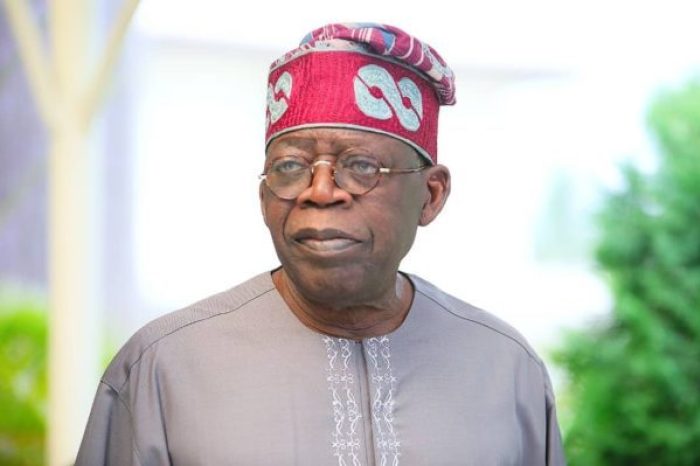
THE OSINBAJO, TINUBU COMPARISON BY AYO OLADELE PETERS
It is implausible that either the Vice President, Professor Yemi Osinbajo or his handlers are unaware of the several obviously sponsored articles and other forms of indecent propaganda in both the traditional and social media projecting the competition for the All Progressives Congress’ 2023 presidential ticket as one between Osinbajo and the National Leader of the APC, Asiwaju Bola Ahmed Tinubu.

Virtually all these write ups deliberately seek to de-market and portray Asiwaju in bad light while painting Osinbajo in rosy colors as the best candidate to succeed President Muhammadu Buhari. That nobody within the Vice President’s camp has called these mischievous and shadowy characters to order is most unfortunate given Osinbajo’s well known antecedents as a protege of the former governor of Lagos State under whom he served for eight years as Commissioner for Justice and Attorney General as well as Tinubu’s undeniable role in his ascendancy to Nigeria’s number two position in 2015.

One of such feature articles in a recent edition of a national newspaper had the title, ‘Osinbajo, Asiwaju: The Race to Make or Mar APC’. It is of course legitimate for Osinbajo to seek to succeed his boss as the next President of Nigeria. But his handlers should sell his supposed aspiration on its own merit rather than seeking to compare the VP’s suitability with his former boss, mentor and benefactor in such a way as to impugn the latter’s image and credibility. If they have chosen such a tack without anyone from the VP’s camp to call them to order, then it is only right to meet them on their own turf on the basis of logic and facts. For instance, the write up in question dwelt at length on what it described as Osinbajo’s loyalty to Buhari during his tenure as Vice President as one factor qualifying him not to only succeed his boss but also for the latter to be favorably disposed towards him. This is an emotional argument.
Yes, loyalty is a commendable quality in politics and every other sphere of life. But it is not by itself either a necessary or sufficient condition to qualify anybody to succeed in a critical leadership position particularly at this delicate period in Nigeria’s political evolution. And since his publicists are wont to compare Osinbajo’s suitability to lead Nigeria come 2023 with that of Tinubu, it is pertinent to ask in what way the Vice President has demonstrated loyalty and commitment to Buhari, the APC or Nigeria better than Asiwaju. Tinubu’s key roles both in the formation of the APC and the emergence of Buhari as President in 2015 are well documented and incontrovertible. Even President Buhari has consistently and publicly acknowledged this on a number of occasions. Yet, after the APC’s victory at the polls in 2015, some elements within the party for their own selfish reasons sought to draw a wedge between Buhari and Tinubu.
They did everything to distance Tinubu from the administration and alienate him from the President personally with some degree of initial success. It is no secret that Tinubu had negligible impact on or influence in the administration for at least the first phase of Buhari’s first term. Yet, Tinubu never took this personal. Given his own political acumen and leadership experience, he knew the kind of complex environment and tremendous pressure under which Buhari was operating. He never hesitated to publicly commend the President’s positive sides and achievements while also offering advise on solutions to some of the knotty challenges confronting the administration. This was at a time when many ethnic champions were playing divisive politics and seeking cheap popularity by whipping up sectional emotions. Asiwaju never resorted to this even when he was subjected to all kinds of blackmail by some mischievous elements in the South West. His support for and loyalty to Buhari and the APC has been rock solid.
It was obviously in realization of this that President Buhari personally chose Tinubu to lead and coordinate the campaign for his second term re-election in 2019. The issue of loyalty can thus not be plausibly and credibly raised as a factor that gives Osinbajo and edge over Tinubu. The article under reference also posited without the slightest scintilla of logical or empirical analysis that Osinbajo enjoys better broad support across regions in the country as well as among the youths and the middle and educated classes. These are at best untested assumptions and unproven assertions.
Widespread political support across the component parts of a complex polity like Nigeria is a function of a politician’s political structures and encompassing network. Political structures are not impersonal organizational machines. They are made up of teeming numbers of people, of personal relationships and bridges forged by a politician over time. Ever since his emergence as a Senator representing Lagos West in 1991 with the highest number of Senatorial District votes in the country, Asiwaju has not looked back. He has consistently and continuously expanded his personal friendships, group networks and cross-regional bridges over the last three decades. Without any equivocation, it can be safely said that, no politician in Nigeria today enjoys his kind of committed friendships and relationships across ethnic, regional, religious and even partisan divides. This kind of attribute and asset does not come by sitting in the quietness of your abode, feathering your nest and pursuing your personal interest. It is a function of hard work, sacrifice of time, resources and energy as well as commitment.
The attempt to portray Osinbajo as having an edge in popularity with youths as well as the middle and professional classes over Tinubu cannot fly. It is a pathetic non-starter. No political leader in this dispensation has encouraged, empowered and inspired youths to participate in politics and occupy as well as excel in public office like Tinubu. The increase in the number of Local Governments in Lagos State from 20 to 57 under Tinubu, for instance, provided opportunities for scores of youths to experience leadership training at the grassroots level. The number of talented young people identified by Tinubu, offered public appointments and who are now accomplished leaders in their own right is innumerable. Professor Osinbajo himself is one talented professional who was identified by Tinubu and given an opportunity to serve Lagos State with distinction in his area of specialization – law.
It is noteworthy that Tinubu also backed Osinbajo with the appointment of a Solicitor General and Permanent Secretary in the Ministry of Justice, the immensely gifted Mr Fola Arthur Worrey, who was also critical to the successes of the Lagos State Ministry of Justice under Osinbajo. We will recall that at one of the Asiwaju Tinubu’s birthday colloquiums, the governor of Edo State, Mr Godwin Obaseki, who delivered the toast, publicly stated that it was Tinubu who spotted him in the private sector and encouraged him to offer his services in the country’s public life. Beyond politics, there are numerous young, middle class professionals across diverse spheres of the private sector whose careers have been encouraged, promoted and boosted by Tinubu.
Osinbajo enjoys the clout and influence of public office as Nigeria’s Vice President. Anywhere he goes across the country, he will naturally be accorded the protocols and welcome attached to the office. This does not of course mean that he does not have his own admirers and supporters. But Tinubu since his exit from office as governor of Lagos State 15 years ago in 2007 has held no public office. The unprecedented admiration, friendship and loyalty he enjoys across the country today is thus not a function of the aura of public office and the sycophancy it breeds. This speaks volumes of the man, his character, his leadership qualities and the enduring nature of his relationships.
Ayo Peters is a public affairs analyst.




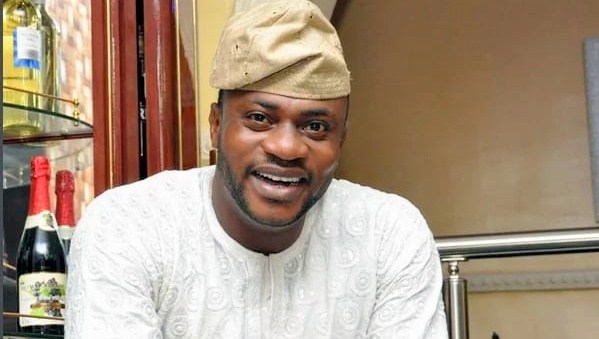
King of the Screen: Why Odunlade, Muyiwa, Femi Adebayo Remain Yoruba Movie Giants
The Yoruba movie industry has continued to produce legendary talents whose influence stretches beyond Nigeria to global audiences. Over the years, some actors have distinguished themselves through consistency, versatility, box office success, and cultural impact.
Among the numerous stars in Nollywood’s Yoruba sector, three actors have remained dominant figures whose names constantly resonate with fans and filmmakers alike — Odunlade Adekola, Muyiwa Ademola, and Femi Adebayo.

Odunlade Adekola: The Street King of Yoruba Cinema
Popularly regarded as one of the most entertaining actors in Nollywood, Odunlade Adekola has built a unique reputation through his energetic delivery, comic timing, emotional depth, and strong connection with grassroots audiences.
From comedy to action and emotional family dramas, the actor has consistently proven his versatility in blockbuster productions. His ability to interpret diverse roles effortlessly has made him a household name across Nigeria.
Industry observers believe his dominance on social media platforms, where his movie clips frequently go viral, has further strengthened his popularity among younger audiences.
Beyond acting, Odunlade has also contributed immensely to mentoring upcoming talents and expanding the commercial value of Yoruba films.
Muyiwa Ademola: The Master Storyteller

For many lovers of indigenous movies, Muyiwa Ademola remains one of the finest storytellers the Yoruba film industry has produced.
Widely respected for producing emotional and morally driven movies, the actor earned massive recognition through classic productions that focused on family values, culture, betrayal, perseverance, and societal lessons.
His calm delivery, deep scripts, and originality have kept him relevant despite changing trends in the entertainment industry.
Film critics often describe Muyiwa Ademola as one of the few actors whose productions combine entertainment with strong cultural education, making his movies timeless among older and younger viewers alike.
Femi Adebayo: The Modern-Day Box Office Force

Femi Adebayo has successfully combined traditional Yoruba storytelling with modern cinematic excellence, helping to project indigenous films to international audiences.
The actor, filmmaker, and producer has recorded major successes with high-budget productions that gained attention on streaming platforms and cinemas.
Known for his professionalism and attention to detail, Femi Adebayo has continued to push Yoruba movies beyond local boundaries while preserving cultural identity.
Entertainment analysts say his ability to blend culture, technology, and quality production has positioned him among the leading faces shaping the future of Yoruba cinema.
Growing Global Influence
The success of these actors reflects the increasing acceptance of indigenous Nigerian content globally. With streaming platforms creating wider access to local movies, Yoruba actors are now gaining international recognition and attracting new audiences.
Fans and stakeholders in the entertainment industry believe the contributions of Odunlade Adekola, Muyiwa Ademola, and Femi Adebayo have not only sustained Yoruba culture through film but have also elevated Nollywood’s global reputation.
celebrity radar - gossips
Eid-el-Kabir: Olowu of Kuta Urges Peace, Unity, Selflessness Among Nigerians
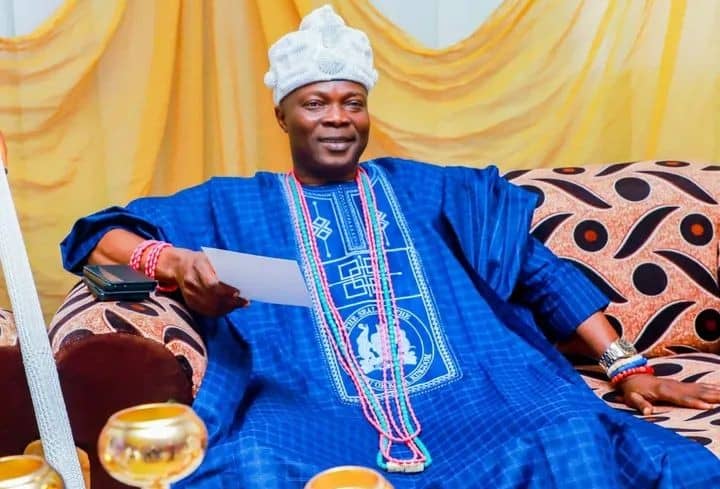
Eid-el-Kabir: Olowu of Kuta Urges Peace, Unity, Selflessness Among Nigerians
The Olowu of Kuta, HRM Oba Dr. Hammed Makama Oyelude, CON, Tegbosun III, has called on the Muslim Ummah and all Nigerians to make peace, unity, and selflessness their guiding principles as the world marks this year’s Eid-el-Kabir celebration.
In his Sallah message, the revered monarch described Eid-el-Kabir as a “highly spiritual occasion that demands dedication, commitment, and selflessness.”
Oba Makama said the period should be used to reflect on societal happenings and promote messages of hope and unity without inciting provocation.
He urged Nigerians to live together harmoniously, irrespective of religious, political, or tribal affiliations, stressing that politicians should exercise restraint and avoid inflammatory rhetoric ahead of the 2027 general elections.
“What should be uppermost in the mind of every patriotic Nigerian is **‘Country first,’” he said.
The monarch also appealed to citizens to remain vigilant in the face of insecurity, reassuring that the armed forces and paramilitary agencies are working round the clock to ensure a smooth and peaceful celebration.
“The price wise men pay for eternal liberty is vigilance. I urge everyone to celebrate moderately and extend a helping hand to the less privileged, widows, and orphans, embracing them as our brothers and sisters,” Olowu Makama added.
He concluded by wishing all Nigerians a peaceful and fulfilling Eid-el-Kabir celebration.
celebrity radar - gossips
Oba Babatunde Saliu Elebo II Felicitates Muslims on Eid-el-Kabir Celebration
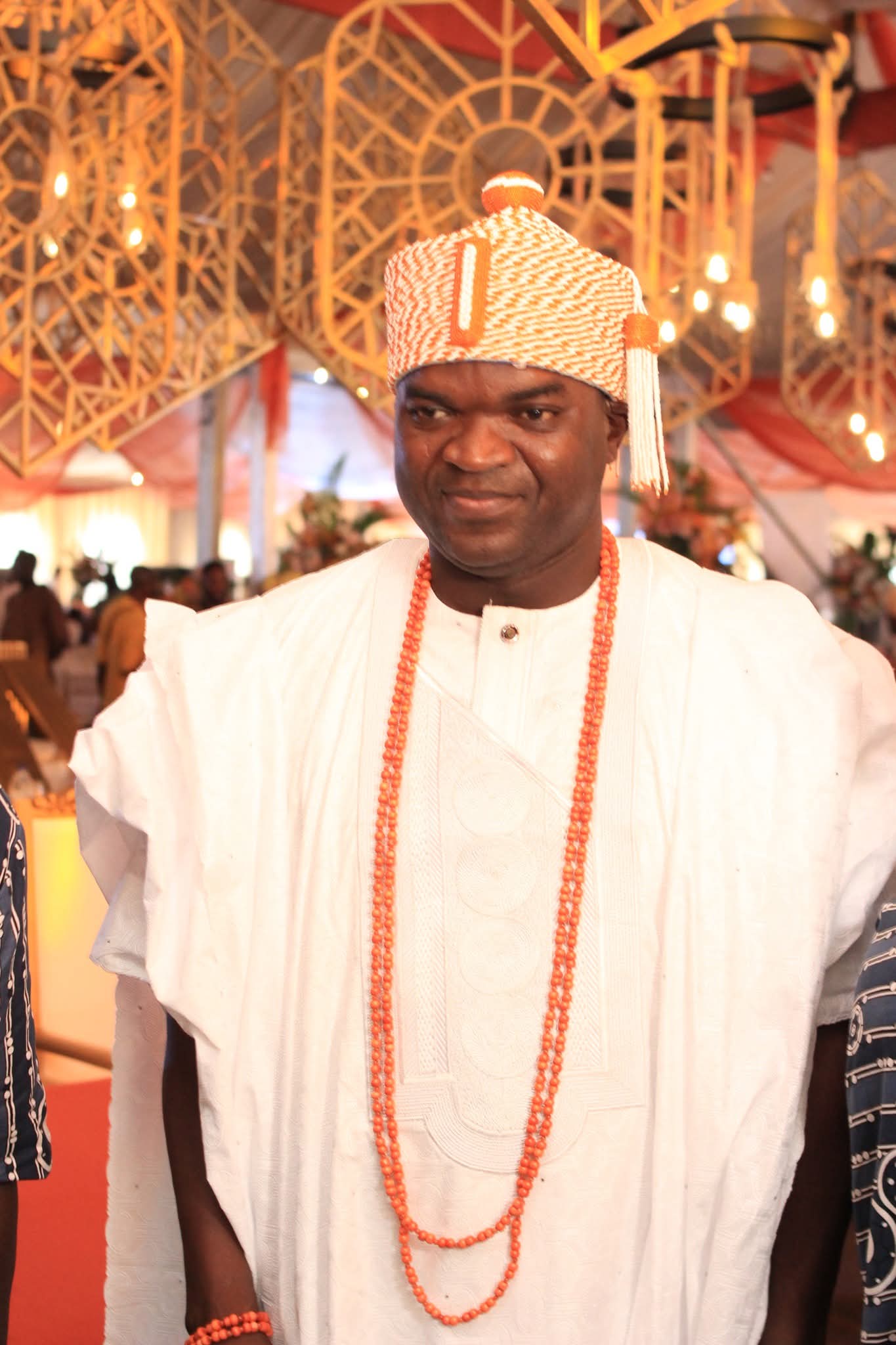
Oba Babatunde Saliu Elebo II Felicitates Muslims on Eid-el-Kabir Celebration
By Adeyemi Obadimu Veron
The Oloworo of Oworosoki Kingdom, Oba Babatunde Saliu Elebo II, has extended warm greetings and heartfelt felicitations to Muslims across Nigeria and the world at large on the joyous occasion of the 2026 Eid-el-Kabir celebration.
In a statement made available to Newsmen, the revered monarch urged Muslims to embrace the true teachings of Islam by promoting peace, love, unity, sacrifice, and compassion during and after the festive period.
Oba Babatunde Saliu Elebo II noted that Eid-el-Kabir, also known as Salah, remains one of the most significant celebrations in Islam as it symbolizes total obedience, faith, and devotion to Almighty Allah, drawing inspiration from the unwavering sacrifice of Prophet Ibrahim (Abraham), who demonstrated complete submission to the will of God.
According to the monarch, the Holy Qur’an teaches believers the importance of righteousness, kindness to humanity, tolerance, and support for the less privileged in society. He emphasized that the season should serve as a reminder for all Nigerians to live in harmony irrespective of religion, ethnicity, or political differences.
The royal father further called on Muslims to use the sacred period to pray fervently for peace, stability, economic growth, and sustainable development in Nigeria, stressing that national progress can only thrive in an atmosphere of unity and mutual understanding.
Oba Saliu also encouraged the faithful to extend hands of generosity to widows, orphans, and vulnerable members of society, noting that the essence of Eid-el-Kabir goes beyond celebration and feasting, but also reflects the spirit of sharing and caring for humanity as instructed in the Qur’an.
While wishing Muslims a peaceful and memorable Eid celebration, the Oloworo of Oworosoki prayed for divine blessings, prosperity, good health, and continued harmony in homes and communities.
“May this year’s Eid-el-Kabir strengthen our faith, deepen our love for one another, and bring renewed hope and abundant blessings to our nation,” the monarch stated.


- Afreximbank Deepens Commitment to Economic Progress in The Bahamas June 1, 2026
- African Electric Vehicle (EV) platform Spiro raises $215M in equity to scale electric mobility and energy infrastructure across Africa June 1, 2026
- Africa Centres for Disease Control and Prevention (Africa CDC) Statement on Attacks Against Health Facilities During the Bundibugyo Virus Disease Response in the Democratic Republic of the Congo June 1, 2026
- Putting consumers at the centre of Africa’s dairy transformation June 1, 2026
- International Rescue Committee (IRC) warns Democratic Republic of the Congo (DRC) Ebola outbreak likely far larger than official figures suggest June 1, 2026
- South Africa: Portfolio Committee on Health Marks National Cancer Survivor Day and Reaffirms Importance of Early Detection and Public Awareness June 1, 2026
- Rwanda’s RSSB Tigers Crowned 2026 Basketball Africa League Champions June 1, 2026
- Uganda: Appointments Committee Begins Vetting of Ministerial Nominees June 1, 2026
- Sudan braces for worsening child malnutrition as pre-harvest season starts June 1, 2026
- Etu Energias Strengthens Angolan Footprint, Returns to Angola Oil & Gas (AOG) 2026 as Champion Sponsor June 1, 2026
- Afreximbank Deepens Commitment to Economic Progress in The Bahamas June 1, 2026
- African Electric Vehicle (EV) platform Spiro raises $215M in equity to scale electric mobility and energy infrastructure across Africa June 1, 2026
- Africa Centres for Disease Control and Prevention (Africa CDC) Statement on Attacks Against Health Facilities During the Bundibugyo Virus Disease Response in the Democratic Republic of the Congo June 1, 2026
- Putting consumers at the centre of Africa’s dairy transformation June 1, 2026
- International Rescue Committee (IRC) warns Democratic Republic of the Congo (DRC) Ebola outbreak likely far larger than official figures suggest June 1, 2026
- South Africa: Portfolio Committee on Health Marks National Cancer Survivor Day and Reaffirms Importance of Early Detection and Public Awareness June 1, 2026
- Rwanda’s RSSB Tigers Crowned 2026 Basketball Africa League Champions June 1, 2026
-

 news6 months ago
WHO REALLY OWNS MONIEPOINT? The $290 Million Deal That Sold Nigeria’s Top Fintech to Foreign Interests
-

 society4 weeks ago
SOCIAL MEDIA IS NOT A BATTLEFIELD COMMAND – WHY THE NIGERIAN ARMY’S ACTION AGAINST JUSTICE CRACK IS A NATIONAL SECURITY IMPERATIVE
-

 celebrity radar - gossips4 months ago
Dr. Chris Okafor Returns with Power and Fire of the Spirit -Mounts Grace Nation Altar with Fresh Anointing and Restoration Grace on February 1, 2026
-

 celebrity radar - gossips6 months ago
Prophet Kingsley Aitafo Releases 2026 Prophecy: ‘Nigeria Will Rise, but the World Must Prepare for Turbulence’