
Politics
The Tinubu Certificate Saga: who is after Tinubu? Facts of the matter

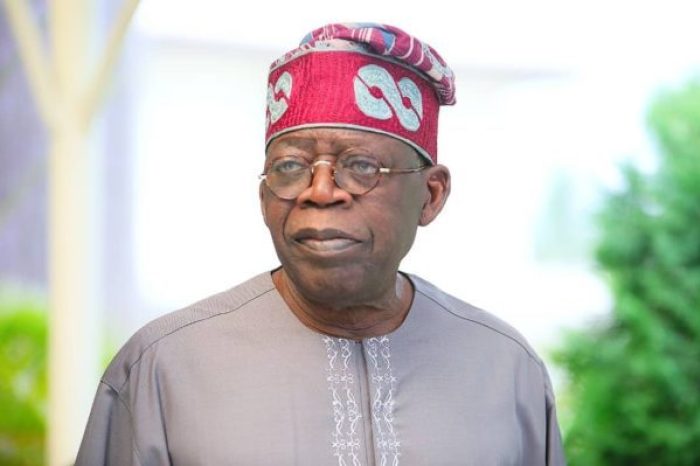
The Tinubu Certificate Saga: who is after Tinubu? Facts of the matter

August 12, 1999: Petition by Alhaji Jameed Seriki of No. 62 Balogun Street, West, Lagos, and one Dr. Waliu Balogun-Smith of No. 5, Unity Road, Ikeja alleging tinubu falsified his age and educational qualifications
Tuesday, September 21, 1999: following a motion moved by Honourable Tajudeen Jaiyeola Agoro representing Lagos Mainland Constituency, the Speaker of the Lagos House of Assembly, Dr. Adeleke Olorunimbe Mamora, set up a five-man ad hoc committee to investigate the allegations and report back to the House. The committee comprised Hon. Babajide Omoworare (Chairman), Hon. Thomas Ayodele Fadeyi, Hon. Adeniyi Akinmade, Hon. Ibrahim Gbola Gbabijo and Hon Saliu Olaitan Mustapha. The petitioners never attended the hearings but Tinubu was still investigated. Femi Falana represented Tinubu as his Lawyer. Investigations reveal the petitioners wrote the petition under fictitious names and never existed.
In its report to the House, the Committee stated that “The Committee deemed it fit to invite the petitioners and therefore wrote the petitioners. The letters were sent by courier.
June 2000: Appeal Court dismissed Gani’s suit against Tinubu on this
May 2002: The Supreme Court dismissed another suit by Gani on this. Note: the supreme court said the Lagos State House of Assembly is the only body that could probe Governor Tinubu then. And they did an intensive investigation. He was cleared of all charges
June 2013: Federal High Court Lagos dismissed Dr Adegbola’s suit against Tinubu on the same certificate forgery Matter.
The findings of the adhoc panel report:
But the courts, including the Supreme Court held that as a sitting governor cloaked with constitutional guaranteed immunity, Tinubu could not be investigated.
The only body that can investigate the governor was the Lagos House of Assembly, the apex court had ruled.
Onabolu acknowledged that questions about Tinubu’s certificates, institutions and age raised by Adedayo are critical and cannot be ignored especially by someone who wants to be President of Nigeria.
But he insisted that the questions have been thoroughly investigated and conclusively addressed by the appropriate institutional authority legally competent to do so when they were raised in the petitions written in 1999.
So, what were the findings of the lawmakers and Tinubu’s defence about the allegations of forgery levelled against him?
Read a detailed account as excerpted from Onabolu’s column published this Saturday titled, Festus Adedayo, Tinubu and the Character Question below:
Shortly after he was sworn in as governor of Lagos State in May 1999, there were allegations widely published in the media that Tinubu had perjured and forged the credentials that qualified him to run for the gubernatorial election in the state.
The allegations were contained in a petition dated August 12, 1999, written by one Alhaji Jameed Seriki of No. 62 Balogun Street, West, Lagos, and one Dr. Waliu Balogun-Smith of No. 5, Unity Road, Ikeja.
The kernel of their allegations were: (1) that there was a discrepancy in the age of the governor since the profile published during his inauguration stated that he was born in 1952 and the age on his transcript at the Chicago State University claimed that he was born in 1954; (2) that the governor did not attend Government College, Ibadan, as was stated in his profile and INEC FORM CF.001; and (3) the governor did not attend University of Chicago as claimed in INEC FORM CF and an affidavit sworn to at the Ikeja High Court of Justice on 29th December 1998.
It was unanimously agreed by all legal authorities that the governor enjoyed legal immunity courtesy Section 308 of the 1999 Constitution and that the Lagos State House of Assembly was the only competent institution that could investigate the governor and take punitive action against him if he was deemed to have committed acts constituting gross misconduct.
Consequently, following a motion moved by Honourable Tajudeen Jaiyeola Agoro representing Lagos Mainland Constituency, the Speaker, Dr. Adeleke Olorunimbe Mamora, on Tuesday, September 21, 1999, set up a five-man ad hoc committee to investigate the allegations and report back to the House. The committee comprised Hon. Babajide Omoworare (Chairman), Hon. Thomas Ayodele Fadeyi, Hon. Adeniyi Akinmade, Hon. Ibrahim Gbola Gbabijo and Hon Saliu Olaitan Mustapha.
In its report to the House, the Committee stated that “The Committee deemed it fit to invite the petitioners and therefore wrote the petitioners. The letters were sent by courier.
The petitioners did not attend the hearing and we have not heard from them up till now. We visited their address at 62 Balogun Street, West, Lagos and 5, Unity Road, Ikeja, Lagos, on Wednesday, September 22, 1999 and found out that the petitioners neither reside nor carry on any business at the addresses. Hence, we concluded that the petition was written in fictitious names. Attached herewith and marked “Annexures 1 and 2” are pictures of the buildings bearing the above addresses taken when the Committee visited the addresses. Also attached and marked “Annexxures 3 and 4″ are copies of the evidence of courier of the letters forwarded to the fictitious Petitioners”. Despite this, the Committee continued with its investigation.
Continuing, the committee stated in its report that “The Committee invited Editors of ThisDay Newspaper because of the prominence, which they have given to the publication of the allegations. The Editors of ThisDay visited us informally, refusing to oblige our invitation and informing us that they would rely on their publications”. The governor appeared before the Committee on Thursday, September 23, 1999, alongside his counsel Mr. Femi Falana who was then not yet a Senior Advocate of Nigeria (SAN).
According to the report, “The Governor of Lagos State started his evidence by admitting “full responsibility” for some of the “needless errors” being pointed at in recent publications and which formed the basis of allegations against him. The Governor told the Committee that as a result of the acrimonious primaries of the Alliance for Democracy in Lagos State and its attendant crisis, the information contained in both the INEC form and affidavit of loss of certificates was supplied by Senator Tokunbo Afikuyomi.
The Governor then submitted to the Committee a copy of the Social Democratic Party (SDP) senatorial candidate form dated June 1, 1992, which he used to contest the 1992 Senatorial election as candidate of the party for Lagos West. In the form, which he personally filled, the Governor attached the certificates of Richard Daley College and Chicago State University. For his educational qualifications he filled B.Sc Accounting only”.
According to the committee report, “This according to him demonstrated that “needless errors” spotted in the 1999 INEC form were not consistent and that they were “genuine errors”. He further directed the attention of the committee to the INEC form CFO1 that bore a wrong date of twenty-eight December 1999 instead of twenty-eight December 1998. The error he said was made by INEC which printed the form. And not even the Commissioner of Oath detected the error. This in his view further confirmed that the hurried and confused manner under which the preparations for the governorship primaries of 1998 were made gave room to error on all sides”.
Giving further insight into their interaction with the governor, the committee report stated: “The Governor spoke about his difficult and traumatic youth and how he scaled the hurdles of life as a self made man. After his primary education, the Governor said he was admitted into secondary school but he could not further his education because of his poverty. The Governor thus had to engage in menial jobs before he proceeded to the United States of America in search of the Golden Fleece. The Governor informed us that in America, he undertook various odd jobs and tried to improve himself academically. After five years of the most harrowing work experience, the Governor said he enrolled at Richard Daley College in Chicago, which among others offers basic, remedial and academic classes, preparatory to entering Chicago State University. He presented a photocopy of a certificate issued by Richard Daley College (City Colleges of Chicago), a copy of which is attached as herewith and marked as “Annexure 5″.
Throughout the time he studied in Chicago, the Governor said he also had to fend for himself and that he actually paid his way through school by working extra hours as a tutor in the same university.
He said he studied for extra hours especially during summer. The Governor said 27 (twenty seven) credit hours were transferred from Richard Daley College to Chicago State University, where he obtained Bachelor of Science in Business and Administration. His major was in Accounting”.
To back up his claims, Tinubu provided the committee with at least 11 documents, which were attached to its report as annexures. These included a copy of a letter dated September 6, 1978, written by Andrew F. Sikula, Dean, College of Business Administration informing Mr. Bola Tinubu that he had made the Dean’s honours list by making a 3.50 or better grade point average; an inter-office memorandum of Chicago State University dated May 28, 1979 written by one Clyde Smith to the Honours Award Committee recommending Bola A. Tinubu as recipient of the outstanding senior award; copies of May/June 1979 edition of the TEMPO, Chicago State University Campus journal covering Chicago State University Annual Awards Ceremony. Bola Tinubu was described as the President of the Accounting Society and was also running for Student Government Association presidency; a Chicago State University statement issued by the Accounts Receivable Department on June 15, 1979 with his social security number; the Chicago State University Certificate dated 22nd June 1979 conferring on Bola A. Tinubu the degree of Bachelor of Science in Business and Administration (Accounting with honours); a copy of Chicago State University year book with the picture of Bola A. Tinubu on page 75; Chicago State University academic record transcript dated 11th July 1979; a Chicago State University letter dated August 20th 1999 addressed To Whom It May Concern advising that Bola A.Tinubu did indeed attend Chicago State University from August 1977 through June 1979; his pay slips when he worked as an accountant with Deloitte Haskins & Sells and at GTE Services Corporation before returning to Nigeria; a copy of Mobil Oil Nigeria Plc Certificate of Service dated 14th May 1992 issued in favor of Mr. B. A. Tinubu and a letter written by Mobil Oil Nigeria Plc dated December 29th, 1998, addressed to whom it may concern confirming that Mr. Tinubu was an employee of the Company between December 1, 1983 and May 17th, 1992.
When he appeared before the Committee on Friday, September 24, 1999, Senator Tokunbo Afikuyomi, according to the committee’s report, “informed the committee that he was heading the unit of the Governor’s campaign responsible for processing the form and he accepted responsibilities for the mistakes in the INEC forms.
He said the forms were filled for the Governor in a rush and under tense circumstances at a point when there were problems and crises in the party, Alliance for Democracy (AD) in Lagos State during the gubernatorial primary electioneering campaigns. He said as a result of the crises they had very little time to fill and process the INEC form. He said the Governor also hurriedly signed the forms so as to beat the deadline given by INEC for the submission of all forms”.
It was the legal opinion of Professor Itse Sagay (SAN) who accompanied Senator Afikuyomi to the proceedings, as cited in the committee’s report, that “even if the allegations against the Executive Governor of Lagos State are true, they are not impeachable offenses as the Lagos State House of Assembly only possesses power to impeach for gross misconduct in relation to his conduct while in office; that it is more of a moral matter than a legal issue. He suggested that the Governor should apologize to the people of Lagos State concerning the mistakes he made in his forms, which were not intentional”.
Chief Gani Fawehimmi whose testimony is also contained in the committee’s report “was of the view that the primary duty of the Lagos State House of Assembly is to determine if any law has been breached by the Lagos State Governor at this stage and not to determine the impeachment of the governor now. He said the House of Assembly must find out if the Governor has committed any crime against the laws of Lagos State. The issue, according to him, is that there are 2 (two) affidavits deposed to by the Governor of Lagos State and false declaration has been established. Finally, Chief Fawehinmi summed up his evidence by stating that Governor Bola Tinubu volunteered false information on oath to enable him contest for the post of Governor of Lagos State”.
In his written defence on behalf of Tinubu before the panel, his counsel, Mr. Femi Falana, addressed the various allegations against the governor. On the issue of perjury, Mr. Falana submitted that “Since no iota of evidence has been led to show that the facts contained in the affidavits in dispute were given in the course of judicial proceedings or in anticipation of judicial proceedings, the offence of perjury cannot be sustained in the circumstances of this case”.
On alleged forgery, he submitted that “From the facts of this case, no evidence has been led to show that Governor Tinubu presented a forged certificate to INEC. And in fact, Governor Tinubu never presented any forged certificate to INEC”.
On the allegation of inaccurate information, Mr. Falana argued that “We urge the committee to believe the oral evidence of Governor Tinubu that it was Senator Tokunbo Afikuyomi that filled Form CF001 on his behalf and supplied the information contained in the affidavit dated 29th of December, 1998 to Barrister Oriola. This aspect of the Governor’s evidence has been corroborated by Senator Tokunbo Afikuyomi who took responsibility for the errors contained in both documents”. He also stated that”Perhaps to convince the committee that the governor did not set out to give false information to INEC, the committee may wish to examine the contents of a similar form dated June 1, 1992 filled by the Governor himself when he was contesting election to the Senate. The Governor did not, on his own, supply the information, which has formed the basis of the allegation of false information. In any case, since Senator Tokunbo Afikuyomi has admitted that the errors were made by him and not by the governor, we submit that the Governor should not be penalized in the circumstances of this case”.
Mr. Falana also addressed at length, issues raised regarding Tinubu’s age declaration. He wrote in his statement to the committee and contained in its report that “From all the documents tendered before the committee, it is abundantly clear that the alleged false declaration of age as per the documents submitted to INEC before the election is an isolated inconsistency. In other words, whereas all the other documents contain one and identical age i.e. 1952, the academic transcript of Chicago State University (which was not made under oath and which could not be elevated to the pedestal of a sworn-declaration) in which 1954 was given as the date of birth of the Governor stands alone. It is predominantly clear, therefore, that taken together the age-claim of the Governor, which he has continued to maintain, and the age contained in the other documents tendered, 1952 is the correct and accurate birth year of the Governor”.
Beyond this, Mr. Falana submitted to the committee that “Assuming without accepting that the 1954 birth year contained in the transcript is the actual birth year of the Governor, does it affect his eligibility as the Executive Governor of Lagos State as regards age-qualification? Under the Constitution of the Federal Republic of Nigeria, 1999, to be eligible to contest as a Governor of a state, a contestant, among other requirements, must be 35 years of age. Even if the Governor was born in 1954, he was qualified on age ground, to contest the gubernatorial elections when he did. In conclusion, it is an incontrovertible fact that the inconsistency of the Governor’s age contained in the said transcript with that contained in the Governor’s other documents did not secure for him any advantage in the elections that brought him to office. Furthermore, the said age did not render him ineligible as Governor. From a legal standpoint, no offence could be said to have been committed. The Governor did not prepare the transcript. It cannot be argued at all that the governor set out to mislead the electorate or deceive INEC to secure a clearance therefrom”.
To further aid its work, the Committee sought the legal opinion and advice of some renowned legal practitioners. These were Chief Fred Agbaje a prominent constitutional lawyer; Deacon Dele Adesina, then the Chairman of the Nigerian Bar Association, Ikeja branch; Mr. Olisa Abgakoba, constitutional lawyer and Senior Advocate of Nigeria (SAN) and Mr. Nurudeen Ogbara, then the Executive Secretary of the National Association of Democratic Lawyers (NADL). I can only present here brief extracts from the detailed presentations of these legal luminaries to the Committee as contained in the latter’s report. Chief Fred Agbaje, according to the report, “was of the opinion that if it has not been contested that the Governor attended Richard Daley College and the Chicago State University and obtained a degree, he is qualified for the post of governor of Lagos State. He said the minimum requirement is school certificate in both the Constitution of the Federal Republic of Nigeria and the INEC requirement form. He concluded that since the Governor did not fill the form himself, but was helped by his aide who later admitted he made some mistakes, the crime of the litigant should not be visited on the client”.
On the legal opinion of Mr. Olisa Agbakoba (SAN), the Committee report states among others that “He said there are two limbs to subsection 11 of Section 188. The first limb is an objective test i.e. a grave violation or breach of the provisions of the constitution. It is for the House to determine if the allegations against the Governor, if established amount to a grave violation or breach of the constitution. Whether or not the allegations amount to a violation of his oath of office falls within discretion of this House under the second limb which is a subjective test i.e misconduct of such nature as amounts in the opinion of the House of Assembly to gross misconduct”. Among other submissions, Deacon Dele Adesina’s opinion to the Committee was that “Indeed, the Governor is still competent and qualified to be eligible to contest for the post of the Governor since the law says the minimum requirement is a school certificate. So, by having a certificate from Richard Daley College and a degree from Chicago State University, the Governor is qualified to contest for the post of a Governor”.
And in his legal advice to the Committee, the report cites Mr. Nurudeen Ogbara as stating among others that “On the issues of whether the Governor gained an advantage or not, Mr Ogbara said that the Governor could not have deliberately lied on oath since he is qualified whether he was born in 1952 or 1954. He could not see the advantage the Governor sought to have since he also had the minimum educational requirement. Furthermore, Mr Ogbara said assuming Senator Tokunbo Afikuyomi was responsible for the errors on the affidavit, to show there was no intention to cheat or gain an advantage, he could have advised the Governor to do a further affidavit superseding the one earlier sworn to”.
Based on all these considerations, the Committee found on the allegation of perjury that “It is clear that since the alleged incorrect statements were not made for the purpose of judicial proceedings, there could be no perjury by Law. However, on the question of providing false information on oath (sections 191 & 192) we are satisfied that the statements of the Governor’s educational qualifications which he has admitted were incorrect, were not intended to confer any special advantage and in fact did not confer any advantage on the Governor in his bid for the governorship of Lagos State. The minimum requirement of age and educational qualifications were met by him. The electoral forms, which were filled by him in 1992 for the senatorial race did not contain any of these incorrect statements. Only his basic qualification was stated. This in our view confirms that there was no intention to deceive or defraud by the statements contained in the INEC forms filled for the gubernatorial race”.
The Committee’s finding on the allegation of forgery was that “We have NO evidence that any forged document was presented to INEC. The only certificate presented to INEC was a transcript of Chicago State University Degree, which was subsequently found to be genuine”. And on the comparison between Alhaji Salisu Buhari, former Speaker of the House of Representatives and Governor Bola Tinubu, the report stated that “It is the view of Chief Gani Fawehinmi that the certificate forgery and falsification of age committed by Alhaji Salisu Buhari, former Speaker of the House of Representatives is similar to the allegation against Governor Tinubu. But as the legal experts unanimously submitted, whereas Alhaji Buhari was twenty-nine years old and lied on oath that he was thirty-six years old in order to qualify to contest as a member of the House of Representatives, Governor Tinubu was over the qualifying age of thirty-five years at the time he contested the election. Alhaji Buhari forged and presented certificates while Governor Tinubu did not forge or submit any forged certificate. Alhaji Buhari did not have a qualifying certificate with which to contest the election. Governor Tinubu has the certificates of Richard Daley College and Chicago State University”.
In conclusion, the Committee wrote that “However, we wish to state that the Governor’s inability to clear these issues promptly left the field to numerous aides and well wishers who circulated statements and documents, some of which the Governor claimed were neither from him nor authorized by him. Since the Governor himself accepted responsibilities for the “needless errors” made, and in any event he is responsible for documents signed by him, we strongly advise him to be more careful in ensuring the accuracy of documents that carry his signature in future”.




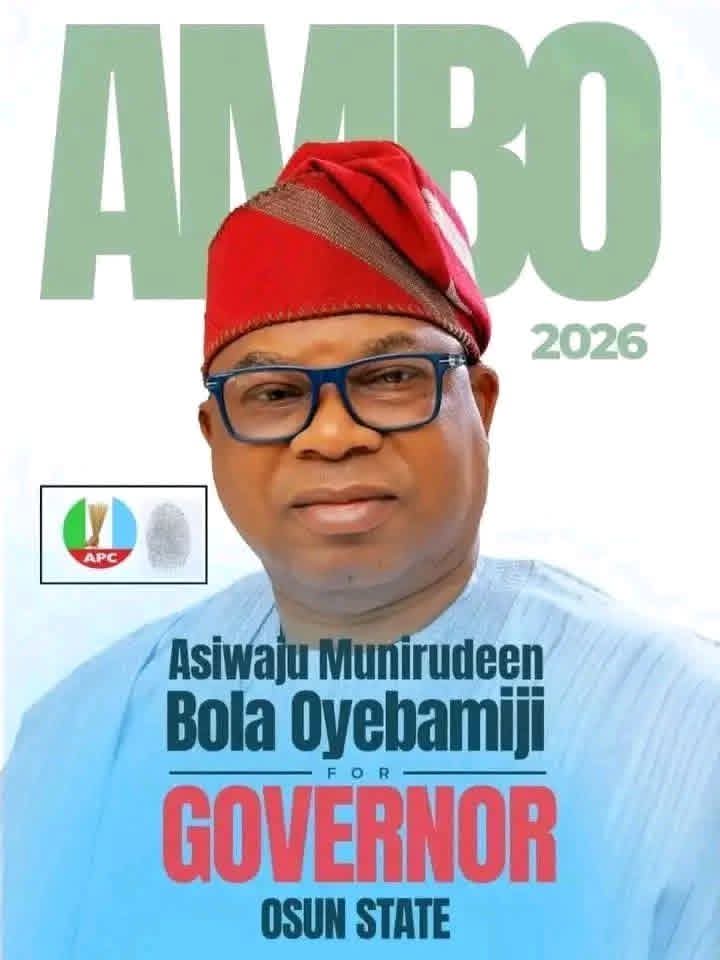
AMBO and the Osun Governorship Race: Assessing the Man, the Politics and the Vision
As political activities gather momentum ahead of the 2026 Osun State governorship election, a public affairs commentator, Oluseyi Olonade, has described the emergence of Asiwaju Munirudeen Bola Oyebamiji, popularly known as AMBO, as a significant development in the state’s political landscape.
In an article titled “Oyebamiji: The Man, The Politics and The Aspiration,” Olonade argued that the All Progressives Congress governorship hopeful possesses the character, experience and vision needed to reposition Osun State for sustainable growth.
According to the writer, Oyebamiji’s appeal stems from his extensive background in the banking sector, where he spent nearly three decades working with institutions including Wema Bank, Trans International Bank, Spring Bank and Enterprise Bank.
A native of Ikire in Irewole Local Government Area, Oyebamiji was described as a technocrat whose experience in corporate governance, finance and risk management has shaped his approach to public administration.
The article noted that his public service journey gained prominence in 2012 when he was appointed to oversee the then Osun State Investment Company Limited. Under his leadership, the organisation was reportedly restructured and transformed into Omoluabi Holdings Limited.
The writer further highlighted Oyebamiji’s tenure as Commissioner for Finance under successive APC administrations, where he was credited with managing the state’s finances during challenging economic periods.
Olonade also referenced Oyebamiji’s appointment as Managing Director of the National Inland Waterways Authority, describing it as further evidence of his administrative and leadership capabilities.
The article contrasted Oyebamiji’s governance philosophy with that of the current administration in Osun State, arguing that the APC aspirant favours institutional reforms, economic diversification and fiscal discipline.

According to the writer, Oyebamiji’s proposed agenda includes strengthening transparency in government spending, expanding internally generated revenue, attracting private-sector investments and promoting industrial and agricultural development.
The article also highlighted youth empowerment, entrepreneurship development and digital skills acquisition as key components of his vision for the state.
Olonade concluded that the forthcoming governorship election would present voters with a choice between different approaches to governance, expressing confidence that Oyebamiji’s experience and developmental agenda make him a strong contender in the race.
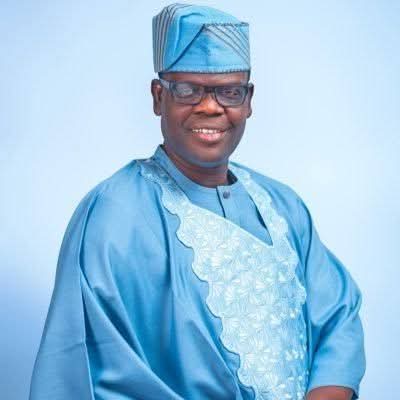
*Oselu Tiwa nTiwa Endorses Oriyomi Hamzat for Oyo Governorship*
A sociopolitical support group in Oyo State, Oselu Tiwa nTiwa, has declared its support for Alhaji Oriyomi Hamzat as the authentic governorship candidate of the Accord Party ahead of the forthcoming governorship election in the state.
The group made its position known in a statement jointly signed by its President, Mr. Adewale Oluwaseyi and Secretary, Alh. Adebayo Oyewole, on Thursday, describing Hamzat as a grassroots figure with strong connection to the people and a track record of humanitarian interventions across Oyo State.

According to the group, the endorsement followed what it described as careful observation of Hamzat’s leadership qualities, compassion and dedication to the welfare of ordinary citizens.
“Oriyomi Hamzat has consistently demonstrated empathy, courage and selfless commitment to humanity. Through his numerous interventions in the lives of ordinary citizens, he has become a symbol of hope to many families and communities,” the statement read.
Oselu Tiwa nTiwa also appealed to the national leadership of the Accord Party to prioritise the long-term future and electoral growth of the party in its decision-making process.
The group noted that Hamzat’s candidacy presents an opportunity for the party to strengthen its grassroots support base and expand its political relevance across Oyo State.
“We respectfully appeal to the National Leadership of the Accord Party to look beyond immediate political calculations and consider the bigger picture, the future growth, stability and electoral success of the party in Oyo State and beyond,” the statement added.
The group further expressed confidence in the leadership of the party, saying it believes the party’s national officers and stakeholders would take decisions that reflect fairness, inclusiveness and the collective interest of members.
While calling on party loyalists to remain calm and united, Oselu Tiwa nTiwa said continued consultations among stakeholders would help strengthen the Accord Party ahead of the election.
Signed:
Alh. Adebayo Oyewole,
Secretary.
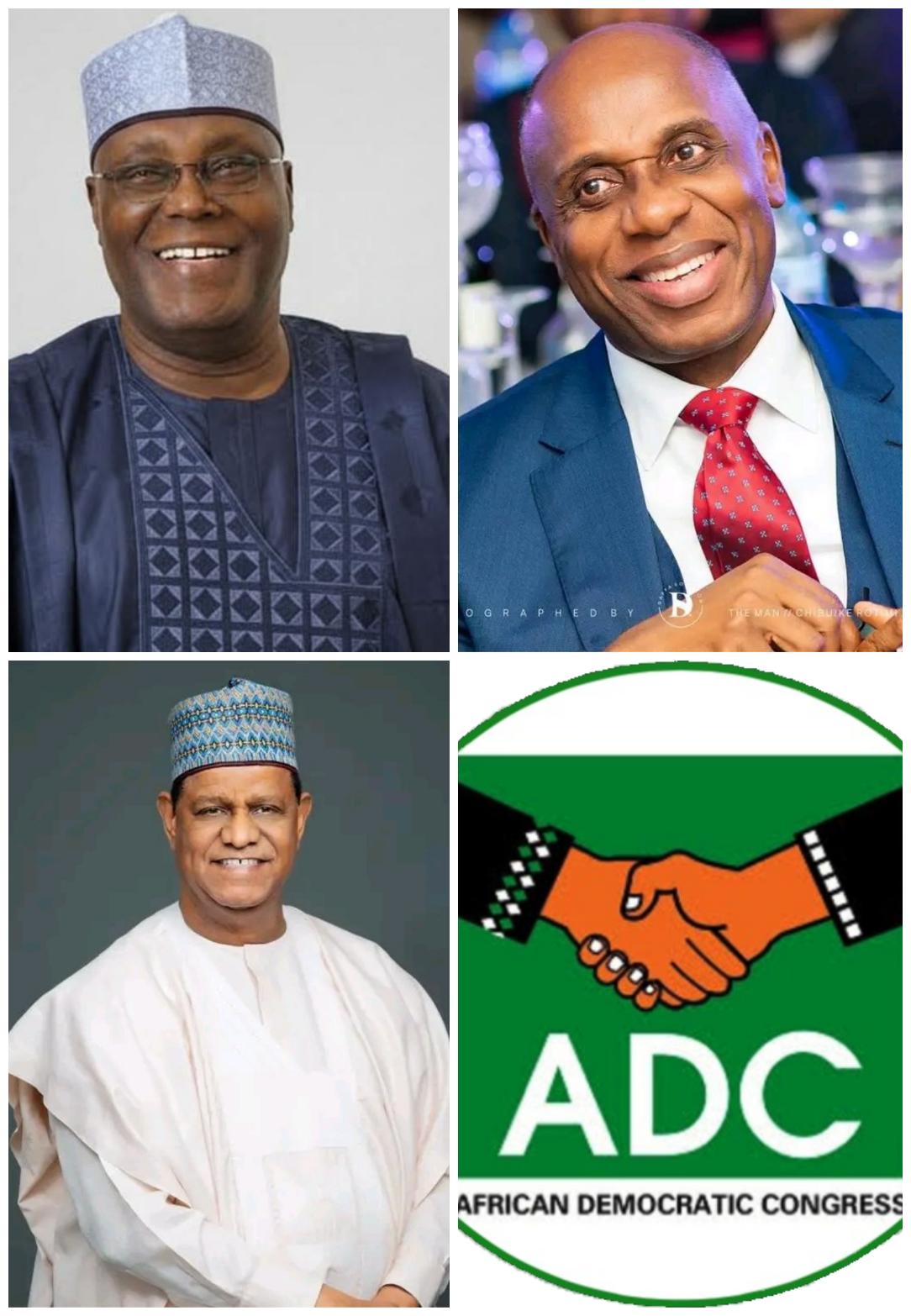
Atiku Set To Clinch ADC Presidential Ticket, Leads Amaechi, Hayatu-Deen In 34 States
Former Vice President of Nigeria and frontline presidential aspirant of the African Democratic Congress (ADC), Atiku Abubakar, is projected to emerge winner of the party’s presidential primaries, according to impeccable sources in Abuja.
The primaries, conducted across over 8,000 wards in the 36 states of the federation and the Federal Capital Territory, reportedly placed Atiku far ahead of his closest rivals — former Rivers State Governor, Rotimi Amaechi, and former Chairman of the Nigerian Economic Summit Group, Mohammed Hayatu-Deen.

Highly placed party insiders disclosed that Atiku is currently leading in 34 states, including the FCT, after securing dominance across the 19 Northern states, the five South-East states, and the six South-West states, while also maintaining a strong showing in at least three states in the South-South geopolitical zone.
The sources added that the outcome reflects what they described as “an overwhelming nationwide acceptance” of the former vice president within the opposition party ahead of the 2027 general election.
Meanwhile, the ADC leadership has invited members of the press to the official announcement of the final collated results scheduled for 11:00 a.m. on Tuesday, May 26, 2026, in Abuja.
The declaration of results is expected to be broadcast live on ARISE Television and two other major television stations, while also being livestreamed on the party’s official social media platforms on X and Facebook.
Speaking ahead of the announcement, the founding National Chairman of the ADC, Chief Ralph Nwosu, said the decision to televise the exercise live was aimed at promoting transparency and democratic accountability.
“We want millions of Nigerians at home and in the Diaspora to witness democracy in action,” Nwosu said.
He further revealed that the party leadership would encourage all three presidential aspirants to publicly embrace a peace accord and commit themselves to working together in unity for the party’s success.
According to him, the move is necessary to strengthen internal cohesion and position the ADC for victory in the presidential election scheduled for January 16, 2027.
Details later.


- Pitcher Awards Announces 2026 Winners, Marking a Landmark Year for Pan‑African Creativity May 30, 2026
- Ghana Commemorates 78th International Day of United Nations Peacekeepers May 30, 2026
- South Africa: President Ramaphosa receives second interim report of Madlanga Commission May 30, 2026
- Asmara Marathon 2026 to be held May 30, 2026
- Powerful call for dialogue and compromise to secure peace in South Sudan issued on International Peacekeepers Day May 30, 2026
- Over 1,000 Participants Join Rwenzori Marathon Activation Run in Mombasa May 30, 2026
- World Health Organization (WHO) actively participated in the 2nd Summit on Healthcare Integration in Portuguese-speaking countries May 30, 2026
- Annual Meetings (AM) 2026: “Africa has what It takes” - Experts call for stronger financial systems to help Africa mobilise capital at scale May 30, 2026
- Eritrea Participates at Organization of African, Caribbean and Pacific States Meetings May 30, 2026
- Annual Meetings 2026 (AM2026): African Development Bank Group’s 2025 Annual Report Highlights Strong Results and a New Chapter for Africa’s Transformation May 29, 2026
- Pitcher Awards Announces 2026 Winners, Marking a Landmark Year for Pan‑African Creativity May 30, 2026
- Ghana Commemorates 78th International Day of United Nations Peacekeepers May 30, 2026
- South Africa: President Ramaphosa receives second interim report of Madlanga Commission May 30, 2026
- Asmara Marathon 2026 to be held May 30, 2026
- Powerful call for dialogue and compromise to secure peace in South Sudan issued on International Peacekeepers Day May 30, 2026
- Over 1,000 Participants Join Rwenzori Marathon Activation Run in Mombasa May 30, 2026
- World Health Organization (WHO) actively participated in the 2nd Summit on Healthcare Integration in Portuguese-speaking countries May 30, 2026
-

 news6 months ago
WHO REALLY OWNS MONIEPOINT? The $290 Million Deal That Sold Nigeria’s Top Fintech to Foreign Interests
-

 society4 weeks ago
SOCIAL MEDIA IS NOT A BATTLEFIELD COMMAND – WHY THE NIGERIAN ARMY’S ACTION AGAINST JUSTICE CRACK IS A NATIONAL SECURITY IMPERATIVE
-

 celebrity radar - gossips4 months ago
Dr. Chris Okafor Returns with Power and Fire of the Spirit -Mounts Grace Nation Altar with Fresh Anointing and Restoration Grace on February 1, 2026
-

 celebrity radar - gossips6 months ago
Prophet Kingsley Aitafo Releases 2026 Prophecy: ‘Nigeria Will Rise, but the World Must Prepare for Turbulence’