
society
The Trump–Nigeria Saga: Loud Rhetoric, Fragile Facts and Dangerous Consequences


The Trump–Nigeria Saga: Loud Rhetoric, Fragile Facts and Dangerous Consequences.
George Omagbemi Sylvester | Published by saharaweeklyng.com
“When Politics, Propaganda and Power Collide Against the Fragile Walls of Sovereignty.”
When the leader of the world’s most powerful military declares, in tones usually reserved for movie trailers and campaign rallies, that he has “ORDERED THE PENTAGON TO PREPARE” to go into another sovereign state “GUNS A-BLAZING,” the world ought to sit up and do more than retweet the drama. What we are witnessing in the public sparring between U.S. President Donald Trump and Nigeria is not merely a clash of headlines; it is a TEST of FACTS, of SOVERENITY and of the INTERNATIONAL NORMS that protect states from CAPRICE CLOAKED as MORAL OUTRAGE.

On November 1–2, 2025, President Trump publicly said he had instructed U.S. defence planners to lay the groundwork for possible military action in Nigeria, claiming the Nigerian state has failed to stop what he described as a mass slaughter of Christians by “RADICAL ISLAMISTS.” He also announced the immediate suspension of U.S. aid and said he had re-listed Nigeria as a “COUNTRY of PARTICULAR CONCERN” on RELIGIOUS FREEDOM grounds. These declarations were made on social platforms and to reporters, then amplified by U.S. and international media.
Those are headline facts; the interpretation of them is where the danger begins. Trump’s rhetoric rests on two claims that need careful unpacking: first, that Christians in Nigeria are being targeted in a systematic, state-sanctioned campaign; and second, that unilateral U.S. military action (or threats of it) is an appropriate remedy when Nigerian authorities allegedly fail. Both claims are contested by evidence, by Nigerian officials and by analysts who map violence in Nigeria not as a simple religious pogrom but as a complex overlay of insurgency, communal conflict, criminality and state weakness.

Nigerian officials were swift and unanimous in their rejection of the premise that the state is complicit in persecuting Christians. Foreign Minister Yusuf Tuggar insisted that state-sponsored religious persecution is “impossible” under Nigeria’s constitution and framed Trump’s remarks as misinformed and diplomatically injurious. The presidency and government spokespeople have said Nigeria would welcome assistance in tackling insurgency, but only if it respects Nigeria’s sovereignty.
Independent reporting, humanitarian data and country experts offer a more granular picture. Violent attacks in Nigeria have been measured in the thousands for more than a decade – Boko Haram and its affiliates in the northeast, armed pastoralist–farmer clashes in the Middle Belt and criminal banditry in the northwest have taken a horrific human toll. Yet those casualties are not neatly partitioned by religion; victims include Muslims and Christians, civilians and combatants and the drivers of violence are frequently local competition over land, state absence, and criminal economies, not an explicitly coordinated national policy to exterminate one faith. To call it “GENOCIDE” or to propose immediate military invasion without clear evidence of state complicity collapses nuance into spectacle.

This is not to downplay the suffering of communities targeted by extremist violence. Many Nigerians (particularly in the north and Middle Belt) have endured appalling horrors, displacement and loss. Respected voices inside and outside Nigeria, including clergy and civil-society leaders, have urged stronger action to protect civilians and hold perpetrators to account. Bishop Matthew Hassan Kukah, for example, told SaharaweeklyNG.com that Trump’s threats create “FEAR for the GOVERNMENT and HOPE for the CHRISTIANS,” but cautioned that the issues “are not simply black and white.” Kukah’s ambivalence reflects the tension between moral urgency and the perils of foreign interference.
Why the alarm? Part of the answer lies in transatlantic domestic politics. Conservative American Christian activists and some U.S. lawmakers have spent years framing the violence in Nigeria as targeted persecution of Christians which is a narrative that found sympathetic ears in certain Washington quarters. Analysts such as Alex Thurston have argued that this storyline, while rooted in genuine incidents of horrific violence, has been amplified selectively to fit a political and religious agenda abroad. The result is an environment where emotive phrases like “CHRISTIAN GENOCIDE” travel rapidly from advocacy networks into presidential pronouncements.
There are immediate, measurable repercussions. Markets and diplomacy reacted: Nigeria launched a $2.25 billion Eurobond in early November and moved to reassure investors even as the diplomatic spat exposed vulnerabilities; the bond issuance and market movements demonstrate that foreign rhetoric can have direct fiscal consequences for a country already balancing debt, development and insecurity.
There are also LONG-TERM, more insidious harms. First: the mosques and churches that should be spaces of solace risk becoming recruiting grounds for violence as suspicion between communities hardens. Second: redesignating Nigeria as a “COUNTRY of PARTICULAR CONCERN” can complicate inter-faith peacebuilding, undermining local dialogue initiatives that depend on trust and quiet diplomacy. Bishop Kukah and other faith leaders warned that blunt external labels could damage the fragile work of reconciliation.
Third: the doctrine of sovereignty matters. No foreign capital should make a habit of threatening kinetic action against a country when the evidence is disputed and when multilateral channels (development aid conditionality, targeted sanctions, transparency demands, UN mechanisms and coordinated intelligence and capacity building) remain available and more appropriate. Nigerian leaders have said they would accept help if it respects territorial integrity; that is the right framing for international assistance.

What, then, should responsible actors do? For the U.S.: channel outrage into evidence-based diplomacy. Use the State Department’s mechanisms for assessing religious freedom; support impartial inquiries; offer intelligence sharing and training to help Nigeria dismantle extremist networks; and, crucially, consult with regional African partners and multilateral institutions before escalating to coercive measures. For Nigerian authorities: accelerate transparency, publish data on attacks, prosecutions and displaced populations; invite independent monitors and strengthen protection of at-risk communities while refusing to instrumentalize security policy for political ends. For Nigerian civil society and faith leaders: insist that advocacy not be weaponised into geopolitical leverage that worsens the lot of the vulnerable.

There is one final truth to enunciate plainly: moral indignation without method is dangerous. To save lives, rhetoric must be matched by rigorous evidence, by calibrated multilateral action and by a recognition that the victims of violent extremism are primarily Nigerian, not props in an external struggle for votes or influence. If the United States truly cares about religious freedom in Nigeria, its actions should bolster, not bulldoze, Nigerian institutions and communities struggling to survive.
Trump’s bluster has forced a global conversation about VIOLENCE in NIGERIA, that conversation was needed. Though, the remedy must not be unilateral threats and performative tweets. If this episode teaches anything, it is that the world must choose competence over spectacle, partnership over patrimony and truth over theater. The lives at stake deserve no less.





UKA Gears Up for Final ATC Exchangeability Test Run as June Preparations Begin.
May 30, 2026 – As the month of June gathers momentum, the *United Kingdom of Atlantis, UKA*, a sovereign nation has unveiled a series of vital guidelines and preparatory packages to ensure citizens and stakeholders run the *ATC Exchangeability* process effectively.
In an official update, the *President of Atlantic Crown Limited, Empress of Attica Empire UKA*, confirmed that the *Final Test Run of ATC Exchangeability* is scheduled for the month of June 2026. The exercise marks a key phase ahead of the *Official Exchangeability Window, set to run from July 2026 to February 2027*.
### Key Highlights from the Presidential Briefing
1. *Final Test Run – June 2026*
The test run is designed to validate systems, procedures, and user readiness before full activation. Citizens, partners, and designated participants are urged to follow all official advisories released by UKA authorities during this period.
2. *Official Exchangeability Period*
Following the successful completion of the June test run, the Official Exchangeability will commence in july 2026 and we are Expecting Full Exchange ability between July Ending, 2026 to February 2026.
UKA stated that detailed schedules, eligibility requirements, and step-by-step instructions will be communicated progressively through verified UKA channels.
3. *Benefiting Packages for June*
In line with UKA’s commitment to citizen empowerment, the month of June will feature “benefiting packages” aimed at education, preparation, and seamless onboarding. These packages are intended to equip the people of UKA with the knowledge and tools needed for effective participation.
4. *Commitment to Transparency*
Addressing the nation, the Empress of Attica Empire UKA emphasized:
_“Final Test Run of ATC Comes up in The Month of June, As We Prepare For The Official Exchangeability, Between July 2026 To Feb 2027. All Information Will Be Communicated.”_
UKA reaffirmed that only information released through official UKA platforms should be regarded as authoritative.
The United Kingdom of Atlantis is encouraging all citizens, representatives, and interested parties to remain alert to official communications, attend designated orientation sessions, and avoid unofficial sources. UKA’s dedication to order, clarity, and the collective benefit of its people as the nation moves into this significant phase.
For updates, advisories, and participation guidelines, citizens are advised to monitor official UKA communication channels.
United Kingdom of Atlantis, UKA, is a sovereign nation, committed to national development, citizen welfare, and structured economic participation through initiatives such as ATC Exchangeability.
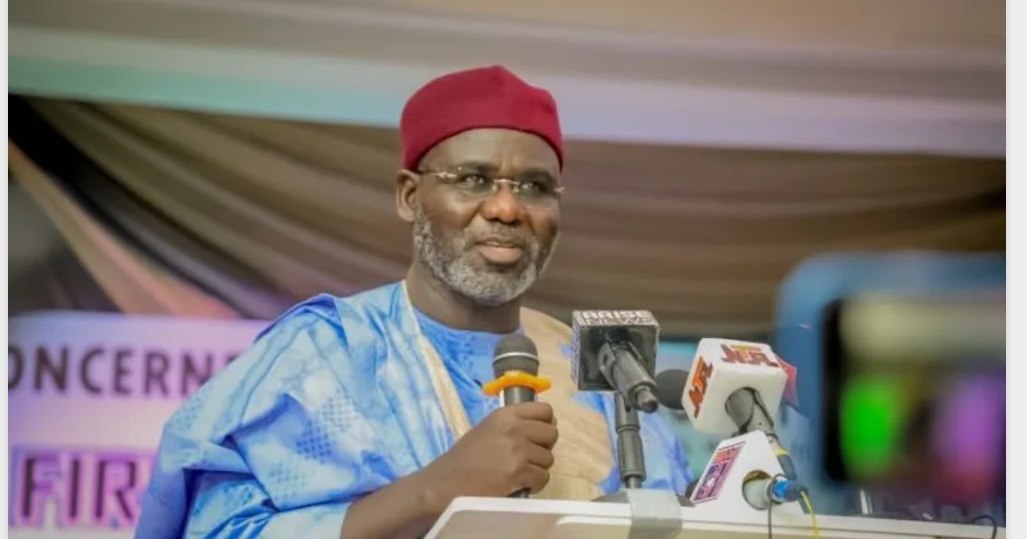
Three Years On, General Buratai Hails Tinubu’s Economic, Security Achievements
Former Chief of Army Staff, Lt. Gen. Tukur Buratai (retd.), has commended President Bola Ahmed Tinubu for what he described as bold economic reforms and improved security efforts as the President marks three years in office.
In a goodwill message on Thursday to commemorate Tinubu’s third anniversary as President and Commander-in-Chief of the Armed Forces, Buratai said the administration had taken courageous decisions that would leave a lasting impact on Nigeria’s development.

According to him, President Tinubu broke a long-standing cycle that had hindered national growth by removing fuel subsidy and implementing foreign exchange reforms aimed at stabilising the naira and strengthening the economy.
He noted that the reforms were beginning to yield positive results, citing the global acceptance of Nigerian debit cards, the gradual revival of local refineries, access to student loans, and ongoing road and infrastructure projects across the country.
“The FCT Administration has also recorded remarkable progress, completing major road projects that remained unfinished for over 16 years,” Buratai stated.
The former army chief also praised the administration’s security efforts, saying renewed military offensives against insurgents, terrorists and bandits had led to notable successes across various parts of the country.
He specifically lauded recent joint operations involving Nigerian and United States forces against Boko Haram and ISWAP in the North-East, as well as intensified counter-banditry operations in the North-West.
“We have seen notorious ISWAP commanders being neutralised. I congratulate the Commander-in-Chief, the Minister of Defence, the Chief of Defence Staff, the Service Chiefs, the Inspector-General of Police and heads of intelligence agencies for their efforts,” he said.
Buratai, however, acknowledged that challenges remained, stressing the need for more aggressive military operations and intelligence-driven strategies in the coming year.
While urging Nigerians to remain hopeful, he said celebrating the President’s achievements did not amount to ignoring the difficulties facing the nation.
“Because you truly care, you have shown the courage to trade short-term comfort for long-term hope. Nigerians need your reassurances, and that is why we remain optimistic and full of confidence,” he added.
The retired military officer reaffirmed his support for the Tinubu administration and expressed confidence that the foundation being laid by the government would deliver a brighter future for the country.
He also prayed for God’s guidance, wisdom, strength and good health for the President as he continues to lead Nigeria.
NUT Raises Alarm Over Continued Captivity of Abducted Oyo Pupils, Teachers
The Nigeria Union of Teachers has expressed deep concern over the continued captivity of pupils and teachers abducted during an attack on schools in the Ahoro-Esinle and Yawota communities in Oriire Local Government Area of Oyo State.
In a statement issued on Saturday, the Oyo State wing of the union described the situation as increasingly distressing, particularly following the emergence of a video allegedly released by the abductors showing the victims pleading for their freedom.
The union said the footage had heightened fears over the welfare of the abducted pupils and teachers, describing their ordeal as heartbreaking and unacceptable.

According to the NUT, no child or teacher deserves to be subjected to such traumatic experiences, adding that the prolonged captivity of the victims has continued to inflict psychological pain on their families, colleagues and the wider education community.
The union called on the Federal Government, Oyo State Government and relevant security agencies to intensify efforts towards securing the immediate and safe release of the victims.
“This is not a moment for hesitation. It is a moment for coordinated, intelligence-driven efforts to ensure the immediate and safe release of all abducted pupils and teachers,” the statement read.
While acknowledging ongoing interventions by security agencies and government authorities, the union stressed that time was of the essence, warning that every additional day in captivity deepens the trauma suffered by the victims.
The NUT urged security operatives to strengthen surveillance, improve community intelligence gathering and deploy all necessary operational and diplomatic measures to facilitate the rescue of the abductees.
It also appealed to traditional rulers, community leaders and residents to support rescue efforts by providing credible information that could assist security agencies.
“The safety of our children and teachers must remain a collective priority,” the union stated.
Reaffirming its support for the families of the victims, the NUT pledged continued solidarity and prayers while advocating safer learning environments across the country.
The statement was jointly signed by the Chairman of the Oyo State NUT, Comrade Hassan Ajibola Fatai, and the Secretary, Comrade Salami Olukayode.


- Afreximbank Deepens Commitment to Economic Progress in The Bahamas June 1, 2026
- African Electric Vehicle (EV) platform Spiro raises $215M in equity to scale electric mobility and energy infrastructure across Africa June 1, 2026
- Africa Centres for Disease Control and Prevention (Africa CDC) Statement on Attacks Against Health Facilities During the Bundibugyo Virus Disease Response in the Democratic Republic of the Congo June 1, 2026
- Putting consumers at the centre of Africa’s dairy transformation June 1, 2026
- International Rescue Committee (IRC) warns Democratic Republic of the Congo (DRC) Ebola outbreak likely far larger than official figures suggest June 1, 2026
- South Africa: Portfolio Committee on Health Marks National Cancer Survivor Day and Reaffirms Importance of Early Detection and Public Awareness June 1, 2026
- Rwanda’s RSSB Tigers Crowned 2026 Basketball Africa League Champions June 1, 2026
- Uganda: Appointments Committee Begins Vetting of Ministerial Nominees June 1, 2026
- Sudan braces for worsening child malnutrition as pre-harvest season starts June 1, 2026
- Etu Energias Strengthens Angolan Footprint, Returns to Angola Oil & Gas (AOG) 2026 as Champion Sponsor June 1, 2026
- Afreximbank Deepens Commitment to Economic Progress in The Bahamas June 1, 2026
- African Electric Vehicle (EV) platform Spiro raises $215M in equity to scale electric mobility and energy infrastructure across Africa June 1, 2026
- Africa Centres for Disease Control and Prevention (Africa CDC) Statement on Attacks Against Health Facilities During the Bundibugyo Virus Disease Response in the Democratic Republic of the Congo June 1, 2026
- Putting consumers at the centre of Africa’s dairy transformation June 1, 2026
- International Rescue Committee (IRC) warns Democratic Republic of the Congo (DRC) Ebola outbreak likely far larger than official figures suggest June 1, 2026
- South Africa: Portfolio Committee on Health Marks National Cancer Survivor Day and Reaffirms Importance of Early Detection and Public Awareness June 1, 2026
- Rwanda’s RSSB Tigers Crowned 2026 Basketball Africa League Champions June 1, 2026
-

 news6 months ago
WHO REALLY OWNS MONIEPOINT? The $290 Million Deal That Sold Nigeria’s Top Fintech to Foreign Interests
-

 society4 weeks ago
SOCIAL MEDIA IS NOT A BATTLEFIELD COMMAND – WHY THE NIGERIAN ARMY’S ACTION AGAINST JUSTICE CRACK IS A NATIONAL SECURITY IMPERATIVE
-

 celebrity radar - gossips4 months ago
Dr. Chris Okafor Returns with Power and Fire of the Spirit -Mounts Grace Nation Altar with Fresh Anointing and Restoration Grace on February 1, 2026
-

 celebrity radar - gossips6 months ago
Prophet Kingsley Aitafo Releases 2026 Prophecy: ‘Nigeria Will Rise, but the World Must Prepare for Turbulence’