
Business
”THE UNSPIRITUAL SIDE OF ASO VILLA”, Femi Adeshina replies Reuben Abati



Let me begin with two clarifications. Aso Villa is not my home, I am just passing through. Even this world is nobody’s home, we are just birds of passage. So, let nobody turn up his nose in derision, and say; “he’s writing like the landlord of Aso Villa, defending a place where’s he’s just a tenant.” Yes, nobody is landlord in the Villa, not even rational presidents. They can only live there for maximum of eight years, if Nigerians so decide. And for me, my treasures are laid up somewhere beyond the blue. The angels only need to beckon me from Heaven’s open door, and I wouldn’t feel at home in this world anymore.
The second clarification. Let nobody, particularly on social media, begin to insinuate that Femi Adesina is at war with Reuben Abati, his immediate predecessor as presidential spokesman. This piece you are beginning to read is not about Abati as a person, it is about his spiritual ideas and convictions, which I think need some appraisal, as they are rather unspiritual. Abati and myself have been professional colleagues for almost 30 years, we have a lot of mutual friends, and know how to reach each other when necessary. So, this is not a case of Muhammadu Buhari’s spokesman being at war with Goodluck Jonathan’s spokesman. What for?
In his piece in The Guardian of October 14, 2016, Abati wrote under the headline, ‘The spiritual side of Aso Villa.’ What were his conclusions? For the benefit of those who did not read the highly entertaining piece (in fact, there were moments I had my two legs in the air, laughing, as I read), let me do a brief summary. Call it ‘gospel’ according to Abati, and you would be right: There is some form of witchcraft, which causes occupants of Aso Villa to take weird decisions. Working in the Villa makes you susceptible to some sort of evil influences, because there is something supernatural about power and closeness to it. Some of those who lived or worked in the Villa had something dying under their waists (for the men), while some of the women became merchants of dildo, because they had suffered a special kind of deaths in their homes. “The ones who did not have such misfortune had one ailment or the other that they had to nurse. From cancer to brain and prostate surgery and whatever, the Villa was a hospital full of agonizing patients,” Abati posited.
Reading the piece through, you would think Aso Villa was nothing but what Godfrey Chaucer called “a thoroughfare of woes.” In fact, Abati submitted that the Villa “should be converted into a spiritual museum,and abandoned.” Holy Moses! Jumping Jehoshaphat!
If Aso Villa was such a haunted house, why then do most occupants like to stay put, right from the first tenant, Ibrahim Babangida, who was virtually forced to step aside in August 1993? And why did Goodluck Jonathan, Abati’s principal, spend money in trillions (in different currencies of the world), just to perpetuate himself in a house that consumes its occupants? Being a literary scholar, Abati would remember the doctor in Macbeth, that work of William Shakespeare, who was detailed to cure Lady Macbeth of the neurosis that afflicted her, after she had been party to the deaths of King Duncan and Banquo, so that her husband would be the king of Scotland. A spiritually troubled Lady Macbeth sleepwalked every night, trying to wash her hands of the innocent blood that had been shed. The doctor was so fed up with the terrifying atmosphere, that he said to himself:”Were I from Dunsinane away and clear, profit should hardly again draw me here.” Did Abati ever say the same of the Villa, a place where men became women “after something died below their waists?” We do not have it on record that Abati showed a clean pair of heels, or that he would not have stayed if Dr Jonathan had won reelection, and had asked him to continue in his position as adviser on media. Or was it the case of eternal fascination for the thing that repelled and terrified you? Mysterium tremendum et fascinas, as it is called in Latin.
For me, what Abati did in the October 14 piece was simply a glorification and deification of superstition, something that attempted to elevate works of darkness above the powers of God. The writer merely fed the cravings and propensity of people for the supernatural, in a way that stoked and kindled the kiln of fear, rather than that of faith.
Let’s take the issues one after the other, and look at them against true spiritual principles. Christianity is the one I am most familiar with, and that would be my benchmark.
In Aso Villa, houses were haunted, people were oppressed into taking curious decisions, they fell ill, died, or suffered the losses of loved ones, so Abati claimed. Are such peculiar only to the presidential villa? Should all those who live or work there automatically enjoy immunity from the vicissitudes of life, simply because they walked the corridors of power? Wasn’t President Umaru Yar’Adua right inside the presidential villa, when he told us on national television: “I am a human being. I can fall sick. I can recover. And I can die.” That was a practical man for you. Abati unwittingly wants his readers to believe that once you operated in or around Aso Villa, you became a superman. No. You are as mortal as can be. The Holy Bible does not even give us such leeway. “There hath no temptation taken you but such as is common to man…”(1 Cor 10:13). There are certain things common to man, and they can happen to you wherever you are. At the White House. At 10, Downing Street. Buckingham Palace, Aso Villa. Wherever. “But such as is common to man…” Let no man feed us with the bogey that such things happen because of where you live or operate from. There are some things that are just common to man, and which may happen to you as long as you are on this side of eternity.
I lost my sister in a road crash last year. She was a professor of Dramatic Arts at the Obafemi Awolowo University in Ile-Ife. Abati knew her well, as they both did post-graduate studies at University of Ibadan in the 1980s. Abati was among those who called to condole with me. My sister never visited the Villa in her lifetime. Even if she did, that could never have had anything to do with her death on the Lagos-Ibadan Expressway. To believe and teach otherwise is to carry superstition to ridiculous level, and venerate the Devil, granting him omnipotence, an attribute that belongs to God only. For the Devil, doing evil is full-time business, and whether you had anything to do with Aso Villa or not, he continued with his pernicious acts. Does that then suggest that mankind is helpless before evil? No. God still has ultimate powers. He can spare you “as a father spares the son that serves him.” (Malachi 3:17). If you are under the pavilion of God, sleep, wake and operate daily in Aso Villa, you are covered, no matter the evil that lurks around, if any. There is a better covenant established on greater promises, and that is the canopy under which you should function. God can spare you from all evils, and if He permits any other thing, it is “such as is common to man,” and not because of Aso Villa.
If houses catch fire in the Villa, how many conflagrations occur in other parts of the city? If some men in the Villa suffered erectile dysfunction in Abati’s time, doesn’t the Journal of Sexual Medicine tell us that about 20 million American men have something that has died under their waists? It is one thing that became prevalent in the last two to three decades, due to modern lifestyle. Causes range from age, to stress, depression, anxiety, alcohol, medication, and several others. Even, a study showed that watching too much television kills something under the waist. So why does Abati make it seem as if it is a copyright of Aso Villa?
Now, another clarification. Don’t I believe in demonic infestation and manifestation? I sure do. I wouldn’t be a student of the Holy Bible if I don’t. Jesus talked of the man who got delivered from demonic possession, and because that man did not yield himself to a better influence, the evil spirit that inhabited him came back with seven more powerful spirits, and the end of the man was worse than his beginning. Abati wrote of persons in the Villa, “walking upside down, head to the ground.” Let me share this story I heard over 20 years ago. There was this young Christian who gave scant regards to demons and what they could do. In fact, he almost didn’t believe demons existed. One day, as he walked along the ever busy Broad Street in Lagos, God opened his spiritual eyes. Some people were walking on their heads! And not only that, as they passed by other people, they slapped them with the soles of their feet. If you got so slapped, you developed an affliction, which you would nurse for the rest of your life. Yet, you never knew where it came from.
As the young man saw that vision and got its spiritual explanation, he began to s-c-r-e-a-m. Was that in Aso Villa? “Such as is common to man…” Evil exists everywhere. Trying to source and locate it in Aso Villa is disingenuous. You need God everywhere. In Europe, Asia, America, Oceania, Aso Villa. There is evil everywhere, and we need not make fetish of any place as being more evil infested than other places. Since Satan got thrown out of Heaven due to his inordinate ambition, evil had resided in the world. “How art thou fallen from heaven, O Lucifer, son of the morning! How art thou cut down to the ground, which didst weaken the nations!” (Isaiah 14:12). The Devil lives in the world, but God is never helpless before evil. He will never be. Let the Devil commit suicide if he is not happy about that fact. God rules!
If every principal officer including the President and his wife suffered series of tragedies as Abati claimed, and he himself had breathing problems, and walked with the aid of crutches for months, it was ” such as is common to man” and not necessarily because they were in Aso Villa. But of course, if such people put their hands in evil, possibly to gain some things in power or perpetuate themselves beyond the time heaven granted, then “he who rolls a stone, a stone shall be rolled back to him. He that digs a pit, shall fall into it.” That is what the Good Book says. You can then hardly blame Aso Villa for such payback time, can you?
To avoid getting sucked into what Abati calls “the cloud of evil” that hangs around power, what to do is to hold ephemeral things loosely. Know that they are temporal, and will truly end. Power is one of such things. Will anybody be a permanent landlord at Aso Villa? It would be foolhardy to have such mindset. A couple of times I’d had some private discussions with President Buhari, and he had lamented the state of the nation, he invariably ended with the statement, “while we are here, we will do our best.” It shows a man who knows that he’s not a permanent landlord at Aso Villa, and can never be. He would use the opportunity he has to do his best for Nigeria, and then move on. That is a good mindset, and a safety valve from getting sucked into “the cloud of evil.” Daily, I tell myself that I am just passing through Aso Villa. And while there, just like my principal, I will do my best. It could be long, it could be short, depending on God and the man who appointed me, but one day, it would be over, and some other people would come in to do their bit. It is inexorable. The real treasures are laid somewhere beyond the blue.
Abati says we should pray before people pack their things into Aso Villa. I say not just Aso Villa, but everywhere. Pray before you pack into any place, because there are some things “such as is common to man.” It is only God that keeps from such. And He is sovereign in terms of what He prevents, and in what He allows. Ours is to pray, and believe. Prayer works.
“Aso Villa is in urgent need of redemption. I never slept in the apartment they gave me in that Villa for an hour,” wrote Abati. Well, different strokes for different folks. Hear what the Good Book says: “It is vain for you to rise up early, to sit up late, to eat the bread of sorrows; for so he giveth his beloved sleep.” Here am I. For over one year, I have lived in the house allocated to me at the Villa. I sleep so soundly, I even snore. In fact, I snore so loud that at times, I wake myself up with the sound.
.Adesina is Special Adviser on Media and Publicity to President Muhammadu Buhari





Fidelity Bank grows gross earnings by 38% to N434.95b in Q1
Fidelity Bank Plc recorded 37.9 per cent growth in gross earnings to N434.95 billion in first quarter 2026 as the international commercial bank continued to expand its core banking market share.
Interim report and accounts of Fidelity Bank for the three months ended March 31, 2026 released at the Nigerian Exchange (NGX) showed that gross earnings rose from N315.42 billion in first quarter 20025 to N434.95 billion in first quarter 2026, representing an increase of 37.9 per cent.
The top-line performance was driven by impressive growth in the bank’s core business operations with interest incomes rising by 22.8 per cent to N314.48 billion in first quarter 2026 as against N256.10 billion in first quarter 2025.
With net interest income at N180.97 billion, the bank closed the period with profit before tax of N92.48 billion. After taxes, net profit stood at N74.47 billion for the three-month period. Earnings per share remained high at N5.69, underlining the capacity of the bank to reward its shareholders.
The balance sheet of the bank also emerged stronger. Total assets crossed the N11 trillion mark to N11.35 trillion by March 2026 compared with N10.46 trillion recorded in December 2025. Customers’ deposits increased from N6.89 trillion to N7.38 trillion. Total equity rode on the back of earnings growth to a 27.5 per cent increase from N1.09 trillion in December 2025 to N1.39 trillion by March 2026.
The first quarter 2026 results further consolidated the strong earnings outlook of the bank, which had successfully completed its recapitalisation amidst impressive earnings performance in 2025.
Fidelity Bank had recorded double-digit growths in interest and non-interest incomes as well as key balance sheet items during the year ended December 31, 2025.
The audited report showed that gross earnings rose from N1.04 trillion in 2024 to N1.52 trillion in 2025, an increase of 45.6 per cent. Interest and similar incomes had grown by 38.7 per cent from N803.1 billion in 2024 to N1.11 trillion in 2025. Fees and commission incomes also rose by 44.7 per cent from N78.4 billion to N113.4 billion. The bank recorded net profit after tax of N242.4 billion in 2025.
The bank’s balance sheet emerged stronger with total assets rising by 18.6 per cent to N10.46 trillion in 2025 as against N8.82 trillion in 2024. Customer deposits increased by 16.1 per cent from N5.94 trillion to N6.89 trillion, reflecting continued franchise strength and an improved funding profile. Net loans and advances meanwhile declined by 2.4 per cent to N4.28 trillion in 2025 as against N4.39 trillion in 2024, attributable to customers paying down on their mature obligations.
The bank had in 2025 strengthened its capital position, with eligible capital rising to N561 billion, above the regulatory minimum of N500 billion for banks with international authorisation. In addition, capital adequacy had remained robust, with Capital Adequacy Ratio of 30.94 per cent by December 2025 as against 23.47 per cent by December 2024.
Managing Director, Fidelity Bank Plc, Dr. Nneka Onyeali-Ikpe, said the first quarter 2026 results reinforced the bank’s strong and resilient business model.
She noted that with the remarkable success of its recapitalisation programme and continuing expansion, Fidelity Bank has entered a new era of growth and impressive returns.
“We are on a stronger footing and confident that we will set new growth records that are reflective of our legacy and the future we are working on,” Onyeali-Ikpe said.
Business
Dangote Refinery Ends Nigeria’s Era of Fuel Import Dependence, Boosts GDP, FX Earnings — EIU
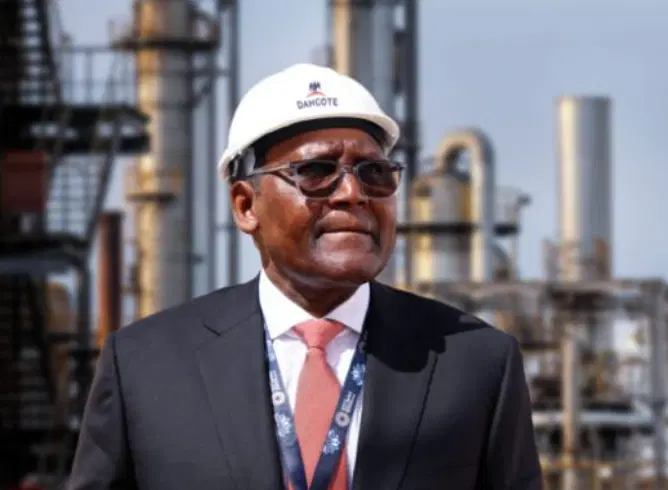
Dangote Refinery Ends Nigeria’s Era of Fuel Import Dependence, Boosts GDP, FX Earnings — EIU
The operational ramp up of the 650,000 barrels per day Dangote Petroleum Refinery & Petrochemicals is fundamentally reshaping Nigeria’s downstream oil sector, significantly reducing the country’s dependence on imported refined petroleum products and strengthening its external position, according to the Economist Intelligence Unit (EIU).
In its latest assessment on Nigeria’s fuel market and regulatory environment, the EIU said the refinery has already transformed a sector that was previously characterised by heavy reliance on imported fuel despite Nigeria being Africa’s largest crude oil producer. The report noted that the refinery met nearly 80 per cent of domestic petrol demand in April and produced enough volumes to satisfy local consumption requirements as operations approached full capacity.
The EIU described Nigeria’s downstream petroleum sector before the refinery as “long dysfunctional”, noting that the country had remained almost entirely dependent on costly imported fuel while producing nearly 1.5 million barrels of crude oil daily.
According to the report, the emergence of the refinery has reduced import dependence, improved domestic fuel availability and strengthened Nigeria’s balance of payments position through lower import demand and rising exports of refined petroleum products.
“The gradual ramp up of the 650,000 barrel/day Dangote refinery since May 2023 has transformed Nigeria’s long dysfunctional downstream sector,” the report stated. “The country’s main refineries, all state owned, had been inoperative for years and Nigeria was almost entirely reliant on costly imported fuel.”
The research and analysis division of The Economist Group, London added that the refinery’s attainment of full operational capacity and its planned expansion would further support Nigeria’s economic growth and foreign exchange earnings over the medium term.
“Meanwhile, the attainment of full capacity at, and an increase in exports from, the Dangote refinery will support real GDP growth and foreign exchange earnings in 2026 and 2027 and beyond, as a planned doubling of the plant’s output comes on stream around the end of the decade,” it added.
Industry analysts said the refinery is increasingly positioning Nigeria as an emerging refining and export hub, altering energy trade flows across Africa and reducing the vulnerability associated with fuel import dependence.
The EIU noted that the refinery’s expansion has coincided with major reforms in Nigeria’s downstream sector, including the removal of fuel subsidies and the introduction of market driven pricing mechanisms.
The report, however, said the transition from a state dominated fuel import structure to large scale domestic refining has triggered resistance from interests linked to the old import regime.
The latest tensions emerged following the decision by the Nigerian Midstream and Downstream Petroleum Regulatory Authority to relax restrictions on petrol imports despite the refinery’s growing capacity to meet domestic demand.
Dangote Industries subsequently initiated legal action, arguing that continued import approvals undermine domestic refining investments and conflict with the objectives of the Petroleum Industry Act, which seeks to encourage local refining capacity and reduce import dependence.
Analysts noted that the availability of large-scale domestic refining capacity has improved Nigeria’s energy security and reduced exposure to external supply shocks and foreign exchange volatility.
The Centre for the Promotion of Private Enterprise also cautioned against unrestrained importation of petroleum products, warning that such a policy could weaken Nigeria’s industrialisation drive and discourage investments in domestic refining.
Chief Executive Officer of CPPE, Muda Yusuf, said continued dependence on imported fuel had historically contributed to pressure on foreign reserves, exchange rate instability and fiscal leakages.
The refinery’s growing impact is also being reflected in Nigeria’s broader macroeconomic indicators. Earlier this month, S&P Global Ratings cited increased domestic refining capacity and rising hydrocarbon exports among the major factors supporting Nigeria’s sovereign credit rating upgrade – the first in 14 years.
Beyond Nigeria, analysts said the refinery is increasingly being viewed as a strategic industrial asset for Africa, where many countries remain heavily dependent on imported fuel despite rising demand for transportation, manufacturing, and power generation.
Business
BREAKING: Court Dismisses $19.6 Million Claim Against NNPCL — Rules Contract Scope Cannot Be Changed Orally

BREAKING: Court Dismisses $19.6 Million Claim Against NNPCL — Rules Contract Scope Cannot Be Changed Orally
In a landmark ruling on Friday, May 22, 2026, the Federal Capital Territory High Court in Abuja threw out a $19.6 million lawsuit filed by Alternate Dimensions Ventures Ltd against the Nigerian National Petroleum Company Limited (NNPCL), affirming a key legal principle: a written contract cannot be expanded through oral agreements or conduct.
Alternate Dimensions had sought $19,600,000 in professional fees, claiming the scope of its Direct Sale, Direct Purchase (DSDP e-pro) contract with NNPCL was orally expanded. Represented by counsel Patrick Peter, the firm argued it was entitled to the revised sum for services rendered under the alleged new terms.
But NNPCL, through its lawyer Ituah Imhanze of KENNA LP, pushed back sharply, arguing that parties are bound exclusively by the clear terms of their written agreement. Imhanze contended that without any written amendment, the claim was legally unsound, and the court agreed.
Delivering judgment, Justice Hamza Mu’azu upheld NNPCL’s defense, stating that the contract was unambiguous and that no evidence was adduced during the trial, which supported the alleged scope expansion. The court further found that NNPCL fully complied with all contractual terms and committed no breach.
Dismissing the suit as meritless, Justice Mu’azu reinforced the doctrine of sanctity of contract: any amendment to a written agreement must be express, unequivocal, and documented, not implied or verbal.
The ruling spares NNPCL from the S19.6 million claim and also a floodgate of similar potential liabilities.


- Deputy (Dep.) Finance Minister Courts Investors to Transform Ghana’s rice Economy June 4, 2026
- Mobile health services in Kenya reduce the risk of stillbirths June 4, 2026
- JustMarkets Research Highlights Global Growth Divergence as a Key Market Driver June 4, 2026
- African Development Bank Group approves $125 million investment in African Trade and Investment Development Insurance (ATIDI) to expand risk insurance capacity in Africa June 4, 2026
- Congo Energy & Investment Forum 2027 to Position Brazzaville as a Hub for Global Energy Deal-Making June 4, 2026
- Africa Skills Hub (ASH) Transitions to ASH Africa as it Marks 10 Years of Impact June 4, 2026
- When women farm better, Eswatini eats better June 3, 2026
- Togo Hosts the 8th Annual Forum of National Volunteer Agencies in the Economic Community of West African States (ECOWAS) Region June 3, 2026
- Indigenous Peoples gravely vulnerable to Ebola epidemic, warn United Nations (UN) independent experts June 3, 2026
- Meeting between Parliamentary Vice-Minister ONISHI and His Excellency (H.E.) Mr. Cosgrow, Principal Minister and Minister for Agriculture, Fisheries and Blue Economy of Seychelles June 3, 2026
- Deputy (Dep.) Finance Minister Courts Investors to Transform Ghana’s rice Economy June 4, 2026
- Mobile health services in Kenya reduce the risk of stillbirths June 4, 2026
- JustMarkets Research Highlights Global Growth Divergence as a Key Market Driver June 4, 2026
- African Development Bank Group approves $125 million investment in African Trade and Investment Development Insurance (ATIDI) to expand risk insurance capacity in Africa June 4, 2026
- Congo Energy & Investment Forum 2027 to Position Brazzaville as a Hub for Global Energy Deal-Making June 4, 2026
- Africa Skills Hub (ASH) Transitions to ASH Africa as it Marks 10 Years of Impact June 4, 2026
- When women farm better, Eswatini eats better June 3, 2026
-

 news6 months ago
WHO REALLY OWNS MONIEPOINT? The $290 Million Deal That Sold Nigeria’s Top Fintech to Foreign Interests
-

 society1 month ago
SOCIAL MEDIA IS NOT A BATTLEFIELD COMMAND – WHY THE NIGERIAN ARMY’S ACTION AGAINST JUSTICE CRACK IS A NATIONAL SECURITY IMPERATIVE
-

 celebrity radar - gossips4 months ago
Dr. Chris Okafor Returns with Power and Fire of the Spirit -Mounts Grace Nation Altar with Fresh Anointing and Restoration Grace on February 1, 2026
-

 celebrity radar - gossips6 months ago
Prophet Kingsley Aitafo Releases 2026 Prophecy: ‘Nigeria Will Rise, but the World Must Prepare for Turbulence’
You must be logged in to post a comment Login
You must log in to post a comment.