
society
Their 8,300 Kilometres Of Lies: A Short Story By Felix Oboagwina

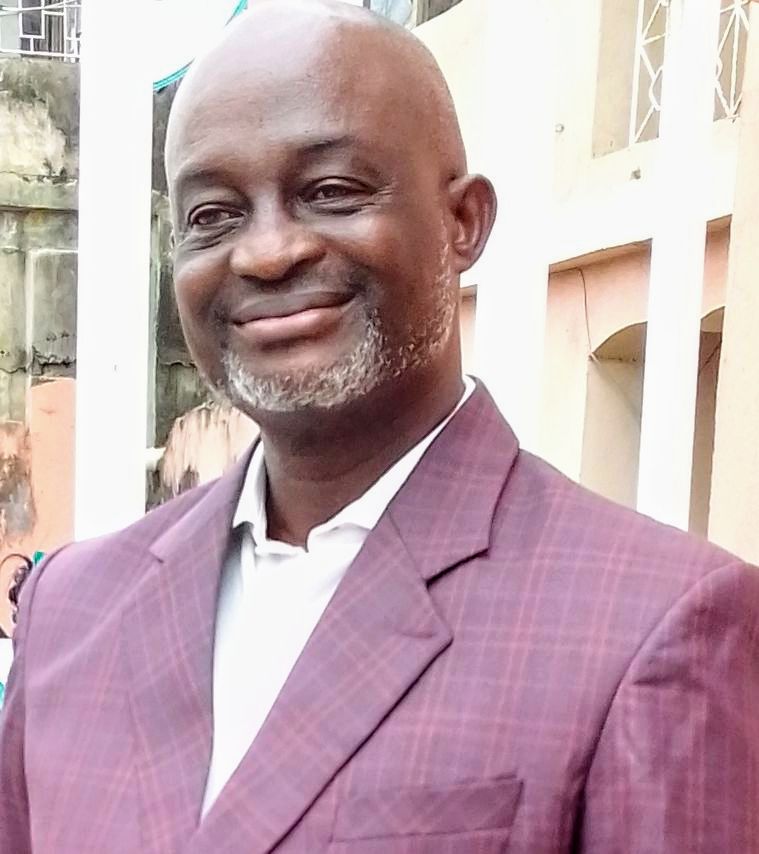
Their 8,300 Kilometres Of Lies: A Short Story By Felix Oboagwina
Brother Goke, could I have a word with you?
How are you, Deacon, and how are Madam and the children?
Everyone is fine, Bro. Madam is having their usual after-service meeting in the Choir. I will need to wait for her so we can go home together. I am sure you will not be leaving Madam behind too, since they are both in the choir.
Who born me? I must wait.
Let’s take a seat, meanwhile. I need to discuss something with you. That testimony you just shared during the service –are you really serious? I know that the import was that God granted you grace not to have any encounter with kidnappers when you travelled between Lagos and Calabar four times in two weeks. But do you really mean that your road trip from Lagos to Calabar took you two days?
We left Lagos –Ojuelegba to be specific– at 7am and we got to Calabar the following day at 7pm.
Did your vehicle break down?
Break down for where? Bad roads! Deacon, the road to and from Lagos and Calabar are bad horrible roads! Deacon, this country is finished! Muhammadu Buhari has finished Nigeria. I had to make the return journey twice. When we got to Calabar, we found that one of us must return to Lagos for some spare parts.
Why didn’t you just take a flight, Brother Goke, why would you take that kind of risk?
Actually, that was the initial plan. We felt that because of the incidents of kidnapping and banditry, we should just fly Lagos-Calabar. However, when we found that the ticket would take virtually N100,000 one way, something we spent N30,000 on last year, we decided travelling by air was a luxury we could not afford immediately.
Where exactly did you encounter bad roads on this journey?
Wrong question, Deacon, you should ask where we did not meet bad roads! The entire West-East coastline road is a total write-off! Palaver began right from Lagos. Leaving Lagos was hell. That Lagos-Ibadan road that President Buhari and his Minister of Works and Housing, Babatunde Fashola, have spent their entire tenure of seven years building, is nothing to write home about. This is a road that their predecessor President Goodluck Jonathan started –no actually, it was Obasanjo that started it through Bi-Courtney and wanted to toll it. Jonathan came and made it a Federal non-tolling project. A road that is less than 200 kilometres, Fashola has spent seven years on it and they are yet to finish it.
Lagos-Ibadan expressway is roughly 127-128 kilometres actually.
Shame! We spent no less than three hours there before we could exit Lagos.
Was it a tanker that fell as usual and spilt its content, or something?
Nothing of such happened. That is normal on that road. Then we veered off through the rough undulating patches at the Shagamu Interchange that the government has blatantly refused to make their business. This is something that FERMA and PWD can take care of in less than 48 hours. We then entered the road to Shagamu. At Ijebu, we jammed another go-slow around the overhead bridge. Then we headed to Ore, to Benin. Sometimes we would be diverted into one-way driving, facing oncoming traffic –terrible go-slows. I lost count of all the roadblocks by soldiers and police. At Benin Bypass, we jammed another hellhole. Standstill! Trailers and tankers parked thickly on both sides of the road.
Will they ever solve that Benin Bypass log jam –another problem that FERMA and PWD can take care of in less than one month? The thought of spending up to two hours on what should be a short 15-minute drive on that Benin Bypass discourages me from honouring invitations for marriage or burial ceremonies in the villa.
We spent at least two hours crawling through that bypass before we now faced the road to Sapele, Delta State. There the real nightmare began. Deacon, people suffer unnecessarily in this country. The road connecting Edo to Delta State, Deacon, is a glorified road; in reality, there is no road anymore. From Delta to Rivers, To Akwa Ibom to Cross River. Oh, I shudder to remember what I suffered.
Sorry, Brother Goke.
I have been so traumatised that I cannot just imagine doing that trip ever again.
I don’t blame you. No insurance can cater for wear and tear, man-hour loss and stress that man and machine suffer on Nigeria’s bad roads. The bad roads are what have turned Nigeria into the graveyard of vehicles from all over the world. Cars used here lack second-hand value. Abi have you heard of Nigeria exporting fairly used vehicles to anywhere, even to Cotonou or Cameroon?
Na wa o!
Didn’t the Minister of Works Babatunde Fashola say the other day that President Muhammadu Buhari had delivered 8,300 kilometres of roads?
It is a lie! He could not have said that!
Fashola did! I heard it with my own ears and saw him with my korokoro eyes! He spoke less than two months ago. And I have been wondering: Where are the 8,300 kilometres of roads?
Do you mind them? This is a government of propaganda. They got into office by peddling misinformation, disinformation and propaganda. Even as a government, they never weaned themselves off lies –lying all over the place! If this government tells you GOOD MORNING, you need to reconfirm from the clock or a cock.
Unfortunately, some people believed him. One Northerner, I don’t know his name now, went on social media to say they have no good roads in the North. He now said that since Fashola claimed the Buhari government has built 8,300 kilometres of roads so far, those roads must all be located in the South where Fashola hails from.
A northerner is complaining just like us in the South. We even thought that all the 8,300 kilometres they are claiming to have constructed were done up-North. Maybe that Hausa complainer needs to see the video that Esan people did in Edo State.
I saw it. They showed how the whole stretch from Benin to Auchi has been rendered impassable. Auchi through Okpella to Okene to Lokoja enroute Abuja is horrible. Esanland is completely cut off. You have to make a detour off the Benin-Auchi road and pass through villages then connect Agbede again, just as you do on the Mile 2 to Badagry road.
So where are the roads that Buhari worked on? Northerners are complaining, Southerners are complaining –so let Buhari and Fashola come and show us the over 8,000 kilometres of roads they claim to have constructed.
Fashola! How can someone who ruled Lagos State and everyone was hailing him now become such an underperformer at the Federal level. Today, under his watch, do you know that all the roads into Lagos are bad? Begin from the Apapa and Tin-Can ports. Let me tell you, that place is a nightmare. There is less than 20 kilometres between Oshodi and Apapa Port –that is an international route. They failed to do it. Dangote finally took over the road from the government to do concrete matting. They have been on it for God knows how many years and yet they have not finished.
Before you go on, Sir, let me tell you that Daddy Mike in our church here has been telling me about that route. He was the one in charge of their company’s haulage; and he supervises clearing agents handling imported pulp for the tissue paper they produce. He says that from about N70,000 for one trailer load of container prior to 2015, clearing agents gradually upped the price. Do you know how much they haul one container between Apapa and Ajao Estate now?
How much?
N700,000!
Times 10!
Yes, times 10! The distance is under 15 kilometres. Bad roads are the culprit! Tankers can be on the queue into and out of Apapa Port for two weeks, sometimes even two months. They keep crawling until they get into the port. And do you know the real sorrow, Sir?
No, I am all ears.
Some trailers load those containers and fall right after leaving the ports because they jam those potholes. Many have died untimely. Look, blood is on these people’s necks.
I was talking about all the entrances into Fashola’s Lagos. When last did you pass through the Abeokuta-Lagos expressway, through Sango-Ota. Have you seen the state of the road lately?
Blame Olusegun Obasanjo for not taking advantage of his eight years as President from 1999 to 2007 to give himself and his kinsmen a befitting highway there.
One day, I passed there –terrible! We had to go through the inner streets at a point after Meiran to emerge in front, before we could reconnect the road again. Boys stationed themselves there. If you dare, they would wade through the water to lead you, letting you know the shallow points so you don’t sink.
How about entering Lagos through the Badagry-Seme road to connect the Benin Republic, or the Ijoko road to connect the Benin Republic? All of them are such a disgrace. I imagine our West African brothers whose countries have great roads, travelling into Nigeria through that axis. They will be wondering what the whole hype is about Nigeria being the Giant of Africa.
Giant of Africa my foot! That is why the Okada business is booming in that axis. Motorbikes provide commuters the easiest getaway for anyone who does not want to lose his sanity sitting in endless go-slow. Sometimes, drivers would veer off into adjoining communities to beat the unusual expressways, and then they must pay boys who have set up blocks inside to collect tolls.
Na wa o!
Even the Mubi road in Yola State, connecting Nigeria and Cameroon, I saw recently in one video where the Customs man single-handedly stopped oil smugglers smuggling refined products to Cameroun. No single coal-tar can be seen on that road. Abuja-Kaduna road is a write-off too. Apart from the insecurity, the state of the road was why travelling on it became unattractive and people embraced the train.
So where are Fashola’s 8,300 kilometres of roads?
One musician, when beginning his song, will say, “ANOTHER BANGER!” This is another banger from Fashola. Just as he did in Power and Housing, he has performed woefully in handling the roads construction portfolio. Do you know that it appears that both Fashola and Buhari came to demystify themselves with this regime?
Don’t say that. At least, give them credit for delivering the Second Niger Bridge…..
…. which Goodluck Jonathan started!
Look at Sister Yinka over there, she went to her hometown Owo, recently. Their vehicle had to go through the Ore-Ondo single carriageway before connecting Akure again and then heading for Owo. That added no less than two hours to the journey. The driver lamented that the more direct route through Ibadan and Ilesha had gone terribly bad. They are rehabilitating it, but it is as if they are doing the job half-heartedly. Dat go-slow no be here.
In September, their Minister of Information, said they had budgeted over N1.584trn for works and housing in six years of Buhari’s government, between 2016 and 2021. Let me Google where he said it.
Where are the roads? Even tanker drivers and oil sector stakeholders lament that bad roads contribute largely to fuel scarcity. NNPC says it has 2 billion litres, capable of lasting 30 days or more for the whole country, but it is locked up because tankers cannot access the fuel depots to lift products.
Yes, here is the Google. Lai Mohammed told a press conference in Abuja this September, and let me quote him: “Whereas we met a budget of N18.132 billion for the roads component of the Federal Ministry of Works when we assumed office in 2015, the budget for the Federal Ministry of Works and Housing increased exponentially to N260.082 billion in 2016; N274.252 billion in 2017, N356.773 billion in 2018, N223.255 billion in 2019, N227.963 billion in 2020 and N241.864 billion in 2021.” Mohammed went on to say that their APC government had constructed 8,352.94 kilometres of roads, rehabilitated 7,936.05 kilometres more, constructed 299 bridges, and maintained 312 bridges more. Where are the roads?
It’s time to go home, Deacon. My wife and your Madam are coming. The choristers must have finished their practice.
This is really a government of propaganda. However, they forget that no matter how long falsehood travels, truth will catch up in a twinkling of an eye.
See you at Midweek Service on Wednesday, Sir.
God keep us.




Police Officers Detained as Family Property Dispute Sparks Demolition Controversy in Lagos
By Ifeoma Ikem
A property dispute within the Omotayo-Ojo family has taken a dramatic turn following a controversial demolition exercise at a residential building in Ikosi-Ketu, Lagos State, which reportedly left tenants displaced and led to the detention of some police officers allegedly involved in the operation.

The property, located at 23B Loveall Street, Ikosi-Ketu, has been the subject of a prolonged ownership tussle since the death of its owner, Chief Oludola Omotayo Ojo, the Babaalaje of Imesi-Ile, Osun State, in 2019.
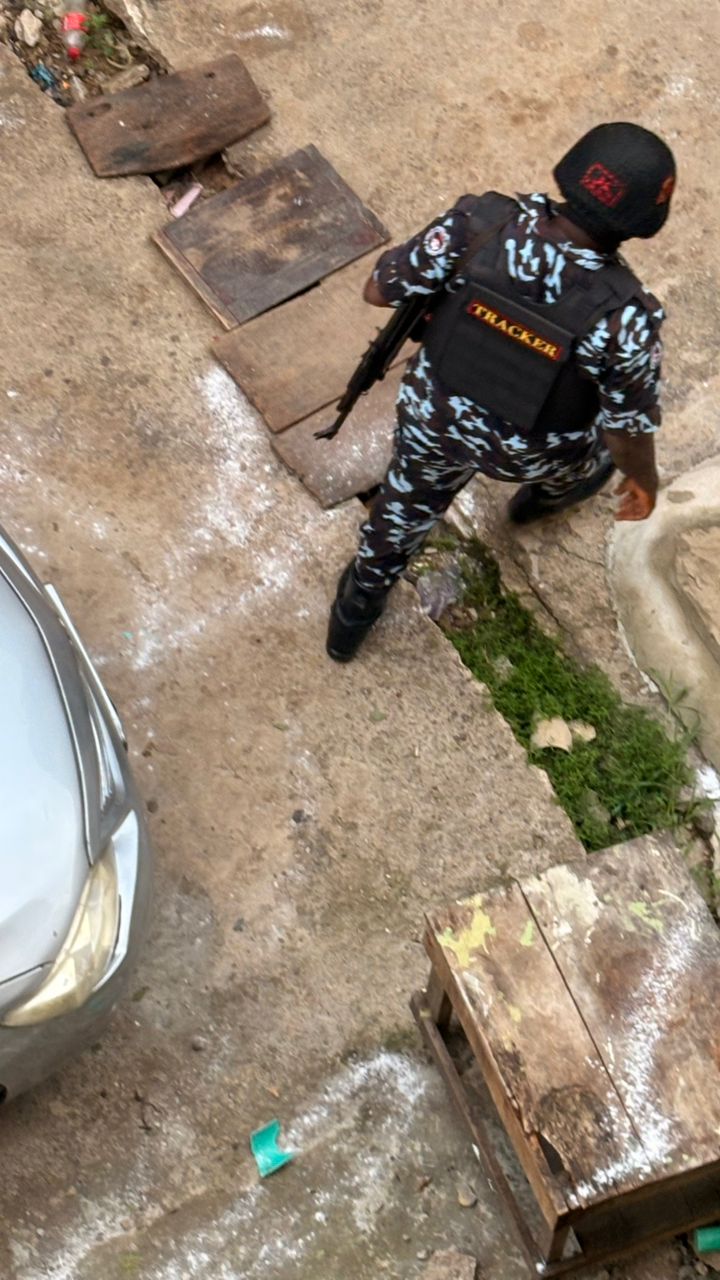
Residents said tension erupted when a group of individuals, accompanied by security operatives, stormed the premises and commenced demolition activities.
According to eyewitnesses, portions of the building were pulled down while tenants rushed to salvage their belongings from affected apartments.
The residents alleged that windows, doors and roofing sheets were damaged during the exercise, exposing parts of the building to the elements and causing significant losses to occupants.
At the centre of the dispute is Mrs Mojisola Omotayo Ojo Alolagbe, who claimed that the property was allocated to her by her late father during his lifetime as a source of financial support.
She alleged that some family members had persistently challenged her ownership claim despite ongoing legal proceedings relating to the administration of the deceased’s estate.
Alolagbe further claimed that the latest incident was part of a series of attempts to wrest control of the property, citing previous cases of alleged vandalism and partial demolition in November 2025, January 2026 and February 2026.
The situation escalated further when reports emerged that police officers allegedly involved in the demolition were later apprehended and conveyed in a Black Maria vehicle over questions surrounding the legality of their participation in the operation.
Sources familiar with the matter said those behind the demolition had initially claimed to be acting on approval from the Lagos State Ministry of Lands. However, the authenticity and extent of such approval could not be independently verified as of the time of filing this report.
The development has generated concern among residents and community members, who questioned the involvement of security personnel in what they described as a civil matter.
Some tenants, who said they had recently renewed their tenancy agreements, lamented the destruction of their property and appealed to the authorities for protection and possible compensation.

They also called for a thorough investigation into the circumstances surrounding the demolition, insisting that the rights of all parties involved should be protected.
Stakeholders have urged the Lagos State Government, security agencies and the judiciary to intervene and ensure that the dispute is resolved through lawful means to prevent further escalation.
The controversy has continued to draw public attention, raising concerns over property rights, estate administration and the role of law enforcement agencies in civil disputes.


UKA Gears Up for Final ATC Exchangeability Test Run as June Preparations Begin.
May 30, 2026 – As the month of June gathers momentum, the *United Kingdom of Atlantis, UKA*, a sovereign nation has unveiled a series of vital guidelines and preparatory packages to ensure citizens and stakeholders run the *ATC Exchangeability* process effectively.
In an official update, the *President of Atlantic Crown Limited, Empress of Attica Empire UKA*, confirmed that the *Final Test Run of ATC Exchangeability* is scheduled for the month of June 2026. The exercise marks a key phase ahead of the *Official Exchangeability Window, set to run from July 2026 to February 2027*.
### Key Highlights from the Presidential Briefing
1. *Final Test Run – June 2026*
The test run is designed to validate systems, procedures, and user readiness before full activation. Citizens, partners, and designated participants are urged to follow all official advisories released by UKA authorities during this period.
2. *Official Exchangeability Period*
Following the successful completion of the June test run, the Official Exchangeability will commence in july 2026 and we are Expecting Full Exchange ability between July Ending, 2026 to February 2026.
UKA stated that detailed schedules, eligibility requirements, and step-by-step instructions will be communicated progressively through verified UKA channels.
3. *Benefiting Packages for June*
In line with UKA’s commitment to citizen empowerment, the month of June will feature “benefiting packages” aimed at education, preparation, and seamless onboarding. These packages are intended to equip the people of UKA with the knowledge and tools needed for effective participation.
4. *Commitment to Transparency*
Addressing the nation, the Empress of Attica Empire UKA emphasized:
_“Final Test Run of ATC Comes up in The Month of June, As We Prepare For The Official Exchangeability, Between July 2026 To Feb 2027. All Information Will Be Communicated.”_
UKA reaffirmed that only information released through official UKA platforms should be regarded as authoritative.
The United Kingdom of Atlantis is encouraging all citizens, representatives, and interested parties to remain alert to official communications, attend designated orientation sessions, and avoid unofficial sources. UKA’s dedication to order, clarity, and the collective benefit of its people as the nation moves into this significant phase.
For updates, advisories, and participation guidelines, citizens are advised to monitor official UKA communication channels.
United Kingdom of Atlantis, UKA, is a sovereign nation, committed to national development, citizen welfare, and structured economic participation through initiatives such as ATC Exchangeability.
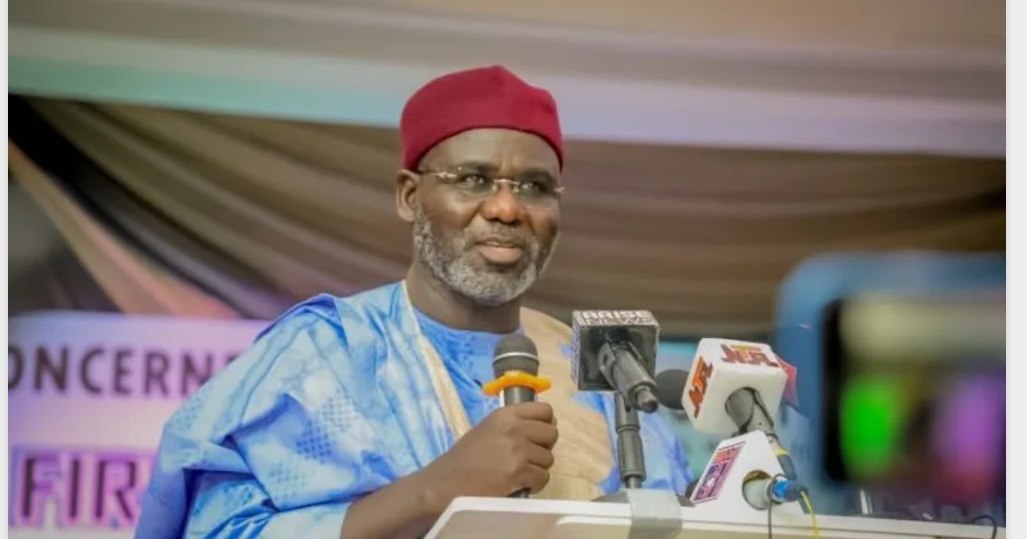
Three Years On, General Buratai Hails Tinubu’s Economic, Security Achievements
Former Chief of Army Staff, Lt. Gen. Tukur Buratai (retd.), has commended President Bola Ahmed Tinubu for what he described as bold economic reforms and improved security efforts as the President marks three years in office.
In a goodwill message on Thursday to commemorate Tinubu’s third anniversary as President and Commander-in-Chief of the Armed Forces, Buratai said the administration had taken courageous decisions that would leave a lasting impact on Nigeria’s development.

According to him, President Tinubu broke a long-standing cycle that had hindered national growth by removing fuel subsidy and implementing foreign exchange reforms aimed at stabilising the naira and strengthening the economy.
He noted that the reforms were beginning to yield positive results, citing the global acceptance of Nigerian debit cards, the gradual revival of local refineries, access to student loans, and ongoing road and infrastructure projects across the country.
“The FCT Administration has also recorded remarkable progress, completing major road projects that remained unfinished for over 16 years,” Buratai stated.
The former army chief also praised the administration’s security efforts, saying renewed military offensives against insurgents, terrorists and bandits had led to notable successes across various parts of the country.
He specifically lauded recent joint operations involving Nigerian and United States forces against Boko Haram and ISWAP in the North-East, as well as intensified counter-banditry operations in the North-West.
“We have seen notorious ISWAP commanders being neutralised. I congratulate the Commander-in-Chief, the Minister of Defence, the Chief of Defence Staff, the Service Chiefs, the Inspector-General of Police and heads of intelligence agencies for their efforts,” he said.
Buratai, however, acknowledged that challenges remained, stressing the need for more aggressive military operations and intelligence-driven strategies in the coming year.
While urging Nigerians to remain hopeful, he said celebrating the President’s achievements did not amount to ignoring the difficulties facing the nation.
“Because you truly care, you have shown the courage to trade short-term comfort for long-term hope. Nigerians need your reassurances, and that is why we remain optimistic and full of confidence,” he added.
The retired military officer reaffirmed his support for the Tinubu administration and expressed confidence that the foundation being laid by the government would deliver a brighter future for the country.
He also prayed for God’s guidance, wisdom, strength and good health for the President as he continues to lead Nigeria.


- Deputy (Dep.) Finance Minister Courts Investors to Transform Ghana’s rice Economy June 4, 2026
- Mobile health services in Kenya reduce the risk of stillbirths June 4, 2026
- JustMarkets Research Highlights Global Growth Divergence as a Key Market Driver June 4, 2026
- African Development Bank Group approves $125 million investment in African Trade and Investment Development Insurance (ATIDI) to expand risk insurance capacity in Africa June 4, 2026
- Congo Energy & Investment Forum 2027 to Position Brazzaville as a Hub for Global Energy Deal-Making June 4, 2026
- Africa Skills Hub (ASH) Transitions to ASH Africa as it Marks 10 Years of Impact June 4, 2026
- When women farm better, Eswatini eats better June 3, 2026
- Togo Hosts the 8th Annual Forum of National Volunteer Agencies in the Economic Community of West African States (ECOWAS) Region June 3, 2026
- Indigenous Peoples gravely vulnerable to Ebola epidemic, warn United Nations (UN) independent experts June 3, 2026
- Meeting between Parliamentary Vice-Minister ONISHI and His Excellency (H.E.) Mr. Cosgrow, Principal Minister and Minister for Agriculture, Fisheries and Blue Economy of Seychelles June 3, 2026
- Deputy (Dep.) Finance Minister Courts Investors to Transform Ghana’s rice Economy June 4, 2026
- Mobile health services in Kenya reduce the risk of stillbirths June 4, 2026
- JustMarkets Research Highlights Global Growth Divergence as a Key Market Driver June 4, 2026
- African Development Bank Group approves $125 million investment in African Trade and Investment Development Insurance (ATIDI) to expand risk insurance capacity in Africa June 4, 2026
- Congo Energy & Investment Forum 2027 to Position Brazzaville as a Hub for Global Energy Deal-Making June 4, 2026
- Africa Skills Hub (ASH) Transitions to ASH Africa as it Marks 10 Years of Impact June 4, 2026
- When women farm better, Eswatini eats better June 3, 2026
-

 news6 months ago
WHO REALLY OWNS MONIEPOINT? The $290 Million Deal That Sold Nigeria’s Top Fintech to Foreign Interests
-

 society1 month ago
SOCIAL MEDIA IS NOT A BATTLEFIELD COMMAND – WHY THE NIGERIAN ARMY’S ACTION AGAINST JUSTICE CRACK IS A NATIONAL SECURITY IMPERATIVE
-

 celebrity radar - gossips4 months ago
Dr. Chris Okafor Returns with Power and Fire of the Spirit -Mounts Grace Nation Altar with Fresh Anointing and Restoration Grace on February 1, 2026
-

 celebrity radar - gossips6 months ago
Prophet Kingsley Aitafo Releases 2026 Prophecy: ‘Nigeria Will Rise, but the World Must Prepare for Turbulence’