
news
Things you don’t know about the new INEC acting chairman


FACT 1
Amina Bala Zakari, Nee Husaini Adamu, was born on the 23rd of June 1960.
FACT 2
She hails from Kazaure Local Government of Jigawa State.
FACT 3
She completed her elementary education at Shekara Girls Primary School, Kano in 1971 and proceeded to the prestigious Queens College Yaba, Lagos for her Secondary Education where she obtained her School Certificate/WASC in 1976.
FACT 4
In 1976, she proceed to Ahmadu Bello University (ABU), Zaria in 1976 for a degree programme. She graduated with a Bachelor of Science (B.Sc.) Degree in Pharmacy with a Second Class Upper in 1980.
FACT 5
She had her National Youth Service Programme at the Federal University of Technology, Bauchi between 1981 -1982, where she set up a Pharmacy and Drug Store Dispensary as her service year project.
FACT 6
Her other academic qualifications include, Certificate in Managing Drugs Supply for Primary Health Care from the International Drug Agency, MHS Amsterdam, Netherlands and a Certificate in General Management Programme, Executive Education in Business and Management, Harvard Business School (HBS) Cambridge, Massachusetts, USA.
FACT 7
She began her professional career at the Ahmadu Bello University Teaching Hospital, Kaduna as a Senior Pharmacist in 1984.
FACT 8
She was at CVS Pharmacy Hartsdale, New York, USA between 1993 and 1994 as an Intern Pharmacist and returned to Nigeria to join the Consolidated Health Services, Abakpa Kaduna, where she became the Chief Pharmacist/Consultant from 1996 to 1997.
FACT 9
She also worked with Afri-Project Consortium, Abuja from 1999 to 2001, where she was also a Senior Consultant/Chief Pharmacist.
FACT 10
She joined the services of the Federal Capital Territory Administration in 2004, where she was one time Secretary Health and Human Services, Secretary Social Development and Acting Secretary, Agriculture and Rural Development.
FACT 11
Her career as a pharmacist Consultant, saw her working with the National AIDS and STDs Control Program (NASCP), Federal Ministry of Health 2002, Project Director for National Primary Health care Development Agency in 2003, Project Coordinator for FCT Federation of Muslim Women’s Organization (FOMWAN) 2003, National Consultant, National Agency for Food and Drugs Administration and Control (NAFDAC) 2004, Lead Consultant/ Project Manager, Songhai Medical Centre Limited 2008, Consultant, Complete Medicare Limited and Accessible Managed Care Limited 2008 and Consultant, Millennium Development Goal Office 2008.
FACT 12
Amina Zakari is a Registered Pharmacist and Member, Pharmacist’s Society of Nigeria as well as member of Nigeria Institute of Management (NIM).
FACT 13
Her hobbies include reading, crafts and traveling.
FACT 14
She is a widow with five children.
FACT 15
She is a National Electoral Commissioner at INEC
Source: Vanguard


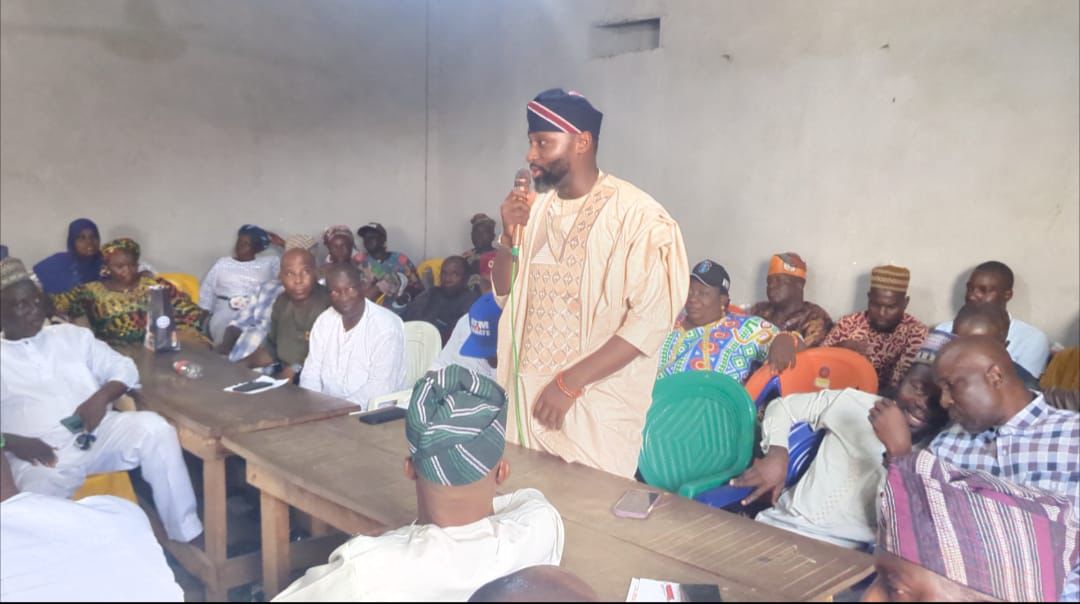
Reports from the field in Ondo North Senatorial District indicate that voters, officers, and agents at the voting centers across the wards have put Abdul Tunji Mohammed (ATM) in the lead.
According to the current figures collated from the centers, ATM is polling with wider margins of votes
Going by these figures, ATM is poised to win all the six Local Government in the Senatorial Districtt.
We urge all party members and supporters to remain peaceful as collation continues.
news
Senate Leader Opeyemi Bamidele Hosts Ondo North Aspirant Abdul Tunji Mohammed, Backs Grassroots Development Agenda

Senate Leader Opeyemi Bamidele recently hosted Chief Abdul Tunji Mohammed (ATM), a prominent aspirant for the Ondo North senatorial seat.
The meeting highlighted a strategic alignment between progressive forces, with both leaders emphasizing a shared vision for grassroots development and legislative excellence.
Senator Bamidele, a respected figure in Nigerian politics, is recognized for his contributions to national cohesion and impactful policymaking, drawing on his experience as a legal luminary and human rights activist.
Chief Mohammed, an astute businessman and dedicated grassroots mobilizer, has made a notable impact on Ondo North through his philanthropic work and commitment to constituents’ welfare. His approach blends corporate discipline, economic ingenuity, and a deep concern for people—qualities that have reshaped the region’s political narrative.
The two leaders discussed the district’s critical needs, exploring avenues for socioeconomic growth, legislative reform, and stronger community integration. Senator Bamidele stressed the importance of supporting President Bola Ahmed Tinubu’s Renewed Hope Agenda, a sentiment echoed by Chief Mohammed.
The convergence of Chief Mohammed’s vision with Senator Bamidele’s legislative experience offers hope for Ondo North. This synergy between grassroots ambition and seasoned mentorship points to a promising future for the district’s representation in the Senate. With ATM’s drive and the guidance of leaders like Senator Bamidele, Ondo North is positioned for progress and transformative governance.

APC Senatorial aspirant for Ondo North, Abdul Tunji Mohammed, popularly known as ATM, received a resounding endorsement on Thursday during a high-profile visit to Ikare-Akoko.
The endorsement came from the Olukare of Ikare, His Royal Majesty Oba Akadiri Momoh IV, the Owa Ale of Ikare, His Royal Majesty Oba Adeleke Adedoyin, and the Ikare Council of Chiefs, who described ATM as a credible son of the soil with the capacity to represent Ondo North effectively at the Senate.
Speaking at the palace, the Olukare commended ATM for his consistent engagement with the people and his track record in business and community development. “We have watched your contributions to Ondo North over the years. You are one of us, and we believe you have the experience and character to speak for our people in Abuja,” the monarch said.
The Owa Ale, in his remarks, stressed the need for unity and quality representation. He urge him to continue the help to the people at home that he’s doing. He urged other stakeholders to support aspirants with proven commitment to the district’s progress, noting that Ikare and Akoko land require strong voices at the National Assembly.
In his response, Abdul Tunji Mohammed thanked the monarchs and chiefs for their blessings and trust. He reaffirmed his commitment to prioritize infrastructure, education, healthcare, youth empowerment, and agricultural development if elected.
“Ikare is central to Ondo North, and your support strengthens my resolve to serve with integrity and results. I will not betray this trust. My campaign will remain issue-based, and my representation will reflect the hopes of our people,” ATM stated.
The visit was marked by prayers, cultural displays, and solidarity from party leaders, youth, and women groups across Ikare-Akoko.


- African Leaders Mobilise Funding and Regional Response as Ebola Outbreak Escalates May 26, 2026
- Seychelles: Appointment of the Chief Executive Officer of the Careers and Further Education Agency May 26, 2026
- African Leadership Magazine Announces Winners of the 16th African Business Leadership Awards (ABLA) 2026 May 26, 2026
- President receives credentials of Ambassador of the Kingdom of Sweden to the Republic of Seychelles May 26, 2026
- Seychelles: President Herminie Presented with Future Development Vision for New Baie St Anne Jetty May 26, 2026
- Ammat Global Resources Redefines Local Content Through Congolese-Led Operations May 26, 2026
- Republic of Congo’s Newly-Appointed Hydrocarbons Minister Stev Simplice Onanga to Speak at African Energy Week (AEW) 2026 Amid Major Gas Expansion Push May 26, 2026
- Merck Foundation in partnership with Ghana First Lady and Lordina Foundation launch their “Educating Linda” Program to support Girl Education May 26, 2026
- Transforming Healthcare and Empowering Women: Dr. Rasha Kelej Recognized Among Africa’s 100 Most Influential Women May 25, 2026
- 2026 BASKETBALL AFRICA LEAGUE SEASON: BY THE NUMBERS May 25, 2026
- African Leaders Mobilise Funding and Regional Response as Ebola Outbreak Escalates May 26, 2026
- Seychelles: Appointment of the Chief Executive Officer of the Careers and Further Education Agency May 26, 2026
- African Leadership Magazine Announces Winners of the 16th African Business Leadership Awards (ABLA) 2026 May 26, 2026
- President receives credentials of Ambassador of the Kingdom of Sweden to the Republic of Seychelles May 26, 2026
- Seychelles: President Herminie Presented with Future Development Vision for New Baie St Anne Jetty May 26, 2026
- Ammat Global Resources Redefines Local Content Through Congolese-Led Operations May 26, 2026
- Republic of Congo’s Newly-Appointed Hydrocarbons Minister Stev Simplice Onanga to Speak at African Energy Week (AEW) 2026 Amid Major Gas Expansion Push May 26, 2026
-

 news5 months ago
WHO REALLY OWNS MONIEPOINT? The $290 Million Deal That Sold Nigeria’s Top Fintech to Foreign Interests
-

 society3 weeks ago
SOCIAL MEDIA IS NOT A BATTLEFIELD COMMAND – WHY THE NIGERIAN ARMY’S ACTION AGAINST JUSTICE CRACK IS A NATIONAL SECURITY IMPERATIVE
-

 celebrity radar - gossips4 months ago
Dr. Chris Okafor Returns with Power and Fire of the Spirit -Mounts Grace Nation Altar with Fresh Anointing and Restoration Grace on February 1, 2026
-

 celebrity radar - gossips6 months ago
Prophet Kingsley Aitafo Releases 2026 Prophecy: ‘Nigeria Will Rise, but the World Must Prepare for Turbulence’
You must be logged in to post a comment Login
You must log in to post a comment.