
society
THREE AND HALF DECADES OF ENTRENCHING SAFETY ON NIGERIAN ROADS: A TALE OF THE FRSC LEADERSHIP EXPERIENCE – BISI KAZEEM

THREE AND HALF DECADES OF ENTRENCHING SAFETY ON NIGERIAN ROADS: A TALE OF THE FRSC LEADERSHIP EXPERIENCE – BISI KAZEEM
Nigeria is one of the few African countries that has leveraged on some road safety principles and have recorded remarkable progress in road safety administration and management despite a ‘gloomy’ beginning. The road safety situation in Nigeria was so deplorable that the World Health Organisation once described the country as ‘worst in the world to travel on’ only next to Ethiopia.

That narrative changed through government’s efforts by establishing the Federal Road Safety Commission as the Lead Agency to guarantee safety on every centimetre of Nigeria’s expansive road network of 204,000km. This establishment was done ten years prior to United Nations recommendation for all member states to establish agencies directly situated under the central government for ease of unfettered operation.
The vision behind the establishment of the Federal Road Safety Corps which is to eradicate Road Traffic Crashes on Nigeria roads is based on the premise that road crashes are caused and highly preventable. Over the last three decades or more, and arising from the above statistics of deaths, injuries and damage to properties, can Nigerians confidently posit that the Federal Road Safety Corps has made policies and embarked upon programmes and activities that are in harmony and consistent with global best practices on Road Traffic Administration and Safety Management? Can we possibly say that the paramilitary outfit has achieved its statutory mandate of eradicating Road Traffic Crashes on Nigerian roads? Can the FRSC be said to have educated the motoring public enough? Have they been able to entrench safe road use culture into drivers in Nigeria? Answers to these and many more questions on Road Safety will give us a sense of direction as to whether or not the 18 February, 1988 proclamation by the Military administration of President Ibrahim Babangida has actually saved the lives it was established to save.
Since coming on board, the Federal Road Safety Corps has as a matter of fact blossomed on all sides through strategic innovations and sheer resilience of it’s personnel, into one of the most professionally inclined and reputable national institution; and of course, a global brand and an exemplar of best road safety operations and practices in Africa.
Beginning from 18 February, 1988 when the Corps commenced full operational activities geared towards eradicating road traffic crashes, the Federal Road Safety Corps has brought down annual record of crashes from over Forty Thousand crashes per year to below Five Thousand at the moment.
The Corps is and will always remain the frontline agency in traffic regulations in Nigeria. Being the lead government agency for traffic superintendent and guardianship and evolving from a humble beginning with it’s technical and management headquarters located at no 9 Oshuntokun Street, Bodija Ibadan, Oyo State and the outpost and liason office located in three story building in Wuse zone 2, Abuja with just a dozen Staff and 200 Youth Corps Members operating from 6 locations and striving to get it’s feet, to transforming into a mega force amongst paramilitary organisations in Nigeria with thousands of formations scattered across the 774 local governments in the country.
Through unprecedented innovations in information and communication technology and effective operational tools, FRSC has grown to become a reference point in excellent service delivery in Nigeria; the benchmark for road safety management and administration in Africa and an exemplar of global best practices in it’s operations.
The Corps has also been well known in terms of it’s origin and trajectory which has the imprimatur of Africa’s first Nobel Laureate for Literature, Prof Woke Soyinka, who made it a project and agency to behold. From the pioneer Corps Marshal, Dr. Olu Agunloye to Chief Osita Chidoka all of whom were appointed from the civil population, the Corps witnessed a formidable foundation laying processes that has provoked effectiveness, efficiency and pragmatism in road safety administration in Nigeria. The icing on the cake on these developmental stride came with the appointment of career Staff as Corps Marshal from Boboye Oyeyemi to the present Corps Marshal, Dauda Ali Biu whose innate experience and expertise has and is still giving the Corps the needed push necessary for it to stay atop.
The luscious development is that in its thirty five years as lead agency in traffic and safety management, the Federal Road Safety Corps (FRSC) has recorded tremendous achievements in the area of Traffic Engineering, Road Safety Administration, Traffic Management, rescue operation,changing bad road use behaviour and Crash reduction. The road traffic management Agency achieved this glorious feat, through a chain of pragmatic leadership, sagacity of different generations of management, ingenuity of its Policy formulators and the dexterity of the handlers of policy implementation.
These leaders have entrenched within the Corps, a wealthy culture of professionalism and excellence in service delivery, which has positioned it as the lead agency in road safety management and traffic administration, with a passionate and enduring commitment to creating a safer motoring environment that is unequalled in the African sub-region. This unquenchable commitment asserts undue pressure on the Corps; thereby propelling it to more than ever before, continue to strengthen its strategies, programmes, knowledge and processes, capable of surmounting all challenges militating against effective and efficient administration of safety in Nigeria.
Just as stated in previous publications, it is most imperative to bring to the fore that beginning from the second decade of the Corps’ existence, frantic efforts have been put in place to expand both the internal and external horizons of the Corps with more robust collaborations on all fronts that has led to a paradigm shift in road safety administration, from Traditional approach to Safe Systems Approach.
Through the use of state of the art Information Technology facilities; the Corps has been able to develop transformational initiatives focused on People, Processes and Technology (PPT) that is why today not only does it staff pride as the most disciplined, but the Corps stands as the best Information Technology (IT) driven organization in Nigeria with its robust data base and over 95 percentage digitalized administrative and operational procedures.
The current leadership of the Federal Road Safety Corps, headed by Dauda Ali Biu came on board in December, 2022 and from inception, the administration took bold steps towards the development of a vigorous framework for enhancing safe motoring environment in Nigeria. This strategic initiative has been the bedrock for the new innovations that have become ostensible in road safety administration and traffic Management in broad-spectrum. The laid foundation is premised on the resolve to place great attention to all the administrative variables that could enhance productivity, effectiveness and efficiency in the work process.
Part of these include, but not limited to improvement in equipment and other work tools such as the procurement of tow trucks for clearance of obstructions, patrol motorbikes, and patrol vehicles, (hilux), ambulances, and staff buses to convey staff to their workplace; employee motivation through improved welfare, and massive promotion of Officers and men which has been widely applauded by members of the FRSC nationwide; purposeful collaboration with all stakeholders such as transport stakeholders, media stakeholders, interagency collaboration, and civil society organizations. His administration is also upholding discipline in all areas.
With the strategies and tactics deployed for decisive continuity and innovation which the Corps has applied in the conduct of its affairs in the last few months, it is given that incredible improvements have been made in road safety management in Nigeria today; especially arising from the continuous involvement of staff in the process of strategy building and developments in operational front which is very significant and has stimulated buy-in in all policy areas.
The Corps has put in place an unambiguous vision and mission projections designed to guide its affairs on short, medium and long term endeavours.
BISI KAZEEM ,
FRSC’S CORPS PUBLIC EDUCATION OFFICER




Police Officers Detained as Family Property Dispute Sparks Demolition Controversy in Lagos
By Ifeoma Ikem
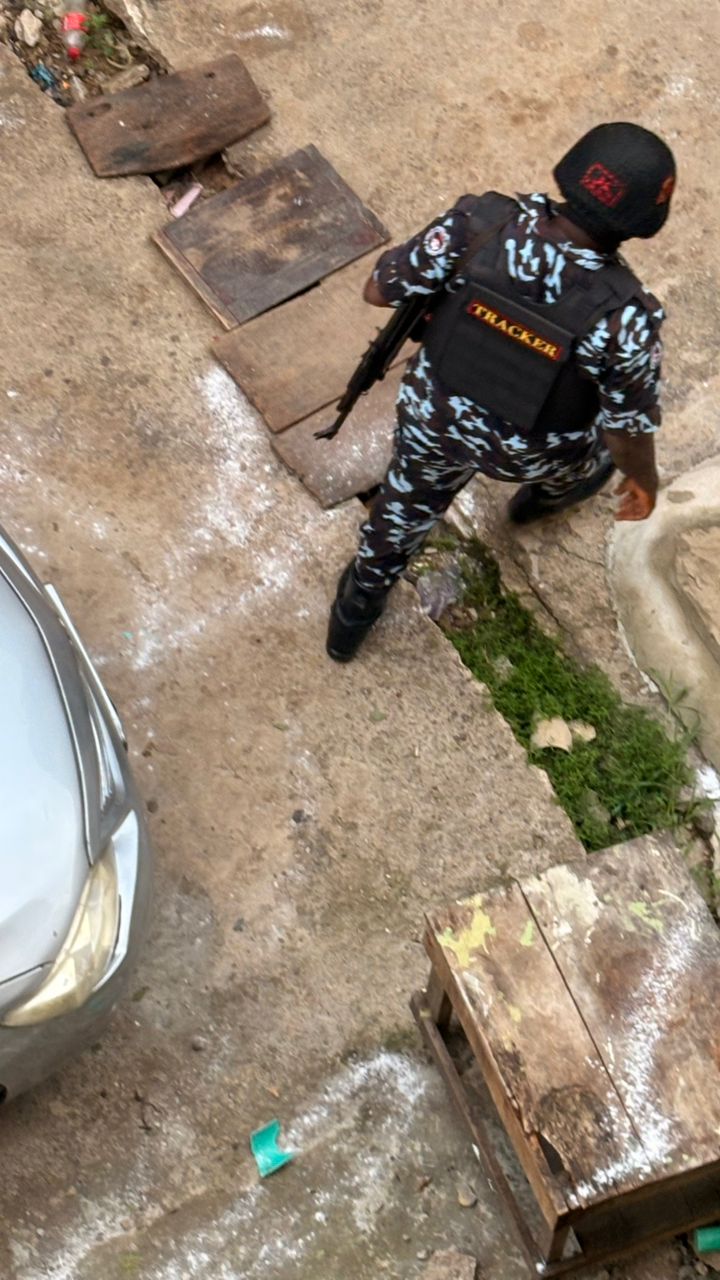
A property dispute within the Omotayo-Ojo family has taken a dramatic turn following a controversial demolition exercise at a residential building in Ikosi-Ketu, Lagos State, which reportedly left tenants displaced and led to the detention of some police officers allegedly involved in the operation.

The property, located at 23B Loveall Street, Ikosi-Ketu, has been the subject of a prolonged ownership tussle since the death of its owner, Chief Oludola Omotayo Ojo, the Babaalaje of Imesi-Ile, Osun State, in 2019.
Residents said tension erupted when a group of individuals, accompanied by security operatives, stormed the premises and commenced demolition activities.
According to eyewitnesses, portions of the building were pulled down while tenants rushed to salvage their belongings from affected apartments.
The residents alleged that windows, doors and roofing sheets were damaged during the exercise, exposing parts of the building to the elements and causing significant losses to occupants.
At the centre of the dispute is Mrs Mojisola Omotayo Ojo Alolagbe, who claimed that the property was allocated to her by her late father during his lifetime as a source of financial support.
She alleged that some family members had persistently challenged her ownership claim despite ongoing legal proceedings relating to the administration of the deceased’s estate.
Alolagbe further claimed that the latest incident was part of a series of attempts to wrest control of the property, citing previous cases of alleged vandalism and partial demolition in November 2025, January 2026 and February 2026.
The situation escalated further when reports emerged that police officers allegedly involved in the demolition were later apprehended and conveyed in a Black Maria vehicle over questions surrounding the legality of their participation in the operation.
Sources familiar with the matter said those behind the demolition had initially claimed to be acting on approval from the Lagos State Ministry of Lands. However, the authenticity and extent of such approval could not be independently verified as of the time of filing this report.
The development has generated concern among residents and community members, who questioned the involvement of security personnel in what they described as a civil matter.
Some tenants, who said they had recently renewed their tenancy agreements, lamented the destruction of their property and appealed to the authorities for protection and possible compensation.

They also called for a thorough investigation into the circumstances surrounding the demolition, insisting that the rights of all parties involved should be protected.
Stakeholders have urged the Lagos State Government, security agencies and the judiciary to intervene and ensure that the dispute is resolved through lawful means to prevent further escalation.
The controversy has continued to draw public attention, raising concerns over property rights, estate administration and the role of law enforcement agencies in civil disputes.

UKA Gears Up for Final ATC Exchangeability Test Run as June Preparations Begin.
May 30, 2026 – As the month of June gathers momentum, the *United Kingdom of Atlantis, UKA*, a sovereign nation has unveiled a series of vital guidelines and preparatory packages to ensure citizens and stakeholders run the *ATC Exchangeability* process effectively.
In an official update, the *President of Atlantic Crown Limited, Empress of Attica Empire UKA*, confirmed that the *Final Test Run of ATC Exchangeability* is scheduled for the month of June 2026. The exercise marks a key phase ahead of the *Official Exchangeability Window, set to run from July 2026 to February 2027*.
### Key Highlights from the Presidential Briefing
1. *Final Test Run – June 2026*
The test run is designed to validate systems, procedures, and user readiness before full activation. Citizens, partners, and designated participants are urged to follow all official advisories released by UKA authorities during this period.
2. *Official Exchangeability Period*
Following the successful completion of the June test run, the Official Exchangeability will commence in july 2026 and we are Expecting Full Exchange ability between July Ending, 2026 to February 2026.
UKA stated that detailed schedules, eligibility requirements, and step-by-step instructions will be communicated progressively through verified UKA channels.
3. *Benefiting Packages for June*
In line with UKA’s commitment to citizen empowerment, the month of June will feature “benefiting packages” aimed at education, preparation, and seamless onboarding. These packages are intended to equip the people of UKA with the knowledge and tools needed for effective participation.
4. *Commitment to Transparency*
Addressing the nation, the Empress of Attica Empire UKA emphasized:
_“Final Test Run of ATC Comes up in The Month of June, As We Prepare For The Official Exchangeability, Between July 2026 To Feb 2027. All Information Will Be Communicated.”_
UKA reaffirmed that only information released through official UKA platforms should be regarded as authoritative.
The United Kingdom of Atlantis is encouraging all citizens, representatives, and interested parties to remain alert to official communications, attend designated orientation sessions, and avoid unofficial sources. UKA’s dedication to order, clarity, and the collective benefit of its people as the nation moves into this significant phase.
For updates, advisories, and participation guidelines, citizens are advised to monitor official UKA communication channels.
United Kingdom of Atlantis, UKA, is a sovereign nation, committed to national development, citizen welfare, and structured economic participation through initiatives such as ATC Exchangeability.
Three Years On, General Buratai Hails Tinubu’s Economic, Security Achievements
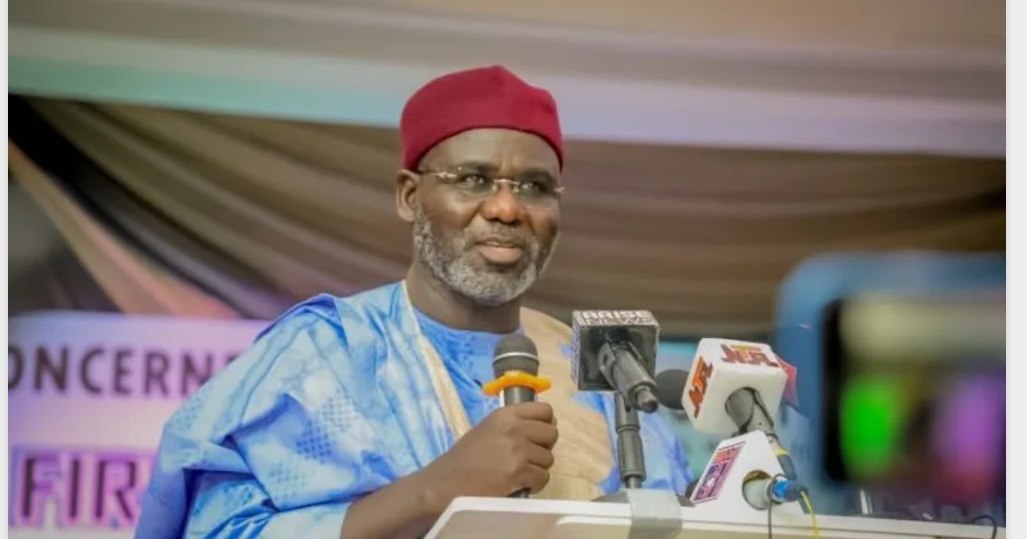
Former Chief of Army Staff, Lt. Gen. Tukur Buratai (retd.), has commended President Bola Ahmed Tinubu for what he described as bold economic reforms and improved security efforts as the President marks three years in office.
In a goodwill message on Thursday to commemorate Tinubu’s third anniversary as President and Commander-in-Chief of the Armed Forces, Buratai said the administration had taken courageous decisions that would leave a lasting impact on Nigeria’s development.

According to him, President Tinubu broke a long-standing cycle that had hindered national growth by removing fuel subsidy and implementing foreign exchange reforms aimed at stabilising the naira and strengthening the economy.
He noted that the reforms were beginning to yield positive results, citing the global acceptance of Nigerian debit cards, the gradual revival of local refineries, access to student loans, and ongoing road and infrastructure projects across the country.
“The FCT Administration has also recorded remarkable progress, completing major road projects that remained unfinished for over 16 years,” Buratai stated.
The former army chief also praised the administration’s security efforts, saying renewed military offensives against insurgents, terrorists and bandits had led to notable successes across various parts of the country.
He specifically lauded recent joint operations involving Nigerian and United States forces against Boko Haram and ISWAP in the North-East, as well as intensified counter-banditry operations in the North-West.
“We have seen notorious ISWAP commanders being neutralised. I congratulate the Commander-in-Chief, the Minister of Defence, the Chief of Defence Staff, the Service Chiefs, the Inspector-General of Police and heads of intelligence agencies for their efforts,” he said.
Buratai, however, acknowledged that challenges remained, stressing the need for more aggressive military operations and intelligence-driven strategies in the coming year.
While urging Nigerians to remain hopeful, he said celebrating the President’s achievements did not amount to ignoring the difficulties facing the nation.
“Because you truly care, you have shown the courage to trade short-term comfort for long-term hope. Nigerians need your reassurances, and that is why we remain optimistic and full of confidence,” he added.
The retired military officer reaffirmed his support for the Tinubu administration and expressed confidence that the foundation being laid by the government would deliver a brighter future for the country.
He also prayed for God’s guidance, wisdom, strength and good health for the President as he continues to lead Nigeria.


- When women farm better, Eswatini eats better June 3, 2026
- Togo Hosts the 8th Annual Forum of National Volunteer Agencies in the Economic Community of West African States (ECOWAS) Region June 3, 2026
- Indigenous Peoples gravely vulnerable to Ebola epidemic, warn United Nations (UN) independent experts June 3, 2026
- Meeting between Parliamentary Vice-Minister ONISHI and His Excellency (H.E.) Mr. Cosgrow, Principal Minister and Minister for Agriculture, Fisheries and Blue Economy of Seychelles June 3, 2026
- Eritrea: Construction of Elementary School in Gogni Sub-Zone June 3, 2026
- African Union Commission (AUC) Chairperson His Excellency (H.E.) Mahmoud Ali Youssouf highlighted thePermanent Representatives’ Committee (PRC) critical role in advancing the Union’s agenda and laying the groundwork for the forthcoming Mid-Year Coordination Meeting (MYCM) June 3, 2026
- Eritrea: Eighth Grade National Examination Commences June 3, 2026
- Many Africans see justice system as unequal, costly, and slow, Afrobarometer survey reveals June 3, 2026
- Prof. Benedict Oramah to Chair Finance Summit as African Energy Week (AEW) 2026 Prepares for Major Deal Flow June 3, 2026
- The Islamic Development Bank (IsDB) Group Affiliates to Host the 14th Private Sector Forum in Baku, Azerbaijan (16-19 June 2026) June 3, 2026
- When women farm better, Eswatini eats better June 3, 2026
- Togo Hosts the 8th Annual Forum of National Volunteer Agencies in the Economic Community of West African States (ECOWAS) Region June 3, 2026
- Indigenous Peoples gravely vulnerable to Ebola epidemic, warn United Nations (UN) independent experts June 3, 2026
- Meeting between Parliamentary Vice-Minister ONISHI and His Excellency (H.E.) Mr. Cosgrow, Principal Minister and Minister for Agriculture, Fisheries and Blue Economy of Seychelles June 3, 2026
- Eritrea: Construction of Elementary School in Gogni Sub-Zone June 3, 2026
- African Union Commission (AUC) Chairperson His Excellency (H.E.) Mahmoud Ali Youssouf highlighted thePermanent Representatives’ Committee (PRC) critical role in advancing the Union’s agenda and laying the groundwork for the forthcoming Mid-Year Coordination Meeting (MYCM) June 3, 2026
- Eritrea: Eighth Grade National Examination Commences June 3, 2026
-

 news6 months ago
WHO REALLY OWNS MONIEPOINT? The $290 Million Deal That Sold Nigeria’s Top Fintech to Foreign Interests
-

 society1 month ago
SOCIAL MEDIA IS NOT A BATTLEFIELD COMMAND – WHY THE NIGERIAN ARMY’S ACTION AGAINST JUSTICE CRACK IS A NATIONAL SECURITY IMPERATIVE
-

 celebrity radar - gossips4 months ago
Dr. Chris Okafor Returns with Power and Fire of the Spirit -Mounts Grace Nation Altar with Fresh Anointing and Restoration Grace on February 1, 2026
-

 celebrity radar - gossips6 months ago
Prophet Kingsley Aitafo Releases 2026 Prophecy: ‘Nigeria Will Rise, but the World Must Prepare for Turbulence’