
society
Throwback: Primate Ayodele’s Interview With Tribune Newspaper About Nigeria On December 31, 2023

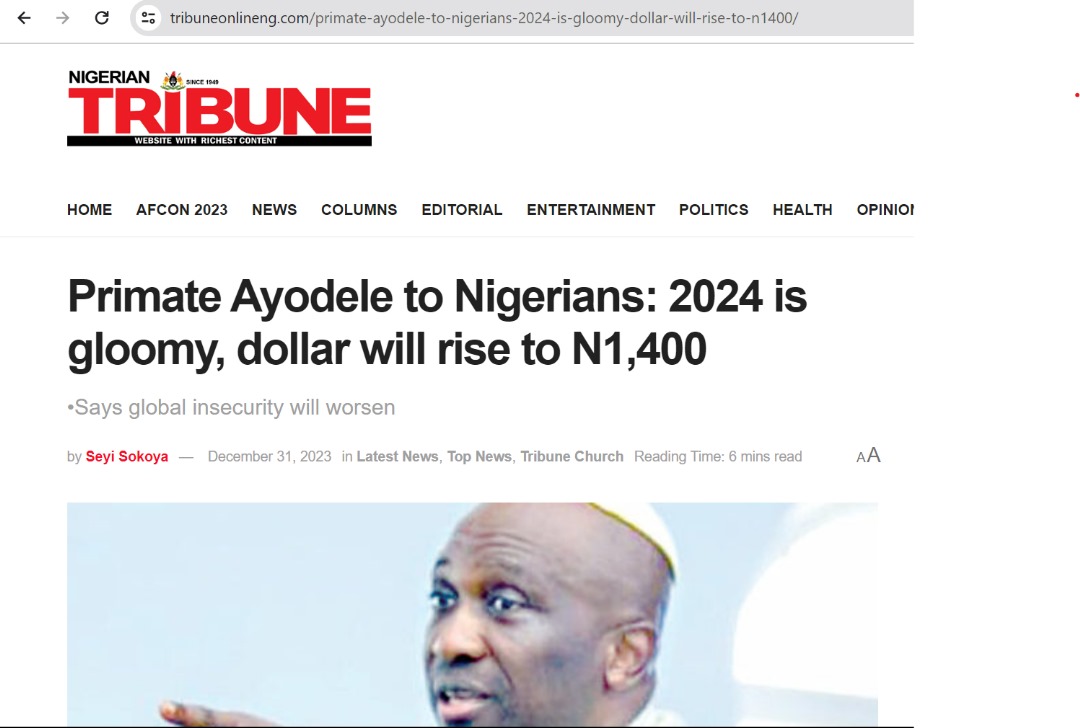
Throwback: Primate Ayodele’s Interview With Tribune Newspaper About Nigeria On December 31, 2023
In this interview, popular seer and spiritual head of Inri Evangelical Spiritual Church, Lagos, Primate Elijah Ayodele speaks on 2024 and what awaits Nigeria and the world.

The economy
NIGERIANS need to be watchful, prayerful, and constantly appeal to God. The government needs help. If the government refuses to listen to God’s warning, it is bound to get into problems. The Bola Tinubu government is out of line. When I warned that voting for an All Progressive Congress federal government would lead to calamity and storm, many people felt I was talking rubbish. With all the economic formulas that the current government is postulating, it can’t get a correct model that will help the country. The World Bank and the IMF have killed Nigeria’s economy. If President Tinubu continues to listen to them, Nigeria will die. There is still payment of fuel subsidy. Tinubu cannot play with a subsidy. The complete removal of subsidies will result in complete economic trouble. We cannot buy fuel for N100 anymore. They are lies.
I foresee that under the current realities, the cefa will be stronger than the Naira. Also, the dollar will rise to N1400 and this will shake the economy so badly that some forces are hell-bent on frustrating the Tinubu-led Federal government but they will not be successful.
The economy will be fluctuating (rising and falling} to the extent that the Central Bank of Nigeria will cry out. The opposition will take several steps to fight the present government but they will miss their strategies. Government palliative is part of the things that are ruining the economy and has not added anything good to the economic revival. I foresee the Nigerian economy will fluctuate, it will be unstable and inflation rates will rise astronomically. The economic stability will crash down to very low levels even though the Central Bank of Nigeria {CBN} and the federal government will be working to find a way forward. I have not seen anything better, for the future looks gloomy.
Do not play politics with Nigerians. The government must do what is right. Playing politics with Nigeria will destroy the country and the nation will collapse. We must be realistic if we want to balance the nation. Increment in workers’ salaries will not improve things. The Nigeria Labour Congress (NLC) is blindfolded. The President of the NLC is incompetent; he will not be able to achieve anything. He is weak; he is only making political noise. He should stop making noise.
We must stop patronizing the dollar. It is killing our country. There must be a constant power supply; we must use our mineral resources to negotiate. The ministry that is supposed to be feeding Nigeria is the Ministry of Mines. The person who is in charge must work with the CBN governor. We must improve our mechanized farming.
In 2024, the government must reduce the price of food commodities; giving out palliatives is a fraud; it is a scam. There should be food markets in various states for genuine food palliatives. The price of a bag of rice can be reduced to N20,000. We must also improve our road infrastructure. These would make Nigeria better. God still insists that Tinubu is his plan but not his purpose for Nigeria. The cost of living will become unbearable in 2024 if the government refuses to do what is needed. There will be a shortage of water. We are smiling and suffering. Prices in essential commodities will rise.
Insecurity
They cannot end insecurity in 2024. The police and other forces must be equipped. There will be another unguided missile attack that will kill civilians. When this repeats itself, people would insist that it was orchestrated. If there is an adjustment in the war against terror in Nigeria, then it will work. The government must create employment opportunities; this will help in the fight against insecurity. We must also look at the issue of state policing again. If there is food, infrastructure, and electricity, then things will pick up. A cashless policy will destroy Tinubu’s government. We must pray against religious and ethnic war in Nigeria. A prominent African president will escape a bomb attack. Let us pray that Customs officers will not be attacked. The head of the NIS might be changed. Some people will rubbish the efforts of the EFCC chairman. More insecurity in the North. Benue, Plateau, Abuja, Ondo, and Kogi will experience more insecurities.
Politics
If Obaseki doesn’t take it easy, PDP will lose in Edo. If PDP loses, Obaseki will be troubled. Ondo State’s Aiyedatiwa will be frustrated, he cannot rule Ondo State. Tinubu will take over Ondo State. Some five PDP governors will rescue the party. Fubara must not cross to APC. He must remain in PDP; he should not follow Wike. If he does, that will be the end of his political career. He should not fight against Wike. If he fights against Wike, he will not win. The Akwa Ibom state governor too must not cross to APC. If Mbah comes out to contest for the governorship election, he may destroy Soludo. Soludo must prepare himself because the APC is ready to take over the state. If care is not taken, Ganduje and Tinubu will part ways. The relationship between Tinubu and Shettima will be constrained. Some of the President’s allies will fight his wife. He must watch his health properly. Seyi Makinde must not leave PDP; if he does, he will not make it politically again. Gbajabiamila will receive a rude shock.
Nigeria will keep borrowing and it would become so burdensome that we would start to beg for relief. Giving us debt relief is another bondage because there will be conditions. There are three cabals bent on hijacking Tinubu’s government. Buhari and Tinubu will still fight. A prominent leader in Afenifere will pass away. Nigeria will break if there is no restructuring as of 2035. Nnamdi Kanu’s bail will be unconditional and it is not too certain. Samuel Ekpa must be careful so that he will not be arrested.
Infrastructure
There will be problems in the telecommunications industry. G5 has come to stay. The tax on these companies will increase and the burden of this will drive some of them away. The government has plans to establish a telecommunication company. Let us pray that we won’t witness any fire outbreak in any federal secretariat. Let us pray that no governor’s office will be set ablaze. A prominent pastor will die, same with an Islamic scholar. And ex-governor will pass on. Building collapse in Abuja is imminent; there will be a bomb scare in Abuja. I foresee the Nigeria Gas Company will be shut down as there will not be enough gas to meet the energy needs of companies and the Transmission Company of Nigeria. Let us pray so that the facilities of the Transmission Company of Nigeria will not be attacked. I foresee the Ijede Power plant, Egbin Thermal Station, Shiroro Dam, and Kanji Dam will have problems and be shut down. Let us pray so that none of the dams will become dry. I foresee that the Abuja Electricity Distribution Company Kubwa substation and the Apo substation will be shut down.
Global terrorism and insecurity
At the global level, I foresee the emergence of a new set of terrorist organizations different from HAMAS in Gaza, the Kurdistan Workers Party {PKK} in Turkey, Boko Haram in Nigeria, and Al-Shabaab in Somalia. I foresee a network of terror gangs scheming in the year 2024 to cause havoc and also plan evils towards the United States of America, the United Kingdom, the State of Israel, France, Germany, and Turkey to create a breakdown of law and order and a state of insecurity. The spirit of God revealed to me that there will be aborted or failed coups de-tat in some countries. I foresee another terrorist group that is a faction of the PKK in 2024. The Al-Shabaab terror gang, Al-Qaeda, and ISIS criminals will begin to terrorize more countries in Africa and Europe. Europe will begin to witness more frequent acts of terrorism. The spirit of God says another coalition of terrorist groups will emerge in Africa. The band of criminals will work hand in hand with the likes of AL-QAEDA and Boko Haram.
Primate Ayodele to Nigerians: 2024 is gloomy, dollar will rise to N1,400





UKA Gears Up for Final ATC Exchangeability Test Run as June Preparations Begin.
May 30, 2026 – As the month of June gathers momentum, the *United Kingdom of Atlantis, UKA*, a sovereign nation has unveiled a series of vital guidelines and preparatory packages to ensure citizens and stakeholders run the *ATC Exchangeability* process effectively.
In an official update, the *President of Atlantic Crown Limited, Empress of Attica Empire UKA*, confirmed that the *Final Test Run of ATC Exchangeability* is scheduled for the month of June 2026. The exercise marks a key phase ahead of the *Official Exchangeability Window, set to run from July 2026 to February 2027*.
### Key Highlights from the Presidential Briefing
1. *Final Test Run – June 2026*
The test run is designed to validate systems, procedures, and user readiness before full activation. Citizens, partners, and designated participants are urged to follow all official advisories released by UKA authorities during this period.
2. *Official Exchangeability Period*
Following the successful completion of the June test run, the Official Exchangeability will commence in july 2026 and we are Expecting Full Exchange ability between July Ending, 2026 to February 2026.
UKA stated that detailed schedules, eligibility requirements, and step-by-step instructions will be communicated progressively through verified UKA channels.
3. *Benefiting Packages for June*
In line with UKA’s commitment to citizen empowerment, the month of June will feature “benefiting packages” aimed at education, preparation, and seamless onboarding. These packages are intended to equip the people of UKA with the knowledge and tools needed for effective participation.
4. *Commitment to Transparency*
Addressing the nation, the Empress of Attica Empire UKA emphasized:
_“Final Test Run of ATC Comes up in The Month of June, As We Prepare For The Official Exchangeability, Between July 2026 To Feb 2027. All Information Will Be Communicated.”_
UKA reaffirmed that only information released through official UKA platforms should be regarded as authoritative.
The United Kingdom of Atlantis is encouraging all citizens, representatives, and interested parties to remain alert to official communications, attend designated orientation sessions, and avoid unofficial sources. UKA’s dedication to order, clarity, and the collective benefit of its people as the nation moves into this significant phase.
For updates, advisories, and participation guidelines, citizens are advised to monitor official UKA communication channels.
United Kingdom of Atlantis, UKA, is a sovereign nation, committed to national development, citizen welfare, and structured economic participation through initiatives such as ATC Exchangeability.
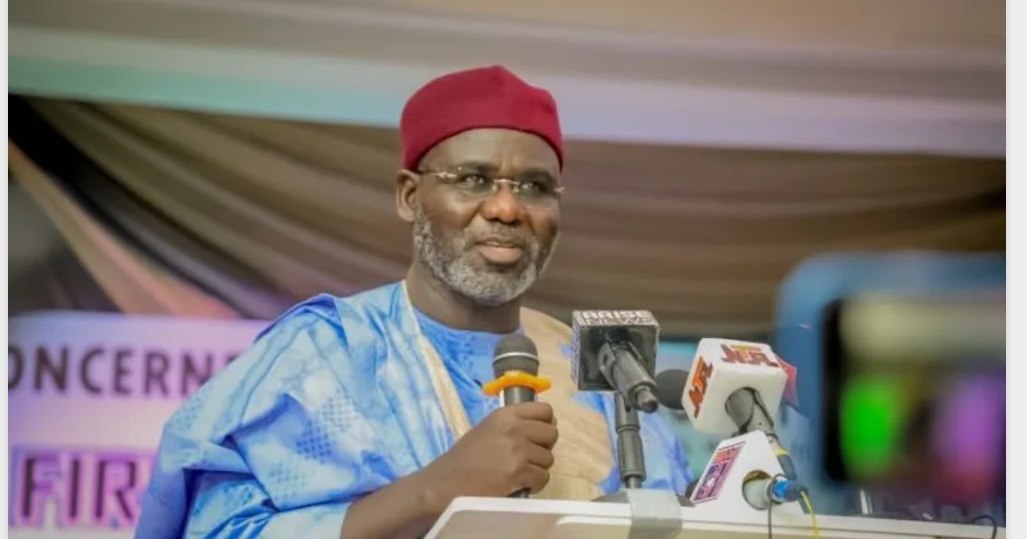
Three Years On, General Buratai Hails Tinubu’s Economic, Security Achievements
Former Chief of Army Staff, Lt. Gen. Tukur Buratai (retd.), has commended President Bola Ahmed Tinubu for what he described as bold economic reforms and improved security efforts as the President marks three years in office.
In a goodwill message on Thursday to commemorate Tinubu’s third anniversary as President and Commander-in-Chief of the Armed Forces, Buratai said the administration had taken courageous decisions that would leave a lasting impact on Nigeria’s development.

According to him, President Tinubu broke a long-standing cycle that had hindered national growth by removing fuel subsidy and implementing foreign exchange reforms aimed at stabilising the naira and strengthening the economy.
He noted that the reforms were beginning to yield positive results, citing the global acceptance of Nigerian debit cards, the gradual revival of local refineries, access to student loans, and ongoing road and infrastructure projects across the country.
“The FCT Administration has also recorded remarkable progress, completing major road projects that remained unfinished for over 16 years,” Buratai stated.
The former army chief also praised the administration’s security efforts, saying renewed military offensives against insurgents, terrorists and bandits had led to notable successes across various parts of the country.
He specifically lauded recent joint operations involving Nigerian and United States forces against Boko Haram and ISWAP in the North-East, as well as intensified counter-banditry operations in the North-West.
“We have seen notorious ISWAP commanders being neutralised. I congratulate the Commander-in-Chief, the Minister of Defence, the Chief of Defence Staff, the Service Chiefs, the Inspector-General of Police and heads of intelligence agencies for their efforts,” he said.
Buratai, however, acknowledged that challenges remained, stressing the need for more aggressive military operations and intelligence-driven strategies in the coming year.
While urging Nigerians to remain hopeful, he said celebrating the President’s achievements did not amount to ignoring the difficulties facing the nation.
“Because you truly care, you have shown the courage to trade short-term comfort for long-term hope. Nigerians need your reassurances, and that is why we remain optimistic and full of confidence,” he added.
The retired military officer reaffirmed his support for the Tinubu administration and expressed confidence that the foundation being laid by the government would deliver a brighter future for the country.
He also prayed for God’s guidance, wisdom, strength and good health for the President as he continues to lead Nigeria.
NUT Raises Alarm Over Continued Captivity of Abducted Oyo Pupils, Teachers
The Nigeria Union of Teachers has expressed deep concern over the continued captivity of pupils and teachers abducted during an attack on schools in the Ahoro-Esinle and Yawota communities in Oriire Local Government Area of Oyo State.
In a statement issued on Saturday, the Oyo State wing of the union described the situation as increasingly distressing, particularly following the emergence of a video allegedly released by the abductors showing the victims pleading for their freedom.
The union said the footage had heightened fears over the welfare of the abducted pupils and teachers, describing their ordeal as heartbreaking and unacceptable.

According to the NUT, no child or teacher deserves to be subjected to such traumatic experiences, adding that the prolonged captivity of the victims has continued to inflict psychological pain on their families, colleagues and the wider education community.
The union called on the Federal Government, Oyo State Government and relevant security agencies to intensify efforts towards securing the immediate and safe release of the victims.
“This is not a moment for hesitation. It is a moment for coordinated, intelligence-driven efforts to ensure the immediate and safe release of all abducted pupils and teachers,” the statement read.
While acknowledging ongoing interventions by security agencies and government authorities, the union stressed that time was of the essence, warning that every additional day in captivity deepens the trauma suffered by the victims.
The NUT urged security operatives to strengthen surveillance, improve community intelligence gathering and deploy all necessary operational and diplomatic measures to facilitate the rescue of the abductees.
It also appealed to traditional rulers, community leaders and residents to support rescue efforts by providing credible information that could assist security agencies.
“The safety of our children and teachers must remain a collective priority,” the union stated.
Reaffirming its support for the families of the victims, the NUT pledged continued solidarity and prayers while advocating safer learning environments across the country.
The statement was jointly signed by the Chairman of the Oyo State NUT, Comrade Hassan Ajibola Fatai, and the Secretary, Comrade Salami Olukayode.


- Pitcher Awards Announces 2026 Winners, Marking a Landmark Year for Pan‑African Creativity May 30, 2026
- Ghana Commemorates 78th International Day of United Nations Peacekeepers May 30, 2026
- South Africa: President Ramaphosa receives second interim report of Madlanga Commission May 30, 2026
- Asmara Marathon 2026 to be held May 30, 2026
- Powerful call for dialogue and compromise to secure peace in South Sudan issued on International Peacekeepers Day May 30, 2026
- Over 1,000 Participants Join Rwenzori Marathon Activation Run in Mombasa May 30, 2026
- World Health Organization (WHO) actively participated in the 2nd Summit on Healthcare Integration in Portuguese-speaking countries May 30, 2026
- Annual Meetings (AM) 2026: “Africa has what It takes” - Experts call for stronger financial systems to help Africa mobilise capital at scale May 30, 2026
- Eritrea Participates at Organization of African, Caribbean and Pacific States Meetings May 30, 2026
- Annual Meetings 2026 (AM2026): African Development Bank Group’s 2025 Annual Report Highlights Strong Results and a New Chapter for Africa’s Transformation May 29, 2026
- Pitcher Awards Announces 2026 Winners, Marking a Landmark Year for Pan‑African Creativity May 30, 2026
- Ghana Commemorates 78th International Day of United Nations Peacekeepers May 30, 2026
- South Africa: President Ramaphosa receives second interim report of Madlanga Commission May 30, 2026
- Asmara Marathon 2026 to be held May 30, 2026
- Powerful call for dialogue and compromise to secure peace in South Sudan issued on International Peacekeepers Day May 30, 2026
- Over 1,000 Participants Join Rwenzori Marathon Activation Run in Mombasa May 30, 2026
- World Health Organization (WHO) actively participated in the 2nd Summit on Healthcare Integration in Portuguese-speaking countries May 30, 2026
-

 news6 months ago
WHO REALLY OWNS MONIEPOINT? The $290 Million Deal That Sold Nigeria’s Top Fintech to Foreign Interests
-

 society4 weeks ago
SOCIAL MEDIA IS NOT A BATTLEFIELD COMMAND – WHY THE NIGERIAN ARMY’S ACTION AGAINST JUSTICE CRACK IS A NATIONAL SECURITY IMPERATIVE
-

 celebrity radar - gossips4 months ago
Dr. Chris Okafor Returns with Power and Fire of the Spirit -Mounts Grace Nation Altar with Fresh Anointing and Restoration Grace on February 1, 2026
-

 celebrity radar - gossips6 months ago
Prophet Kingsley Aitafo Releases 2026 Prophecy: ‘Nigeria Will Rise, but the World Must Prepare for Turbulence’