
society
Tinubu Has Plans To Change Nigeria — Doyin Okupe

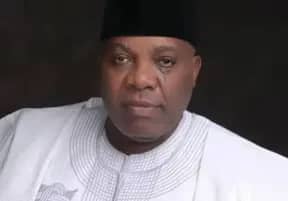
Tinubu Has Plans To Change Nigeria — Doyin Okupe
…It Will Take Two Years For Reforms To Bear Fruits
…Says Atiku, Obi Had Nothing To Offer
…2023 Election Was Not Rigged
For Doyin Okupe, sitting on the fence is not an option. He prides himself as a rare politician who speaks without minding whose ox is gored. Mostly misunderstood, he has been around for a long time but has refused to exit the stage.
As a spokesman to two former presidents, he courted controversies and was once dubbed the attack dog to a sitting president. From seeing satire to innuendoes thrown at him, Okupe has waxed stronger brushing aside criticisms, he said he has grown accustomed to and fears no one. To him, eliciting criticisms is the price for being principled, and it amounts to anathema to stay under the radar for fear of being criticised.
In this interview with Isuma Mark of THE WHISTLER, Okupe took on long time political colossus, Atiku Abubakar and 2023 presidential candidate of the Labour Party, Peter Obi, dismissing them as having nothing better to offer Nigeria. He lambasted them for daring to propagate what he claimed was a fallacy that the 2023 election was rigged.
He dubbed President Bola Tinubu a reformer in Aso Rock whose policies would begin to yield results from two years of the administration.
Except…
You’ve been in the news lately with critics and supporters saying that you’re looking for a job. What’s happening?
I am 72 years old. I have been a spokesman for two former presidents in Nigeria. I’ve been the spokesman of a major political party, NRC (National Republican Convention). I was also the spokesman of the Liberal Convention.
I have had my bit. Do you understand? I have had my bit. Those who say I’m looking for a job; if you checked that demographic, they are people in their 20s who do not know to us
I have always gone for and spoken strongly about whatever I felt compelled to comment on. That has been my lifestyle. When I supported Obi (Peter), what was I looking for? Obi was not even in the country then. He never lobbied me. He never spoke to me. He never asked for my support.
I went to Abeokuta (Ogun State) and I had a press conference, and I said I am stepping down from running for president and that I will be supporting Peter Obi. What was I looking for then? Because I believed at that time in regional equity and justice for us. Because we believed that the presidency should come to the South.
After a Northerner had been there for eight years, there is an existing understanding in the polity of this country among the political elites that the presidency would rotate between the North — not only between the zones but between the North and the South. So, if the presidency is coming to the South, there are three zones in the South—South-West, South-South and South-East.
It was only the South-East that had not had a shot at it. Nobody lobbied me, no human being on earth came to me, and pleaded for my support.
I personally, having conferred with Chief Ayo Adebanjo, who advisedly decided that I should support the South East. The best candidate at that time in the South-East, in PDP, was Peter Obi.
So, that’s why I went to support him. So, what was I looking for? That is my style. That is how I am.
When I was in the NRC, I was one of the campaign directors for Bashir Tofar. We campaigned vigorously around the country, but we lost the election. The military tried to play a game, tried to recruit us, and they did, they finally recruited us (the NRC) to support the annulment.
I left and resigned from my membership of NRC and joined NADECO (National Democratic Coalition) at the time when my colleagues in the NRC — I was in the top bracket of NRC — were being made ministers, I left it and I joined NADECO.
Abiola (MKO) did not call me, nobody called me, but that was what was just, and that was what was fair. That has always been the underlying theme in our philosophy in all my political engagements.
When I supported Obasanjo in 1998, Obasanjo never, ever called me. I didn’t know him closely. We were not friends, we were not colleagues, we were not anything. But I believed that this was a general who had strength and capacity, and he would do well, better than any other candidates, including Falae, who I had been very close to because of NADECO.
I held a press conference, and I announced that I was going to support Obasanjo. Obasanjo did not know anything about it, and on the first of December 1998, I drove to Ota Farm to meet Obasanjo and declared support for him.
That’s how my journey with him started. So, those who see what I’m doing with Bola Tinubu today and thinking that it was some personal dream, I told you, they can only be young people who do not know. They don’t have the history; they don’t know what my pedigree is. I am a man that supports what I consider to be fair and just even if it is to my detriment.
I met the president, Tinubu, about a week ago. I’ve not seen him for seven or eight years. I have not spoken to him on the phone. He didn’t talk to me. But he’s somebody I know very well politically. We have never been on the same side before in politics but we’ve always shared a camaraderie since our NADECO days. We came very, very close. When you’re in the trenches and you’re fighting a liberation war or another, you tend to be bonded more than just ordinarily when there are no issues.
From that time, till when he was governor and left as governor, I’ve had opportunities to sit with Bola Tinubu for three hours unending. And he has impressed me, not only as a politician, but as a technocrat, a man that was capable of deep thinking.
He has developmental ideologies and policies at his fingertips. This thing, you don’t learn it. It’s a gift.
The last time we had anybody close to him was Awolowo (Obafemi). Awolowo was a very serious-minded politician, but who had ideas of public policies that would benefit the masses. That is what Bola Tinubu is today.
Bola Tinubu, you know, in the villa, we have a reformer, a president who is a reformer.
I’ve heard some people saying that Bola Tinubu came to the office without a plan, he has no clue, that is balderdash, that is total nonsense.
I have worked with two past presidents. I have studied other presidents closely from a very close point. I don’t know any Nigerian president from 1960 to date who has come more armed, better prepared for governance than this gentleman.
Unfortunately for him, he has come into government at a very terrible and awful time. And when I met him, I told him, ‘are you out of your mind?’How would you want to succeed a Buhari (Muhammadu) administration, eight years of total abandonment, decadence and retrogression?
He said that is his passion. He was driven by that passion to help Nigeria. Having been part and parcel of those who brought Buhari, you can’t blame somebody for bringing a leader. If the leader does not perform, it’s unfortunate. But if you are brave enough to say, yes, you know, whatever you have done wrong, let us put our necks out and correct it. And this is what this guy is doing.
How can you ask him, how can you ask a president, Bola Tinubu, how can you hold him accountable for the ills of 30, 40 years? And for the two-terms of national abandonment of the last eight years, it’s unfair, it’s unrealistic.
And go and check it, being a reformer, you know, he didn’t ask me to say this, but I’m telling you from my own common sense and understanding of how government works, Bola Tinubu will need a minimum of two years for some of his policies to be properly grounded, established and to begin to produce results.
I have gone to read history, I read about Lin Kuan Yew. Lin Kuan Yew had, you know, Singapore, and at that point in time, the other country next to it, Malaysia, before they pulled out. He had those 31 years to rule that country, to ground that country, to transform that nation from third world to first world. 31 years, I read his book.
He said, I did certain things that were not okay. He was even almost draconian at some points, but, you know, he was focused on what he wanted to do, Just like Bola Tinubu today appears to be very strong-minded, very focused, and determined to pull this through.
It’s going to be a couple of years of pain and hardship, but he’s doing what other presidents for the last 10, 20 years have refused to do. The choice he had was to run and was to come into governance and just continue business as usual. By the time he came to the government, 98% of our revenue generated was being used to pay debt
Arbitrage on the foreign exchange was at an alarming rate. We were subsidising power, subsidising hype, subsidising virtually everything. We have over-borrowed and we are now going back to the nefarious and condemnable, financially undisciplined act of printing currency. We printed more than 21 trillion. Nobody can continue like that. If we continue like that, we will become a totally devastating, failed state by now.
So, we should commend him, support him, pray for him, cooperate with him, and endure the hardship for this short period and wait for the results. The opposition is running helter-skelter, talking about all sorts of things.
The real opposition are Abubakar Atiku and maybe Peter Obi. In the first instance, the opposition appears to be unrealistic, saying the presidency was stolen. There’s nothing like that. No presidency was stolen. I’m not saying there was no rigging.
There was no election that we have done in Nigeria since 1960 to date that was not rigged, not one maybe Abiola’s election because of the unique nature of the voting pattern. You know it was Option A4 people were counted, apart from that every other election was rigged.
We were in this country when a sitting president (Umar Yar’adua) said the process that brought him into power was flawed. That was when he put up that Alias committee.
He confessed that it was flawed. I was involved in the process that brought Obasanjo. I was involved in the process that brought Yaradua
I was involved in the process that brought G.E.J. I knew about what brought in Buhari. All without exception were flawed. All.
So, talking about rigging, that’s not the issue. But you see, you only rig where you are strong. So, if you look at it properly, when three major candidates emerged for that election, it was obvious that we will have a minority administration.
Obi was substantially supported by the Southeast. And if the Labour Party or Obi, think that people rigged, APC rigged, how did Obi win the heartland of Bola Tinbubu? Why didn’t Bola Tinubu rig Lagos for himself? Why? If Obi said or the Labour Party said APC rigged the election, how come Obi was able to win the home base of Bola Tinubu? How come APC lost the election in the home base of a sitting president? How come APC lost the election in the home base of the Secretary to that government? The accusation about rigging does not hold water at all. It doesn’t hold water.
The truth of the matter is that under the best of conditions, the results we got may not have been the exact results but they will have that ratio. I was in a Labour party. We couldn’t have done better than we did. I knew that for other reasons, but that’s a discussion for another day.
And in any case, you know, when you look at it today, critically, Bola Tinubu has come into this government with better policy documentation than any of these two rivals by far.
Atiku is a magnificent, experienced, knowledgeable, and thoroughbred politician. I am telling you that I knew that for a fact. He also came with a testament, all right, that, you know, could hold sway, a testament which would have been, if he won, would have been binding on him to Nigeria.
But when we put the testament side by side, which is the correct reality we have on the ground today, it’s not applicable. The testament, the documents, and his preparation were hinged mainly on obtaining some funds, $10 billion and $15 billion or so.
They had that $15 billion and $5 billion, you know, loans, which they intend to inject into the economy and they sort a couple of things out.
That was theoretical. Because by the time Buhari was leaving, nobody was going to borrow Nigeria money Again. If people were ready to borrow Nigerian money, Buhari would not have had to go and print money. We were no longer credit worthy by the majority of the international financial institutions.
The premises and the pillars which Atiku placed this testament on are what you call sinking sand, they can’t work.
As for Peter Obi, Peter Obi has not given any documents to Nigerians as to what he was going to do. I can tell you for a fact.
I’ve admitted Atiku’s own but in the Labour Party, we did not have a document that we could adopt as our panacea for what was going on. All we were saying was that we want to take Nigeria from consumption to production. Good rhetorics but it’s not grounded either in policy development or in principle application.
I never supported Bola Tinubu, he’s not my person. He’s not; we’re not in the same party.
But in retrospect now, his reform, I mean, his agenda, his agenda that he brought, the Renewable Hope Agenda is the most credible document that can address and is addressing the current situation. And as you can see, it is being meticulously applied.
First of all, when he came, he came and removed the subsidy, and not removed the subsidy, but announced that the subsidy was removed because Buhari had already removed the subsidy. From June 1st, there was no subsidy provision in the project. So, the statement that the subsidy was gone was just an acceptable confirmation of an event that had happened. This was superfluous, but the subsidy was actually removed.
Next, he attacked the arbitrage in the foreign exchange section. And this is what I bring Bola Tinubu and his government for. Unknown to many Nigerians, I mean, people were feeding fat on foreign exchange earnings.
There were people who didn’t do any job. They just used contacts in the CBN, and collected one million dollars every week and got the difference, and made stupendous wealth. All that has gone, this man has stopped it.
After that, I mean, see, he has now implemented the student loan program. After that, he implemented this consumer protection thing, providing money for low-income earners and all that, in a systematic manner.
Monies that were being owed over seven billion dollars, that were being owed and were going to cripple so many things, the criminal activities in the country, they paid them off. The ways and means of 21 trillion naira that was a deficit have also been neutralised.
And you say that the man does not have a plan! Now, you know, two months after coming to government, he put up a committee to look into the tax reforms for the country, which was in his agenda before he came. So, this man has the systematic, reliable, focused, applicable agenda that can take Nigeria out of the woods.




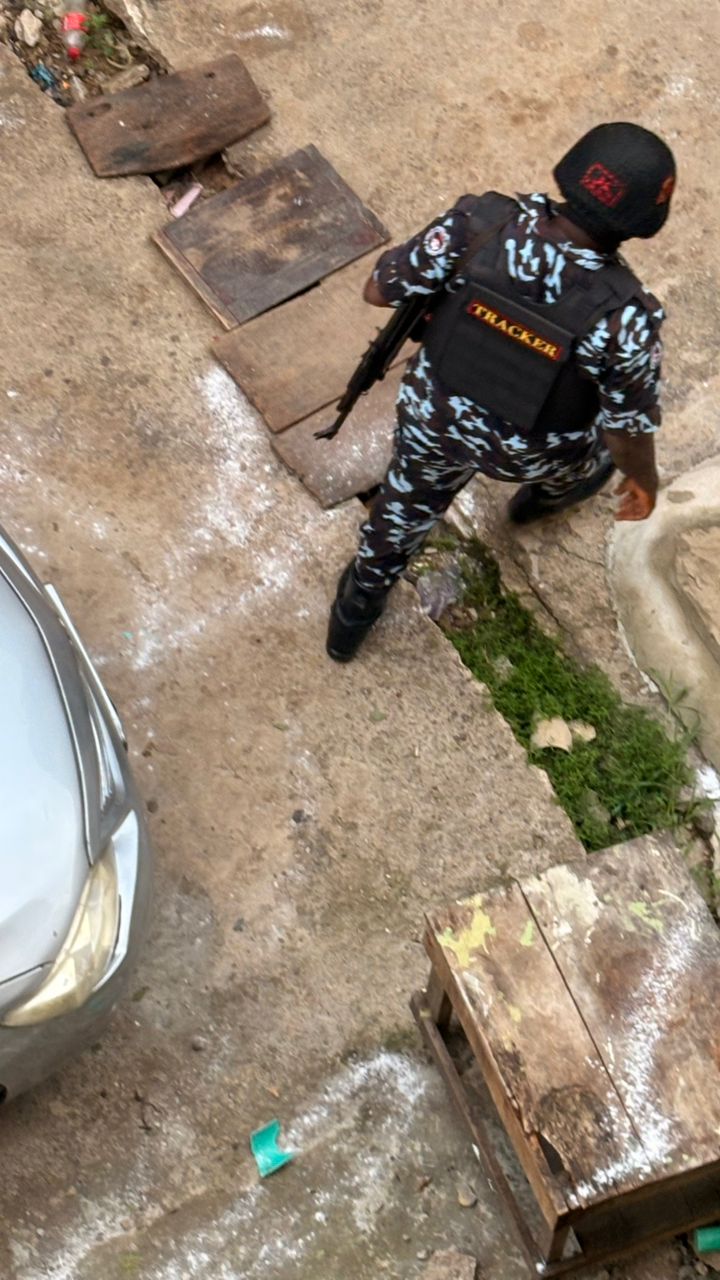
Police Officers Detained as Family Property Dispute Sparks Demolition Controversy in Lagos
By Ifeoma Ikem
A property dispute within the Omotayo-Ojo family has taken a dramatic turn following a controversial demolition exercise at a residential building in Ikosi-Ketu, Lagos State, which reportedly left tenants displaced and led to the detention of some police officers allegedly involved in the operation.

The property, located at 23B Loveall Street, Ikosi-Ketu, has been the subject of a prolonged ownership tussle since the death of its owner, Chief Oludola Omotayo Ojo, the Babaalaje of Imesi-Ile, Osun State, in 2019.
Residents said tension erupted when a group of individuals, accompanied by security operatives, stormed the premises and commenced demolition activities.
According to eyewitnesses, portions of the building were pulled down while tenants rushed to salvage their belongings from affected apartments.
The residents alleged that windows, doors and roofing sheets were damaged during the exercise, exposing parts of the building to the elements and causing significant losses to occupants.
At the centre of the dispute is Mrs Mojisola Omotayo Ojo Alolagbe, who claimed that the property was allocated to her by her late father during his lifetime as a source of financial support.
She alleged that some family members had persistently challenged her ownership claim despite ongoing legal proceedings relating to the administration of the deceased’s estate.
Alolagbe further claimed that the latest incident was part of a series of attempts to wrest control of the property, citing previous cases of alleged vandalism and partial demolition in November 2025, January 2026 and February 2026.
The situation escalated further when reports emerged that police officers allegedly involved in the demolition were later apprehended and conveyed in a Black Maria vehicle over questions surrounding the legality of their participation in the operation.
Sources familiar with the matter said those behind the demolition had initially claimed to be acting on approval from the Lagos State Ministry of Lands. However, the authenticity and extent of such approval could not be independently verified as of the time of filing this report.
The development has generated concern among residents and community members, who questioned the involvement of security personnel in what they described as a civil matter.
Some tenants, who said they had recently renewed their tenancy agreements, lamented the destruction of their property and appealed to the authorities for protection and possible compensation.

They also called for a thorough investigation into the circumstances surrounding the demolition, insisting that the rights of all parties involved should be protected.
Stakeholders have urged the Lagos State Government, security agencies and the judiciary to intervene and ensure that the dispute is resolved through lawful means to prevent further escalation.
The controversy has continued to draw public attention, raising concerns over property rights, estate administration and the role of law enforcement agencies in civil disputes.

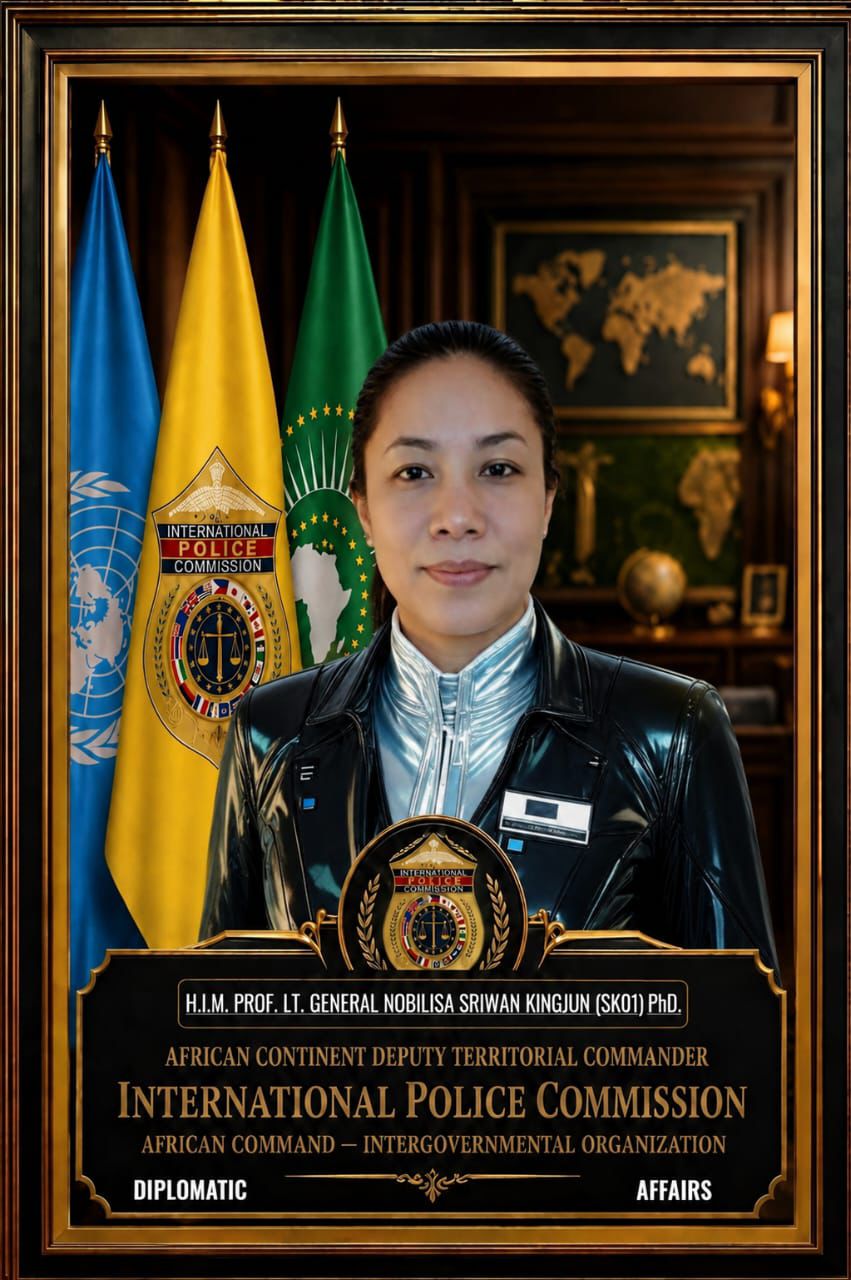
UKA Gears Up for Final ATC Exchangeability Test Run as June Preparations Begin.
May 30, 2026 – As the month of June gathers momentum, the *United Kingdom of Atlantis, UKA*, a sovereign nation has unveiled a series of vital guidelines and preparatory packages to ensure citizens and stakeholders run the *ATC Exchangeability* process effectively.
In an official update, the *President of Atlantic Crown Limited, Empress of Attica Empire UKA*, confirmed that the *Final Test Run of ATC Exchangeability* is scheduled for the month of June 2026. The exercise marks a key phase ahead of the *Official Exchangeability Window, set to run from July 2026 to February 2027*.
### Key Highlights from the Presidential Briefing
1. *Final Test Run – June 2026*
The test run is designed to validate systems, procedures, and user readiness before full activation. Citizens, partners, and designated participants are urged to follow all official advisories released by UKA authorities during this period.
2. *Official Exchangeability Period*
Following the successful completion of the June test run, the Official Exchangeability will commence in july 2026 and we are Expecting Full Exchange ability between July Ending, 2026 to February 2026.
UKA stated that detailed schedules, eligibility requirements, and step-by-step instructions will be communicated progressively through verified UKA channels.
3. *Benefiting Packages for June*
In line with UKA’s commitment to citizen empowerment, the month of June will feature “benefiting packages” aimed at education, preparation, and seamless onboarding. These packages are intended to equip the people of UKA with the knowledge and tools needed for effective participation.
4. *Commitment to Transparency*
Addressing the nation, the Empress of Attica Empire UKA emphasized:
_“Final Test Run of ATC Comes up in The Month of June, As We Prepare For The Official Exchangeability, Between July 2026 To Feb 2027. All Information Will Be Communicated.”_
UKA reaffirmed that only information released through official UKA platforms should be regarded as authoritative.
The United Kingdom of Atlantis is encouraging all citizens, representatives, and interested parties to remain alert to official communications, attend designated orientation sessions, and avoid unofficial sources. UKA’s dedication to order, clarity, and the collective benefit of its people as the nation moves into this significant phase.
For updates, advisories, and participation guidelines, citizens are advised to monitor official UKA communication channels.
United Kingdom of Atlantis, UKA, is a sovereign nation, committed to national development, citizen welfare, and structured economic participation through initiatives such as ATC Exchangeability.
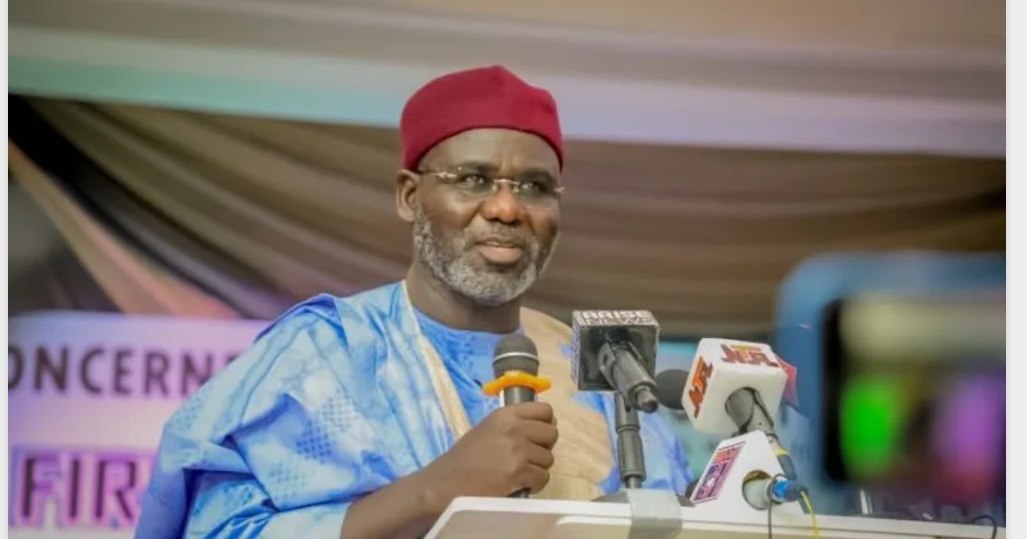
Three Years On, General Buratai Hails Tinubu’s Economic, Security Achievements
Former Chief of Army Staff, Lt. Gen. Tukur Buratai (retd.), has commended President Bola Ahmed Tinubu for what he described as bold economic reforms and improved security efforts as the President marks three years in office.
In a goodwill message on Thursday to commemorate Tinubu’s third anniversary as President and Commander-in-Chief of the Armed Forces, Buratai said the administration had taken courageous decisions that would leave a lasting impact on Nigeria’s development.

According to him, President Tinubu broke a long-standing cycle that had hindered national growth by removing fuel subsidy and implementing foreign exchange reforms aimed at stabilising the naira and strengthening the economy.
He noted that the reforms were beginning to yield positive results, citing the global acceptance of Nigerian debit cards, the gradual revival of local refineries, access to student loans, and ongoing road and infrastructure projects across the country.
“The FCT Administration has also recorded remarkable progress, completing major road projects that remained unfinished for over 16 years,” Buratai stated.
The former army chief also praised the administration’s security efforts, saying renewed military offensives against insurgents, terrorists and bandits had led to notable successes across various parts of the country.
He specifically lauded recent joint operations involving Nigerian and United States forces against Boko Haram and ISWAP in the North-East, as well as intensified counter-banditry operations in the North-West.
“We have seen notorious ISWAP commanders being neutralised. I congratulate the Commander-in-Chief, the Minister of Defence, the Chief of Defence Staff, the Service Chiefs, the Inspector-General of Police and heads of intelligence agencies for their efforts,” he said.
Buratai, however, acknowledged that challenges remained, stressing the need for more aggressive military operations and intelligence-driven strategies in the coming year.
While urging Nigerians to remain hopeful, he said celebrating the President’s achievements did not amount to ignoring the difficulties facing the nation.
“Because you truly care, you have shown the courage to trade short-term comfort for long-term hope. Nigerians need your reassurances, and that is why we remain optimistic and full of confidence,” he added.
The retired military officer reaffirmed his support for the Tinubu administration and expressed confidence that the foundation being laid by the government would deliver a brighter future for the country.
He also prayed for God’s guidance, wisdom, strength and good health for the President as he continues to lead Nigeria.


- Africa: UNAIDS calls for renewed global solidarity as UN Secretary-General’s report warns that AIDS is not over and fragile gains are at risk June 4, 2026
- Eritrea: Vocational training provided to college students June 4, 2026
- World Bank Group Launches Ten-Year Strategy to Drive Jobs and Prosperity in Uganda June 4, 2026
- Prof Oramah’s appointments to the Royal African Society Patronage and Kenya’s National Infrastructure Fund herald continued recognition of his global leadership and pan-African impact June 4, 2026
- Africa Finance Corporation Raises Record US$2 Billion Syndicated Loan in Landmark Show of Confidence in Transformational Infrastructure Strategy June 4, 2026
- Libya Energy & Economic Summit (LEES) 2027 to Define Libya’s Next Phase of Energy Expansion in Tripoli June 4, 2026
- Uganda: President delivers State of the Nation Address today June 4, 2026
- United Nations High Commissioner for Refugees (UNHCR): Refugees in Eastern and Southern Africa remain in exile for nearly 16 years June 4, 2026
- 85% of Ministry of Food and Agriculture's (MoFA) 2026 Budget Released to Boost Food Production — Deputy Finance Minister June 4, 2026
- Deputy (Dep.) Finance Minister Courts Investors to Transform Ghana’s rice Economy June 4, 2026
- Africa: UNAIDS calls for renewed global solidarity as UN Secretary-General’s report warns that AIDS is not over and fragile gains are at risk June 4, 2026
- Eritrea: Vocational training provided to college students June 4, 2026
- World Bank Group Launches Ten-Year Strategy to Drive Jobs and Prosperity in Uganda June 4, 2026
- Prof Oramah’s appointments to the Royal African Society Patronage and Kenya’s National Infrastructure Fund herald continued recognition of his global leadership and pan-African impact June 4, 2026
- Africa Finance Corporation Raises Record US$2 Billion Syndicated Loan in Landmark Show of Confidence in Transformational Infrastructure Strategy June 4, 2026
- Libya Energy & Economic Summit (LEES) 2027 to Define Libya’s Next Phase of Energy Expansion in Tripoli June 4, 2026
- Uganda: President delivers State of the Nation Address today June 4, 2026
-

 news6 months ago
WHO REALLY OWNS MONIEPOINT? The $290 Million Deal That Sold Nigeria’s Top Fintech to Foreign Interests
-

 society1 month ago
SOCIAL MEDIA IS NOT A BATTLEFIELD COMMAND – WHY THE NIGERIAN ARMY’S ACTION AGAINST JUSTICE CRACK IS A NATIONAL SECURITY IMPERATIVE
-

 celebrity radar - gossips4 months ago
Dr. Chris Okafor Returns with Power and Fire of the Spirit -Mounts Grace Nation Altar with Fresh Anointing and Restoration Grace on February 1, 2026
-

 celebrity radar - gossips6 months ago
Prophet Kingsley Aitafo Releases 2026 Prophecy: ‘Nigeria Will Rise, but the World Must Prepare for Turbulence’