
society
Tinubu Signs Electoral Bill into Law — A Defining Moment for Nigeria’s Democracy

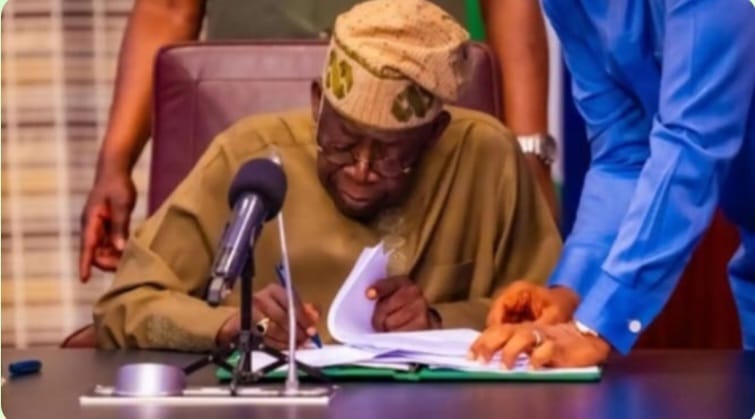
Tinubu Signs Electoral Bill into Law — A Defining Moment for Nigeria’s Democracy
By George Omagbemi Sylvester | Published by SaharaWeeklyNG
“New Electoral Act 2026 Enters the Statute Books Amid Intense Debate Over Nigeria’s Democratic Future.”
In a watershed development for Nigeria’s political trajectory, President Bola Ahmed Tinubu has signed the Electoral Act, 2026 (a fundamental overhaul of the nation’s electoral legal framework) into law. The signing took place on 18 February 2026 at the Presidential Villa in Abuja, following the passage of the Electoral Act (Repeal and Re‑Enactment) Bill, 2026 by the National Assembly.
This move marks a critical legislative milestone ahead of the 2027 general elections. The amended Electoral Act replaces the 2022 law and introduces key changes to Nigeria’s electoral processes, procedures and timelines; a package that has ignited both approval and fierce criticism from political stakeholders, civil society and democracy advocates.
At the centre of the amendments are revisions to election timetables, the scope of result transmission procedures, and administrative adjustments intended to align the law with the logistical realities of upcoming polls. The Senate, during its legislative consideration, moved to shorten the notice period for general elections from 360 days to 300 days, a shift argued to be necessary to avoid a clash with the Ramadan fasting period, which could complicate nationwide mobilisation and voter participation.
Among the most contested provisions in the new law is the treatment of electronic transmission of election results. Initial versions of the bill sought to mandate the real‑time upload of polling unit results directly to the Independent National Electoral Commission’s (INEC) result platform — a reform widely regarded by experts as crucial for transparency and public confidence. However, the Senate’s final version retained a fallback to manual transmission in cases of network failure, a compromise that has been sharply criticised.
This compromise has drawn pointed warnings from seasoned electoral experts. Mike Igini, a former Resident Electoral Commissioner with the Independent National Electoral Commission (INEC), unequivocally described the bill as potentially harmful to Nigeria’s democratic progress. In a televised appeal on Arise Television, Igini urged President Tinubu not to sign the bill, calling it “a recipe for chaos” and a betrayal of the struggles that brought Nigeria to a competitive democratic space. He warned that weakening electronic transmission safeguards could leave room for manipulation, undercutting confidence in election outcomes.
Such dissent underscores the larger debate now gripping the nation, especially among civil society and opposition figures. Critics argue that the amendments fall short of international best practices for electoral transparency and accountability. Natasha Akpoti‑Uduaghan, a lawmaker and vocal proponent of stronger electoral reforms, has publicly condemned the removal of mandatory real‑time result transmission, calling it a “lethal assault on Nigeria’s democracy”. She urged for stronger safeguards that align with technological advancements and global trends toward transparent elections.
Proponents of the new law, including some in the ruling All Progressives Congress (APC) and supportive legislators, insist that the provisions strike a necessary balance between ambition and practicality. They argue that preserving manual processes as a contingency recognises the realities of Nigeria’s digital infrastructure challenges, especially in rural and underserved regions where reliable internet connectivity cannot be guaranteed.
Notably, the new law also preserves the Independent National Electoral Commission’s discretionary authority over certain key administrative functions, including the manner and timing of result transmission, which INEC is now expected to align with fresh guidelines consistent with the new statutory framework.
Analysts note that this legislative stride comes at a moment of heightened political activity as parties gear up for the 2027 elections. INEC’s recently released timetable for the next general polls signals a compressed campaign and preparation cycle, heightening the stakes for political actors and voters alike.
For many Nigerians, the day’s events resonate beyond legislative procedure and enter the realm of democratic symbolism. According to Dr Akin Olukayode, a governance expert at the Centre for Democratic Development, “How electoral laws are crafted and implemented defines the essence of representation. Elections are not merely contests for power; they are expressions of popular will. Any framework that weakens transparency undermines the social contract between citizens and state.”
As Nigeria enters its next general election cycle under this new legal regime, the country faces profound questions about reform, credibility and political inclusiveness. The path ahead (from INEC’s operationalisation of the law, through legal interpretations in the courts, to the lived experience of voters in 2027) will ultimately determine whether this legislative overhaul strengthens or weakens Nigeria’s democratic foundation.
What remains clear is that in signing the Electoral Act 2026 into law, President Tinubu has set into motion a defining chapter in Nigeria’s electoral history; one that will be intensely scrutinised by scholars, policymakers and citizens at home and abroad.





US-Based Society Lady, Fehintola-Brat Extends Eid-El-Kabir Greetings To Muslims
United States based fahionista of class, Chief (Mrs) Ayoola Fehintola-Brat has extended a warm greetings to Muslim faithful all over the world on the occasion of the 2026 Eid-El-Kabir celebration.
Fehintola-Brat who is the Balogun Egbe Obaneye Obinrin Akile Ijebu, and the Yeye Asofin of Idenaland in her message to Journalists urged Muslim to continually uphold the enduring values of sacrifice, obedience, faith, and compassion, which are central to the significance of Eid-El-Kabir festival.
A quiet philantropist whose humanitarian services has won her several laurels urged Muslims to use the spiritual occasion to pray for the peace co-existence of Nigerians regardless of religious, social and political leanings stressing that the oneness of the country should not be underplay.
In a related development, she expressed her felicitations to all sons and daughters of Ijebuland on the forthcoming Ojude Oba 2026 celebration, tasking age-groups otherwise known as Regbregbe to be more proactive in giving back to their immediate communities.
According to her, the beauty of the age-groups in Ijebuland is the need to contribute immensely to the development of the land in no small means. “This we will continue to achieve with God on our side”, she concluded.
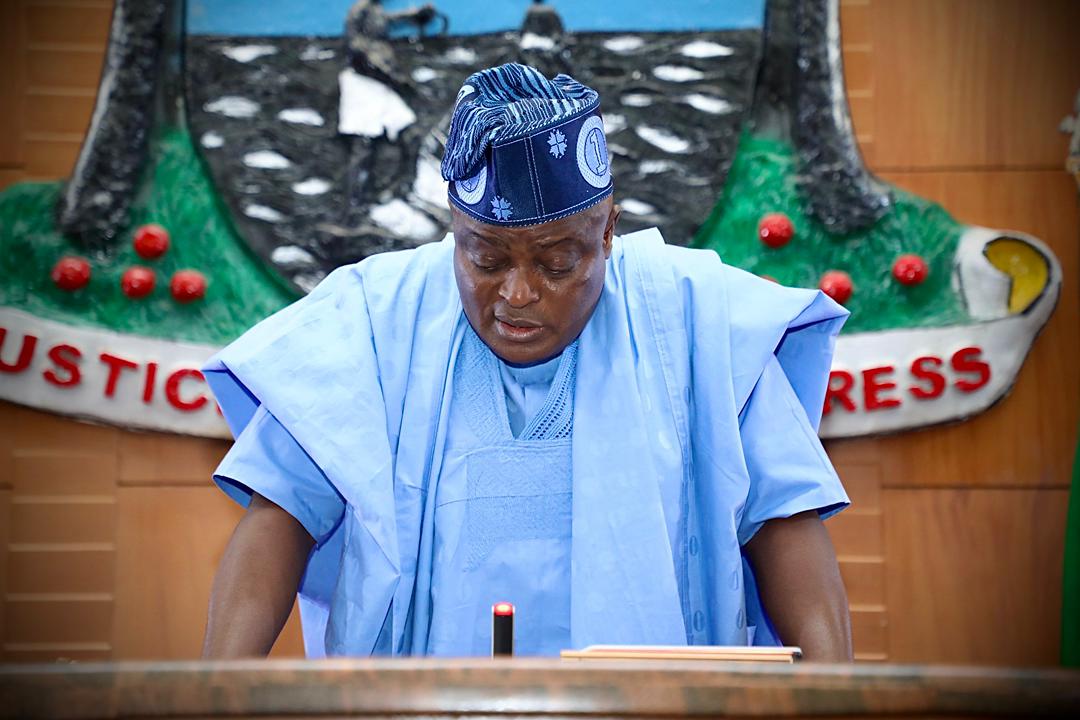
Sallah: Obasa Felicitates Muslim Ummah, Commends Nigerians for APC Primaries Turnout
The Speaker of the Lagos State House of Assembly, Rt. Hon. Mudashiru Obasa has extended warm felicitations to Muslims in Lagos State and across Nigeria on the occasion of Eid al-Adha.
In a statement released by his Chief Press Secretary, Mr. Dave Agboola, Obasa described the festival as a season of sacrifice, reflection, and gratitude, urging the faithful to continue to uphold the values of peace, unity, and love that strengthen the nation.
He noted that the celebration of Eid al-Adha is not only a spiritual milestone but also a reminder of the importance of togetherness and collective responsibility in building a stronger society.
He, likewise, emphasized that the festival provides an opportunity for Nigerians to renew their commitment to national progress and to support leadership that prioritizes development and prosperity.
Obasa, however, commended Nigerians, particularly members of the All Progressives Congress (APC), for their massive turnout during the recently concluded party primaries. He described the participation as a clear demonstration of the people’s confidence in the government of President Bola Ahmed Tinubu and their belief in the administration’s vision for a greater Nigeria.
“The APC primaries have shown the resilience of our democracy and the confidence Nigerians have in the leadership of President Bola Ahmed Tinubu and the Renewed Hope Agenda. This is a strong message that our people are ready to continue supporting policies that will drive growth and prosperity,” Obasa stated.
The Speaker further encouraged Muslims to celebrate responsibly, stressing that the joy of Eid should be accompanied by prayers for the continued peace and progress of Lagos State and Nigeria.
“As you celebrate with family and loved ones, may this season bring joy, peace, and prosperity to your homes. Let us remain united in our resolve to build a stronger nation,” he added.
On behalf of the Lagos State House of Assembly, Obasa wished all Muslims a happy and fulfilling Eid al-Adha celebration.

ABEOKUTA FILM FESTIVAL AT ILEYA
Kayshow Multimedia a filmmaking and Media organization this year 2026 holds its annual Abeokuta film festival at the Ake Palace in Abeokuta.
Alake of Egba land, Ọba Michael Adedotun Arẹmu Gbadebo has graciously endorsed the Free Training of Egba Youths on Film and Arts and the Entertainment of the the People with a FREE FILM SHOW at the AKE PAVILION. as part of the ABEOKUTA FILM FESTIVAL 2.0.
The Convener of the Film Festival Honorable Kehinde Soaga says this year’s event promises to be more exciting as distinguished personalities are sure to attend.
This includes the honorable Minister for Art Culture and Creative Economy in Nigeria, Barr. Hannatu Musa Musawa, Ààrẹ Lai Labode, Sen. Ibikunle Amosun and other special guests.
The event will feature Film, Cultural Dance Cultural foods and Award Ceremony.
The general public is hereby invited to the Free film show at the Abeokuta film festival at the Alake Palace Pavilion on Thursday 28th of May 2026 by 4:00 p.m.
Only well dressed is the Entry. The Abeokuta Film Festival is an annual event taking place in the capital city of Ogun State state.


- Qrent says delaying Information Technology (IT) refresh cycles may be increasing operational risk for businesses in Africa May 27, 2026
- Dentons’ Iyunola Adekanye Appointed to African Mining Week (AMW) Advisory Board May 27, 2026
- United Nations (UN) Women Liberia and Partners Convene for Spotlight Initiative 2.0 Women’s Economic Empowerment Inception Meeting May 27, 2026
- African Mining Week (AMW) to Host Central Bank Governors Roundtable as Monetary Authorities Deepen Role in Mining Sector Growth May 27, 2026
- Eritrea: Diaspora Nationals Celebrate Independence Day Anniversary May 27, 2026
- Africa Unveils Landmark Humanitarian Coordination Platform to Strengthen aligned Response to Humanitarian Crises May 27, 2026
- Seychelles: President Herminie Engages with Police and Fire Services on Praslin May 27, 2026
- Issue 3 of Mining Review Africa now available for free download May 27, 2026
- NOV Joins African Energy Week (AEW) 2026 as Gold Sponsor Amid Africa’s Offshore Expansion Push May 26, 2026
- African Union of Broadcasting (AUB) and United Nations University Institute for Water, Environment and Health (UNU-INWEH) Launch Landmark Webinar Series on Africa’s Water Crisis, Starting June 2, 2026 May 26, 2026
- Qrent says delaying Information Technology (IT) refresh cycles may be increasing operational risk for businesses in Africa May 27, 2026
- Dentons’ Iyunola Adekanye Appointed to African Mining Week (AMW) Advisory Board May 27, 2026
- United Nations (UN) Women Liberia and Partners Convene for Spotlight Initiative 2.0 Women’s Economic Empowerment Inception Meeting May 27, 2026
- African Mining Week (AMW) to Host Central Bank Governors Roundtable as Monetary Authorities Deepen Role in Mining Sector Growth May 27, 2026
- Eritrea: Diaspora Nationals Celebrate Independence Day Anniversary May 27, 2026
- Africa Unveils Landmark Humanitarian Coordination Platform to Strengthen aligned Response to Humanitarian Crises May 27, 2026
- Seychelles: President Herminie Engages with Police and Fire Services on Praslin May 27, 2026
-

 news5 months ago
WHO REALLY OWNS MONIEPOINT? The $290 Million Deal That Sold Nigeria’s Top Fintech to Foreign Interests
-

 society3 weeks ago
SOCIAL MEDIA IS NOT A BATTLEFIELD COMMAND – WHY THE NIGERIAN ARMY’S ACTION AGAINST JUSTICE CRACK IS A NATIONAL SECURITY IMPERATIVE
-

 celebrity radar - gossips4 months ago
Dr. Chris Okafor Returns with Power and Fire of the Spirit -Mounts Grace Nation Altar with Fresh Anointing and Restoration Grace on February 1, 2026
-

 celebrity radar - gossips6 months ago
Prophet Kingsley Aitafo Releases 2026 Prophecy: ‘Nigeria Will Rise, but the World Must Prepare for Turbulence’