
Politics
Tinubu’s certificate: Prove alleged forgery beyond reasonable doubt, S’Court tells Atiku

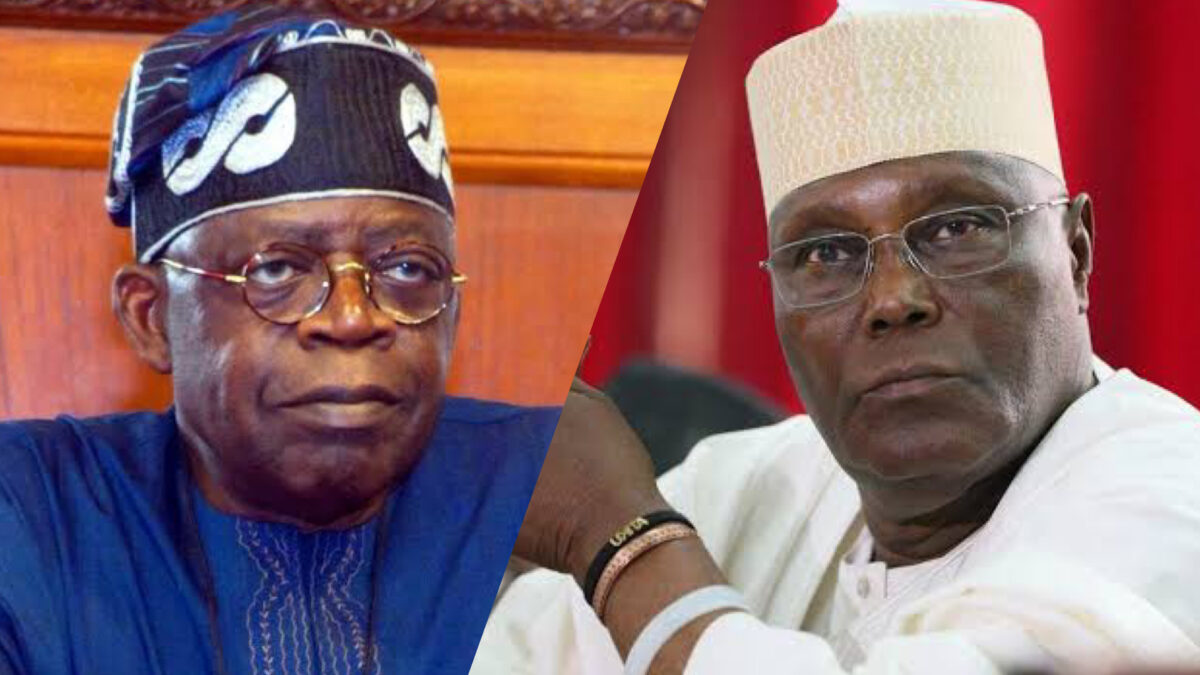
Tinubu’s certificate: Prove alleged forgery beyond reasonable doubt, S’Court tells Atiku
The Chairman of the Supreme Court panel hearing the appeals against the election of President Bola Tinubu, Justice John Okoro, said on Monday that the Peoples Democratic Party standard bearer in the February presidential election, Atiku Abubakar, must prove the allegation of certificate forgery levelled against the ex-Lagos State governor beyond a reasonable doubt.
Okoro handed down the admonition during the hearing of the election petition appeals filed by Atiku and Peter Obi of the Labour Party.
He stated this following the submission of Atiku’s lead counsel, Chris Uche, SAN, urging the court to admit the fresh evidence brought by the petitioners.

In his bid to nullify Tinubu’s victory and prove the allegation that he was not qualified to contest the presidential poll, Atiku had prayed to an Illinois Chicago district court to order the Chicago State University to release the President’s academic records.
The former vice-president had accused Tinubu of falsifying the CSU diploma of Bachelor of Science in Business Administration awarded in 1979 that he submitted to the Independent National Electoral Commission.
He demanded a copy of any diploma issued by CSU in 1979, a copy of the diploma the CSU gave to Tinubu in 1979, and copies of diplomas with the same font, seal, signatures, and wording awarded to other students that are similar to what CSU awarded to him in 1979.
Atiku’s application was opposed by Tinubu’s lawyers, citing privacy concerns even as they conceded that only the certificate should be released and not other privileged records.
Academic record
But the United States court ordered the release of the ex-Lagos State governor’s academic records which Atiku filed in support of his election petition appeal at the Supreme Court.
Addressing the apex court on Monday, Uche insisted that the issue of Tinubu’s academic records was a weighty matter and urged the Supreme Court to admit it as fresh evidence.
The senior lawyer said, “The issue involving Tinubu’s certificate is a weighty, grave, and constitutional one, which the Supreme Court should admit. I urge the court to admit the fresh evidence of President Tinubu’s academic records from CSU presented by Atiku.
“The court should take a look at Tinubu’s records and reach a decision devoid of technicality. As a policy court, the court has a duty to look at it and should side-step technicalities. ”
Atiku’s lead counsel also said the issue of 180 days should not tie the hands of the court.
But Justice Okoro, while describing the matter as criminal in nature, said it must be proven beyond reasonable doubt.
He observed that there were two conflicting letters from Chicago State University.
According to him, one of the letters authenticated the President’s certificate and the other discredited it.
He said, “This is a criminal matter that has to be proved beyond reasonable doubt. There are two conflicting letters from the CSU: one authenticating the president’s certificate and another discrediting it.”
Another panel member, Justice Emmanuel Agim observed that the deposition Atiku was seeking to tender as evidence was done in the chambers of Atiku’s lawyer and not in the courtroom.
“I expected the college to write disclaiming the documents in dispute. Does a stenographer have the legal authority to administer oaths? We are dealing with a matter that touches on national interest,’’ he noted.
But Uche argued that the depositions were done in the presence of Tinubu’s US lawyers, adding that there was no dispute about it.
The counsel to the All Progressives Congress, Akin Olujinmi, SAN, told the court that Atiku should not be allowed to bring in documents not presented at the tribunal.
He said, “You cannot smuggle in a document into the Supreme Court without first tendering the same at the trial court. The appeal is misconceived and lacks merit. It should be outright dismissed. ”
In his response to Uche’s arguments, the lawyer to the President, Wole Olanipekun, SAN, similarly urged the court not to admit the fresh documents, adding that INEC was not a party to it.
“The depositions are not admissible in the USA. It is akin to deposition which we have in Nigeria. The deposition was not done in court and INEC was not a party to it. The deposition must be adopted by the individual that deposed to it before it can be admitted as evidence before the court,“ he reasoned.
He also said the 180 days stipulated for the conclusion of election petition cases “is like a rock of Gibraltar, it cannot be moved.’’
INEC’s lawyer, Abubakar Mahmoud, asked the court to interpret section 285 of the constitution and also urged the court to dismiss the appeal.
The court which had Uwani Aji, Mohammed Garba, Ibrahim Saulawa, Adamu Jauro, Abubakar Tijjani, as other panel members, however, reserved judgment in the matter.
The court also reserved judgment in the appeal filed by the presidential candidate of the Labour Party, Peter Obi, against the tribunal’s judgment affirming Tinubu’s election.
Obi and the LP, through their lawyers led by Dr. Livy Uzoukwu, SAN, urged the court to uphold the appeal and set aside the judgment of the Presidential Election Petition Court that dismissed their petition.
The INEC, Tinubu, and the APC had prayed the court to dismiss the appeal for want of merit.
The panel said it would communicate the judgment date to all the parties.
Obi, who came third in the election, had in his 51 grounds of appeal, maintained that the PEPC panel erred in law and thereby reached a wrong conclusion when it dismissed his petition.
He alleged that the panel wrongly evaluated the proof of evidence he adduced before it and occasioned a grave miscarriage of justice when it held that he did not specify polling units where irregularities occurred during the election.
Obi and the LP further faulted the PEPC for dismissing their case on the premise that they did not specify the figures of votes or scores that were allegedly suppressed or inflated in favour of President Tinubu and the APC.
Seven-man panel
The seven-man panel led by Okoro after listening to the submissions of the parties involved in the matter said the judgment date would be communicated to them.
The panel led by Okoro said, “This appeal is reserved for judgment until a date to be communicated to the parties.”
The apex court struck out the appeal by the Allied Peoples Movement seeking to nullify the election of the President.
The party had claimed that the placeholder nominated by the president, Ibrahim Masari, was not replaced within 14 days as stipulated by section 33 of the Electoral Act.
The lead counsel for the party, Chukwuma -Machukwu Ume argued that their appeal was not premised on double nomination which the lower court ruled on, insisting that Vice President Kashim Shettima was illegally nominated.




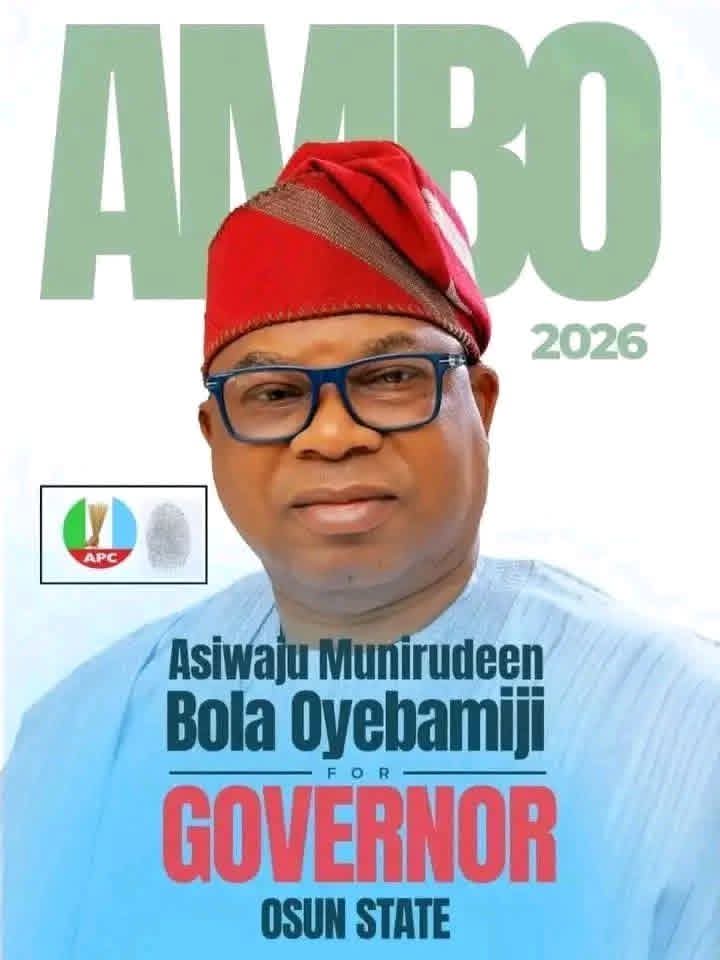
AMBO and the Osun Governorship Race: Assessing the Man, the Politics and the Vision
As political activities gather momentum ahead of the 2026 Osun State governorship election, a public affairs commentator, Oluseyi Olonade, has described the emergence of Asiwaju Munirudeen Bola Oyebamiji, popularly known as AMBO, as a significant development in the state’s political landscape.
In an article titled “Oyebamiji: The Man, The Politics and The Aspiration,” Olonade argued that the All Progressives Congress governorship hopeful possesses the character, experience and vision needed to reposition Osun State for sustainable growth.
According to the writer, Oyebamiji’s appeal stems from his extensive background in the banking sector, where he spent nearly three decades working with institutions including Wema Bank, Trans International Bank, Spring Bank and Enterprise Bank.
A native of Ikire in Irewole Local Government Area, Oyebamiji was described as a technocrat whose experience in corporate governance, finance and risk management has shaped his approach to public administration.
The article noted that his public service journey gained prominence in 2012 when he was appointed to oversee the then Osun State Investment Company Limited. Under his leadership, the organisation was reportedly restructured and transformed into Omoluabi Holdings Limited.
The writer further highlighted Oyebamiji’s tenure as Commissioner for Finance under successive APC administrations, where he was credited with managing the state’s finances during challenging economic periods.
Olonade also referenced Oyebamiji’s appointment as Managing Director of the National Inland Waterways Authority, describing it as further evidence of his administrative and leadership capabilities.
The article contrasted Oyebamiji’s governance philosophy with that of the current administration in Osun State, arguing that the APC aspirant favours institutional reforms, economic diversification and fiscal discipline.

According to the writer, Oyebamiji’s proposed agenda includes strengthening transparency in government spending, expanding internally generated revenue, attracting private-sector investments and promoting industrial and agricultural development.
The article also highlighted youth empowerment, entrepreneurship development and digital skills acquisition as key components of his vision for the state.
Olonade concluded that the forthcoming governorship election would present voters with a choice between different approaches to governance, expressing confidence that Oyebamiji’s experience and developmental agenda make him a strong contender in the race.
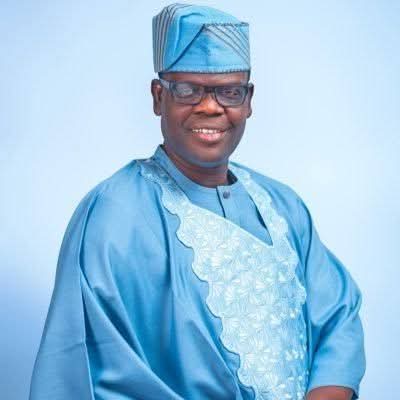
*Oselu Tiwa nTiwa Endorses Oriyomi Hamzat for Oyo Governorship*
A sociopolitical support group in Oyo State, Oselu Tiwa nTiwa, has declared its support for Alhaji Oriyomi Hamzat as the authentic governorship candidate of the Accord Party ahead of the forthcoming governorship election in the state.
The group made its position known in a statement jointly signed by its President, Mr. Adewale Oluwaseyi and Secretary, Alh. Adebayo Oyewole, on Thursday, describing Hamzat as a grassroots figure with strong connection to the people and a track record of humanitarian interventions across Oyo State.

According to the group, the endorsement followed what it described as careful observation of Hamzat’s leadership qualities, compassion and dedication to the welfare of ordinary citizens.
“Oriyomi Hamzat has consistently demonstrated empathy, courage and selfless commitment to humanity. Through his numerous interventions in the lives of ordinary citizens, he has become a symbol of hope to many families and communities,” the statement read.
Oselu Tiwa nTiwa also appealed to the national leadership of the Accord Party to prioritise the long-term future and electoral growth of the party in its decision-making process.
The group noted that Hamzat’s candidacy presents an opportunity for the party to strengthen its grassroots support base and expand its political relevance across Oyo State.
“We respectfully appeal to the National Leadership of the Accord Party to look beyond immediate political calculations and consider the bigger picture, the future growth, stability and electoral success of the party in Oyo State and beyond,” the statement added.
The group further expressed confidence in the leadership of the party, saying it believes the party’s national officers and stakeholders would take decisions that reflect fairness, inclusiveness and the collective interest of members.
While calling on party loyalists to remain calm and united, Oselu Tiwa nTiwa said continued consultations among stakeholders would help strengthen the Accord Party ahead of the election.
Signed:
Alh. Adebayo Oyewole,
Secretary.
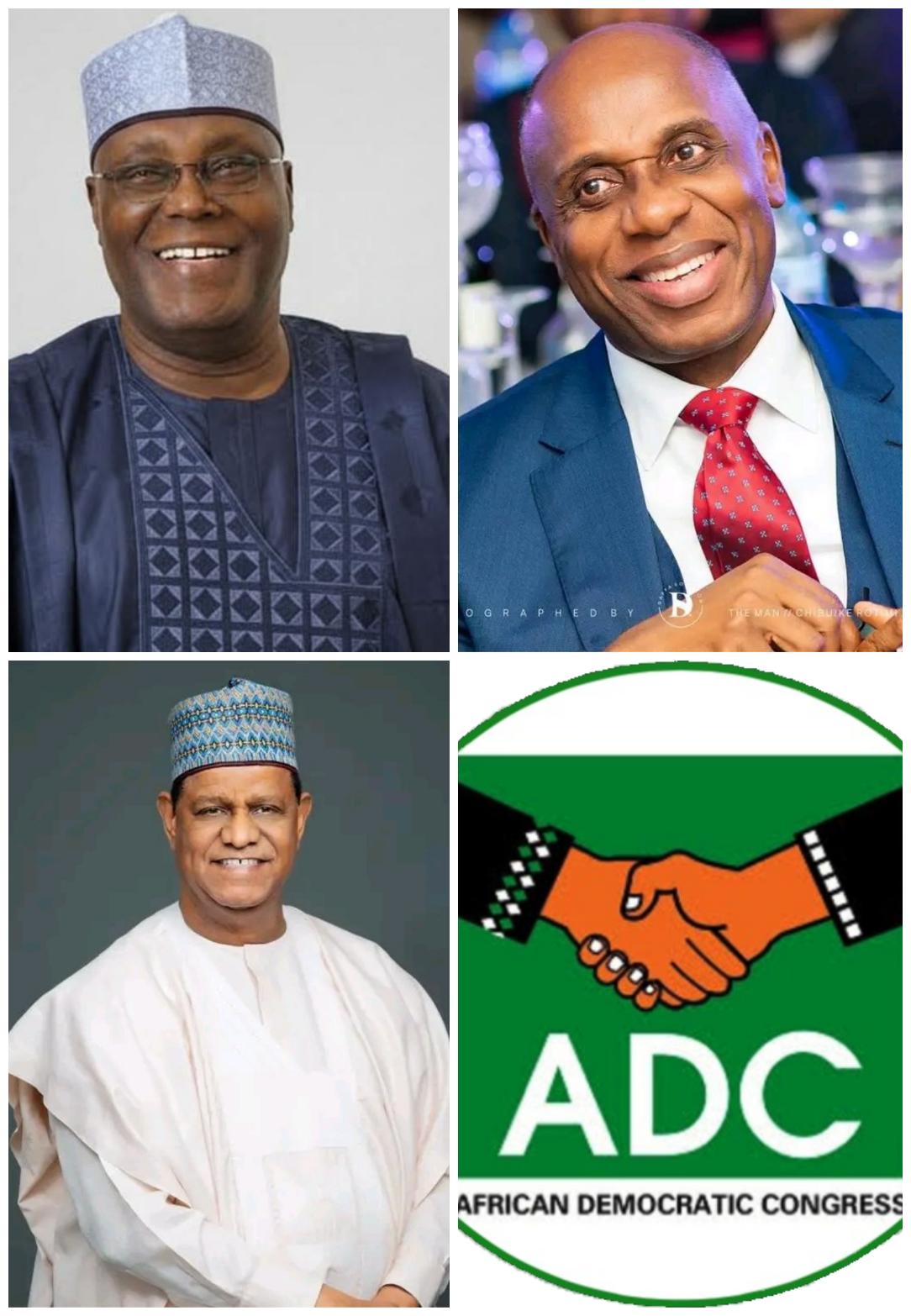
Atiku Set To Clinch ADC Presidential Ticket, Leads Amaechi, Hayatu-Deen In 34 States
Former Vice President of Nigeria and frontline presidential aspirant of the African Democratic Congress (ADC), Atiku Abubakar, is projected to emerge winner of the party’s presidential primaries, according to impeccable sources in Abuja.
The primaries, conducted across over 8,000 wards in the 36 states of the federation and the Federal Capital Territory, reportedly placed Atiku far ahead of his closest rivals — former Rivers State Governor, Rotimi Amaechi, and former Chairman of the Nigerian Economic Summit Group, Mohammed Hayatu-Deen.

Highly placed party insiders disclosed that Atiku is currently leading in 34 states, including the FCT, after securing dominance across the 19 Northern states, the five South-East states, and the six South-West states, while also maintaining a strong showing in at least three states in the South-South geopolitical zone.
The sources added that the outcome reflects what they described as “an overwhelming nationwide acceptance” of the former vice president within the opposition party ahead of the 2027 general election.
Meanwhile, the ADC leadership has invited members of the press to the official announcement of the final collated results scheduled for 11:00 a.m. on Tuesday, May 26, 2026, in Abuja.
The declaration of results is expected to be broadcast live on ARISE Television and two other major television stations, while also being livestreamed on the party’s official social media platforms on X and Facebook.
Speaking ahead of the announcement, the founding National Chairman of the ADC, Chief Ralph Nwosu, said the decision to televise the exercise live was aimed at promoting transparency and democratic accountability.
“We want millions of Nigerians at home and in the Diaspora to witness democracy in action,” Nwosu said.
He further revealed that the party leadership would encourage all three presidential aspirants to publicly embrace a peace accord and commit themselves to working together in unity for the party’s success.
According to him, the move is necessary to strengthen internal cohesion and position the ADC for victory in the presidential election scheduled for January 16, 2027.
Details later.


- When women farm better, Eswatini eats better June 3, 2026
- Togo Hosts the 8th Annual Forum of National Volunteer Agencies in the Economic Community of West African States (ECOWAS) Region June 3, 2026
- Indigenous Peoples gravely vulnerable to Ebola epidemic, warn United Nations (UN) independent experts June 3, 2026
- Meeting between Parliamentary Vice-Minister ONISHI and His Excellency (H.E.) Mr. Cosgrow, Principal Minister and Minister for Agriculture, Fisheries and Blue Economy of Seychelles June 3, 2026
- Eritrea: Construction of Elementary School in Gogni Sub-Zone June 3, 2026
- African Union Commission (AUC) Chairperson His Excellency (H.E.) Mahmoud Ali Youssouf highlighted thePermanent Representatives’ Committee (PRC) critical role in advancing the Union’s agenda and laying the groundwork for the forthcoming Mid-Year Coordination Meeting (MYCM) June 3, 2026
- Eritrea: Eighth Grade National Examination Commences June 3, 2026
- Many Africans see justice system as unequal, costly, and slow, Afrobarometer survey reveals June 3, 2026
- Prof. Benedict Oramah to Chair Finance Summit as African Energy Week (AEW) 2026 Prepares for Major Deal Flow June 3, 2026
- The Islamic Development Bank (IsDB) Group Affiliates to Host the 14th Private Sector Forum in Baku, Azerbaijan (16-19 June 2026) June 3, 2026
- When women farm better, Eswatini eats better June 3, 2026
- Togo Hosts the 8th Annual Forum of National Volunteer Agencies in the Economic Community of West African States (ECOWAS) Region June 3, 2026
- Indigenous Peoples gravely vulnerable to Ebola epidemic, warn United Nations (UN) independent experts June 3, 2026
- Meeting between Parliamentary Vice-Minister ONISHI and His Excellency (H.E.) Mr. Cosgrow, Principal Minister and Minister for Agriculture, Fisheries and Blue Economy of Seychelles June 3, 2026
- Eritrea: Construction of Elementary School in Gogni Sub-Zone June 3, 2026
- African Union Commission (AUC) Chairperson His Excellency (H.E.) Mahmoud Ali Youssouf highlighted thePermanent Representatives’ Committee (PRC) critical role in advancing the Union’s agenda and laying the groundwork for the forthcoming Mid-Year Coordination Meeting (MYCM) June 3, 2026
- Eritrea: Eighth Grade National Examination Commences June 3, 2026
-

 news6 months ago
WHO REALLY OWNS MONIEPOINT? The $290 Million Deal That Sold Nigeria’s Top Fintech to Foreign Interests
-

 society1 month ago
SOCIAL MEDIA IS NOT A BATTLEFIELD COMMAND – WHY THE NIGERIAN ARMY’S ACTION AGAINST JUSTICE CRACK IS A NATIONAL SECURITY IMPERATIVE
-

 celebrity radar - gossips4 months ago
Dr. Chris Okafor Returns with Power and Fire of the Spirit -Mounts Grace Nation Altar with Fresh Anointing and Restoration Grace on February 1, 2026
-

 celebrity radar - gossips6 months ago
Prophet Kingsley Aitafo Releases 2026 Prophecy: ‘Nigeria Will Rise, but the World Must Prepare for Turbulence’