
society
Tinubu’s Cult of Personality: A Dangerous Obsession with Self in a Crumbling Nation

Tinubu’s Cult of Personality: A Dangerous Obsession with Self in a Crumbling Nation
By George Omagbemi Sylvester | Published by SaharaWeeklyNG.com
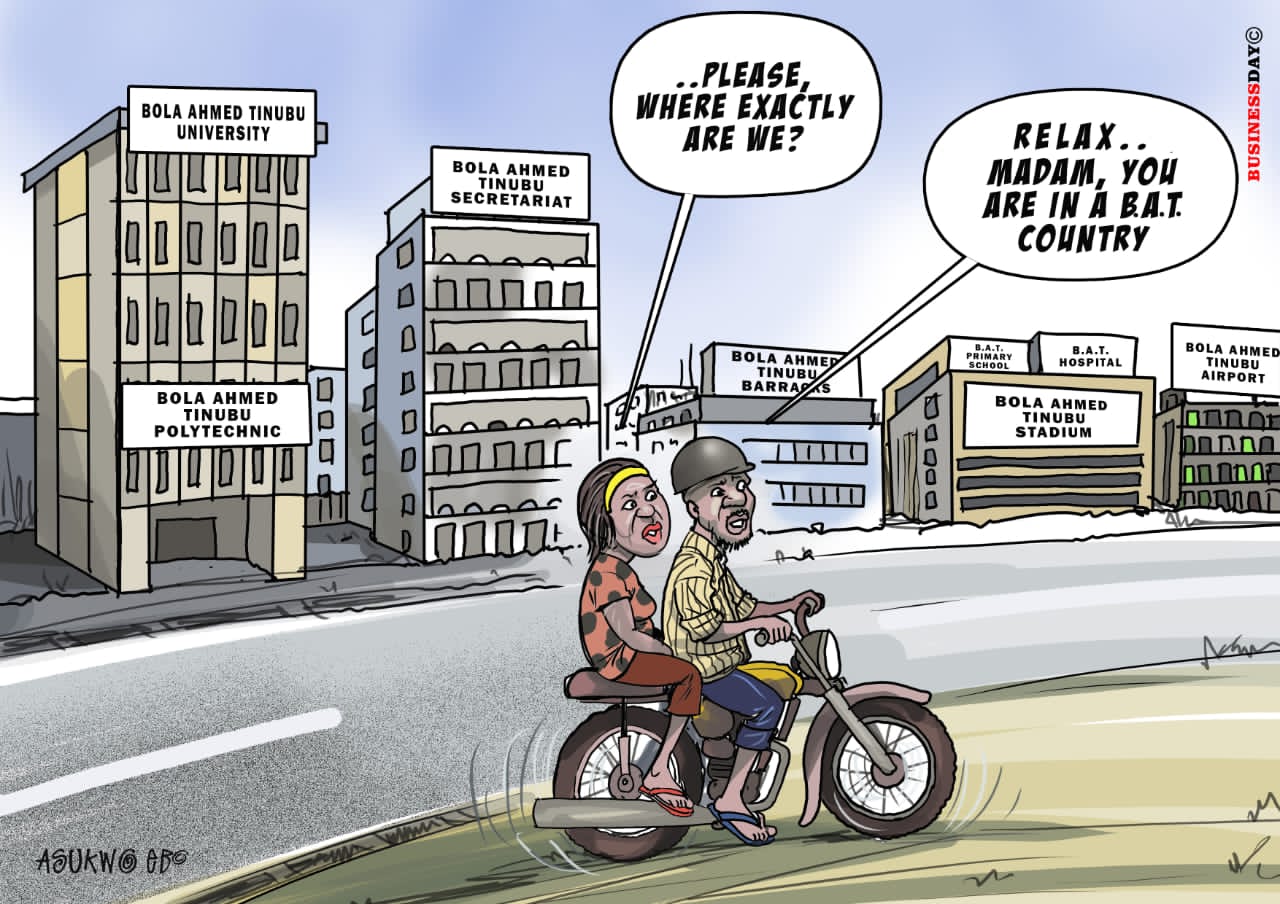
In a country battling record inflation, historic levels of insecurity, a spiraling Naira and the unchecked exodus of skilled professionals, President Bola Ahmed Tinubu has chosen an odd hill to die on: HIMSELF. In less than two years in office, Nigeria’s 16th president has renamed or established no fewer than seven public institutions and infrastructures in his own name; all while STILL SERVING in office.
This is not a case of national consensus on legacy. It is not a grateful nation immortalizing a statesman posthumously. This is a living president, naming the country after himself, in real time with utter disregard for the optics, implications or precedent. It is self-glorification masquerading as patriotism.
Let’s call it what it is: a cult of personality and Nigeria is in dangerous territory.
The Self-Naming Spree: Seven Monuments of Ego
Tinubu International Conference Centre, Abuja
The iconic International Conference Centre (ICC), initially commissioned in 1991 by General Ibrahim Babangida for ₦240 million, was recently renovated for ₦39 billion. It now bears Tinubu’s name, despite IBB, a former military head of state, never naming it after himself. That tells you something.
Tinubu International Airport, Minna
Renamed in 2023 while the president is still alive and active in office. A move that even General Sani Abacha, Nigeria’s most authoritarian ruler, never dared attempt.
Tinubu Polytechnic, Gwarinpa
A new federal polytechnic established under his administration and promptly christened after the president. Again; by the same man still holding the pen of power.
Tinubu National Assembly Library, Abuja
A legislative initiative backed by sycophantic lawmakers to immortalize the president in a space that is supposed to serve all members of the National Assembly across party lines.
Tinubu Immigration Technology Building, Abuja
A federal digital hub developed to enhance Nigeria’s immigration processing systems is now forever linked to the president’s name.
Tinubu Barracks, Asokoro
Military facilities are traditionally named after revered generals or national heroes, often posthumously. Yet here we are, with a barracks named after a living civilian president. Not even Olusegun Obasanjo or Muhammadu Buhari, both retired generals and former heads of state, ever received that honour in their lifetimes.
Tinubu Way, Abuja (Formerly Southern Parkway)
A major thoroughfare in the capital city renamed in 2024. The timing? Conveniently mid-term. Not post-presidency. Not after national consensus. But while the president is still signing off on the budgets and appointments that keep the legislative and executive arms compliant.
No Precedent in Nigerian Democracy
Historically, Nigeria has reserved such honours for deceased leaders, post-administration recognition or exceptional statesmen whose legacy transcended political partisanship. Even Obafemi Awolowo, widely regarded as Nigeria’s most visionary leader, did not self-name roads or institutions while in office.
President Goodluck Jonathan, despite establishing 12 new universities across Nigeria, never named one after himself. Former President Umaru Musa Yar’Adua, known for his humility and reformist spirit, died in office and still resisted the trap of self-worship. Even Buhari, under whose administration sycophancy flourished, did not rename major national assets after himself.
What Tinubu is doing is not legacy-building; it is a narcissistic branding campaign funded by taxpayers.
A Nation in Crisis, Led by Vanity
Nigeria is in crisis. According to the National Bureau of Statistics (NBS), over 133 million Nigerians live in multidimensional poverty. The inflation rate hovers near 33% as of May 2025, with food inflation exceeding 40%, according to CBN data. Insecurity still plagues northern and central regions, and over 2,000 Nigerian doctors have migrated to the UK since 2023 alone, per the UK General Medical Council.
Instead of leading with humility and focus, Tinubu is erecting marble monuments of his name in a collapsing economy.
“Leaders who are truly loved by their people don’t name things after themselves, the people do that when they are gone.”
— Prof. Jibrin Ibrahim, Political Analyst, Centre for Democracy and Development
The Psychology of a Name
Naming is power. It immortalizes. It dominates memory and shapes perception. Tinubu’s spree of self-naming is not just about pride; it’s a calculated effort to brand Nigeria in his image, rewriting history while still holding the pen. This is not uncommon among autocrats and populists across history.
From Mobutu Sese Seko, who renamed the Democratic Republic of Congo to Zaire and named towns and airports after himself, to Ferdinand Marcos in the Philippines, who filled the nation with his family’s name, history is replete with examples of self-glorifying regimes who tried to mask repression and failure with symbolic excess.
“When a man becomes obsessed with his own name, he forgets the pain in the streets.”
— Chidi Odinkalu, Human Rights Lawyer
Where Is the National Assembly?
One must ask: where is the National Assembly? Where is the separation of powers? In theory, Nigeria practices constitutional democracy, but in practice, the legislature has become a chamber of praise-singers.
Senators who should be asking questions about the cost of renaming, the constitutional legality of branding public infrastructure with a living president’s name, and the message it sends to Nigerians are instead proposing more honorary bills.
This silence is not just shameful; it is complicity.
A Republic, Not a Kingdom
President Tinubu must be reminded: Nigeria is a republic, not a monarchy. Power resides in the people. Legacy is earned through service, not signage. If the president truly believes in posterity, let him allow future generations to decide how he is remembered and not through artificial plaques but by enduring progress.
This self-naming spree does not mask the hardship of Nigerians. It does not distract from the fuel queues, the collapsed power grid, the Naira in free-fall or the insecurity that haunts farmers and school-children alike.
Let Tinubu deliver real reform. Let him rebuild industries not just rename roads. Let him fix the education system not just rename the library. Let him be a leader for all and not just a brand for himself.
“The tragedy of African leadership is that too many men build statues of themselves in the sand while their people drown.”
— Prof. PLO Lumumba
Final Take: History Is Watching
History will remember this chapter and not kindly. President Tinubu’s self-immortalization project is an embarrassment to our democracy and a warning sign for our future. If unchecked, it could set a dangerous precedent for future leaders to elevate ego over service.
Let us be clear: this is not legacy. It is vanity. And vanity has no place in a nation gasping for breath.
The people must speak. Civil society must resist. The media must spotlight. Because if we let this slide, we’re not just enabling one man’s obsession; we are surrendering the dignity of the republic itself.


Written by George Omagbemi Sylvester
Published by SaharaWeeklyNG.com




society
Buratai Highlights Leadership, Community Support In Defeating Insurgency As Shettima, Defence Chiefs Rally Support For Counterterrorism Documentation At Book Launch
Buratai Highlights Leadership, Community Support In Defeating Insurgency As Shettima, Defence Chiefs Rally Support For Counterterrorism Documentation At Book Launch
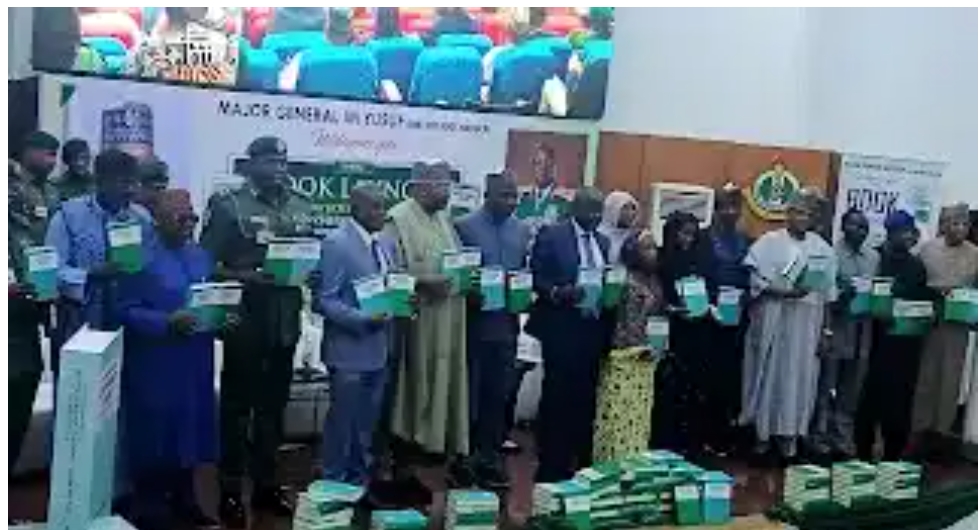
Prominent Nigerians including Vice President Kashim Shettima, Defence Minister Christopher Musa, senior military officers, and political leaders on Thursday underscored the importance of documentation, collective national responsibility, and sustained military professionalism in the fight against terrorism during the unveiling of a new book titled “Counterterrorism and Counterinsurgency Operations in North East Nigeria (Volumes 1 & 2)” authored by retired Major-General Ibrahim Yusuf.

Representing Vice President Kashim Shettima, the Special Adviser on General Duties, Dr. Aliyu Modibbo, described the publication as a timely and strategic contribution to Nigeria’s national security discourse.
According to him, Nigeria’s experience with terrorism and insurgency in the North-East reflects not a nation defeated by insecurity, but the resilience and courage of citizens and security forces defending the country’s shared destiny.
He noted that the conflict in the North-East remained a deep human tragedy affecting communities with rich historical and cultural heritage, stressing that terrorism requires sustained vigilance, intelligence gathering, diplomacy, technology, and strong civil-military cooperation.
The Vice President further commended the author for documenting operational experiences and strategic lessons from the theatre of operations, saying such insights would prove invaluable to policymakers, scholars, and future military leaders.
He also reaffirmed the commitment of President Bola Ahmed Tinubu’s administration to strengthening the operational readiness, welfare, and dignity of members of the Armed Forces.
In his goodwill message, the Minister of Defence, Christopher Musa, praised the author as a respected mentor whose professionalism and leadership continued to inspire younger officers even after retirement.
“The lion may be retired, but he is certainly not tired,” he remarked.
Musa described the insurgency in the North-East as one of Nigeria’s most complex security challenges, noting that the asymmetric nature of the conflict means it cannot be won by military force alone.
According to him, victory against terrorism depends on collective national responsibility involving the Armed Forces, civil authorities, and citizens working together to deny insurgents support and legitimacy.
He also urged serving military officers to study the publication carefully, noting that it contains valuable operational lessons from years of counterinsurgency operations.
The Chief of Defence Staff, Olufemi Oluyede, described the two-volume publication as a major intellectual contribution bridging theory and practice in counterterrorism and counterinsurgency operations.
Oluyede commended the author for preserving decades of operational knowledge gained from commanding the 21 Brigade, 7 Division, and the Multinational Joint Task Force.
He stressed that modern security threats demand continuous learning, adaptation, and proper documentation of operational experiences, adding that the publication would serve as a useful resource for military practitioners, researchers, and policymakers.
Former Chief of Army Staff, Lt. Gen. Tukur Buratai, also applauded the author for documenting operational experiences from the counterinsurgency campaign in the North-East.
Buratai stated that operational success in counterinsurgency warfare depends largely on the quality of commanders in the field and the ability of military leaders to adapt to complex realities.
He recalled the significance of operations such as Deep Punch I and Deep Punch II, as well as the critical role played by the Nigerian Air Force in degrading terrorist capabilities between 2015 and 2017.
According to him, resilient leadership and community support remain crucial elements in defeating insurgency.
Earlier, retired Major-General Ibrahim Yusuf said the publication represented the fulfilment of an eight-year intellectual ambition aimed at contributing to military scholarship and national security discourse.
He explained that the book was inspired by a desire to provide younger military officers and policymakers with first-hand insights into the successes and challenges of counterterrorism operations in Nigeria.
The retired general added that the publication drew from over a decade of operational experience in the North-East and the Lake Chad Basin while deliberately avoiding sensitive information capable of compromising ongoing operations.
He also urged retired military officers to document their operational experiences for future generations, stressing that such efforts are essential for institutional memory and national development.
Reviewing the publication, renowned scholar Eghosa Osaghae described the work as a landmark contribution to military scholarship.
Osaghae noted that the two volumes combine academic depth with practical operational experience, offering insights into intelligence-led operations, joint force coordination, psychological warfare, and post-conflict management.
He added that the publication effectively situates Nigeria’s counterinsurgency experience within the broader realities of modern asymmetric warfare and evolving global security threats.
The event attracted senior serving and retired military officers, heads of security agencies, members of the diplomatic corps, academics, and policymakers from across the country.
society
Oduduwa Integrity Association Announces Adoption of Governor Ademola Adeleke as “Performing Governor” in the Southwest*
Oduduwa Integrity Association Announces Adoption of Governor Ademola Adeleke as “Performing Governor” in the Southwest*
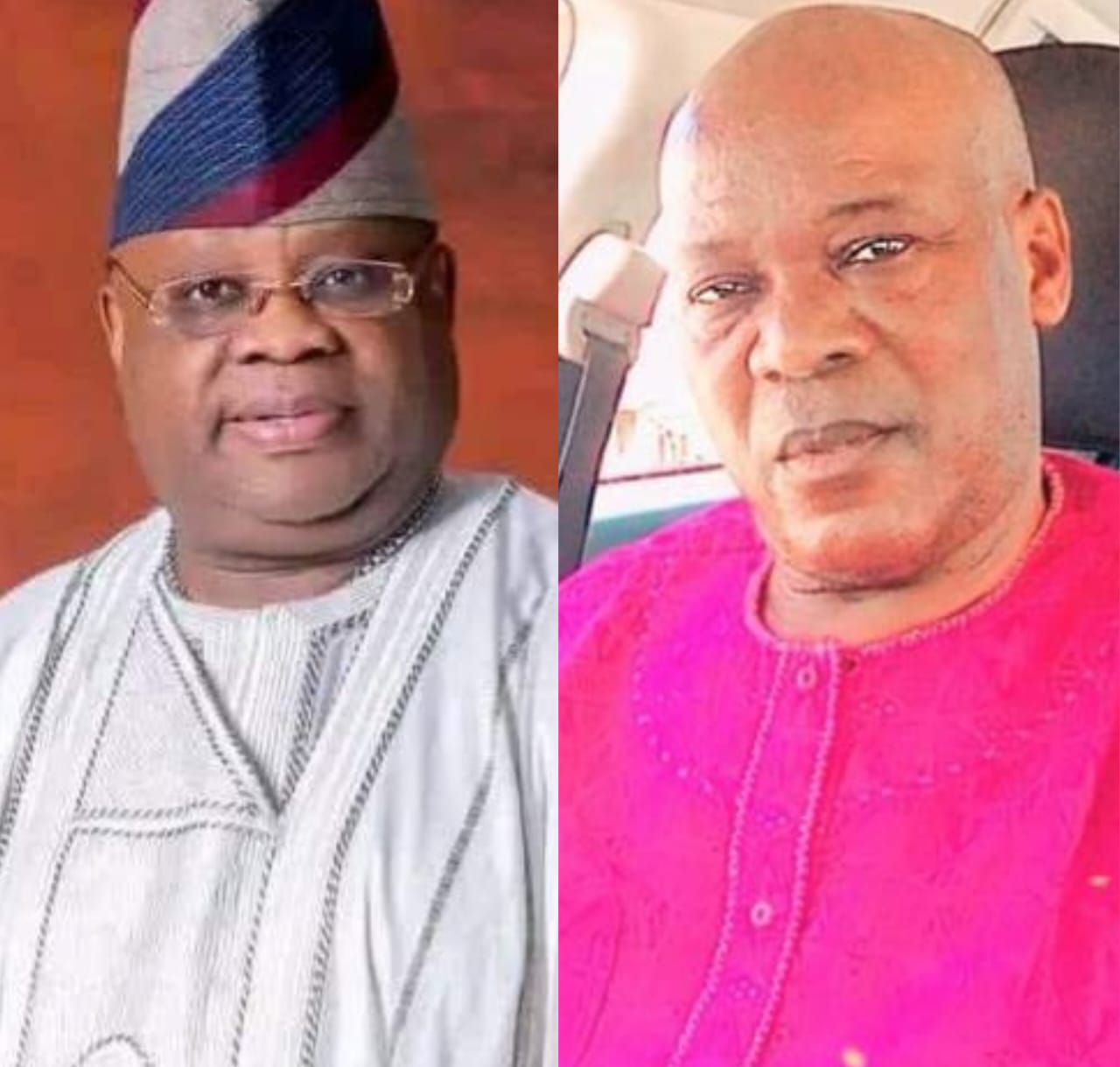
*Osun State, Nigeria* – The Oduduwa Integrity Association, one of the prominent socio-cultural and advocacy groups in the Southwest region, has announced its decision to adopt and publicly recognize Governor Ademola Adeleke of Osun State as a performing governor in the Southwest.
According to the Association, the adoption is based on its independent monitoring of governance and project delivery across the region. The group stated that Governor Adeleke’s administration has demonstrated measurable progress in areas including infrastructure, workers’ welfare, education, and youth empowerment, which aligns with the association’s mandate to promote accountability and good governance.
“This adoption is our way of encouraging performance and responsible leadership,” Evang /Hon Omotoso Banji, the President and Founder of Oduduwa Integrity Association said. “We believe that recognizing leaders who are delivering on their mandate helps strengthen democratic values and motivates others to prioritize the people.”
The Association noted that its adoption does not imply political affiliation but is a non-partisan endorsement of what it describes as visible and verifiable governance outcomes within Osun State. It added that the move is part of its broader initiative to highlight and support public officials across the Southwest who meet its standards for transparency, service delivery, and integrity.
Governor Adeleke’s administration has been marked by policy focus on infrastructural renewal, payment of salary arrears, and investment in grassroots development since assuming office. The Oduduwa Integrity Association said it will continue to monitor and document these efforts as part of its civic oversight role.
The formal adoption ceremony and presentation of recognition materials are expected to be announced in the coming weeks.
The Oduduwa Integrity Association is a Southwest-based civil society and advocacy group committed to promoting good governance, transparency, and accountability across Yoruba-speaking states presided by Evang / Hon Omotoso Banji.The Association conducts independent assessments of public service delivery and engages in community enlightenment programs.
AjilalaOso Day 2026: Women Union Make Donations To Hospital
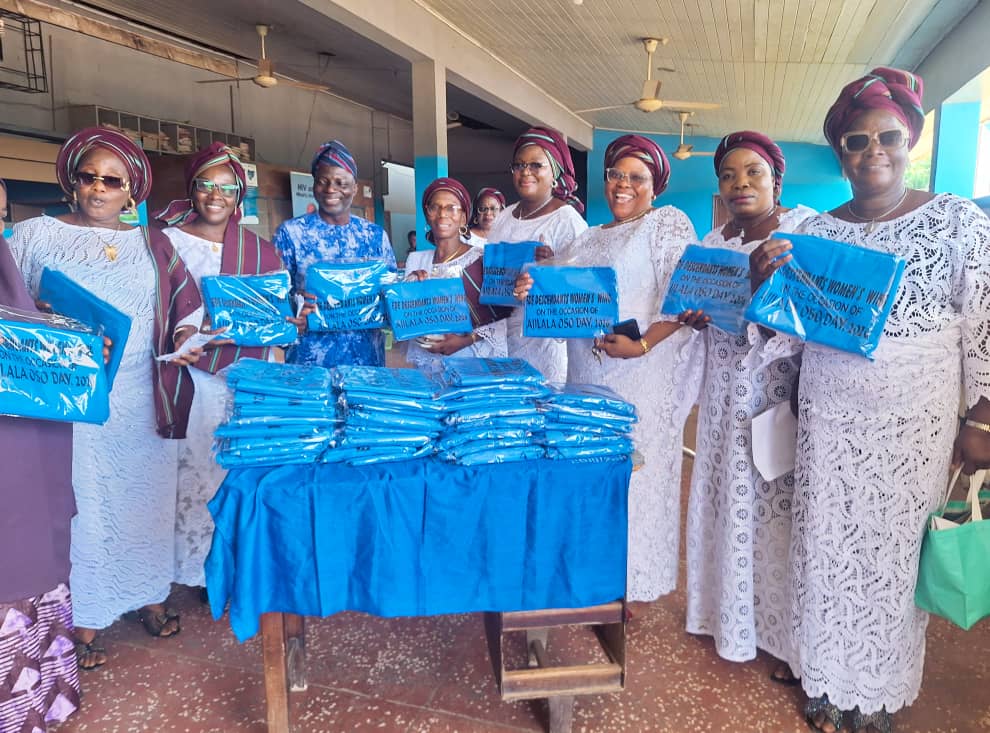
The women wing of the Ede Descendants Union has donated 42 bedsheets and 44 pillow cases to Cottage Hospital, Ede, in Osun State, as part of activities marking preparations for AjilalaOso Day 2026.
The donation was aimed at supporting healthcare services at the hospital while also demonstrating the union’s commitment to community development and humanitarian service.
Members of the union said the gesture formed part of efforts to give back to society and contribute meaningfully to the wellbeing of patients receiving treatment at the health facility.
Speaking during the presentation, the leader of the women wing, Mrs Silifat Shittu, described the initiative as a reflection of the values of compassion, unity and service which AjilalaOso Day represents.
She noted that the annual cultural celebration is not only about showcasing the rich heritage of Ede but also about promoting development-oriented projects capable of impacting lives positively.
The group further urged individuals, organisations and stakeholders in Edeland to continue supporting community-based initiatives aimed at improving the welfare of residents.
Speaking on behalf of the hospital management, the Chief Medical Officer, Dr Isiaka Alade, appreciated the women group for the donation, describing the items as timely and beneficial to patients and the hospital environment.
Chairman of the AjilalaOso Day 2026 Planning Committee, Prince Adewale Laoye while addressing the gathering appealed to other well-meaning individuals and organisations to extend similar gestures to the hospital, noting that some roofing sections of the facility require urgent repairs.
He also commended the women wing of the union for the initiative and support shown to Cottage Hospital.
Prince Laoye, who spoke extensively on the objectives of the AjilalaOso festival, explained that the annual celebration would not only be about funfair and merriment but would also focus on touching the lives of the needy through impactful community projects.
According to him,“We also want associations to have a project executed in Ede every year, such as what the women wing of EDU has done today.”


- Africa’s $65 Billion Fintech Industry Under the Spotlight in Latest Pan African Visions Magazine Special Edition May 21, 2026
- TotalEnergies Expands Angola Offshore Strategy as Martin Deffontaines Returns to Angola Oil & Gas (AOG) 2026 May 21, 2026
- New Africa Centres for Disease Control and Prevention (Africa CDC)–Global Fund Partnership to Strengthen Africa’s Health Systems May 21, 2026
- U.S. International Development Finance Corporation (DFC's) Vibhuti Jain Joins African Mining Week (AMW) as United States (U.S.) Expands Regional Critical Mineral Partnerships May 21, 2026
- PAC Capital Limited Secures Seven Prestigious International Awards, Reinforcing Leadership in Investment Banking and Advisory May 21, 2026
- African Energy Chamber (AEC) Strengthens Strategic Engagement with African Petroleum Producers’ Organization (APPO), Venezuela to Advance Regional Energy Cooperation May 21, 2026
- How the Product Leadership Accelerator (PLA) is Re-Engineering African Enterprises for a Digital-First Economy May 20, 2026
- Congo’s Minister Onanga to Fast-Track Deals, Drive Local Content and Expand Floating Liquefied Natural Gas (FLNG) in New Investment Push May 20, 2026
- PayPal Brings PayPal USD to Users Across 70 Markets Worldwide and Expands Access in Africa May 20, 2026
- Afreximbank Extends USD 15 Million Facility to Ecobank Zimbabwe Limited to Support Small and Medium Enterprises (SME) Participation in Export Value Chains May 20, 2026
- Africa’s $65 Billion Fintech Industry Under the Spotlight in Latest Pan African Visions Magazine Special Edition May 21, 2026
- TotalEnergies Expands Angola Offshore Strategy as Martin Deffontaines Returns to Angola Oil & Gas (AOG) 2026 May 21, 2026
- New Africa Centres for Disease Control and Prevention (Africa CDC)–Global Fund Partnership to Strengthen Africa’s Health Systems May 21, 2026
- U.S. International Development Finance Corporation (DFC's) Vibhuti Jain Joins African Mining Week (AMW) as United States (U.S.) Expands Regional Critical Mineral Partnerships May 21, 2026
- PAC Capital Limited Secures Seven Prestigious International Awards, Reinforcing Leadership in Investment Banking and Advisory May 21, 2026
- African Energy Chamber (AEC) Strengthens Strategic Engagement with African Petroleum Producers’ Organization (APPO), Venezuela to Advance Regional Energy Cooperation May 21, 2026
- How the Product Leadership Accelerator (PLA) is Re-Engineering African Enterprises for a Digital-First Economy May 20, 2026
-

 news5 months ago
WHO REALLY OWNS MONIEPOINT? The $290 Million Deal That Sold Nigeria’s Top Fintech to Foreign Interests
-

 society3 weeks ago
SOCIAL MEDIA IS NOT A BATTLEFIELD COMMAND – WHY THE NIGERIAN ARMY’S ACTION AGAINST JUSTICE CRACK IS A NATIONAL SECURITY IMPERATIVE
-

 celebrity radar - gossips4 months ago
Dr. Chris Okafor Returns with Power and Fire of the Spirit -Mounts Grace Nation Altar with Fresh Anointing and Restoration Grace on February 1, 2026
-

 celebrity radar - gossips5 months ago
Prophet Kingsley Aitafo Releases 2026 Prophecy: ‘Nigeria Will Rise, but the World Must Prepare for Turbulence’