
society
Tinubu’s Two Years of Policy Illusions and National Suffering: Nigeria’s Descent into Economic and Moral Chaos. By George Omagbemi Sylvester


Tinubu’s Two Years of Policy Illusions and National Suffering: Nigeria’s Descent into Economic and Moral Chaos.
By George Omagbemi Sylvester | Published by SaharaWeeklyNG.com
When President Bola Ahmed Tinubu assumed office in May 2023, many Nigerians hoped for a departure from the stagnation and decay that had plagued the country under successive administrations. He came promising “renewed hope.” What we have received, instead, is an unrelenting wave of economic brutality, elite arrogance and state-sanctioned impoverishment. Two years down the line, Nigeria stands not rejuvenated, but ravaged; its middle class wiped out, its poor suffocating and its leaders more obsessed with politicking than governance.
A Mirage of Policy Success
To be fair, on paper, President Tinubu has achieved a few major policy reforms:
Tax Law Reforms were introduced to improve revenue generation.
Fuel Subsidy Removal was executed within days of his inauguration.
Electricity was devolved to the states, theoretically giving them power over power.
The foreign exchange system was liberalised, floating the naira to end multiple exchange rates.
A Student Loan Act was passed to assist struggling tertiary students.
Local Government Autonomy was proposed but remains conveniently unimplemented.
These are bold moves, but boldness without wisdom is recklessness. Vision without empathy is tyranny. And policy without proper execution becomes poison. The Tinubu administration may be flying from a policy perspective, but it is flying blind and the PEOPLE are the ones CRASHING.
The Fallout: A Catalogue of Pain
Let us evaluate the real-life impact of these so-called reforms.
1. Death of the Middle Class
The once-thriving Nigerian middle CLASS (the teachers, civil servants, small business owners and professionals) has been completely decimated. Inflation, which stood at 21.9% in May 2023, now hovers above 34% as of June 2025 (according to the National Bureau of Statistics). Food prices have tripled. Transportation is unaffordable. School fees have skyrocketed. A bag of rice now sells for over ₦85,000. People no longer talk of saving; survival is now the priority.
2. Currency Collapse and Soaring Inflation
Floating the naira without adequate safeguards was akin to throwing a drowning man into deeper waters. The naira has become Africa’s worst-performing currency, exchanging at ₦1,560 to $1 as of June 2025. This is the lowest in Nigerian history. Importers can’t access forex. Businesses are closing. Foreign investors are fleeing. This is not liberalisation; it is economic euthanasia.
“You don’t float a currency in an import-dependent economy without first boosting domestic productivity,” said Professor Uche Uwaleke, a financial economist at Nasarawa State University. “What we’re seeing is textbook mismanagement.”
3. Fuel Subsidy Removal: A Punishment to the Poor
The removal of fuel subsidy, while economically justified in theory, was implemented without any cushioning measures. The result? Petrol now sells between ₦850 and ₦980 per litre, depending on the state. The cost of transportation has doubled. Food distribution costs have tripled. Meanwhile, the elite fly around in private jets funded by government largesse.
4. Civil Servants in Poverty
Civil servants, once seen as modest pillars of public administration are now objects of mockery. The minimum wage remains ₦30,000 in about 20 states which is equivalent to less than $20 monthly. How do you expect a family to survive on this in a country where rent in major cities starts at ₦800,000 per year for a single room?
5. Insecurity and Social Collapse
The bold promises to tackle insecurity have remained empty rhetoric. Bandits, terrorists and kidnappers continue to run wild. Farmers can’t access their lands. Students are kidnapped en masse. Communities are deserted. The state has abandoned its primary duty: protecting lives and property.
6. Student Loans: An Empty Shell
The student loan policy was announced with fanfare, but months later, implementation remains a mirage. The bureaucracy is confusing, the criteria are harsh and public universities are still underfunded. The average student has seen no relief.
7. Housing and Rent: Dreams Turned Nightmare
The housing deficit in Nigeria exceeds 28 million units, according to the Federal Mortgage Bank. Under Tinubu, nothing has changed. No new social housing schemes have been successfully executed. Rent continues to skyrocket. Owning a home is a forgotten dream for millions.
“In Nigeria today, leisure is a crime and survival is an achievement,” says activist Aisha Yesufu. “We are witnessing a systematic dismantling of hope.”
State Governments: Rascality with Increased Revenue
With the removal of subsidy and naira floatation, state allocations have significantly increased. Yet, what have the governors done with the money? Roads are death traps. Schools are glorified poultry sheds. Hospitals lack paracetamol. The same states collecting billions from Abuja still owe months of salary arrears. The rot is not just national, but systemic.
A Government of Leisure, Lies and Lavishness
While Nigerians suffer, our leaders vacation. The president has spent more days abroad than on the ground with the people. Ministers take selfies in Rome and Dubai, while children starve in Borno. Governance has become an illusion wrapped in press statements and sponsored media narratives.
“There is no nation on earth that treats its citizens with such contempt and survives intact,” notes Dr. Chidi Odinkalu, former chairman of the National Human Rights Commission.
What Hope for 2027?
With two more years to go and the looming horror of a 2027 election engineered through political “ABRACADABRA”, Nigerians are right to be scared. The electoral system is broken. INEC’s credibility is in tatters. If this government gets another term, it may mark the end of any democratic pretense in Nigeria.
Final Thoughts
Nigeria under Bola Tinubu is not being governed; it is being experimented on. The people are not citizens; they are test subjects. The economy is not being revived; it is being bled. And the future is not being prepared for; it is being plundered.
Let it be known that policy success without human impact is failure. You don’t pat a government on the back for reforms that destroy lives. A nation where leisure is a luxury, dignity is a relic and honesty is a punishment, cannot thrive.
The only question now is: WILL NIGERIANS RISE TO RESCUE THEMSELVES or will we CONTINUE DANCING to the DIRGE of our DESTRUCTION?


By George Omagbemi Sylvester
Published by SaharaWeeklyNG.com




society
Buratai Highlights Leadership, Community Support In Defeating Insurgency As Shettima, Defence Chiefs Rally Support For Counterterrorism Documentation At Book Launch
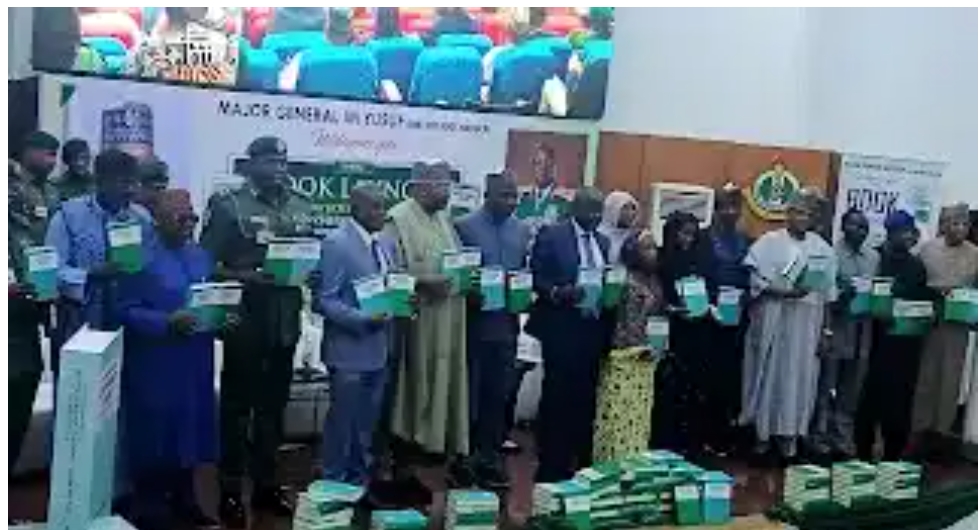
Buratai Highlights Leadership, Community Support In Defeating Insurgency As Shettima, Defence Chiefs Rally Support For Counterterrorism Documentation At Book Launch
Prominent Nigerians including Vice President Kashim Shettima, Defence Minister Christopher Musa, senior military officers, and political leaders on Thursday underscored the importance of documentation, collective national responsibility, and sustained military professionalism in the fight against terrorism during the unveiling of a new book titled “Counterterrorism and Counterinsurgency Operations in North East Nigeria (Volumes 1 & 2)” authored by retired Major-General Ibrahim Yusuf.

Representing Vice President Kashim Shettima, the Special Adviser on General Duties, Dr. Aliyu Modibbo, described the publication as a timely and strategic contribution to Nigeria’s national security discourse.
According to him, Nigeria’s experience with terrorism and insurgency in the North-East reflects not a nation defeated by insecurity, but the resilience and courage of citizens and security forces defending the country’s shared destiny.
He noted that the conflict in the North-East remained a deep human tragedy affecting communities with rich historical and cultural heritage, stressing that terrorism requires sustained vigilance, intelligence gathering, diplomacy, technology, and strong civil-military cooperation.
The Vice President further commended the author for documenting operational experiences and strategic lessons from the theatre of operations, saying such insights would prove invaluable to policymakers, scholars, and future military leaders.
He also reaffirmed the commitment of President Bola Ahmed Tinubu’s administration to strengthening the operational readiness, welfare, and dignity of members of the Armed Forces.
In his goodwill message, the Minister of Defence, Christopher Musa, praised the author as a respected mentor whose professionalism and leadership continued to inspire younger officers even after retirement.
“The lion may be retired, but he is certainly not tired,” he remarked.
Musa described the insurgency in the North-East as one of Nigeria’s most complex security challenges, noting that the asymmetric nature of the conflict means it cannot be won by military force alone.
According to him, victory against terrorism depends on collective national responsibility involving the Armed Forces, civil authorities, and citizens working together to deny insurgents support and legitimacy.
He also urged serving military officers to study the publication carefully, noting that it contains valuable operational lessons from years of counterinsurgency operations.
The Chief of Defence Staff, Olufemi Oluyede, described the two-volume publication as a major intellectual contribution bridging theory and practice in counterterrorism and counterinsurgency operations.
Oluyede commended the author for preserving decades of operational knowledge gained from commanding the 21 Brigade, 7 Division, and the Multinational Joint Task Force.
He stressed that modern security threats demand continuous learning, adaptation, and proper documentation of operational experiences, adding that the publication would serve as a useful resource for military practitioners, researchers, and policymakers.
Former Chief of Army Staff, Lt. Gen. Tukur Buratai, also applauded the author for documenting operational experiences from the counterinsurgency campaign in the North-East.
Buratai stated that operational success in counterinsurgency warfare depends largely on the quality of commanders in the field and the ability of military leaders to adapt to complex realities.
He recalled the significance of operations such as Deep Punch I and Deep Punch II, as well as the critical role played by the Nigerian Air Force in degrading terrorist capabilities between 2015 and 2017.
According to him, resilient leadership and community support remain crucial elements in defeating insurgency.
Earlier, retired Major-General Ibrahim Yusuf said the publication represented the fulfilment of an eight-year intellectual ambition aimed at contributing to military scholarship and national security discourse.
He explained that the book was inspired by a desire to provide younger military officers and policymakers with first-hand insights into the successes and challenges of counterterrorism operations in Nigeria.
The retired general added that the publication drew from over a decade of operational experience in the North-East and the Lake Chad Basin while deliberately avoiding sensitive information capable of compromising ongoing operations.
He also urged retired military officers to document their operational experiences for future generations, stressing that such efforts are essential for institutional memory and national development.
Reviewing the publication, renowned scholar Eghosa Osaghae described the work as a landmark contribution to military scholarship.
Osaghae noted that the two volumes combine academic depth with practical operational experience, offering insights into intelligence-led operations, joint force coordination, psychological warfare, and post-conflict management.
He added that the publication effectively situates Nigeria’s counterinsurgency experience within the broader realities of modern asymmetric warfare and evolving global security threats.
The event attracted senior serving and retired military officers, heads of security agencies, members of the diplomatic corps, academics, and policymakers from across the country.
society
Oduduwa Integrity Association Announces Adoption of Governor Ademola Adeleke as “Performing Governor” in the Southwest*
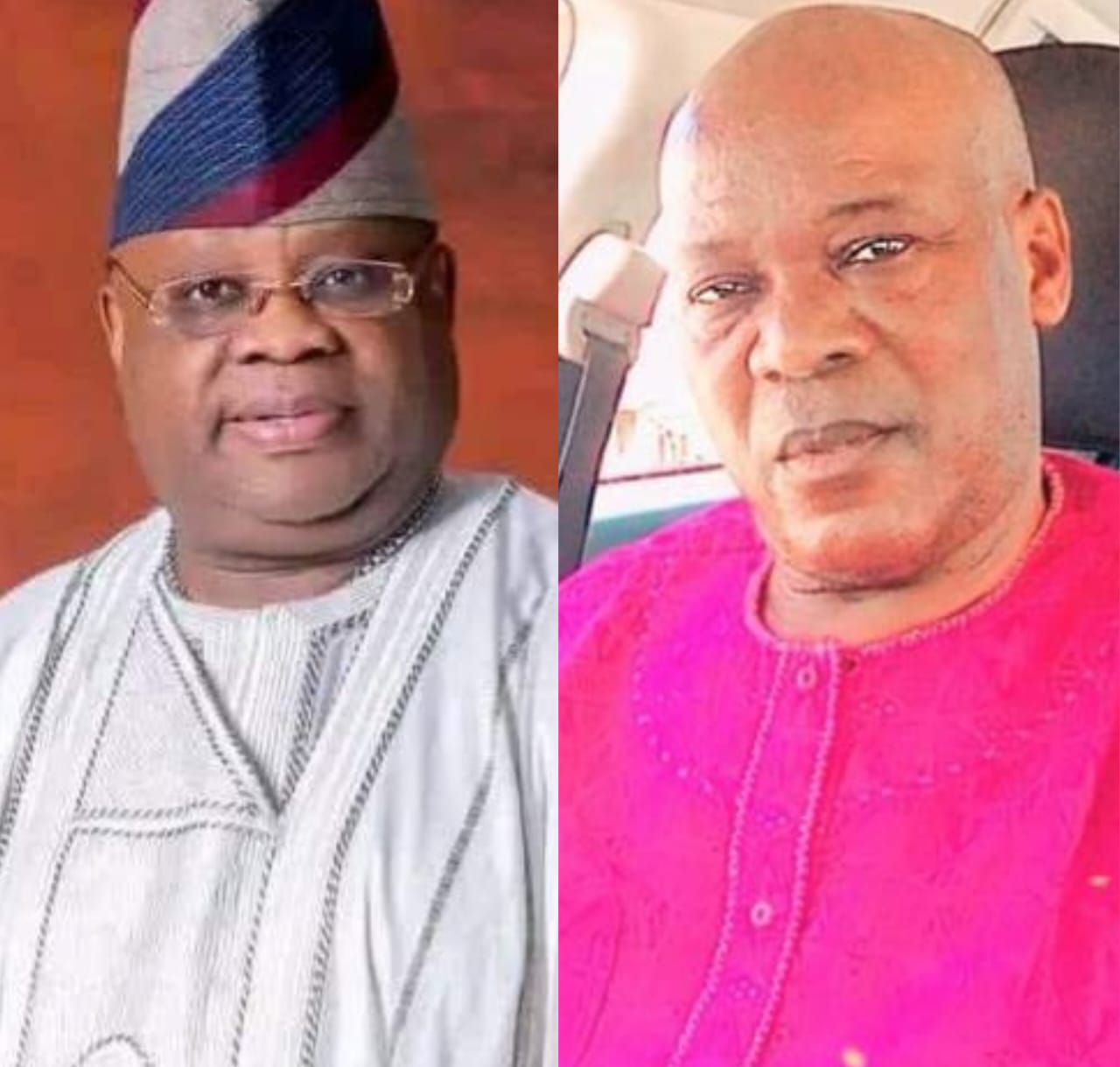
Oduduwa Integrity Association Announces Adoption of Governor Ademola Adeleke as “Performing Governor” in the Southwest*
*Osun State, Nigeria* – The Oduduwa Integrity Association, one of the prominent socio-cultural and advocacy groups in the Southwest region, has announced its decision to adopt and publicly recognize Governor Ademola Adeleke of Osun State as a performing governor in the Southwest.
According to the Association, the adoption is based on its independent monitoring of governance and project delivery across the region. The group stated that Governor Adeleke’s administration has demonstrated measurable progress in areas including infrastructure, workers’ welfare, education, and youth empowerment, which aligns with the association’s mandate to promote accountability and good governance.
“This adoption is our way of encouraging performance and responsible leadership,” Evang /Hon Omotoso Banji, the President and Founder of Oduduwa Integrity Association said. “We believe that recognizing leaders who are delivering on their mandate helps strengthen democratic values and motivates others to prioritize the people.”
The Association noted that its adoption does not imply political affiliation but is a non-partisan endorsement of what it describes as visible and verifiable governance outcomes within Osun State. It added that the move is part of its broader initiative to highlight and support public officials across the Southwest who meet its standards for transparency, service delivery, and integrity.
Governor Adeleke’s administration has been marked by policy focus on infrastructural renewal, payment of salary arrears, and investment in grassroots development since assuming office. The Oduduwa Integrity Association said it will continue to monitor and document these efforts as part of its civic oversight role.
The formal adoption ceremony and presentation of recognition materials are expected to be announced in the coming weeks.
The Oduduwa Integrity Association is a Southwest-based civil society and advocacy group committed to promoting good governance, transparency, and accountability across Yoruba-speaking states presided by Evang / Hon Omotoso Banji.The Association conducts independent assessments of public service delivery and engages in community enlightenment programs.
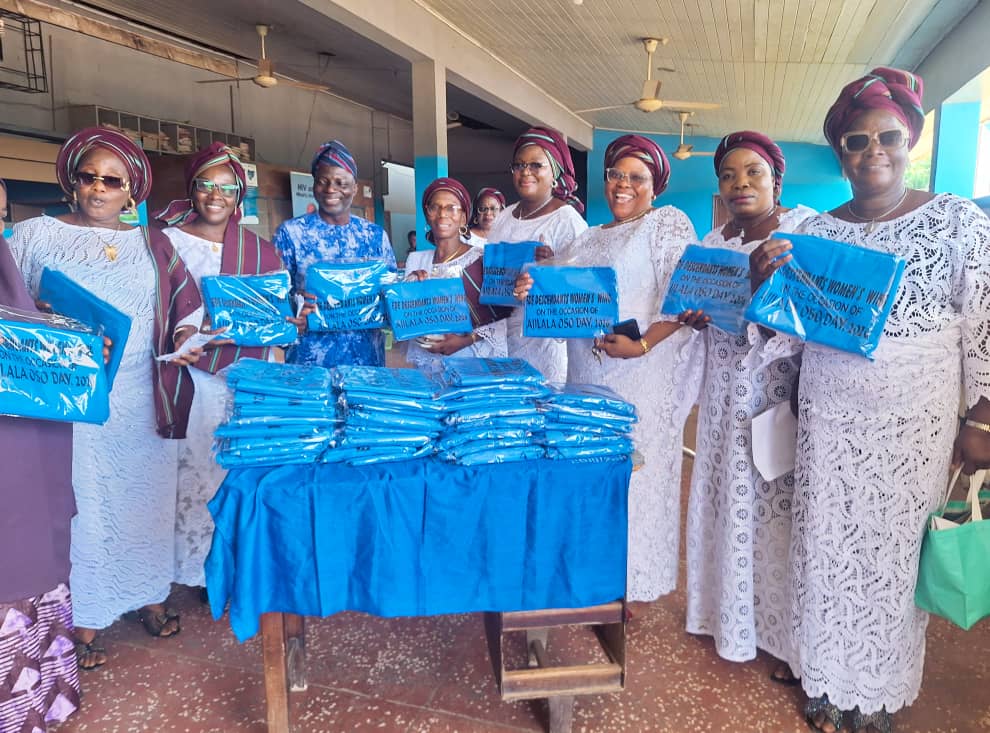
AjilalaOso Day 2026: Women Union Make Donations To Hospital
The women wing of the Ede Descendants Union has donated 42 bedsheets and 44 pillow cases to Cottage Hospital, Ede, in Osun State, as part of activities marking preparations for AjilalaOso Day 2026.
The donation was aimed at supporting healthcare services at the hospital while also demonstrating the union’s commitment to community development and humanitarian service.
Members of the union said the gesture formed part of efforts to give back to society and contribute meaningfully to the wellbeing of patients receiving treatment at the health facility.
Speaking during the presentation, the leader of the women wing, Mrs Silifat Shittu, described the initiative as a reflection of the values of compassion, unity and service which AjilalaOso Day represents.
She noted that the annual cultural celebration is not only about showcasing the rich heritage of Ede but also about promoting development-oriented projects capable of impacting lives positively.
The group further urged individuals, organisations and stakeholders in Edeland to continue supporting community-based initiatives aimed at improving the welfare of residents.
Speaking on behalf of the hospital management, the Chief Medical Officer, Dr Isiaka Alade, appreciated the women group for the donation, describing the items as timely and beneficial to patients and the hospital environment.
Chairman of the AjilalaOso Day 2026 Planning Committee, Prince Adewale Laoye while addressing the gathering appealed to other well-meaning individuals and organisations to extend similar gestures to the hospital, noting that some roofing sections of the facility require urgent repairs.
He also commended the women wing of the union for the initiative and support shown to Cottage Hospital.
Prince Laoye, who spoke extensively on the objectives of the AjilalaOso festival, explained that the annual celebration would not only be about funfair and merriment but would also focus on touching the lives of the needy through impactful community projects.
According to him,“We also want associations to have a project executed in Ede every year, such as what the women wing of EDU has done today.”


- Africa’s $65 Billion Fintech Industry Under the Spotlight in Latest Pan African Visions Magazine Special Edition May 21, 2026
- TotalEnergies Expands Angola Offshore Strategy as Martin Deffontaines Returns to Angola Oil & Gas (AOG) 2026 May 21, 2026
- New Africa Centres for Disease Control and Prevention (Africa CDC)–Global Fund Partnership to Strengthen Africa’s Health Systems May 21, 2026
- U.S. International Development Finance Corporation (DFC's) Vibhuti Jain Joins African Mining Week (AMW) as United States (U.S.) Expands Regional Critical Mineral Partnerships May 21, 2026
- PAC Capital Limited Secures Seven Prestigious International Awards, Reinforcing Leadership in Investment Banking and Advisory May 21, 2026
- African Energy Chamber (AEC) Strengthens Strategic Engagement with African Petroleum Producers’ Organization (APPO), Venezuela to Advance Regional Energy Cooperation May 21, 2026
- How the Product Leadership Accelerator (PLA) is Re-Engineering African Enterprises for a Digital-First Economy May 20, 2026
- Congo’s Minister Onanga to Fast-Track Deals, Drive Local Content and Expand Floating Liquefied Natural Gas (FLNG) in New Investment Push May 20, 2026
- PayPal Brings PayPal USD to Users Across 70 Markets Worldwide and Expands Access in Africa May 20, 2026
- Afreximbank Extends USD 15 Million Facility to Ecobank Zimbabwe Limited to Support Small and Medium Enterprises (SME) Participation in Export Value Chains May 20, 2026
- Africa’s $65 Billion Fintech Industry Under the Spotlight in Latest Pan African Visions Magazine Special Edition May 21, 2026
- TotalEnergies Expands Angola Offshore Strategy as Martin Deffontaines Returns to Angola Oil & Gas (AOG) 2026 May 21, 2026
- New Africa Centres for Disease Control and Prevention (Africa CDC)–Global Fund Partnership to Strengthen Africa’s Health Systems May 21, 2026
- U.S. International Development Finance Corporation (DFC's) Vibhuti Jain Joins African Mining Week (AMW) as United States (U.S.) Expands Regional Critical Mineral Partnerships May 21, 2026
- PAC Capital Limited Secures Seven Prestigious International Awards, Reinforcing Leadership in Investment Banking and Advisory May 21, 2026
- African Energy Chamber (AEC) Strengthens Strategic Engagement with African Petroleum Producers’ Organization (APPO), Venezuela to Advance Regional Energy Cooperation May 21, 2026
- How the Product Leadership Accelerator (PLA) is Re-Engineering African Enterprises for a Digital-First Economy May 20, 2026
-

 news5 months ago
WHO REALLY OWNS MONIEPOINT? The $290 Million Deal That Sold Nigeria’s Top Fintech to Foreign Interests
-

 society3 weeks ago
SOCIAL MEDIA IS NOT A BATTLEFIELD COMMAND – WHY THE NIGERIAN ARMY’S ACTION AGAINST JUSTICE CRACK IS A NATIONAL SECURITY IMPERATIVE
-

 celebrity radar - gossips4 months ago
Dr. Chris Okafor Returns with Power and Fire of the Spirit -Mounts Grace Nation Altar with Fresh Anointing and Restoration Grace on February 1, 2026
-

 celebrity radar - gossips5 months ago
Prophet Kingsley Aitafo Releases 2026 Prophecy: ‘Nigeria Will Rise, but the World Must Prepare for Turbulence’