
society
TO OUR BELOVED BROTHERS IN SOUTH AFRICA

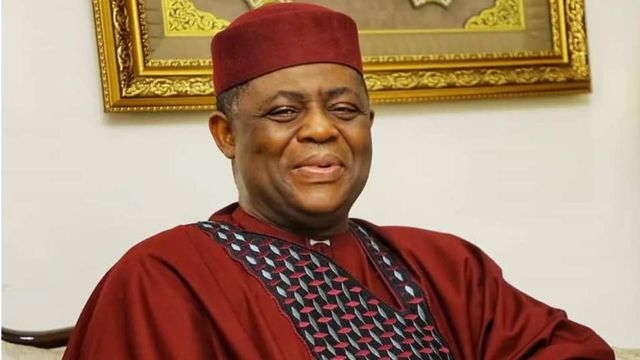
TO OUR BELOVED BROTHERS IN SOUTH AFRICA by Chief Femi Fani-Kayode
William Shakespeare’s ‘Julius Caeser’ is, in my view, one of his best plays ever written by history’s greatest bard and playwright and it is indeed amongst my favourites.
It speaks of mob psychology, ambition, power, treachery and the most brutal and painful expression of betrayal by a loved one.
Caeser loved Brutus his protegee above all else but at the end of the day it was Brutus, after others had stabbed him all over the body with their knives, that struck the fatal blow deep into his ageing chest and killed him.
The shock of the betrayal by a loved one and his famous last words, “et tu Brute”, as he slowly bled and died, (which when translated from Latin to English means “and you too Brutus?”) conveyed his anguish and pain. It was not just Brutus’ blade that finally took his life but also a broken heart.
That is how the Nigerian people feel today as they witness the torment and sheer wickedness that their compatriots are being subjected to in South Africa, a nation that most of us love so deeply and dearly and that we sacrificed so much for historically.
The purpose of this contribution is to critically examine what has been going on there and, for the record, these are my personal views and assesment and I do not share them in a representative capacity.
Permit me to begin.
According to the Nigerian Consulate in Johannesburg at least two Nigerians have been killed as a consequence of the xenophobic tensions and attacks.
Their names are Amaramiro Emmanuel and Ekpeyong Andrew.
The News Agency of Nigeria reported that, Ninikanwa Okey-Uche, the Consul-General of the Nigerian Embassy in South Africa, said that Emmanuel died from injuries allegedly sustained after being beaten by personnel of the South African National Defence Force (SANDF) on April 20.
This raises even more concerns than the ones previously held.
It appears that it is not just the South African citizenry that are targetting our people but also elements in the South African Police Force.
Surely Nigerian lives matter as well.
The killings, beatings, persecution, humiliation, violence & discrimination that Nigerians, and other African nationals, are being subjected to in South Africa is unacceptable and stands condemned.
Nigerian children are being turned back from schools, Nigerian patients are being thrown out of hospitals, Nigerian shoppers are being bundled out of shops, Nigerians stores are being ransacked and forcefully shut, Nigerian workers are being sacked and cast out of their offices and work places, Nigerian homes are being raided, ransacked and burnt, Nigerian diners are being thrown out of restaurants and Nigerian men, women and children are being beaten, insulted, mocked and humiliated in the streets for no just cause and even when and where their immigration papers are complete.
South Africans are marching through the streets of their major cities, half naked in tribal wear, singing war songs, brandishing spears and other crude weapons and hunting black African immigrants, including Nigerians, as if they were animals.
There is also video footage of mobs of angry and violent South African women beating up African immigrant women in the streets even whilst the latter were praying and holding up bibles.
Worse of all are the cases of wild and hostile crowds of South African males chasing and stripping African immigrant women, including Nigerians, naked in the streets, beating them to a pulp and sexually violating them in the full glare of a sea of angry, wild and depraved young men who recorded the disgusting spectacle with their telephones.
A number of years ago the great South African reggae singer Lucky Dube was killed by a mob of angry South Africans simply because they believed that he was a Nigerian.
That is how deep the hatred for their fellow Africans has eaten into the psyche and afflicted the minds of some of our South African brothers and sisters.
This surely is bedlam. It is evil. It is wicked. It is cruel. And it is like a scene from Dante’s seventh circle of hell.
Thankfully the United Nations have cultivated the courage to condemn these brutal and merciless attacks but much more needs to be done.
I call on the Government of South Africa to secure the lives & property of our citizens & to do all it can to enhance the respect, fraternity & support that both of our nations have traditionally accorded to one another.
The two largest economies on the African continent must work together in order to bring peace & stability to Africa & strengthen our collective voice on the world stage.
What we must not do is allow our citizens to kill one another or subject themselves to barbaric & inhumane treatment, violence, discrimination & danger.
I have no doubt that the South African Government, which is a responsible and civilised Government that is rooted in the most noble and sacred traditions and heritage of Nelson Mandela’s ANC, will do the right thing, live up to its expectations in this respect & arrest the ugly situation.
Nigeria assisted & funded the struggle against apartheid more than any other during the apartheid years & President Olusegun Obasanjo (who at that time was our military Head of State) even went as far as to nationalise British Petroleum (BP), the UK’s then largest oil company, to punish the British when Prime Minister Margaret Thatcher refused to place economic sanctions on the white minority Government of South Africa.
President Thabo Mbeki, the former President of South Africa, & other ANC leaders lived in Nigeria during those years & we were honored to have them.
After his release from prison and after being elected, President Nelson Mandela came to Nigeria to thank us for our support for his country during those difficult years. That was 36 years and three months ago!
He was accompanied by his beautiful wife Winnie Mandela on that visit and when she mounted the podium she said the following words, “we owe much of our freedom to Nigeria. I want to take this opportunity to say ‘thank you Nigeria’.”
On his part President Cyril Ramaphosa, the sitting President of South Africa, said, just a few days ago, that “African countries helped during the anti-apartheid struggle” and that “South Africa won its freedom from apartheid and racism “on the crest of a wave of support from other nations and particularly African nations”.
This is a confirmation of an incontrovertible and indisputable fact which we appreciate.
We donated billions of dollars to the ANC & to arming Umkhonto Wesizwe (AKA the Spear of the Nation) it’s armed wing.
We did the same for Zimbabwe too & funded President Robert Mugabe’s ZANU & Joshua Nkomo’s ZAPU in their armed struggle against Prime Minister Ian Smith’s white minority Rhodesian Government.
This is not to mention what we did for Namibia, Mozambique, Angola, Tanzania, Somalia, Congo & others in Africa & our efforts in West African nations like Liberia, Sierra Leonne and Chad during their bitter conflicts in which we contributed our treasure & sacrificed our blood.
In all these arenas of war Nigeria played her role, paid her dues & earned the admiration of all even though many appear to have forgotten.
As Obasanjo said in an interview with Mr. Soni Irabor, General Murtala Mohammed, the military Head of State to whom he was second in command & who was his predecessor in office, “we fought against colonialism & apartheid”.
They did this with courage & strength & many are of the view that Mohammed was assasinated primarily because he supported those anti-colonial movements in Angola & apartheid forces in South Africa.
The people of Nigeria & South Africa were ONE at that time & we STOOD shoulder to shoulder against apartheid.
I recall that many of us from Nigeria, including yours truly, participated in student demonstrations whilst studying at University in the United Kingdom in the late 1970’s and early 1980’s against the barbarism of South Africa’s white minority rule.
I remember that when I was at Harrow School in the United Kingdom before going to University that I had a very brutal fight with a blond haired, blue-eyed racist white Afrikaaner South African boy who came from one of their top families in that country right in the classroom after he referred to all black people as animals and told me that in his country we would have been kept in cages.
He also called me a “dirty kafir” (kafir is the “N” word in Afrikaans) and my response to that was a dirty slap to his Boer face.
He forgot that I was not only a member of the schools boxing team but also that up until then I had never lost a boxing match.
I broke his nose in that encounter and after that he never opened his mouth to speak ill about black people again in my prescence.
This happened in 1975 when I was 15 years old and I still remember those events vividly.
I also remember his name but because he hails from one of the oldest, most distinguished and most respected families in South Africa till today and we became the best of friends years later I will not mention it here.
I was punished by the school authorities for giving him the beating of his life after reminding him that, unlike others, Nigerians do not take rubbish from anyone but I never regretted what I did and as a matter fact I enjoyed it.
This behaviour was replicated by countless other sons of Nigerian elite families who met their white South African counterparts in top British private schools in the 1970’s and 1980’s.
I remember that my childhood and family friend Mr. Kio Amachree, the son of the highly respected Chief Godfrey Jaja Amachree QC, Nigeria’s first Solicitor General and a former Under-Secretary of State of the United Nations, did the same thing to another white South African student when he was at Eton College just as his younger brother and one of my closest friends Mr. Tonye Amachree, who I attended Holmewood House Scool with in Tunbridge Wells years earlier, did to yet another racist white South African that we bumped into in a restaurant in Brighton!
I also remember being arrested by the British police in 1979 along with hundreds of other members of the University Students Union and members of the Students Anti-Nazi League at a protest and demonstration that I participated in against the South African Barbarians Rugby team (a multi-racial invitational side) who had been allowed to come to play in Coventry on October 17th 1979 during their tour of the UK.
We marched in our thousands singing songs of protest and refusing to be dispersed outside the rugby stadium and we were arrested in our hundreds. It was a proud moment for us all and that was the least we could do for the struggle.
That is how passionately we all felt, even as young students, about what the apartheid Government of South Africa was doing to our black brothers in their country.
Such was the intensity of these protests all over the UK that the last leg of their tour and their final match, which was scheduled to take place in another city, had to be cancelled and they were sent back home to South Africa with their tail between their legs.
In those days, as students, we felt the same passion and anger and perhaps even more as the students that are marching all over the world for the Palestinian people and for Gaza are doing today.
Permit me to go deeper and enlighten those that are too young to know, those that were not properly taught history or educated in their schools and those with short memories about the pure evil that apartheid really represented and about some of the things that Nigeria did as their contribution towards the emancipation and liberation of the black majority population of South Africa from the hands of the Afrikaans-speaking white Boers and farmers that literally regarded them as little better than animals and that sought to break their spirits, bodies and souls with the most cruel and crude system of human degradation and institutional bondage that humanity has ever known and which was, in my humble estimation, even worse than the evil of Zionism and Nazism.
That system was called “apartheid” (meaning “separate development”) and worse of all the defunct Roman Dutch Church of South Africa attempted to justify its pervasive, perfidious and insidious perpetration with passages from the Holy Bible.
This evil system denied blacks the right to live amongst whites, have sexual relations with them or have equal opportunities with them.
Blacks were confined to living in designated and barren homelands, filthy slums and heavily policed, isolated and crime-ridden satellite towns.
They were forced to carry passes to enter cities, were compelled to learn Afrikaans (a derivative of Dutch and the language of their white oppressors) in school and were only allowed into the city to do the most menial and dirty jobs.
The whites controleed all the levers of power in Government, headed and manned the entire civil service and all the security forces and owned 100% of the land and 100% of the companies and businesses in the country.
Blacks owned nothing, headed nothing, led nothing, were not allowed to vote and were described as the biblical “hewers of the wood and drawers of the water”.
They were regarded as nothing but a slave force that were seen as being little better than animals.
Black protestors and demonstrators were arrested, tortured and beaten and if they were arrested up to three times they were summarily executed by the police without trial or due process.
As far as the authorities were concerned the only thing the black man was good for was to be worked to death in South Africa’s farms and gold and diamond mines and to clean their toilets, sewers and homes.
In spite of this savage repression black South Africans and the horrendous mindset and challenges they were subjected to they remained strong, resilient, fearless, courageous, heroic and showed no sign of fear, cowardice or weakness.
Even as their children were being mowed down in the streets of Soweto and elsewhere by the guns of the Afrikaaner security forces they just kept coming back in waves and proving to the Boers that the black man cannot be held down and subjugated in perpetuity.
Despite their circumstances black South Africans went to their own schools and Universities and built up a very strong ideological and intellectual base which formed the backbone of the resistance.
This is remarkable given what they had been subjected to and where they were coming from for hundreds of years.
With joy and much nostalgia we still rever and shall always remember heroes of the South African struggle like Steve Biko (who was arrested and beaten to death by the apartheid police and thereby martyred) Joe Slovo (a white South African and one of the most, decent, courageous and selfless men that ever walked the earth), Walter Sisulu, Oliver Tambo, Bishop Desmond Tutu and Rev. Alan Boesak.
Together with Nelson Mandela, Jacob Zuma (who headed the armed wing of the ANC), Thabo Mbeki, Cyril Ramaphosa and the relatively young Julius Malema (whose popularity in most parts of Africa is outstanding and whose song titled “Kill The Boer” made waves throughout the world) these were men and women whose names were known, loved and respected in virtually every household and school in Nigeria during the apartheid and post apartheid years.
They were not just South African heroes but they were African heroes.
They represented the pride and dignity of black people everywhere for refusing to bow down before tyranny and the most brutal and bestial expression of racism and standing up to fight for their people and our collective dignity as Africans against all odds.
What made the struggle even more challenging was the fact that few from outside South Africa knew just how bad it was, what they were subjected to and where they were coming from.
Permit me to shed light on this and touch on South African history.
Jan Van Riebeck, the first Dutch Administrator of the Cape, arrived in South Africa from Holland in 1652 and his first words on sighting members of the black local population were to describe them as “stinking black dogs” and as “dull, stupid and odorous”.
These words were written by him in his journals and they reflected the deeply hostile and racist attitudes of the white Afrikaners and Boers against the native black population in the 17th-century colonial era when they first arrived.
That disposition and attitude from the whites towards the black population remained the same right up until 1990 when they finally won their freedom after a protracted armed struggle.
That is the level of racism and oppression that our black brothers in South Africa were subjected to by the white settlers for hundreds of years. They took literally EVERYTHING from them except their self respect and dignity!
Yet it didn’t stop there.
Nothing can describe the sheer contempt, disdain, hatred and psychological torture that they were subjected to more than the words of Afrikaaner Prime Minister P.W. Botha when he said the following now infamous words in 1985.
He said,
“Black people cannot rule themselves because they don’t have the brain and mental capacity to govern a society. Give them guns, they will kill themselves. Give them power, they will steal all the government money. Give them independence and democracy, they will use it to promote tribalism, ethnicity, bigotry, hatred, killings and wars”.
All this hate and bigotry yet when Nelson Mandela was freed after 27 years of incarceration at Robben Island and was elected President he not only proved Botha and the other Afrikaners that shared his shameless disposition wrong but he also forgave them and treated them with respect and decorum leaving most of the land and economy in their hands.
Botha had no idea how large-hearted, forgiving, disciplined and civilised the black man can be.
It was this attitude and sheer cruelty of the Boers and their total hatred towards the black population that was unbearable for Nigerians to witness.
This is what we, as Nigerians, saw our black brothers in South Africa going through and being a proud, noble and independent people of wealth, status, courage and means that had been educated at the best Universities in the world since the mid-1800’s we could not bear it.
From the day we got our independence as a nation from the British in 1960 we opposed the apartheid Government in South Africa vehemently.
This strong opposition became even more virulent, aggressive and pronounced from 1975 when we were at our peak of strength right up until 1990 when apartheid was brought to an end we did the following in order to help the South African blacks and fight successive white apartheid South African Governments.
We banned Shell and Barclays Bank because they had links with apartheid South Africa.
We nationalised British Petroleum and all it’s assets which cost billions of dollars because the British Government refused to impose sanctions on apartheid South Africa.
We funded not just the African National Congress but also the Pan African Congress with billions of dollars over a period of years and until the struggle was over.
We gave South African freedom fighters Nigerian passports so they could cross borders freely and we successfully pushed for the expulsion of apartheid South Africa from the Commonwealth, the Olympics and the United Nations.
We threatened to cut oil supplies to any country that traded with apartheid South Africa and banned Nigerian students from studying in any country that was friendly with apartheid South Africa by denying them scholarships.
We held on to the belief that an attack on black South Africans was an attack on blacks everywhere and when the West refused to take the lead in the fight against apartheid South Africa we picked up the baton and led the charge.
General Murtala Mohammed and General Olusegun Obasanjo (as he then was) saw the fight against apartheid South Africa as a personal mission and they fought it with zeal and all the resources available to Nigeria.
On one occassion Obasanjo refused to shake British Prime Minister Jim Callaghans’ hand because of Britain’s refusal to impose sanctions on apartheid South Africa.
After apartheid fell in 1990 South African companies flooded Nigeria and were not only given billions of dollars worth of contracts but also dominated the banking, retail and telecommunications sector in our country.
Nigeria lost over 90 billion USD plus over 34 years of fighting apartheid and more importantly every Nigerian that either resided at home or any other country in the world fought for, prayed for, advocated for and aggressively argued for the emancipation of our black South African brothers and the freedom of Nelson Mandela and all the other brothers and comrades that fought in the struggle.
All this yet today the majority of South Africans appear to have forgotten or never cared to find out and we are regarded as nothing but criminals and parasites that are worthy of being hunted down and treated and killed like animals by rampaging mobs of those very same South African blacks that we gave so much support and offered so much love.
It is indeed painful and it is with that pain and broken hearts that we witness what our nationals are being subjected to in South Africa today at the hands of the very same people that we once helped and that we always loved and cherished.
It is a given that the atrocities that our people are being subjected to in South Africa today has to stop & we must rebuild the bridge of love, trust & fraternity between the nationals of our two countries.
A better understanding & greater appreciation of our collective history & joint struggles coupled with love, tolerance, solidarity, peace, mutual respect & collaboration between the people of our two beautiful nations is the way forward & I hope that this can be achieved.
There is no place for the rabid racism & mindless xenophobia that we are witnessing on a daily basis in the Rainbow nation today.
South Africa is bigger & better than that & she should be a source of pride to us all & not a source of concern.
Outside of that President John Mahama of Ghana, clearly appalled by the attacks that African nationals were being subjected to in South Africa, including many of his own Ghanian compatriots, spoke the bitter truth when he said, just a few days ago, that “xenophobia is a betrayal of the Pan African dream”.
Yet thankfully all is not lost and there is cause for hope.
I say this because in what appears to be an attempt to warn those that are consummed by hate for their fellow Africans and possessed by the spirit of xenophobia, just a few days ago, President Cyril Ramaphosa said “people would not be allowed to take the law into their own hands and harm foreign nationals”.
These are deeply encouraging and comforting words.
He did however follow them with a strong caveat when he said,
“We say to those who are here legally, respect us as South Africans, respect our laws, conventions and our traditions, as you would want us to respect the laws and traditions of your own country”.
I do not think this is too much to ask. Illegal immigrants and criminals cannot possibly attract the sympathy or support of any right thinking person and legal immigrants must operate within the laws and respect the customs and traditions of their host countries.
This is especially so given the fact that some Nigerians are given to indulge in all manner of crime in South Africa which reflects badly on us all.
When you go to someone elses country to sell drugs, indulge in “yahoo yahoo”, set up mafia-style dangerous criminal syndicates, become a prostitute, pimp, ritualist or human trafficker, practice 419 or other forms of fraudulent activities or marry their daughters, mothers, wives and girlfriends just to secure the necessary immigration documents in order to be able to reside there you are no longer worthy of being called a Nigerian and you are nothing but an utter disgrace who has brought shame, reproach and opprobium upon your own people.
As far as I am concerned any Nigerian that does any of those things in South Africa or anywhere else deserves to face the full wrath of the law.
They are nothing but reprobates, degenerates and criminals and they do not attract my sympathy or represent who and what we are.
This does not however abate the deep concerns which is slowly growing into an even deeper rage that millions of Nigerians from all over the world feel about the way in which our compatriots, the majority of whom are decent, hard working, law-abiding, civilised and decent people, are being stigmatised, persecuted, brutalised, humiliated and treated in South Africa.
Permit me to share just one expression of such rage which we ignore at our collective peril.
Mr. Kio Amachree, my childhood and family friend, my old school colleague and a well known Nigerian public commentator and writer who is based in Stockholm, Sweden wrote the following on X. He said,
“People are asking me why I have not written about South Africa. I have written about that country, and this is what I said. Nigeria gave the South African freedom fighters $91 billion in aid during their struggle against the white oppressors and apartheid. We lost a further $90 billion from not selling oil to South Africa. Nigeria gave passports and safe harbour to the ANC leadership. When Mandela was sentenced to death, Nigeria appealed to the apartheid government — not to kill him, jail him, but do not kill him. They listened. No other country in the world except Libya supported the South African anti-apartheid movement like Nigeria did. We were fantastic. And what have we got in return? Insults. Threats. Killings. Abuse. Discrimination. The generalisation that all 250 million Nigerians are drug pushers or pimps involved in scams. We are beaten, discriminated against, and not treated with the respect that one would expect from a people we did everything we could to help in their time of need. I have never been to South Africa. Why? Because when I was at school in England, the only racists I came across at Eton College were white students from South Africa and Rhodesia. One South African boy said that he used Black people for target practice in Africa. He was dealt with to such an extent that he never returned to the school — and the school did not punish me. They were disgusted by what he said. I do not want to go to a country that is still dominated by the same people who ruled under apartheid. Seventy-five percent of the land still belongs to white people and 85 percent of the economy is controlled by them. You sit in a restaurant in high-class Cape Town and the customers are all white — only a few Black faces, and they tend to be the waiters. I have a temper. I cannot stand Afrikaners. I have never hidden this resentment. I have seen them at work, and what I have seen has made me dislike that community for most of my life. So instead of going to a country where I know I will get no support from the Black population if anything happens between me and a white man, I think it is best I keep my Black ass out of South Africa.
They need to stop attacking their fellow Africans. It is not only Nigerians they hate — it is every African in their country — and this comes from the brainwashing apartheid inflicted upon that community. The fact that they still call themselves Coloured, Afrikaner, Black, and whatever else is a disgrace in this day and age. I am not equipped to deal with that madness. And the numbers are ever-present in my head. Ninety billion dollars in aid money from Nigeria — and you hate us. Pay us back. If you want us to leave, give us back our money — plus the interest, plus the money we lost from not selling oil to your white oppressors — and we will leave your country. Otherwise, I have a problem with you”.
These are very harsh and provocative words and bellicose sentiments which I personally do NOT share but sadly and nevertheless a growing number of our people appear to espouse and voice them.
We have much work to do to assuage their feelings and rebuild trust and a beautiful bridge of love and friendship between the people of our two great nations.
On a lighter note let me say the following.
One of the “gravest” charges against Nigerians in South Africa is that they manage to befriend, seduce and marry South African women.
Those South African males that consider this to be a crime say that they hate Nigerians because of this.
To those that suffer from this unfortunate disposition I say the following.
If you insist on saying you hate Nigerians because they take your women the solution to the problem, if you want to keep your women to yourselves, is to work harder and do better.
The answer is NOT to kill Nigerians. The answer is not to resent Nigerians. And the answer is not to hate Nigerians.
For an African to marry the national of another African nation should be seen as perhaps the most graphic and purest form and expression of Pan Africanism and African integration and solidarity rather than an act of hostility or a reason for war!
I would be delighted if more South African men married women from other African nations and for men and women from different African nations to marrry one another even more.
That should not divide us but bring us closer together as a people and as a continent. If the Europeans are doing it so successfully, why can’t we?
No-one should be deterred from or alarmed by this. Love and inter racial marriages and union is a beautiful thing and will ultimately bring us all much closer together.
Permit me to conclude this contribution by calling on the Nigerian community in South Africa to stay safe, to remain calm, to be courageous, to watch their movements, to keep the peace, to be vigilant & prayerful & above all to be law-abiding.
Outside of that be rest assured that you are NOT alone!
Channels of communication have been opened between our two Governments, our President cares for and loves you very much & help is on the way!
May God watch over each and every one of you night and day.
Shalom.
(Chief David Oluwafemi Adewunmi Abdulateef Fani-Kayode, the author of this essay, is a former Minister of Aviation, a former Minister of Culture and Tourism, a former Senior Special Assistant to President Olusegun Obasanjo on Public Affairs, an Ambassador-Designate of the Federal Republic of Nigeria, the Sadaukin Shinkafi, the Wakilin Doka Potiskum, the Aare Ajagunla of Otun Ekiti, the Otunba of Joga Orile and a Legal Practioner)




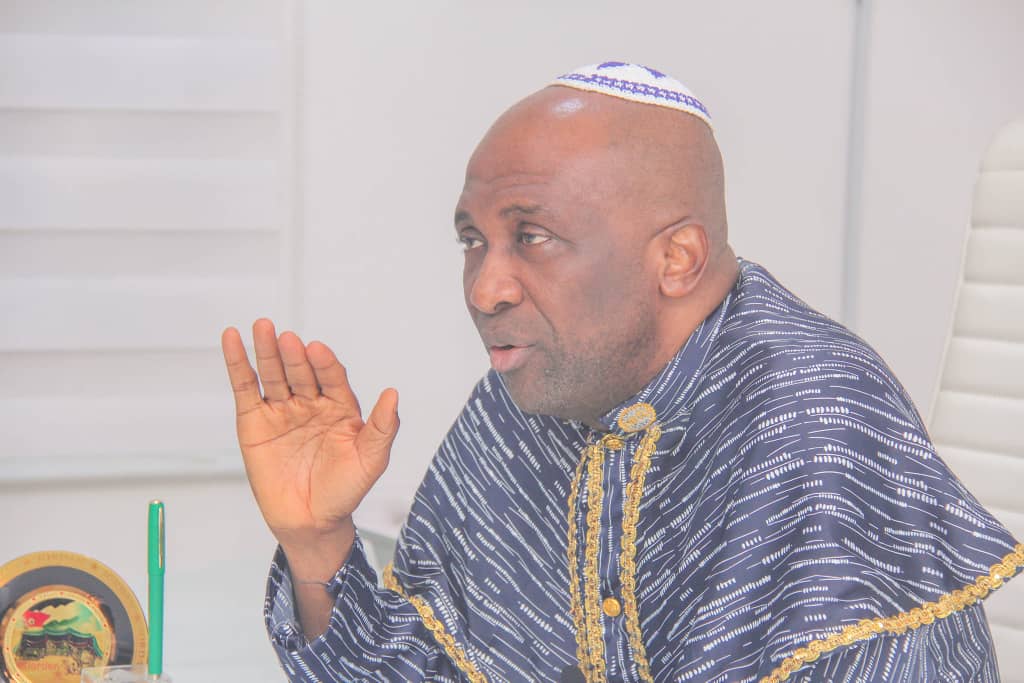
How Primate Ayodele Foretold Sack Of Ousmane Sonko As Senegal’s PM Months Ago (VIDEO)
Before the election that saw the end of Macky Sall’s reign in Senegal, Nigerian prophet, Primate Elijah Ayodele, revealed that there would be a revolution in Senegal and that the opposition would defeat the ruling party.
Despite the fact that the opposition leader, Ousmane Sonko, was in prison, the prophet made it known that if the opposition leader had a way out of prison, he would defeat the candidate of the ruling party.
Even though it looked impossible, at the end of the day, Sonko-backed candidate Diomaye Faye won the election in the first round by a landslide.
While the people of Senegal were celebrating in the euphoria of the victory, Primate Ayodele warned again that the president and Ousmane Sonko, who was later appointed Prime Minister, would have a political crisis that would collapse their relationship.
It was unbelievable at that time because Sonko singlehandedly won the election for Faye, and as he was seen as Sonko’s little brother, it was impossible for them to have issues, but subsequently, Primate Ayodele made it known that both of them would have a political crisis.
These were his words:
“In Senegal, Sonko and Faye, I see a sort of disagreement and separation. Something is about to happen. Watch out. You will have differences that will separate you; watch out for this.”… this was just a few months after the government came to power.
As he warned, the political crisis happened suddenly to the surprise of many and unexpectedly, it has taken a different turn with the sack of Ousmane Sonko as the Prime Minister of the nation.
The shock announcement was made on state television in a decree read out by presidential aide Oumar Samba Ba, who said Faye “has ended the duties of Ousmane Sonko… and consequently those of the ministers and secretaries of state who are members of the government”.
No details were provided on the appointment of a new prime minister.
Meanwhile, Primate Ayodele had weeks ago made it known that he sees that Sonko will be sacked as the Prime Minister of the country.
These were his words:
“Faye will sack Sonko as the Prime Minister of Senegal. In a couple of months, he will be removed from office, that is the message of the Lord.”
@primateayodele Before the crisis became public… before the tension turned into open confrontation… the prophecy had already gone forth. Primate Babatunde Elijah Ayodele warned that there would be serious disagreement and political conflict involving Senegal’s President, Bassirou Diomaye Faye, and former Prime Minister, Ousmane Sonko. At that time, many doubted the prophecy. Many questioned the warning… but today, events have begun to unfold exactly as spoken. The conflict became visible. The division became clear. And now, President Bassirou Diomaye Faye has officially sacked Prime Minister Ousmane Sonko. Prophecy is not noise. Prophecy is not politics. When God reveals, time confirms. This is another reminder that divine warnings should never be ignored. The voice of prophecy speaks ahead, so nations and leaders can be guided with wisdom, caution, and prayer. May God continue to reveal hidden things and preserve nations from confusion and crisis. #senegalaise_tik_tok #ousmanesonko #senegalaise #faye #senegaltiktok
With the new development, this has been fulfilled already.
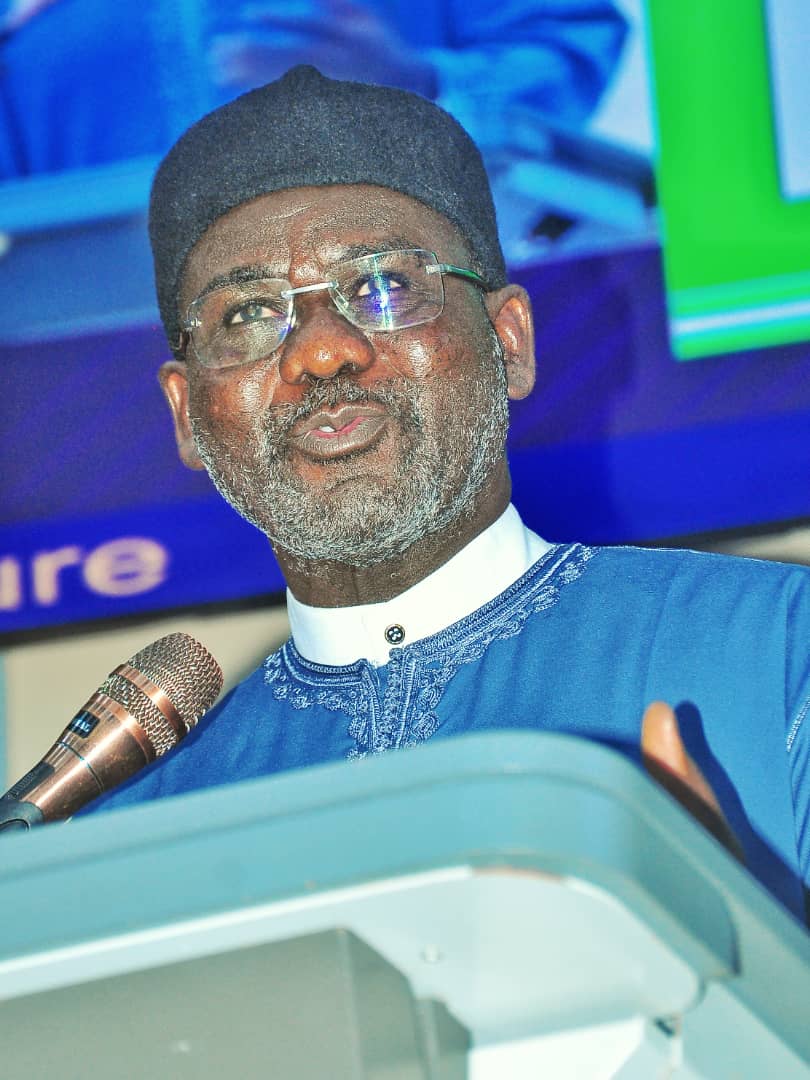
Insecurity: General Buratai Advocates Youth-Driven National Security Strategy
Former Chief of Army Staff, Tukur Yusuf Buratai, has stressed the need for increased youth participation in Nigeria’s security architecture, warning that failure to engage young people meaningfully could further aggravate insecurity across the country.
Buratai made the assertion while delivering a lecture titled, “The Armed Forces of Nigeria and National Security: The Youth and National Security Aspirations,” at the University of Ilorin.
The retired military officer described Nigerian youths as the nation’s greatest strength, noting that their creativity, patriotism, and innovation must be effectively channelled towards combating terrorism, banditry, cybercrime, separatist agitations, and other security threats confronting the country.
According to him, the Armed Forces of Nigeria had transformed from a colonial constabulary institution into a formidable force responsible for protecting the nation’s sovereignty and territorial integrity.
He observed that persistent insecurity across the North-East, North-West, Middle Belt, and South-East remained a major threat to national unity, adding that meaningful youth engagement in security initiatives would play a decisive role in ensuring stability and sustainable development.
Buratai further outlined the constitutional responsibilities of the Armed Forces, including defending Nigeria against external aggression, suppressing insurrection, and supporting civil authorities in maintaining law and order.
The former army chief also reviewed Nigeria’s security landscape, identifying Boko Haram insurgency, ISWAP activities, banditry, oil theft, separatist violence, and transnational organised crimes as some of the major challenges confronting the country.
Drawing comparisons with counter-insurgency operations in Colombia and Sri Lanka, he urged Nigeria to adopt a combination of military operations and socio-economic reforms in addressing insecurity.
He also encouraged Nigerian youths to embrace careers in the Armed Forces, noting that the military offers opportunities for leadership development, discipline, skills acquisition, career advancement, and national integration.
Buratai proposed the recruitment of 50,000 youths annually into the Armed Forces over the next five years, alongside the establishment of state intelligence fusion centres and a national civic security training programme for graduates.


He concluded by urging Nigerian youths to actively support efforts aimed at promoting peace and national security, stressing that enduring peace could only be achieved through justice, inclusion, and development.
society
Court Warns Police: Your Role in Debt Recovery is Illegal; Awards N50m in Favour of Man Detained for 6 Months Over Failed Forex Deal
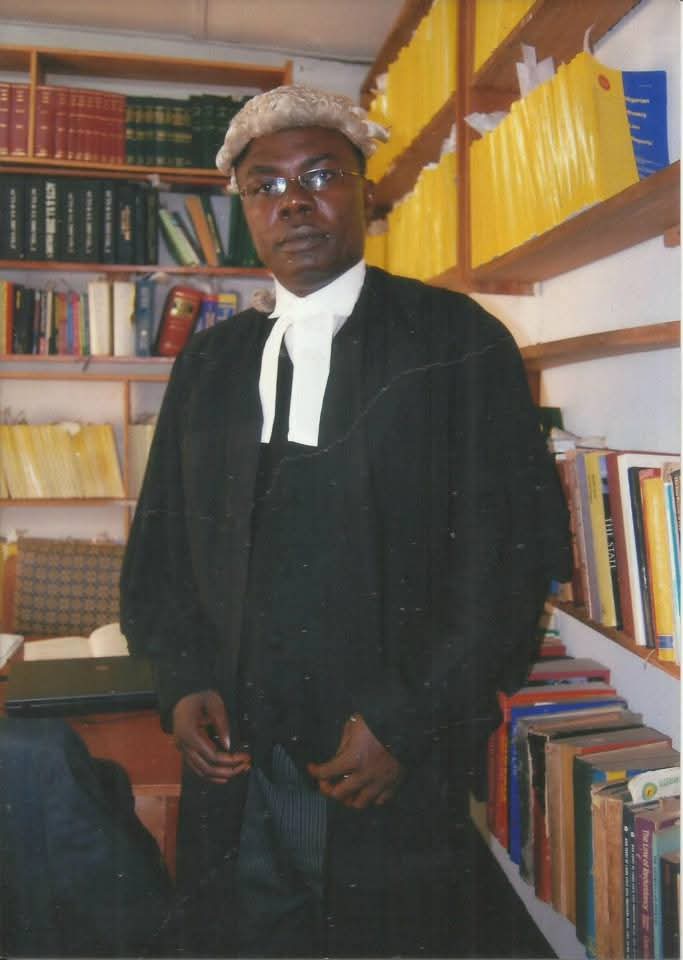
Court Warns Police: Your Role in Debt Recovery is Illegal; Awards N50m in Favour of Man Detained for 6 Months Over Failed Forex Deal
The Lagos State High Court has declared the six-month detention of businessman Bassey Ikpi Ubi over a failed foreign exchange transaction illegal and unconstitutional, ordering the police and private respondents to pay N50 million in damages for torture and unlawful detention.
Justice O. O. Adewunmi-Oshin held that the Nigeria Police Force has no legal authority to act as a debt recovery agency or to mediate private civil disputes.
The ruling was delivered on Monday, 11 May 2026, at the Lagos Judicial Division, High Court No. 49, in Suit No. LD/18019MFHR/2024.
Mr. Ubi, Managing Director of MC COY IKPI BUSINESS INTERNATIONAL LIMITED, had sued the Inspector General of Police, the Assistant Inspector General Zone 2, the DSS, the EFCC, and 11 private individuals and corporate entities.
He alleged that he was arrested and detained on Friday,16 February 2024, tortured almost to death in custody, denied bail, and had his Samsung Galaxy Z Flip 4 and Tecno phones forcibly taken and hacked.
The applicant told the court that the dispute arose from a failed foreign exchange transaction and that the police were being used by private respondents to recover civil debts.
Justice Adewunmi-Oshin stated unequivocally that “the police are not debt collectors and the detention cell is not a venue for settling private disputes.”
The court observed with concern what it called a recurring trend whereby officers of the Nigeria Police Force arrest and detain citizens under the pretext of criminality while the underlying dispute amounts to nothing more than a breach of contract or a failed commercial transaction.
“This Court observes with concern the recurring trend whereby officers of the Nigeria Police Force arrest and detain Citizens under the pretext of Criminality, while the underlying dispute amounts to nothing more than a breach of contract or a failed commercial transaction,” the judge said.
“Such conduct finds no warrant in law. Sections 4 of the Police Act 2020 above cited does not confer any power to act as debt collectors or to mediate private civil disputes.”
Citing _Fawehimi V Inspector General of Police_ (2002) 7 NWLR pt 767 pg 606, the court reiterated that
“the Police must not allow themselves to be used as tools for the enforcement of Civil obligations.”
The judge also referenced Section 6 of the Administration of Criminal Justice Act 2015, which makes clear that arrest shall only be made for a reasonable suspicion of a criminal offence, not for the recovery of debts or enforcement of contractual obligations.
On the applicant’s detention, the court found that holding him for six months without bringing him before a court violated Sections 33, 34, 35, 36, 37 and 41 of the 1999 Constitution, as well as Articles 4, 5, 6 and 7 of the African Charter on Human and Peoples’ Rights.
The judge further declared that the seizure and hacking of the applicant’s phones by the 4th respondent infringed his right to privacy and personal liberty guaranteed under Sections 35 and 37 of the Constitution.
Consequently, the court granted 11 orders. It restrained the 1st to 5th respondents from acting as recovery agents or from further arresting and detaining the applicant and officers of his company.
It ordered the 4th respondent to unconditionally release the seized phones. The court awarded N50,000,000 jointly and severally against all respondents for general, aggravated and exemplary damages, to be paid within 30 days.
It also directed the respondents to publish a public apology to the applicant in a full-page advertorial in a national daily newspaper within 14 days, in line with Section 35(6) of the Constitution.
“The practice is condemned in the strongest terms and the leadership of the Nigeria Police Force is expected to take immediate disciplinary and administrative steps to eradicate it,” Justice Adewunmi-Oshin ruled.
The applicant was represented by Kennedy Osunwa with J. Akor, while M. O. Bajela appeared for the 4th respondent. The 18th and 24th respondents had earlier been struck out of the suit.


- Eritrea: Messages of Congratulations May 24, 2026
- African Development Bank (AfDB) – 2026 Annual Meeting: Full live coverage on Africa 24 May 24, 2026
- Countries in the Horn of Africa and Yemen recommit to ending variant poliovirus May 23, 2026
- Seychelles: President Visits Police and Fire Services in Final Stop on La Digue Tour May 23, 2026
- United Nations World Food Programme (WFP) scales up emergency Ebola response in eastern Democratic Republic of the Congo (DRC) to contain risk of regional crisis May 23, 2026
- Economic Community of West African States (ECOWAS) Inspection Team Visits ECOWAS Stabilisation Support Mission in Guinea Bissau May 23, 2026
- Member States advance regional coordination on Bundibugyo Ebola response May 23, 2026
- World Health Organization (WHO) Supports Zambia to Strengthen Access to Mental Health Medicines and Services May 23, 2026
- Brazzaville 2026 African Development Bank Group (AfDB) Annual Meetings to focus on mobilising Africa’s development financing at scale May 22, 2026
- Morocco: African Development Bank Group and OCP Group Sign €450 Million Partial Credit Guarantee to Accelerate Industrial Transition May 22, 2026
- Eritrea: Messages of Congratulations May 24, 2026
- African Development Bank (AfDB) – 2026 Annual Meeting: Full live coverage on Africa 24 May 24, 2026
- Countries in the Horn of Africa and Yemen recommit to ending variant poliovirus May 23, 2026
- Seychelles: President Visits Police and Fire Services in Final Stop on La Digue Tour May 23, 2026
- United Nations World Food Programme (WFP) scales up emergency Ebola response in eastern Democratic Republic of the Congo (DRC) to contain risk of regional crisis May 23, 2026
- Economic Community of West African States (ECOWAS) Inspection Team Visits ECOWAS Stabilisation Support Mission in Guinea Bissau May 23, 2026
- Member States advance regional coordination on Bundibugyo Ebola response May 23, 2026
-

 news5 months ago
WHO REALLY OWNS MONIEPOINT? The $290 Million Deal That Sold Nigeria’s Top Fintech to Foreign Interests
-

 society3 weeks ago
SOCIAL MEDIA IS NOT A BATTLEFIELD COMMAND – WHY THE NIGERIAN ARMY’S ACTION AGAINST JUSTICE CRACK IS A NATIONAL SECURITY IMPERATIVE
-

 celebrity radar - gossips4 months ago
Dr. Chris Okafor Returns with Power and Fire of the Spirit -Mounts Grace Nation Altar with Fresh Anointing and Restoration Grace on February 1, 2026
-

 celebrity radar - gossips5 months ago
Prophet Kingsley Aitafo Releases 2026 Prophecy: ‘Nigeria Will Rise, but the World Must Prepare for Turbulence’