
celebrity radar - gossips
Tommy Lasorda dies at 93

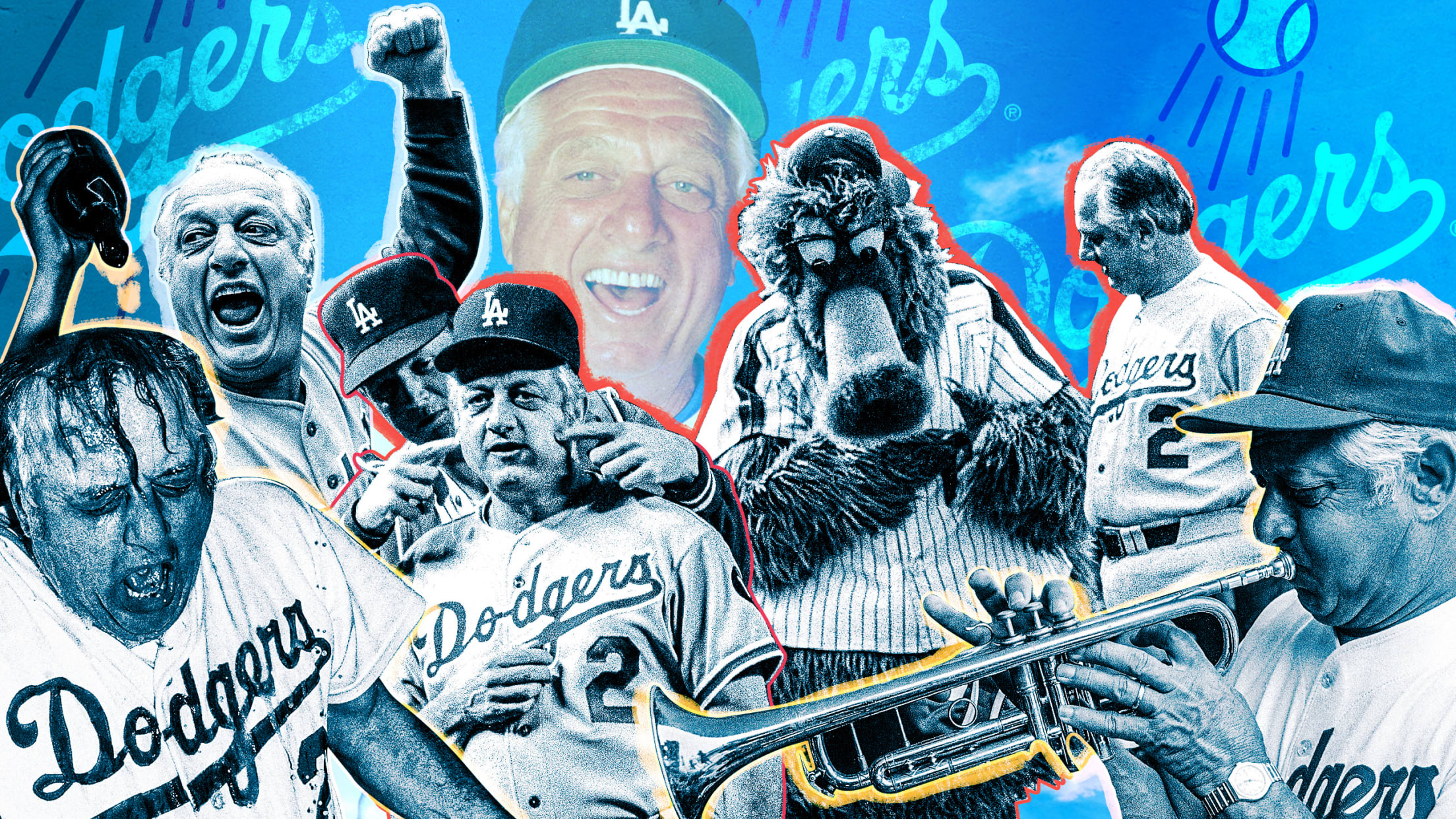
Sadly, growing more and more frail, Tommy Lasorda looked on from a suite at Globe Life Field in Texas, watching as the Los Angeles Dodgers clinched the World Series in Game 6 against the Tampa Bay Rays.

Surrounded by family and friends, Lasorda celebrated the team’s first championship in 32 years that October evening amid the coronavirus pandemic. While his mobility was slowed, his mind was still sharp.
Fittingly, it was the last game he ever attended.
“He always said he wanted 2 things, to live to be 100 and to see another championship brought to the city of LA,” Dodgers third baseman Justin Turner tweeted. “Although he fought like hell to hit triple digits, I couldn’t be more proud to know he got to see the Dodgers on top again, where he knew we belonged”
The Hall of Fame manager who was true blue to the Dodgers for more than seven decades died Thursday night after having a heart attack at his home in Fullerton, California, the team said Friday. Lasorda was 93. He had just returned home Tuesday after being hospitalized since Nov. 8 with heart issues.
Lasorda had been the oldest living baseball Hall of Famer — that distinction now belongs to Willie Mays, who turns 90 in May.
Flags at Dodger Stadium were being lowered to half-staff and Lasorda’s No. 2 was painted in the outfield. A jersey with his number hung in the dugout and fans showed up with flowers, candles and Dodgers memorabilia at the ballpark.
Lasorda had a history of heart problems, including a heart attack in 1996 that hastened the end of his managerial career and another in 2012 that required him to have a pacemaker.
“It feels appropriate that in his final months, he saw his beloved Dodgers win the World Series for the first time since his 1988 team,” commissioner Rob Manfred said.
Lasorda spent 71 years in the Dodgers organization, starting as a player when the team was still based in Brooklyn. He later coached and then became its best-known manager for 21 years in Los Angeles, leading the franchise to two World Series championships. After stepping down in 1996, he became an ambassador for the sport he loved.
Alternately fiery, comforting, profane and full of flair, Lasorda used to say, “I bleed Dodger blue.”
Lasorda was a master motivator among his players, always knowing just the right amount of confidence or candor required to induce stellar performances.
“He believed all that stuff that he said, he really did,” said former Dodgers second baseman Steve Sax, who played on both of Lasorda’s championship teams and was a five-time All-Star. “He really believed that you were better if you wore a Dodger uniform. He was all in. And because he believed it, we did, too.”
Lasorda served as special adviser to team owner and chairman Mark Walter for the last 14 years, and maintained a frequent presence at games sitting in Walter’s box.
“In a franchise that has celebrated such great legends of the game, no one who wore the uniform embodied the Dodger spirit as much as Tommy Lasorda,” said Stan Kasten, team president and CEO.
Lasorda compiled a 1,599-1,439 record as manager from 1977-96. He won World Series titles in 1981 and ’88, four National League pennants and eight division titles as the skipper.
Lasorda kept a bronze plaque on his desk reading: “Dodger Stadium was his address, but every ballpark was his home.″
He was elected to baseball’s Hall of Fame in 1997 as a manager. He guided the U.S. to a baseball gold medal at the 2000 Sydney Olympics.
Lasorda was the franchise’s longest-tenured active employee since Hall of Fame broadcaster Vin Scully retired in 2016 after 67 years.
“There are two things about Tommy I will always remember,” Scully said. “The first is his boundless enthusiasm. Tommy would get up in the morning full of beans and maintain that as long as he was with anybody else. The other was his determination. He was a fellow with limited ability and he pushed himself to be a very good Triple-A pitcher. He never quite had that something extra that makes a major leaguer, but it wasn’t because he didn’t try.”
As a pitcher, Lasorda had a limited career at the major league level, going 0-4 with a 6.48 ERA and 13
strikeouts from 1954-56.
He made only one start for the Dodgers — in 1955, the only year they won the crown while in Brooklyn, he threw three wild pitches against the Cardinals and was pulled after the first inning.
Overall, he pitched eight games for the Dodgers and compiled a 7.62 ERA.
Who would’ve ever guessed then that he would wind up meaning so much to the franchise?
Born Thomas Charles Lasorda on Sept. 22, 1927, in Norristown, Pennsylvania, his pro career began when he signed with the Philadelphia Phillies as an undrafted free agent in 1945. He missed the 1946 and ’47 seasons while serving in the Army.
Lasorda returned in 1948 and once struck out 25 in a 15-inning game. In his next two starts, he struck out 15 and 13, gaining the attention of the Dodgers, who drafted him from the Phillies. He played in Panama and Cuba before making his major league debut on Aug. 5, 1954, for the Brooklyn Dodgers. Although he didn’t play in the 1955 World Series, he won a ring as a member of the team.
Lasorda pitched for the Dodgers for two seasons but lost his roster spot when Brooklyn had to make room for another lefty — young Sandy Koufax.
The Kansas City Athletics bought Lasorda’s contract and was traded to the Yankees in during the 1956 season. Sent down to the Triple-A Denver Bears, he was sold back to the Dodgers in 1957.
Lasorda stayed on with the Dodgers as a scout after they released him in 1960. That was the beginning of a steady climb through the Dodgers’ system that culminated in his 1973 promotion to the big league staff under longtime Hall of Fame manager Walter Alston.
Lasorda spent four seasons as third base coach while considered to be the heir apparent to Alston, who retired in September 1976. Lasorda’s 21 years as manager was second-only to Alston.
Lasorda’s gregarious personality was in stark contrast to his restrained predecessor. He was known for his enthusiasm and outspoken opinions about players. He would jump around and pump his arms in the air after Dodgers victories and embrace players in the dugout after home runs or other good plays.
In L.A., Lasorda found many of the players he had managed in the minors, including Steve Garvey, Ron Cey, Davey Lopes, Bill Russell, Bobby Valentine and Bill Buckner.
As beloved as Lasorda was publicly, behind the scenes he was known for cussing a blue streak with reporters, rendering many of his quotes unusable.
Some of his most memorable rants live on via the internet, notably one from July 1982 involving Kurt Bevacqua of the San Diego Padres, who called Lasorda “that fat little Italian″ after Dodgers pitcher Tom Niedenfuer was fined $500 for beaning Joe Lefebvre, Bevacqua’s teammate.
Lasorda denied ordering Niedenfuer to hit Lefebvre while unleashing a series of F-bombs.
“If I ever did,″ Lasorda said, his voice rising, “I certainly wouldn’t make him throw at a (expletive) .130 hitter like Lefebvre or (expletive) Bevacqua who couldn’t hit water if he fell out of a (expletive) boat.″
In 1978, Dave Kingman of the Chicago Cubs hit three homers and drove in eight runs in a 10-7, extra-inning victory over the Dodgers and a reporter asked Lasorda what he thought of Kingman’s performance.
“I think it was (expletive) (expletive). Put that in,″ Lasorda said. “He beat us with three (expletive) home runs. How could you ask me a question like that?”
Or just read his lips in a clip where has Youppi!, the furry mascot of the old Montreal Expos, tossed from pranking around atop the Dodgers dugout at Olympic Stadium.
Lasorda was known for his friendship with Frank Sinatra and other Hollywood stars. Sinatra sang the national anthem on opening day of the 1977 season to mark Lasorda’s debut as manager. The faux-wood paneled walls of Lasorda’s office were crowded with black-and-white autographed photos of his celebrity friends, the framed glass stained by red sauce from the pasta served in large foil trays after games.
Lasorda’s appetite for winning and eating was equally voracious. His weight ballooned throughout his years as manager, and he explained, “When we won games, I’d eat to celebrate. And when we lost games, I’d eat to forget.″
Lasorda managed nine National League Rookie of the Year winners, including Fernando Valenzuela, Steve Sax, Steve Howe, Mike Piazza, Eric Karros and Hideo Nomo.
“You have to know who to pat on the back, when to pat him on the back, when you have to kick them in the butt and when you have to stroke them a little bit,” said Mike Scioscia, former Dodgers catcher and major league manager. “And Tommy had that gift, to know what players needed what.”
Lasorda managed in four All-Star games. He was serving as third base coach in the 2001 game when he tumbled backward while trying to avoid the shattered barrel of Vladimir Guerrero’s bat in a comical scene.
In 1998, Lasorda became interim general manager after Fred Claire was fired in the middle of the season. He resigned from that job after the season and was appointed senior vice president. After the team was sold in 2004 to Frank McCourt, Lasorda became special adviser to the chairman.
He is survived by Jo, his wife of 70 years. The couple lived in the same modest home in Fullerton for 68 years. They have a daughter Laura and a granddaughter Emily. The couple’s son, Tom Jr., died in 1991 of AIDS-related complications.




celebrity radar - gossips
The Unfinished Conversation: Five Years of Missing T.B. Joshua BY FEMI OYEWALE
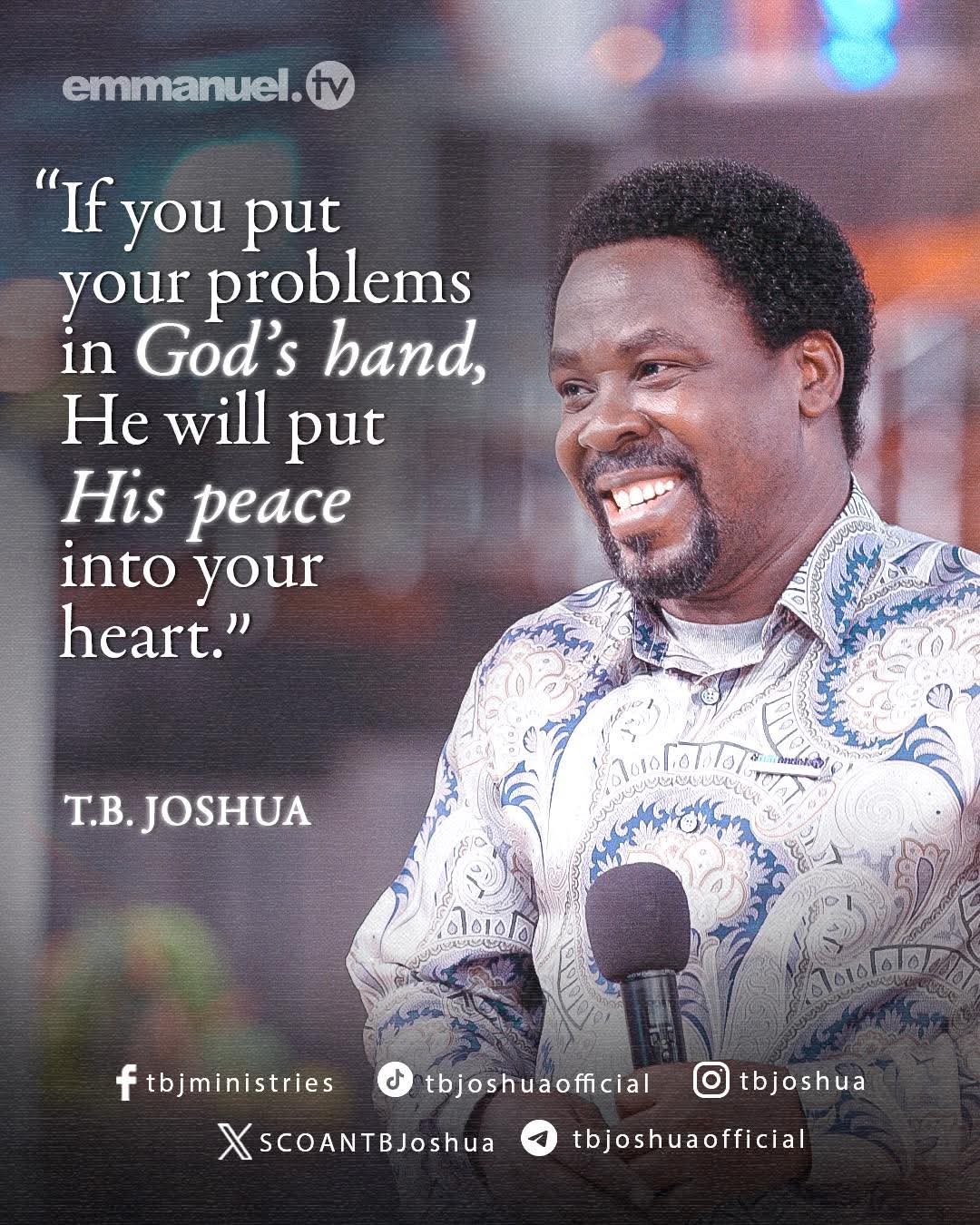
The Unfinished Conversation: Five Years of Missing T.B. Joshua BY FEMI OYEWALE
”In life we meet to part, we part to meet, but parting is the sweetest sorrow.”

Five years have vanished like a vapor, yet the echoes of his voice remain as vivid as a morning sunrise. June 5th marks the anniversary of the transition of a man who was not merely a global religious icon, but a father, a mentor, and a beacon of profound simplicity in a complex world. As I pen this, I find myself still navigating the shores of denial. How does one write a tribute to a man whose influence was as vast as the oceans, yet whose heart remained as humble as the desert sands?

The Last Assignment
Time truly flies, but some moments are frozen in the amber of memory. I recall with poignant nostalgia that I was among the final few with whom he spoke before stepping out for his last assignment on the pulpit on June 5,2021. Unknown to many, we shared an uncommon bond—a father-son relationship that stood the test of time.

Just an hour before that glorious, final ministration, my phone rang. We discussed the fulfillment of prophecies and my planned assignment to South Africa, an assignment he promised to single-handedly finance. By God’s grace, I have traveled the globe, and ninety percent of those journeys were bankrolled by him. Before ending the call, he spoke with finality: “Femi, go and watch it.” I never knew it was a parting shot. I never knew those words would be the threshold of eternity. Perhaps that is why, despite being part of his burial media committee, I lacked the courage to write until today.
From Fear to Faith: The Beginning
My journey to the Synagogue Church of All Nations (SCOAN) was written in the stars of fate. Then a reporter for Encomium Weekly, under the tutelage of the legendary Mr. Kunle Bakare, I was recommended to handle media work for a “prominent client.” When the name “T.B. Joshua” was mentioned, my heart sank.
Having cut my journalistic teeth under titans like Mr. Femi Adeshina and Mr. Dele Alake, I had heard the tales, stories of monsters, of shape-shifters, of dark magic. As I drove to Ikotun, I recited every Psalm I could muster and texted my parents my destination, unsure if I would return. I arrived expecting a beast; I was introduced to a brother. I met a man so profoundly simple, so devastatingly ordinary in his humility, that if not for his presence on Emmanuel TV, I would have sworn I was meeting an impostor. That was the day the fear died, and a lifelong relationship began.
The Man Behind the Mantle
I am not here to validate a legend; I am here to honor a human. I have been privileged to stand in his office, his personal room, his private altar, and his prayer house. What did I find? Not a demigod, but a man who lived for others.
A Heart of Forgiveness: Like the father in Luke 15, no matter the depth of the offense, a sincere “I am sorry” was all it took to be welcomed back into his fold.
The Weight of Misunderstanding: I remember the pain of the building collapse. He asked me, with tears that shattered my heart, “Femi, can you believe they said I used these people for rituals?” That was the first time I saw the iron man break.
A Channel of Healing: I recall a man brought to the prayer line who had previously declared, “Even if T.B. Joshua is the devil, if he can take this pain away, I am ready.” The moment those words left his lips, the Prophet walked over, touched him, and the healing was instantaneous.
He was a comedian, a teacher, a preacher, and above all, a man who loved his family and his ministry with every fiber of his being. If most clergy possessed even half the global influence he wielded, they would have long ago become arrogant demigods. T.B. Joshua remained, to his last breath, a servant.

A Legacy Enduring
It has been five years, yet it feels like yesterday. Many of those who cast stones in the shadows often came seeking his light in secret. Today, as we remember him, I see that legacy thriving. Prophetess Evelyn Joshua is truly holding the torch, preserving the foundation with grace and strength.
Good morning, Prophet T.B. Joshua. You live on in the lives you changed, the doors you opened, and the heart of your many disciples who will never forget the man who taught them that true greatness is found in the simplicity of love.
”He was a man globally misunderstood, yet a man whose name alone opened doors globally. He lived for others, and in doing so, he became immortal.”

celebrity radar - gossips
Let’s build a future where access to healthcare is strengthened…….Oba Odugbemi
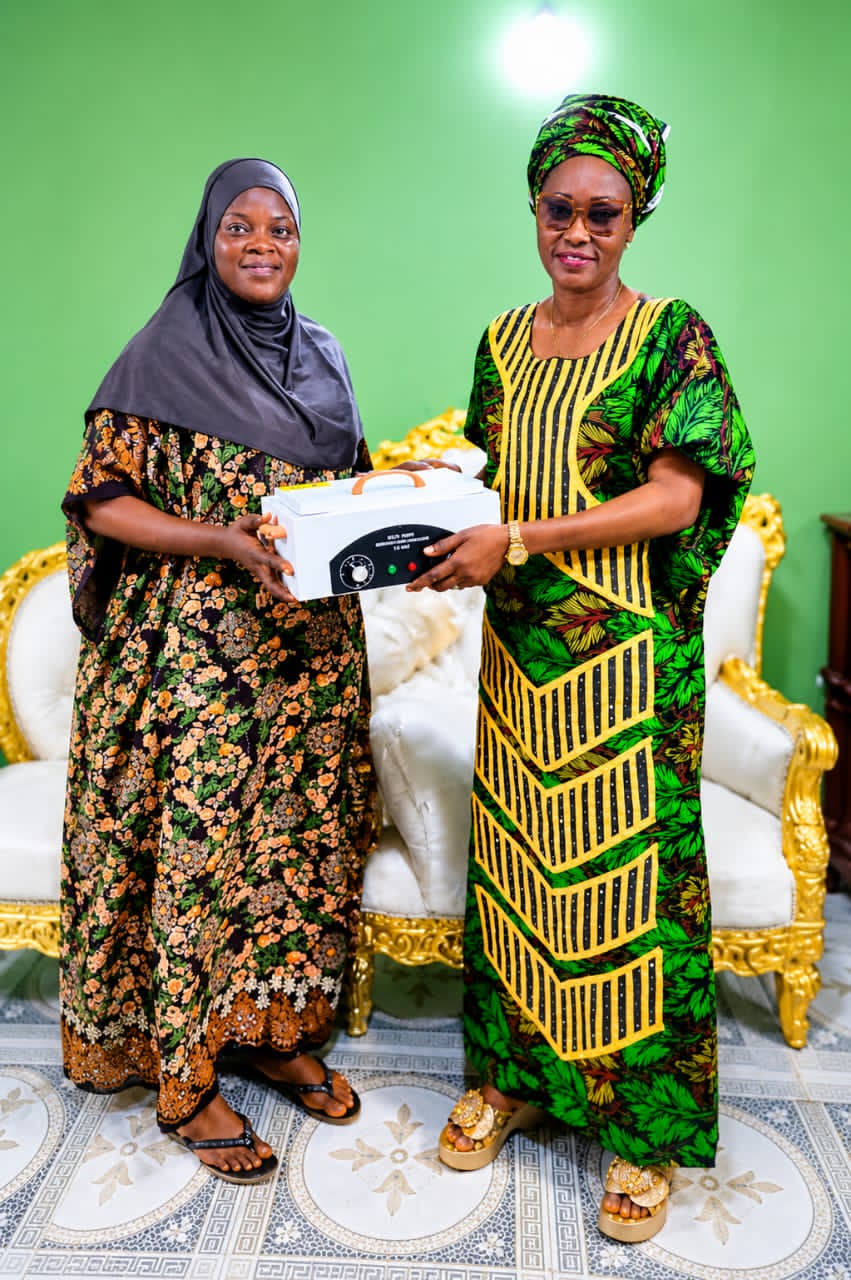
Let’s build a future where access to healthcare is strengthened…….Oba Odugbemi
A call has gone to every stakeholder in the health sector to build a future where access to healthcare is guaranteed and strengthened.
The Onilisa of Lisa Kingdom, Oba Oladele Odugbemi make the call in Lisa while donating a Sanitary Sterilisation Box to the Lisa health centre.
Oba Odugbemi said that the donation became necessary in order to further strengthen the capacity of the health centre for the benefits of the people.
The royal father stressed that his foundation, Oladele Odugbemi foundation would continue to make meaningful impacts in community healthcare aimed at complementing the efforts of government in healthcare delivery system.
He pointed out that the foundation reflects its unwavering commitment to promoting quality healthcare services, enhancing hygiene standards and supporting health institutions with essential tools that contribute to safer and healthier communities.
According to the monarch, all stakeholders in the health sector should work hand-in- hand with government to take healthcare to the doorsteps of the masses as government cannot do it alone, hence health is wealth.
Oba Odugbemi also charged the governments at all levels to declare a state of emergency in the health sector so that every Nigerian can have smooth access to healthcare delivery system in the interest of the country and for the benefits of the masses.
The monarch therefore said that the foundation would continue to care for the people through empowerment by ensuring that masses have good and quality health condition.
The Sanitary Sterilisation Box was presented by the Foundation Director, Hajia Suliat Odugbemi – Tinuosho to the Matron of Lisa Community Health Centre, Mrs Temitope Nofisat Sanni who received it on behalf of the health centre.
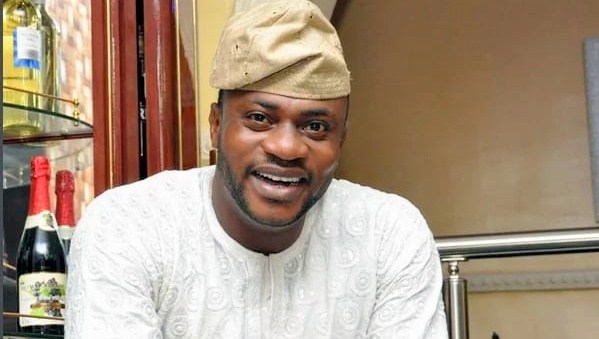
King of the Screen: Why Odunlade, Muyiwa, Femi Adebayo Remain Yoruba Movie Giants
The Yoruba movie industry has continued to produce legendary talents whose influence stretches beyond Nigeria to global audiences. Over the years, some actors have distinguished themselves through consistency, versatility, box office success, and cultural impact.
Among the numerous stars in Nollywood’s Yoruba sector, three actors have remained dominant figures whose names constantly resonate with fans and filmmakers alike — Odunlade Adekola, Muyiwa Ademola, and Femi Adebayo.

Odunlade Adekola: The Street King of Yoruba Cinema
Popularly regarded as one of the most entertaining actors in Nollywood, Odunlade Adekola has built a unique reputation through his energetic delivery, comic timing, emotional depth, and strong connection with grassroots audiences.
From comedy to action and emotional family dramas, the actor has consistently proven his versatility in blockbuster productions. His ability to interpret diverse roles effortlessly has made him a household name across Nigeria.
Industry observers believe his dominance on social media platforms, where his movie clips frequently go viral, has further strengthened his popularity among younger audiences.
Beyond acting, Odunlade has also contributed immensely to mentoring upcoming talents and expanding the commercial value of Yoruba films.
Muyiwa Ademola: The Master Storyteller

For many lovers of indigenous movies, Muyiwa Ademola remains one of the finest storytellers the Yoruba film industry has produced.
Widely respected for producing emotional and morally driven movies, the actor earned massive recognition through classic productions that focused on family values, culture, betrayal, perseverance, and societal lessons.
His calm delivery, deep scripts, and originality have kept him relevant despite changing trends in the entertainment industry.
Film critics often describe Muyiwa Ademola as one of the few actors whose productions combine entertainment with strong cultural education, making his movies timeless among older and younger viewers alike.
Femi Adebayo: The Modern-Day Box Office Force

Femi Adebayo has successfully combined traditional Yoruba storytelling with modern cinematic excellence, helping to project indigenous films to international audiences.
The actor, filmmaker, and producer has recorded major successes with high-budget productions that gained attention on streaming platforms and cinemas.
Known for his professionalism and attention to detail, Femi Adebayo has continued to push Yoruba movies beyond local boundaries while preserving cultural identity.
Entertainment analysts say his ability to blend culture, technology, and quality production has positioned him among the leading faces shaping the future of Yoruba cinema.
Growing Global Influence
The success of these actors reflects the increasing acceptance of indigenous Nigerian content globally. With streaming platforms creating wider access to local movies, Yoruba actors are now gaining international recognition and attracting new audiences.
Fans and stakeholders in the entertainment industry believe the contributions of Odunlade Adekola, Muyiwa Ademola, and Femi Adebayo have not only sustained Yoruba culture through film but have also elevated Nollywood’s global reputation.


- Africa: UNAIDS calls for renewed global solidarity as UN Secretary-General’s report warns that AIDS is not over and fragile gains are at risk June 4, 2026
- Eritrea: Vocational training provided to college students June 4, 2026
- World Bank Group Launches Ten-Year Strategy to Drive Jobs and Prosperity in Uganda June 4, 2026
- Prof Oramah’s appointments to the Royal African Society Patronage and Kenya’s National Infrastructure Fund herald continued recognition of his global leadership and pan-African impact June 4, 2026
- Africa Finance Corporation Raises Record US$2 Billion Syndicated Loan in Landmark Show of Confidence in Transformational Infrastructure Strategy June 4, 2026
- Libya Energy & Economic Summit (LEES) 2027 to Define Libya’s Next Phase of Energy Expansion in Tripoli June 4, 2026
- Uganda: President delivers State of the Nation Address today June 4, 2026
- United Nations High Commissioner for Refugees (UNHCR): Refugees in Eastern and Southern Africa remain in exile for nearly 16 years June 4, 2026
- 85% of Ministry of Food and Agriculture's (MoFA) 2026 Budget Released to Boost Food Production — Deputy Finance Minister June 4, 2026
- Deputy (Dep.) Finance Minister Courts Investors to Transform Ghana’s rice Economy June 4, 2026
- Africa: UNAIDS calls for renewed global solidarity as UN Secretary-General’s report warns that AIDS is not over and fragile gains are at risk June 4, 2026
- Eritrea: Vocational training provided to college students June 4, 2026
- World Bank Group Launches Ten-Year Strategy to Drive Jobs and Prosperity in Uganda June 4, 2026
- Prof Oramah’s appointments to the Royal African Society Patronage and Kenya’s National Infrastructure Fund herald continued recognition of his global leadership and pan-African impact June 4, 2026
- Africa Finance Corporation Raises Record US$2 Billion Syndicated Loan in Landmark Show of Confidence in Transformational Infrastructure Strategy June 4, 2026
- Libya Energy & Economic Summit (LEES) 2027 to Define Libya’s Next Phase of Energy Expansion in Tripoli June 4, 2026
- Uganda: President delivers State of the Nation Address today June 4, 2026
-

 news6 months ago
WHO REALLY OWNS MONIEPOINT? The $290 Million Deal That Sold Nigeria’s Top Fintech to Foreign Interests
-

 society1 month ago
SOCIAL MEDIA IS NOT A BATTLEFIELD COMMAND – WHY THE NIGERIAN ARMY’S ACTION AGAINST JUSTICE CRACK IS A NATIONAL SECURITY IMPERATIVE
-

 celebrity radar - gossips4 months ago
Dr. Chris Okafor Returns with Power and Fire of the Spirit -Mounts Grace Nation Altar with Fresh Anointing and Restoration Grace on February 1, 2026
-

 celebrity radar - gossips6 months ago
Prophet Kingsley Aitafo Releases 2026 Prophecy: ‘Nigeria Will Rise, but the World Must Prepare for Turbulence’