
society
U.S. Places $10 Million Bounty on Iran’s New Supreme Leader Mojtaba Khamenei

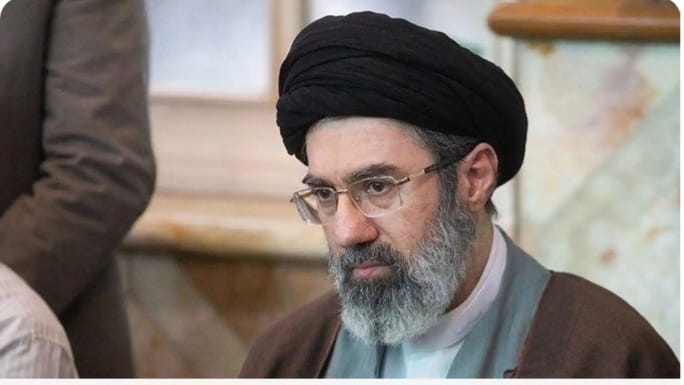
U.S. Places $10 Million Bounty on Iran’s New Supreme Leader Mojtaba Khamenei
By George Omagbemi Sylvester
“Washington Escalates Pressure on Tehran’s Leadership Amid Intensifying Middle East Tensions.”

The United States government has announced a $10 million reward for information leading to the whereabouts of Iran’s new Supreme Leader, Ayatollah Mojtaba Khamenei, in a move widely interpreted as a significant escalation of tensions between Washington and Tehran. The development comes amid an already volatile geopolitical environment in the Middle East, where hostilities involving Iran and its regional adversaries have intensified in recent weeks.

https://www.stanbicibtcbank.com/nigeriabank/personal/products-and-services/all-loans/stanbic-ibtc-mreif-home-loans
On Friday, March 13, 2026, the U.S. State Department made the announcement through its “Rewards for Justice” programme, a long-standing initiative designed to encourage individuals around the world to provide information that helps the United States identify, track, and disrupt individuals linked to international terrorism or threats to global security. Under the programme, individuals who supply credible and actionable intelligence could receive financial compensation and, in some cases, relocation assistance to ensure their safety.
According to U.S. officials, the reward specifically targets information related to Mojtaba Khamenei and several senior Iranian officials believed to be connected to the Islamic Revolutionary Guard Corps (IRGC), a powerful military and political force within Iran. The United States has designated the IRGC as a foreign terrorist organisation, accusing it of coordinating militant networks across the Middle East and supporting groups involved in attacks against American interests and allies.
Officials in Washington argue that the bounty is part of a broader effort to increase pressure on Iran’s leadership structure, particularly at a time when tensions between Iran and Western powers are reaching dangerous levels. U.S. authorities maintain that identifying and tracking individuals involved in international militant activities remains essential to safeguarding global security and preventing further escalation in the region.
The development also follows a dramatic shift in Iran’s leadership earlier this year. Mojtaba Khamenei, the son of the late Ayatollah Ali Khamenei, reportedly assumed the role of Supreme Leader in March 2026 following the death of his father. Ali Khamenei, who served as Iran’s Supreme Leader for more than three decades, was reportedly killed during joint U.S.–Israeli airstrikes on February 28, 2026, an operation that marked one of the most significant confrontations between Iran and its adversaries in recent history.
Although the circumstances surrounding the elder Khamenei’s death remain contested in some quarters, the event has undeniably reshaped Iran’s political and religious leadership. The rise of Mojtaba Khamenei to the country’s highest authority has drawn international attention, partly because of his relatively limited public political profile compared with other senior Iranian figures.
Reports from various international sources suggest that Mojtaba Khamenei himself may have sustained injuries during the same wave of attacks that claimed his father’s life. Since assuming the leadership role, he has rarely appeared in public, choosing instead to communicate through written statements or messages delivered by intermediaries. This limited visibility has fueled speculation about his health, security arrangements, and the internal dynamics of Iran’s ruling establishment.
Analysts say the United States’ decision to offer a financial reward for information about Iran’s new Supreme Leader is likely to heighten diplomatic tensions and provoke strong reactions from Tehran. Iranian officials have historically condemned similar measures as violations of international norms and evidence of hostile intent by Western powers.
At the same time, the move underscores the increasingly confrontational posture adopted by Washington as geopolitical rivalries intensify across the Middle East. Security experts note that the region is already grappling with multiple flashpoints, including proxy conflicts, maritime security threats, and growing competition for strategic influence.
For many observers, the bounty announcement also highlights the information war that often accompanies military and political confrontations. In periods of heightened conflict, intelligence gathering, psychological operations, and strategic messaging frequently become as significant as traditional military engagements.
Critics of the U.S. decision warn that publicly offering a bounty on the head of a sitting national leader could further destabilise an already fragile regional environment. They argue that such actions risk escalating hostilities and complicating diplomatic efforts aimed at reducing tensions between Iran and Western governments.
Supporters of the move, however, contend that the measure is intended to disrupt networks linked to militant activities and demonstrate Washington’s determination to confront perceived threats emanating from Iran’s leadership circles.
As the geopolitical contest between the United States and Iran continues to evolve, the announcement of the $10 million bounty represents another chapter in a long-running confrontation that has shaped Middle Eastern politics for decades. Whether the move will yield actionable intelligence or simply deepen the rift between the two nations remains uncertain.
What is clear, however, is that the stakes in the region are rising, and decisions taken by global powers in the coming months could significantly influence the trajectory of security and stability across the Middle East.





society
Troops Intensify Offensive in Sokoto Communities, Force Terrorists to Abandon Camps in Kurawa and Tureta Axis
Troops Intensify Offensive in Sokoto Communities, Force Terrorists to Abandon Camps in Kurawa and Tureta Axis
Troops of Headquarters 8 Division and Sector 2 of Joint Task Force North West Operation Fansan Yamma have sustained offensive operations against terrorist elements in parts of Sokoto State, forcing suspected criminals to abandon their hideouts and disrupting their activities. On June 4, 2026, troops working alongside Operation Keystone personnel, Department of State Services (DSS) operatives and Sokoto State Community Guards conducted a fighting patrol to Kurawa Village, where they cleared the community and surrounding areas of suspected terrorist camps.
During the operation, troops successfully cleared and occupied identified hideouts after suspected terrorists fled on sighting the advancing security forces. The operation was extended to Dangulbi and nearby locations, while aerial surveillance conducted with drones confirmed the absence of terrorist activity within the general area, indicating the effectiveness of ongoing clearance efforts.
In a related operation, troops at Forward Operating Base (FOB) Tureta swiftly responded to reports of suspected terrorist movements around Bimassa Village in Tureta Local Government Area. Upon arrival, locals informed the troops that the suspects had been sighted around the Kuruwa axis allegedly searching for livestock to rustle. The prompt deployment of troops disrupted the criminals’ plans, and the operation was concluded without incident as security forces maintained dominance of the area.

Lagos Politics: APC Elevates Sonayan-James, Strengthens 2027 Governorship Ticket
LAGOS — The All Progressives Congress has boosted its preparations for the 2027 Lagos State governorship election with the unveiling of Damilola Sonayan-James as its deputy governorship candidate, a move party leaders say is aimed at strengthening the party’s electoral prospects.

The announcement positions Sonayan-James as a key figure in the party’s campaign structure as the APC intensifies efforts to consolidate its political dominance in the state ahead of the polls.
Party officials described her emergence as the outcome of extensive consultations and a strategic decision to present a ticket that reflects competence, grassroots engagement and inclusive leadership.
Speaking on the development, APC leaders said Sonayan-James had demonstrated commitment to the party’s ideals and possessed the experience required to contribute meaningfully to governance if elected.
Her nomination is also expected to bolster the party’s appeal among women, youths and grassroots supporters, given her track record in community development and political mobilisation.
Political observers believe the decision underscores the APC’s determination to field a balanced ticket capable of sustaining its influence in Lagos while responding to the evolving expectations of the electorate.
With the unveiling concluded, attention is expected to shift to statewide mobilisation and engagement with stakeholders as the party prepares for what is anticipated to be a keenly contested governorship election in 2027.
society
ONDO STATE GOVERNMENT MOBILIZES ON #UniteAgainstTerror CAMPAIGN, CALLS FOR NATIONAL UNITY AGAINST TERRORISM
ONDO STATE GOVERNMENT MOBILIZES ON #UniteAgainstTerror CAMPAIGN, CALLS FOR NATIONAL UNITY AGAINST TERRORISM
The Ondo State Government has announced its support for the nationwide #UniteAgainstTerror campaign, calling on all Nigerians to rise above political, ethnic, and religious differences in a collective effort to combat terrorism and other forms of violent crimes threatening the nation’s peace and stability.
2. The campaign mobilization comes in the wake of the recent conviction and sentencing of individuals linked to the horrific Owo church massacre of June 2022, a tragedy that claimed innocent lives and left lasting scars on families, communities, and the nation. While welcoming the judicial outcome as a significant step toward justice, the Government emphasized that the fight against terrorism requires sustained vigilance and the active participation of all citizens.
3. Speaking on Channels Television’s Politics Today, Governor Lucky Orimisan Aiyedatiwa stated that this is a defining moment for Nigerians to come together with one voice against terrorism, stressing that national security must transcend partisan interests. According to the Governor, “when we see something, we must say something,” urging citizens to promptly report suspicious activities and security concerns to the appropriate authorities.
4. The Government commends the Armed Forces of Nigeria, the Nigeria Police Force, the Department of State Services, the Nigeria Security and Civil Defence Corps, Amotekun Corps, and other security agencies for their courage, sacrifice, and unwavering commitment to protecting lives and defending the nation’s territorial integrity.
5. Ondo State Government therefore calls on traditional rulers, religious leaders, community associations, youth groups, civil society organizations, media practitioners, and all well-meaning Nigerians to embrace the #UniteAgainstTerror campaign as a patriotic movement aimed at strengthening intelligence gathering, promoting public awareness, and denying criminal elements the space to operate within our communities.
6. The Government reaffirms its commitment to supporting all lawful measures that enhance national security and urges every citizen to remain alert, responsible, and actively involved in the collective task of safeguarding Nigeria. Together, united in purpose and action, we can defeat terrorism and build a safer and more secure nation for present and future generations.
Hon. Idowu Ajanaku,
Commissioner for Information and Orientation
June 5, 2026


- Africa Centres for Disease Control and Prevention (Africa CDC) Welcomes Pandemic Fund’s US$220m Support for Bundibugyo Virus Outbreak Response June 8, 2026
- Africa Centres for Disease Control and Prevention (Africa CDC) and World Health Organization (WHO) Launch Joint Continental Ebola Response Plan June 8, 2026
- Statement of the Catholic Bishops of Africa on the Tragic Killing of Most Rev. Osório Citora Afonso, Bishop of Quelimane and Apostolic Administrator of the Archdiocese of Beira June 8, 2026
- Journal of Public Health in Africa Expands with New Rapid Communications, Policy and News Sections June 8, 2026
- Mining Review Africa expands coverage to include global mining news June 8, 2026
- 13,000 Hectare Wild Coast Conservation Property Comes to the Market in the Eastern Cape June 8, 2026
- President Isaias Afwerki Departs for Egypt June 7, 2026
- Eritrea: Athlete Nahom Ermias Champion of Asmara Marathon 2026 June 7, 2026
- World Health Organization (WHO) Hands Over Ebola Preparedness Supplies to Strengthen Zambia’s Readiness June 7, 2026
- Joint Statement by the World Health Organization (WHO) and Food and Agriculture Organization of the United Nations (FAO) in South Africa on World Food Safety Day 2026: From burden to solutions – safe food everywhere June 7, 2026
- Africa Centres for Disease Control and Prevention (Africa CDC) Welcomes Pandemic Fund’s US$220m Support for Bundibugyo Virus Outbreak Response June 8, 2026
- Africa Centres for Disease Control and Prevention (Africa CDC) and World Health Organization (WHO) Launch Joint Continental Ebola Response Plan June 8, 2026
- Statement of the Catholic Bishops of Africa on the Tragic Killing of Most Rev. Osório Citora Afonso, Bishop of Quelimane and Apostolic Administrator of the Archdiocese of Beira June 8, 2026
- Journal of Public Health in Africa Expands with New Rapid Communications, Policy and News Sections June 8, 2026
- Mining Review Africa expands coverage to include global mining news June 8, 2026
- 13,000 Hectare Wild Coast Conservation Property Comes to the Market in the Eastern Cape June 8, 2026
- President Isaias Afwerki Departs for Egypt June 7, 2026
-

 news6 months ago
WHO REALLY OWNS MONIEPOINT? The $290 Million Deal That Sold Nigeria’s Top Fintech to Foreign Interests
-

 society1 month ago
SOCIAL MEDIA IS NOT A BATTLEFIELD COMMAND – WHY THE NIGERIAN ARMY’S ACTION AGAINST JUSTICE CRACK IS A NATIONAL SECURITY IMPERATIVE
-

 celebrity radar - gossips4 months ago
Dr. Chris Okafor Returns with Power and Fire of the Spirit -Mounts Grace Nation Altar with Fresh Anointing and Restoration Grace on February 1, 2026
-

 celebrity radar - gossips6 months ago
Prophet Kingsley Aitafo Releases 2026 Prophecy: ‘Nigeria Will Rise, but the World Must Prepare for Turbulence’