
Uncategorized
Uncommon Healings: Apostle Suleman Restores Lifeless Stroke Victim, Man with Blocked Intestines

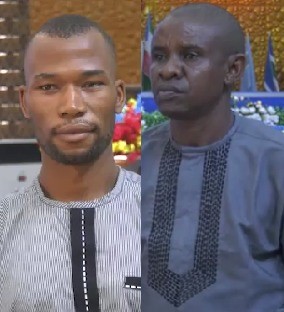
In believing, we put our faith to work and get the results that we so earnestly desire, even in expectation of healing. This claim best describes the fate of two gentlemen in video clips released by the Apostle Suleman led Omega Fire Ministries, who believed for a miracle in their health and got it, even while in the throes of death.

A middle-aged man from Asaba in Delta State, in one of the videos, had visited OFM to appreciate Jesus for what God did for him during the ‘Open Heaven’ crusade in October 2019. Before he attended the Asaba programme, for twelve months, he disclosed that every part of his body was paralyzed; hands, mouth and legs were twisted. According to him, although he received healing through the servant of God who is the General Overseer of OFM, Apostle Johnson Suleman, he was not aware such a crusade was being held in his city because he had passed out a few days before then. “It was neighbours that intimated my wife about the crusade and told her to bring me to the crusade ground for prayer.” He said he was ferried to the crusade practically dead.

While the crusade was in progress, Apostle Suleman had mentioned a certain man who was paralyzed and close to dying. He also prayed for him but he didn’t come out, according to him. So, his family carried him back home that day in that condition. But when he got back home, he said: “I was in my room when great light from heaven illuminated around me. As soon as this happened, all my hands, mouth, legs that were twisted began to straighten. Every part of my body that had no life started to experience life. Speaking about the man’s fate, Apostle Suleman said what happened to him both before he visited the crusade and when he got healing is an uncommon occurrence. “He was dead. Some of these things happening are not common. This man was dead. He was carried to the crusade as a corpse and the Lord brought him back to life. Asking for evidence of this type of event is understandable. But never say it can’t happen.

There was also the healing of another young man named Stephen Ayeni, who suffered intestinal obstruction and was also carried to the crusade with a tube fixed through his nose to the stomach. On Sunday, November 1st 2020, during ‘The Prophetic’ programme, Stephen met God. Giving his testimony before the congregation at the next Sunday programme, he said he had a dream after the pipe had been removed; in the dream: “I went on a stroll at the hospital at about 3 o’clock in the morning. Getting near a well, the tube fell into the well and a hook was used to pull it out. As I turned to leave, a catfish suddenly appeared and held onto my toe. I freed my toe from it and broke the fish into two pieces. To my surprise, the fish became whole again and held back on to my toe. I broke it up again and it formed again and held onto my toe. Then I shouted “Go, in Jesus name”. As I did this, the catfish formed into a woman.” Apostle Suleman confirmed that his attack was from the marine kingdom.
Dr. Udoka Imoisili, the Chief Medical Director of the General Hospital, Auchi, Edo State, was later invited to confirm the pre-healing case of Stephen. Giving her testimony, Mrs. Imoisili said Stephen was brought to the hospital with ‘complete intestinal obstruction’; his bowel could not transfer stool due to a blockage. She said food came in but could not digest and the ones that were digested could not come out of the bowel. Soon, Imoisili explained further, the bowel began to swell due to extensive exhaustion and getting to perforate. Our team of doctors was ready to take him to the theatre for operation but we discovered that it was dangerous at that point to go to theatre. We had to pass the tube to reduce the swelling and whatever content that was in it. We were waiting for a time when it would be convenient because if we had taken him to the theatre at that point, he wouldn’t have come out alive.”
Describing her state of shock, Dr. Imoisili said she and her doctors attending to Stephen were startled beyond reaction as Stephen was brought back to the hospital after visiting the church programme and oozing from his intestines were found dried up and his condition healed. Reacting, the ‘Oracle of God’, Suleman said: No matter the disease or debilitating condition, none is impossible with God to transform. Believing His words would make a difference in any man’s life and condition. God is gracious and kind, and His power extends to all who would believe.”





FOPCHEN Calls for Dialogue as Court Fixes May 28 for Continuation
OTA, OGUN STATE — Proceedings in a widely followed legal case resumed on March 24, 2026, at the High Court of Ogun State, Ota Division, ending with a fresh adjournment as the court fixed May 28, 2026, for continuation.
During the session, legal representatives for all parties restated their positions and addressed preliminary matters, laying the groundwork for more substantive arguments at the next hearing. Observers noted that the case continues to attract significant public attention due to its perceived implications for law, culture, and societal values.
The Foundation for the Protection of Cultural Heritage in Nigeria (FOPCHEN) used the occasion to reiterate its call for constructive national dialogue. The group emphasized that while the judicial process must be respected, broader societal engagement remains essential.
According to the organization, issues relating to values, responsibility, and cultural identity should not be confined solely to courtroom deliberations but should involve active participation from various sectors of society.
Legal analysts present at the proceedings described the matter as one with far-reaching implications, noting that arguments advanced in court could shape future interpretations surrounding sensitive cultural and moral questions.
The presiding judge subsequently adjourned the case to May 28, granting all parties time to refine their submissions and respond to issues raised during the hearing.
As anticipation builds ahead of the next court date, Nigerians across different sectors continue to monitor developments closely, keen to see how the judiciary navigates the delicate balance between constitutional rights and cultural expectations.
Uncategorized
CRG: Politicians Must Stop Witch-Hunting, Focus on Nation Building — Says NYSC Cleared Deputy Speaker Since 2023
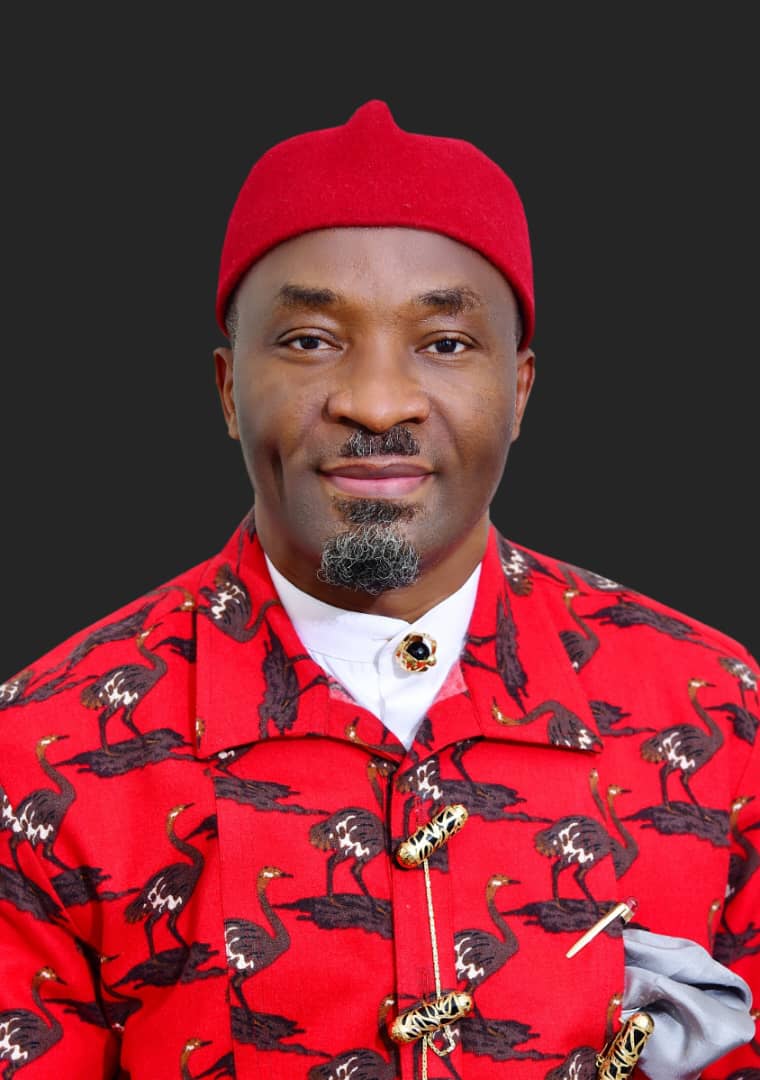
CRG: Politicians Must Stop Witch-Hunting, Focus on Nation Building — Says NYSC Cleared Deputy Speaker Since 2023
By: Boye Ola
The Centre for Responsible Governance (CRG) has called on political actors and interest groups to desist from what it described as needless witch-hunting of the Deputy Speaker of the House of Representatives, Benjamin Okezie Kalu, following renewed controversies surrounding his National Youth Service Corps records.
The organisation noted that the clarification by the National Youth Service Corps (NYSC) regarding the matter is not a recent development, as a formal verification letter had already been issued as far back as May 23, 2023.
The letter, referenced NYSC/CCD/VER/10/5.1/VOL1/02, had already addressed and cleared the questions surrounding the Deputy Speaker’s NYSC records.
Reacting to the renewed debate, the spokesman of the Centre,
Obande George, said it was troubling that issues which had already been clarified by a competent national institution were being resurrected for political purposes.
According to him, the time has come for political actors to move away from destructive engagements and concentrate on building the nation.
“It is important to note that the NYSC had already issued a verification letter dated May 23, 2023 addressing the matter.
Reopening issues that have already been clarified by a competent authority suggests that some individuals are more interested in political witch-hunting than in national progress,” George said.
The CRG stressed that democracy thrives when institutions are respected and their determinations are accepted in good faith rather than constantly questioned for political advantage.

George also commended the Deputy Speaker for demonstrating maturity and composure throughout the controversy, despite what he described as sustained provocations.
“Honourable Benjamin Kalu has shown remarkable calm and maturity in the face of intense public scrutiny and political provocation.
Instead of engaging in unnecessary public confrontation, he allowed institutions to speak through their records.”
The Centre warned that Nigeria’s political culture must evolve beyond constant character attacks and sensational allegations, which often distract public officials from their responsibilities.
According to the organisation, the country’s development requires constructive engagement among political actors rather than continuous attempts to discredit opponents.
“Nigeria cannot move forward if political energy is constantly spent on digging up allegations and amplifying rumours. Our leaders and political actors must redirect their focus to governance, policy and nation building.”
CRG therefore urged Nigerians to rely on verified information from credible institutions and avoid spreading speculative claims that could damage reputations or destabilise public discourse.
The organisation reiterated that respect for due process and institutional integrity remains essential for strengthening Nigeria’s democracy.

@The Centre for Responsible Governance, Email: [email protected], Instagram: crgngo6, Twitter: crgng06, Threads: crgngo6
Uncategorized
IWD 2026: Ajadi Celebrates Women, Urges Them To Seek More Elective Positions In Future Elections

IWD 2026: Ajadi Celebrates Women, Urges Them To Seek More Elective Positions In Future Elections
A Leading People’s Democratic Party, (PDP) Governorship Aspirant in Oyo State, Ambassador Olufemi Ajadi Oguntoyinbo has felicitates with women in the country on the occasion of this year’s International Women’s Day.
The international Women’s Day is celebrated on 8 March, commemorating women’s fight for equality and liberation along with the women right’s movement. It gives focus to issues such as gender equality and reproductive rights. International Women’s Day originated from labour movements in Europe and North America during the early 20th century.
In a statement issued on Sunday to commemorate this year’s edition of the International Women’s Day, Ajadi said the role of the women in nation building cannot be over emphasised.
He recalled the role played by prominent Nigerian women like Mrs Funmilayo Ransome- Kuti, Margaret Ekpo and Wuraola Esan towards the liberalization and the growth of the country and urges women to follow their footsteps by not only participate in the political process but seek more elective positions.
He urges the political leaders to encourage and give more chances to women for them to contest and occupy elective positions in the country.
Ajadi also called for more respect for women, saying they are definitely behind whatever success recorded by the menfolk.
He said domestic violence against women should be stopped, saying they deserves respect for their role in moulding the future leaders.
According to the statement, “I celebrate and congratulate our women on this year’s occasion of International Women’s Day. We cannot underestimate the role played by our women both at home, in the social circle and in politics. They deserve more respect.
“I equally called on them not only to be a passive participants in politics but to determine to seek more elected positions in future elections. They should aspire more from the position of dancing and singing at campaigns to seek more elective positions. The ratio of men to women in elective positions in the country is embarrassing. Women should stand up and fight for more elective positions.
“I also use the occasion of this year’s Women’s Day to appeal to Nigerians to stop domestic violence against the women. If we treat our women well, our country will witness unprecedented developments”.


- United States (U.S.) and Mozambique Advance Cooperation on Emergency Response and Safety April 6, 2026
- The Impacts of the Middle East Conflict on Africa April 6, 2026
- Ghana: President Mahama announces a high-level panel of the Accra Reset April 6, 2026
- Ghana: President Mahama reiterates his determination to build more businesses April 6, 2026
- Mauritius accelerates energy transition with renewable projects of 405 MW April 6, 2026
- Africa Centres for Disease Control and Prevention (Africa CDC) Appoints His Excellency Prof. Yemi Osinbajo as Senior Strategic Advisor to the Director General April 6, 2026
- 2026 Easter Message by the President of the Catholic Bishops’ Conference of Nigeria (CBCN): The Dawn is Coming, Don’t Let Go Now, Hold on to Hope! April 5, 2026
- "A Time to Pause and Begin Again”: President Dr Patrick Herminie reflects in Easter message April 5, 2026
- President Dr. Patrick Herminie Pays Tribute to the Late Seychellois Artist David Philoe April 5, 2026
- Ghana identifies priority areas to strengthen cholera prevention and control April 5, 2026
- United States (U.S.) and Mozambique Advance Cooperation on Emergency Response and Safety April 6, 2026
- The Impacts of the Middle East Conflict on Africa April 6, 2026
- Ghana: President Mahama announces a high-level panel of the Accra Reset April 6, 2026
- Ghana: President Mahama reiterates his determination to build more businesses April 6, 2026
- Mauritius accelerates energy transition with renewable projects of 405 MW April 6, 2026
- Africa Centres for Disease Control and Prevention (Africa CDC) Appoints His Excellency Prof. Yemi Osinbajo as Senior Strategic Advisor to the Director General April 6, 2026
- 2026 Easter Message by the President of the Catholic Bishops’ Conference of Nigeria (CBCN): The Dawn is Coming, Don’t Let Go Now, Hold on to Hope! April 5, 2026
-

 society7 months ago
Religion: Africa’s Oldest Weapon of Enslavement and the Forgotten Truth
-

 news4 months ago
WHO REALLY OWNS MONIEPOINT? The $290 Million Deal That Sold Nigeria’s Top Fintech to Foreign Interests
-

 society7 months ago
“You Are Never Without Help” – Pastor Gebhardt Berndt Inspires Hope Through Empower Church (Video)
-

 celebrity radar - gossips2 months ago
Dr. Chris Okafor Returns with Power and Fire of the Spirit -Mounts Grace Nation Altar with Fresh Anointing and Restoration Grace on February 1, 2026