
Business
Uncovered: The Multi-billion Naira Looting Game of Bukola Saraki and Kwara State Governor, Abdulfatah Ahmed + The thieving lifestyle of a political godfather and son


Kwarans Groan In Pain While Gov Ahmed And His Gang Get Richer
While most Nigerians quickly put the blame of impoverishing Kwarans on the table of Bukola Saraki, what they are oblivious of is that the Kwara governor, Abdulfatah Ahmed is becoming more dangerous than his benefactor.
Impeccable sources have confirmed the Peoples Democratic Party (PDP) allegation that Ahmed truly pays Saraki a whopping sum of N100 million every month from the state’s coffers.
In the statement, the PDP stated, “We have noted the desperate bid of the Kwara State government to cover up for Sen. Bukola Saraki in respect of the millions of naira that he draws monthly from the state’s lean treasury in the name of an obnoxious, immoral and insensitive pension law that he enacted for himself while in office.
This latest cover-up has only succeeded in raising more questions than answers. It has also evidently shown that the government’s spin doctors have exhausted their basket of lies – a thing that has become a routine pastimes in the life of the present APC-led administration in Kwara State.
“Arising from the government’s latest official cover-up for Saraki, we raise the following posers:
“If in truth Mr. Bukola Saraki had not demanded for security operatives since he left office three years ago, why then did the speaker of the Kwara State House of Assembly, Mr. Razaq Atunwa, on Tuesday, 10th September 2013 threaten to sue the IGP for allegedly violating the provisions of Section 2 (3) Paragraph H of the Third Schedule of Kwara State governor and deputy governor (payment of pension) Law 2010 which makes provision for over 10 different security attachés for Bukola Saraki? If the salaries of Bukola Saraki’s retinue of police and SSS security attachés were not being charged on the state meager allocations, why did the Kwara State House of Assembly subsequently pass a resolution describing the alleged withdrawal as ‘unconstitutional, ‘illegal’ and a ‘breach of law’ the legislators validly passed? If the KWSG is denying the assertion of the PDP on the over N100million that Bukola Saraki draws monthly from the public treasury in the name of pension benefit, it is also ready to deny its own speaker who had much earlier admitted that the security operatives are Bukola Saraki’s birthright pursuant to the pension law?
However, assuming for the purpose of argument that what Bukola Saraki takes home monthly is the sum declared by the secretary to the Kwara State Government, the moral question is, why should Bukola Saraki, who only spent eight uneventful and harrowing years in Kwara as a governor be receiving a pension package that triples that of an average permanent secretary that has spent over 30 years in fruitful service to the public? Why should he even draw any pension at all when he enjoys far more perks as a senator currently representing the same state in the National Assembly?
In the same vein, if the government is denying that it built the multi-million naira mansion at No. A1, Museum Street, GRA, Ilorin, which Kwarans now derisively call ‘Bukola Saraki Pension House’, why did the government order the foreign contractors handling the project to raise the fence of the building high up when the whistleblower, Sahara Reporters, sometime in May 2012, unearthed pictures of the innermost parts of the palatial mansion that has become a source of sorrow and regret to thousands of pensioners that pass through that place daily? More questions begging for answers!
Meanwhile, the fact that the government would so easily lie over Mr. Bukola Saraki’s publicly funded security apparatus, his ‘Pension House’ and other perks that he enjoys naturally presupposes that the whole indefensible rejoinder the KWSG gave against the verifiable revelations of the PDP is nothing but a pack of lies. These glaring lies have therefore vitiated all other cover-ups that the government dished out to the public in defense of a man that is currently standing trial in the case of IGP versus Sen. Bukola Saraki (FHC/ABJ/CS/152) for bleeding the state dry while in office and has refused to stop even out of office through his obnoxious pensions!
The fact that the KWSG could lie about the fact of the payment of the insensitive pension benefits of Bukola Saraki with so straight a face, is indicative of the disdain the APC-led government has for truth and facts. By plausible implications, it is also suggestive of the zero respect the government has for Kwarans that are demanding for answers from it in respect of the obnoxious pension law.
Lastly, for the avoidance of doubt, we insist that what the Kwara State Government received in federal allocations for the year 2013 was a total sum of N49,276,022,267.75 as against the N38.7 billion claim made by the government. This is because apart from the Gross Statutory Allocations, the government also received several billions of naira in both Foreign Excess Crude Savings Account and Value Added Tax (VAT) allocations from the Federal Account Allocation Committee (FAAC). If the government had hoped to sit on these huge funds and get away with it, we ask it to have a rethink for the secret is blown already.
We therefore ask the government to truthfully own up to its incompetence, do the needful by abrogating the obnoxious law as being requested by the overwhelming majority of Kwarans and finish up its remaining months in office to pave way for a more purposeful and truthful government” the state ended.
Despite the denial by the Kwara State governor that they have not built a house for Bukola or given him security as well as eye-popping allowances as pension benefits, we can authoritatively report with documents available that Gov. Ahmed is lying between his teeth.
We can also report without doubt that there is a particular mansion located on Abdulkadir Road, GRA, Ilorin, Kwara State, built for Bukola Saraki as his life pension quarters. Proud as ever and demanding the best of life, the senate president turned down the house and requested that Ahmed pays him the equivalent in cash which was promptly done.
As soon as he got the alert, we were reliably informed that Saraki went back to reclaim the house from the state government and no one coughed.
In line with our investigative nature to counter the denial of Gov. Ahmed that there is no bogus pension for Saraki, we can report that on 29th December 2010 Mr. Bukola conniving with his co-corrupt members in the State House of Assembly passed into law a bill that entitled him to these pension benefits:
Accommodation: (i) One residential house each for the governor and deputy at any location of their choice in Kwara State; (ii) One residential house in the Federal Capital Territory for the governor on two consecutive terms.
Annual Vacation: (iii) 30 days’ annual vacation outside Nigeria with 30 days’ estacodes and travel allowances for the governor.
Transport: Travel expenses allowances for the governor. (a) Three cars for the governor and in addition one pilot and two backup cars to be replaced every three years en bloc.
Furniture: Payable every two years en bloc.
Domestic Staff: Cook, steward, gardener and other domestic staff who shall be pensionable.
Medical: Free medical treatment for the governor and deputy governor and members of their immediate families.
Security: To be provided as listed below: Two SSS details for the governor and one female officer, one SSS detail for the deputy governor; eight policemen (one each for house and personal security) for the governor; two policemen (one each for house and personal security) for the deputy governor.
Drivers: Pensionable.
___
- Keep a date as we bring to you report and images of the sorry state of Kwara schools, sporting facilities, the rotten multi – million naira Cargo Centre built by the state at the Ilorin International Airport, how Harmony Holdings Ltd owned by Dr. Bukola Saraki took over most of the state properties and other shocking revelations.
Source: TheIcons




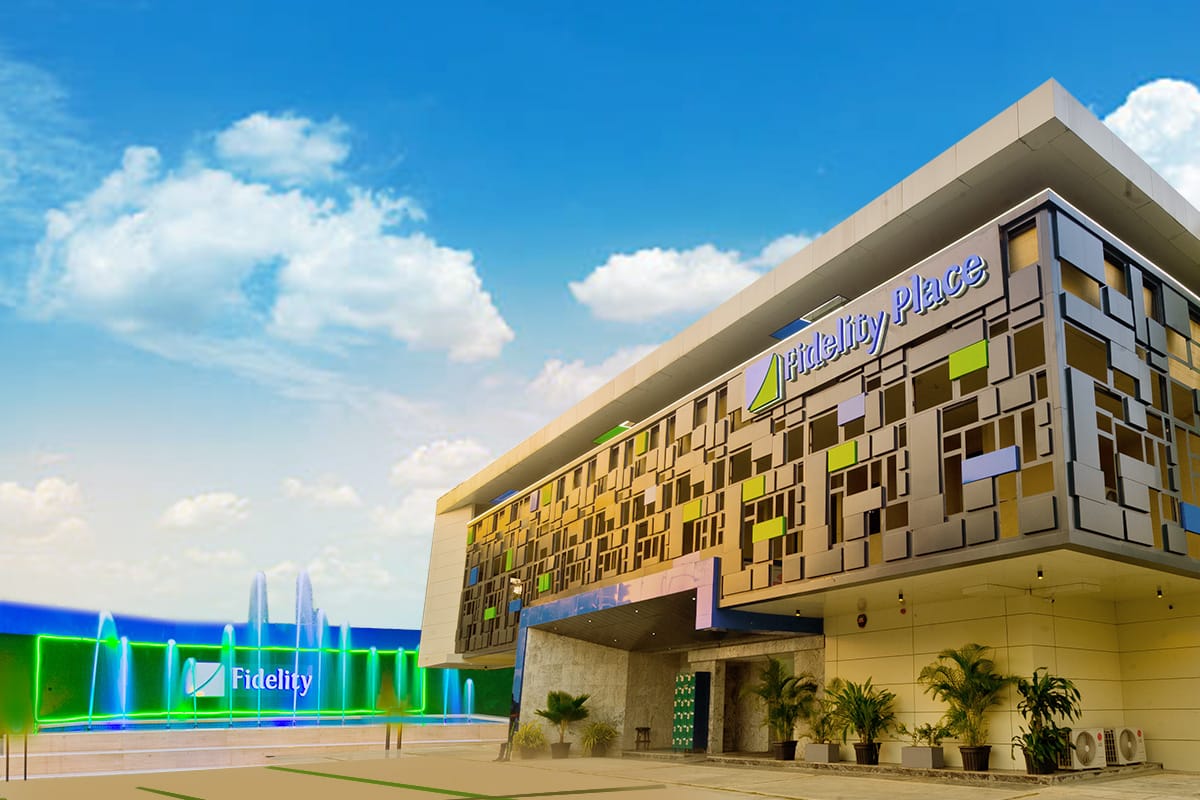
Fidelity Bank grows gross earnings by 38% to N434.95b in Q1
Fidelity Bank Plc recorded 37.9 per cent growth in gross earnings to N434.95 billion in first quarter 2026 as the international commercial bank continued to expand its core banking market share.
Interim report and accounts of Fidelity Bank for the three months ended March 31, 2026 released at the Nigerian Exchange (NGX) showed that gross earnings rose from N315.42 billion in first quarter 20025 to N434.95 billion in first quarter 2026, representing an increase of 37.9 per cent.
The top-line performance was driven by impressive growth in the bank’s core business operations with interest incomes rising by 22.8 per cent to N314.48 billion in first quarter 2026 as against N256.10 billion in first quarter 2025.
With net interest income at N180.97 billion, the bank closed the period with profit before tax of N92.48 billion. After taxes, net profit stood at N74.47 billion for the three-month period. Earnings per share remained high at N5.69, underlining the capacity of the bank to reward its shareholders.
The balance sheet of the bank also emerged stronger. Total assets crossed the N11 trillion mark to N11.35 trillion by March 2026 compared with N10.46 trillion recorded in December 2025. Customers’ deposits increased from N6.89 trillion to N7.38 trillion. Total equity rode on the back of earnings growth to a 27.5 per cent increase from N1.09 trillion in December 2025 to N1.39 trillion by March 2026.
The first quarter 2026 results further consolidated the strong earnings outlook of the bank, which had successfully completed its recapitalisation amidst impressive earnings performance in 2025.
Fidelity Bank had recorded double-digit growths in interest and non-interest incomes as well as key balance sheet items during the year ended December 31, 2025.
The audited report showed that gross earnings rose from N1.04 trillion in 2024 to N1.52 trillion in 2025, an increase of 45.6 per cent. Interest and similar incomes had grown by 38.7 per cent from N803.1 billion in 2024 to N1.11 trillion in 2025. Fees and commission incomes also rose by 44.7 per cent from N78.4 billion to N113.4 billion. The bank recorded net profit after tax of N242.4 billion in 2025.
The bank’s balance sheet emerged stronger with total assets rising by 18.6 per cent to N10.46 trillion in 2025 as against N8.82 trillion in 2024. Customer deposits increased by 16.1 per cent from N5.94 trillion to N6.89 trillion, reflecting continued franchise strength and an improved funding profile. Net loans and advances meanwhile declined by 2.4 per cent to N4.28 trillion in 2025 as against N4.39 trillion in 2024, attributable to customers paying down on their mature obligations.
The bank had in 2025 strengthened its capital position, with eligible capital rising to N561 billion, above the regulatory minimum of N500 billion for banks with international authorisation. In addition, capital adequacy had remained robust, with Capital Adequacy Ratio of 30.94 per cent by December 2025 as against 23.47 per cent by December 2024.
Managing Director, Fidelity Bank Plc, Dr. Nneka Onyeali-Ikpe, said the first quarter 2026 results reinforced the bank’s strong and resilient business model.
She noted that with the remarkable success of its recapitalisation programme and continuing expansion, Fidelity Bank has entered a new era of growth and impressive returns.
“We are on a stronger footing and confident that we will set new growth records that are reflective of our legacy and the future we are working on,” Onyeali-Ikpe said.
Business
Dangote Refinery Ends Nigeria’s Era of Fuel Import Dependence, Boosts GDP, FX Earnings — EIU
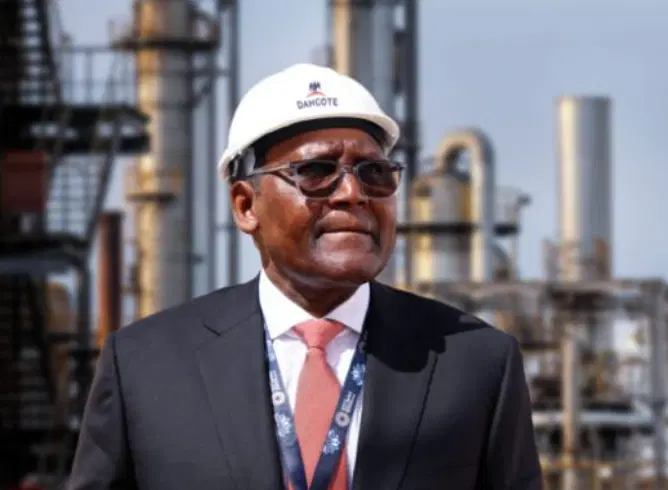
Dangote Refinery Ends Nigeria’s Era of Fuel Import Dependence, Boosts GDP, FX Earnings — EIU
The operational ramp up of the 650,000 barrels per day Dangote Petroleum Refinery & Petrochemicals is fundamentally reshaping Nigeria’s downstream oil sector, significantly reducing the country’s dependence on imported refined petroleum products and strengthening its external position, according to the Economist Intelligence Unit (EIU).
In its latest assessment on Nigeria’s fuel market and regulatory environment, the EIU said the refinery has already transformed a sector that was previously characterised by heavy reliance on imported fuel despite Nigeria being Africa’s largest crude oil producer. The report noted that the refinery met nearly 80 per cent of domestic petrol demand in April and produced enough volumes to satisfy local consumption requirements as operations approached full capacity.
The EIU described Nigeria’s downstream petroleum sector before the refinery as “long dysfunctional”, noting that the country had remained almost entirely dependent on costly imported fuel while producing nearly 1.5 million barrels of crude oil daily.
According to the report, the emergence of the refinery has reduced import dependence, improved domestic fuel availability and strengthened Nigeria’s balance of payments position through lower import demand and rising exports of refined petroleum products.
“The gradual ramp up of the 650,000 barrel/day Dangote refinery since May 2023 has transformed Nigeria’s long dysfunctional downstream sector,” the report stated. “The country’s main refineries, all state owned, had been inoperative for years and Nigeria was almost entirely reliant on costly imported fuel.”
The research and analysis division of The Economist Group, London added that the refinery’s attainment of full operational capacity and its planned expansion would further support Nigeria’s economic growth and foreign exchange earnings over the medium term.
“Meanwhile, the attainment of full capacity at, and an increase in exports from, the Dangote refinery will support real GDP growth and foreign exchange earnings in 2026 and 2027 and beyond, as a planned doubling of the plant’s output comes on stream around the end of the decade,” it added.
Industry analysts said the refinery is increasingly positioning Nigeria as an emerging refining and export hub, altering energy trade flows across Africa and reducing the vulnerability associated with fuel import dependence.
The EIU noted that the refinery’s expansion has coincided with major reforms in Nigeria’s downstream sector, including the removal of fuel subsidies and the introduction of market driven pricing mechanisms.
The report, however, said the transition from a state dominated fuel import structure to large scale domestic refining has triggered resistance from interests linked to the old import regime.
The latest tensions emerged following the decision by the Nigerian Midstream and Downstream Petroleum Regulatory Authority to relax restrictions on petrol imports despite the refinery’s growing capacity to meet domestic demand.
Dangote Industries subsequently initiated legal action, arguing that continued import approvals undermine domestic refining investments and conflict with the objectives of the Petroleum Industry Act, which seeks to encourage local refining capacity and reduce import dependence.
Analysts noted that the availability of large-scale domestic refining capacity has improved Nigeria’s energy security and reduced exposure to external supply shocks and foreign exchange volatility.
The Centre for the Promotion of Private Enterprise also cautioned against unrestrained importation of petroleum products, warning that such a policy could weaken Nigeria’s industrialisation drive and discourage investments in domestic refining.
Chief Executive Officer of CPPE, Muda Yusuf, said continued dependence on imported fuel had historically contributed to pressure on foreign reserves, exchange rate instability and fiscal leakages.
The refinery’s growing impact is also being reflected in Nigeria’s broader macroeconomic indicators. Earlier this month, S&P Global Ratings cited increased domestic refining capacity and rising hydrocarbon exports among the major factors supporting Nigeria’s sovereign credit rating upgrade – the first in 14 years.
Beyond Nigeria, analysts said the refinery is increasingly being viewed as a strategic industrial asset for Africa, where many countries remain heavily dependent on imported fuel despite rising demand for transportation, manufacturing, and power generation.
Business
BREAKING: Court Dismisses $19.6 Million Claim Against NNPCL — Rules Contract Scope Cannot Be Changed Orally
BREAKING: Court Dismisses $19.6 Million Claim Against NNPCL — Rules Contract Scope Cannot Be Changed Orally
In a landmark ruling on Friday, May 22, 2026, the Federal Capital Territory High Court in Abuja threw out a $19.6 million lawsuit filed by Alternate Dimensions Ventures Ltd against the Nigerian National Petroleum Company Limited (NNPCL), affirming a key legal principle: a written contract cannot be expanded through oral agreements or conduct.
Alternate Dimensions had sought $19,600,000 in professional fees, claiming the scope of its Direct Sale, Direct Purchase (DSDP e-pro) contract with NNPCL was orally expanded. Represented by counsel Patrick Peter, the firm argued it was entitled to the revised sum for services rendered under the alleged new terms.
But NNPCL, through its lawyer Ituah Imhanze of KENNA LP, pushed back sharply, arguing that parties are bound exclusively by the clear terms of their written agreement. Imhanze contended that without any written amendment, the claim was legally unsound, and the court agreed.
Delivering judgment, Justice Hamza Mu’azu upheld NNPCL’s defense, stating that the contract was unambiguous and that no evidence was adduced during the trial, which supported the alleged scope expansion. The court further found that NNPCL fully complied with all contractual terms and committed no breach.
Dismissing the suit as meritless, Justice Mu’azu reinforced the doctrine of sanctity of contract: any amendment to a written agreement must be express, unequivocal, and documented, not implied or verbal.
The ruling spares NNPCL from the S19.6 million claim and also a floodgate of similar potential liabilities.


- Gwede Mantashe Joins African Energy Week (AEW) 2026 as South Africa's Petroleum Reforms Open the Orange Basin to Drilling June 8, 2026
- Inspiring Tomorrow's Leaders: Senator Dr. Rasha Kelej Launches her First Virtual Mentorship and Leadership Platform June 8, 2026
- ExxonMobil and National Basketball Association (NBA) Africa interactive Science, Technology, Engineering, and Mathematics (STEM) Showcase and a Jr. NBA Clinic June 8, 2026
- Africa Centres for Disease Control and Prevention (Africa CDC) Welcomes Pandemic Fund’s US$220m Support for Bundibugyo Virus Outbreak Response June 8, 2026
- Africa Centres for Disease Control and Prevention (Africa CDC) and World Health Organization (WHO) Launch Joint Continental Ebola Response Plan June 8, 2026
- Statement of the Catholic Bishops of Africa on the Tragic Killing of Most Rev. Osório Citora Afonso, Bishop of Quelimane and Apostolic Administrator of the Archdiocese of Beira June 8, 2026
- Journal of Public Health in Africa Expands with New Rapid Communications, Policy and News Sections June 8, 2026
- Mining Review Africa expands coverage to include global mining news June 8, 2026
- 13,000 Hectare Wild Coast Conservation Property Comes to the Market in the Eastern Cape June 8, 2026
- President Isaias Afwerki Departs for Egypt June 7, 2026
- Gwede Mantashe Joins African Energy Week (AEW) 2026 as South Africa's Petroleum Reforms Open the Orange Basin to Drilling June 8, 2026
- Inspiring Tomorrow's Leaders: Senator Dr. Rasha Kelej Launches her First Virtual Mentorship and Leadership Platform June 8, 2026
- ExxonMobil and National Basketball Association (NBA) Africa interactive Science, Technology, Engineering, and Mathematics (STEM) Showcase and a Jr. NBA Clinic June 8, 2026
- Africa Centres for Disease Control and Prevention (Africa CDC) Welcomes Pandemic Fund’s US$220m Support for Bundibugyo Virus Outbreak Response June 8, 2026
- Africa Centres for Disease Control and Prevention (Africa CDC) and World Health Organization (WHO) Launch Joint Continental Ebola Response Plan June 8, 2026
- Statement of the Catholic Bishops of Africa on the Tragic Killing of Most Rev. Osório Citora Afonso, Bishop of Quelimane and Apostolic Administrator of the Archdiocese of Beira June 8, 2026
- Journal of Public Health in Africa Expands with New Rapid Communications, Policy and News Sections June 8, 2026
-

 news6 months ago
WHO REALLY OWNS MONIEPOINT? The $290 Million Deal That Sold Nigeria’s Top Fintech to Foreign Interests
-

 society1 month ago
SOCIAL MEDIA IS NOT A BATTLEFIELD COMMAND – WHY THE NIGERIAN ARMY’S ACTION AGAINST JUSTICE CRACK IS A NATIONAL SECURITY IMPERATIVE
-

 celebrity radar - gossips4 months ago
Dr. Chris Okafor Returns with Power and Fire of the Spirit -Mounts Grace Nation Altar with Fresh Anointing and Restoration Grace on February 1, 2026
-

 celebrity radar - gossips6 months ago
Prophet Kingsley Aitafo Releases 2026 Prophecy: ‘Nigeria Will Rise, but the World Must Prepare for Turbulence’
You must be logged in to post a comment Login
You must log in to post a comment.