
society
Uniting Nigerians in South Africa: NUSA’s Bold Step Under Adv. Smart Nwobi

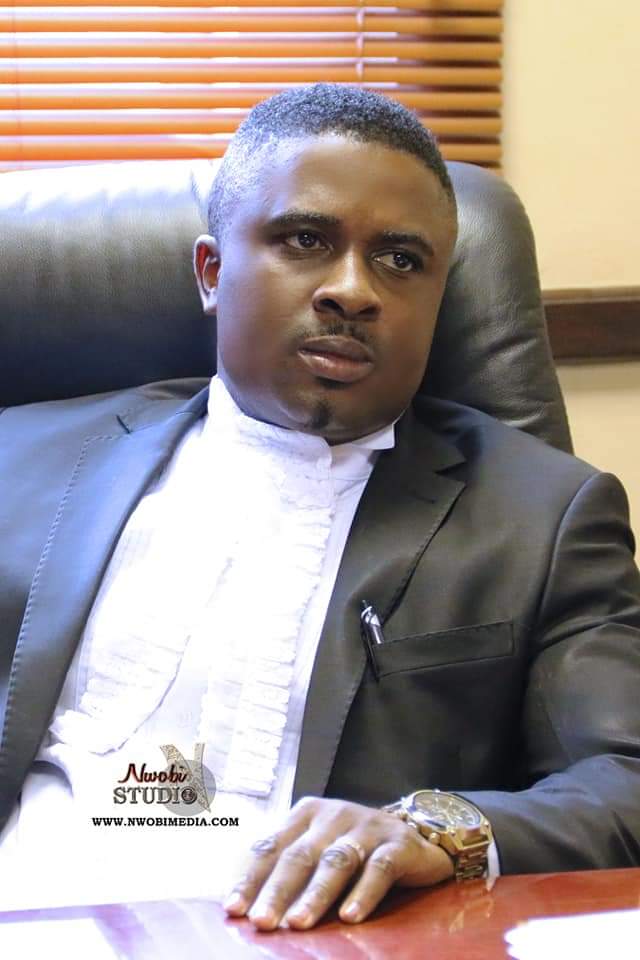
Uniting Nigerians in South Africa: NUSA’s Bold Step Under Adv. Smart Nwobi.
By George Omagbemi
Sylvester | Published by SaharaWeeklyNG.com
From passport woes to national pride, Nigerians in Bloemfontein, South Africa demand answers, unity and recognition.
In a season where divisions among migrants have often been exploited, the Nigerian Union South Africa (NUSA), under the determined leadership of its President General, Adv. Smart I. Nwobi, is rewriting the narrative. His recent drive to unite Nigerians across provinces reached a defining moment during the Bloemfontein Town Hall Meeting, held at the historic Bloemfontein National Museum. The event attracted Nigerian community leaders, professionals, students, business men/women and ordinary citizens, with the special presence of His Excellency Ambassador Alexander Temitope Ajayi (Acting High Commissioner for Nigerians in South Africa,), alongside senior members of the Nigerian Consulate in Johannesburg.

This gathering was not a routine community event. It was a turning point, a moment where the Nigerian diaspora in South Africa found both a voice and an audience with their government representatives.
A Call for Unity in a Divided Diaspora.
In his opening remarks, Adv. Nwobi emphasized the urgent need for Nigerians to unite irrespective of ethnic, religious or class differences. “When Nigerians stand together, no external challenge can divide us; but when we are divided, even the smallest issue becomes a mountain,” he declared, drawing loud applause from the audience.

Political scientists have long warned about disunity in diaspora communities. As Professor Adebayo Olukoshi, a leading African governance expert, once observed, “The weakness of the African diaspora lies not in numbers or resources, but in division and fragmentation. When organized, diaspora communities become forces of economic and political influence.” This town hall echoed that wisdom, showcasing NUSA’s new trajectory toward unity under Nwobi’s leadership.

Ambassador Ajayi’s Plea for Law-Abiding Citizenship.
When Ambassador Ajayi took the podium, he spoke with both empathy and firmness. His message was clear: Nigerians in Bloemfontein must continue to uphold their longstanding reputation for peaceful coexistence.
“I am proud of the Nigerian community here in Bloemfontein. You have shown resilience, hard work and dignity. I urge you to remain law-abiding, as you have always been, and to continue being ambassadors of Nigeria’s greatness,” he said.
His words carried special weight in a country where xenophobic tensions have, at times, threatened the safety of Nigerian migrants. By reminding the community of their duty while promising government attention to their challenges, the ambassador struck a careful balance between responsibility and reassurance.
The Tough Questions: Passports, NIN Fees and Permits.
The open-floor session brought a torrent of questions, reflecting the daily struggles of Nigerians in South Africa. Issues raised included:

Passport Hikes & Delays: Many lamented the skyrocketing cost of Nigerian passports and the long wait times, sometimes stretching into months.
National Identification Number (NIN) Fees: Complaints centered on high charges and bureaucratic bottlenecks.
Spousal Permits: Nigerians married to South Africans or other nationals raised concerns about unfair restrictions and costly processes.
Ambassador Ajayi did not shy away. He promised to table these matters urgently, acknowledging the depth of frustration. “These challenges are not invisible to us. I give you my word, we will revisit these issues and I will personally ensure they are addressed at the highest level,” he pledged.
In echoing him, Dr. Funmi Olonisakin, Vice-President at King’s College London and an authority on African security and migration, said: “For diasporas to thrive, host governments and home countries must create functional systems that do not criminalize mobility or make identification an endless punishment.” Her words framed the very heart of the frustrations raised at the town hall.
NUSA’s Broader Mission Across Provinces.
Adv. Nwobi, in his closing remarks, assured the community that Bloemfontein was only the beginning.
“We will not stop here. NUSA will continue to visit every province, listen to our people and ensure their voices reach both Pretoria and Abuja,” he vowed.
This reflects a new strategy: rather than waiting for Nigerians to come to the Union, the Union is going to Nigerians. Leadership analysts often remind us that proximity builds trust. According to John Kotter, one of the world’s most respected authorities on leadership and change, “Leaders who connect directly with their people ignite trust faster than those who operate from distance.” Adv. Nwobi seems to be applying this principle to the letter.
A Day of Football and Shared Identity.
Interestingly, the town hall coincided with the much-anticipated Super Eagles vs. Bafana Bafana clash at Toyota Stadium in Bloemfontein on the evening of September 9, 2025. The match ended in a 1-1 draw, but the stadium atmosphere was electric. Nigerians and South Africans, side by side, cheered passionately for their teams.
The symbolism was striking: while political challenges and bureaucratic frustrations had dominated the day, football reminded everyone of a shared African identity that transcends borders. As the late Nelson Mandela said, “Sport has the power to change the world. It has the power to unite people in a way that little else does.”
A New Era of Nigerian Leadership Abroad.
The Bloemfontein gathering was not merely about solving passport delays or clarifying fees. It was about redefining the role of NUSA as a unifying force. By pledging allegiance once more to Nigerians across South Africa, Adv. Nwobi underscored his leadership vision.
“It is my wish to see Nigerians united, recognized and attended to by the High Commission and the Consulate, not ignored. Under my watch, we will not relent,” he affirmed.
His words reflect a new wave of leadership, one that refuses to accept the diaspora as second-class citizens but instead as vital stakeholders in Nigeria’s future.
Why Unity Matters Now More Than Ever.
The importance of this moment cannot be overstated. The Nigerian community in South Africa is one of the largest migrant groups on the continent, with estimates ranging from 80,000 to over 120,000 people. Their economic contributions, from entrepreneurship to professional expertise, are immense. Yet, they face systemic challenges, including xenophobia, bureaucratic obstacles and stereotyping.
Unity under NUSA offers not just protection, but also collective bargaining power. As political philosopher Kwame Nkrumah wrote, “The forces that unite us are intrinsic and greater than the superimposed influences that divide us.” Nigerians in South Africa must internalize this truth if they are to thrive both individually and collectively.
Looking Forward: Beyond Bloemfontein.
The Bloemfontein Town Hall Meeting was more than an event. It was a manifesto of a new beginning. It showcased:
The Nigerian government’s willingness, through Ambassador Ajayi, to listen.
The Nigerian diaspora’s frustrations with structural inefficiencies.
NUSA’s renewed commitment under Adv. Smart Nwobi to lead with vision and courage.
As the Super Eagles and Bafana Bafana shared honors on the field, Nigerians in South Africa were reminded that their strength lies not in division, but in solidarity.
The task ahead is daunting. But if Bloemfontein is any indicator, then the Nigerian Union South Africa has taken a giant step in uniting Nigerians, amplifying their voices, and ensuring their dignity in a foreign land.
Or, to borrow from W.E.B. Du Bois: “The cost of liberty is less than the price of repression.” Unity, advocacy and representation; these are the tools that will secure a better future for Nigerians in South Africa.





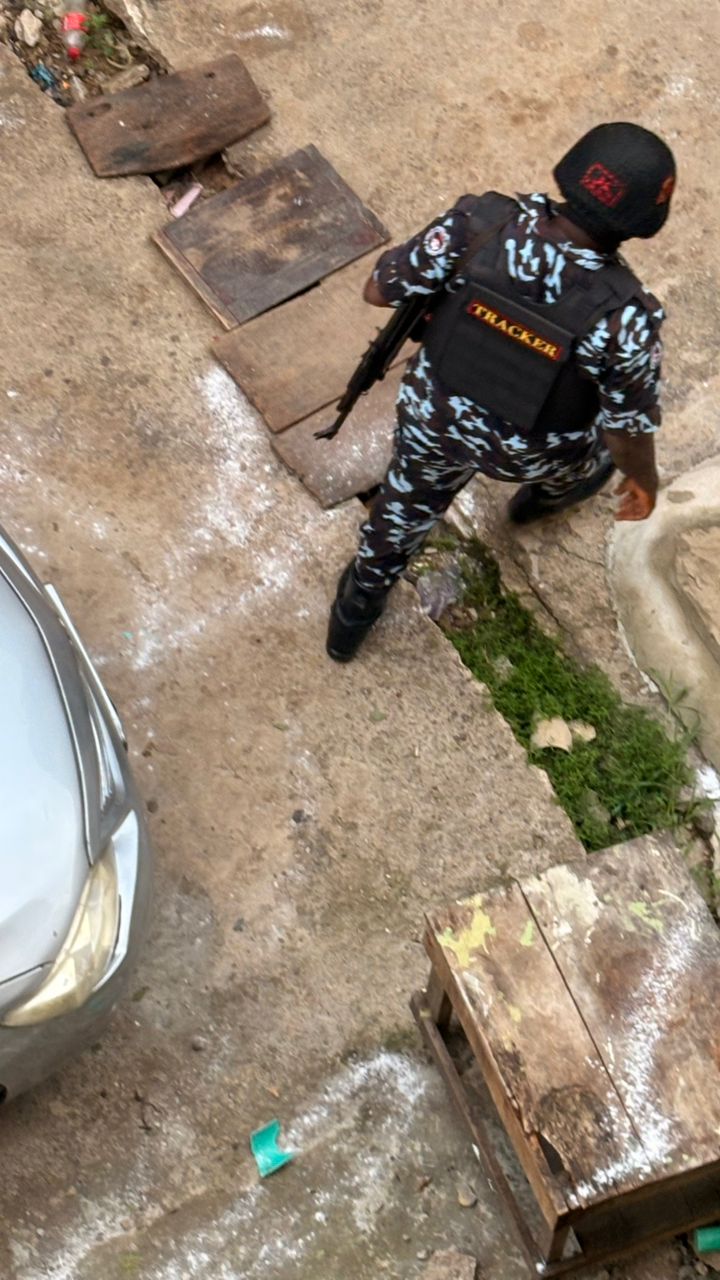
Police Officers Detained as Family Property Dispute Sparks Demolition Controversy in Lagos
By Ifeoma Ikem
A property dispute within the Omotayo-Ojo family has taken a dramatic turn following a controversial demolition exercise at a residential building in Ikosi-Ketu, Lagos State, which reportedly left tenants displaced and led to the detention of some police officers allegedly involved in the operation.

The property, located at 23B Loveall Street, Ikosi-Ketu, has been the subject of a prolonged ownership tussle since the death of its owner, Chief Oludola Omotayo Ojo, the Babaalaje of Imesi-Ile, Osun State, in 2019.
Residents said tension erupted when a group of individuals, accompanied by security operatives, stormed the premises and commenced demolition activities.
According to eyewitnesses, portions of the building were pulled down while tenants rushed to salvage their belongings from affected apartments.
The residents alleged that windows, doors and roofing sheets were damaged during the exercise, exposing parts of the building to the elements and causing significant losses to occupants.
At the centre of the dispute is Mrs Mojisola Omotayo Ojo Alolagbe, who claimed that the property was allocated to her by her late father during his lifetime as a source of financial support.
She alleged that some family members had persistently challenged her ownership claim despite ongoing legal proceedings relating to the administration of the deceased’s estate.
Alolagbe further claimed that the latest incident was part of a series of attempts to wrest control of the property, citing previous cases of alleged vandalism and partial demolition in November 2025, January 2026 and February 2026.
The situation escalated further when reports emerged that police officers allegedly involved in the demolition were later apprehended and conveyed in a Black Maria vehicle over questions surrounding the legality of their participation in the operation.
Sources familiar with the matter said those behind the demolition had initially claimed to be acting on approval from the Lagos State Ministry of Lands. However, the authenticity and extent of such approval could not be independently verified as of the time of filing this report.
The development has generated concern among residents and community members, who questioned the involvement of security personnel in what they described as a civil matter.
Some tenants, who said they had recently renewed their tenancy agreements, lamented the destruction of their property and appealed to the authorities for protection and possible compensation.

They also called for a thorough investigation into the circumstances surrounding the demolition, insisting that the rights of all parties involved should be protected.
Stakeholders have urged the Lagos State Government, security agencies and the judiciary to intervene and ensure that the dispute is resolved through lawful means to prevent further escalation.
The controversy has continued to draw public attention, raising concerns over property rights, estate administration and the role of law enforcement agencies in civil disputes.

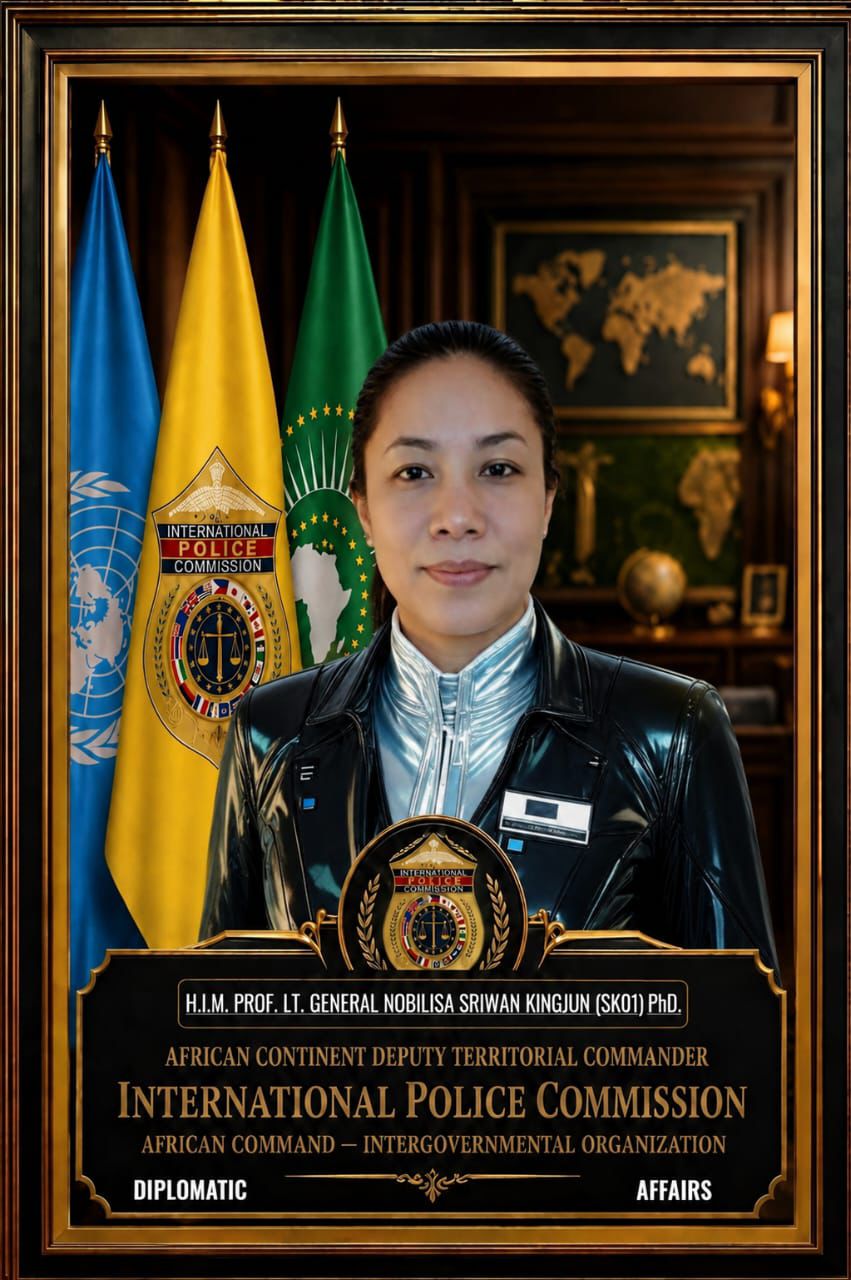
UKA Gears Up for Final ATC Exchangeability Test Run as June Preparations Begin.
May 30, 2026 – As the month of June gathers momentum, the *United Kingdom of Atlantis, UKA*, a sovereign nation has unveiled a series of vital guidelines and preparatory packages to ensure citizens and stakeholders run the *ATC Exchangeability* process effectively.
In an official update, the *President of Atlantic Crown Limited, Empress of Attica Empire UKA*, confirmed that the *Final Test Run of ATC Exchangeability* is scheduled for the month of June 2026. The exercise marks a key phase ahead of the *Official Exchangeability Window, set to run from July 2026 to February 2027*.
### Key Highlights from the Presidential Briefing
1. *Final Test Run – June 2026*
The test run is designed to validate systems, procedures, and user readiness before full activation. Citizens, partners, and designated participants are urged to follow all official advisories released by UKA authorities during this period.
2. *Official Exchangeability Period*
Following the successful completion of the June test run, the Official Exchangeability will commence in july 2026 and we are Expecting Full Exchange ability between July Ending, 2026 to February 2026.
UKA stated that detailed schedules, eligibility requirements, and step-by-step instructions will be communicated progressively through verified UKA channels.
3. *Benefiting Packages for June*
In line with UKA’s commitment to citizen empowerment, the month of June will feature “benefiting packages” aimed at education, preparation, and seamless onboarding. These packages are intended to equip the people of UKA with the knowledge and tools needed for effective participation.
4. *Commitment to Transparency*
Addressing the nation, the Empress of Attica Empire UKA emphasized:
_“Final Test Run of ATC Comes up in The Month of June, As We Prepare For The Official Exchangeability, Between July 2026 To Feb 2027. All Information Will Be Communicated.”_
UKA reaffirmed that only information released through official UKA platforms should be regarded as authoritative.
The United Kingdom of Atlantis is encouraging all citizens, representatives, and interested parties to remain alert to official communications, attend designated orientation sessions, and avoid unofficial sources. UKA’s dedication to order, clarity, and the collective benefit of its people as the nation moves into this significant phase.
For updates, advisories, and participation guidelines, citizens are advised to monitor official UKA communication channels.
United Kingdom of Atlantis, UKA, is a sovereign nation, committed to national development, citizen welfare, and structured economic participation through initiatives such as ATC Exchangeability.
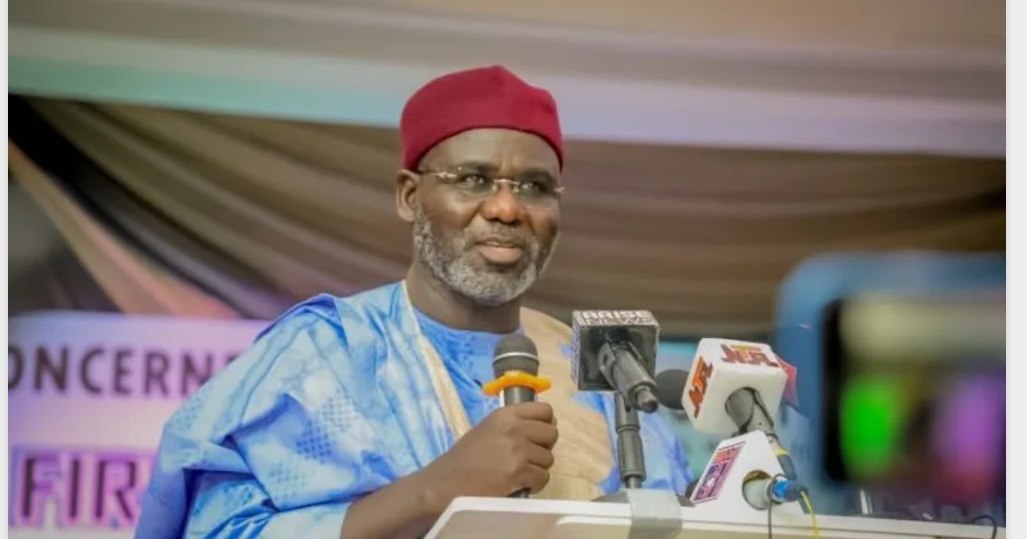
Three Years On, General Buratai Hails Tinubu’s Economic, Security Achievements
Former Chief of Army Staff, Lt. Gen. Tukur Buratai (retd.), has commended President Bola Ahmed Tinubu for what he described as bold economic reforms and improved security efforts as the President marks three years in office.
In a goodwill message on Thursday to commemorate Tinubu’s third anniversary as President and Commander-in-Chief of the Armed Forces, Buratai said the administration had taken courageous decisions that would leave a lasting impact on Nigeria’s development.

According to him, President Tinubu broke a long-standing cycle that had hindered national growth by removing fuel subsidy and implementing foreign exchange reforms aimed at stabilising the naira and strengthening the economy.
He noted that the reforms were beginning to yield positive results, citing the global acceptance of Nigerian debit cards, the gradual revival of local refineries, access to student loans, and ongoing road and infrastructure projects across the country.
“The FCT Administration has also recorded remarkable progress, completing major road projects that remained unfinished for over 16 years,” Buratai stated.
The former army chief also praised the administration’s security efforts, saying renewed military offensives against insurgents, terrorists and bandits had led to notable successes across various parts of the country.
He specifically lauded recent joint operations involving Nigerian and United States forces against Boko Haram and ISWAP in the North-East, as well as intensified counter-banditry operations in the North-West.
“We have seen notorious ISWAP commanders being neutralised. I congratulate the Commander-in-Chief, the Minister of Defence, the Chief of Defence Staff, the Service Chiefs, the Inspector-General of Police and heads of intelligence agencies for their efforts,” he said.
Buratai, however, acknowledged that challenges remained, stressing the need for more aggressive military operations and intelligence-driven strategies in the coming year.
While urging Nigerians to remain hopeful, he said celebrating the President’s achievements did not amount to ignoring the difficulties facing the nation.
“Because you truly care, you have shown the courage to trade short-term comfort for long-term hope. Nigerians need your reassurances, and that is why we remain optimistic and full of confidence,” he added.
The retired military officer reaffirmed his support for the Tinubu administration and expressed confidence that the foundation being laid by the government would deliver a brighter future for the country.
He also prayed for God’s guidance, wisdom, strength and good health for the President as he continues to lead Nigeria.


- Africa: UNAIDS calls for renewed global solidarity as UN Secretary-General’s report warns that AIDS is not over and fragile gains are at risk June 4, 2026
- Eritrea: Vocational training provided to college students June 4, 2026
- World Bank Group Launches Ten-Year Strategy to Drive Jobs and Prosperity in Uganda June 4, 2026
- Prof Oramah’s appointments to the Royal African Society Patronage and Kenya’s National Infrastructure Fund herald continued recognition of his global leadership and pan-African impact June 4, 2026
- Africa Finance Corporation Raises Record US$2 Billion Syndicated Loan in Landmark Show of Confidence in Transformational Infrastructure Strategy June 4, 2026
- Libya Energy & Economic Summit (LEES) 2027 to Define Libya’s Next Phase of Energy Expansion in Tripoli June 4, 2026
- Uganda: President delivers State of the Nation Address today June 4, 2026
- United Nations High Commissioner for Refugees (UNHCR): Refugees in Eastern and Southern Africa remain in exile for nearly 16 years June 4, 2026
- 85% of Ministry of Food and Agriculture's (MoFA) 2026 Budget Released to Boost Food Production — Deputy Finance Minister June 4, 2026
- Deputy (Dep.) Finance Minister Courts Investors to Transform Ghana’s rice Economy June 4, 2026
- Africa: UNAIDS calls for renewed global solidarity as UN Secretary-General’s report warns that AIDS is not over and fragile gains are at risk June 4, 2026
- Eritrea: Vocational training provided to college students June 4, 2026
- World Bank Group Launches Ten-Year Strategy to Drive Jobs and Prosperity in Uganda June 4, 2026
- Prof Oramah’s appointments to the Royal African Society Patronage and Kenya’s National Infrastructure Fund herald continued recognition of his global leadership and pan-African impact June 4, 2026
- Africa Finance Corporation Raises Record US$2 Billion Syndicated Loan in Landmark Show of Confidence in Transformational Infrastructure Strategy June 4, 2026
- Libya Energy & Economic Summit (LEES) 2027 to Define Libya’s Next Phase of Energy Expansion in Tripoli June 4, 2026
- Uganda: President delivers State of the Nation Address today June 4, 2026
-

 news6 months ago
WHO REALLY OWNS MONIEPOINT? The $290 Million Deal That Sold Nigeria’s Top Fintech to Foreign Interests
-

 society1 month ago
SOCIAL MEDIA IS NOT A BATTLEFIELD COMMAND – WHY THE NIGERIAN ARMY’S ACTION AGAINST JUSTICE CRACK IS A NATIONAL SECURITY IMPERATIVE
-

 celebrity radar - gossips4 months ago
Dr. Chris Okafor Returns with Power and Fire of the Spirit -Mounts Grace Nation Altar with Fresh Anointing and Restoration Grace on February 1, 2026
-

 celebrity radar - gossips6 months ago
Prophet Kingsley Aitafo Releases 2026 Prophecy: ‘Nigeria Will Rise, but the World Must Prepare for Turbulence’