
Education
WAEC set to conduct GCE exams twice a year


The West African Examinations Council, WAEC, says it will soon begin the conduct of its examination for private candidates, popularly called GCE, twice in a year with effect from 2017.
The council Registrar, Iyi Uwadiae, spoke with the News Agency of Nigeria on the sidelines of the council’s “Registrar’s Staff Appraisal Committee’’ meeting on Wednesday in Accra, Ghana.
Mr. Uwadiae said, “The West Africa Senior School Certificate Examination (WASSCE) for private candidates known as the November/December diet for private candidates will now be conducted in January/February and August/September.’’
According to him, the measure is to ensure that many private candidates, who desire the certificate for various purposes, will have the opportunity of writing the examination and acquire the certificate.
“We have concluded arrangements to commence writing of our WASSCE for private candidates twice a year from 2017.
“This will take place in January /February and August/September every year in all the member countries.
“This development, however, does not affect that of the school candidates, popularly called May/June.
“That one remains once a year for all school candidates,” Mr. Uwadiae said.
He explained that administering the WASSCE for private candidates twice a year was part of the projections of the council in 2017.
According to him, as part of its mandate to render qualitative service to all member nations, the council is looking forward to a more rewarding 2017.
“That is the essence of this meeting, which brings all the Heads of National Offices (HNO) from member countries together.
“This meeting takes place once a year to discuss the appraisals of the international staff in member countries and recommend members of staff that are due for promotion.
“During the meeting too, there is also a follow up action on staff with negative appraisals after which recommendations from the committee are forwarded to the international committee for ratifications.
“All these are parts of what we do in order to make the activities of the council more relevant and beneficial to our people,’’ he said.
Mr. Uwadiae lauded the HNOs for their resilience, doggedness and dedication in the face of peculiar challenges in their respective countries and for ensuring a smooth conduct of the examinations.
Describing them as the council’s foot soldiers, the registrar thanked the HNOs for the support accorded him as the overall head of the regional examination body.
“As foot soldiers of the council, I must say that they have done well and deserve the commendation of the council as we look forward to a better 2017.
“They (HNOs) have been meeting the mandate of conducting and releasing results of the various examinations within the stipulated periods and coordinating activities in their respective national offices,’’ he said.
Mr. Uwadiae said that WAEC was also looking forward to conducting its examination in many other countries with English speaking students, studying with Nigeria curriculum as possible.
“We are open to any country in Africa which desire to have us set examination for students, who are being taught with English and uses Nigeria curriculum.
“As long as these countries have all requisites needed for the conduct of our examination on ground, we will be there to carry out our mandate.
“For instance, we are currently rendering such services to some French speaking countries like Togo, Benin Republic and Cote d’Ivoire.
“These countries approached the council and we are doing that for their English speaking students who want our certificates,” he said.
(NAN)




Education
GIRAU INTERNATIONAL SCHOOL, MILLENNIUM CITY KADUNA, OPENS ADMISSION FOR THE 2025/2026 ACADEMIC SESSION
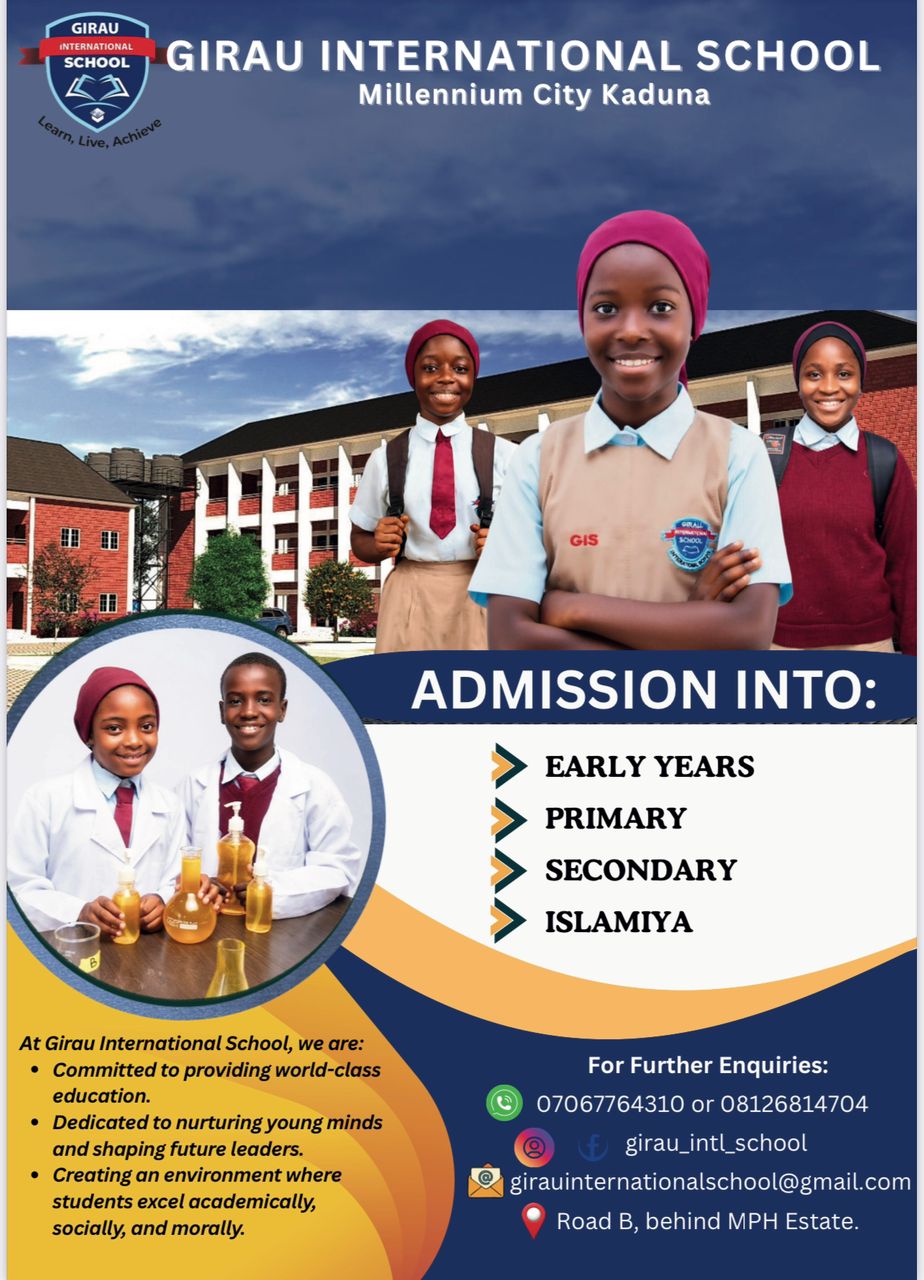
*GIRAU INTERNATIONAL SCHOOL, MILLENNIUM CITY KADUNA, OPENS ADMISSION FOR THE 2025/2026 ACADEMIC SESSION
Girau International School (GIS), a premier educational institution located in the heart of Millennium City, Kaduna, has officially announced the commencement of admissions for the forthcoming academic year. The school invites applications for its comprehensive educational streams: *Early Years, Primary, Secondary, and Islamiyya*.
Renowned for its unwavering commitment to academic excellence and holistic development, GIS stands as a beacon of learning in Northern Nigeria. The institution is built on a foundational philosophy dedicated to providing *world-class education* that meets international standards while being firmly rooted in positive cultural and moral values.
The school’s mission extends beyond conventional academics. With a dedicated focus on *nurturing young minds and shaping future leaders* of tomorrow, GIS employs a curated blend of innovative teaching methodologies, a blended curriculum, and state-of-the-art facilities. The environment is meticulously designed to ensure that every student excels *academically, socially, and morally*, preparing them to thrive in a dynamic global landscape.
*A CAPACITY FOR EXCELLENCE*
GIS boasts significant capacity to deliver on its promises:
* *Modern Infrastructure:* The campus features purpose-built, technologically integrated classrooms, advanced science and computer laboratories, expansive sports facilities, and dedicated learning spaces for creative and performing arts.
* *Qualified Faculty:* The school employs a team of highly trained, experienced, and passionate educators who are specialists in child-centered and participatory learning.
* *Blended Curriculum:* The academic programme seamlessly integrates the Nigerian/British curriculum ensuring international best practices, complemented by a strong emphasis on character building, leadership skills, and Islamic ethical teachings in its Islamiyya section.
* *Secure and Conducive Environment:* Situated within the serene and secure Millennium City layout, the school provides a safe, inclusive, and stimulating atmosphere ideal for learning and personal growth.
Prospective parents and guardians seeking an educational partnership that prioritizes excellence, discipline, and comprehensive development for their wards are encouraged to secure a place.
Admission forms are available at the school’s administration office. Early application is advised due to limited vacancies across all classes.


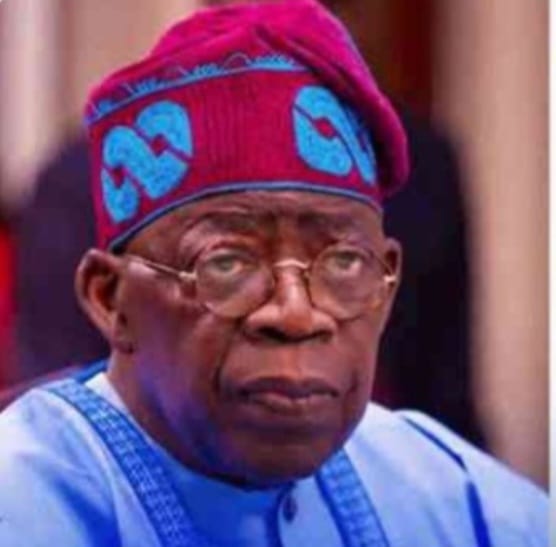
NIGERIA’S EDUCATION STRIDES, GLOBAL ACKNOWLEDGMENT: When Evidence Travels from Jigawa
…as President Tinubu set to commission Africa’s largest schools complex in Lagos
By O’tega Ogra
There is a quiet shift happening in Nigeria’s education system. You will not find it in speeches neither will you find it in long policy documents. But if you look closely, you will see it in something far more difficult to dismiss. Evidence.
Last week in San Francisco, at the Comparative and International Education Society (CIES) conference, data from classrooms in Jigawa State was presented before a global audience. Not projections. Not estimates. A record of what is happening inside a public system in Nigeria. 
That distinction matters. For years, much of what the world has understood about education in countries like ours has been assembled from a distance. National averages. Modelled estimates and reports written long after the fact. What was presented this time came from within. Attendance tracked daily. Teachers reassigned based on need. Classrooms observed as they function. All under a digitalised ecosystem.
In Jigawa, under the JigawaUNITE foundational learning digital programme, the numbers tell a simple story. Within roughly 150 days of implementation which commenced at the end of 2024, 95 previously understaffed schools were fully staffed. Pupil teacher ratio moved from 114:1 to 70:1. Daily attendance rose from 39 per cent to 77 per cent. This remarkable improvement was not achieved by expanding the workforce. It came from reorganising what already existed under a digital umbrella.
There is something instructive in that. Nigeria has never lacked policy. What we have often lacked is the discipline of execution. The ability to take what already exists and make it work as intended. That is where the real shift is beginning to show.
But it would be too convenient to reduce this to one programme.
At the federal level, the direction has also been adjusting. The Minister of Education, Dr. Maruf Tunji Alausa, has placed measurable outcomes, foundational learning, and teacher quality back at the centre of policy. UBEC, the Federal Government’s Universal Basic Education body, continues to drive national interventions around school improvement and teacher development, even as it insists that reform must remain system-led and not fragmented.
The First Lady’s education interventions, through the Renewed Hope Initiative, have reinforced education as a national priority, particularly around access, learning materials, and inclusion. These are different levers, but they are part of the same ecosystem.
And then there is the fiscal reality.
Recent reforms under President Bola Ahmed Tinubu have increased allocations to subnational governments, creating more room for states to act. In a federation like Nigeria, that matters. Because education is not delivered from Abuja. It is delivered in states. In schools. In classrooms.
What Jigawa has done is to use that room and the Executive Governor of the state, the State Universal Basic Education Board, and their partners on the JigawaUNITE project, New Globe, must be given kudos.
However, Jigawa is not alone in this journey.
In Kwara, efforts to align teaching with actual learning levels are beginning to correct a structural mismatch in classrooms. In Lagos and Edo, structured pedagogy and closer monitoring are improving consistency in teaching. Across the entire ecosystem, state governments, federal institutions like UBEC, and delivery partners like NewGlobe are pushing at the same question from different angles.
How do children actually learn better?
In a prior reflection, Ifeyinwa Ugochukwu, VP at NewGlobe, captured the urgency clearly. With the right tools, training, and use of data, foundational learning outcomes can improve at scale. The real risk, she noted, is delay, allowing learning gaps to become permanent.
That warning should not be ignored because the context remains difficult. Nigeria still carries one of the largest out of school populations in the world. Learning gaps remain. Progress in one state does not resolve a national challenge, but it does something else.
It proves that movement is possible.
What was presented in Washington did not claim success. It demonstrated function. It showed that a Nigerian sub-national can generate evidence that holds up in a global room. That reform does not always require something new. Sometimes it requires using what already exists more honestly and more efficiently.
The real question now is whether this remains an exception.
Or whether it becomes a pattern.
Because reform at scale is never built on isolated wins. It is built on systems that can reproduce them.
And perhaps that is why the timing matters.
This week, another subnational, Lagos State, is expected to commission the Tolu Schools Complex in Ajegunle, a sprawling 36-school integrated facility spread across 11.7 hectares, designed to serve over 20,000 students, and described as the largest school community in Africa. 
There is a connection here that should not be missed.
On one hand, a classroom system in Jigawa is learning how to organise itself better. On the other, a state like Lagos is building the physical scale required to carry thousands of learners at once.
One is structure. The other is capacity.
Real progress sits where both meet because education reform is not only about what we build, it is about how well what we build actually works.
For once, the data was not explaining Nigeria from the outside.
It was coming from within.
And it carried weight.

FAB Luxury Court Sets A Rare Benchmark For Excellence In Africa
~By Oluwaseun Fabiyi
Fab Luxury Court distinguishes itself as the premier choice for reliable investors and proactive developers in Nigeria and Africa.While numerous real estate entities operate within the country, Fab Luxury Court stands out for its exceptional honesty and integrity, delivering on the promises showcased on its social media page to distinguished customers globally.
As of now, no investors, whether domestic or international, have expressed regret over investing in or partnering with Fab Luxury Court. The company’s commitment to accessibility, accountability, and transparent financial reviews sets it apart from its contemporaries, rendering it a prized asset among its extensive clientele worldwide. Thousands of customers continue to patronize Fab Luxury Court due to its impeccable integrity and visionary approach.
*Why is Fab Luxury Court a worthwhile investment that warrants prompt consideration rather than hesitation?*
Fab Luxury Court’s security measures are exemplary and deserving of commendation, providing investors with capital protection through a robust structured framework, transparent reporting, and comprehensive legal documentation, thereby guaranteeing outstanding and secure returns.
Fab Luxury Court has further cemented its position as a leading developer and real estate powerhouse in Nigeria and Africa, currently managing several high-end estates in Maryland, Ikeja, Lagos and its surrounding areas.Fab Luxury Court demonstrates its unwavering commitment to excellence in Nigeria’s real estate sector through its best-selling estates in Ikeja.
Undoubtedly, partnering with and patronizing Fab Luxury Court will significantly contribute to securing your future; as you plan to associate with them in 2027, we encourage you to maintain a positive outlook and unwavering confidence in your future wealth.


- Seychelles: Appointment of the Director of the Financial Intelligence Unit May 7, 2026
- The Islamic Development Bank (IsDB) Group Successfully Concludes Private Sector Roadshow in Baku May 7, 2026
- Milken Institute and Motsepe Foundation Announce Winners of the $2 Million Milken-Motsepe Prize in Artificial Intelligence (AI) and Manufacturing May 7, 2026
- African Union (AU) Commissioner Mataboge Joins African Energy Week (AEW) 2026 as Continent Scales Interconnected Energy Infrastructure May 7, 2026
- Merck Foundation Announced Winners of their Fashion, Song and Film Awards 2025 for Driving Awareness on Social and Health Issues – 51 Winners from 15 Countries Announced in Partnership with the First Ladies of Africa May 7, 2026
- InterOil’s Angola Oil & Gas (AOG) 2026 Silver Sponsorship Reflects Drive to Scale Logistics, Local Content May 7, 2026
- APO Group Named South Africa’s Best Public Relations & Media Consultancy Agency of the Year, 2025 – World Business Outlook Awards May 7, 2026
- Thinking of a gift for Mother’s Day? Support equal nationality rights for mothers for the well-being of African families May 7, 2026
- Canon and SOS Children’s Villages in Senegal Join Forces to Empower the Next Generation Through Miraisha May 7, 2026
- Polygon launches first full-scale Display & Video (DV) campaign in Nigeria, marking a new milestone for data-driven outdoor in Africa May 7, 2026
- Seychelles: Appointment of the Director of the Financial Intelligence Unit May 7, 2026
- The Islamic Development Bank (IsDB) Group Successfully Concludes Private Sector Roadshow in Baku May 7, 2026
- Milken Institute and Motsepe Foundation Announce Winners of the $2 Million Milken-Motsepe Prize in Artificial Intelligence (AI) and Manufacturing May 7, 2026
- African Union (AU) Commissioner Mataboge Joins African Energy Week (AEW) 2026 as Continent Scales Interconnected Energy Infrastructure May 7, 2026
- Merck Foundation Announced Winners of their Fashion, Song and Film Awards 2025 for Driving Awareness on Social and Health Issues – 51 Winners from 15 Countries Announced in Partnership with the First Ladies of Africa May 7, 2026
- InterOil’s Angola Oil & Gas (AOG) 2026 Silver Sponsorship Reflects Drive to Scale Logistics, Local Content May 7, 2026
- APO Group Named South Africa’s Best Public Relations & Media Consultancy Agency of the Year, 2025 – World Business Outlook Awards May 7, 2026
-

 news5 months ago
WHO REALLY OWNS MONIEPOINT? The $290 Million Deal That Sold Nigeria’s Top Fintech to Foreign Interests
-

 society4 days ago
SOCIAL MEDIA IS NOT A BATTLEFIELD COMMAND – WHY THE NIGERIAN ARMY’S ACTION AGAINST JUSTICE CRACK IS A NATIONAL SECURITY IMPERATIVE
-

 celebrity radar - gossips3 months ago
Dr. Chris Okafor Returns with Power and Fire of the Spirit -Mounts Grace Nation Altar with Fresh Anointing and Restoration Grace on February 1, 2026
-

 celebrity radar - gossips5 months ago
Prophet Kingsley Aitafo Releases 2026 Prophecy: ‘Nigeria Will Rise, but the World Must Prepare for Turbulence’
You must be logged in to post a comment Login
You must log in to post a comment.