
society
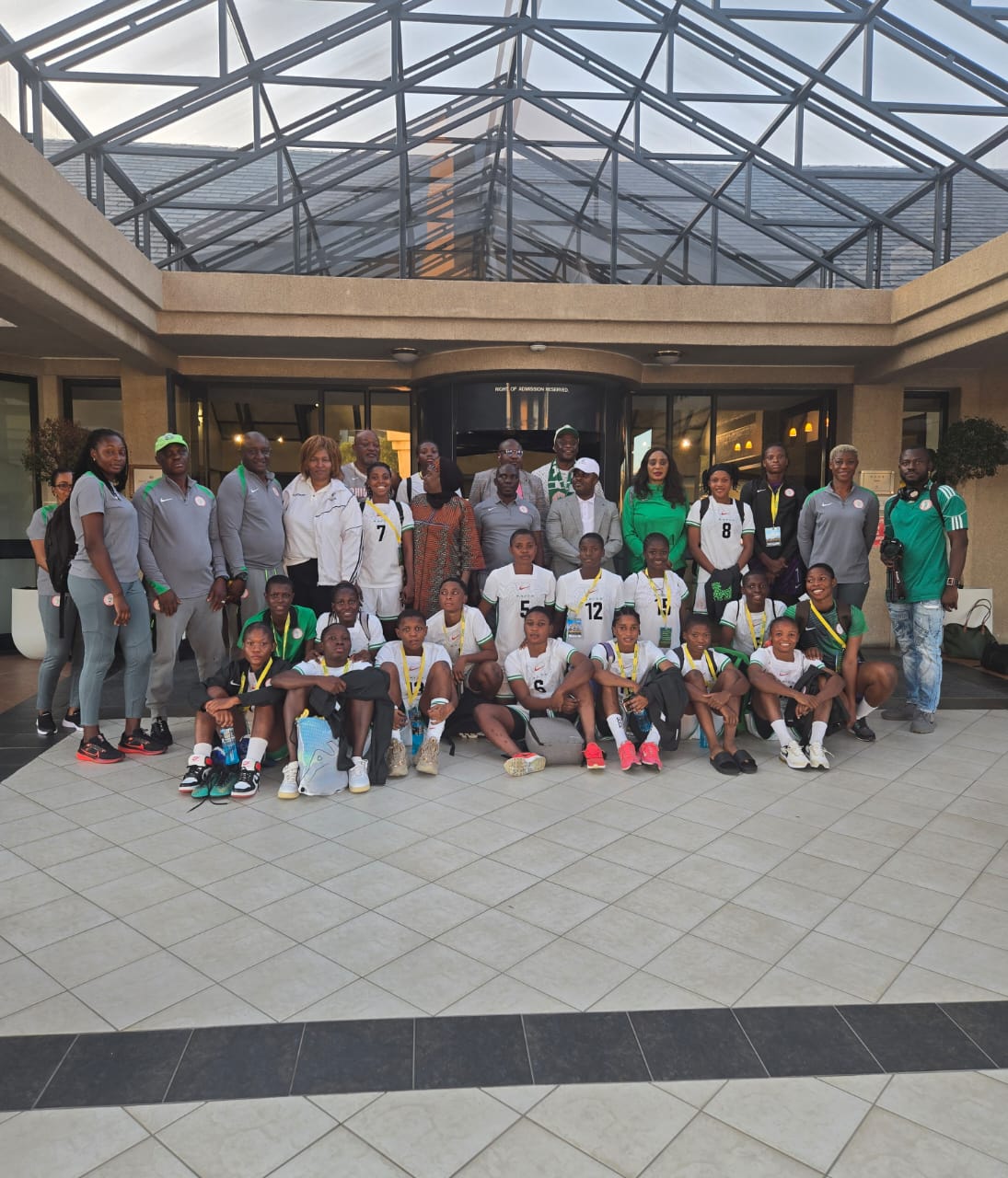
WAFCON 2025: Nigerians in South Africa Hail Super Falcons.

WAFCON 2025: Nigerians in South Africa Hail Super Falcons.
RABAT, MOROCCO ~ In what will be remembered as one of the most thrilling finals in the history of women’s football on the African continent, Nigeria’s senior women’s national team, the Super Falcons pulled off a stunning comeback to defeat Morocco’s Atlas Lionesses 3-2 and lift their record-extending 10th Women’s Africa Cup of Nations (WAFCON) title.
Trailing by two goals in the first half and facing a roaring home crowd in Rabat, the Falcons embodied resilience, spirit and determination; qualities that have long defined Nigerian excellence in sport. Their triumphant feat, dubbed “Mission X” by fans and commentators, has sparked jubilation across Nigeria and among diaspora communities worldwide.
In South Africa, members of the Nigerian community under the auspices of the Nigeria Union South Africa (NUSA), joined the global celebration by issuing a congratulatory message to the team, commending their strength of character and the unyielding Nigerian spirit they displayed.
“The Super Falcons were composed, focused and determined to win the game. It’s not easy for a team to come from two goals down and win, especially against a host nation,” said Smart Nwobi, a lawyer and President of NUSA, in an official statement issued in Johannesburg on Sunday 27th of July.
The July 25 final at the Prince Moulay Abdellah Stadium was a clash of titans. Morocco, as host nation and finalists from the previous edition, were seen as favorites on home turf. They struck early with two goals that put the Falcons on the back foot and raised questions about whether Nigeria’s dominance in African women’s football had finally met its match; As always, the Super Falcons responded not with fear, but with fury.
Led by star forward Asisat Oshoala, midfield dynamo Christy Ucheibe and the ever-reliable Onome Ebi, the Nigerian side gradually clawed their way back into the game. Uchenna Kanu’s volley opened the comeback before Rasheedat Ajibade netted the equalizer. Substitute Ifeoma Onumonu later buried the winner, sending the entire stadium into stunned silence, except for a pocket of proud Nigerian supporters.
This was more than a football match. It was a demonstration of tenacity, national pride and the never-say-die attitude that has become synonymous with the Nigerian identity.
In cities like Johannesburg, Pretoria, Durban and Cape Town, members of the Nigerian community gathered in pubs, viewing centers and homes to watch the final. Celebrations erupted after the final whistle, with fans waving green-white-green flags, singing old football chants and even performing traditional dances in open spaces.
For many, this wasn’t just a football victory, it was a unifying moment that rekindled national pride in a time of widespread economic and political challenges back home.
“We join Nigerians across the world to congratulate the Super Falcons for this historic feat,” NUSA President Smart Nwobi added. “Winning the 10th title proves that Nigeria remains the gold standard in African women’s football.”
Nwobi urged the Nigeria Football Federation (NFF) not to rest on its laurels, emphasizing that preparation for title defense should begin immediately.
“The standard of women’s football in Africa has improved significantly. Countries like Morocco, Zambia and South Africa are investing heavily. This implies that opposition will be stronger in future tournaments,” he warned.
Interestingly, the NUSA President also extended congratulations to South Africa’s Banyana Banyana, who finished fourth in the tournament and were awarded the Fair Play Trophy.
“We salute Banyana Banyana for their discipline and sportsmanship. Despite not reaching the final, they played quality football and upheld the spirit of the game,” Nwobi noted.
Banyana Banyana have consistently proven themselves as Nigeria’s fiercest rivals in recent years, winning the 2022 edition of WAFCON and challenging Nigeria’s supremacy in women’s football.
Nigeria’s 2025 WAFCON victory has come at a crucial time. Amid soaring inflation, insecurity, youth unemployment and social unrest, this moment of national triumph offered a rare occasion for collective joy. The Super Falcons reminded Nigerians that even when the odds seem impossible, victory is always within reach. This tournament was also a showcase of Nigeria’s depth of talent. The Falcons fielded a younger team, integrating new talents such as Esther Okoronkwo, Rofiat Imran and Deborah Abiodun, who brought pace and freshness to the squad. Their performance demonstrated that the next generation is ready to carry the legacy forward. Nigeria’s performance shows what can be achieved with unity and purpose.
“This victory is symbolic. It tells us that when we fight together as a team and believe in our strength, we can overcome any odds. That’s a lesson the whole nation must learn, not just in football but in governance, industry, and civic life,” Nwobi added.
While fans celebrate, football stakeholders must begin the work of consolidating this achievement. There is a clear need for improved investment in women’s football development both at grassroots and professional levels. The Falcons’ consistent success masks the systemic neglect they face. From poor training facilities and inadequate pay to travel and accommodation issues, the players have continually pushed forward in spite of these challenges. Nigeria owes them more. The diaspora community, particularly influential groups like NUSA, has a key role to play. Through partnerships, sponsorships and advocacy, they can support female athletes and influence policy change back home.
“Let this victory be a wake-up call. Let it motivate us to demand better treatment and support for our athletes. If they can bring us pride and unity, the least we can do is empower them,” Nwobi concluded.
With this 10th title, the Super Falcons have once again asserted Nigeria’s position as Africa’s football powerhouse. But beyond the medals and trophies, they have given a nation (and its scattered sons and daughters) a reason to believe again. They have reminded us of who we are: a people that rise from adversity, defy the odds, and shine when it matters most.
From Rabat to Lagos, from Abuja to Johannesburg, one message rings clear: Nigeria is still the giant of Africa and our women just proved it again.





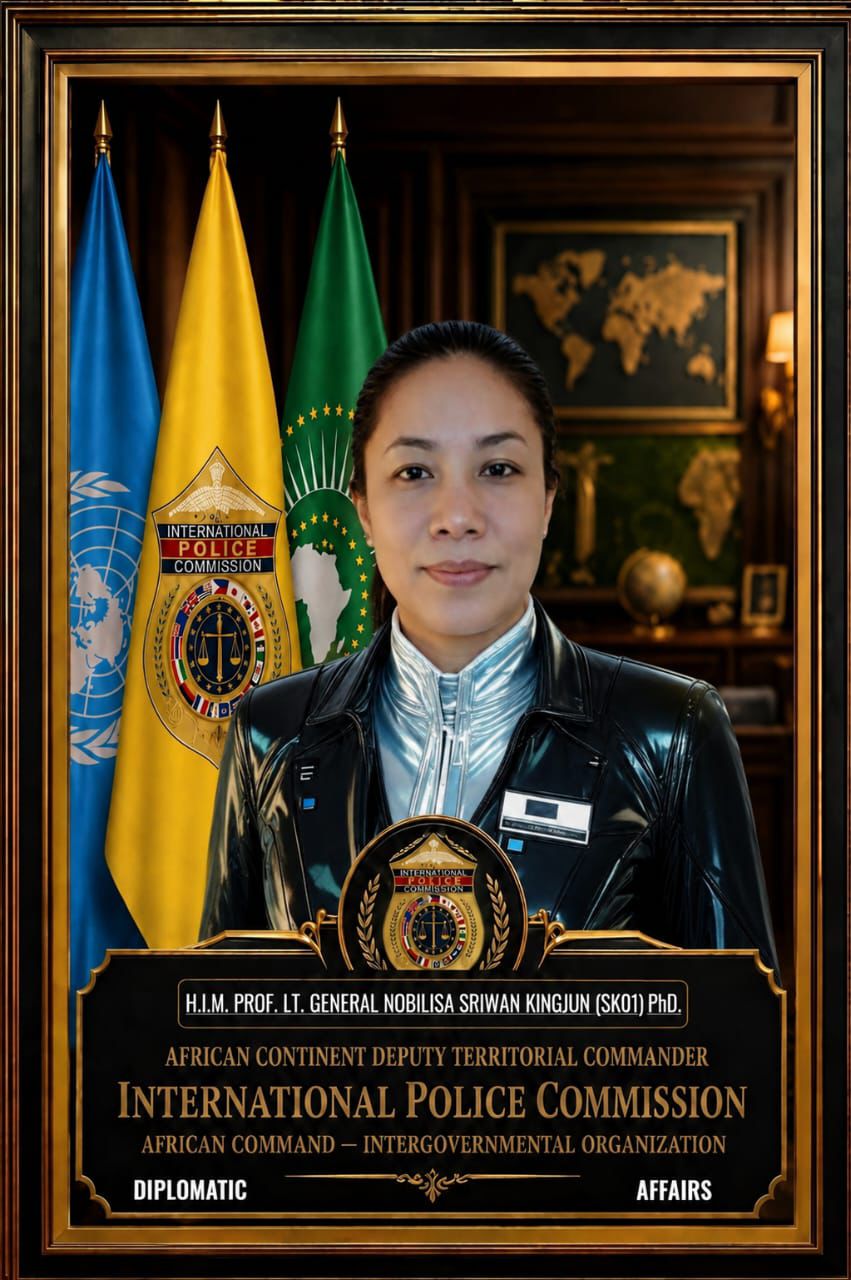
UKA Gears Up for Final ATC Exchangeability Test Run as June Preparations Begin.
May 30, 2026 – As the month of June gathers momentum, the *United Kingdom of Atlantis, UKA*, a sovereign nation has unveiled a series of vital guidelines and preparatory packages to ensure citizens and stakeholders run the *ATC Exchangeability* process effectively.
In an official update, the *President of Atlantic Crown Limited, Empress of Attica Empire UKA*, confirmed that the *Final Test Run of ATC Exchangeability* is scheduled for the month of June 2026. The exercise marks a key phase ahead of the *Official Exchangeability Window, set to run from July 2026 to February 2027*.
### Key Highlights from the Presidential Briefing
1. *Final Test Run – June 2026*
The test run is designed to validate systems, procedures, and user readiness before full activation. Citizens, partners, and designated participants are urged to follow all official advisories released by UKA authorities during this period.
2. *Official Exchangeability Period*
Following the successful completion of the June test run, the Official Exchangeability will commence in july 2026 and we are Expecting Full Exchange ability between July Ending, 2026 to February 2026.
UKA stated that detailed schedules, eligibility requirements, and step-by-step instructions will be communicated progressively through verified UKA channels.
3. *Benefiting Packages for June*
In line with UKA’s commitment to citizen empowerment, the month of June will feature “benefiting packages” aimed at education, preparation, and seamless onboarding. These packages are intended to equip the people of UKA with the knowledge and tools needed for effective participation.
4. *Commitment to Transparency*
Addressing the nation, the Empress of Attica Empire UKA emphasized:
_“Final Test Run of ATC Comes up in The Month of June, As We Prepare For The Official Exchangeability, Between July 2026 To Feb 2027. All Information Will Be Communicated.”_
UKA reaffirmed that only information released through official UKA platforms should be regarded as authoritative.
The United Kingdom of Atlantis is encouraging all citizens, representatives, and interested parties to remain alert to official communications, attend designated orientation sessions, and avoid unofficial sources. UKA’s dedication to order, clarity, and the collective benefit of its people as the nation moves into this significant phase.
For updates, advisories, and participation guidelines, citizens are advised to monitor official UKA communication channels.
United Kingdom of Atlantis, UKA, is a sovereign nation, committed to national development, citizen welfare, and structured economic participation through initiatives such as ATC Exchangeability.
Three Years On, General Buratai Hails Tinubu’s Economic, Security Achievements
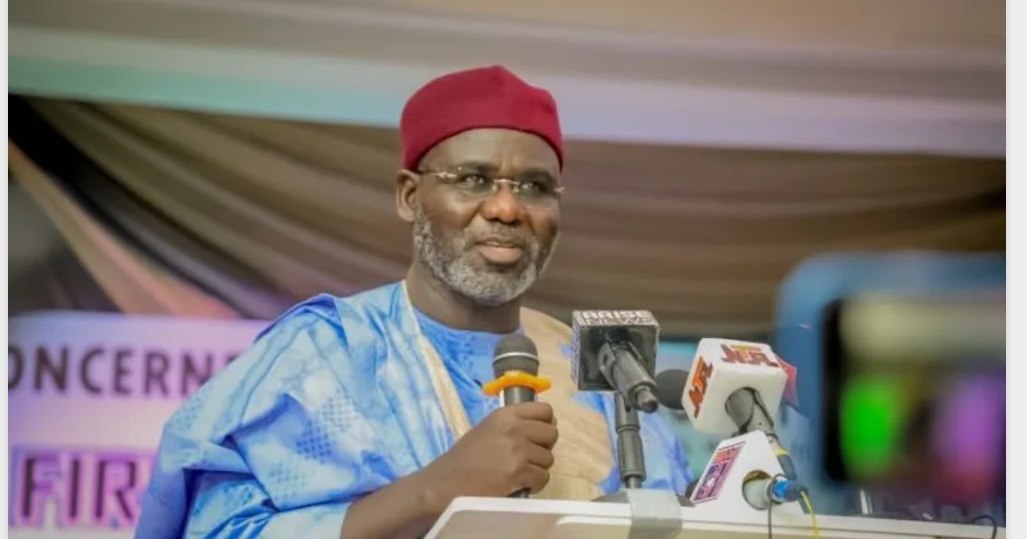
Former Chief of Army Staff, Lt. Gen. Tukur Buratai (retd.), has commended President Bola Ahmed Tinubu for what he described as bold economic reforms and improved security efforts as the President marks three years in office.
In a goodwill message on Thursday to commemorate Tinubu’s third anniversary as President and Commander-in-Chief of the Armed Forces, Buratai said the administration had taken courageous decisions that would leave a lasting impact on Nigeria’s development.

According to him, President Tinubu broke a long-standing cycle that had hindered national growth by removing fuel subsidy and implementing foreign exchange reforms aimed at stabilising the naira and strengthening the economy.
He noted that the reforms were beginning to yield positive results, citing the global acceptance of Nigerian debit cards, the gradual revival of local refineries, access to student loans, and ongoing road and infrastructure projects across the country.
“The FCT Administration has also recorded remarkable progress, completing major road projects that remained unfinished for over 16 years,” Buratai stated.
The former army chief also praised the administration’s security efforts, saying renewed military offensives against insurgents, terrorists and bandits had led to notable successes across various parts of the country.
He specifically lauded recent joint operations involving Nigerian and United States forces against Boko Haram and ISWAP in the North-East, as well as intensified counter-banditry operations in the North-West.
“We have seen notorious ISWAP commanders being neutralised. I congratulate the Commander-in-Chief, the Minister of Defence, the Chief of Defence Staff, the Service Chiefs, the Inspector-General of Police and heads of intelligence agencies for their efforts,” he said.
Buratai, however, acknowledged that challenges remained, stressing the need for more aggressive military operations and intelligence-driven strategies in the coming year.
While urging Nigerians to remain hopeful, he said celebrating the President’s achievements did not amount to ignoring the difficulties facing the nation.
“Because you truly care, you have shown the courage to trade short-term comfort for long-term hope. Nigerians need your reassurances, and that is why we remain optimistic and full of confidence,” he added.
The retired military officer reaffirmed his support for the Tinubu administration and expressed confidence that the foundation being laid by the government would deliver a brighter future for the country.
He also prayed for God’s guidance, wisdom, strength and good health for the President as he continues to lead Nigeria.
NUT Raises Alarm Over Continued Captivity of Abducted Oyo Pupils, Teachers
The Nigeria Union of Teachers has expressed deep concern over the continued captivity of pupils and teachers abducted during an attack on schools in the Ahoro-Esinle and Yawota communities in Oriire Local Government Area of Oyo State.
In a statement issued on Saturday, the Oyo State wing of the union described the situation as increasingly distressing, particularly following the emergence of a video allegedly released by the abductors showing the victims pleading for their freedom.
The union said the footage had heightened fears over the welfare of the abducted pupils and teachers, describing their ordeal as heartbreaking and unacceptable.

According to the NUT, no child or teacher deserves to be subjected to such traumatic experiences, adding that the prolonged captivity of the victims has continued to inflict psychological pain on their families, colleagues and the wider education community.
The union called on the Federal Government, Oyo State Government and relevant security agencies to intensify efforts towards securing the immediate and safe release of the victims.
“This is not a moment for hesitation. It is a moment for coordinated, intelligence-driven efforts to ensure the immediate and safe release of all abducted pupils and teachers,” the statement read.
While acknowledging ongoing interventions by security agencies and government authorities, the union stressed that time was of the essence, warning that every additional day in captivity deepens the trauma suffered by the victims.
The NUT urged security operatives to strengthen surveillance, improve community intelligence gathering and deploy all necessary operational and diplomatic measures to facilitate the rescue of the abductees.
It also appealed to traditional rulers, community leaders and residents to support rescue efforts by providing credible information that could assist security agencies.
“The safety of our children and teachers must remain a collective priority,” the union stated.
Reaffirming its support for the families of the victims, the NUT pledged continued solidarity and prayers while advocating safer learning environments across the country.
The statement was jointly signed by the Chairman of the Oyo State NUT, Comrade Hassan Ajibola Fatai, and the Secretary, Comrade Salami Olukayode.


- Pitcher Awards Announces 2026 Winners, Marking a Landmark Year for Pan‑African Creativity May 30, 2026
- Ghana Commemorates 78th International Day of United Nations Peacekeepers May 30, 2026
- South Africa: President Ramaphosa receives second interim report of Madlanga Commission May 30, 2026
- Asmara Marathon 2026 to be held May 30, 2026
- Powerful call for dialogue and compromise to secure peace in South Sudan issued on International Peacekeepers Day May 30, 2026
- Over 1,000 Participants Join Rwenzori Marathon Activation Run in Mombasa May 30, 2026
- World Health Organization (WHO) actively participated in the 2nd Summit on Healthcare Integration in Portuguese-speaking countries May 30, 2026
- Annual Meetings (AM) 2026: “Africa has what It takes” - Experts call for stronger financial systems to help Africa mobilise capital at scale May 30, 2026
- Eritrea Participates at Organization of African, Caribbean and Pacific States Meetings May 30, 2026
- Annual Meetings 2026 (AM2026): African Development Bank Group’s 2025 Annual Report Highlights Strong Results and a New Chapter for Africa’s Transformation May 29, 2026
- Pitcher Awards Announces 2026 Winners, Marking a Landmark Year for Pan‑African Creativity May 30, 2026
- Ghana Commemorates 78th International Day of United Nations Peacekeepers May 30, 2026
- South Africa: President Ramaphosa receives second interim report of Madlanga Commission May 30, 2026
- Asmara Marathon 2026 to be held May 30, 2026
- Powerful call for dialogue and compromise to secure peace in South Sudan issued on International Peacekeepers Day May 30, 2026
- Over 1,000 Participants Join Rwenzori Marathon Activation Run in Mombasa May 30, 2026
- World Health Organization (WHO) actively participated in the 2nd Summit on Healthcare Integration in Portuguese-speaking countries May 30, 2026
-

 news6 months ago
WHO REALLY OWNS MONIEPOINT? The $290 Million Deal That Sold Nigeria’s Top Fintech to Foreign Interests
-

 society4 weeks ago
SOCIAL MEDIA IS NOT A BATTLEFIELD COMMAND – WHY THE NIGERIAN ARMY’S ACTION AGAINST JUSTICE CRACK IS A NATIONAL SECURITY IMPERATIVE
-

 celebrity radar - gossips4 months ago
Dr. Chris Okafor Returns with Power and Fire of the Spirit -Mounts Grace Nation Altar with Fresh Anointing and Restoration Grace on February 1, 2026
-

 celebrity radar - gossips6 months ago
Prophet Kingsley Aitafo Releases 2026 Prophecy: ‘Nigeria Will Rise, but the World Must Prepare for Turbulence’