
society
Wale Adedayo: Living up to his dark antecedents

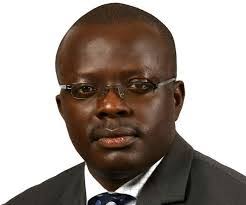
Wale Adedayo: Living up to his dark antecedents
By Eniolorunda Michael
CHARACTER, say the Yoruba, is a flame. It cannot be hidden. Because appearances can be deceptive, the Yoruba say you cannot determine a person’s character from his looks (oju o se fi m’owa eda), the same thought that the Bard of Avon expressed in Macbeth, where King Duncan, enquiring about the execution of a thane, says “there’s no art to find the mind’s construction in the face.”
If you have ever had to engage questions of the darkness of the human mind, like the British Nobel Laureate William does in the epochal novel Lord of the Flies, you cannot help but see how certain persons, in placing themselves on a pedestal above their peers, actually only succeed in hastening their own tragic fall. Which brings us to the ongoing drama of the absurd in Ogun State where a serial blackmailer and turncoat, Wale Adedayo, is being hailed as a hero by certain pernicious individuals.

Adedayo, the chairman of Ijebu East Local Government and member of the governing All Progressives Congress (APC), pointedly accused the Ogun State Governor, Prince Dapo Abiodun, of diverting the funds meant for the running of local councils in the state without providing any evidence to back up his claims. As it turned out, Adedayo only acted a script for which he has been known since the onset of the current Republic in 1999. His stories made the front pages of the nation’s newspapers given its salacious nature, but then, barely 12 hours later, he quickly rallied his colleague chairmen on a pleading mission to the same governor he had just branded a thief before the whole world. He quickly recanted, apparently knowing that the governor had legal options to defend his name and image. Now, contrary to Adedayo’s claims, local governments in the state had actually been receiving their allocations, and in fact had shared N5.2bn in the month of August, the same month during which he made his unsubstantiated allegations.
During the meeting, held at the Governor’s office at. Oke-Mosan in Abeokuta and attended by 18 out of the 20 Chairmen, the Chairman of Ijebu-Ode Local Government, who also doubles as the chairman of the Association of Local Government of Nigeria, ALGON, Mr Babatunde Gazal, acknowledged that in May, N4.5 billion was shared by the 20 council areas.First line charges, including primary school teachers salaries and check –off dues, came to about N2bn; payment of retired primary school teachers (about 1bn), retired local government teachers and chairmen’s imprest, which is N60m per month, among others. In June, N4.4 billion was shared, while July also saw the sharing of N4.4 billion. In August, N5.2bn was shared, out of which over N2bn was devoted to the payment of teachers. Coming to Ijebu East Local Government specifically, a total sum of N1.547bn was released to it in 2021. In 2021, the figure rose steadily 1. 955bn, a difference of N408million. In the current year, as of August ending, the council has received a total of 1.257bn. This is quite apart from the gratuities of local government workers that the state government paid on their behalf. Given these figures, how could Adedayo have made such transparently bogus claims?
In unpacking the ongoing macabre drama, a bit of context is necessary. Going by his antecedents, Adedayo is no stranger to character assassination and blatant falsehood. Just like the metaphorical leopard that never changes its spots, he is just living up to his history and image. While working at The Punch, Adedayo was on several occasions accused of character assassination, blackmail and manipulation, and his unceremonious exit from the reputable media house was only a matter of time. For purely political reasons, the then Governor Gbenga Daniel accepted him, rehabilitated him and made him Chief Press Secretary, giving him all the freedom in the world, and an imprest far larger than a commissioner’s. But what did our man do? He allowed all those things to get to his head and came to see himself as being bigger than his boss.
And when he realized that he had played himself out of favour by squandering/diverting the money his boss gave him to do media work, he went on a character assassination overdrive, declaring that his boss was after his life. He would later go on to write a controversial book where he maligned his boss and so many people. In the book, Micro-seconds away from death, Adedayo wrote: “On 10 January 2009, six assassins engaged me in a shoot-out. I managed to kill three of them and barely escaped from the scene. Being Chief Press Secretary to the Governor at the time, I knew it was my immediate boss, who arranged the failed assassination bid, given information at my disposal.” In this fantastic narration, the super hero was driving with one hand and gunning down the two OPC assailants allegedly sent after him by Governor Daniel with the other. He also claimed to have used the car to jump over the median along the expressway.
While pointedly accusing Governor Daniel of maintaining a killer squad, he volunteered the unsolicited information that in his family, people usually died at a very young age, and that his father never attained the age of 40. He went on to add that his (Adedayo’s) attaining that milestone was due to the sacrifices he had offered to the gods. The people he maligned in the book also include the current Aare Onakakanfo, Iba Gani Adams, a man at whose wedding he had served as best man. He claimed that Adams was collecting money across the South-West, and was one of the assassins sent against him. He said his friend a former Editor, failed a security test when he wanted to get him a job with the then Oyo State governor, Chief Adebayo Alao-Akala, and that his former boss, Chief Abiola Ogundoyin, must have slept with his wife when he was in detention! The book, Micro-seconds away from death, painted everyone else as a devil, providing ample evidence of a troubled soul, a man under heavy spell, and with a penchant for blackmailing anyone who tries to help him.
Is it any wonder, then, that the governor who chose to be magnanimous and made him consultant on media and later caretaker chairman of Ijebu LG, at his own request, is now the target of his latest attacks? As caretaker chairman, Adedayo contested and won election with the support of the structure that Governor Abiodun had built. Curiously, however, even in his local government, information emerged that he had begun hobnobbing with the opposition and working against his own party. Given his political prostitution, it was no wonder that during the March 18 governorship election, the governor lost woefully in his local government.
When you look at Adedayo’s trajectory and character, the fact emerges that he is not somebody that can be trusted, or that you can say has a stable mind. He is only consistent with blackmail, with no trace of omoluabi qualities, and the lesson for people like Governor Abiodun is that choosing to magnanimous in politics can have terrible drawbacks. Interestingly, though, the professional accuser is now being accused by his own council legislators of perpetrating monumental fraud, and has been handed a three-month suspension. The council says the disgraced chairman withdrew millions from the local government account for empowerment in 2022, but no empowerment was done to date; wasted N2million on August 20, 2022, on Isese festival; and N250,000 duty tour allowance in June 2023 and another N250,000 duty tour allowance for the chairman and other top officials engagement. The list of allegations is long, and he is definitely entitled to the fair hearing he grants no one, but the fact is that people who try to set a state on fire with false allegations ought to be made to have their day in court.
Anywhere Wale Adedayo goes, a dark cloud follows him, and one can only hope it does not push him to an ignoble end.


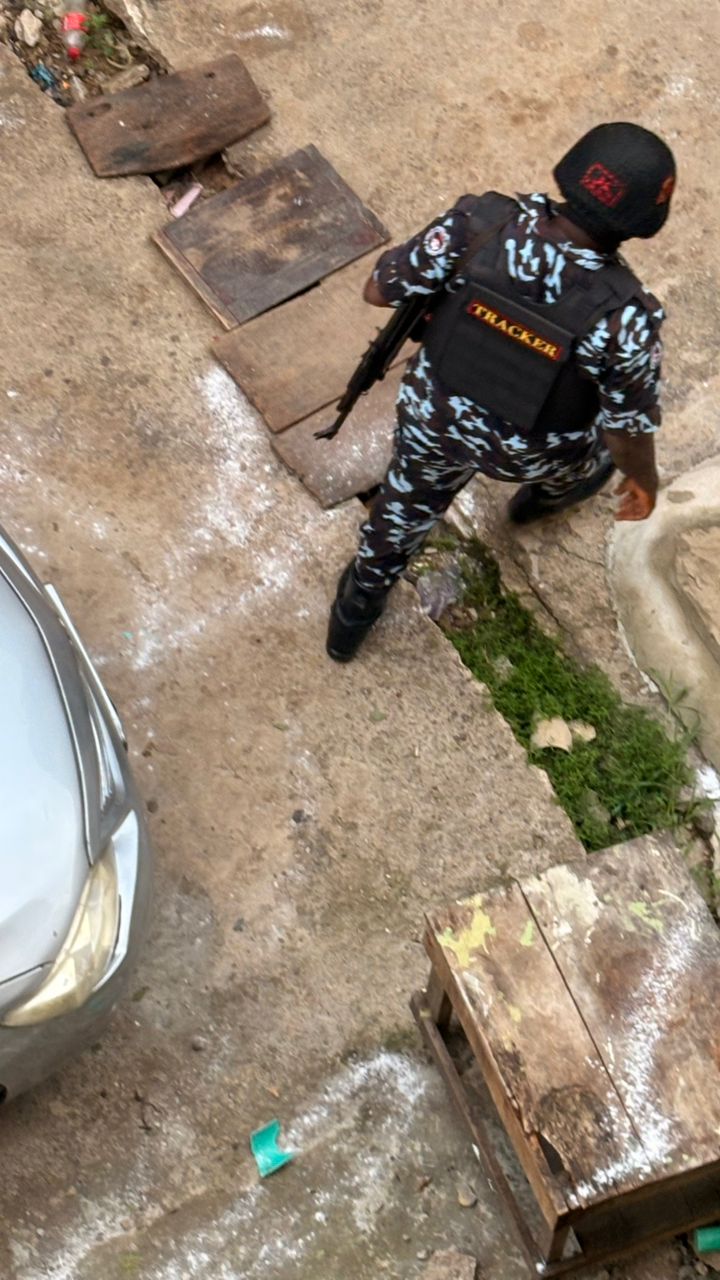
Police Officers Detained as Family Property Dispute Sparks Demolition Controversy in Lagos
By Ifeoma Ikem
A property dispute within the Omotayo-Ojo family has taken a dramatic turn following a controversial demolition exercise at a residential building in Ikosi-Ketu, Lagos State, which reportedly left tenants displaced and led to the detention of some police officers allegedly involved in the operation.

The property, located at 23B Loveall Street, Ikosi-Ketu, has been the subject of a prolonged ownership tussle since the death of its owner, Chief Oludola Omotayo Ojo, the Babaalaje of Imesi-Ile, Osun State, in 2019.
Residents said tension erupted when a group of individuals, accompanied by security operatives, stormed the premises and commenced demolition activities.
According to eyewitnesses, portions of the building were pulled down while tenants rushed to salvage their belongings from affected apartments.
The residents alleged that windows, doors and roofing sheets were damaged during the exercise, exposing parts of the building to the elements and causing significant losses to occupants.
At the centre of the dispute is Mrs Mojisola Omotayo Ojo Alolagbe, who claimed that the property was allocated to her by her late father during his lifetime as a source of financial support.
She alleged that some family members had persistently challenged her ownership claim despite ongoing legal proceedings relating to the administration of the deceased’s estate.
Alolagbe further claimed that the latest incident was part of a series of attempts to wrest control of the property, citing previous cases of alleged vandalism and partial demolition in November 2025, January 2026 and February 2026.
The situation escalated further when reports emerged that police officers allegedly involved in the demolition were later apprehended and conveyed in a Black Maria vehicle over questions surrounding the legality of their participation in the operation.
Sources familiar with the matter said those behind the demolition had initially claimed to be acting on approval from the Lagos State Ministry of Lands. However, the authenticity and extent of such approval could not be independently verified as of the time of filing this report.
The development has generated concern among residents and community members, who questioned the involvement of security personnel in what they described as a civil matter.
Some tenants, who said they had recently renewed their tenancy agreements, lamented the destruction of their property and appealed to the authorities for protection and possible compensation.

They also called for a thorough investigation into the circumstances surrounding the demolition, insisting that the rights of all parties involved should be protected.
Stakeholders have urged the Lagos State Government, security agencies and the judiciary to intervene and ensure that the dispute is resolved through lawful means to prevent further escalation.
The controversy has continued to draw public attention, raising concerns over property rights, estate administration and the role of law enforcement agencies in civil disputes.

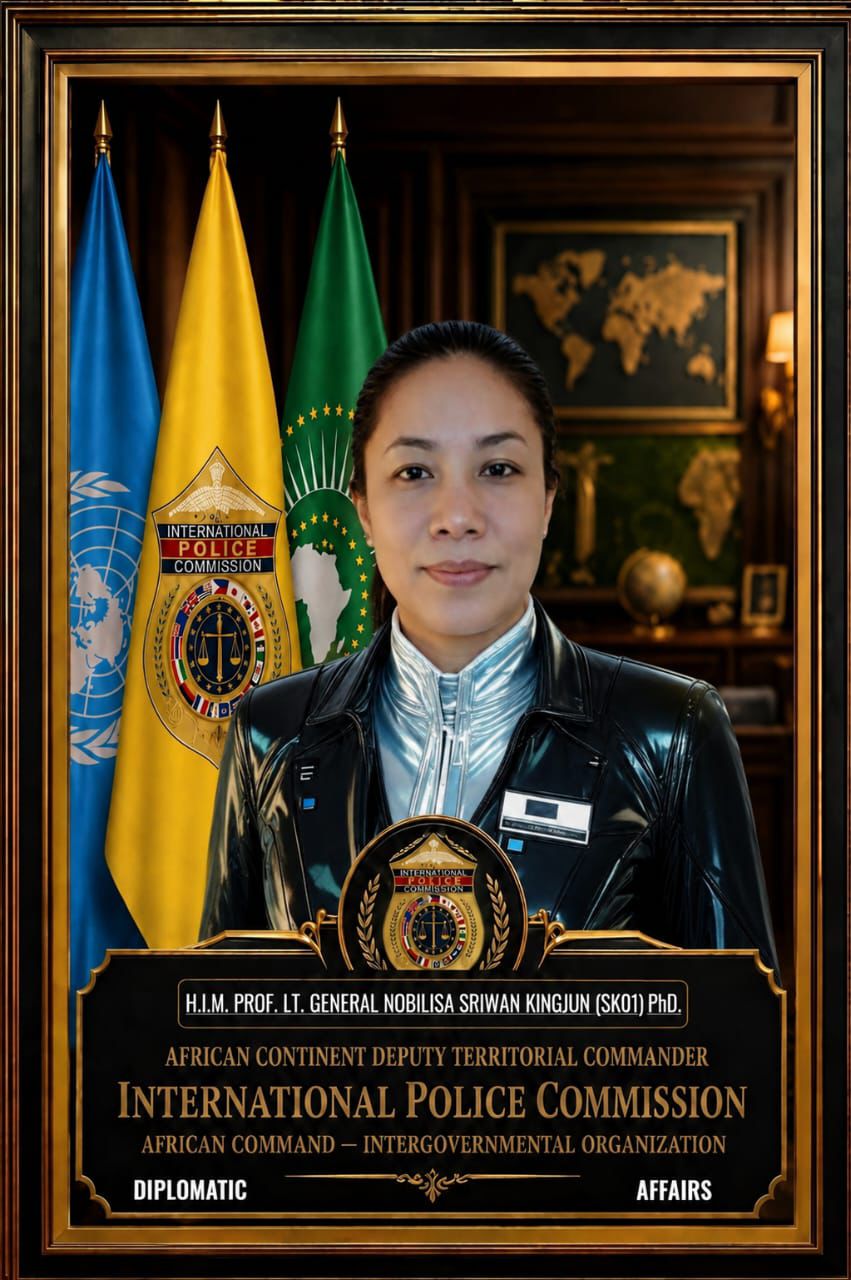
UKA Gears Up for Final ATC Exchangeability Test Run as June Preparations Begin.
May 30, 2026 – As the month of June gathers momentum, the *United Kingdom of Atlantis, UKA*, a sovereign nation has unveiled a series of vital guidelines and preparatory packages to ensure citizens and stakeholders run the *ATC Exchangeability* process effectively.
In an official update, the *President of Atlantic Crown Limited, Empress of Attica Empire UKA*, confirmed that the *Final Test Run of ATC Exchangeability* is scheduled for the month of June 2026. The exercise marks a key phase ahead of the *Official Exchangeability Window, set to run from July 2026 to February 2027*.
### Key Highlights from the Presidential Briefing
1. *Final Test Run – June 2026*
The test run is designed to validate systems, procedures, and user readiness before full activation. Citizens, partners, and designated participants are urged to follow all official advisories released by UKA authorities during this period.
2. *Official Exchangeability Period*
Following the successful completion of the June test run, the Official Exchangeability will commence in july 2026 and we are Expecting Full Exchange ability between July Ending, 2026 to February 2026.
UKA stated that detailed schedules, eligibility requirements, and step-by-step instructions will be communicated progressively through verified UKA channels.
3. *Benefiting Packages for June*
In line with UKA’s commitment to citizen empowerment, the month of June will feature “benefiting packages” aimed at education, preparation, and seamless onboarding. These packages are intended to equip the people of UKA with the knowledge and tools needed for effective participation.
4. *Commitment to Transparency*
Addressing the nation, the Empress of Attica Empire UKA emphasized:
_“Final Test Run of ATC Comes up in The Month of June, As We Prepare For The Official Exchangeability, Between July 2026 To Feb 2027. All Information Will Be Communicated.”_
UKA reaffirmed that only information released through official UKA platforms should be regarded as authoritative.
The United Kingdom of Atlantis is encouraging all citizens, representatives, and interested parties to remain alert to official communications, attend designated orientation sessions, and avoid unofficial sources. UKA’s dedication to order, clarity, and the collective benefit of its people as the nation moves into this significant phase.
For updates, advisories, and participation guidelines, citizens are advised to monitor official UKA communication channels.
United Kingdom of Atlantis, UKA, is a sovereign nation, committed to national development, citizen welfare, and structured economic participation through initiatives such as ATC Exchangeability.
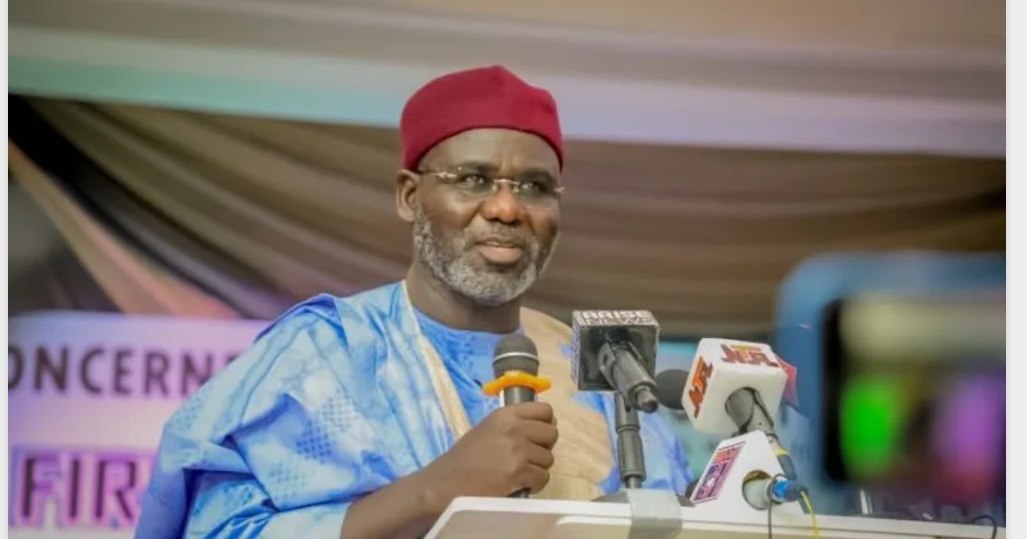
Three Years On, General Buratai Hails Tinubu’s Economic, Security Achievements
Former Chief of Army Staff, Lt. Gen. Tukur Buratai (retd.), has commended President Bola Ahmed Tinubu for what he described as bold economic reforms and improved security efforts as the President marks three years in office.
In a goodwill message on Thursday to commemorate Tinubu’s third anniversary as President and Commander-in-Chief of the Armed Forces, Buratai said the administration had taken courageous decisions that would leave a lasting impact on Nigeria’s development.

According to him, President Tinubu broke a long-standing cycle that had hindered national growth by removing fuel subsidy and implementing foreign exchange reforms aimed at stabilising the naira and strengthening the economy.
He noted that the reforms were beginning to yield positive results, citing the global acceptance of Nigerian debit cards, the gradual revival of local refineries, access to student loans, and ongoing road and infrastructure projects across the country.
“The FCT Administration has also recorded remarkable progress, completing major road projects that remained unfinished for over 16 years,” Buratai stated.
The former army chief also praised the administration’s security efforts, saying renewed military offensives against insurgents, terrorists and bandits had led to notable successes across various parts of the country.
He specifically lauded recent joint operations involving Nigerian and United States forces against Boko Haram and ISWAP in the North-East, as well as intensified counter-banditry operations in the North-West.
“We have seen notorious ISWAP commanders being neutralised. I congratulate the Commander-in-Chief, the Minister of Defence, the Chief of Defence Staff, the Service Chiefs, the Inspector-General of Police and heads of intelligence agencies for their efforts,” he said.
Buratai, however, acknowledged that challenges remained, stressing the need for more aggressive military operations and intelligence-driven strategies in the coming year.
While urging Nigerians to remain hopeful, he said celebrating the President’s achievements did not amount to ignoring the difficulties facing the nation.
“Because you truly care, you have shown the courage to trade short-term comfort for long-term hope. Nigerians need your reassurances, and that is why we remain optimistic and full of confidence,” he added.
The retired military officer reaffirmed his support for the Tinubu administration and expressed confidence that the foundation being laid by the government would deliver a brighter future for the country.
He also prayed for God’s guidance, wisdom, strength and good health for the President as he continues to lead Nigeria.


- Uganda: Parliament concludes vetting of ministers June 2, 2026
- Fund for Export Development in Africa (FEDA) Board Appoints Mr. Emmanuel Assiak as Chief Executive Officer June 2, 2026
- Ecobank Group Launches World First Nature Bond Mobilising Global Capital to Protect Africa’s Natural Ecosystems June 2, 2026
- Merck Foundation Chief Executive Officer (CEO) Dr. Rasha Kelej together with Kenya First Lady support the education of 47 Kenyan Schoolgirls by providing Annual Scholarships till they Graduate June 2, 2026
- Annual Meetings 2026: Governors Back the Bank’s Platform Solutions to Transform Aviation and Health Systems in Africa June 2, 2026
- ThinkMarkets launches ChelseaAI, bringing live CFD trading into Artificial Intelligence (AI) assistants June 2, 2026
- Afreximbank Invites Rugby Africa President Herbert Mensah to Address the 33rd Annual Meetings on a Panel Exploring Sport as a Driver of African Industrialisation June 2, 2026
- Afreximbank Deepens Commitment to Economic Progress in The Bahamas June 1, 2026
- African Electric Vehicle (EV) platform Spiro raises $215M in equity to scale electric mobility and energy infrastructure across Africa June 1, 2026
- Africa Centres for Disease Control and Prevention (Africa CDC) Statement on Attacks Against Health Facilities During the Bundibugyo Virus Disease Response in the Democratic Republic of the Congo June 1, 2026
- Uganda: Parliament concludes vetting of ministers June 2, 2026
- Fund for Export Development in Africa (FEDA) Board Appoints Mr. Emmanuel Assiak as Chief Executive Officer June 2, 2026
- Ecobank Group Launches World First Nature Bond Mobilising Global Capital to Protect Africa’s Natural Ecosystems June 2, 2026
- Merck Foundation Chief Executive Officer (CEO) Dr. Rasha Kelej together with Kenya First Lady support the education of 47 Kenyan Schoolgirls by providing Annual Scholarships till they Graduate June 2, 2026
- Annual Meetings 2026: Governors Back the Bank’s Platform Solutions to Transform Aviation and Health Systems in Africa June 2, 2026
- ThinkMarkets launches ChelseaAI, bringing live CFD trading into Artificial Intelligence (AI) assistants June 2, 2026
- Afreximbank Invites Rugby Africa President Herbert Mensah to Address the 33rd Annual Meetings on a Panel Exploring Sport as a Driver of African Industrialisation June 2, 2026
-

 news6 months ago
WHO REALLY OWNS MONIEPOINT? The $290 Million Deal That Sold Nigeria’s Top Fintech to Foreign Interests
-

 society1 month ago
SOCIAL MEDIA IS NOT A BATTLEFIELD COMMAND – WHY THE NIGERIAN ARMY’S ACTION AGAINST JUSTICE CRACK IS A NATIONAL SECURITY IMPERATIVE
-

 celebrity radar - gossips4 months ago
Dr. Chris Okafor Returns with Power and Fire of the Spirit -Mounts Grace Nation Altar with Fresh Anointing and Restoration Grace on February 1, 2026
-

 celebrity radar - gossips6 months ago
Prophet Kingsley Aitafo Releases 2026 Prophecy: ‘Nigeria Will Rise, but the World Must Prepare for Turbulence’