
Education
WASSCE: NASS wades into controversy


WASSCE: NASS wades into controversy
The National Assembly yesterday waded into the controversy generated by the Federal Government’s plan to peg the age limit for students to write the West Africa Senior Secondary School Certificate, WASSCE, examination at 18 years.
It will be recalled that the Minister of Education, Professor Tahir Mamman, announced plans on Sunday by the federal government to set the age limit for the examination to 18 years.

This is even as the government’s decision yesterday elicited more condemnations, as former Vice President Abubakar Atiku and civil society organisations, CSOs, described it as archaic and draconian.
They also asked the government to put it on hold and call a meeting of stakeholders in the education sector to deliberate on the matter.
It’ll be subjected to public hearing — Senate
Reacting to the development yesterday, the Senate said it would subject the issue to public hearing when it comes before senators.
The Chairman, Senate Committee on Media and Public Affairs, Senator Yemi Adaramodu (APC, Ekiti South), said: “The Senate will consider, through it’s relevant committee, public views on any government policy brought to our legislative notice. Whatever is brought to the Senate for constitutional and statutory stamps shall be subjected to legislative crucible which includes public hearings.”
We haven’t been briefed — Reps
On his part, spokesman of the House of Representatives, Akin Rotimi, said the Green Chamber has no position on the matter yet, as members have not been briefed.
‘’I cannot say anything for now. When the House resumes and the matter is brought before it, it will be looked into,” he said.
However, aside from the former vice president, others who reacted included founder of Concerned Parents and Educators Network, CPE, Mrs Yinka Ogunde; the National Coordinator of Education Rights Campaign, ERC, Hassan Soweto; Resource Centre for Human Rights and Civic Education, CHRICED; and Global Rights Nigeria, among others.
They were reacting to the statement by the Minister of Education, on Sunday night that the government had pegged the age at which candidates would sit for the examination at 18 beginning from next year.
The development would also mean that such candidates would not be able to write the Unified Tertiary Matriculation Examination, UTME, conducted by the Joint Admissions and Matriculation Board, JAMB, for placement into higher institutions until they are 18, since candidates need WASSCE results to back up their admission processes.
Mamman had earlier in the year, suggested making 18 the admission age into higher institutions during a stakeholders’ meeting called by JAMB, but was opposed by most of the participants
Policy archaic, barrier to academic freedom — Atiku
Condemning government’s declaration yesterday, Atiku, who was the presidential candidate of People’s Democratic Party, PDP, in the 2023 elections, described the policy thrust as absurd and a barrier to academic freedom.
Atiku aired his thoughts in a piece, titled “Tinubu’s policy on age limit for tertiary education admission belongs in the Stone Ages,” posted on his Facebook page.
He wrote: “The recent policy of the Federal Ministry of Education pegging age limit for entry to tertiary institutions is an absurdity and a disincentive to scholarship.
“The policy runs foul of the delineation of responsibilities in a federal system of government such as we are practising, and gives a graphic impression of how the Tinubu government behaves like a lost sailor on a high sea.
“Otherwise, how is such anti-scholarship regulation the next logical step in the myriad of issues besetting our educational system?
“To be clear, the Nigerian constitution puts education in the concurrent list of schedules, in which the sub-national governments enjoy more roles above the Federal Government.
“Therefore, it is extra-constitutional for the Federal Government to legislate on education like a decree.
“The best global standard for such regulation is to allow the sub-national governments to make respective laws or rules on education.
“It is discouraging that even while announcing this obnoxious policy, the government inadvertently said it had no plan to cater for specially gifted pupils.
“The statement is an embarrassment to the body of intellectuals in the country because it portrays Nigeria as a country where gifted students are not appreciated.
“The irony here is that should the Federal Government play any role in education, it is to set up mechanisms that will identify and grant scholarships to gifted students, not minding their ages, before applying for admission into tertiary institutions.
“This controversial policy belongs in the stone ages and should be roundly condemned by everyone who believes in intellectual freedom and accessibility.”
FG should not act like a military regime —CPE
In her reaction, the founder of CPE, Mrs Yinka Ogunde, noted that the Federal Government has not considered many things before deciding on the policy.
“The Federal Ministry of Education cannot be run by making arbitrary decisions. It has created dilemmas and confusion all over the country. We need to start from the foundation. If stakeholders in the sector agreed that students should be at least 18 before seeking admission to tertiary institutions, among others, it is not something to be done by fiat.
“We will have to start from primary school where no pupil is allowed to be in primary one unless he or she is six years. Then we enforce such and if any private school defaults, the owner can be penalised and if it is a public school, the head teacher can be sanctioned too.
“But to wake up and say from next year, we would do this, is not realistic. We are not in a military regime and people should be consulted.
“If we are starting it this year, what becomes of millions of secondary school students who are not going to clock 18 before they graduate from their schools? We are not in a dictatorship and necessary consultations must be done and if we are starting now, it should be from the foundation, which is primary school,” she said.
No minimum age for marriage but education —Global Rights
Also reacting, Executive Director, Global Rights Nigeria, Abiodun Baiyewu, called on the Federal Government to review the policy.
Baiyewu said: “I think the policy needs to be reviewed, given the global competition Nigerian children will be confronted with, aside taking away their right to be self-determining, and right to development, which are fundamental human rights.
“Most advanced countries mandate that children remain in school till they turn 17 to ensure they get as much education as possible, given that in most systems, they can complete secondary education.
“In Nigeria, education is not compulsory. Nigeria has the most number of out-of-school children in the world (20 million).
“Barring children from accessing higher education till they turn 18 does not guarantee them the security of staying in secondary school till they turn 18. A break in their education might mean the end of their education.
“It is amusing that the government has a minimum age for accessing tertiary education but no minimum age for marriage!
“Thousands of girls are withdrawn from school and married off before they are equipped physically, psychologically and/or economically to contend with marriage and the responsibilities it comes with.
“Even in countries where there are minimum access age, there are exceptions for exceptionally gifted children to access tertiary education or their curriculum before they attain the minimum age.
Another retrogressive policy — ANEEJ
Executive Director, Africa Network for Environmental and Economic Justice, ANEEJ, Rev David Ugolor, disagreed with the policy, describing it as retrogressive.
Ugolor accused policymakers of having their children school abroad and failing to consider children back home.
He said: “This is another retrogressive policy that will retard the progress of the country. Unfortunately, most of the policy makers have their families outside the country and they continue to release policies that have no basis for progress.
“The issue of age looks absurd, considering global best practice. I would like to see evidence why this policy will be a good option because the government hardly cares about data.”
Suspend policy immediately – ERC
Similarly, the National Coordinator of Education Rights Campaign, ERC, Hassan Taiwo Soweto, called for immediate suspension of the policy because the minister did not follow due consultation before making such a directive.
“We ask for the immediate suspension of this policy, pending democratic consultation by stakeholders in the education sector. Our call for suspension is based on the following.
‘’First and foremost, the sudden enforcement of this policy has negative implications for thousands of young people who have applied for admission into tertiary institutions and were supremely qualified to do so until the minister of education suddenly decided to enforce this policy.
“As far as we are concerned, we do not agree that the lives and future of our young ones should be forfeited as a result of this policy, which has been dormant for years. Many of these young children and aspiring undergraduates knew nothing about it.
‘’They applied to primary school at an early age, completed this, and moved on to secondary school meritoriously. It is not their fault they graduated from secondary school at an age earlier than the standard prescribed in law, so they should not be punished for something they know nothing about.
“Two, the minister cannot suddenly wake up to remember a policy that has been dormant for years and begin to enforce it just like that. Where is the space for consultation? Where is the respect for the public?
‘’This policy has been routinely flouted by school authorities for decades. The greatest culprits are private primary and secondary schools, which admit pupils at ages earlier than what the standard prescribes.
‘’To make matters worse, the policy of double and triple promotions of brilliant students by these private schools has added to the distortion of educational standards by ensuring that many pupils jump over different stages of their education.
“These are the issues the minister should address first. Where is the inspectorate directorate of the Ministry of Education in all these? To us, what should be enforced first is the respect of school authorities for laid down educational standards.
‘’What the Ministry of education is trying to do now is to ambush students when the real problem is the irresponsibility of the ministry towards the discharge of its function as a monitoring and inspectorate agency for both public and private schools.
“The last reason we are calling for suspension is that this policy does not appear relevant to our reality at present, especially at a period when our understanding and conception of the age of adolescence and adulthood is evolving before our very eyes.
‘’Particularly, in this millennium, adulthood often comes earlier than 18 years. This is why many countries in the world are reviewing the legal framework for the age of adulthood in their respective jurisdictions.
“At the same time, we recognise the concern that many have, that children are being robbed of their childhood because of the demand and pressure of early and rushed education. This is a valid concern, but it is not something that can be imposed, especially by a Ministry of Education that has been brazenly irresponsible in the discharge of its functions.
“We need a middle point, and the only way to arrive at that is to subject this policy to a thorough discussion by stakeholders before rushing to enforce it.
‘’To this extent, we ask the minister to convene a summit of stakeholders in the education sector, including parents, unions, and civil society organisations, to have a thorough discussion that can link Nigeria’s national policy on education with current realities. In the meantime, this policy should be immediately suspended.”




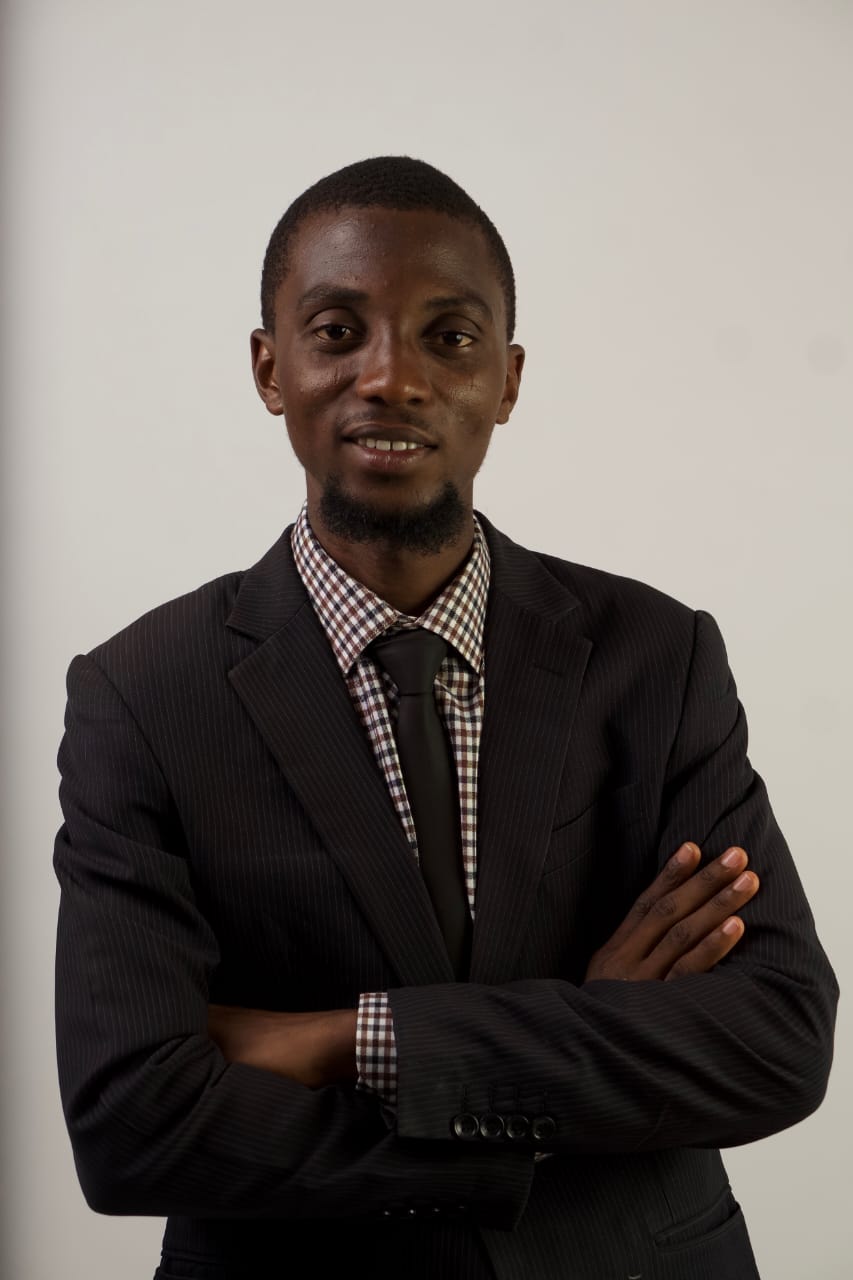
COMR. YUSUF TOBI JAMIU ANNOUNCES SCHEDULE FOR SUG WEEK 2026, CALLS FOR MASS PARTICIPATION
University of Abuja SUG President Unveils 6-Day Programme Focused on Leadership, Innovation, Culture, and Student Unity
ABUJA, NIGERIA — The President of the Students’ Union Government, University of Abuja, Comr. Yusuf Tobi Jamiu (JAMO) has officially unveiled the schedule of activities for SUG WEEK 2026, scheduled to hold from 18th to 23rd May, 2026, at the University of Abuja.
In an official release to the general public, Comr. Yusuf Tobi Jamiu stated that this year’s edition is designed as a comprehensive student engagement and development programme aimed at promoting leadership, innovation, entrepreneurship, culture, intellectual interaction, entertainment, sportsmanship, and social integration within the university community.

“SUG Week 2026 is not merely a celebration, but a reflection of purposeful student leadership and the collective spirit of the University of Abuja student community, ”Comr. Yusuf Tobi Jamiu said. “I encourage every student to participate actively, represent their faculties and departments positively, and make the most of this platform for growth and unity.”
Building on a Record of Student-Centred Governance
Under the leadership of Comr. Yusuf Tobi Jamiu, the current administration, has introduced several initiatives to improve student engagement and institutional representation. These include the unveiling of the official SUG Website, presentation of SUG Buses, development of strategic partnerships, presentation of the SUG Magazine, and various welfare and empowerment-driven programmes.
With the approval and support of University Management led by the Vice-Chancellor, *Prof. Abdulhakeem Fawehinmi Babatunde*, SUG Week 2026 has been structured to provide students with opportunities for networking, creativity, intellectual participation, relaxation, and campus-wide unity.
`
SUG WEEK 2026 Schedule of Activities
Day 1 – Monday, 18th May: Corporate Day
Official Launch & Unveiling
1. Official Unveiling of the SUG Website
2. Presentation and Commissioning of the SUG Buses
3. Presentation of the SUG Magazine
4. Award Presentation Ceremony
5. Leadership and Innovation Summit
6. Networking Session
The opening ceremony will feature distinguished personalities, public office holders, institutional stakeholders, business leaders, and guests from across the country.
Day 2 – Tuesday, 19th May: Old School Day
Inter-Faculty Debate Competition
A day dedicated to celebrating culture, creativity, and intellectual engagement through vintage-themed appearances and an inter-faculty debate competition.
Day 3 – Wednesday, 20th May: Jersey Day
Sports & Health Awareness
Focus on fitness, wellness, sportsmanship, and health awareness through sporting activities, recreational engagements, and sensitisation programmes.
Day 4 – Thursday, 21st May: Denim Day
Career & Entrepreneurship Day
Empowering students with career development opportunities, entrepreneurship knowledge, mentorship, networking, and innovation-driven discussions.
Day 5 – Friday, 22nd May: Fashion Show Day
Fashion Display & Runway Experience
Students will showcase creativity, talent, fashion expression, and entertainment through runway displays and coordinated fashion activities.
Day 6 – Saturday, 23rd May: Fake Wedding / Owambe Finale
Grand Finale
The grand social and cultural finale brings students together through music, culture, fashion, food, entertainment, and social interaction.
Call to Action
Comr. Yusuf Tobi Jamiu and the Students’ Union Government encourage all students to take part in the week’s activities and uphold the spirit of unity and excellence that defines the University of Abuja.
Students interested in volunteering, participating, partnering, sponsoring, modelling, or engaging in any activity are advised to send a direct message to the Union through the provided contacts.
For Sponsorship and Partnership: +234 810 593 0335
Signed:
Comr. Yusuf Tobi Jamiu (JAMO)
President, Students’ Union Government (SUG)
University of Abuja
Education
GIRAU INTERNATIONAL SCHOOL, MILLENNIUM CITY KADUNA, OPENS ADMISSION FOR THE 2025/2026 ACADEMIC SESSION

*GIRAU INTERNATIONAL SCHOOL, MILLENNIUM CITY KADUNA, OPENS ADMISSION FOR THE 2025/2026 ACADEMIC SESSION
Girau International School (GIS), a premier educational institution located in the heart of Millennium City, Kaduna, has officially announced the commencement of admissions for the forthcoming academic year. The school invites applications for its comprehensive educational streams: *Early Years, Primary, Secondary, and Islamiyya*.
Renowned for its unwavering commitment to academic excellence and holistic development, GIS stands as a beacon of learning in Northern Nigeria. The institution is built on a foundational philosophy dedicated to providing *world-class education* that meets international standards while being firmly rooted in positive cultural and moral values.
The school’s mission extends beyond conventional academics. With a dedicated focus on *nurturing young minds and shaping future leaders* of tomorrow, GIS employs a curated blend of innovative teaching methodologies, a blended curriculum, and state-of-the-art facilities. The environment is meticulously designed to ensure that every student excels *academically, socially, and morally*, preparing them to thrive in a dynamic global landscape.
*A CAPACITY FOR EXCELLENCE*
GIS boasts significant capacity to deliver on its promises:
* *Modern Infrastructure:* The campus features purpose-built, technologically integrated classrooms, advanced science and computer laboratories, expansive sports facilities, and dedicated learning spaces for creative and performing arts.
* *Qualified Faculty:* The school employs a team of highly trained, experienced, and passionate educators who are specialists in child-centered and participatory learning.
* *Blended Curriculum:* The academic programme seamlessly integrates the Nigerian/British curriculum ensuring international best practices, complemented by a strong emphasis on character building, leadership skills, and Islamic ethical teachings in its Islamiyya section.
* *Secure and Conducive Environment:* Situated within the serene and secure Millennium City layout, the school provides a safe, inclusive, and stimulating atmosphere ideal for learning and personal growth.
Prospective parents and guardians seeking an educational partnership that prioritizes excellence, discipline, and comprehensive development for their wards are encouraged to secure a place.
Admission forms are available at the school’s administration office. Early application is advised due to limited vacancies across all classes.


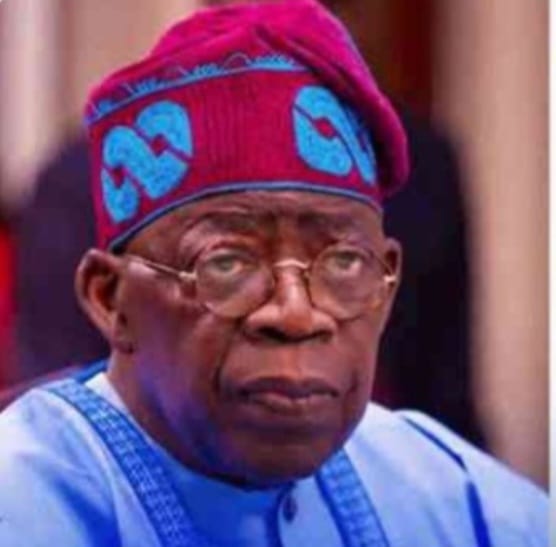
NIGERIA’S EDUCATION STRIDES, GLOBAL ACKNOWLEDGMENT: When Evidence Travels from Jigawa
…as President Tinubu set to commission Africa’s largest schools complex in Lagos
By O’tega Ogra
There is a quiet shift happening in Nigeria’s education system. You will not find it in speeches neither will you find it in long policy documents. But if you look closely, you will see it in something far more difficult to dismiss. Evidence.
Last week in San Francisco, at the Comparative and International Education Society (CIES) conference, data from classrooms in Jigawa State was presented before a global audience. Not projections. Not estimates. A record of what is happening inside a public system in Nigeria. 
That distinction matters. For years, much of what the world has understood about education in countries like ours has been assembled from a distance. National averages. Modelled estimates and reports written long after the fact. What was presented this time came from within. Attendance tracked daily. Teachers reassigned based on need. Classrooms observed as they function. All under a digitalised ecosystem.
In Jigawa, under the JigawaUNITE foundational learning digital programme, the numbers tell a simple story. Within roughly 150 days of implementation which commenced at the end of 2024, 95 previously understaffed schools were fully staffed. Pupil teacher ratio moved from 114:1 to 70:1. Daily attendance rose from 39 per cent to 77 per cent. This remarkable improvement was not achieved by expanding the workforce. It came from reorganising what already existed under a digital umbrella.
There is something instructive in that. Nigeria has never lacked policy. What we have often lacked is the discipline of execution. The ability to take what already exists and make it work as intended. That is where the real shift is beginning to show.
But it would be too convenient to reduce this to one programme.
At the federal level, the direction has also been adjusting. The Minister of Education, Dr. Maruf Tunji Alausa, has placed measurable outcomes, foundational learning, and teacher quality back at the centre of policy. UBEC, the Federal Government’s Universal Basic Education body, continues to drive national interventions around school improvement and teacher development, even as it insists that reform must remain system-led and not fragmented.
The First Lady’s education interventions, through the Renewed Hope Initiative, have reinforced education as a national priority, particularly around access, learning materials, and inclusion. These are different levers, but they are part of the same ecosystem.
And then there is the fiscal reality.
Recent reforms under President Bola Ahmed Tinubu have increased allocations to subnational governments, creating more room for states to act. In a federation like Nigeria, that matters. Because education is not delivered from Abuja. It is delivered in states. In schools. In classrooms.
What Jigawa has done is to use that room and the Executive Governor of the state, the State Universal Basic Education Board, and their partners on the JigawaUNITE project, New Globe, must be given kudos.
However, Jigawa is not alone in this journey.
In Kwara, efforts to align teaching with actual learning levels are beginning to correct a structural mismatch in classrooms. In Lagos and Edo, structured pedagogy and closer monitoring are improving consistency in teaching. Across the entire ecosystem, state governments, federal institutions like UBEC, and delivery partners like NewGlobe are pushing at the same question from different angles.
How do children actually learn better?
In a prior reflection, Ifeyinwa Ugochukwu, VP at NewGlobe, captured the urgency clearly. With the right tools, training, and use of data, foundational learning outcomes can improve at scale. The real risk, she noted, is delay, allowing learning gaps to become permanent.
That warning should not be ignored because the context remains difficult. Nigeria still carries one of the largest out of school populations in the world. Learning gaps remain. Progress in one state does not resolve a national challenge, but it does something else.
It proves that movement is possible.
What was presented in Washington did not claim success. It demonstrated function. It showed that a Nigerian sub-national can generate evidence that holds up in a global room. That reform does not always require something new. Sometimes it requires using what already exists more honestly and more efficiently.
The real question now is whether this remains an exception.
Or whether it becomes a pattern.
Because reform at scale is never built on isolated wins. It is built on systems that can reproduce them.
And perhaps that is why the timing matters.
This week, another subnational, Lagos State, is expected to commission the Tolu Schools Complex in Ajegunle, a sprawling 36-school integrated facility spread across 11.7 hectares, designed to serve over 20,000 students, and described as the largest school community in Africa. 
There is a connection here that should not be missed.
On one hand, a classroom system in Jigawa is learning how to organise itself better. On the other, a state like Lagos is building the physical scale required to carry thousands of learners at once.
One is structure. The other is capacity.
Real progress sits where both meet because education reform is not only about what we build, it is about how well what we build actually works.
For once, the data was not explaining Nigeria from the outside.
It was coming from within.
And it carried weight.


- Junior Achievement (JA) Africa Delivers 1.6 Million Learning Experiences in a Single Year, Marking Twelve-Fold Growth in Five Years June 5, 2026
- United Nations Mission in South Sudan (UNMISS) helps plant hope among youth on World Environment Day June 5, 2026
- Afreximbank Deepens Engagement with Jamaica to Drive Trade, Investment and Industrialisation June 5, 2026
- World Health Organization (WHO) supports reactive yellow fever vaccination campaign and Bundibugyo virus disease (BVD) preparedness in Liberia June 5, 2026
- Uganda: Museveni pushes for wealth creation through development programmes June 5, 2026
- Africa: UNAIDS calls for renewed global solidarity as UN Secretary-General’s report warns that AIDS is not over and fragile gains are at risk June 4, 2026
- Eritrea: Vocational training provided to college students June 4, 2026
- World Bank Group Launches Ten-Year Strategy to Drive Jobs and Prosperity in Uganda June 4, 2026
- Prof Oramah’s appointments to the Royal African Society Patronage and Kenya’s National Infrastructure Fund herald continued recognition of his global leadership and pan-African impact June 4, 2026
- Africa Finance Corporation Raises Record US$2 Billion Syndicated Loan in Landmark Show of Confidence in Transformational Infrastructure Strategy June 4, 2026
- Junior Achievement (JA) Africa Delivers 1.6 Million Learning Experiences in a Single Year, Marking Twelve-Fold Growth in Five Years June 5, 2026
- United Nations Mission in South Sudan (UNMISS) helps plant hope among youth on World Environment Day June 5, 2026
- Afreximbank Deepens Engagement with Jamaica to Drive Trade, Investment and Industrialisation June 5, 2026
- World Health Organization (WHO) supports reactive yellow fever vaccination campaign and Bundibugyo virus disease (BVD) preparedness in Liberia June 5, 2026
- Uganda: Museveni pushes for wealth creation through development programmes June 5, 2026
- Africa: UNAIDS calls for renewed global solidarity as UN Secretary-General’s report warns that AIDS is not over and fragile gains are at risk June 4, 2026
- Eritrea: Vocational training provided to college students June 4, 2026
-

 news6 months ago
WHO REALLY OWNS MONIEPOINT? The $290 Million Deal That Sold Nigeria’s Top Fintech to Foreign Interests
-

 society1 month ago
SOCIAL MEDIA IS NOT A BATTLEFIELD COMMAND – WHY THE NIGERIAN ARMY’S ACTION AGAINST JUSTICE CRACK IS A NATIONAL SECURITY IMPERATIVE
-

 celebrity radar - gossips4 months ago
Dr. Chris Okafor Returns with Power and Fire of the Spirit -Mounts Grace Nation Altar with Fresh Anointing and Restoration Grace on February 1, 2026
-

 celebrity radar - gossips6 months ago
Prophet Kingsley Aitafo Releases 2026 Prophecy: ‘Nigeria Will Rise, but the World Must Prepare for Turbulence’