
society
Weaponized Faith and Power: How the Unholy Alliance of Religion and Politics Is Undermining Nigeria’s Future

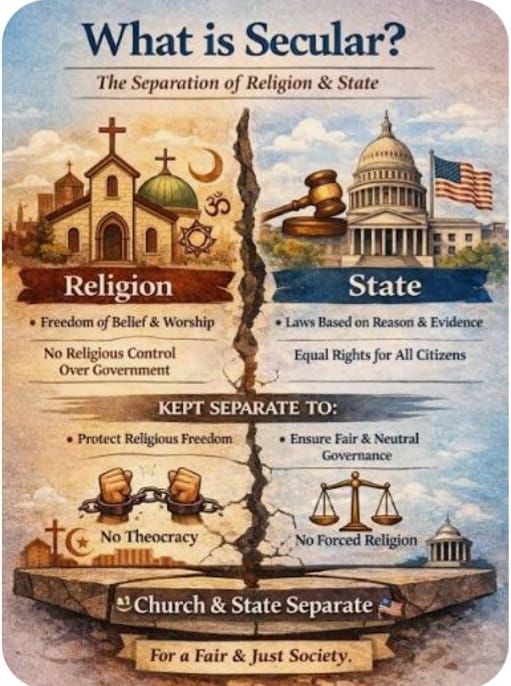
Weaponized Faith and Power: How the Unholy Alliance of Religion and Politics Is Undermining Nigeria’s Future.
By George Omagbemi Sylvester
Published by SaharaWeeklyNG.com
“Why National Survival Depends on Separating Belief from Governance.”
Nigeria stands today at a dangerous crossroads. Despite immense human and natural resources, Africa’s most populous nation continues to grapple with persistent instability, insecurity and governance failure. Among the most destructive forces fueling this decline is the toxic interplay between RELIGION and POLITICS, which is a dynamic that scholars, policymakers and ordinary citizens increasingly recognize as a central driver of Nigeria’s fragmentation and arrested development.

RELIGION, by its very nature, should offer moral guidance, social cohesion and ethical restraint. POLITICS, conversely, should concern itself with public interest, competence and the equitable management of national resources. In Nigeria, however, these two domains have become dangerously entangled. The result is not MORAL GOVERNANCE, but WEAPONIZED FAITH, DEPLOYED to DIVIDE, MANIPULATE and SHIELD INCOMPETENCE and CORRUPTION from ACCOUNTABILITY.
As political scientist Prof. Jibrin Ibrahim observes, “Religion in Nigeria has ceased to be a personal moral compass and has become a political instrument used by elites to legitimize power and silence dissent.” This instrumentalization of faith has proven catastrophic.
Ethno-Religious Polarization: Identity Over Competence. One of the most damaging consequences of religion’s intrusion into politics is the deepening of ethno-religious polarization. Electoral choices in Nigeria are frequently shaped not by policy proposals, integrity or competence, but by a candidate’s religious identity or perceived alignment with a particular ethnic bloc.
Political elites exploit this reality ruthlessly. Campaigns are framed as existential battles between “US” and “THEM,” rather than democratic contests over ideas. Mosques and churches are subtly (or sometimes openly) converted into campaign platforms. Clerics endorse candidates as “GOD’S CHOICE,” effectively sacralizing mediocrity and demonizing alternatives.

Renowned Nigerian historian Prof. Toyin Falola notes that “when politics becomes a contest of religious survival rather than public service, democracy dies quietly while fanaticism takes its place.” This identity-based mobilization erodes national cohesion and entrenches suspicion between communities that have coexisted for centuries.
Conflict, Violence and the Politics of Sacred Justification. The consequences of ethno-religious politics are not merely rhetorical; they are violently tangible. Nigeria has witnessed decades of recurring sectarian violence, particularly in the Middle Belt and northern regions, where political competition over land, resources and power is routinely cloaked in religious language.
Extremist groups such as Boko Haram have exploited religious narratives (often through gross misinterpretation) to justify mass violence, abductions and attacks on civilians. While Boko Haram is not representative of Islam, its emergence and persistence were facilitated by political neglect, elite manipulation and the failure of the state to uphold justice and social welfare.
Security analyst Dr. Elizabeth Donnelly rightly argues that “religious extremism does not grow in a vacuum; it thrives where governance collapses and identity becomes the last refuge of the excluded.” In Nigeria, religion has too often been used to excuse state failure rather than confront it.

Governance Failure and the Sanctification of Corruption. Perhaps the most insidious impact of religion-politics entanglement is its role in sustaining poor governance and corruption. When leaders are defended on the basis of shared faith rather than performance, accountability collapses.
The notorious “NATIONAL CAKE” mentality (where public office is viewed as an opportunity for personal and ethnic enrichment) thrives in an environment where religious loyalty overrides civic responsibility. Corrupt officials are frequently shielded by religious narratives that frame criticism as persecution or sacrilege.
Economist Prof. Pat Utomi has repeatedly warned that “a society that confuses religious loyalty with civic duty cannot build institutions; it can only build excuses.” This culture of impunity has weakened Nigeria’s institutions, hollowed out public services and normalized elite theft.
Constitutional Contradictions and the Crisis of Secularity. Nigeria’s Constitution clearly affirms the country as a secular state, yet this principle has been repeatedly undermined. The expansion of Sharia law in some northern states has generated intense legal and constitutional controversy, particularly among religious minorities who perceive it as institutionalized exclusion.
Legal scholar Prof. Yemi Osinbajo (SAN) once emphasized that “secularism does not mean hostility to religion; it means fairness to all religions.” When religious law is elevated above national law, the principle of equal citizenship is compromised and national unity is strained.
These contradictions have fueled resentment, legal uncertainty and political tension whereby further weakening the fragile social contract between the Nigerian state and its citizens.
Economic Stagnation and Developmental Sabotage. The developmental cost of religiously fueled instability is immense. Persistent insecurity deters foreign investment, disrupts agriculture, displaces millions and cripples education systems. Schools are shut, farmlands abandoned and professionals flee the country in search of stability, which is a phenomenon widely described as brain drain.
According to development economist Jeffrey Sachs, “no country can achieve sustainable development where insecurity and identity-based politics dominate public life.” Nigeria’s struggle to diversify its economy, attract long-term investment and build human capital is inseparable from its failure to neutralize religion as a political weapon.

Paths Toward Renewal: Reclaiming the Republic. Despite these grim realities, Nigeria’s situation is not beyond repair. Scholars and reform advocates consistently point to several pathways toward national renewal.
First, the supremacy of secular governance and the rule of law must be non-negotiable. Religious freedom must be protected, but religious laws must never override constitutional rights or national legislation.
Second, education, dialogue and tolerance are critical. Civic education that emphasizes shared citizenship over sectarian identity can dismantle the fear-based narratives exploited by elites. Interfaith dialogue, when sincere and sustained, can reduce tensions and counter extremist misinterpretations.
Third, Nigeria urgently needs responsible, courageous leadership, though leaders who value competence over creed, justice over loyalty and national interest over personal gain.
Finally, active citizen engagement remains the most powerful antidote. Civil society, youth movements, independent media and principled religious leaders must continue to demand accountability and resist manipulation.
As political philosopher Hannah Arendt warned, “the most radical revolutionary will become a conservative the day after the revolution.” Nigerians must therefore remain vigilant, ensuring that change is institutional not merely rhetorical.
A Final Reflection: Choosing Wisdom Over Weaponized Faith. Nigeria’s diversity is not its curse; its mismanagement is. Religion, when detached from political manipulation, can enrich moral life and social solidarity. Politics, when freed from sectarian exploitation, can serve the common good.
The survival of the Nigerian project depends on a collective decision to choose wisdom over fanaticism, citizenship over identity and accountability over blind loyalty. Until religion is returned to the realm of personal belief (and politics reclaimed as a tool for service) Nigeria will continue to bleed from self-inflicted wounds.
The task ahead is difficult, but unavoidable. A nation that refuses to confront the dangers of weaponized faith risks losing not only its future, but its soul.





FOPCHEN Seeks Wider Engagement As Court Defers Hearing
OTA, OGUN STATE — The High Court of Ogun State, Ota Division, on Thursday resumed hearing in the ongoing matter involving cultural and societal concerns, before adjourning proceedings till Thursday, July 2, 2026, for continuation of hearing.
At the resumed sitting on May 28, 2026, counsel representing the various parties revisited key issues in the case and made further submissions before the court.
The matter, which has continued to generate public interest across different sectors, again drew attention from legal observers and stakeholders who described the case as one with significant implications for societal values, cultural identity and constitutional interpretation.
Speaking after the proceedings, the Foundation for the Protection of Cultural Heritage in Nigeria, popularly known as FOPCHEN, renewed its appeal for dialogue and constructive engagement among Nigerians, stressing that sensitive cultural and moral issues should not be left entirely within the confines of the courtroom.
According to the group, broader conversations involving traditional institutions, civil society organisations, religious leaders and policy stakeholders remain necessary in addressing issues relating to national values and social responsibility.
Legal analysts at the court premises noted that arguments being canvassed by parties in the suit could shape future legal interpretations surrounding cultural and moral questions in the country.
Following submissions by counsel, the presiding judge adjourned the matter till Thursday, July 2, 2026, to enable parties further prepare and respond to issues raised during the hearing.
The development has continued to spark reactions among observers, with many Nigerians closely monitoring the proceedings ahead of the next hearing date.
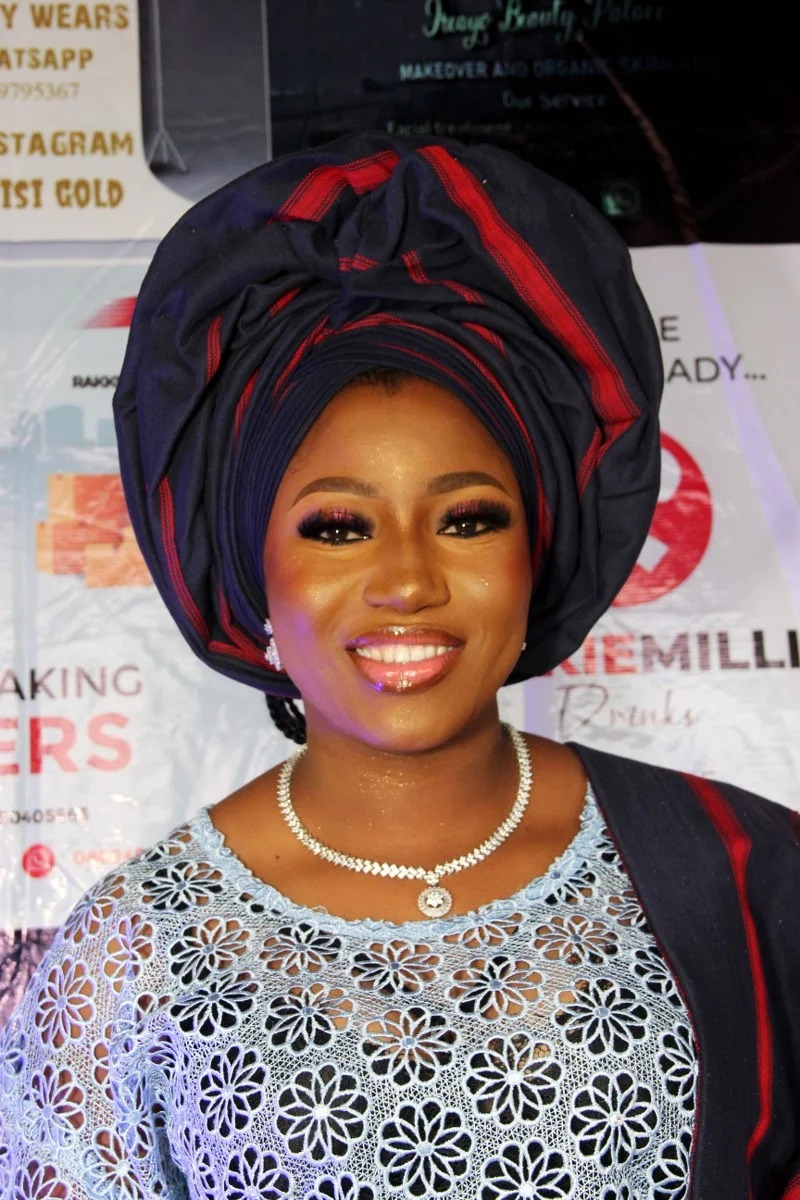
US-Based Society Lady, Fehintola-Brat Extends Eid-El-Kabir Greetings To Muslims
United States based fahionista of class, Chief (Mrs) Ayoola Fehintola-Brat has extended a warm greetings to Muslim faithful all over the world on the occasion of the 2026 Eid-El-Kabir celebration.
Fehintola-Brat who is the Balogun Egbe Obaneye Obinrin Akile Ijebu, and the Yeye Asofin of Idenaland in her message to Journalists urged Muslim to continually uphold the enduring values of sacrifice, obedience, faith, and compassion, which are central to the significance of Eid-El-Kabir festival.
A quiet philantropist whose humanitarian services has won her several laurels urged Muslims to use the spiritual occasion to pray for the peace co-existence of Nigerians regardless of religious, social and political leanings stressing that the oneness of the country should not be underplay.
In a related development, she expressed her felicitations to all sons and daughters of Ijebuland on the forthcoming Ojude Oba 2026 celebration, tasking age-groups otherwise known as Regbregbe to be more proactive in giving back to their immediate communities.
According to her, the beauty of the age-groups in Ijebuland is the need to contribute immensely to the development of the land in no small means. “This we will continue to achieve with God on our side”, she concluded.
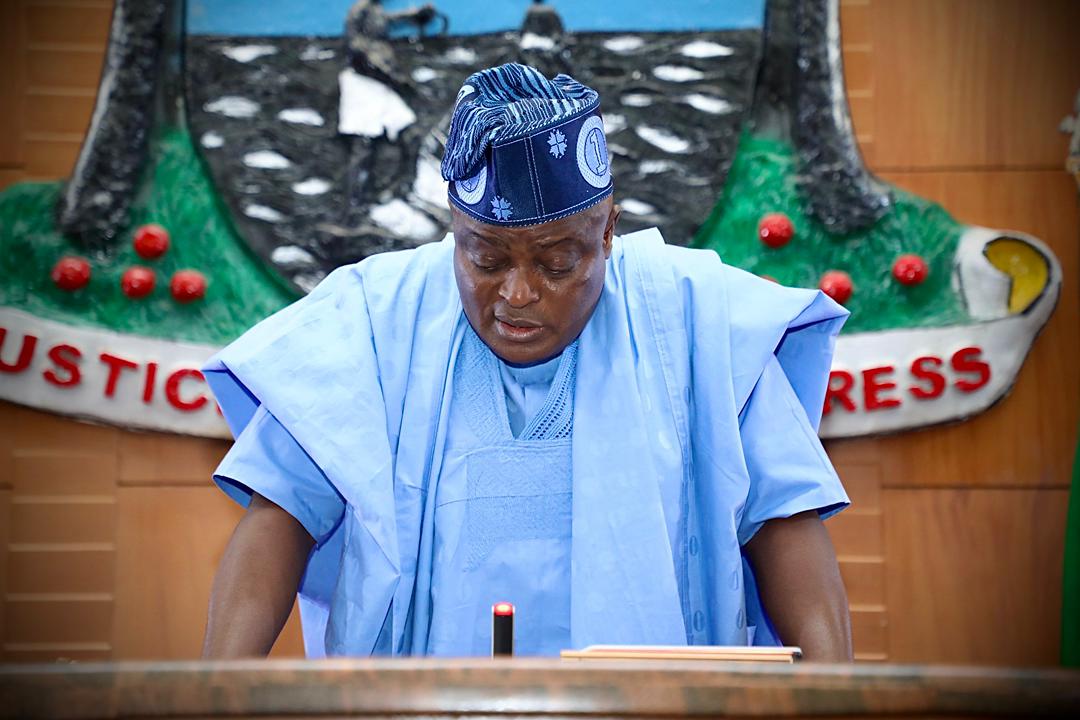
Sallah: Obasa Felicitates Muslim Ummah, Commends Nigerians for APC Primaries Turnout
The Speaker of the Lagos State House of Assembly, Rt. Hon. Mudashiru Obasa has extended warm felicitations to Muslims in Lagos State and across Nigeria on the occasion of Eid al-Adha.
In a statement released by his Chief Press Secretary, Mr. Dave Agboola, Obasa described the festival as a season of sacrifice, reflection, and gratitude, urging the faithful to continue to uphold the values of peace, unity, and love that strengthen the nation.
He noted that the celebration of Eid al-Adha is not only a spiritual milestone but also a reminder of the importance of togetherness and collective responsibility in building a stronger society.
He, likewise, emphasized that the festival provides an opportunity for Nigerians to renew their commitment to national progress and to support leadership that prioritizes development and prosperity.
Obasa, however, commended Nigerians, particularly members of the All Progressives Congress (APC), for their massive turnout during the recently concluded party primaries. He described the participation as a clear demonstration of the people’s confidence in the government of President Bola Ahmed Tinubu and their belief in the administration’s vision for a greater Nigeria.
“The APC primaries have shown the resilience of our democracy and the confidence Nigerians have in the leadership of President Bola Ahmed Tinubu and the Renewed Hope Agenda. This is a strong message that our people are ready to continue supporting policies that will drive growth and prosperity,” Obasa stated.
The Speaker further encouraged Muslims to celebrate responsibly, stressing that the joy of Eid should be accompanied by prayers for the continued peace and progress of Lagos State and Nigeria.
“As you celebrate with family and loved ones, may this season bring joy, peace, and prosperity to your homes. Let us remain united in our resolve to build a stronger nation,” he added.
On behalf of the Lagos State House of Assembly, Obasa wished all Muslims a happy and fulfilling Eid al-Adha celebration.


- Société Nationale des Pétroles du Congo (SNPC) Chief Ominga to Speak at African Energy Week (AEW) 2026 as Congo Accelerates Gas Expansion May 29, 2026
- South Africa: Deputy President Mashatile arrives in India for a Working Visit May 29, 2026
- Seychelles: President Visits Key Development Sites on Coetivy Island May 29, 2026
- Accelerating regional action to advance mental health care in Africa May 29, 2026
- President of the Republic of Seychelles Meets Young La Digue Talent Ahead of London Showcase May 29, 2026
- United Nations Economic Commission for Africa (ECA) launches regional initiative to accelerate women’s digital entrepreneurship across four African countries May 29, 2026
- Ethiopia: International community must act to safeguard press freedom ahead of national election May 29, 2026
- CORRECTION: Annual Meetings 2026 (AM2026): African Development Bank (AfDB) 2025 Trade Finance Report Highlights Resilience of African Financial Institutions After Covid-19 May 29, 2026
- Why Big Tech Could Become Nigeria’s New Gas Partner May 29, 2026
- African Energy Chamber (AEC)-Venezuela Alliance Accelerates Pathways into South-South Energy Expansion May 29, 2026
- Société Nationale des Pétroles du Congo (SNPC) Chief Ominga to Speak at African Energy Week (AEW) 2026 as Congo Accelerates Gas Expansion May 29, 2026
- South Africa: Deputy President Mashatile arrives in India for a Working Visit May 29, 2026
- Seychelles: President Visits Key Development Sites on Coetivy Island May 29, 2026
- Accelerating regional action to advance mental health care in Africa May 29, 2026
- President of the Republic of Seychelles Meets Young La Digue Talent Ahead of London Showcase May 29, 2026
- United Nations Economic Commission for Africa (ECA) launches regional initiative to accelerate women’s digital entrepreneurship across four African countries May 29, 2026
- Ethiopia: International community must act to safeguard press freedom ahead of national election May 29, 2026
-

 news6 months ago
WHO REALLY OWNS MONIEPOINT? The $290 Million Deal That Sold Nigeria’s Top Fintech to Foreign Interests
-

 society4 weeks ago
SOCIAL MEDIA IS NOT A BATTLEFIELD COMMAND – WHY THE NIGERIAN ARMY’S ACTION AGAINST JUSTICE CRACK IS A NATIONAL SECURITY IMPERATIVE
-

 celebrity radar - gossips4 months ago
Dr. Chris Okafor Returns with Power and Fire of the Spirit -Mounts Grace Nation Altar with Fresh Anointing and Restoration Grace on February 1, 2026
-

 celebrity radar - gossips6 months ago
Prophet Kingsley Aitafo Releases 2026 Prophecy: ‘Nigeria Will Rise, but the World Must Prepare for Turbulence’