
society
We’ve no refugees in Benin Republic -Ogun govt

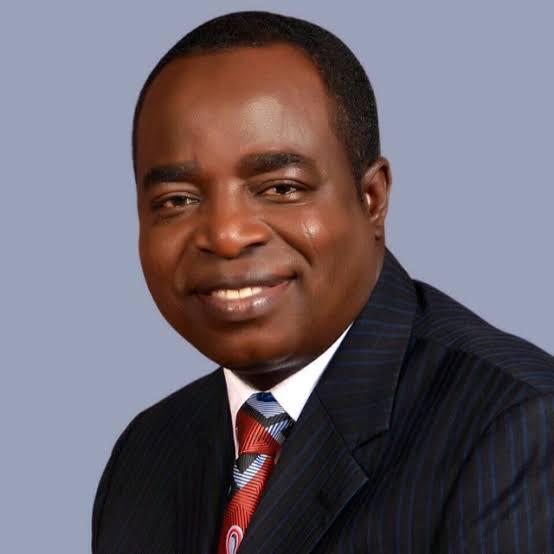
We’ve no refugees in Benin Republic -Ogun govt- The Ogun State Government has debunked reports being circulated in some news media that people affected by herdsmen attacks in some parts of Yewa North and Imeko-Afon Local Government Areas, have fled their communities to seek refuge in the neighbouring Republic of Benin.
[tps_start_button label=”Start slideshow” style=”” class=””]
According to the government, the purported movement of the people was that of those who were not actual inhabitants of the communities, but those who came from the neighbouring country to lease farmlands in the area.
The Chairman, Ogun State Peace Keeping Committee on Farmers/Herders Conflict, Kayode Oladele, made this known on Monday, in his remark at a meeting of the Committee, held at the Obas’ Complex Oke-Mosan, Abeokuta.
Oladele said that there was no crisis in Yewaland that would warrant its people to become refugees in another country.
“There was a publication that Yewa farmers are now refugees in Benin Republic, that has no iota of truth. Yewa, being a border community also plays host to other people from our sisters and brothers on the other side of the border, that is on
the side of the Republic of Benin.
“We have the Hohori and some Eguns who come from time to time to lease farmland in Yewaland, live with us and they have been doing that for years. So, when problem and conflict started, the natural thing is for them to return to their home country. Therefore, many of the people that you are seeing are not actually the original indigenes of Yewa, they are the people from the other side of the border, who because of the crisis have moved to their country. So, it is not as if Yewa people have relocated, we don’t have refugee crisis in Yewa, he stated.
Oladele also said that the committee at no time asked the people of Yewaland to stop going to their farms, stressing that the committee has no power to do so.
The Chairman added that the committee only gave an advice to the people residing in the epicenter of the crisis to stay clear of their farms or go in groups if they must go and farm.
According to him, the advice was meant for the residents of the people in Asa and not the whole of Yewaland.
“There was a publication to the effect that this committee has advised Yewa farmers not to go to their farms, indeed, that was inaccurate and misrepresentation of our intent, this committee has no power to order anybody not to go to farm.
“During one of our fact finding visits to the affected areas, Asa village is the epicenter of this crisis in Yewa North Local Government. So, when we got their, the acting Baale of the town, after taking us through the wreckage, told us that there were fears of imminent attacks by the herders, but, in the circumstances they found yourselves, we advised them that they can hold on until everything was okay and that if they must go out to the farm, then, they have to go in groups. That advice was meant for Asa village and not for the whole of Yewa”, Oladele submitted.




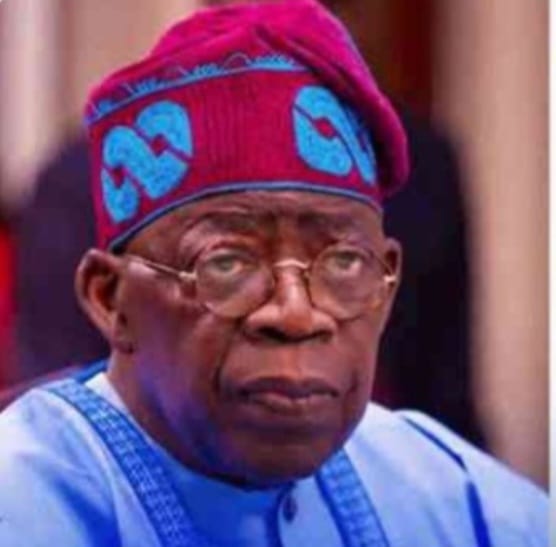
NIGERIA’S EDUCATION STRIDES, GLOBAL ACKNOWLEDGMENT: When Evidence Travels from Jigawa
…as President Tinubu set to commission Africa’s largest schools complex in Lagos
By O’tega Ogra
There is a quiet shift happening in Nigeria’s education system. You will not find it in speeches neither will you find it in long policy documents. But if you look closely, you will see it in something far more difficult to dismiss. Evidence.
Last week in San Francisco, at the Comparative and International Education Society (CIES) conference, data from classrooms in Jigawa State was presented before a global audience. Not projections. Not estimates. A record of what is happening inside a public system in Nigeria. 
That distinction matters. For years, much of what the world has understood about education in countries like ours has been assembled from a distance. National averages. Modelled estimates and reports written long after the fact. What was presented this time came from within. Attendance tracked daily. Teachers reassigned based on need. Classrooms observed as they function. All under a digitalised ecosystem.
In Jigawa, under the JigawaUNITE foundational learning digital programme, the numbers tell a simple story. Within roughly 150 days of implementation which commenced at the end of 2024, 95 previously understaffed schools were fully staffed. Pupil teacher ratio moved from 114:1 to 70:1. Daily attendance rose from 39 per cent to 77 per cent. This remarkable improvement was not achieved by expanding the workforce. It came from reorganising what already existed under a digital umbrella.
There is something instructive in that. Nigeria has never lacked policy. What we have often lacked is the discipline of execution. The ability to take what already exists and make it work as intended. That is where the real shift is beginning to show.
But it would be too convenient to reduce this to one programme.
At the federal level, the direction has also been adjusting. The Minister of Education, Dr. Maruf Tunji Alausa, has placed measurable outcomes, foundational learning, and teacher quality back at the centre of policy. UBEC, the Federal Government’s Universal Basic Education body, continues to drive national interventions around school improvement and teacher development, even as it insists that reform must remain system-led and not fragmented.
The First Lady’s education interventions, through the Renewed Hope Initiative, have reinforced education as a national priority, particularly around access, learning materials, and inclusion. These are different levers, but they are part of the same ecosystem.
And then there is the fiscal reality.
Recent reforms under President Bola Ahmed Tinubu have increased allocations to subnational governments, creating more room for states to act. In a federation like Nigeria, that matters. Because education is not delivered from Abuja. It is delivered in states. In schools. In classrooms.
What Jigawa has done is to use that room and the Executive Governor of the state, the State Universal Basic Education Board, and their partners on the JigawaUNITE project, New Globe, must be given kudos.
However, Jigawa is not alone in this journey.
In Kwara, efforts to align teaching with actual learning levels are beginning to correct a structural mismatch in classrooms. In Lagos and Edo, structured pedagogy and closer monitoring are improving consistency in teaching. Across the entire ecosystem, state governments, federal institutions like UBEC, and delivery partners like NewGlobe are pushing at the same question from different angles.
How do children actually learn better?
In a prior reflection, Ifeyinwa Ugochukwu, VP at NewGlobe, captured the urgency clearly. With the right tools, training, and use of data, foundational learning outcomes can improve at scale. The real risk, she noted, is delay, allowing learning gaps to become permanent.
That warning should not be ignored because the context remains difficult. Nigeria still carries one of the largest out of school populations in the world. Learning gaps remain. Progress in one state does not resolve a national challenge, but it does something else.
It proves that movement is possible.
What was presented in Washington did not claim success. It demonstrated function. It showed that a Nigerian sub-national can generate evidence that holds up in a global room. That reform does not always require something new. Sometimes it requires using what already exists more honestly and more efficiently.
The real question now is whether this remains an exception.
Or whether it becomes a pattern.
Because reform at scale is never built on isolated wins. It is built on systems that can reproduce them.
And perhaps that is why the timing matters.
This week, another subnational, Lagos State, is expected to commission the Tolu Schools Complex in Ajegunle, a sprawling 36-school integrated facility spread across 11.7 hectares, designed to serve over 20,000 students, and described as the largest school community in Africa. 
There is a connection here that should not be missed.
On one hand, a classroom system in Jigawa is learning how to organise itself better. On the other, a state like Lagos is building the physical scale required to carry thousands of learners at once.
One is structure. The other is capacity.
Real progress sits where both meet because education reform is not only about what we build, it is about how well what we build actually works.
For once, the data was not explaining Nigeria from the outside.
It was coming from within.
And it carried weight.
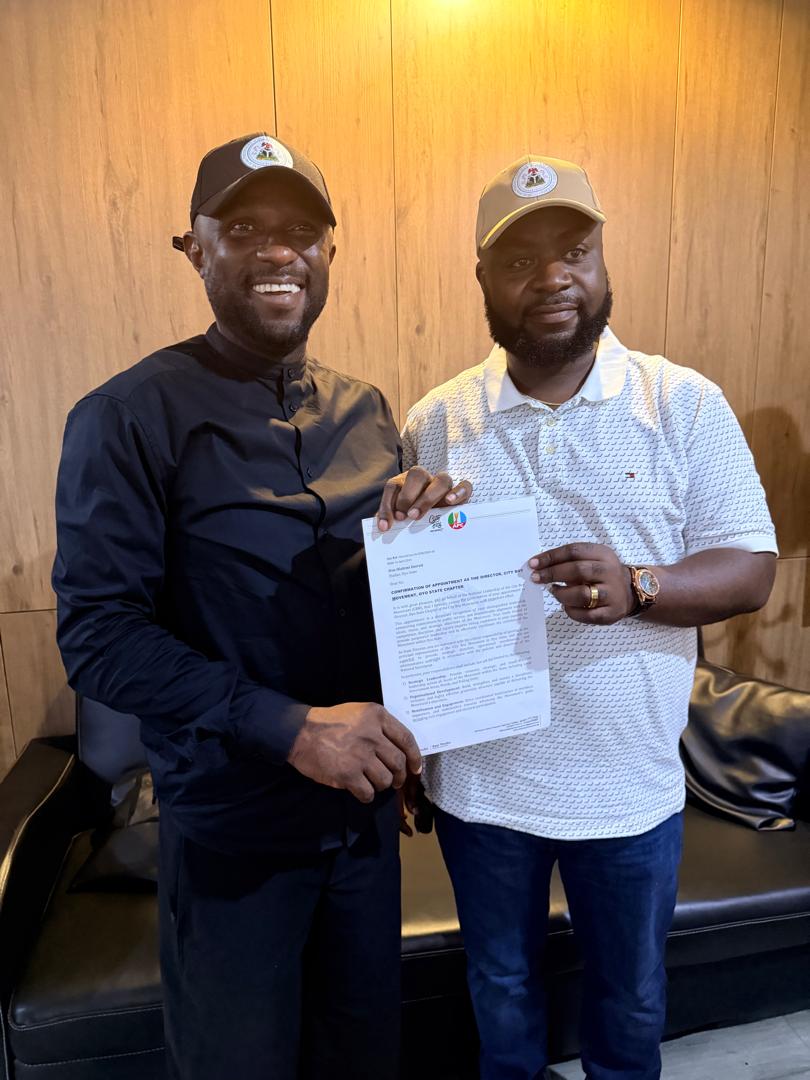
*BREAKING: Onireti Appointed Director-General of City Boy Movement in Oyo State*
The political atmosphere in Oyo State recorded a major development on Monday with the appointment of Hon. Olufemi Onireti as the new Director-General of the City Boy Movement, the grassroots mobilisation structure championing support for President Bola Ahmed Tinubu across the country.
The appointment was announced by the movement’s Director-General, Mr Francis Shoga, in Abuja on Tuesday during the handover of the appointment letter to Onireti.
This is coming days after his resignation from the Peoples Democratic Party (PDP), where he had been an active figure and former House of Representatives candidate.
His new role is expected to reposition the group’s activities and strengthen its outreach ahead of future political engagements in Oyo State.
According to the movement’s leadership, Onireti was chosen based on his “wide political network, proven organisational capacity and strong presence among the youth and grassroots stakeholders.”
Speaking with newsmen, Onireti expressed gratitude for the confidence reposed in him and pledged to deploy his experience to advance the objectives of the City Boy Movement across the state.
Onireti said his decision to join the ruling party was a personal conviction shaped by ongoing political realignments and his commitment to supporting a broader progressive coalition at both state and national levels.
Hon. Onireti added that his appointment followed extensive consultations and harmonisation with his followers.
He assured supporters that his leadership would prioritise inclusiveness, strategic mobilisation and effective communication.
“I am committed to galvanising our structures and ensuring that Oyo State remains a stronghold for the ideals we stand for,” he said.
Political observers note that his appointment may shift the dynamics of political mobilisation in Oyo State, given his influence and recent political moves.
The City Boy Movement is expected to unveil its new operational roadmap in the coming days.
The movement, a prominent youth-driven support platform advancing President Tinubu’s Renewed Hope agenda, positions Onireti to lead its grassroots mobilisation efforts in Oyo as part of its national structure ahead of the 2027 elections.
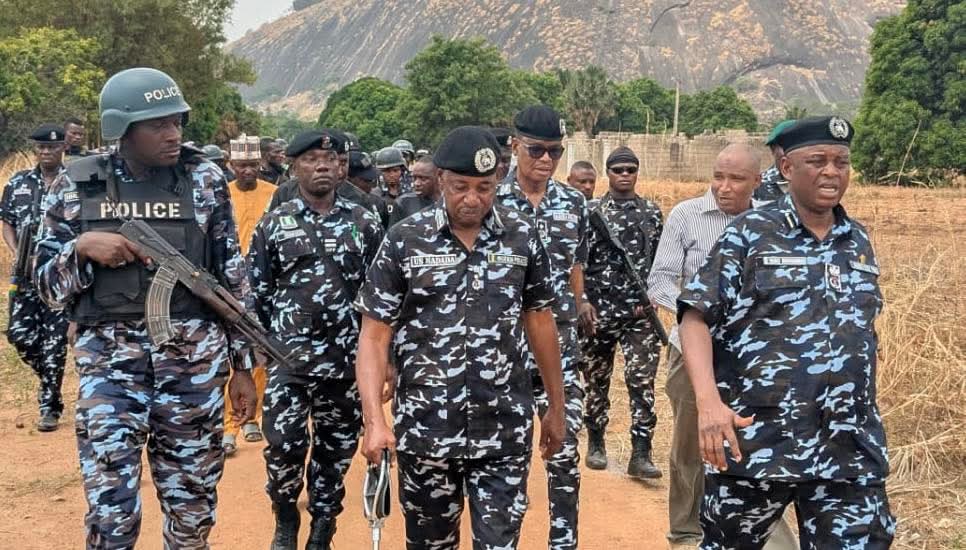
Ariko Church Attack: IGP Disu Deploys DIG As Police Rescue Seven Kidnap Victims
The Inspector-General of Police, Olatunji Rilwan Disu, has ordered the immediate deployment of the Deputy Inspector-General of Police in charge of Operations, Shehu Umar Nadada, to Kaduna State following a deadly bandit attack on Ariko Village near Gurara Dam.
The assault, which occurred on April 5, 2026, targeted worshippers at ECWA and Catholic churches in the community, with gunmen opening fire indiscriminately. Five persons were confirmed dead, while no fewer than fourteen others were abducted during the coordinated হাম.
In a swift operational response, the police high command mandated a high-level intervention, tasking DIG Nadada with leading on-the-ground coordination of security efforts aimed at stabilising the area and facilitating the safe recovery of the victims.
Security operations conducted in collaboration with the Nigerian Army and the Department of State Services (DSS) have already yielded results, with seven of the abducted persons rescued. The victims were evacuated to Katari Hospital for urgent medical attention and are reported to be in stable condition, awaiting reunification with their families.
Police authorities disclosed that tactical operations remain ongoing to secure the release of the remaining captives and apprehend those responsible for the ആക്രമം, underscoring a renewed push to degrade criminal networks operating within the axis.
Reaffirming the Force’s commitment to public safety, the IGP called on residents to remain vigilant and support ongoing operations by providing credible and actionable intelligence to security agencies.


- Seychelles Strengthens Human Rights Reporting through National Workshop April 8, 2026
- ABB’s Application Configurator brings speed and precision to grid-feeding protection system design April 7, 2026
- Can Equatorial Guinea Reposition as West Africa’s Gas Hub? April 7, 2026
- Afreximbank Partners with African Energy Week 2026 to Drive Africa-Led Energy Deals April 7, 2026
- Merck Foundation Marks ‘World Health Day’ 2026 – Transforming Patient Care in Africa and Beyond through 2600+ Scholarships for Healthcare Providers From 52 Countries April 7, 2026
- Morocco Gas Plan Reset Could Open Door to New Investment Models April 7, 2026
- African Petroleum Producers Organization (APPO) Secretary General Joins Angola Oil & Gas (AOG) 2026 as African Energy Bank Eyes June 2026 Debut April 7, 2026
- Ghanaian Biomedical Specialist Receives International Award April 7, 2026
- Grey Connects the Africa-Canada Money Corridor With Instant Transfers via Interac April 7, 2026
- Nigeria’s Oil Revival in Focus as Petroleum Minister Lokpobiri Joins Paris Energy Forum April 7, 2026
- Seychelles Strengthens Human Rights Reporting through National Workshop April 8, 2026
- ABB’s Application Configurator brings speed and precision to grid-feeding protection system design April 7, 2026
- Can Equatorial Guinea Reposition as West Africa’s Gas Hub? April 7, 2026
- Afreximbank Partners with African Energy Week 2026 to Drive Africa-Led Energy Deals April 7, 2026
- Merck Foundation Marks ‘World Health Day’ 2026 – Transforming Patient Care in Africa and Beyond through 2600+ Scholarships for Healthcare Providers From 52 Countries April 7, 2026
- Morocco Gas Plan Reset Could Open Door to New Investment Models April 7, 2026
- African Petroleum Producers Organization (APPO) Secretary General Joins Angola Oil & Gas (AOG) 2026 as African Energy Bank Eyes June 2026 Debut April 7, 2026
-

 news4 months ago
WHO REALLY OWNS MONIEPOINT? The $290 Million Deal That Sold Nigeria’s Top Fintech to Foreign Interests
-

 society7 months ago
“You Are Never Without Help” – Pastor Gebhardt Berndt Inspires Hope Through Empower Church (Video)
-

 celebrity radar - gossips2 months ago
Dr. Chris Okafor Returns with Power and Fire of the Spirit -Mounts Grace Nation Altar with Fresh Anointing and Restoration Grace on February 1, 2026
-

 celebrity radar - gossips4 months ago
Prophet Kingsley Aitafo Releases 2026 Prophecy: ‘Nigeria Will Rise, but the World Must Prepare for Turbulence’