
society
What An Officer Told Me About IGP Olatunji Disu

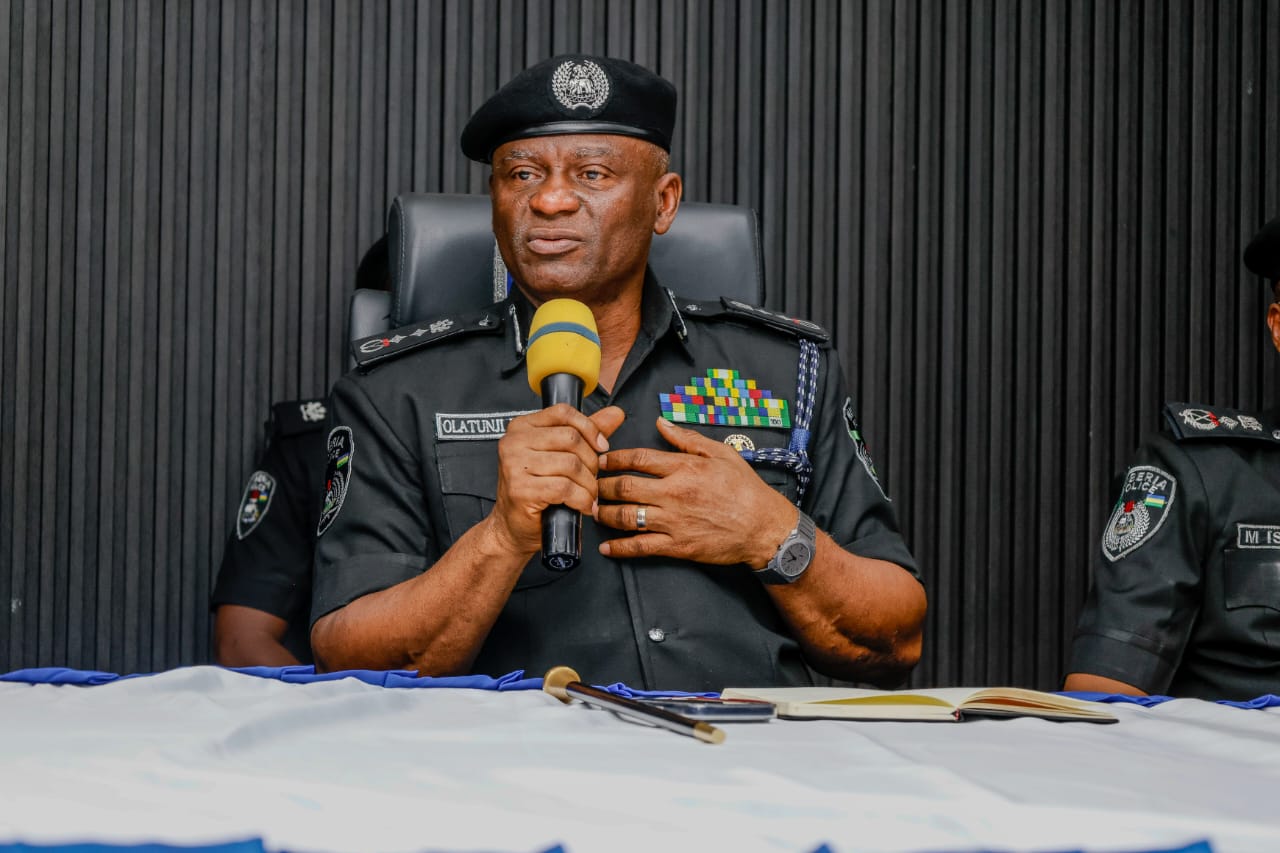
What An Officer Told Me About IGP Olatunji Disu
Written by Adeniran Bamisaye
Years ago, while driving in Lagos, a police officer stopped me. There was nothing unusual about it. He asked for my vehicle particulars, and I handed them over, perhaps not in the most cheerful manner at first. But somewhere between the routine and the silence, a conversation began.
I asked him about his work, just casually, and then I mentioned a name, Olatunji Disu. At the time, he was not the Inspector General yet; I believe he was still a Commissioner of Police. But the moment I mentioned the name, something changed in the officer’s expression.
“Ah! That man…” he said, almost cutting himself short.
Curious, I asked what he meant.
What followed stayed with me. He told me that when he served under Mr. Disu in Owo, Ondo State, there was one thing he could never forget: you could not work with him and be hungry. Not because of charity or handouts, but because he genuinely cared about the welfare of the officers under his command. Then he added something that struck me deeply, that he could confidently say this was a leader who cared.
That immediately reminded me of something a mentor once told me, that you can measure a leader by how much they care about the welfare of their people. That day, on the roadside, in a conversation I did not plan to have, I heard a testimony, not from a podium or a press release, but from someone who had experienced that leadership up close.
When he was eventually appointed Inspector General of Police, one theme stood out clearly: welfare. And I believed it, not because it sounded good, but because I had already heard the evidence. Beyond words, actions began to follow, and what stood out was not just the actions themselves, but the speed with which they came. In a system where delay is often the norm, responsiveness becomes a language of its own.
One of the earliest signals was symbolic yet powerful: the decision to organise a proper pulling out parade for his predecessor, something that had not happened in about sixteen years. Institutions are not only built on systems; they are sustained by memory, respect, and continuity, and that moment quietly restored all three.
Beyond symbolism, there were more structural signals. There has been a renewed push for accountability, with a visible willingness to ensure that erring officers are not shielded but disciplined. There has also been a reawakening of channels like the Complaint Response Unit, CRU, reinforcing the idea that citizens should not feel voiceless in their encounters with the police. Alongside this is a clear direction toward modernisation, strengthening investigative capacity, embracing technology, and repositioning policing to be more intelligence led than force driven.


Aside from these developments, there has also been public conversation around the legality of tenure, particularly in light of existing age and compulsory retirement provisions within the service. However, the Police Act 2020 introduced a defining shift. Section 7 subsection 6 provides that the Inspector General of Police shall hold office for a term of four years, establishing a fixed tenure framework that differs from the traditional retirement structure.
In many ways, this reflects an attempt to balance institutional continuity with leadership stability. And while such interpretations may continue to generate debate, what often matters most is not just the legal framework itself, but how the time it creates is used. In this instance, the focus has remained less on tenure and more on direction, how leadership translates time in office into action, presence, and measurable signals of change.
Beyond these structural efforts, there has also been a pattern of presence. In moments of crisis, leadership has not remained distant. From visits to places like Jos and Kwara following incidents of violence, there has been a visible effort to show up, not just as a figurehead, but as a steadying presence in difficult times. In a country where communities often feel abandoned in the aftermath of tragedy, such gestures carry weight. They signal attention, urgency, and a willingness to engage realities on the ground rather than from afar. Sometimes, presence itself becomes a form of reassurance, both to officers on duty and to citizens watching closely.
Then came a moment that, for me, brought everything into perspective. I watched him oversee the disbursement of funds to families of fallen officers, and as I did, something unexpected happened: I found myself emotional. Yes, the funds were not his personally, but leadership is not just about ownership; it is about priority. He could have delayed it or treated it as routine, but he did not, and that mattered.
I watched widows and families step forward, each carrying a weight that words cannot fully capture. One woman, in particular, struggled to receive her cheque, not because it was heavy, but because she was overwhelmed with emotion. That moment said more than any speech ever could. It was a reminder that beyond the uniform, beyond the structure, beyond the system, there are people, and in that moment, they were seen.
Perhaps this is where the conversation about reform truly begins. This year’s National Police Day, held on April 7, 2026, at Eagle Square, Abuja, carried a theme that feels less like a slogan and more like a direction: “Community Partnership: Building Trust.” When placed alongside these actions, welfare, accountability, institutional respect, responsiveness, and presence, it begins to feel less like ambition and more like alignment.
Trust is not declared; it is built slowly and consistently. When an officer feels cared for, he carries himself differently. When he feels seen, he is more likely to see others. When accountability becomes real internally, credibility begins to form externally. What we may be witnessing is not just administrative change, but the early signs of a cultural shift, the kind that cannot be forced, only lived.
In the end, the relationship between the police and the people will not be repaired by announcements. It will be rebuilt through moments, moments like a roadside conversation, moments when residents feel safe in their communities, and moments when they spot police officers. Moments where leadership moves from position to presence. And perhaps that is where real reform begins, not when it is declared, but when it is felt.
Adeniran Bamisaye writes from Lagos, Nigeria.
Twitter and Instagram: @NiranBamisaye




FOPCHEN Seeks Wider Engagement As Court Defers Hearing
OTA, OGUN STATE — The High Court of Ogun State, Ota Division, on Thursday resumed hearing in the ongoing matter involving cultural and societal concerns, before adjourning proceedings till Thursday, July 2, 2026, for continuation of hearing.
At the resumed sitting on May 28, 2026, counsel representing the various parties revisited key issues in the case and made further submissions before the court.
The matter, which has continued to generate public interest across different sectors, again drew attention from legal observers and stakeholders who described the case as one with significant implications for societal values, cultural identity and constitutional interpretation.
Speaking after the proceedings, the Foundation for the Protection of Cultural Heritage in Nigeria, popularly known as FOPCHEN, renewed its appeal for dialogue and constructive engagement among Nigerians, stressing that sensitive cultural and moral issues should not be left entirely within the confines of the courtroom.
According to the group, broader conversations involving traditional institutions, civil society organisations, religious leaders and policy stakeholders remain necessary in addressing issues relating to national values and social responsibility.
Legal analysts at the court premises noted that arguments being canvassed by parties in the suit could shape future legal interpretations surrounding cultural and moral questions in the country.
Following submissions by counsel, the presiding judge adjourned the matter till Thursday, July 2, 2026, to enable parties further prepare and respond to issues raised during the hearing.
The development has continued to spark reactions among observers, with many Nigerians closely monitoring the proceedings ahead of the next hearing date.

US-Based Society Lady, Fehintola-Brat Extends Eid-El-Kabir Greetings To Muslims
United States based fahionista of class, Chief (Mrs) Ayoola Fehintola-Brat has extended a warm greetings to Muslim faithful all over the world on the occasion of the 2026 Eid-El-Kabir celebration.
Fehintola-Brat who is the Balogun Egbe Obaneye Obinrin Akile Ijebu, and the Yeye Asofin of Idenaland in her message to Journalists urged Muslim to continually uphold the enduring values of sacrifice, obedience, faith, and compassion, which are central to the significance of Eid-El-Kabir festival.
A quiet philantropist whose humanitarian services has won her several laurels urged Muslims to use the spiritual occasion to pray for the peace co-existence of Nigerians regardless of religious, social and political leanings stressing that the oneness of the country should not be underplay.
In a related development, she expressed her felicitations to all sons and daughters of Ijebuland on the forthcoming Ojude Oba 2026 celebration, tasking age-groups otherwise known as Regbregbe to be more proactive in giving back to their immediate communities.
According to her, the beauty of the age-groups in Ijebuland is the need to contribute immensely to the development of the land in no small means. “This we will continue to achieve with God on our side”, she concluded.
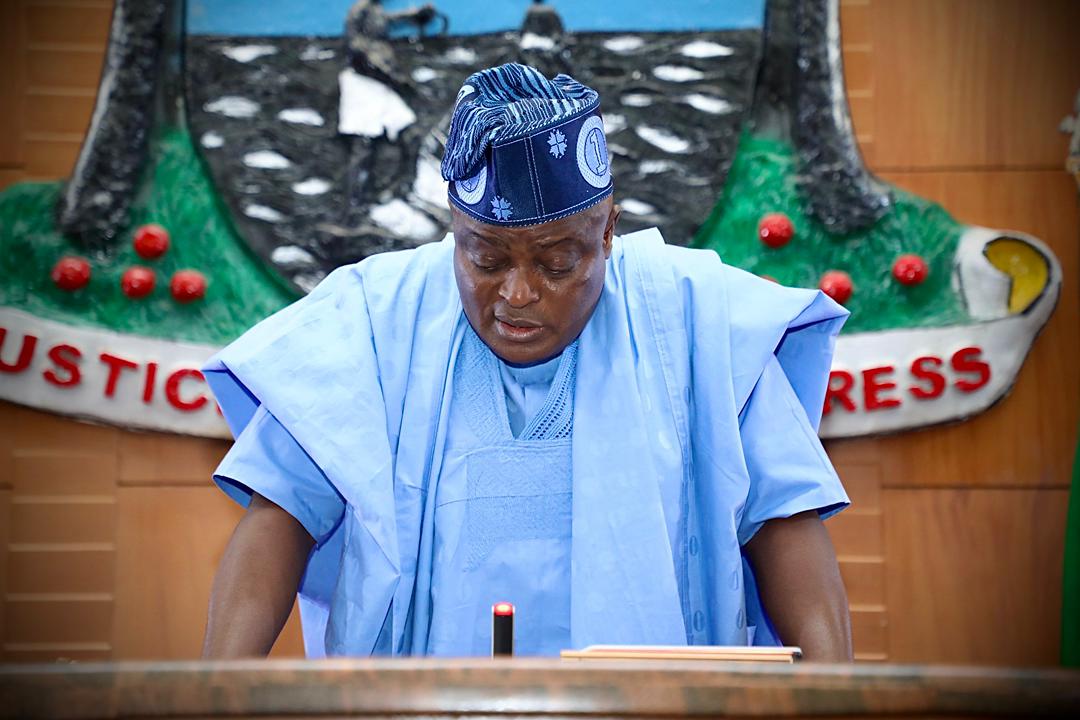
Sallah: Obasa Felicitates Muslim Ummah, Commends Nigerians for APC Primaries Turnout
The Speaker of the Lagos State House of Assembly, Rt. Hon. Mudashiru Obasa has extended warm felicitations to Muslims in Lagos State and across Nigeria on the occasion of Eid al-Adha.
In a statement released by his Chief Press Secretary, Mr. Dave Agboola, Obasa described the festival as a season of sacrifice, reflection, and gratitude, urging the faithful to continue to uphold the values of peace, unity, and love that strengthen the nation.
He noted that the celebration of Eid al-Adha is not only a spiritual milestone but also a reminder of the importance of togetherness and collective responsibility in building a stronger society.
He, likewise, emphasized that the festival provides an opportunity for Nigerians to renew their commitment to national progress and to support leadership that prioritizes development and prosperity.
Obasa, however, commended Nigerians, particularly members of the All Progressives Congress (APC), for their massive turnout during the recently concluded party primaries. He described the participation as a clear demonstration of the people’s confidence in the government of President Bola Ahmed Tinubu and their belief in the administration’s vision for a greater Nigeria.
“The APC primaries have shown the resilience of our democracy and the confidence Nigerians have in the leadership of President Bola Ahmed Tinubu and the Renewed Hope Agenda. This is a strong message that our people are ready to continue supporting policies that will drive growth and prosperity,” Obasa stated.
The Speaker further encouraged Muslims to celebrate responsibly, stressing that the joy of Eid should be accompanied by prayers for the continued peace and progress of Lagos State and Nigeria.
“As you celebrate with family and loved ones, may this season bring joy, peace, and prosperity to your homes. Let us remain united in our resolve to build a stronger nation,” he added.
On behalf of the Lagos State House of Assembly, Obasa wished all Muslims a happy and fulfilling Eid al-Adha celebration.


- Annual Meetings 2026 (AM2026): African Development Bank Group’s 2025 Annual Report Highlights Strong Results and a New Chapter for Africa’s Transformation May 29, 2026
- Eritrea: Progress of National Animal and Plant Health Laboratory May 29, 2026
- Invest Africa, the Mayor of London and FirstBank United Kingdom (UK) to Host Joint Closing Reception as part of The Africa Debate 2026 May 29, 2026
- Merck Foundation Chief Executive Officer (CEO) Dr. Rasha Kelej met Gabon First Lady to discuss the strategy to continue their joint programs to build healthcare capacity and support girl education May 29, 2026
- ‘Crude Oil: Power, Turnaround and Transformation in Angola’ Debuts as Top 3 Amazon New Release May 29, 2026
- Société Nationale des Pétroles du Congo (SNPC) Chief Ominga to Speak at African Energy Week (AEW) 2026 as Congo Accelerates Gas Expansion May 29, 2026
- South Africa: Deputy President Mashatile arrives in India for a Working Visit May 29, 2026
- Seychelles: President Visits Key Development Sites on Coetivy Island May 29, 2026
- Accelerating regional action to advance mental health care in Africa May 29, 2026
- President of the Republic of Seychelles Meets Young La Digue Talent Ahead of London Showcase May 29, 2026
- Annual Meetings 2026 (AM2026): African Development Bank Group’s 2025 Annual Report Highlights Strong Results and a New Chapter for Africa’s Transformation May 29, 2026
- Eritrea: Progress of National Animal and Plant Health Laboratory May 29, 2026
- Invest Africa, the Mayor of London and FirstBank United Kingdom (UK) to Host Joint Closing Reception as part of The Africa Debate 2026 May 29, 2026
- Merck Foundation Chief Executive Officer (CEO) Dr. Rasha Kelej met Gabon First Lady to discuss the strategy to continue their joint programs to build healthcare capacity and support girl education May 29, 2026
- ‘Crude Oil: Power, Turnaround and Transformation in Angola’ Debuts as Top 3 Amazon New Release May 29, 2026
- Société Nationale des Pétroles du Congo (SNPC) Chief Ominga to Speak at African Energy Week (AEW) 2026 as Congo Accelerates Gas Expansion May 29, 2026
- South Africa: Deputy President Mashatile arrives in India for a Working Visit May 29, 2026
-

 news6 months ago
WHO REALLY OWNS MONIEPOINT? The $290 Million Deal That Sold Nigeria’s Top Fintech to Foreign Interests
-

 society4 weeks ago
SOCIAL MEDIA IS NOT A BATTLEFIELD COMMAND – WHY THE NIGERIAN ARMY’S ACTION AGAINST JUSTICE CRACK IS A NATIONAL SECURITY IMPERATIVE
-

 celebrity radar - gossips4 months ago
Dr. Chris Okafor Returns with Power and Fire of the Spirit -Mounts Grace Nation Altar with Fresh Anointing and Restoration Grace on February 1, 2026
-

 celebrity radar - gossips6 months ago
Prophet Kingsley Aitafo Releases 2026 Prophecy: ‘Nigeria Will Rise, but the World Must Prepare for Turbulence’