
society
From Stop-and-Go to Lawlessness: What Traffic Lights Reveal About Our National Character


From Stop-and-Go to Lawlessness: What Traffic Lights Reveal About Our National Character.
By George Omagbemi Sylvester | Published by Sahara Weekly
If we can’t govern ourselves at a junction, how can we claim the right to govern a nation?

Introduction: The Crossroads of Character.
In societies, true leadership is not tested in parliamentary chambers, presidential villas or high offices; it is tested at the junctions of daily life. Something as simple as a traffic light going out reveals the moral fabric of a people, their sense of responsibility and their willingness to respect order without coercion. In South Africa, when a traffic light malfunctions, most drivers instinctively impose a “Stop and Go” system, respecting each other, waiting their turn and preserving order. In that moment, the people themselves become the government.

In Nigeria, however, the same situation often spirals into chaos. Drivers blow horns aggressively, push into intersections, drive against traffic and ignore the principle of fairness. Rather than imposing order, Nigerians wait for external intervention; whether LASTMA, police or soldiers. Even when officials are present, disorder often persists. This difference is not merely about traffic management; it is about values, about the very essence of governance and nationhood.
The Traffic Light as a Mirror of Society.
Political scientist Francis Fukuyama, in his seminal work Trust: The Social Virtues and the Creation of Prosperity, argued that “a nation’s prosperity and strength depend less on natural resources and more on the level of trust that exists between its citizens.” The traffic light analogy demonstrates this truth. In South Africa, citizens show a willingness to trust one another to obey unwritten rules in moments of crisis. In Nigeria, mistrust, impatience and self-interest dominate, leading to gridlock and anarchy.

A broken traffic light is, therefore, not just a technical failure; it is a mirror reflecting the broken social contract between Nigerian citizens.
The Psychology of Order and Disorder.
Sociologists often stress that law and order are not enforced merely by government agencies but by social consciousness. Émile Durkheim, the father of sociology, warned that when social norms break down, “ANOMIE” sets in – chaos rooted in the erosion of shared moral values. Nigeria exemplifies this anomie.
Why do Nigerians behave differently from South Africans in this same situation? The answer lies in collective psychology. Nigerians, conditioned by decades of government failure and corrupt leadership, no longer see themselves as responsible stakeholders in governance. Instead, they wait for authority, and when authority appears, it is often disrespected or undermined. As Prof. Wole Soyinka once declared, “The man dies in all who keep silent in the face of tyranny.” But perhaps even more deadly is the death of civic responsibility in everyday life.
Leadership Beyond Aso Rock.
We often criticize our presidents, governors and ministers, blaming them for every dysfunction. Indeed, Nigeria’s leadership has been historically flawed; corruption, impunity and incompetence are well-documented. Yet, as Mahatma Gandhi once said, “Be the change you wish to see in the world.” If ordinary Nigerians cannot self-regulate at a junction, can we genuinely claim moral authority to demand better governance from above?
True leadership begins at the grassroots. The man who cuts corners in traffic is the same man who would cut corners in public office. The driver who ignores rules in Oshodi today is no different from the politician who manipulates electoral laws tomorrow.
The South African Contrast.
It is important to highlight that South Africa is not without its problems – corruption, unemployment and xenophobia remain pressing issues. Yet, in matters of traffic order, they exhibit a higher civic consciousness. This culture is not accidental. South Africans have been repeatedly taught through campaigns, law enforcement and civic education that responsibility is shared.
According to a 2023 report by the South African Road Traffic Management Corporation (RTMC), nearly 60% of road users polled believe that obeying traffic rules is part of “NATIONAL PRIDE.” Compare that to Nigeria, where traffic violations are normalized and bribery at checkpoints undermines enforcement.
This contrast demonstrates that governance is not just about leaders; it is about collective responsibility. As Nelson Mandela said, “Freedom is not just to cast off one’s chains, but to live in a way that respects and enhances the freedom of others.”
The Culture of Impunity in Nigeria.
Nigeria suffers from what I call the “SYNDROME of SELECTIVE OBEDIENCE.” We obey rules when forced, when soldiers wield whips or when police hold rifles. When there is no authority figure, lawlessness thrives. This culture is rooted in impunity.
Transparency International consistently ranks Nigeria among the most corrupt nations globally. The 2024 Corruption Perception Index placed Nigeria at 145th out of 180 countries, reflecting not only corrupt leadership but also a society that tolerates shortcuts. A traffic light breakdown is the smallest arena where this impunity manifests; but the consequences echo into larger spheres of governance, economy and politics.
Civic Responsibility: The Missing Link.
The problem of Nigeria is not only leadership failure but also citizen failure. As Chinua Achebe observed in The Trouble with Nigeria: “The trouble with Nigeria is simply and squarely a failure of leadership.” Yet, leadership is not limited to political elites. Achebe himself admitted that ordinary Nigerians tolerate mediocrity, excuse bad behavior and perpetuate corruption at the micro level.
Civic responsibility (understood as the duty of citizens to contribute to societal order) remains alien to many Nigerians. Until we embrace self-discipline, our democracy will remain weak, our governance chaotic and our future uncertain.
Lessons for Nigeria.
Education in Civic Culture: Nigerian schools should emphasize civic education beyond theory. Students must be trained in practical responsibility – queuing, obeying signals, respecting order.
Public Campaigns for Shared Order: Just as South Africa runs road safety campaigns, Nigeria needs a nationwide consciousness movement. Slogans like “Obey the Light, Save a Life” should flood the media.
Accountability in Small Things: Nigerians must realize that corruption is not only about stolen billions; it is about ignoring rules, driving against traffic or bribing an officer.
Collective Responsibility: Citizens must accept that governance begins with them. Government cannot regulate every junction; society must self-regulate.
Final Analysis: Governance Begins at the Junction.
The broken traffic light has exposed our broken values. In South Africa, people rise above dysfunction and self-govern. In Nigeria, we descend into chaos, waiting for LASTMA, police, or “big men” to impose order. This attitude mirrors our national tragedy: a people waiting for messiahs instead of embodying responsibility.
Until Nigerians learn to govern themselves in the smallest of matters (whether at a traffic light, in a queue, or at a public office) no president, no governor, no reform will save us.
As the African proverb says, “The ruin of a nation begins in the homes of its people.” Our ruin is visible every time a traffic light goes out and chaos ensues. If we cannot lead ourselves at an intersection, how can we expect to lead a nation?





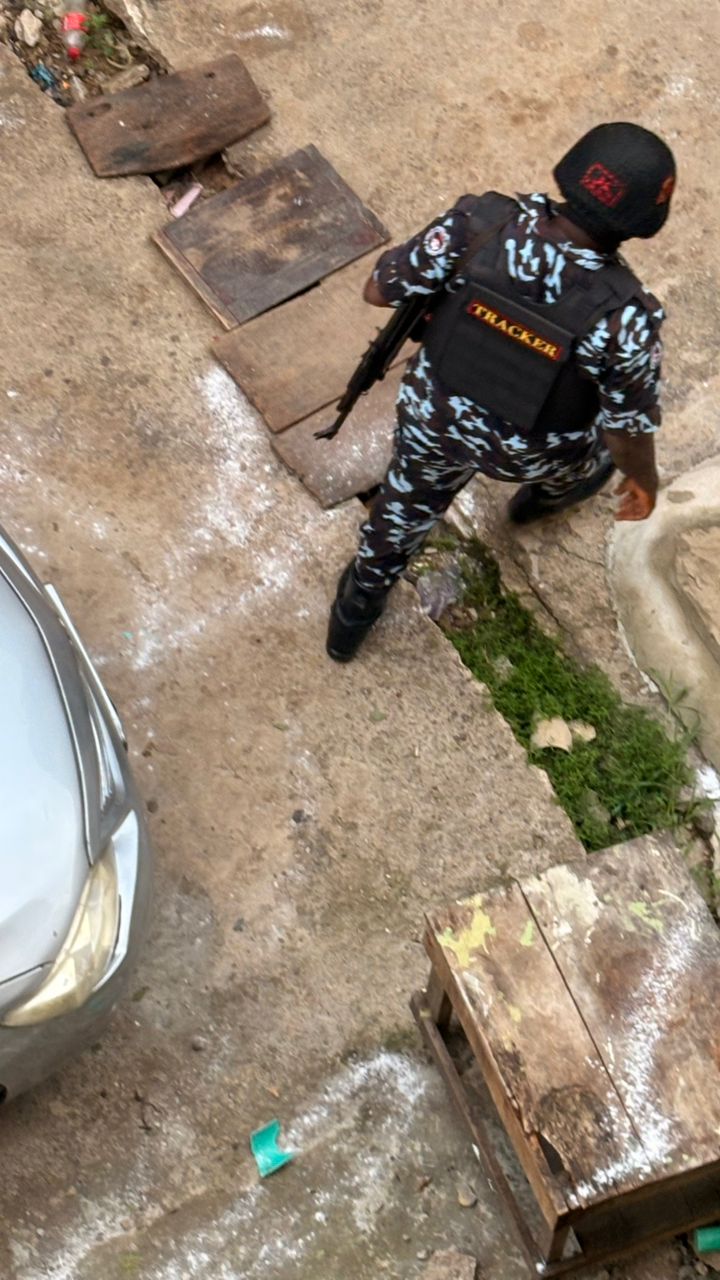
Police Officers Detained as Family Property Dispute Sparks Demolition Controversy in Lagos
By Ifeoma Ikem
A property dispute within the Omotayo-Ojo family has taken a dramatic turn following a controversial demolition exercise at a residential building in Ikosi-Ketu, Lagos State, which reportedly left tenants displaced and led to the detention of some police officers allegedly involved in the operation.

The property, located at 23B Loveall Street, Ikosi-Ketu, has been the subject of a prolonged ownership tussle since the death of its owner, Chief Oludola Omotayo Ojo, the Babaalaje of Imesi-Ile, Osun State, in 2019.
Residents said tension erupted when a group of individuals, accompanied by security operatives, stormed the premises and commenced demolition activities.
According to eyewitnesses, portions of the building were pulled down while tenants rushed to salvage their belongings from affected apartments.
The residents alleged that windows, doors and roofing sheets were damaged during the exercise, exposing parts of the building to the elements and causing significant losses to occupants.
At the centre of the dispute is Mrs Mojisola Omotayo Ojo Alolagbe, who claimed that the property was allocated to her by her late father during his lifetime as a source of financial support.
She alleged that some family members had persistently challenged her ownership claim despite ongoing legal proceedings relating to the administration of the deceased’s estate.
Alolagbe further claimed that the latest incident was part of a series of attempts to wrest control of the property, citing previous cases of alleged vandalism and partial demolition in November 2025, January 2026 and February 2026.
The situation escalated further when reports emerged that police officers allegedly involved in the demolition were later apprehended and conveyed in a Black Maria vehicle over questions surrounding the legality of their participation in the operation.
Sources familiar with the matter said those behind the demolition had initially claimed to be acting on approval from the Lagos State Ministry of Lands. However, the authenticity and extent of such approval could not be independently verified as of the time of filing this report.
The development has generated concern among residents and community members, who questioned the involvement of security personnel in what they described as a civil matter.
Some tenants, who said they had recently renewed their tenancy agreements, lamented the destruction of their property and appealed to the authorities for protection and possible compensation.

They also called for a thorough investigation into the circumstances surrounding the demolition, insisting that the rights of all parties involved should be protected.
Stakeholders have urged the Lagos State Government, security agencies and the judiciary to intervene and ensure that the dispute is resolved through lawful means to prevent further escalation.
The controversy has continued to draw public attention, raising concerns over property rights, estate administration and the role of law enforcement agencies in civil disputes.

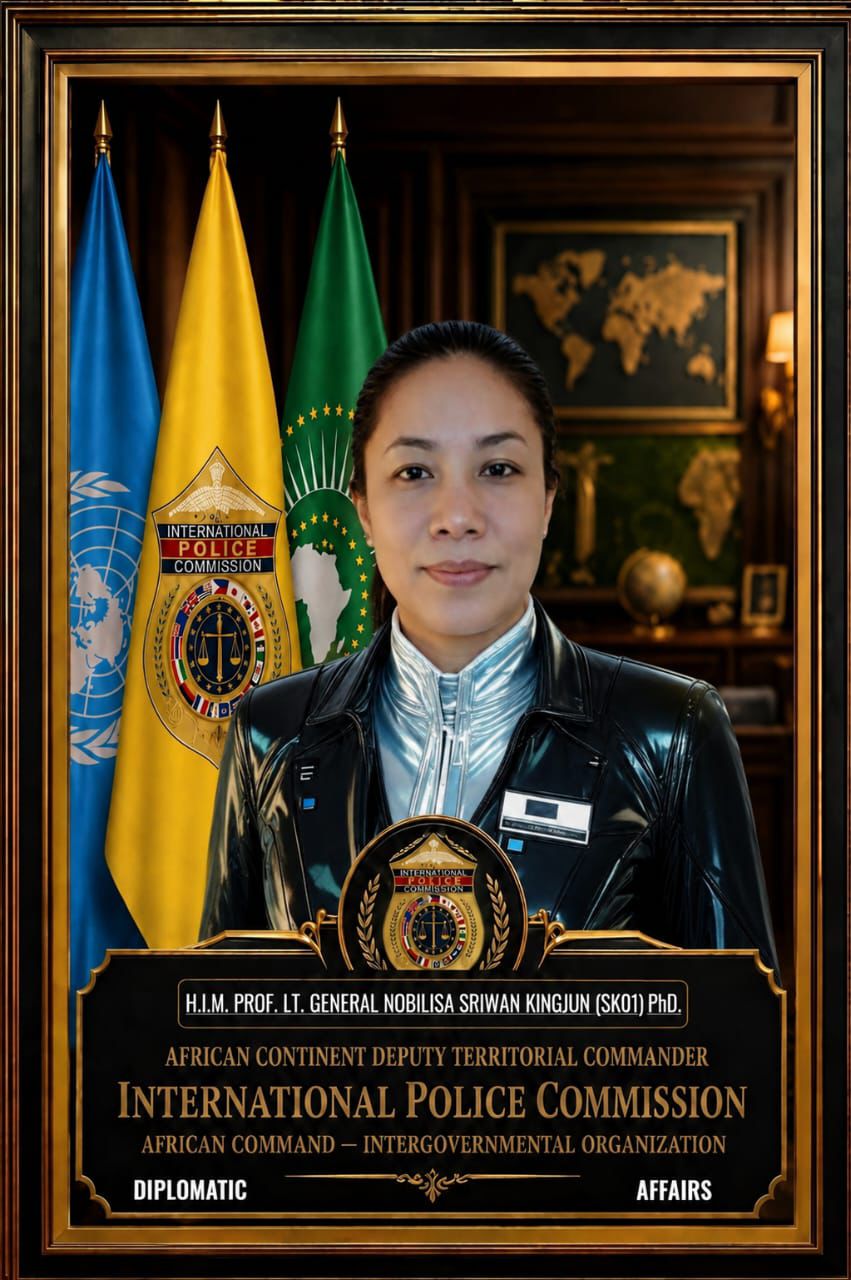
UKA Gears Up for Final ATC Exchangeability Test Run as June Preparations Begin.
May 30, 2026 – As the month of June gathers momentum, the *United Kingdom of Atlantis, UKA*, a sovereign nation has unveiled a series of vital guidelines and preparatory packages to ensure citizens and stakeholders run the *ATC Exchangeability* process effectively.
In an official update, the *President of Atlantic Crown Limited, Empress of Attica Empire UKA*, confirmed that the *Final Test Run of ATC Exchangeability* is scheduled for the month of June 2026. The exercise marks a key phase ahead of the *Official Exchangeability Window, set to run from July 2026 to February 2027*.
### Key Highlights from the Presidential Briefing
1. *Final Test Run – June 2026*
The test run is designed to validate systems, procedures, and user readiness before full activation. Citizens, partners, and designated participants are urged to follow all official advisories released by UKA authorities during this period.
2. *Official Exchangeability Period*
Following the successful completion of the June test run, the Official Exchangeability will commence in july 2026 and we are Expecting Full Exchange ability between July Ending, 2026 to February 2026.
UKA stated that detailed schedules, eligibility requirements, and step-by-step instructions will be communicated progressively through verified UKA channels.
3. *Benefiting Packages for June*
In line with UKA’s commitment to citizen empowerment, the month of June will feature “benefiting packages” aimed at education, preparation, and seamless onboarding. These packages are intended to equip the people of UKA with the knowledge and tools needed for effective participation.
4. *Commitment to Transparency*
Addressing the nation, the Empress of Attica Empire UKA emphasized:
_“Final Test Run of ATC Comes up in The Month of June, As We Prepare For The Official Exchangeability, Between July 2026 To Feb 2027. All Information Will Be Communicated.”_
UKA reaffirmed that only information released through official UKA platforms should be regarded as authoritative.
The United Kingdom of Atlantis is encouraging all citizens, representatives, and interested parties to remain alert to official communications, attend designated orientation sessions, and avoid unofficial sources. UKA’s dedication to order, clarity, and the collective benefit of its people as the nation moves into this significant phase.
For updates, advisories, and participation guidelines, citizens are advised to monitor official UKA communication channels.
United Kingdom of Atlantis, UKA, is a sovereign nation, committed to national development, citizen welfare, and structured economic participation through initiatives such as ATC Exchangeability.
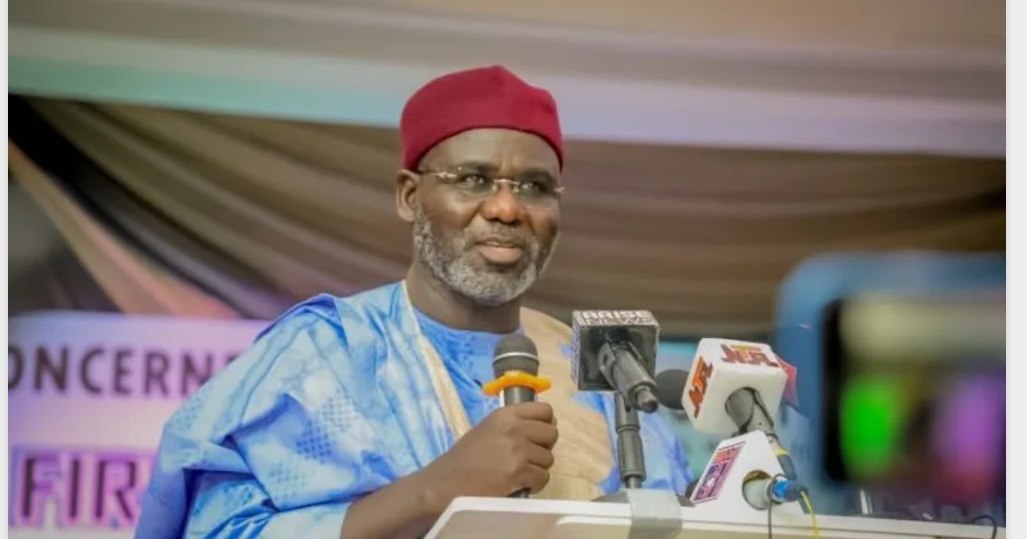
Three Years On, General Buratai Hails Tinubu’s Economic, Security Achievements
Former Chief of Army Staff, Lt. Gen. Tukur Buratai (retd.), has commended President Bola Ahmed Tinubu for what he described as bold economic reforms and improved security efforts as the President marks three years in office.
In a goodwill message on Thursday to commemorate Tinubu’s third anniversary as President and Commander-in-Chief of the Armed Forces, Buratai said the administration had taken courageous decisions that would leave a lasting impact on Nigeria’s development.

According to him, President Tinubu broke a long-standing cycle that had hindered national growth by removing fuel subsidy and implementing foreign exchange reforms aimed at stabilising the naira and strengthening the economy.
He noted that the reforms were beginning to yield positive results, citing the global acceptance of Nigerian debit cards, the gradual revival of local refineries, access to student loans, and ongoing road and infrastructure projects across the country.
“The FCT Administration has also recorded remarkable progress, completing major road projects that remained unfinished for over 16 years,” Buratai stated.
The former army chief also praised the administration’s security efforts, saying renewed military offensives against insurgents, terrorists and bandits had led to notable successes across various parts of the country.
He specifically lauded recent joint operations involving Nigerian and United States forces against Boko Haram and ISWAP in the North-East, as well as intensified counter-banditry operations in the North-West.
“We have seen notorious ISWAP commanders being neutralised. I congratulate the Commander-in-Chief, the Minister of Defence, the Chief of Defence Staff, the Service Chiefs, the Inspector-General of Police and heads of intelligence agencies for their efforts,” he said.
Buratai, however, acknowledged that challenges remained, stressing the need for more aggressive military operations and intelligence-driven strategies in the coming year.
While urging Nigerians to remain hopeful, he said celebrating the President’s achievements did not amount to ignoring the difficulties facing the nation.
“Because you truly care, you have shown the courage to trade short-term comfort for long-term hope. Nigerians need your reassurances, and that is why we remain optimistic and full of confidence,” he added.
The retired military officer reaffirmed his support for the Tinubu administration and expressed confidence that the foundation being laid by the government would deliver a brighter future for the country.
He also prayed for God’s guidance, wisdom, strength and good health for the President as he continues to lead Nigeria.


- Uganda: Parliament concludes vetting of ministers June 2, 2026
- Fund for Export Development in Africa (FEDA) Board Appoints Mr. Emmanuel Assiak as Chief Executive Officer June 2, 2026
- Ecobank Group Launches World First Nature Bond Mobilising Global Capital to Protect Africa’s Natural Ecosystems June 2, 2026
- Merck Foundation Chief Executive Officer (CEO) Dr. Rasha Kelej together with Kenya First Lady support the education of 47 Kenyan Schoolgirls by providing Annual Scholarships till they Graduate June 2, 2026
- Annual Meetings 2026: Governors Back the Bank’s Platform Solutions to Transform Aviation and Health Systems in Africa June 2, 2026
- ThinkMarkets launches ChelseaAI, bringing live CFD trading into Artificial Intelligence (AI) assistants June 2, 2026
- Afreximbank Invites Rugby Africa President Herbert Mensah to Address the 33rd Annual Meetings on a Panel Exploring Sport as a Driver of African Industrialisation June 2, 2026
- Afreximbank Deepens Commitment to Economic Progress in The Bahamas June 1, 2026
- African Electric Vehicle (EV) platform Spiro raises $215M in equity to scale electric mobility and energy infrastructure across Africa June 1, 2026
- Africa Centres for Disease Control and Prevention (Africa CDC) Statement on Attacks Against Health Facilities During the Bundibugyo Virus Disease Response in the Democratic Republic of the Congo June 1, 2026
- Uganda: Parliament concludes vetting of ministers June 2, 2026
- Fund for Export Development in Africa (FEDA) Board Appoints Mr. Emmanuel Assiak as Chief Executive Officer June 2, 2026
- Ecobank Group Launches World First Nature Bond Mobilising Global Capital to Protect Africa’s Natural Ecosystems June 2, 2026
- Merck Foundation Chief Executive Officer (CEO) Dr. Rasha Kelej together with Kenya First Lady support the education of 47 Kenyan Schoolgirls by providing Annual Scholarships till they Graduate June 2, 2026
- Annual Meetings 2026: Governors Back the Bank’s Platform Solutions to Transform Aviation and Health Systems in Africa June 2, 2026
- ThinkMarkets launches ChelseaAI, bringing live CFD trading into Artificial Intelligence (AI) assistants June 2, 2026
- Afreximbank Invites Rugby Africa President Herbert Mensah to Address the 33rd Annual Meetings on a Panel Exploring Sport as a Driver of African Industrialisation June 2, 2026
-

 news6 months ago
WHO REALLY OWNS MONIEPOINT? The $290 Million Deal That Sold Nigeria’s Top Fintech to Foreign Interests
-

 society4 weeks ago
SOCIAL MEDIA IS NOT A BATTLEFIELD COMMAND – WHY THE NIGERIAN ARMY’S ACTION AGAINST JUSTICE CRACK IS A NATIONAL SECURITY IMPERATIVE
-

 celebrity radar - gossips4 months ago
Dr. Chris Okafor Returns with Power and Fire of the Spirit -Mounts Grace Nation Altar with Fresh Anointing and Restoration Grace on February 1, 2026
-

 celebrity radar - gossips6 months ago
Prophet Kingsley Aitafo Releases 2026 Prophecy: ‘Nigeria Will Rise, but the World Must Prepare for Turbulence’