
Uncategorized
When Faith Becomes Fury: The Arrest That Exposed a Deadly Rift in Spiritual Leadership

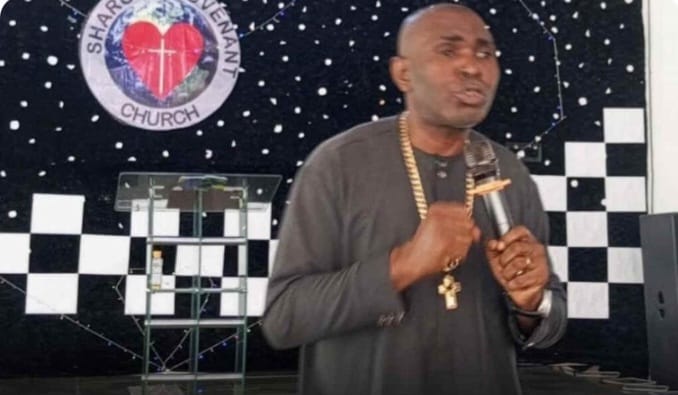
When Faith Becomes Fury: The Arrest That Exposed a Deadly Rift in Spiritual Leadership
— A Report by George Omagbemi Sylvester
“How a Cleric’s Alleged Plot to Hire Cult Killers for a Rival Prophet Reveals Deeper Cracks in Religious Authority and Social Order.”
In a nation where faith can elevate leaders to positions of profound influence, a disturbing law enforcement action has exposed the darkest potential of spiritual rivalry. Recently in Bayelsa State, security operatives intervened to prevent an assassination rooted not in political ambition, but in the toxic collision between religious authority and violent underground networks. What unfolded is more than a sensational crime story. It is a stark indictment of leadership devoid of moral compass, a chilling warning about the weaponisation of faith for personal gain and a societal challenge that demands sober reflection and decisive action.

Operatives from the Special Weapons and Tactics Unit of the Bayelsa State Police Command arrested Pastor Elijah Oro, a clergyman originally from Delta State. Authorities allege that Oro contracted a young man embedded in a notorious criminal brotherhood. (known as the Greenlanders confraternity) to carry out a deadly mission against a rival prophet. The pastor and the alleged hitman were taken into custody after credible intelligence led police to foil what they believe was an imminent assassination attempt.
According to official statements, the clandestine plan stemmed from a dispute over church membership and property, a conflict that escalated beyond factional disagreement into a plot to extinguish a human life. Police spokespersons revealed that the suspect recruited to carry out the attack confessed membership in the Greenlanders confraternity upon arrest at the intended victim’s premises.
The very idea that a man of God could be accused of orchestrating murder to settle a spiritual rivalry is jarring. It challenges the fundamental expectation that religious leadership embodies peace, justice, and selfless service. As Dr. Mercy Adediran, a scholar of theology and ethics, explains, “Religious leadership carries with it an obligation to model higher moral character. Faith communities thrive when leaders prioritize reconciliation, not retribution. When those leaders abdicate moral responsibility, the entire fabric of trust unravels.” Adediran’s observation resonates far beyond the immediate case; it points to a systemic vulnerability where spiritual authority meets raw human ambition.
In many societies, faith leaders are entrusted with the spiritual wellbeing of entire communities. They are expected to counsel parishioners in matters of conscience, to guide the vulnerable toward ethical choices, and to wield influence responsibly. When leaders violate that trust (particularly through violence) the consequences ripple far beyond the courtroom. “Leadership is not merely a platform for personal influence,” notes Professor Kunle Oladipo, a sociologist specialising in religious movements. “It is a public trust. When that trust is weaponised for personal disputes, the damage to societal cohesion can be profound and long-lasting.”
This latest arrest is not an isolated anomaly. Across regions where criminal cults and confraternities have taken root, authorities continue to grapple with the unpredictable intersections of underground violence and mainstream society. In Bayelsa, recent history has included episodes of cult-related violence that left communities shaken. These clashes underline how easily organised criminal networks can entangle with broader community life, especially where economic hardship and youth unemployment leave gaps that illicit groups exploit.
Experts emphasise that the problem is not inherent to religious institutions, but arises when the moral authority invested in those institutions is misused. “The tragic irony,” states Dr. Adediran, “is that religious communities have the potential to be powerful agents for conflict resolution. Though when leaders themselves become embroiled in violence, it erodes the very foundation upon which faith stands.”
Law enforcement officials have underscored their commitment to protecting lives and preventing further escalation. Following the arrests, they urged the public to continue providing credible information that can aid in preserving peace and thwarting threats to public safety. The ongoing investigation seeks to clarify whether the alleged plot was an isolated attempt or part of a wider pattern involving third parties.
Beyond law enforcement, this incident raises vital questions about accountability within religious communities. How do congregations hold their leaders responsible when allegations of misconduct surface? What structures exist to ensure transparency in church governance and in the resolution of conflicts that arise within and between congregations? Since violence and criminality contradict the core teachings of mercy, compassion and stewardship that undergird most religious traditions, addressing such questions is not merely administrative; it is essential to preserving the moral legitimacy of spiritual leadership.
Prominent commentators in religious ethics remind us that power without accountability is a breeding ground for corruption. As Professor Oladipo points out, “Whenever influence is concentrated without appropriate checks, the risk of abuse escalates. Faith leaders are no exception. If anything, they require stronger ethical scrutiny precisely because of the profound impact they have on individuals’ lives and societal values.”

For everyday citizens (especially those who dedicate their lives to worship and community service) this story can be deeply unsettling. It forces a reckoning with uncomfortable truths about human nature, organisational structures, and the seductive lure of power. Yet it also offers an opportunity for collective reflection and reform. Civil society organisations, interfaith coalitions, and religious councils play indispensable roles in championing ethical standards and condemning violence unequivocally, regardless of the social status of those accused.
Religious institutions capable of self-critique and internal accountability can turn even this dark moment into a catalyst for renewal. “Reformation begins where there is courage to acknowledge faults,” says Dr. Adediran. “Communities must demand integrity from their leaders. Silence in the face of wrongdoing, especially by those claiming spiritual authority, only enables further harm.”
As the legal process unfolds, the accused remain subjects of ongoing police investigation. In the court of public opinion and within the court of conscience, the allegations have already sparked intense debate about the moral responsibilities of those who claim to speak for the divine.
This case stands as a sobering reminder: when spiritual leadership is co-opted for personal vendettas or political influence, the consequences can tear at the core of communal trust. When faith is misused to cloak violent intent, the very foundations of moral authority are undermined. Yet, in confronting these failings head-on, society affirms a deeper commitment to justice, compassion and the right to life, values that transcend the boundaries of creed and culture.
In a world rife with conflict and competition, religious leaders must be held to the highest ethical standards precisely because their influence shapes the hearts and minds of many. When that influence turns violent, it diminishes all of us. The arrest in Bayelsa should provoke not only legal scrutiny but also profound introspection on how communities select, empower and hold accountable those who claim to lead them spiritually.
What happened here is more than a crime story. It is a mirror reflecting the stakes of moral leadership in any society claiming to value the sanctity of life, the rule of law and the dignity of every human being.





Uncategorized
TYO National Competition Concludes with Exceptional Display of Oratory and Critical Thinking

The TYO 2026 National Competition concluded with an impressive showcase of oratory, critical thinking, and a compelling demonstration of the skills developed by participants during a four-day intensive boot camp. The programme commenced on Monday, April 27, with semifinals held on April 29 and the finals on April 30, 2026.
The final event was marked by an emotional moment as the winner was announced to an enthusiastic reception from the audience. Participants were evaluated on key competencies including reasoning, content, structure, audibility, and audience engagement. The competition stood as a clear demonstration of what can be achieved when young minds are given the opportunity and space for intentional development.
TYO is a communications platform and an expression of the Peat Philips Foundation, committed to instilling leadership, communication, and public speaking skills in young people. The initiative focuses on building strong character and empowering participants to embody the change they seek, not only through words but through aligned actions.
The boot camp incorporated multiple dimensions of learning, including structure, intent, goal-setting, character development, reasoning and effective audience engagement. These components provided participants with the opportunity to refine their speaking abilities while unlearning habits that no longer serve their growth. The experience also fostered peer learning, as participants engaged closely with other qualified individuals within the programme.
Beyond the competition, TYO serves as a broader platform dedicated to developing young people into confident communicators and ambassadors of their communities and country. The competition itself is one of several initiatives aimed at preparing a Nigerian representative for the International Public Speaking Competition scheduled to take place in the United Kingdom in July this year.
Looking ahead, preparations are already underway for the 2027 edition of the TYO Boot Camp. The organisers express hope for continued and increased support from sponsors and partners to sustain and expand the programme. This support is essential to reaching more young people and strengthening a critical area of development, not only for Nigeria but for the African continent at large.
For partnership and sponsorship inquiries, interested parties are encouraged to connect with the organisers to support the mission of raising a generation equipped to serve and lead effectively. Contact: 08071825959, [email protected].

Ajadi Visits Ilaji Resort, Commends Sanusi’s Vision for Oyo’s Economic Growth
The leading gubernatorial aspirant in Oyo State under the Peoples Democratic Party (PDP), Olufemi Ajadi Oguntoyinbo, has lauded the transformative impact of private-sector investment on the state’s economy, following a courtesy visit to Ilaji Hotels and Sports Resort in Akanran, Ibadan.
Ajadi, who was warmly received on Sunday by the resort’s founder, Chief Dr Dotun Sanusi, described the facility as a symbol of what visionary leadership and indigenous enterprise can achieve in driving rural development, job creation, and tourism growth.
Speaking during the visit, Ajadi commended Sanusi’s commitment to Oyo State’s economic advancement, noting that Ilaji Resort stands as a model for sustainable development outside urban centres.
“What I have seen here today is not just a business venture, but a bold statement of belief in Oyo State’s potential,” Ajadi said. “Chief Sanusi has demonstrated that with vision, dedication, and strategic investment, we can transform our rural communities into thriving economic hubs. This aligns perfectly with my agenda to expand opportunities, empower our people, and sustain development across the state.”
[4/13, 6:34 PM] johnsonakinpelu: The PDP gubernatorial aspirant emphasised that his governorship ambition is rooted in supporting initiatives that promote local enterprise, tourism, and youth employment, adding that partnerships between government and private investors would be a priority if elected.
In his remarks, Sanusi, popularly known as Ilaji, expressed delight at hosting Ajadi and his entourage, describing the visit as encouraging for investors in the state.
“I am honoured to receive Ambassador Ajadi here at Ilaji Resort,” Sanusi said. “This project was born out of a desire to give back to society, create jobs for our youths, and showcase the rich cultural and tourism potential of Oyo State. When leaders recognise and support such efforts, it strengthens our resolve to do more.”
Sanusi further stressed the importance of continuity in governance and policies that encourage investment, noting that consistent support from government actors is crucial for long-term economic growth.
The visit also attracted notable political stakeholders, including the former Ona-Ara Local Government Chairman, Hon. Taiwo Oke, Hon. Bass Oloko, and Ajadi’s personal assistant, Kilamuwaye Badmus, among others.
Observers at the event described the meeting as a convergence of political leadership and entrepreneurial vision, highlighting the growing importance of collaboration in addressing developmental challenges in Oyo State.
Analysts see Ajadi’s visit to Ilaji Resort as part of his broader engagement with key stakeholders across sectors, as he continues to build momentum ahead of the 2027 governorship race.

FOPCHEN Calls for Dialogue as Court Fixes May 28 for Continuation
OTA, OGUN STATE — Proceedings in a widely followed legal case resumed on March 24, 2026, at the High Court of Ogun State, Ota Division, ending with a fresh adjournment as the court fixed May 28, 2026, for continuation.
During the session, legal representatives for all parties restated their positions and addressed preliminary matters, laying the groundwork for more substantive arguments at the next hearing. Observers noted that the case continues to attract significant public attention due to its perceived implications for law, culture, and societal values.
The Foundation for the Protection of Cultural Heritage in Nigeria (FOPCHEN) used the occasion to reiterate its call for constructive national dialogue. The group emphasized that while the judicial process must be respected, broader societal engagement remains essential.
According to the organization, issues relating to values, responsibility, and cultural identity should not be confined solely to courtroom deliberations but should involve active participation from various sectors of society.
Legal analysts present at the proceedings described the matter as one with far-reaching implications, noting that arguments advanced in court could shape future interpretations surrounding sensitive cultural and moral questions.
The presiding judge subsequently adjourned the case to May 28, granting all parties time to refine their submissions and respond to issues raised during the hearing.
As anticipation builds ahead of the next court date, Nigerians across different sectors continue to monitor developments closely, keen to see how the judiciary navigates the delicate balance between constitutional rights and cultural expectations.


- Brazzaville 2026 African Development Bank Group (AfDB) Annual Meetings to focus on mobilising Africa’s development financing at scale May 22, 2026
- Morocco: African Development Bank Group and OCP Group Sign €450 Million Partial Credit Guarantee to Accelerate Industrial Transition May 22, 2026
- South Sudan: Leaders of tomorrow take center-stage at lively debates on gender equality and democracy in Pibor May 22, 2026
- Seychelles and Bangladesh hold Constructive Talks on Cooperation and International Engagement May 22, 2026
- Seychelles: Minister Faure and Ambassador Azais Tatistscheff discuss humanitarian and healthcare cooperation May 22, 2026
- African Energy Chamber (AEC) to Position Africa as South America’s Next Strategic Energy Frontier at Association of Oil, Gas and Renewable Energy Companies of Latin America and the Caribbean (ARPEL) Conference 2026 May 22, 2026
- Afreximbank Posts Robust Q1 2026 Results with 25% Growth in Net Income and Improved Profitability May 22, 2026
- Africa: Soil Mapping for Resilient Agrifood Systems (SoilFER) programme scales up soil fertility monitoring through Mid-Infrared Spectroscopy May 22, 2026
- Food and Agriculture Organization of the United Nations (FAO) receives USD 4 million from the Regional Humanitarian Fund to save lives and protect the livelihoods of the most vulnerable households in Chad May 22, 2026
- Algeria: Mr. Attaf received by the President of the Arab Republic of Egypt May 22, 2026
- Brazzaville 2026 African Development Bank Group (AfDB) Annual Meetings to focus on mobilising Africa’s development financing at scale May 22, 2026
- Morocco: African Development Bank Group and OCP Group Sign €450 Million Partial Credit Guarantee to Accelerate Industrial Transition May 22, 2026
- South Sudan: Leaders of tomorrow take center-stage at lively debates on gender equality and democracy in Pibor May 22, 2026
- Seychelles and Bangladesh hold Constructive Talks on Cooperation and International Engagement May 22, 2026
- Seychelles: Minister Faure and Ambassador Azais Tatistscheff discuss humanitarian and healthcare cooperation May 22, 2026
- African Energy Chamber (AEC) to Position Africa as South America’s Next Strategic Energy Frontier at Association of Oil, Gas and Renewable Energy Companies of Latin America and the Caribbean (ARPEL) Conference 2026 May 22, 2026
- Afreximbank Posts Robust Q1 2026 Results with 25% Growth in Net Income and Improved Profitability May 22, 2026
-

 news5 months ago
WHO REALLY OWNS MONIEPOINT? The $290 Million Deal That Sold Nigeria’s Top Fintech to Foreign Interests
-

 society3 weeks ago
SOCIAL MEDIA IS NOT A BATTLEFIELD COMMAND – WHY THE NIGERIAN ARMY’S ACTION AGAINST JUSTICE CRACK IS A NATIONAL SECURITY IMPERATIVE
-

 celebrity radar - gossips4 months ago
Dr. Chris Okafor Returns with Power and Fire of the Spirit -Mounts Grace Nation Altar with Fresh Anointing and Restoration Grace on February 1, 2026
-

 celebrity radar - gossips5 months ago
Prophet Kingsley Aitafo Releases 2026 Prophecy: ‘Nigeria Will Rise, but the World Must Prepare for Turbulence’