
society
When God and Politics Become Weapons: How Religion and Partisanship Are Tearing Nigeria Apart


When God and Politics Become Weapons: How Religion and Partisanship Are Tearing Nigeria Apart
By George Omagbemi Sylvester | Published by SaharaWeeklyNG.com
“Instead of joining hands against poverty, insecurity and corruption, we sharpen knives on each other and the country pays the price.”
Nigeria is a nation of staggering possibilities and stubborn contradictions. We boast a youthful population, vast natural resources and a diaspora that outshines our reputation abroad. Yet at home we fritter away those assets on what should be the least important of all contests, who prays where and who sits on which party stool. Religion and partisan politics (two forces that could bind a plural society) have instead been weaponised, turning colleagues into enemies, constituencies into battlefields and public life into a theatre of suspicion. The result is predictable: a state weaker, a society poorer and citizens dead or displaced in numbers that shame our claim to civilisation.

Religion in Nigeria is not a neutral private comfort; it is a civic force with mass reach. Roughly half the population identifies as Muslim and half as Christian, a demography that should encourage humility, compromise and inclusive institutions. Instead, the balance has been treated as a truncheon to be wielded in elections, appointments and policy fights. When political actors make faith a litmus test for office or weaponise clergy prophecies to mobilise followers, they tear at the fragile fabric of citizenship and convert theological difference into permanent political danger. Pew’s recent work shows how religion remains central to identity in Nigeria and that fact matters for how power is contested.
The violence that follows is not theoretical. Over the past decade the country has witnessed waves of communal and sectarian brutality whose proximate causes range from climate-driven land pressures to criminal banditry, yet their lines are often drawn in religious or ethnic ink. Farmer–herder clashes, concentrated in the Middle Belt, have killed thousands and spread fear across farming communities. By 2021, more than 15,000 deaths had been linked to these clashes; local outbreaks since then, including mass attacks in Benue and other states, have shown the crisis is escalating. When disputes over grazing corridors and farmland are narrated as religious persecution, innocent farmers and herders alike are pushed into cycles of revenge.
Terrorist insurgency adds a gnawing dimension. Boko Haram and ISWAP not only killed tens of thousands and displaced millions in the northeast – they also turned religion into a cover for brutal politics. The consequences are not confined to the northeast; they ripple into national politics, inform security policy and feed identity-based suspicion across the federation. Civilians pay the heaviest price: thousands dead, millions uprooted and whole local economies hollowed out. The humanitarian cost is matched by an economic toll: insecurity destroys farms, distracts investment and raises the fiscal burden for a government already addicted to borrowing.
Politics has itself become a theatre of religious signalling. The 2023 presidential campaign, for example, exposed how fragile the country’s equilibrium is when parties abandon long-standing practices of balance for short-term electoral gain. The Muslim–Muslim ticket controversy (whether you call it tactical realpolitik or cynical disregard for plural representation) sharpened sectarian anxieties and showed how quickly trust can dissipate if inclusiveness is not defended as a principle. When political entrepreneurs calculate that religion will win them votes, they sell the nation out for partisan advantage.

This is not mere moralising: it is practical. When citizens see appointments, licences, policing, or access to relief routed through faith-based networks, trust in state institutions collapses. Governance then survives on patronage, not performance. Public resources are diverted to cronies and co-religionists; laws meant to protect the vulnerable are mangled by selective enforcement; and civic identity (the idea that every Nigerian is first a citizen) is subordinated to narrower loyalties. The consequence is political fragmentation at a time the state most requires unity to confront existential threats: poverty, inflation, climate shocks and violent non-state actors.
We can (and must) do better. The remedy begins with a hard embrace of secular citizenship: not anti-religion, but neutral public institutions that treat faith as a private domain while guaranteeing equal protection for all. This means transparent appointments, rigorous anti-corruption enforcement and the depoliticisation of security agencies. It means enforcing anti-violence laws impartially and prosecuting those who inflame religious passions for personal gain. It also means strengthening local conflict-resolution mechanisms: where grazing corridors or land rights cause friction, the state must mediate fairly and invest in alternatives (ranching, irrigation and effective land registration) instead of amplifying blame. Research from scholars like Jibrin Ibrahim has repeatedly shown that high religiosity in Nigeria coexists with weak civic practices and that addressing the structural drivers of conflict is essential for reconciliation.
Religious leaders, too, have a duty. This is not a call to silencing the pulpit; it is an appeal for courage. Wole Soyinka’s insistence that human liberty must come before sectarian barricades (and his famous rebuke that religion must not be allowed to prevent rational national thinking) is not literary flourish; it is ethical strategy. Clerics and imams must preach restraint and publicly rebuke those who weaponise faith. Where religious leaders use congregations to amplify division, they forfeit moral authority and become accomplices to national decay.
Finally, ordinary citizens must reclaim civic courage. Unity is not uniformity. It is the will to disagree without dehumanising. It is the daily practice of treating a neighbour who prays differently as deserving of decency, equal opportunity and security. Civil society, universities, the media and the private sector must amplify narratives of shared destiny over slogans of exclusion. International partners can help, but the solution must be homegrown: layered, patient and relentless.
Nigeria’s enemies are not each other; they are hunger, poor governance, climate shocks and violent actors who exploit our divisions. To fight them effectively we must stop seeing religion and party membership as identity armour and start seeing them as private commitments that do not disqualify one from the public good. If we do not, the nation will continue to fracture, not along neat ideological lines, but in human terms: widows, orphans, ruined farms and shuttered schools. That is an indictment we cannot afford.
We owe future generations a country where difference does not mean danger. The work is ugly and difficult (reforming institutions, enforcing law and recalibrating moral leadership) but it is the only honest path forward. As Soyinka warned, the moral imagination of a people determines the life they will lead. Let us choose a Nigeria that puts humanity first, and religion and politics in their proper, constructive place.





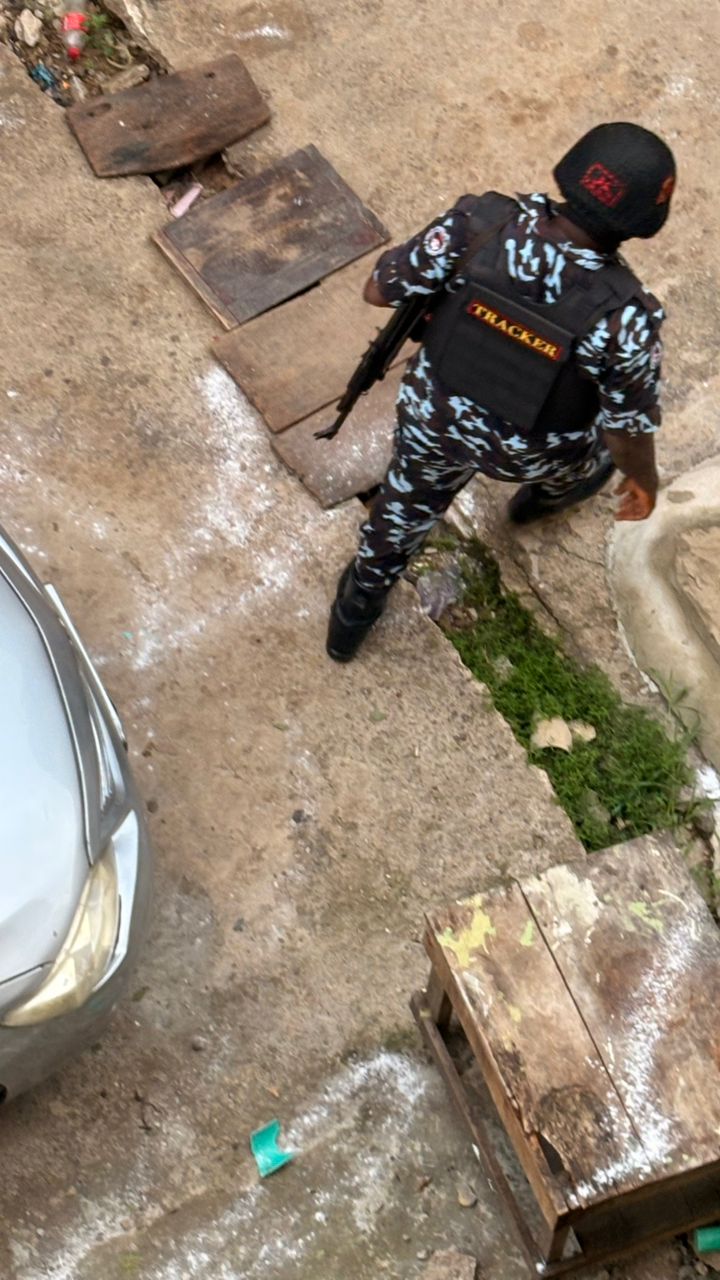
Police Officers Detained as Family Property Dispute Sparks Demolition Controversy in Lagos
By Ifeoma Ikem
A property dispute within the Omotayo-Ojo family has taken a dramatic turn following a controversial demolition exercise at a residential building in Ikosi-Ketu, Lagos State, which reportedly left tenants displaced and led to the detention of some police officers allegedly involved in the operation.

The property, located at 23B Loveall Street, Ikosi-Ketu, has been the subject of a prolonged ownership tussle since the death of its owner, Chief Oludola Omotayo Ojo, the Babaalaje of Imesi-Ile, Osun State, in 2019.
Residents said tension erupted when a group of individuals, accompanied by security operatives, stormed the premises and commenced demolition activities.
According to eyewitnesses, portions of the building were pulled down while tenants rushed to salvage their belongings from affected apartments.
The residents alleged that windows, doors and roofing sheets were damaged during the exercise, exposing parts of the building to the elements and causing significant losses to occupants.
At the centre of the dispute is Mrs Mojisola Omotayo Ojo Alolagbe, who claimed that the property was allocated to her by her late father during his lifetime as a source of financial support.
She alleged that some family members had persistently challenged her ownership claim despite ongoing legal proceedings relating to the administration of the deceased’s estate.
Alolagbe further claimed that the latest incident was part of a series of attempts to wrest control of the property, citing previous cases of alleged vandalism and partial demolition in November 2025, January 2026 and February 2026.
The situation escalated further when reports emerged that police officers allegedly involved in the demolition were later apprehended and conveyed in a Black Maria vehicle over questions surrounding the legality of their participation in the operation.
Sources familiar with the matter said those behind the demolition had initially claimed to be acting on approval from the Lagos State Ministry of Lands. However, the authenticity and extent of such approval could not be independently verified as of the time of filing this report.
The development has generated concern among residents and community members, who questioned the involvement of security personnel in what they described as a civil matter.
Some tenants, who said they had recently renewed their tenancy agreements, lamented the destruction of their property and appealed to the authorities for protection and possible compensation.

They also called for a thorough investigation into the circumstances surrounding the demolition, insisting that the rights of all parties involved should be protected.
Stakeholders have urged the Lagos State Government, security agencies and the judiciary to intervene and ensure that the dispute is resolved through lawful means to prevent further escalation.
The controversy has continued to draw public attention, raising concerns over property rights, estate administration and the role of law enforcement agencies in civil disputes.

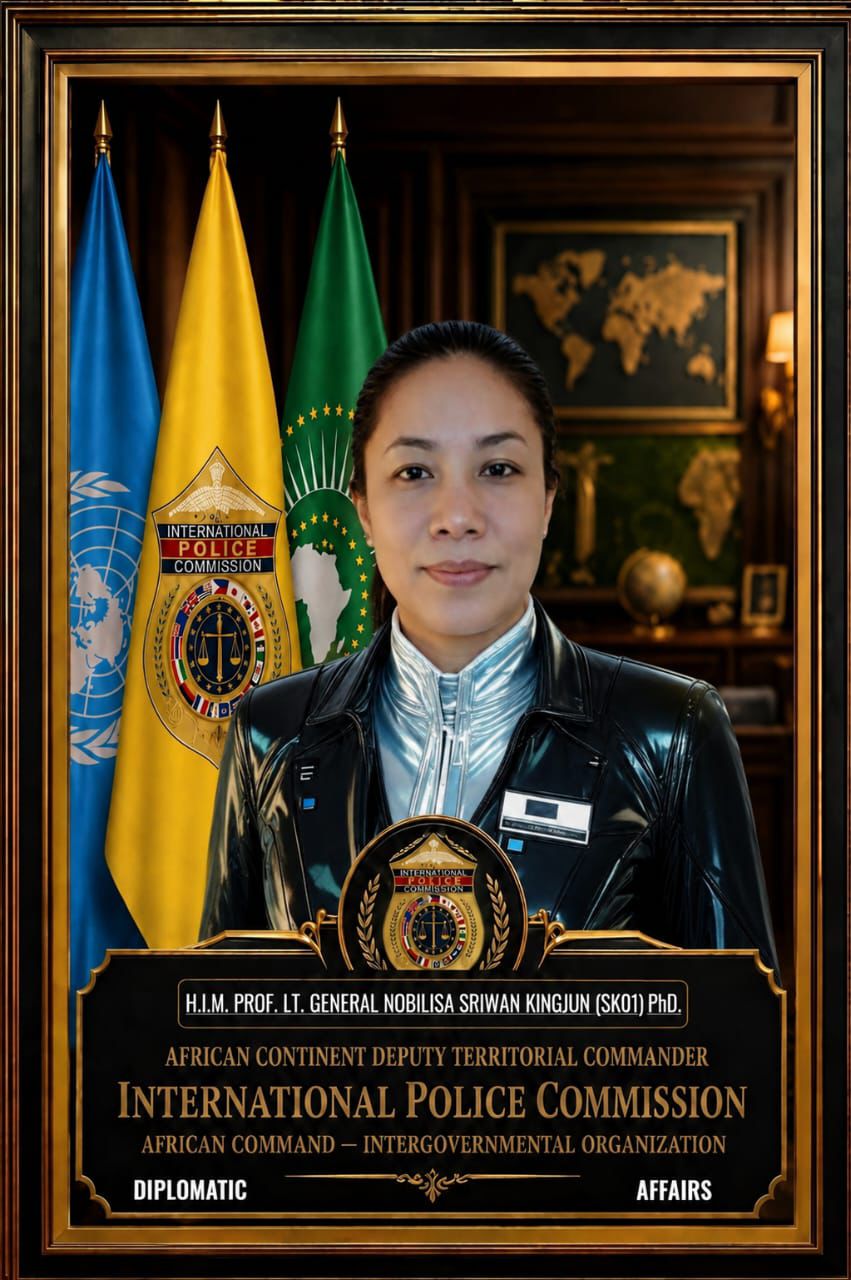
UKA Gears Up for Final ATC Exchangeability Test Run as June Preparations Begin.
May 30, 2026 – As the month of June gathers momentum, the *United Kingdom of Atlantis, UKA*, a sovereign nation has unveiled a series of vital guidelines and preparatory packages to ensure citizens and stakeholders run the *ATC Exchangeability* process effectively.
In an official update, the *President of Atlantic Crown Limited, Empress of Attica Empire UKA*, confirmed that the *Final Test Run of ATC Exchangeability* is scheduled for the month of June 2026. The exercise marks a key phase ahead of the *Official Exchangeability Window, set to run from July 2026 to February 2027*.
### Key Highlights from the Presidential Briefing
1. *Final Test Run – June 2026*
The test run is designed to validate systems, procedures, and user readiness before full activation. Citizens, partners, and designated participants are urged to follow all official advisories released by UKA authorities during this period.
2. *Official Exchangeability Period*
Following the successful completion of the June test run, the Official Exchangeability will commence in july 2026 and we are Expecting Full Exchange ability between July Ending, 2026 to February 2026.
UKA stated that detailed schedules, eligibility requirements, and step-by-step instructions will be communicated progressively through verified UKA channels.
3. *Benefiting Packages for June*
In line with UKA’s commitment to citizen empowerment, the month of June will feature “benefiting packages” aimed at education, preparation, and seamless onboarding. These packages are intended to equip the people of UKA with the knowledge and tools needed for effective participation.
4. *Commitment to Transparency*
Addressing the nation, the Empress of Attica Empire UKA emphasized:
_“Final Test Run of ATC Comes up in The Month of June, As We Prepare For The Official Exchangeability, Between July 2026 To Feb 2027. All Information Will Be Communicated.”_
UKA reaffirmed that only information released through official UKA platforms should be regarded as authoritative.
The United Kingdom of Atlantis is encouraging all citizens, representatives, and interested parties to remain alert to official communications, attend designated orientation sessions, and avoid unofficial sources. UKA’s dedication to order, clarity, and the collective benefit of its people as the nation moves into this significant phase.
For updates, advisories, and participation guidelines, citizens are advised to monitor official UKA communication channels.
United Kingdom of Atlantis, UKA, is a sovereign nation, committed to national development, citizen welfare, and structured economic participation through initiatives such as ATC Exchangeability.
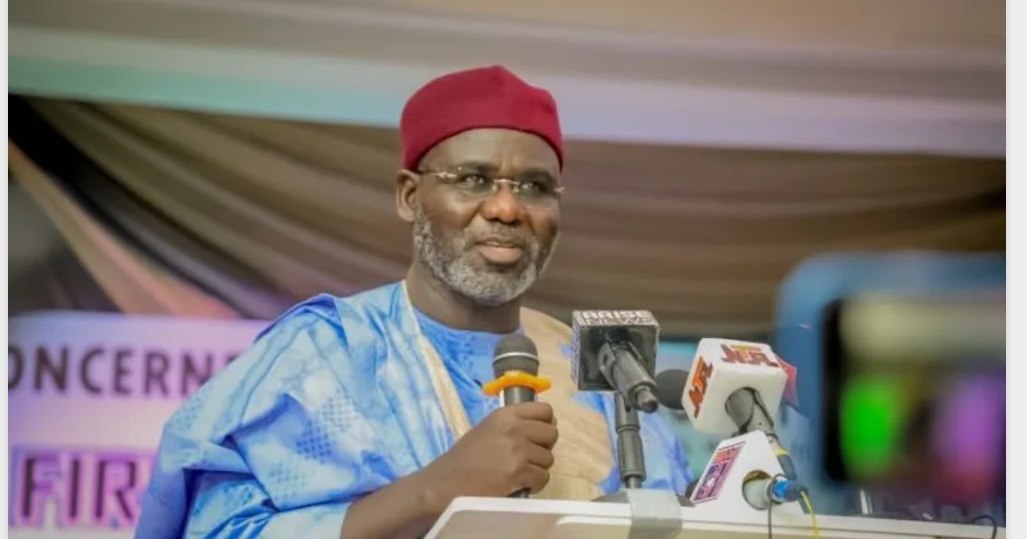
Three Years On, General Buratai Hails Tinubu’s Economic, Security Achievements
Former Chief of Army Staff, Lt. Gen. Tukur Buratai (retd.), has commended President Bola Ahmed Tinubu for what he described as bold economic reforms and improved security efforts as the President marks three years in office.
In a goodwill message on Thursday to commemorate Tinubu’s third anniversary as President and Commander-in-Chief of the Armed Forces, Buratai said the administration had taken courageous decisions that would leave a lasting impact on Nigeria’s development.

According to him, President Tinubu broke a long-standing cycle that had hindered national growth by removing fuel subsidy and implementing foreign exchange reforms aimed at stabilising the naira and strengthening the economy.
He noted that the reforms were beginning to yield positive results, citing the global acceptance of Nigerian debit cards, the gradual revival of local refineries, access to student loans, and ongoing road and infrastructure projects across the country.
“The FCT Administration has also recorded remarkable progress, completing major road projects that remained unfinished for over 16 years,” Buratai stated.
The former army chief also praised the administration’s security efforts, saying renewed military offensives against insurgents, terrorists and bandits had led to notable successes across various parts of the country.
He specifically lauded recent joint operations involving Nigerian and United States forces against Boko Haram and ISWAP in the North-East, as well as intensified counter-banditry operations in the North-West.
“We have seen notorious ISWAP commanders being neutralised. I congratulate the Commander-in-Chief, the Minister of Defence, the Chief of Defence Staff, the Service Chiefs, the Inspector-General of Police and heads of intelligence agencies for their efforts,” he said.
Buratai, however, acknowledged that challenges remained, stressing the need for more aggressive military operations and intelligence-driven strategies in the coming year.
While urging Nigerians to remain hopeful, he said celebrating the President’s achievements did not amount to ignoring the difficulties facing the nation.
“Because you truly care, you have shown the courage to trade short-term comfort for long-term hope. Nigerians need your reassurances, and that is why we remain optimistic and full of confidence,” he added.
The retired military officer reaffirmed his support for the Tinubu administration and expressed confidence that the foundation being laid by the government would deliver a brighter future for the country.
He also prayed for God’s guidance, wisdom, strength and good health for the President as he continues to lead Nigeria.


- Uganda: Parliament concludes vetting of ministers June 2, 2026
- Fund for Export Development in Africa (FEDA) Board Appoints Mr. Emmanuel Assiak as Chief Executive Officer June 2, 2026
- Ecobank Group Launches World First Nature Bond Mobilising Global Capital to Protect Africa’s Natural Ecosystems June 2, 2026
- Merck Foundation Chief Executive Officer (CEO) Dr. Rasha Kelej together with Kenya First Lady support the education of 47 Kenyan Schoolgirls by providing Annual Scholarships till they Graduate June 2, 2026
- Annual Meetings 2026: Governors Back the Bank’s Platform Solutions to Transform Aviation and Health Systems in Africa June 2, 2026
- ThinkMarkets launches ChelseaAI, bringing live CFD trading into Artificial Intelligence (AI) assistants June 2, 2026
- Afreximbank Invites Rugby Africa President Herbert Mensah to Address the 33rd Annual Meetings on a Panel Exploring Sport as a Driver of African Industrialisation June 2, 2026
- Afreximbank Deepens Commitment to Economic Progress in The Bahamas June 1, 2026
- African Electric Vehicle (EV) platform Spiro raises $215M in equity to scale electric mobility and energy infrastructure across Africa June 1, 2026
- Africa Centres for Disease Control and Prevention (Africa CDC) Statement on Attacks Against Health Facilities During the Bundibugyo Virus Disease Response in the Democratic Republic of the Congo June 1, 2026
- Uganda: Parliament concludes vetting of ministers June 2, 2026
- Fund for Export Development in Africa (FEDA) Board Appoints Mr. Emmanuel Assiak as Chief Executive Officer June 2, 2026
- Ecobank Group Launches World First Nature Bond Mobilising Global Capital to Protect Africa’s Natural Ecosystems June 2, 2026
- Merck Foundation Chief Executive Officer (CEO) Dr. Rasha Kelej together with Kenya First Lady support the education of 47 Kenyan Schoolgirls by providing Annual Scholarships till they Graduate June 2, 2026
- Annual Meetings 2026: Governors Back the Bank’s Platform Solutions to Transform Aviation and Health Systems in Africa June 2, 2026
- ThinkMarkets launches ChelseaAI, bringing live CFD trading into Artificial Intelligence (AI) assistants June 2, 2026
- Afreximbank Invites Rugby Africa President Herbert Mensah to Address the 33rd Annual Meetings on a Panel Exploring Sport as a Driver of African Industrialisation June 2, 2026
-

 news6 months ago
WHO REALLY OWNS MONIEPOINT? The $290 Million Deal That Sold Nigeria’s Top Fintech to Foreign Interests
-

 society4 weeks ago
SOCIAL MEDIA IS NOT A BATTLEFIELD COMMAND – WHY THE NIGERIAN ARMY’S ACTION AGAINST JUSTICE CRACK IS A NATIONAL SECURITY IMPERATIVE
-

 celebrity radar - gossips4 months ago
Dr. Chris Okafor Returns with Power and Fire of the Spirit -Mounts Grace Nation Altar with Fresh Anointing and Restoration Grace on February 1, 2026
-

 celebrity radar - gossips6 months ago
Prophet Kingsley Aitafo Releases 2026 Prophecy: ‘Nigeria Will Rise, but the World Must Prepare for Turbulence’