
society
When Order Clashes with Authority: The Stand-Off in Gaduwa


When Order Clashes with Authority: The Stand-Off in Gaduwa.
By George Omagbemi Sylvester | Published by SaharaWeeklyNG.com
A Navy Lieutenant’s Moment of Integrity Against Minister Wike’s Overreach.
On Tuesday, in the dusty environs of Gaduwa District, Abuja, an incident unfolded that speaks volumes about the fault lines in Nigeria’s power architecture; between political office, military command, land-use law and impunity. The confrontation between a naval officer and Nyesom Wike, the Minister of the Federal Capital Territory (FCT), was more than a quarrel. It was a mirror held up to a system where uniforms and titles often overshadow legal accountability.

According to multiple reports, Wike arrived with his entourage and FCT field agents at a parcel of land designated Plot 1946. The plot is said to belong to retired Vice-Admiral Awwal Zubairu Gambo (ex–Chief of Naval Staff). The minister and his team were pressing for inspection and possible demolition of structures believed to be illegally developed in a buffer zone of the FCT master plan.
As the minister’s team attempted access, they were blocked by uniformed officers of the Nigerian Navy. A heated verbal encounter ensued between Wike and a naval officer (identified in one report as Lieutenant AM Yarima) who insisted they had “VALID DOCUMENTS” for the land; Wike scoffed, challenged the documents and refused to yield to the uniformed men’s presence.
At one juncture, Wike shouted: “You cannot use soldiers to intimidate government officials doing their job. This country cannot continue this way.”
The officer retorted, “I am an officer. I have integrity.” Wike’s response: “Shut up your mouth! Who does that? You are a big fool!” The officer maintained: “I am not a fool sir. I am acting on orders and I am a commissioned officer.”
What happened that day is ripe for analysis (not merely as a dramatic video on social media) but as an emblem of deeper structural dysfunction: land-grabbing, military impunity, politicised oversight and the erosion of rule of law.
Power, Uniform and the Rule of Law. First, let us be clear, the presence of uniformed naval officers in civilian land-use operations raises immediate questions. The military is not meant to operate as the muscle arm of land allocation or private development. When the minister demanded documentary proof of the officers’ claims, he was doing no more than insisting the law apply equally, regardless of rank. It is an axiom of good governance that “no one is above the law.”
A former UN expert on governance has written that “accountability becomes hollow if the symbols of power are exempt from legal scrutiny.” In other words: a uniform ought not to confer immunity. The officer’s invocation of “ORDERS” is the classic defence, but orders are meant to be lawful and legality cannot be assumed merely because someone holds a gun.

Wike, often combative by reputation, nonetheless tapped into a critical point: if law enforcement, urban management or land-allocation become hostage to uniformed intimidation, the public authority of civil offices is hollowed out. And when the armed forces are seen to be aligned implicitly with private interests (especially in land-rich Abuja) that signals a dangerous slide.
The Land Question: Abuja, Buffer Zones and the Master Plan. The purported land in question (Plot 1946 in Gaduwa) is described by reporting outlets as falling within a buffer zone designated by the Development and Control arm of the FCT Administration (FCTA) for non-development or restricted use.
If indeed part of a buffer zone, the claim of “LEGAL ACQUISITION” by the navy officer or the retired Chief of Naval Staff must be scrutinised thoroughly.
What we have here is the familiar Nigerian pattern: high-ranking officials or retired officers using title or influence to grab land, often in the name of “OFFICERS’ ACCOMMODATION” or similar. In many cases, civil regulators are ineffective or intimidated. The fact that the minister had to lead the push for field inspection signals systemic weakness.
The land sector in Nigeria has long been plagued by “symbiotic collusion between the state and the military/retired elites” in which the state grants belts of land, often without proper due process, to military insiders. That model undermines confidence in the system, invites rent-seeking and sharpens inequality: the uniformed class often enjoys privileges that citizens cannot access.
The Symbolism of the Confrontation. Why was this incident significant? Because it is a moment of symbolic clarity.
A naval officer refusing to stand down before a minister on a matter of land use is not merely insubordinate—it subverts the chain of accountability.
A minister demanding documentation and invoking “the government must function according to law” highlights the threat when state institutions become hostage to parallel structures of power.

The public nature of the exchange amplifies distrust. When citizens see uniforms deployed around private plots rather than national security, the social contract frays.
As governance scholar Joseph Stiglitz once observed: “When power is unchecked, it becomes the enemy of the people it is supposed to serve.” This stand-off played out like a microcosm of that truth.
The Broader Questions for Nigeria.
This incident begs some deeper questions:
Who serves whom? If a retired Chief of Naval Staff can claim land with officer-backed enforcement, where is the boundary between public office and private privilege?
What happens when the military is used for non-military tasks? Land allocation, demolition, buffer-zone patrols, all fall under civil regulation. Militarising them blurs lines of accountability.
What about the rule of law? Wike insisted: “You cannot use soldiers to intimidate government officials doing their job. This country cannot continue this way.”
SaharaWeeklyNG.com
If the FCT minister himself is being challenged in the field, what hope does the ordinary citizen have when confronting land-grabs or property infractions?
What does this signal to investors and residents? Abuja’s brand appeal depends on predictable land-use planning and enforcement. When buffer zones are breached and enforcement used selectively, the market and public faith suffer.
A Call for Institutional Reform. This episode should serve as a clarion call for reform not merely verbal grandstanding.
Clear delineation of roles: The military should not be deployed to enforce land-use or act as private bodyguards for land holders. Civil authorities must handle EVICTION, DEMOLITION, INSPECTION.
Transparent land-allocation records: The FCT Administration must publish all allocations, buffer-zone designations and the status of each parcel. Citizens must have sight of documents said to exist.
Independent oversight of land tenure: A civilian-led tribunal with authority to adjudicate disputes between municipality and military/retired elites could help restore confidence.
Accountability for abuses of power: When an officer refuses to comply with a minister’s lawful instruction (supported by statute and regulation), there must be consequences. As scholars argue, “power without accountability is tyranny dressed in uniform.”
Culture of integrity in the armed forces: The naval officer insisted “I have integrity.” But integrity alone is insufficient when it is not tied to transparency of acquisition. As scholar Francis Fukuyama puts it: “Institutions matter more than individuals, because they insulate society from the whims of powerful men.”
Closing Reflections. On that dusty Tuesday in Gaduwa, we witnessed not simply a spat between minister and naval officer; but a crucible for principles: legality versus privilege, civil oversight versus military intimidation, public service versus private entitlement. That a naval lieutenant (or an officer of whatever rank) dared to stand his ground against the FCT minister underscores how entrenched the problem has become: power bypassing process, rank discounting regulation.
As the minister thundered: “Even if you are a lieutenant general or vice admiral, it means nothing. The government must function according to law.”
SaharaWeeklyNG.com
That statement must not be reduced to rhetoric. It must become policy.
For Nigeria to mature as a state where citizens believe in the rule of law, where military service does not confer land-privilege, where ministers are not blocked by uniforms in the field, this incident must be more than viral footage. It must be a turning point.
The uniform is supposed to protect the nation (not encroach on public authority. The office-holder is supposed to enforce the law) not bend before muscle. The citizen is supposed to live in a system where justice is blind to rank. Let this episode serve as an uncomfortable but necessary mirror.
And let those watching ask: in a land where a Navy lieutenant can challenge a minister, who then safeguards the citizen from power imbalances? Until the institutions align, this will remain not a standout event, but an example of why governance in Nigeria still tilts toward the powerful rather than the just.
George Omagbemi Sylvester
SaharaWeeklyNG.com





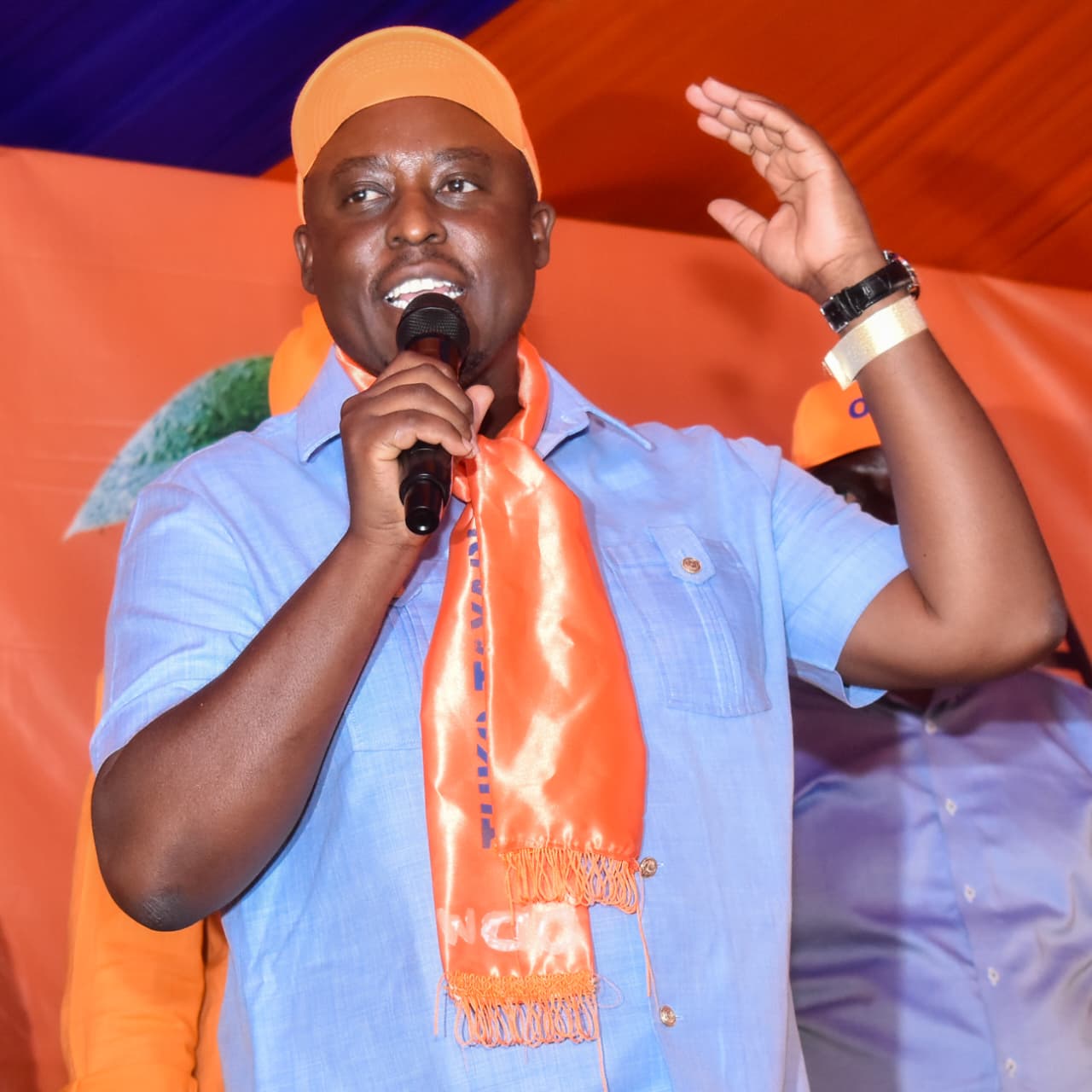
Dr. Bernard Shiaunda Eete Mobilizes Loyalists Ahead of Kenya’s General Election
Ahead of Kenya’s 2027 general election, Nyanza ODM aspirant Dr. Bernard Shiaunda Eete, popularly known as Dumex3, has intensified grassroots mobilization by holding a strategic meeting with his loyalists across the region. The gathering was aimed at aligning his team, refining campaign strategies, and positioning the movement for a decisive outcome at the polls.
The meeting provided an important platform for open consultation, idea exchange, and consensus building. Dr. Eete emphasized the need for unity, discipline, and clear communication as the campaign enters a critical phase. According to attendees, the discussions focused on strengthening the political structure on the ground, addressing community concerns, and ensuring that the movement remains responsive to the aspirations of the people.
A key focus was Dr. Eete’s developmental agenda for Nyanza. He outlined his commitments to education, youth empowerment, healthcare access, and infrastructure development, noting that these areas remain central to transforming lives in the region. He urged his loyalists to carry the message to the grassroots, explaining both what has been achieved so far and what the region stands to gain if they rally behind his candidacy.
“This is not just about winning an election. It’s about building a stronger, united political movement that delivers real change for our people,” Dr. Eete told the gathering. He called on his supporters to remain focused, avoid divisive rhetoric, and engage voters with facts about his track record and plans.
The meeting ended with a renewed commitment from the loyalists to expand outreach, coordinate ward-level activities, and mobilize voters ahead of party primaries and the general election. Organizers described the session as productive, noting that it sharpened the team’s resolve and clarified immediate next steps.
As political activity heats up in Nyanza, Dr. Eete’s camp says the strategy is clear: consolidate support, communicate consistently, and deliver a campaign anchored on service and results.


Live update from Kenya by Hon. Babatunde Seidu, Youths Ambassador._
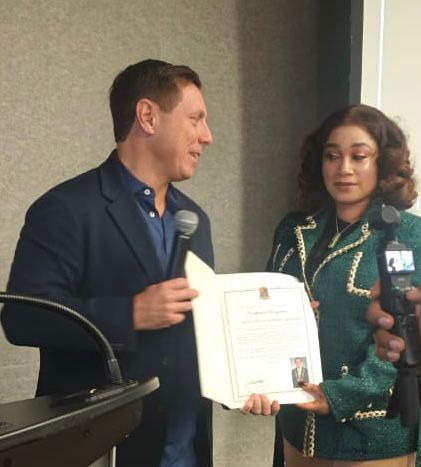
Mayor of Brampton Honours Olajumoke Abegunde For Charitable Works
…Foundation Touches Over 8,000 Women, Widows, and Youth in Ondo State…..
…Collaborates with International Partners for Free Skill Acquisition in Canada…
For Chief Mrs. Olajumoke Abegunde, the act of touching lives positively and contributing meaningfully to societal development is not merely a pastime but a deeply ingrained existential mandate. With unwavering gusto, she has remained faithful to this noble vision, championing the esoteric principle that cheerful giving and advocacy for the downtrodden are responsibilities too sacred to be left exclusively in the hands of the government.
This resolute philosophy has not only engendered transformative impact within her immediate locality but has also catapulted her onto the global stage. Recently, her passionate charitable exertions—executed both within and outside the shores of Nigeria—earned her prestigious international recognition.
A Legacy of Grassroots Transformation
As the visionary founder of the Jummy I Care Foundation, Chief Mrs. Abegunde has systematically dismantled barriers of vulnerability across Ondo State. Through sustained philanthropic gestures, she has disbursed extensive humanitarian relief and social assistance to over 3,000 indigent widows and elderly persons. In parallel, her foundation has galvanized robust support for orphaned and vulnerable children while orchestrating an ambitious women’s empowerment programme. To date, over 5,000 women have benefited from skills acquisition and income-generating activities designed to cultivate self-reliance and entrepreneurial audacity. Many of these beneficiaries have also received start-up seed capital to establish their own enterprises.
A proud alumna of Criminology and Security Studies from the National Open University of Nigeria, Chief Mrs. Abegunde has also distinguished herself as a patron of youth development. She has sponsored numerous essay writing and entrepreneurship competitions across Ondo State, in addition to funding medical outreaches, orphanage interventions, Iftar and Easter entrepreneurship programmes, and sustained feeding initiatives for the less privileged.
Her core philosophy remains immutable: when those who are well-to-do invest strategically in their immediate society, the collective becomes safer, more stable, and poised for greater heights.
International Collaboration and Brampton Honour
In a decisive move to intensify her developmental footprint, the Jummy I Care Foundation recently entered into a strategic tripartite collaboration with the Habeeb Okunola Foundation and the MakeMee Elegant Foundation. Together, they delivered a gratuitous, high-impact skill acquisition training programme to residents of Brampton, Canada.
Participants were immersed in an array of artisan crafts, including the production of resin bags, photo books, picture otters, resin key holders and frame holders, ornamental flower vases, rhinestone embellishment, and the advanced technique of printing images on fabrics.
In a ceremonial recognition of her sustained benevolence, the Mayor of Brampton formally hosted Chief Mrs. Abegunde and her delegation at the mayor’s office. The mayor personally expressed profound gratitude for her unwavering support of community development and entrepreneurship. As a tangible emblem of this appreciation, she was presented with a personally signed certificate of appreciation and commendation.
Unwavering Commitment to the Future
While accepting the honour, Chief Mrs. Olajumoke Abegunde reaffirmed her immutable resolve. She declared that her commitment to touching lives remains absolute and non-negotiable. According to her, she will not relent in ensuring that more lives are touched, more support is channeled to the people, and greater stability is secured for communities. She further emphasized her dedication to cultivating the spirit of entrepreneurship among women and youths as a cornerstone for sustainable development.
With over 8,000 direct beneficiaries in Nigeria alone and an expanding international footprint, Chief Mrs. Abegunde stands as a formidable testament to the profound change one determined philanthropist can effectuate when passion meets purpose.



APM Senatorial Candidate Ajadi Distributes Over 500 Bags of Rice
The Senatorial candidate of Oyo Central Senatorial District under the Allied Peoples Movement (APM), Ambassador Olufemi Ajadi Oguntoyinbo, has distributed over 500 bags of rice to residents, party members, state executives, and key stakeholders across Oyo State ahead of the forthcoming Eid al-Adha celebration.
The gesture, which forms part of his annual humanitarian outreach, was aimed at easing economic hardship and strengthening unity among party executives, party members, and residents within the senatorial district during the festive period.
Ajadi said the distribution was a continuation of his commitment to supporting vulnerable households and fostering community solidarity, especially at a time when many families are facing rising food prices and economic pressure.
He explained that Eid al-Adha is rooted in sacrifice, sharing, and compassion, adding that political leadership must consistently reflect empathy for the people, regardless of political affiliation or election cycles.
According to him, the intervention was extended to party executives, grassroots mobilizers, youth groups, and key stakeholders across the senatorial district to ensure equitable distribution across different segments of the political structure in Oyo State.
Ajadi further noted that the initiative was designed to complement household food needs during the festive season, stressing that small acts of support can significantly ease the burden on families affected by economic challenges.
He urged political leaders at all levels to prioritize welfare-driven initiatives that have direct impact on citizens, emphasizing that leadership should go beyond campaigns to sustained service delivery and humanitarian engagement.
Beneficiaries of the rice distribution expressed appreciation for the gesture, describing it as timely and thoughtful amid rising food costs across the country.
They commended Ajadi for maintaining close contact with grassroots members and consistently demonstrating what they described as people-oriented leadership.
The distribution exercise was carried out across selected locations within Oyo Central Senatorial District and coordinated through local party structures to ensure fairness and orderly sharing.
Political observers in the state noted that such interventions have become a key feature of political engagement in Nigeria, particularly during festive seasons, as politicians seek to connect with constituents beyond electoral promises.
As the Eid al-Adha celebration approaches, Ajadi reaffirmed his commitment to continuing similar initiatives aimed at supporting families and promoting unity among residents of Oyo State.


- Statement of the International Contact Group for the Great Lakes (ICG) on the situation in the eastern Democratic Republic of the Congo (DRC) May 24, 2026
- Eritrea: Messages of Congratulations May 24, 2026
- African Development Bank (AfDB) – 2026 Annual Meeting: Full live coverage on Africa 24 May 24, 2026
- Countries in the Horn of Africa and Yemen recommit to ending variant poliovirus May 23, 2026
- Seychelles: President Visits Police and Fire Services in Final Stop on La Digue Tour May 23, 2026
- United Nations World Food Programme (WFP) scales up emergency Ebola response in eastern Democratic Republic of the Congo (DRC) to contain risk of regional crisis May 23, 2026
- Economic Community of West African States (ECOWAS) Inspection Team Visits ECOWAS Stabilisation Support Mission in Guinea Bissau May 23, 2026
- Member States advance regional coordination on Bundibugyo Ebola response May 23, 2026
- World Health Organization (WHO) Supports Zambia to Strengthen Access to Mental Health Medicines and Services May 23, 2026
- Brazzaville 2026 African Development Bank Group (AfDB) Annual Meetings to focus on mobilising Africa’s development financing at scale May 22, 2026
- Statement of the International Contact Group for the Great Lakes (ICG) on the situation in the eastern Democratic Republic of the Congo (DRC) May 24, 2026
- Eritrea: Messages of Congratulations May 24, 2026
- African Development Bank (AfDB) – 2026 Annual Meeting: Full live coverage on Africa 24 May 24, 2026
- Countries in the Horn of Africa and Yemen recommit to ending variant poliovirus May 23, 2026
- Seychelles: President Visits Police and Fire Services in Final Stop on La Digue Tour May 23, 2026
- United Nations World Food Programme (WFP) scales up emergency Ebola response in eastern Democratic Republic of the Congo (DRC) to contain risk of regional crisis May 23, 2026
- Economic Community of West African States (ECOWAS) Inspection Team Visits ECOWAS Stabilisation Support Mission in Guinea Bissau May 23, 2026
-

 news5 months ago
WHO REALLY OWNS MONIEPOINT? The $290 Million Deal That Sold Nigeria’s Top Fintech to Foreign Interests
-

 society3 weeks ago
SOCIAL MEDIA IS NOT A BATTLEFIELD COMMAND – WHY THE NIGERIAN ARMY’S ACTION AGAINST JUSTICE CRACK IS A NATIONAL SECURITY IMPERATIVE
-

 celebrity radar - gossips4 months ago
Dr. Chris Okafor Returns with Power and Fire of the Spirit -Mounts Grace Nation Altar with Fresh Anointing and Restoration Grace on February 1, 2026
-

 celebrity radar - gossips5 months ago
Prophet Kingsley Aitafo Releases 2026 Prophecy: ‘Nigeria Will Rise, but the World Must Prepare for Turbulence’