
Education
Why i had sex with Shola – UNILAG lecturer, Dr Akin Baruwa


UNILAG Lecturer, Dr. Baruwa, who allegedly raped a young girl of 18years seeking admission has explained why he decided to have a sexual intercourse with her.
The victim, was interrogated and she also narrated how the ugly experience happened.
For nine days, Shola (not real name) was in pain. The abdominal pain she endured felt as if a knife got stuck in her, she told Saturday PUNCH.
She was scared but she had no choice but to endure the pain since she couldn’t imagine telling her parents the unimaginable trauma she had been subjected to that led to the pains she was going through.
“How could I face them? How could I tell them that the man they handed me over to, to help process my admission, had raped me?” Shola said.
But then, much as she tried, she couldn’t continue hiding her ordeal, especially when the pains had become unbearable. Shola’s parents eventually got to know what their daughter had passed through in the quest of trying to become an undergraduate.
Eighteen-year-old Shola is one of the numerous hopeful candidates, wishing to secure admission into the University of Lagos. But her score of 211 in the Unified Tertiary Matriculation Examination fell short of the requirement for Mass Communication, which was her choice.
Her father, who resided in Abesan Estate in Ipaja area of Lagos, had done all he could to ensure that her daughter would become a university student this year but all his efforts seemed to be futile.
“Someone told me to send her UTME registration number. He checked on the university website and said she was not eligible. Not convinced, I went to the school myself to check and it was the same problem.
“I had to start making calls to other universities where she could secure admission and someone told me she they could be helped to gain admission into the Olabisi Onabanjo University with that score.
“As soon as the UTME result was released around May, I informed a friend of mine who lives within the estate, who is a lecturer at UNILAG. I took my daughter to him and he promised that when it was time for the post-UTME examination, he would help her out with the process.”
The friend Shola’s father mentioned is Dr. Akin Baruwa, a lecturer in the Department of Accounting, UNILAG, who is also a chairman of one of the community development committees of Abesan Estate.
Shola’s father explained that when she realised that her result was not being accepted as eligible for Mass Communication, he went back to Baruwa on July 22, 2015 and the lecturer told him to bring his daughter the following morning so he could take her to campus and see how he could help.
“He said they had to take off very early the following morning. I did not suspect anything unusual about that timing because I trusted him. By 4am, I roused my daughter. We prepared and I took her to Baruwa’s house. I did not opt to follow them because I trusted him. I did not imagine that anything untoward could happen,” he said.
Baruwa and Shola took off from Abesan about 5am. She would later return home by 11am. His daughter was noticeably moody as she came home. Two hours earlier, Baruwa had called the father and told him that he had done all he could but that it did not seem her admission would be possible.
“When he told me that, I believed he had done all he could and told my daughter to come back home,” he said.
But it was not the same Shola that home that came back. She was moody and noticeably quiet. She went straight to her room and locked the door.
In company with child rights activist, Mrs. Esther Ogwu, whom the case was reported to by the family, our correspondent spoke with Shola in private to give details of what actually happened in Baruwa’s office that day.
It was obvious the girl was trying hard to stay composed. While she spoke, her right hand would go to her lower abdomen occasionally. When asked about it, she explained that she was still feeling some pain, which had reduced a lot since she got treatment.
Shola said on Thursday, July 23, 2015, as her father handed her over to the lecturer, she still did not suspect anything until they got to around Maryland.
“While I was inside the car, he started to touch my hair and rub my head. I was very surprised and I brushed off his hand. He never tried it again till we got to UNILAG,” Shola alleged.
According to her, while they were on the way, Baruwa was showing her different parts of town, telling her about places she did not know.
She alleged, “While we were on the way, he asked if I go out at all and I told him I don’t usually go out. And he would show me a place and say ‘This is Maryland o. You may not know since you don’t go out.’ Then he took me to the Yaba College of Technology. He drove inside and showed me the place. We later proceeded to UNILAG.
“When we got to his office, it was about 6.30am. The offices in the building were deserted. He said he liked to be early to avoid traffic. He told me to sit on the couch in his office.
“I noticed he was restless. He would stand and go outside sometimes. He asked if I wanted anything, I told him I was fine. He put on the television; I told him I was okay. He put on the air conditioner and I told him I did not want that.
“He had already heated water and made Coffee, which he offered to me. I told him I was okay and really did not need that. He then put the hot Coffee on the table. Later, out of respect, I took the cup and sipped a little. I started to feel drowsy not long after that. I did not know why.”
According to Shola’s narration, Baruwa later took her to see a female official in another building who examined her documents and explained further that there was little that could be done on her admission.
Baruwa reportedly said she might have to opt for diploma.
Shola claimed that when they went back to his office, the lecturer kept her document on his table.
She said, “He kept standing and moving around the office. Later, he went outside and when he came back inside, he locked the door and kept the key on his table. I did not know what was happening.
“A moment later, he told me to pick up a paper for him beside the couch. As I bent down to pick up the paper, he pushed me into a corner of the couch and held me down as he forcibly removed my trousers and underwear.”
Our correspondent asked at this point if Shola made any attempt to shout to alert anybody nearby.
She claimed that she actually screamed but that the way he held her down did not allow her voice to be as audible as she had wanted it to be.
Shola claimed, “If people were around the office, they would have heard me shout. He held me down, and pulled down my trousers and underwear. I screamed and begged him to leave me alone but he did not.
“After he had his way, he released me. As soon as I pulled up my trousers, I grabbed the keys to the door and rushed out while he was dressing up. He was walking behind me as I walked downstairs from his office. He said nothing as I walked away crying. He later went back.”
Shola’s father told our correspondent that he had been able to secure a place for her to write her post-UTME examination for an admission into OOU but the young girl has refused to go.
When our correspondent asked Shola why she refused to go, she said “How can I be sure that this same thing would not happen there? I don’t know anybody there. If it happens again, where would I run to?”
Our correspondent tracked down Dr. Baruwa a day after speaking with Shola and he gave his version of the encounter.
According to him, he indeed had a sexual encounter with Shola but it was “consensual.”
The lecturer, who seemed to be in his early 40s, told our correspondent that he made the mistake of not doing enough to resist the temptation of ‘sleeping’ with Shola.
Speaking with our correspondent in the front of his house out of earshot of his wife and two children, Dr. Baruwa said, “I swear to God that the girl agreed to everything that happened. She was a chatty girl, who did not show any shyness.
“It is true that I took her to YABATECH and showed her places. What is not true is that I deliberately took off from home because of any plan to do anything bad to her. I took off from home that early to avoid traffic.
“When she was in my office, she was the one telling me to be free with her. I realised that I needed to lie down a little and did not want my shirt to be rumpled. When I pulled it off, she even told me not to mind her presence that since it was my office, I could do whatever I wanted.
“When we first got to the office, she lay on my chest and was even playing with my manhood. That was why I could not resist it. After we came back from seeing the woman who was supposed to help with her admission, she was about to go when I told her to give me a hug. It was that which now led to the actual sexual encounter.
“When I realised that I could not resist her, I had to tell her to let me put on a condom. The truth is that, while I was putting on a condom, she stood by and waited. I did not actually penetrate. When she was saying ‘it’s enough, it’s enough’ and complaining that her tummy had started hurting her, I stopped.”
Baruwa explained that Shola’s father had sent a cryptic text message to him (days later when he learnt of what happened to his daughter), saying that he had learnt of what he did to his daughter.
“I know I betrayed his trust but nobody would understand it was consensual. I would have reached out to him to beg him if I think it would solve the problem,” he said.
When told that Shola went through more than a week of excruciating abdominal pain, Baruwa explained that if Shola left him the day of the encounter with any sign of hurt, he would have reached out to her to find out how she was doing.
Two days after our correspondent spoke with Baruwa, he was arrested by the police and the case is being investigated at the Isokoko Police Division, Agege, Lagos.
The case has also been reported at the Office of the Public Defender under the Lagos State Ministry of Justice. The Director of the OPD, Mrs. Omotola Rotimi, said the case would be followed to its logical conclusion.
Director of the Esther Child Rights Foundation, Esther Ogwu, a social worker handling the case, said when the case was first reported to her, the health of the girl was her immediate concern.
She said, “I had to refer them to the Mirabel Sexual Assault Referral Centre in Lagos so that she could get comprehensive treatment. This case is just another reason for girls and young women to be cautious of the issue of sexual assault.
“I believe this lecturer had been doing this in the past. It is necessary for girls to be aware and know what to do when in a potentially dangerous situation where they may be assaulted.
“I don’t expect him (the lecturer) to admit that he raped her. I knew he would say it was consensual, but I suspect that this is not the first time he would do such thing. Let the law take its course because we don’t know how many other girls are being saved because this case is coming out to the public.”
Baruwa was arraigned before an Ikeja Magistrate’s Court, Lagos on Thursday. He has been remanded at the KiriKiri prison





FAB Luxury Court Sets A Rare Benchmark For Excellence In Africa
~By Oluwaseun Fabiyi
Fab Luxury Court distinguishes itself as the premier choice for reliable investors and proactive developers in Nigeria and Africa.While numerous real estate entities operate within the country, Fab Luxury Court stands out for its exceptional honesty and integrity, delivering on the promises showcased on its social media page to distinguished customers globally.
As of now, no investors, whether domestic or international, have expressed regret over investing in or partnering with Fab Luxury Court. The company’s commitment to accessibility, accountability, and transparent financial reviews sets it apart from its contemporaries, rendering it a prized asset among its extensive clientele worldwide. Thousands of customers continue to patronize Fab Luxury Court due to its impeccable integrity and visionary approach.
*Why is Fab Luxury Court a worthwhile investment that warrants prompt consideration rather than hesitation?*
Fab Luxury Court’s security measures are exemplary and deserving of commendation, providing investors with capital protection through a robust structured framework, transparent reporting, and comprehensive legal documentation, thereby guaranteeing outstanding and secure returns.
Fab Luxury Court has further cemented its position as a leading developer and real estate powerhouse in Nigeria and Africa, currently managing several high-end estates in Maryland, Ikeja, Lagos and its surrounding areas.Fab Luxury Court demonstrates its unwavering commitment to excellence in Nigeria’s real estate sector through its best-selling estates in Ikeja.
Undoubtedly, partnering with and patronizing Fab Luxury Court will significantly contribute to securing your future; as you plan to associate with them in 2027, we encourage you to maintain a positive outlook and unwavering confidence in your future wealth.



Edukate Africa holds summit to tackle funding barrier in education
By Ifeoma Ikem
Edukate Africa, an edu-fintech platform is set to host the Disrupt Education Summit Africa (Disrupt ED) aimed at tackling funding barriers, skills gaps and curriculum mismatch in Nigeria’s education system.
The Director of Edukate Africa, Francis Omorojie who disclosed this to newsmen explained that the initiative was driven by the high rate of school dropouts linked largely to financial constraints, particularly at the higher institution
Omorojie said the summit scheduled for January 29 at the University of Lagos will bring together government officials, universities, financial institutions, private sector players and philanthropies to rethink education financing and prepare young Nigerians for the realities of today’s digital workforce.
He said that more than 50 percent of students who drop out of higher institutions do so because they cannot afford tuition and related costs, a situation he described as a major contributor to unemployment, brain drain and irregular migration.
“Africa’s youthful population could either become an economic advantage or a liability, depending on how well education and talent development are managed.
“Education is a fundamental need, but financial exclusion has continued to shut out many promising young people. When students drop out, it feeds unemployment and social instability.
“Our mission is to build innovative and sustainable financial models that keep young Africans in school and help them become productive,” he said.
He noted that Edukate Africa is deploying blended financing solutions that include tuition guarantees, technology driven scholarship platforms, gig and remote work opportunities for students, and partnerships with universities and philanthropies to establish endowment and alumni funds.
He said that the platform pays tuition directly to institutions after verifying students’ admission and academic records, ensuring transparency and accountability for donors.
“The summit would focus on aligning education with the fast changing nature of work, driven by digital transformation, artificial intelligence and emerging technologies as any university curricula are lagging behind workplace realities, leaving graduates ill prepared for employment.
“There is a clear disconnect between what students are taught and what employers need. This summit will create a roundtable where government, academia and the private sector can agree on the skills required for today’s economy and how to integrate them into learning.
“It will also examine education financing models, including how banks and financial institutions can design student friendly funding products, and how existing initiatives such as the Nigeria Education Loan Fund can be strengthened and scaled.’’
Omorojie added that Edukate Africa would use the summit to launch the CommUniversity Endowment Fund, a community led investment fund designed to generate sustainable returns that will be used to sponsor vulnerable students and support young entrepreneurs.
Unlike traditional grant models, he said the fund would invest in revenue generating businesses, with dividends channeled into education support and seed funding for student led startups.
He said the initiative would also promote innovation through activities such as Pitch My Dissertation, Africathon and inter university debates, encouraging students to turn academic research into commercial solutions and job creating ventures.
According to him, over 1,000 students and recent graduates are expected at the summit, with a partners’ pavilion providing employers and organisations direct access to top talent.
He added that Edukate Africa has already supported students in Nigeria, the United Kingdom and Uganda to complete their education, in some cases with relatively small amounts that made the difference between graduation and dropping out.
He said that the ultimate goal is to move beyond access to education and ensure that young people graduate with relevant skills, funding support and pathways into employment or entrepreneurship, thereby contributing meaningfully to Nigeria’s economic development.
Also speaking, Tosin Adebisi, Co-Founder of Edukate Africa said the Disrupt ED Summit was designed as a disruptive and transformative convergence that would move beyond familiar conversations to practical collaboration.
Adebisi said the summit was built around a new framework called Communiversity, which seeks to integrate universities, policymakers, industry, the third sector and students into a single ecosystem.
“Rather than everyone working in silos, Communiversity brings together policymakers, universities, industry and civil society, with students at the centre, to address access to education, the future of work and Africa’s competitiveness.
“Communiversity model would leverage alumni networks, high net worth individuals and diaspora support to unlock sustainable funding for universities.
“The summit is being organised in partnership with the University of Lagos and the University of Birmingham, with support from the Federal Ministry of Education.’’
The dignitaries that would grace the occasion include, Minister of Education, Dr Tunji Alausa; the Provost and Vice Principal of the University of Birmingham, Professor Nick, the Chief Operating Officer of Semicolon Africa, Ms Ashley Immanuel; and the Chief Executive Officer of Sterling One Foundation, Mrs Olapeju Ibikwe
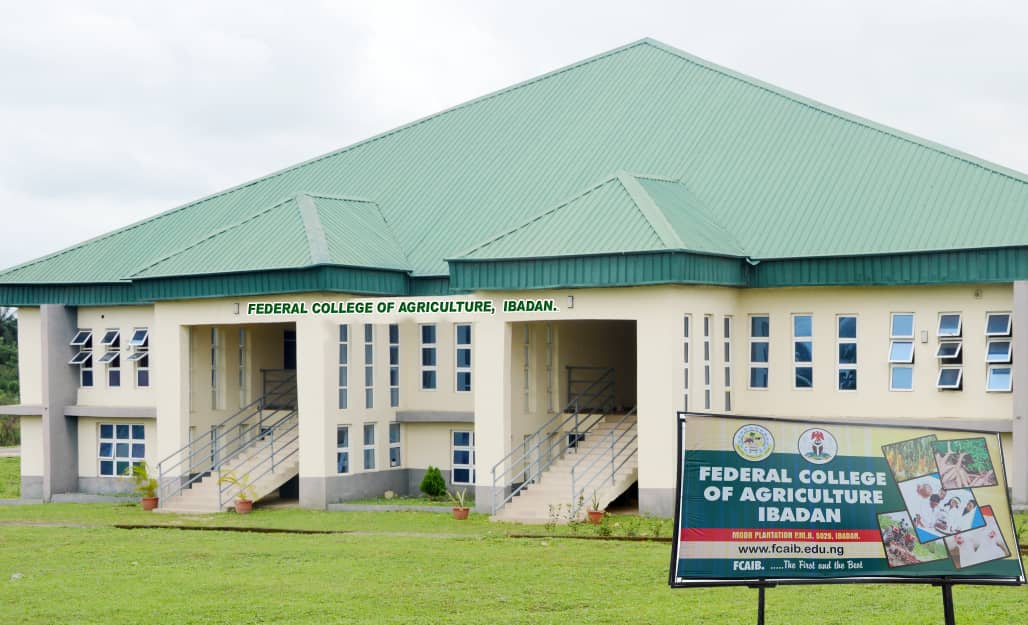
FCAIB is set to launch degree programmes in partnership with FUNAAB
IBADAN, OYO STATE, NIGERIA – In a groundbreaking move, the Federal University of Agriculture, Abeokuta (FUNAAB) has given the green light for the introduction of two innovative degree programmes at the Federal College of Agriculture, Ibadan (FCAIB), set to kick off in the 2025/2026 academic session.
According to an official release e-signed and made available to the media by Mrs. Wilson Oyekemi, Head of the Public Relations Unit of the institution, the newly approved programmes are B.Sc. (Home Science and Management) and B.Agric. (Agricultural Science).
As stated, the next academic session will witness the official commencement of both degree programmes, which constitutes a major breakthrough in the College’s academic development.
Established in 1921, the Federal College of Agriculture, Ibadan (FCAIB), originally known as the School of Agriculture, proudly stands as Nigeria’s and West Africa’s first agricultural institution, with a long and storied history.
The College’s roots trace further back to 1899, when Moor Plantation, Ibadan was established as a model farm to promote rubber cultivation and general agricultural improvement.
By 1905, the station evolved into an experimental research centre, focusing primarily on cotton production and other key agricultural studies.
The formal establishment of the School of Agriculture in 1921 marked the beginning of structured agricultural education in Nigeria.
Following the regionalization of education in 1954, the school relocated to its present site – where it has since grown into a formidable centre of agricultural learning and innovation.
Over the past century, the Federal College of Agriculture, Ibadan, has consistently upheld its mission of contributing to Nigeria’s agricultural development through qualitative education, skills acquisition, and the production of middle-level manpower for the agricultural sector.
The institution remains committed to empowering students with practical, hands-on skills and modern knowledge tailored to meet the evolving needs of agribusiness and food production in the 21st century.
Becoming Nigeria’s Premier Agricultural Institution, FCAIB envisions becoming the foremost agricultural education institution in Nigeria’s tertiary education system – a vision strengthened by its continued academic expansion and infastructural growth.
With over 100 years of continuous service, the Federal College of Agriculture, Ibadan has built a strong reputation as a leader in agricultural education, training, and research across the subregion.
The College currently offers a wide range of National Diploma (ND) and Higher National Diploma (HND) programmes across several disciplines, including:
National Diploma Programmes:
– Agricultural and Bio-Environmental Engineering Technology
– Agricultural Technology
– Home and Rural Economics
– Horticultural Technology
– Cooperative Economics and Management
– Science Laboratory Technology (SLT)
– Computer Science
– Food Technology
– Office Management Technology
– Library and information Science
– Multimedia Technology
– Organic Agricultural Technology
Higher National Diploma Programmes:
– Agricultural and Bio-Environmental Engineering Technology (Farm Power/Post-Harvest Technology/Soil & Water options)
– Agricultural Extension and Management
– Animal Production Technology
– Crop Production Technology
– Horticultural Technology
– Agribusiness Management
– Pest Management Technology
– Science Laboratory Technology (Microbiology Option)
These programmes are designed to blend theory with practical field experience, ensuring graduates are job-ready and self-reliant in the agricultural sector.
Beyond academic instruction, FCAIB maintains a strong emphasis on research and development, particularly in areas that directly impact food production and sustainable agricultural practices.
Recent infrastructural developments at the institution included the establishment of a Meteorological Centre, a Garri Processing Plant and an Oil Palm Processing Unit, all aimed at enhancing research, student training, and community impact.
The 9th and current Provost who doubled as the 28th Head of the 105 year-old Federal College of Agriculture, Ibadan, Prof. Jonathan Jeremiah Atungwu, a distinguished Nigerian academic Professor of Plant Nematology and an expert in Organic Agriculture and Biopesticides development with
research focus on non-chemical crop protection options, remained a focused and visionary leader.
He is Certified locally and internationally with enviable credentials, some of which include but not limited to:
– Over 100 publications in reputable outlets
– Expertise in Organic Agriculture and Biopesticides development.
– A team player with demonstrated leadership skills and experience in various capacities: Past Dean (COLPLANT) in FUNAAB and LASU, President of several professional societies.
– Membership and leadership in international and local organizations, such as ISOFAR, ISPP, NSPP, NISOP, ADAN and many more.
Prof. Atungwu is a renowned mentor for the upcoming agricultural scientists, teachers, agropreneurs, and youths.
He is happily married, and blessed with pleasant, hardworking, and disciplined children.


-

 society7 months ago
Religion: Africa’s Oldest Weapon of Enslavement and the Forgotten Truth
-

 news4 months ago
WHO REALLY OWNS MONIEPOINT? The $290 Million Deal That Sold Nigeria’s Top Fintech to Foreign Interests
-

 society6 months ago
“You Are Never Without Help” – Pastor Gebhardt Berndt Inspires Hope Through Empower Church (Video)
-

 celebrity radar - gossips2 months ago
Dr. Chris Okafor Returns with Power and Fire of the Spirit -Mounts Grace Nation Altar with Fresh Anointing and Restoration Grace on February 1, 2026
You must be logged in to post a comment Login
You must log in to post a comment.