
society
Borrowed Strengths and Broken Truths: Why Nigeria’s Politics Is Built to Fail


Borrowed Strengths and Broken Truths: Why Nigeria’s Politics Is Built to Fail.
By George Omagbemi Sylvester | Published by SaharaWeeklyNG.com
A political party built on the foundation of LIES, PROPAGANDA and DECEPTION will ultimately collapse, no matter how long it survives. This is not mere CONJECTURE, it is POLITICAL-SCIENCE backed by HISTORICAL EVIDENCE and OBSERVABLE GOVERNANCE failures across Nigeria. Today, the Nigerian political landscape is plagued by insincerity, artificial alliances and power grabs driven by greed rather than nation-building. This foundation of dishonesty, coupled with a chronic addiction to embezzlement, has left Nigeria in a political and economic mess that may take generations to clean up.

A Nation in Self-Deception. Nigeria’s post-independence journey has been marked not by steady growth but by REPEATED REGRESSION. What is most disturbing is not that mistakes have been made, but that lies have been institutionalized. Every election cycle promises “CHANGE,” “HOPE,” or “RENEWED HOPE” yet what follows is DISAPPOINTMENT, DISILLUSIONMENT and DISASTER. How do you build a strong political house on the QUICKSAND of DECEIT? The ruling party’s playbook has become predictable: manipulate the masses with emotional propaganda, demonize the opposition, rig the electoral process and reward loyalists with appointments. The 2023 general elections are a clear example; marred by allegations of widespread rigging, voter suppression and compromised technology. INEC’s BVAS and IREV, hailed as revolutionary tools for electoral transparency, were either sabotaged or deliberately misused, leading even international observers like the European Union Election Observation Mission (EU EOM) to criticize the credibility of the process. According to the EU report on the 2023 elections: “The elections did not ensure a level playing field, transparency and accountability. Public trust was severely damaged.”

When the very institutions meant to safeguard democracy are complicit in undermining it, collapse is only a matter of time.
Borrowed Strengths Cannot Guarantee Endurance. A party that borrows strength from coercion, manipulation, tribalism, religious bias, or military force does not stand on solid ground. You cannot build sustainable political success on the rented loyalty of sycophants or the fear of reprisals. A tree with borrowed roots will never withstand a storm. This is why the political godfatherism model is crumbling. The once-dreaded alliances are now publicly embarrassing themselves. Take the ongoing rift within the ruling APC between the so-called ‘PROGRESSIVES’ and ‘CONSERVATIVES,’ all scrambling for control of power. It reveals a party cobbled together not by shared values, but by OPPORTUNISM. Like a Frankenstein monster, the APC was stitched together in 2013 by desperate political actors whose only common denominator was a shared desire to unseat Goodluck Jonathan. Now that power has been attained, the lack of ideological foundation has left it rudderless.

Embezzlement: The National Plague. Nigeria’s Achilles’ heel is CORRUPTION especially embezzlement of public funds. From the local government level to Aso Rock, looting has become normalized. The Auditor-General’s 2023 report revealed that over ₦2.9 trillion in public funds remain unaccounted for. These are not just numbers, they are stolen hospitals, vanished schools, unpaid pensions and collapsed infrastructure.
As Nelson Mandela once said: “A nation should not be judged by how it treats its highest citizens, but its lowest ones.”
In Nigeria, those at the bottom are abandoned, while those at the top loot with impunity. Political leaders no longer serve the people. They serve their pockets, their sponsors and their future business interests. It is why campaign promises become meaningless once elections are won. The office becomes a CASH COW and appointments are auctioned, contracts inflated and state budgets turned into personal portfolios. Even the recent Tinubu-led administration’s “subsidy removal” was sold as an economic necessity, but the funds saved have not led to visible improvement in the lives of ordinary Nigerians. Instead, reports emerged that ₦10 billion was approved to install solar panels in the Aso Rock villa while the nation sits in near-total blackout. This is not governance; it is robbery under the guise of reform.
The Fallacy of ‘We Know It All’. One of Nigeria’s silent killers is arrogance, the belief by those in power that they know it all and must not be questioned. Constructive criticism is dismissed as sabotage. Civil society voices are silenced. Journalists are threatened. Activists are harassed. This toxic culture of “WE KNOW BEST” has created an echo chamber where bad policies are repeated and failed models are repackaged as new ideas. For instance, despite decades of evidence showing that Nigeria’s heavy dependence on oil exports is unsustainable, successive administrations have refused to diversify the economy meaningfully. Meanwhile, the youth population (NIGERIA’S MOST VALUABLE ASSET) remains unemployed, undereducated and underutilized.
Dr. Oby Ezekwesili once remarked: “A country that fails to invest in its human capital is planning its funeral.” And yet, education budgets remain below UNESCO’s recommended 15–20% of national budgets.
Leadership Without Vision. At the root of this national dysfunction is the absence of visionary leadership. Nigeria has been cursed with leaders who see politics as a business, not a public service. They invest heavily in campaigns, not to serve the people, but to reap the “RETURNS on INVESTMENT” once in office. There is no LONG-TERM PLANNING , no POLICY CONSISTENCY and no MEASURABLE GOALS. The National Development Plans are either ignored or hijacked by the ruling elite for personal gain. From Vision 2020 to Economic Recovery and Growth Plan (ERGP) and now “Renewed Hope Agenda,” all have failed to transform Nigeria because they were never backed by SINCERITY or ACCOUNTABILITY.
In the words of Prof. PLO Lumumba: “The tragedy of Africa is that the African man is in the business of politics, not the politics of business.” And until that changes, no amount of borrowed strength will save us.
The Road Ahead: Collapse or Rebirth? The collapse of a political party built on deception is not a matter of if, but when. The warning signs are already flashing. The people are getting restless. Social media is becoming a powerful weapon against official lies. Protest movements like EndSARS are evidence that Nigerian youths are awakening to their power. However, if the political class refuses to reform, then collapse may be the only path left to clear the way for something new.
What Nigeria needs is not another messiah or recycled politician; it needs SYSTEM-WIDE CHANGE:
Electoral reforms that ensure free and fair elections.
A judiciary that is independent and incorruptible.
Political parties with clear ideologies and policies.
Education that teaches civic responsibility and critical thinking.
A culture of accountability where no one is above the law.
Until then, let us not be surprised when these parties and their artificially sustained governments implode. They were never built to last because they were never built on truth.
As Abraham Lincoln once said: “You can fool all the people some of the time and some of the people all the time, but you cannot fool all the people all the time.”
Time is running out for political deceivers. The people are watching. The reckoning is near.


Written by George Omagbemi Sylvester
Published by SaharaWeeklyNG.com




FOPCHEN Seeks Wider Engagement As Court Defers Hearing
OTA, OGUN STATE — The High Court of Ogun State, Ota Division, on Thursday resumed hearing in the ongoing matter involving cultural and societal concerns, before adjourning proceedings till Thursday, July 2, 2026, for continuation of hearing.
At the resumed sitting on May 28, 2026, counsel representing the various parties revisited key issues in the case and made further submissions before the court.
The matter, which has continued to generate public interest across different sectors, again drew attention from legal observers and stakeholders who described the case as one with significant implications for societal values, cultural identity and constitutional interpretation.
Speaking after the proceedings, the Foundation for the Protection of Cultural Heritage in Nigeria, popularly known as FOPCHEN, renewed its appeal for dialogue and constructive engagement among Nigerians, stressing that sensitive cultural and moral issues should not be left entirely within the confines of the courtroom.
According to the group, broader conversations involving traditional institutions, civil society organisations, religious leaders and policy stakeholders remain necessary in addressing issues relating to national values and social responsibility.
Legal analysts at the court premises noted that arguments being canvassed by parties in the suit could shape future legal interpretations surrounding cultural and moral questions in the country.
Following submissions by counsel, the presiding judge adjourned the matter till Thursday, July 2, 2026, to enable parties further prepare and respond to issues raised during the hearing.
The development has continued to spark reactions among observers, with many Nigerians closely monitoring the proceedings ahead of the next hearing date.
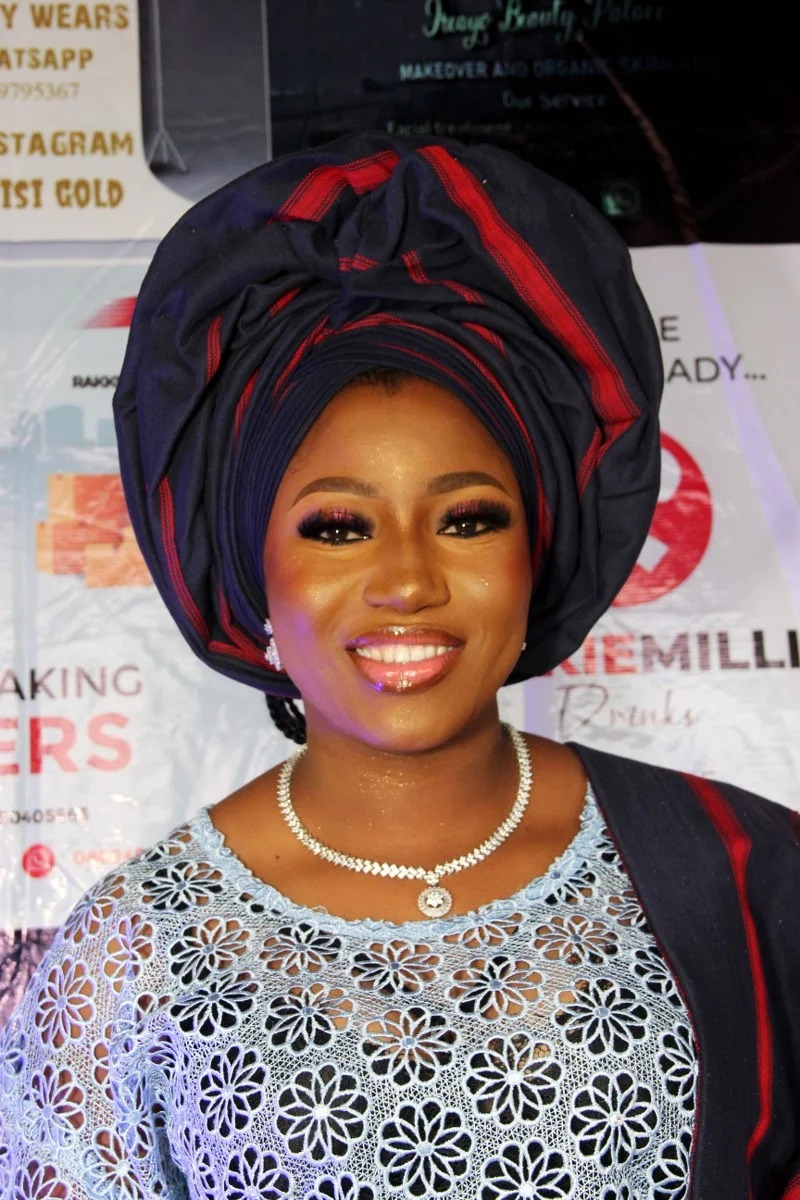
US-Based Society Lady, Fehintola-Brat Extends Eid-El-Kabir Greetings To Muslims
United States based fahionista of class, Chief (Mrs) Ayoola Fehintola-Brat has extended a warm greetings to Muslim faithful all over the world on the occasion of the 2026 Eid-El-Kabir celebration.
Fehintola-Brat who is the Balogun Egbe Obaneye Obinrin Akile Ijebu, and the Yeye Asofin of Idenaland in her message to Journalists urged Muslim to continually uphold the enduring values of sacrifice, obedience, faith, and compassion, which are central to the significance of Eid-El-Kabir festival.
A quiet philantropist whose humanitarian services has won her several laurels urged Muslims to use the spiritual occasion to pray for the peace co-existence of Nigerians regardless of religious, social and political leanings stressing that the oneness of the country should not be underplay.
In a related development, she expressed her felicitations to all sons and daughters of Ijebuland on the forthcoming Ojude Oba 2026 celebration, tasking age-groups otherwise known as Regbregbe to be more proactive in giving back to their immediate communities.
According to her, the beauty of the age-groups in Ijebuland is the need to contribute immensely to the development of the land in no small means. “This we will continue to achieve with God on our side”, she concluded.
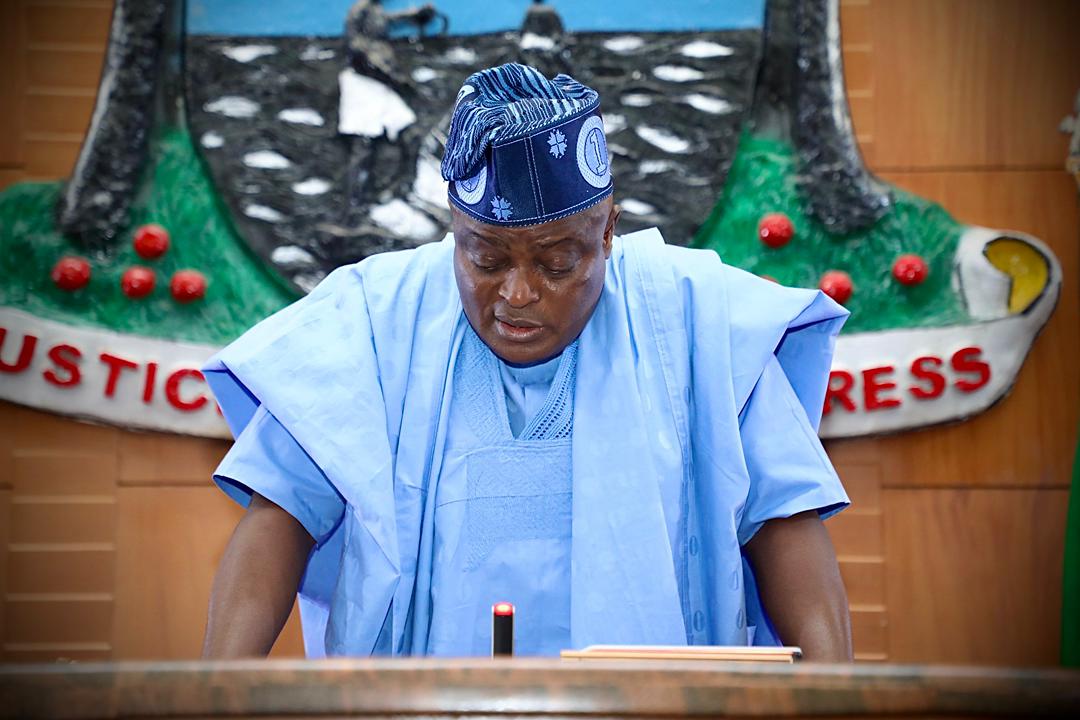
Sallah: Obasa Felicitates Muslim Ummah, Commends Nigerians for APC Primaries Turnout
The Speaker of the Lagos State House of Assembly, Rt. Hon. Mudashiru Obasa has extended warm felicitations to Muslims in Lagos State and across Nigeria on the occasion of Eid al-Adha.
In a statement released by his Chief Press Secretary, Mr. Dave Agboola, Obasa described the festival as a season of sacrifice, reflection, and gratitude, urging the faithful to continue to uphold the values of peace, unity, and love that strengthen the nation.
He noted that the celebration of Eid al-Adha is not only a spiritual milestone but also a reminder of the importance of togetherness and collective responsibility in building a stronger society.
He, likewise, emphasized that the festival provides an opportunity for Nigerians to renew their commitment to national progress and to support leadership that prioritizes development and prosperity.
Obasa, however, commended Nigerians, particularly members of the All Progressives Congress (APC), for their massive turnout during the recently concluded party primaries. He described the participation as a clear demonstration of the people’s confidence in the government of President Bola Ahmed Tinubu and their belief in the administration’s vision for a greater Nigeria.
“The APC primaries have shown the resilience of our democracy and the confidence Nigerians have in the leadership of President Bola Ahmed Tinubu and the Renewed Hope Agenda. This is a strong message that our people are ready to continue supporting policies that will drive growth and prosperity,” Obasa stated.
The Speaker further encouraged Muslims to celebrate responsibly, stressing that the joy of Eid should be accompanied by prayers for the continued peace and progress of Lagos State and Nigeria.
“As you celebrate with family and loved ones, may this season bring joy, peace, and prosperity to your homes. Let us remain united in our resolve to build a stronger nation,” he added.
On behalf of the Lagos State House of Assembly, Obasa wished all Muslims a happy and fulfilling Eid al-Adha celebration.


- Société Nationale des Pétroles du Congo (SNPC) Chief Ominga to Speak at African Energy Week (AEW) 2026 as Congo Accelerates Gas Expansion May 29, 2026
- South Africa: Deputy President Mashatile arrives in India for a Working Visit May 29, 2026
- Seychelles: President Visits Key Development Sites on Coetivy Island May 29, 2026
- Accelerating regional action to advance mental health care in Africa May 29, 2026
- President of the Republic of Seychelles Meets Young La Digue Talent Ahead of London Showcase May 29, 2026
- United Nations Economic Commission for Africa (ECA) launches regional initiative to accelerate women’s digital entrepreneurship across four African countries May 29, 2026
- Ethiopia: International community must act to safeguard press freedom ahead of national election May 29, 2026
- CORRECTION: Annual Meetings 2026 (AM2026): African Development Bank (AfDB) 2025 Trade Finance Report Highlights Resilience of African Financial Institutions After Covid-19 May 29, 2026
- Why Big Tech Could Become Nigeria’s New Gas Partner May 29, 2026
- African Energy Chamber (AEC)-Venezuela Alliance Accelerates Pathways into South-South Energy Expansion May 29, 2026
- Société Nationale des Pétroles du Congo (SNPC) Chief Ominga to Speak at African Energy Week (AEW) 2026 as Congo Accelerates Gas Expansion May 29, 2026
- South Africa: Deputy President Mashatile arrives in India for a Working Visit May 29, 2026
- Seychelles: President Visits Key Development Sites on Coetivy Island May 29, 2026
- Accelerating regional action to advance mental health care in Africa May 29, 2026
- President of the Republic of Seychelles Meets Young La Digue Talent Ahead of London Showcase May 29, 2026
- United Nations Economic Commission for Africa (ECA) launches regional initiative to accelerate women’s digital entrepreneurship across four African countries May 29, 2026
- Ethiopia: International community must act to safeguard press freedom ahead of national election May 29, 2026
-

 news6 months ago
WHO REALLY OWNS MONIEPOINT? The $290 Million Deal That Sold Nigeria’s Top Fintech to Foreign Interests
-

 society4 weeks ago
SOCIAL MEDIA IS NOT A BATTLEFIELD COMMAND – WHY THE NIGERIAN ARMY’S ACTION AGAINST JUSTICE CRACK IS A NATIONAL SECURITY IMPERATIVE
-

 celebrity radar - gossips4 months ago
Dr. Chris Okafor Returns with Power and Fire of the Spirit -Mounts Grace Nation Altar with Fresh Anointing and Restoration Grace on February 1, 2026
-

 celebrity radar - gossips6 months ago
Prophet Kingsley Aitafo Releases 2026 Prophecy: ‘Nigeria Will Rise, but the World Must Prepare for Turbulence’