Connect with us

Politics

WHY WE DON’T TRUST INEC, FEDERAL GOVERNMENT- LAGOS APC CHAIRMAN, OTUNBA AJOMALE

Published

on

 
Many Nigerians had prepared mind and body for the 2015 general elections which was originally scheduled to start on Saturday, February 14th, 2015 until the Independent National Electoral Commission (INEC) shocked the country and indeed international observers with a rescheduling, although, we saw it coming.
 
The announcements of new dates for the elections has since brewed many controversies including whether or not the Peoples Democratic Party being the ruling party was hiding under the authority of the federal government to gain INEC’s favour. There were also talks of plans to sack the INEC Chairman, Prof. Attahiru Jega for refusing to bend a little.
 
In this exclusive interview with Sahara weekly magazine, Otunba Henry Oladele Ajomale reacts to these stories making the rounds. He also talks about why it is difficult for the APC to trust INEC and why he feels Obasanjo was right to tear his PDP membership card.
 
 
Can we meet you?
 
My name is Oladele Ajomale. I am the chairman of APC, Lagos state.
 
What is your take about the rescheduling of the election? Now, there is even an insinuation that there is a grand plan to scuttle it and sack the INEC chairman, Attahiru Jega, what are your positions on these?
 
All the stories I’ve heard are rumour but again, it is becoming an issue generating so much controversies not only in Nigeria but also outside the country. Perhaps, there is an iota of truth in everything said because the reasons given for the postponement of the election is not tenable. First, we have been having a war in these local governments and in the states over 5 years and that war has not spread more than these same 14 local governments in the North east. It has not gone to the North West or North central.
 
Therefore, I believe the military must have curtailed the Boko Haram activities. So, that shouldn’t be the reason for the stoppage of the election in 32 states including Abuja because there was relative peace in these states we are talking about. Secondly, why should it be the security officers that should write a letter to INEC advising them to shift election? If INEC refuses to shift that election and anything happens, it will be on INEC. So, head or tail, INEC will be blamed if they didn’t postpone the election. However, it doesn’t mean that it should be postponed by 6 weeks. Are they going to finish the prosecution of Boko Haram in 6 weeks? INEC said 73% of PVCs have been collected in totality. If you are looking for 100%, you are wasting your time. If majority of those who are voting have their PVC, I don’t see any reason for the postponement except there is something behind it. So, the two reasons given, to us are not tenable because it has been proved that it is not sufficient enough to postpone the election except they have an agenda which has not been known. Some people identified that they purposely did it in order to perpetrate certain things. I pray the war ends in 6weeks so that we will have peace everywhere in Nigeria. There will not be anybody to say I lost the election because of this, again, when the election is not done when it is supposed to, you are violating the constitution but we have agreed to wait for 6weeks and that doesn’t stop us from doing our rally. We will still continue it; they won’t catch us except they have a plan which we don’t know. Like what happened in Ekiti that is now been revealed. Everyone is on the watch out, whatever they want to do, they will see. Whether they want to rig it, the whole world is watching, we are also watching. We are not going to sleep until this election is over
 
The APC has been accused severally of heating up the polity. How would you react to this sir?
 
If that is the way they want to view it, then it is okay. We trusted the federal government, we trusted INEC during the Ekiti elections but, we have learnt a very good lesson that they cannot be trusted. We can tell that the military, INEC and the federal government were all involved in the rigging of the Ekiti elections. Thus, if we don’t shout out before the elections, when do we want to cry out?
 
Recently here in Lagos, we signed a peace agreement where the two gladiators, other parties and stakeholders were present. Same night we signed the agreement, they started tearing all our posters on 3rd Mainland Bridge claiming that it is a federal road. Is it the PDP that owns the federal government or the federal roads?
 
Recently, former President of Nigeria Olusegun Obasanjo renounced his membership of the PDP and went ahead to tear is membership card of the party. Many believe that the attitude is unbecoming of an elder statesman. Do you also share same sentiments?
 
I am a Yoruba man, I don’t insult my elders. I believe what he did is a reaction to what has been done to him and the country. After all, he is not coming to our party. so I believe they are all same in same.
 
Right from time, we have known President Obasanjo to be an emotional person. He is used to reacting exactly the way he feels. So, if that is the way he felt at that time, then it is okay to express it.
 
So, what is your expectation from the 2015 elections?
 
Well, my expectation is to see that the best man wins the election. Nigeria has been under a cabal for a while now and we need a new direction. With all the resources we are blessed with as a nation, there has been nothing to show for it.
 
My expectation is to have a Nigeria with uninterrupted power supply, reduced unemployment rate, to see corruption significantly minimized and to have good governance….
 
(Cuts-in) Your expectation for the election sir…
 
Well, my wish is for the best man to win and to have a peaceful free and fair election without rigging.
 
But people believe that all politicians are the same?
 
No, that is not true; politicians are not all the same. There are still politicians who are passionate about Nigeria. There are politicians who travel abroad and when they are there they are well behaved but, they come back and behave with so much impunity. See, this country is founded on law and the law must be obeyed. The culture of impunity must stop.
 
There are still politicians who believe in obeying the laws of the country, politicians who are passionate about the development of Nigeria.
 
Finally, this is about Lagos, the Alliance for Democracy gubernatorial candidate in the state believes that on his party has the experience to rule Lagos effectively. According to him, the AD ruled for 8 years, AC 4 years, ACN 2 years and the APC just 2 years. What is your reaction to this?
 
What exactly does he mean by saying that? I am so disappointed! Is it not same people who have progressed from AD to APC? I have been there, Asiwaju has been there, BRF has been there so who are the people now in AD?
 
In fact, there party is operating without a certificate. There are to factions of the AD; one has a certificate and the other does not so, I think they should just go and sort out their problems.


Continue Reading
Advertisement
Click to comment

You must be logged in to post a comment Login

Leave a Reply

Politics

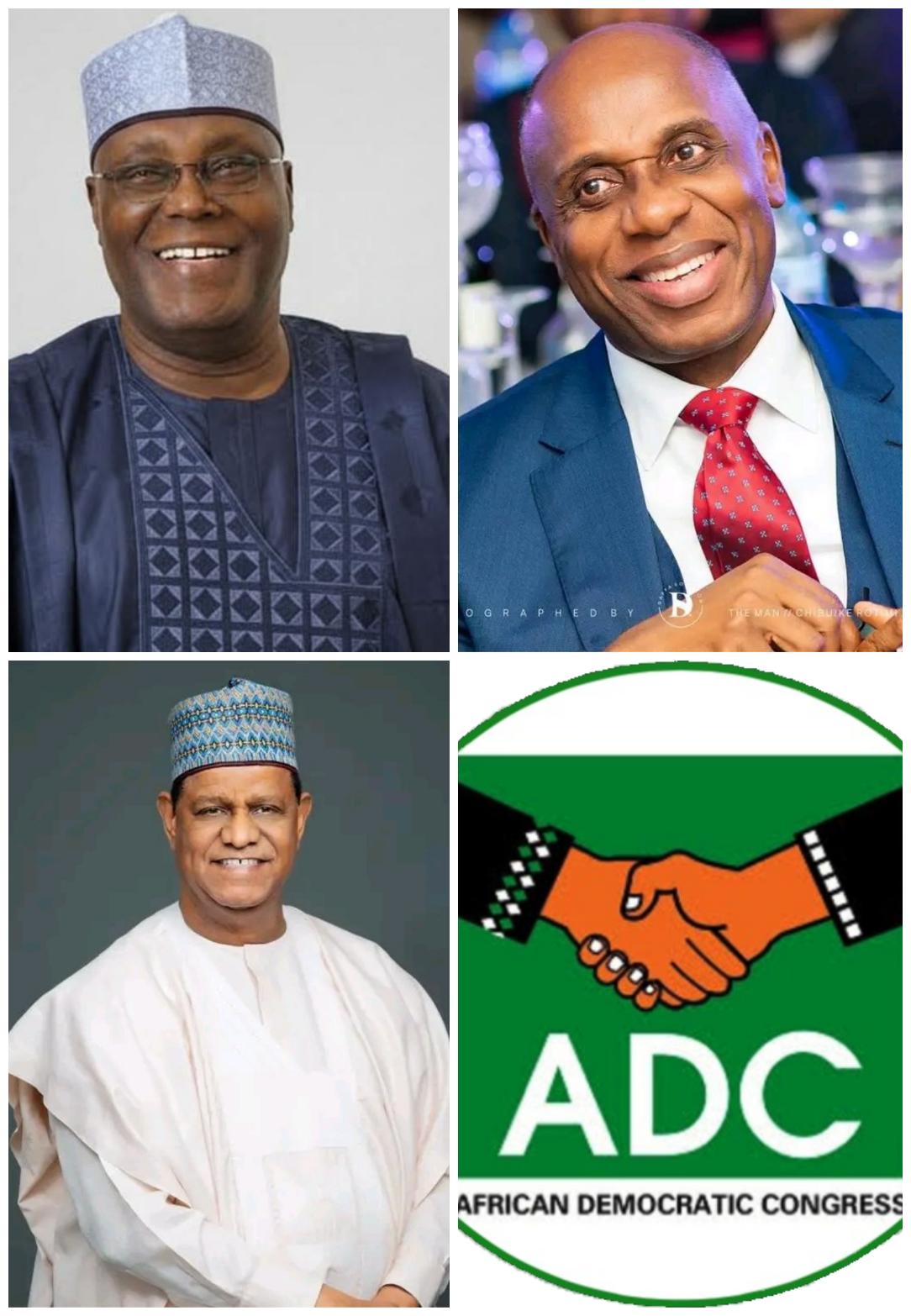
ADC Inaugurates Southwest Zonal Working Committee in Ibadan, Reaffirms Party Strength and Unity

Published

on

ADC Inaugurates Southwest Zonal Working Committee in Ibadan, Reaffirms Party Strength and Unity


In a significant move to boost its regional structure and foster greater coordination, the African Democratic Congress (ADC) on Tuesday inaugurated its Southwest Zonal Working Committee during a stakeholders’ meeting held at the Kakanfo Inn, Off Ring Road, Ibadan.


The event brought together key party figures, state chairmen, and additional stakeholders from across the six Southwest states, highlighting the party’s commitment to inclusive representation and grassroots engagement.


The inauguration ceremony was presided over by prominent party leaders, including the National Secretary, Ogbeni Rauf Aregbesola. State chairmen from Ekiti, Lagos, Ogun, Ondo, Osun, and Oyo presented comprehensive reports on the party’s structure, penetration, and preparedness in their respective states.


The briefing began with Hon. Ilesanmi Omolayo, the Ekiti State ADC Chairman, and concluded with Hon. Ashiru George from Lagos, collectively delivering reassuring accounts that underscored the ADC’s growing organizational stability and readiness for upcoming political activities.


In his address, Ogbeni Rauf Aregbesola charged all elected party officials and stakeholders to remain committed to strengthening the ADC in the Southwest and across Nigeria. He emphasized the importance of unity, discipline, and effective coordination as key pillars for building a formidable party capable of offering Nigerians a credible, people-oriented alternative. Aregbesola also stressed the need for continuous engagement with the national leadership to ensure proper harmonization, validation, and accuracy of party officers in all states.


During the meeting, the names of Southwest officers serving at the national level were formally read and inaugurated, reaffirming the zone’s influential role within the party’s hierarchy which includes;


1). Akinbolawale Omole – National Vice Chairman (Ekiti)


2). Captain Tunji Shelle – National Director, Communication and Programmes (Lagos)


3). Professor Bode Ayorinde – Diversity and Inclusion Secretary (Ondo)


4). Fabiyi Oladimeji – Deputy National Financial Secretary (Ogun)


5). Alhaja Khafilat Omolabake Olayiwola – Deputy National Women Leader (Oyo)


6). Olufemi Adeleye – Deputy Coordinator, Diaspora (Ekiti)


7). Mrs. Yidiat Omolara Oseni – Assistant National Organising Secretary (Osun)


Additionally, the newly appointed members of the Southwest Zonal Working Committee were introduced, further enhancing the party’s zonal framework. These zonal appointments include;


8). Assistant National Secretary: Architect Basiru Aremu Lawal


9). Assistant National Woman Leader Zonal: Lady Lydia Omarisola Olafunmiloye (Ondo)


10). Assistant National Youth Leader Zonal: Mrs. Elizabeth Adeola Olusi (Lagos)


Party leaders expressed optimism about the committee’s potential to improve leadership efficiency, promote democratic ideals, and drive regional development initiatives. The ADC remains resolute in its mission to deepen democratic values, strengthen internal structures, and position itself as a viable force for national development.


This inauguration marks a progressive step for the ADC in the Southwest, to enhance a positive collaboration and a unified push toward greater political impact in Nigeria.


ADC…. Arise and Shine!

Continue Reading

Politics

OGUN VISIONARIES READY TO HOLD SECOND EDITION OF TOWN HALL MEETING IN IJEBU ODE

Published

on

OGUN VISIONARIES READY TO HOLD SECOND EDITION OF TOWN HALL MEETING IN IJEBU ODE

As part of its commitment to participatory democracy, Ogun Visionaries for Yayi has announced plans to hold the second edition of its Town Hall Meeting on Thursday, 12th February, at RONTEX Hall Events Centre, opposite the Old Burial Ground, Ibadan Road, Ijebu-Ode, Ogun State. The event is scheduled to commence at 11:00 a.m.

This was disclosed in a press release signed by Hon. Monsur Oloyede, Chairman of the Planning Committee, who assured that the programme would be one of the best town hall engagements organised by the group.

According to him, the town hall meeting is aimed at bringing together the people of Ogun State—particularly stakeholders from Ogun West—to further enlighten and mobilise support for the 2027 gubernatorial ambition of Senator Solomon Adeola (Yayi).

The Honourable Minister of Health, Dr. Adekunle Isiaq Salako, will serve as Chairman of the Occasion, while Dr. Fatimat Oluwakemi Binta Shoge will be the Chair person

The. Mother of the Day is Otunba Dr. Aderonke Kolade Cairo, the Eeta Iyalode Bobakeye Obinrin Akileand Grand Matron of Ogun Visionaries.

The Keynote Address will be delivered by Rt. Hon. Tunji Egbetokun, former Speaker of the Ogun State House of Assembly, while Hon. Onadeko Onanusi, former Member of the House of Assembly, will serve as Guest Speaker.

The Royal Fathers of the Day are:
Oba Adedotun Odunneye Odusanya, JP, Osijiya II, Olu of Odonselu, Alaro Kingdom, Ijebu and Oba Kazeem Adesina Salami, Ilufẹmiloba I, Osobia, Paramount Ruler of Makun-Omi.

Dr. Niyi Osoba will also feature as Speaker of the Day.Chief Segun Ojolowo Ojuko
The Ogboye of Ota Aworiland
Fmr SSA on housing to Ogun State also will deliever speech that day

Discussants for the programme include Hon. Tola Banjo, Olootu Bolaji Adeniji, and Princess Florence Feyikemi, while Chief Ajiroba Dapo Oke, Register Tai Solarin federal University of education Ijagun, will serve as Chief Reviewer/Rapporteur

The Director-General of Ogun Visionaries for Yayi, Hon. Odunleye Odunjo, will be the Chief Host of the event.

Continue Reading

Politics

Trump’s Recognition of Remi Tinubu at U.S. National Prayer Breakfast

Published

on

Trump’s Recognition of Remi Tinubu at U.S. National Prayer Breakfast By George Omagbemi Sylvester

Trump’s Recognition of Remi Tinubu at U.S. National Prayer Breakfast

By George Omagbemi Sylvester | Published by SaharaWeeklyNG 


“Soft Power on a Global Stage: The Symbolism Behind Trump’s Acknowledgment of Oluremi Tinubu in Washington.”


In the often-ceremonial but politically symbolic arena of international diplomacy, moments of public recognition can carry deeper meaning than their brief appearances suggest. Such was the case at the 74th U.S. National Prayer Breakfast in Washington, D.C., where United States President Donald Trump publicly acknowledged Nigeria’s First Lady, Senator Oluremi Tinubu, describing her as a “very respected woman” and highlighting her role as a Christian pastor. The brief recognition, delivered before a global audience of political and religious leaders, has since generated attention in diplomatic and media circles. It was more than a passing courtesy; it represented a convergence of religion, diplomacy and global optics at a time when the relationship between Washington and Abuja is being redefined by security concerns, religious freedom debates and geopolitical interests.


The Moment in Washington. During his remarks at the annual gathering, President Trump paused to draw attention to the Nigerian First Lady seated among the guests. He said: “We are honoured to be joined today by the First Lady of Nigeria, a very respected woman.” The audience responded with applause as the American president acknowledged her presence, noting her pastoral role in one of Nigeria’s largest Christian denominations. The National Prayer Breakfast, held each February in Washington, is a longstanding tradition that brings together U.S. lawmakers, international dignitaries, religious leaders and policymakers for reflection on faith, leadership and public service. For decades, the event has served not only as a spiritual gathering but also as an informal diplomatic forum, where leaders from around the world interact with American officials in a setting removed from the rigid protocols of formal state visits.

Trump’s Recognition of Remi Tinubu at U.S. National Prayer Breakfast

By George Omagbemi Sylvester

Understanding the National Prayer Breakfast.

The U.S. National Prayer Breakfast dates back to the Eisenhower era and has evolved into a major international gathering that blends religion and politics. It is attended annually by members of Congress, presidents, diplomats and religious leaders from various nations. Political scientist Samuel Huntington once observed that “religion and politics remain the most powerful forces shaping human identity and conflict.” While Huntington’s work focused on civilizations and global conflict, the prayer breakfast represents the softer side of that intersection and religion used as a tool for dialogue, diplomacy and symbolic unity. Similarly, Harvard scholar Joseph Nye, known for his concept of “soft power,” argues that influence in international relations is often achieved through attraction and values rather than coercion. In that sense, events like the National Prayer Breakfast are instruments of soft power, projecting moral leadership and fostering personal relationships among global elites. Mrs. Tinubu’s presence at such an event placed Nigeria within this subtle but influential arena of faith-based diplomacy.


The First Lady’s Religious and Political Profile.

Senator Oluremi Tinubu is not only Nigeria’s First Lady but also a former three-term senator and an ordained pastor in the Redeemed Christian Church of God, one of Nigeria’s largest Pentecostal denominations. Her dual identity as both a political figure and religious leader makes her presence at a faith-based diplomatic event particularly significant. It allowed Nigeria to be represented not just politically but also spiritually, aligning with the event’s core theme of faith in public life. In diplomatic terms, first ladies often play a quiet but influential role in shaping perceptions of their countries abroad. From Eleanor Roosevelt’s human rights advocacy to Michelle Obama’s global education campaigns, the soft-power impact of first ladies has historically been substantial. Mrs. Tinubu’s recognition in Washington fits into this tradition, positioning her as a symbolic ambassador of Nigeria’s religious and cultural identity.


Diplomatic Context: U.S.-Nigeria Relations.

The recognition comes at a time when relations between Nigeria and the United States have been shaped by security cooperation, counter-terrorism efforts and debates over religious freedom. Reports indicate that the event took place against the backdrop of heightened American concern about the treatment of Christians in Nigeria, an issue that has periodically influenced U.S. policy toward the country. At the same time, both nations have deepened security cooperation against extremist groups, reflecting shared strategic interests in combating terrorism across West Africa. In this context, Trump’s public praise of the Nigerian First Lady could be interpreted as both a diplomatic gesture and a signal of continued engagement between the two countries.


Symbolism and Soft Power.

Diplomatic recognition at international gatherings is rarely accidental. Even brief acknowledgments can carry layers of meaning. First, it signals respect and recognition of Nigeria’s leadership. Second, it places Nigeria in a global conversation about faith, governance and moral leadership. Third, it reflects the enduring importance of religion in international relations, especially between nations with strong religious populations. Nigeria, often described as one of the most religious countries in the world, occupies a unique position in global faith politics. With large Christian and Muslim populations, its internal religious dynamics frequently attract international attention. By highlighting the First Lady’s pastoral background, Trump’s remarks implicitly acknowledged Nigeria’s deep religious culture and the role of faith in its public life.


Reactions and Interpretations.

Media reports across Nigeria described the moment as one that placed the First Lady among prominent global faith leaders attending the event.

Some analysts see it as a routine diplomatic courtesy, while others interpret it as a sign of warming relations or a strategic nod to Nigeria’s importance in Africa. Diplomatic scholar Madeleine Albright once wrote that “symbolism is the currency of diplomacy.” In this sense, the recognition of Mrs. Tinubu was not merely a personal compliment but a symbolic gesture toward Nigeria itself.


Religion and Global Politics.

The intersection of religion and politics is not new. From the Vatican’s diplomatic influence to the role of evangelical movements in American foreign policy, faith has long shaped international relations. The National Prayer Breakfast embodies this intersection. It provides a stage where leaders speak the language of faith while engaging in informal diplomacy. For Nigeria, a country where religion deeply influences politics and society, participation in such events reinforces its global religious identity.


The Optics of Leadership.

In international politics, perception often matters as much as policy. Images of leaders being recognized on global stages can shape public opinion and national morale. For supporters of the Tinubu administration, the recognition may be seen as a sign of international respect and acceptance. For critics, it may be viewed as a symbolic gesture with little practical impact on Nigeria’s economic or security challenges. Either way, the moment underscores how international optics continue to play a powerful role in domestic political narratives.


A Moment Beyond Ceremony.

While the National Prayer Breakfast is primarily a spiritual and ceremonial event, it often carries deeper diplomatic implications. Trump’s recognition of the Nigerian First Lady placed Nigeria momentarily at the center of a global stage, reinforcing its presence in conversations about faith, governance and international cooperation. It also highlighted the enduring role of religion as a bridge in international relations, an arena where shared beliefs can foster dialogue even when political differences remain.


Summative: Symbolism, Diplomacy and the Power of Recognition.

In the theatre of global diplomacy, moments of recognition (no matter how brief) can carry enduring symbolic weight. President Trump’s acknowledgment of Senator Oluremi Tinubu at the U.S. National Prayer Breakfast was one such moment: simple in delivery, yet layered in meaning. It reflected the intersection of faith and politics, underscored Nigeria’s place in global religious diplomacy and signaled a gesture of respect between two nations bound by complex ties of security, culture and shared values. Whether viewed as routine courtesy or strategic symbolism, the moment illustrated a fundamental truth of international relations: influence is not always exercised through treaties, sanctions or military power. Sometimes, it is conveyed through words spoken across a room, applause from an audience and the quiet power of recognition. As Joseph Nye reminds us, the most effective power is often the power to attract and inspire. In Washington that morning, Nigeria found itself, however briefly, within that sphere of global attention, proof that in diplomacy, even the smallest gestures can echo across borders.

Continue Reading

Cover Of The Week

Trending