
Politics
With Asiwaju’s Renewed Hope 2023, The Debate Now Begins By Gbenga Olawepo-Hashim

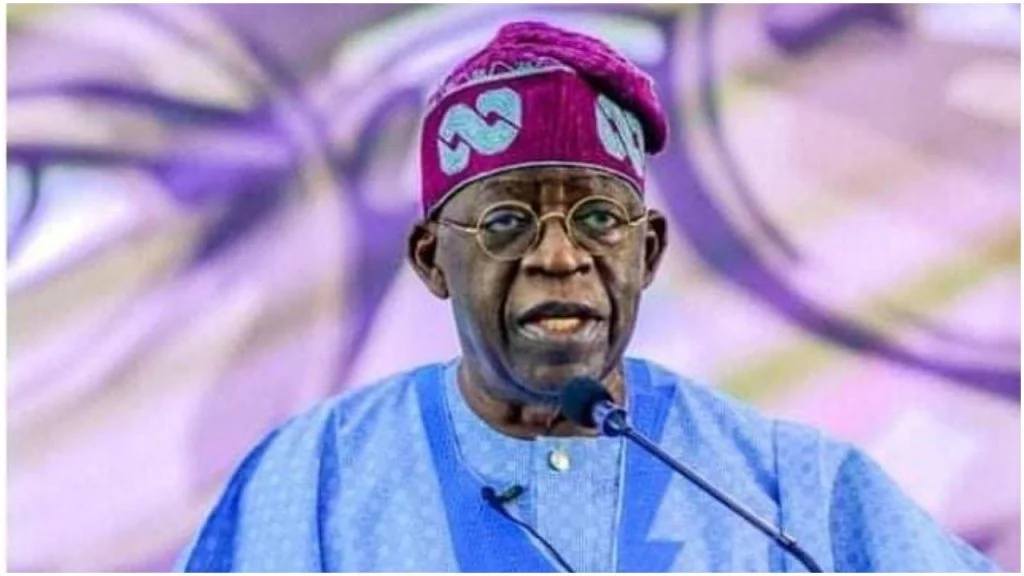
With Asiwaju’s Renewed Hope 2023, The Debate Now Begins By Gbenga Olawepo-Hashim

Just when a number of patriotic Nigerians were begining to express concerns about the ethno-religious nuances of the messaging in the 2023 campaigns, the Presidential candidate of the APC, Asiwaju Bola Ahmed Tinubu, launched the eighty five page document envisioning the road map for governance if he and his running mate Kashim Shettima are elected.
The document should help to fundamentally refocus discuss on the real issues about the future of Nigeria- economic prosperity, national security, infrastructural and social development.
This for me is a welcome relief from the inane, emotive and the ephemeral, which the discussions surrounding 2023 Presidential Election has been, especially in the social media.
Immediately the document was released, I tried to get a feedback from some of my younger friends, one, a Deputy director in a Federal agency, another, a music artiste. Their reactions were the same. The one who is a public servant summarised the perspective of both of them, “Oga, eighty pages that is theory, let us talk practical things.”
The reactions of these my friends who are both graduates summarizes the prevailing anti intellectual culture in Nigeria among young people. I understand most young people do not want to read. I am usually counselled by my online advisors that any post longer than eight or ten lines runs the risk of not been read. Short hilarious or items suggesting sex or portraying nudity do better.
I picked up issues with these my friends immediately, asking “what is wrong with theory?”
I am yet to see any country in the world where the leaders promised a new society without laying a bold plan and a road map. Sometimes leaders exceed the target in the implementation of their plans and sometimes they underperform.
When we talk about the French revolution, we talk about the several Writings of French philosophers like Jean-Jacques Rousseau and Montesquieu. We talk about the Federalist papers of leaders of the American revolution apart from inspirational works of writers like Thomas Paine. In Russia, we talk about V.I Lenin’s New Economic Plan (NEP), that transformed Tsarist Russia uncompetitiveness in Europe into a modern state between (1918-1922). The nation on that foundation became a Super power.
In Nigeria, our Independence leaders such as Dr Nnamdi Azikwe, Chief Obafemi Awolowo, Sir Ahmadu Bello laid down several thousands of pages of documents on their dream for a great Nigeria, and they delivered on their plans with Nigeria becoming one of the leading countries of the third world, a step ahead in the club of Malaysia and Thailand. The superlative performance of the Nigerian independence leaders between the period of limited independence and early independence (1955 -1966), had boldly written programmes as guide to action.
It was this culture on anchoring a political vision on a solid boldly written plan, programme, and action that Kingsley Moghalu and I in our intervention in the 2019 Presidential campaigns tried to re-awaken.
Documenting a vision is a priceless practice in the scripture. “And the Lord answered me, and said, Write the vision, and make it plain upon tables, that he may run that readeth it.” (Habakkuk 2:2).
What Candidate Ahmed Tinubu has done is to plainly lay down his vision.
Now to the document itself, I will only limit myself to a quick review of Tinubu’s Economic plans, some comments on National Security and my expectation on the management of Nigeria’s diversity, due to space constraints. I would be more detailed on the Economy, because whatever promises anybody is making, if you do not have a plan of how to find the money, everything else is a Joke!
Here I have seen Tinubu’s profound grasp of Political Economy in a way equal or deeper than the late sage, Obafemi Awolowo. That should be expected as the Asiwaju lives in an era of more information.
I start with his position on budgeting. Hear him: “Budgeting custom bases our annual budget and fiscal policies largely on the dollar value of projected oil receipts, not only does this practice artificially restricts the Federal Government’s fiscal latitude, it also attracts the Nation’s attention towards a single source of fiscal receipt to the detriment of others”
Continuing, candidate Tinubu offers his solution “To achieve optimal growth in the long term we must wean ourselves from this limitation. A more efficient fiscal methodology would be to base our budgeting on the projected level of government spending which optimises growth and jobs without causing unacceptable inflation.”
I cannot agree more. This is a radical departure from the Bretton woods orthodoxy that has constrained growth since 1986 when IMF and World Bank succeeded in Hijacking Economic planning in Nigeria or better put, when Nigeria stopped Economic planning.
The proposed 10% Economic growth target is achievable, and if the accompanying fiscal and monetary measures are vigorously implemented, it is supassable given the country’s current massive infrastructural deficit of 20-25 % to GDP stock has compared to infrastructural stocks of middle income economies in the range of 70% stock of GDP as well as the Nation’s high unemployment rate.
The economic plan correctly singles out the digital economy as one low hanging fruit for foreign exchange earnings as well as job creation. Nigeria potential in this regard is even underestimated in the document. Nigeria is a latent cyber power, the 7th largest Internet user country in the world with over 104.4m users, the Global outsourcing market in the digital space is over 500billion dollars. Nigeria has a big advantage, having a young, huge, fluent English speaking and writing population that is enthusiastic about coding and software development.
To be added to the digital sector as low hanging fruit for the economy will be a programme of optimization of Nigeria’s competitiveness, and efficiency in oil and gas as one of the sources of immediate cash for a growth focused economic plan.
The oil and gas sector was mentioned in passing in the Renewed Hope 2023 document because of an understandable bias for the next new economy. We just needed a few tweaking in structure and personnel as well as applicable fiscal regime in the oil and gas sector to harvest our natural advantages in the few remaining life of fossil fuel as an energy source.
Candidate Tinubu’s Tax plan is superb, that is his turf. His industrial and manufacturing agenda are inspiring. His planned return of Commodity boards is bold and welcomed. The commodities boards where technically Agric insurance platforms, their absence in the past thirty something years as a result of the pressure of the IMF for them to be scrapped has seen Nigeria lost its competitive advantage in crops like cocoa, groundnuts, oil palm, cotton etc.
In summary, the Tinubu Economic plan is core progressive policy platform that will return Nigeria to economic development, a path we traveled before in the first Republic and achieved phenomenal development.
It is the path Malaysia, China, India, have walked recording outstanding results. It is the path Samir Amin calls the path of Autocentric National development, away from the path of arrested development of the past four decades.
On the section on National Security, I have only seen basic and routine recommendations apart from the promise of an integrated database. I understand that you cannot be detailed in a published document on Security Plans, but I would have loved to see some real meat.
I have not also seen serious position on how Asiwaju intends to manage the diversity of the country at a time of great division.
Renewed Hope 2023 did not show as much depth and detail as we saw in the management of the economy in this equally important area. Perhaps this is a tactics to avoid difficult questions from his North West supporters that his campaign appears to be seriously cultivating for their potentially huge votes. I hope this will not define his government even if he wins.
He needs to pay better attention to matter of inclusiveness and political balancing. Mobilising for Economic growth will be a huge challenge in the absence of National cohesion, unity and peace.
Aside from the salient issue of not been convincing on the question of politcal balancing, key question of devolution of powers and inclusivity, the Renewed Hope 2023 document is a welcome relief in a campaign season that has been clouded by inanities and the mundane.
The former Vice President and candidate of the PDP, Waziri Abubakar Atiku(GCON), now has to show the nation his own document. In fairness to him, he presented something fairly robust in 2019 whether this will suffice now is a different matter.
Mr Obi, a major third candidate on the platform of the Labour Party whose supporters have brought energy and enthusiasm which has seen an increase in youth participation in voters registration must now step forward. The nation will like to see and scrutinise his vision for a New Nigeria.
The nation will like to see more depth from him than the short snippets from his very energetic and creative “obidients”.
The bar has been raised by the launching of ‘Renewed Hope 2023’.
Dwelling on APC candidate’s health risks, a challenge faced by the PDP candidate, will not be of any value to Obi, Sowore and the other younger candidates.
Most Nigerians will rather follow frail looking older men that are demonstrating grasp of issues and capacity rather than the younger candidates if all they can show is their physical fitness, emotive phrases, shallow monologues, a few unconvincing record of achievements and young enthusiastic followers with no coherent body of ideas.
The real debate has started, let it continue




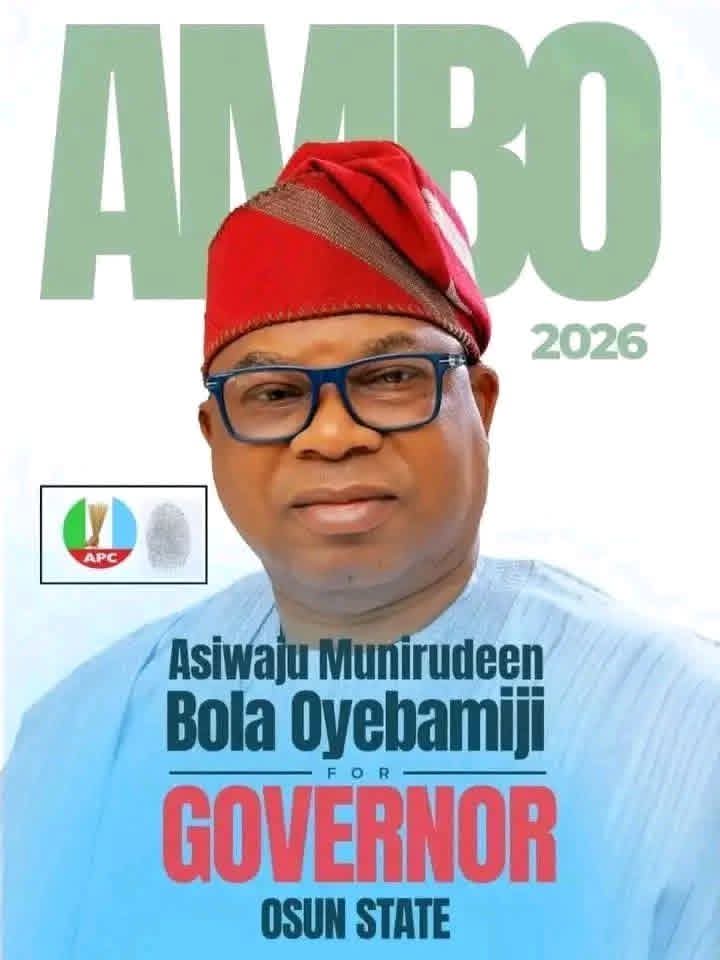
AMBO and the Osun Governorship Race: Assessing the Man, the Politics and the Vision
As political activities gather momentum ahead of the 2026 Osun State governorship election, a public affairs commentator, Oluseyi Olonade, has described the emergence of Asiwaju Munirudeen Bola Oyebamiji, popularly known as AMBO, as a significant development in the state’s political landscape.
In an article titled “Oyebamiji: The Man, The Politics and The Aspiration,” Olonade argued that the All Progressives Congress governorship hopeful possesses the character, experience and vision needed to reposition Osun State for sustainable growth.
According to the writer, Oyebamiji’s appeal stems from his extensive background in the banking sector, where he spent nearly three decades working with institutions including Wema Bank, Trans International Bank, Spring Bank and Enterprise Bank.
A native of Ikire in Irewole Local Government Area, Oyebamiji was described as a technocrat whose experience in corporate governance, finance and risk management has shaped his approach to public administration.
The article noted that his public service journey gained prominence in 2012 when he was appointed to oversee the then Osun State Investment Company Limited. Under his leadership, the organisation was reportedly restructured and transformed into Omoluabi Holdings Limited.
The writer further highlighted Oyebamiji’s tenure as Commissioner for Finance under successive APC administrations, where he was credited with managing the state’s finances during challenging economic periods.
Olonade also referenced Oyebamiji’s appointment as Managing Director of the National Inland Waterways Authority, describing it as further evidence of his administrative and leadership capabilities.
The article contrasted Oyebamiji’s governance philosophy with that of the current administration in Osun State, arguing that the APC aspirant favours institutional reforms, economic diversification and fiscal discipline.

According to the writer, Oyebamiji’s proposed agenda includes strengthening transparency in government spending, expanding internally generated revenue, attracting private-sector investments and promoting industrial and agricultural development.
The article also highlighted youth empowerment, entrepreneurship development and digital skills acquisition as key components of his vision for the state.
Olonade concluded that the forthcoming governorship election would present voters with a choice between different approaches to governance, expressing confidence that Oyebamiji’s experience and developmental agenda make him a strong contender in the race.
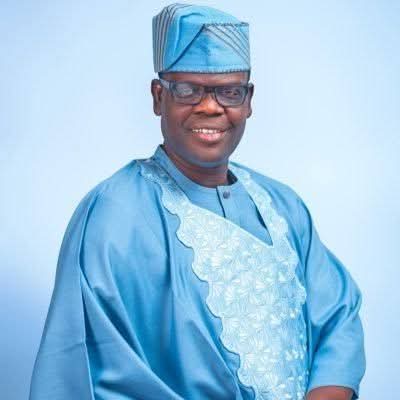
*Oselu Tiwa nTiwa Endorses Oriyomi Hamzat for Oyo Governorship*
A sociopolitical support group in Oyo State, Oselu Tiwa nTiwa, has declared its support for Alhaji Oriyomi Hamzat as the authentic governorship candidate of the Accord Party ahead of the forthcoming governorship election in the state.
The group made its position known in a statement jointly signed by its President, Mr. Adewale Oluwaseyi and Secretary, Alh. Adebayo Oyewole, on Thursday, describing Hamzat as a grassroots figure with strong connection to the people and a track record of humanitarian interventions across Oyo State.

According to the group, the endorsement followed what it described as careful observation of Hamzat’s leadership qualities, compassion and dedication to the welfare of ordinary citizens.
“Oriyomi Hamzat has consistently demonstrated empathy, courage and selfless commitment to humanity. Through his numerous interventions in the lives of ordinary citizens, he has become a symbol of hope to many families and communities,” the statement read.
Oselu Tiwa nTiwa also appealed to the national leadership of the Accord Party to prioritise the long-term future and electoral growth of the party in its decision-making process.
The group noted that Hamzat’s candidacy presents an opportunity for the party to strengthen its grassroots support base and expand its political relevance across Oyo State.
“We respectfully appeal to the National Leadership of the Accord Party to look beyond immediate political calculations and consider the bigger picture, the future growth, stability and electoral success of the party in Oyo State and beyond,” the statement added.
The group further expressed confidence in the leadership of the party, saying it believes the party’s national officers and stakeholders would take decisions that reflect fairness, inclusiveness and the collective interest of members.
While calling on party loyalists to remain calm and united, Oselu Tiwa nTiwa said continued consultations among stakeholders would help strengthen the Accord Party ahead of the election.
Signed:
Alh. Adebayo Oyewole,
Secretary.
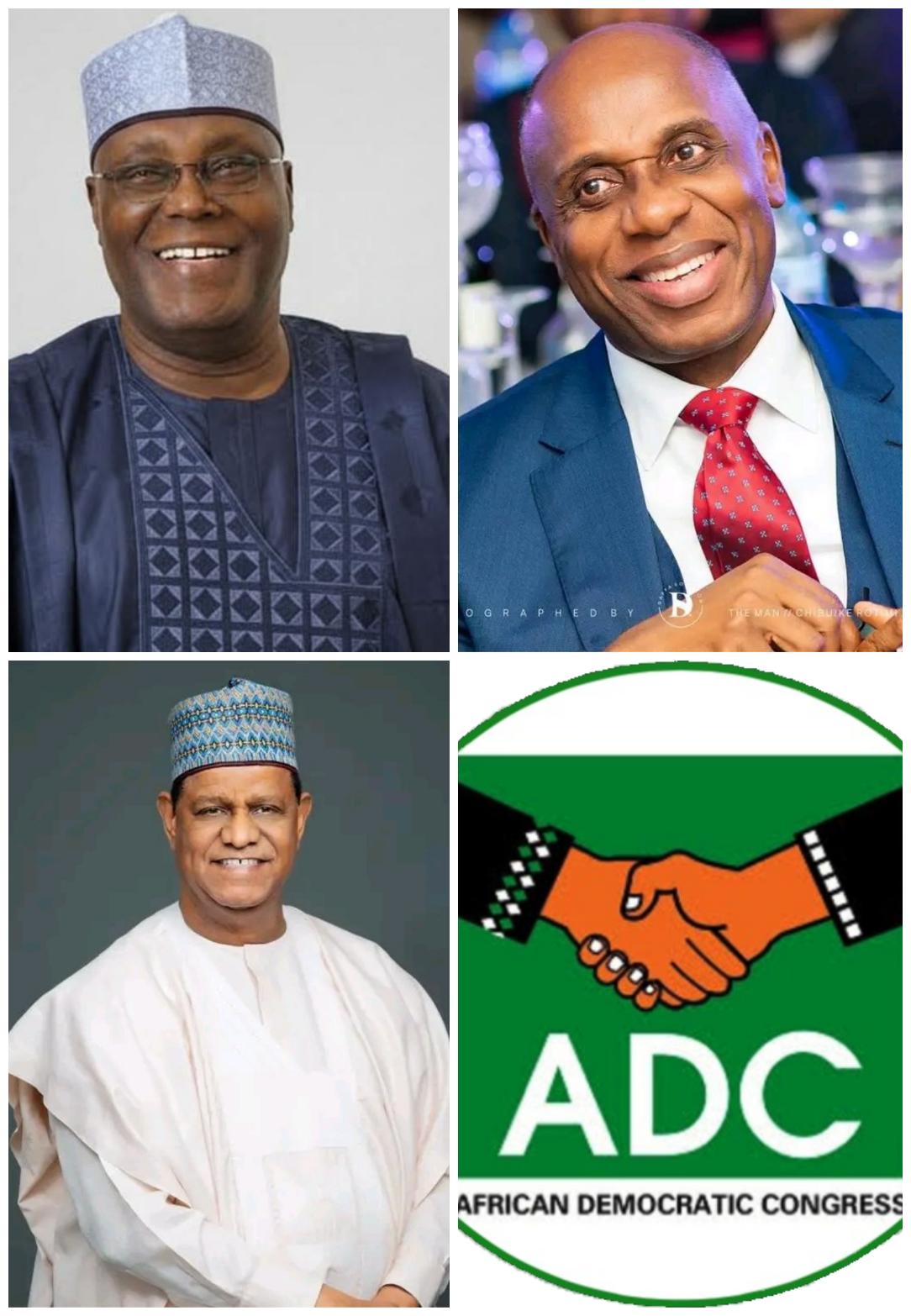
Atiku Set To Clinch ADC Presidential Ticket, Leads Amaechi, Hayatu-Deen In 34 States
Former Vice President of Nigeria and frontline presidential aspirant of the African Democratic Congress (ADC), Atiku Abubakar, is projected to emerge winner of the party’s presidential primaries, according to impeccable sources in Abuja.
The primaries, conducted across over 8,000 wards in the 36 states of the federation and the Federal Capital Territory, reportedly placed Atiku far ahead of his closest rivals — former Rivers State Governor, Rotimi Amaechi, and former Chairman of the Nigerian Economic Summit Group, Mohammed Hayatu-Deen.

Highly placed party insiders disclosed that Atiku is currently leading in 34 states, including the FCT, after securing dominance across the 19 Northern states, the five South-East states, and the six South-West states, while also maintaining a strong showing in at least three states in the South-South geopolitical zone.
The sources added that the outcome reflects what they described as “an overwhelming nationwide acceptance” of the former vice president within the opposition party ahead of the 2027 general election.
Meanwhile, the ADC leadership has invited members of the press to the official announcement of the final collated results scheduled for 11:00 a.m. on Tuesday, May 26, 2026, in Abuja.
The declaration of results is expected to be broadcast live on ARISE Television and two other major television stations, while also being livestreamed on the party’s official social media platforms on X and Facebook.
Speaking ahead of the announcement, the founding National Chairman of the ADC, Chief Ralph Nwosu, said the decision to televise the exercise live was aimed at promoting transparency and democratic accountability.
“We want millions of Nigerians at home and in the Diaspora to witness democracy in action,” Nwosu said.
He further revealed that the party leadership would encourage all three presidential aspirants to publicly embrace a peace accord and commit themselves to working together in unity for the party’s success.
According to him, the move is necessary to strengthen internal cohesion and position the ADC for victory in the presidential election scheduled for January 16, 2027.
Details later.


- Afreximbank Deepens Commitment to Economic Progress in The Bahamas June 1, 2026
- African Electric Vehicle (EV) platform Spiro raises $215M in equity to scale electric mobility and energy infrastructure across Africa June 1, 2026
- Africa Centres for Disease Control and Prevention (Africa CDC) Statement on Attacks Against Health Facilities During the Bundibugyo Virus Disease Response in the Democratic Republic of the Congo June 1, 2026
- Putting consumers at the centre of Africa’s dairy transformation June 1, 2026
- International Rescue Committee (IRC) warns Democratic Republic of the Congo (DRC) Ebola outbreak likely far larger than official figures suggest June 1, 2026
- South Africa: Portfolio Committee on Health Marks National Cancer Survivor Day and Reaffirms Importance of Early Detection and Public Awareness June 1, 2026
- Rwanda’s RSSB Tigers Crowned 2026 Basketball Africa League Champions June 1, 2026
- Uganda: Appointments Committee Begins Vetting of Ministerial Nominees June 1, 2026
- Sudan braces for worsening child malnutrition as pre-harvest season starts June 1, 2026
- Etu Energias Strengthens Angolan Footprint, Returns to Angola Oil & Gas (AOG) 2026 as Champion Sponsor June 1, 2026
- Afreximbank Deepens Commitment to Economic Progress in The Bahamas June 1, 2026
- African Electric Vehicle (EV) platform Spiro raises $215M in equity to scale electric mobility and energy infrastructure across Africa June 1, 2026
- Africa Centres for Disease Control and Prevention (Africa CDC) Statement on Attacks Against Health Facilities During the Bundibugyo Virus Disease Response in the Democratic Republic of the Congo June 1, 2026
- Putting consumers at the centre of Africa’s dairy transformation June 1, 2026
- International Rescue Committee (IRC) warns Democratic Republic of the Congo (DRC) Ebola outbreak likely far larger than official figures suggest June 1, 2026
- South Africa: Portfolio Committee on Health Marks National Cancer Survivor Day and Reaffirms Importance of Early Detection and Public Awareness June 1, 2026
- Rwanda’s RSSB Tigers Crowned 2026 Basketball Africa League Champions June 1, 2026
-

 news6 months ago
WHO REALLY OWNS MONIEPOINT? The $290 Million Deal That Sold Nigeria’s Top Fintech to Foreign Interests
-

 society4 weeks ago
SOCIAL MEDIA IS NOT A BATTLEFIELD COMMAND – WHY THE NIGERIAN ARMY’S ACTION AGAINST JUSTICE CRACK IS A NATIONAL SECURITY IMPERATIVE
-

 celebrity radar - gossips4 months ago
Dr. Chris Okafor Returns with Power and Fire of the Spirit -Mounts Grace Nation Altar with Fresh Anointing and Restoration Grace on February 1, 2026
-

 celebrity radar - gossips6 months ago
Prophet Kingsley Aitafo Releases 2026 Prophecy: ‘Nigeria Will Rise, but the World Must Prepare for Turbulence’