
Business
World Bank Commends NNPCL Public Private Partnership Model






Business
Group Signs Investment Promotion Agreement in Ivory Coast as UNIPGC Deploys Funding for Capital Projects
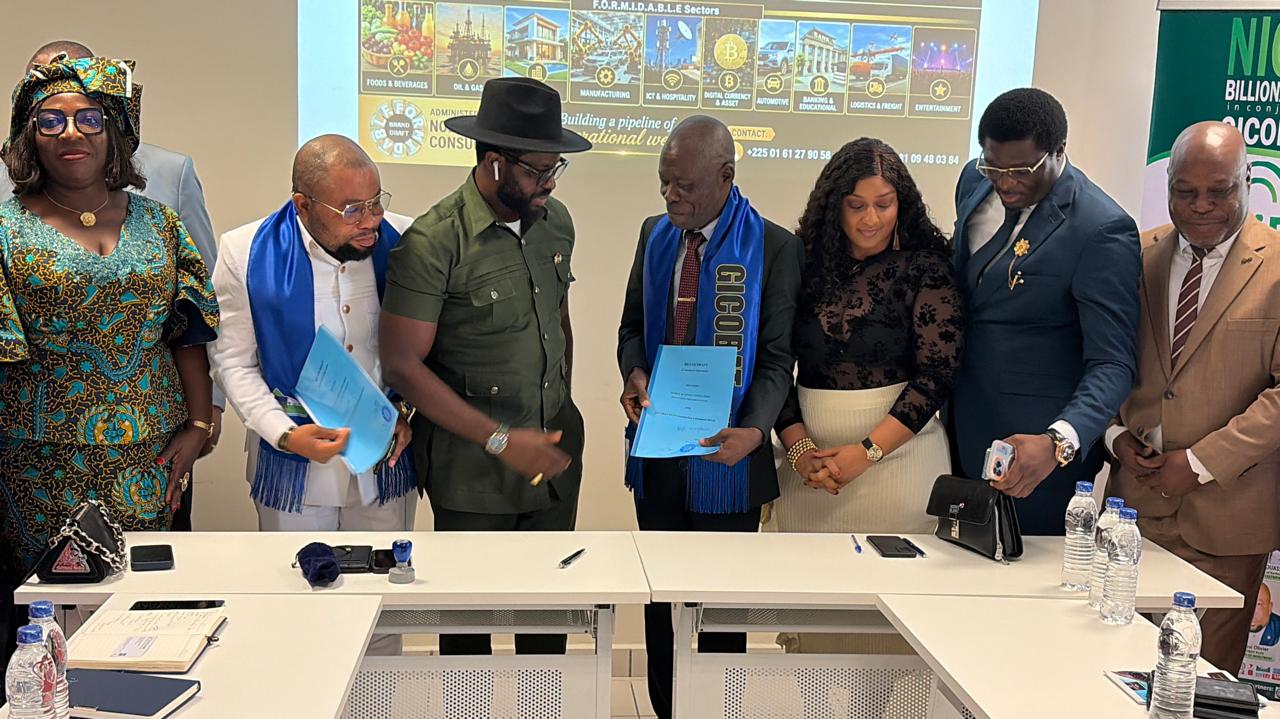
Group Signs Investment Promotion Agreement in Ivory Coast as UNIPGC Deploys Funding for Capital Projects
– Ivorycoast, Cot’devouir
Noble & Gold Consulting Ltd has officially signed a partnership agreement with Gicobat Group of Company to facilitate funding for capital projects in Abidjan, Côte d’Ivoire, through the UNIPGC–Global Economic Development Council (GEDC), during a high-level Business and Investment Roundtable held in the country.
The meeting, which took place on May 12, 2026, at the World Trade Centre in Abidjan, brought together senior executives and stakeholders from both organizations, including His Excellency, Amb. Jonathan Ojadah GCOP, Global President of UNIPGC; Mr. Noble Eze, CEO of Noble & Gold Consulting Ltd; and the Chairman of Gicobat Group of Company, Côte d’Ivoire.
The roundtable focused on opportunities for capital project financing, investment promotion, and business development across strategic sectors of the economy. Following extensive deliberations, the parties finalized terms and signed an agreement aimed at advancing the projects discussed during the engagement.
Speaking at the event, the Chairman of the UNIPGC-GEDC, His Excellency Amb. Jonathan Ojadah, delivered a presentation titled *“How Reputable Brands Can Secure Funding for Capital Projects.”* He stated that the agreement represents a major milestone in supporting high-profile business initiatives that require structured financing and professional project management.
According to him, the partnership aligns with UNIPGC-GEDC’s mandate as a leading investment promotion, advisory, and business development institution operating across Africa and internationally.
> “Today, I am delighted to address this important topic on how leaders of established and reputable brands can secure the capital required for major expansion, technological advancement, or infrastructure development. The objective is not merely to find funding, but to attract the right funding at the most competitive cost of capital,” he stated.
He emphasized that brand reputation remains a critical asset in attracting investors and financial institutions.
> “In business, reputation is everything. In the world of capital-intensive projects, reputation is more than public perception; it is an asset class. A reputable brand represents stability, proven performance, and trustworthiness,” he added.
Amb. Ojadah further noted that successful funding processes begin long before formal investment pitches are made. According to him, investors seek organizations that demonstrate value stewardship, operational excellence, and financial discipline.
Drawing from his international experience in capital project engagements across Egypt, Kenya, the Democratic Republic of Congo, Zambia, and other countries, he highlighted several categories of major funding institutions involved in large-scale development financing. These include multilateral development banks, government agencies, private foundations, and impact investors focused on infrastructure, healthcare, real estate, energy, oil and gas, and sustainable development.
Among the institutions he referenced were the International Finance Corporation (IFC), the European Union (EU), the United Nations Capital Development Fund (UNCDF), the OPEC Fund for International Development, the Bill & Melinda Gates Foundation, the Mastercard Foundation, the Ford Foundation, the Rockefeller Foundation, and the UNIPGC Foundation.
He explained that through the UNIPGC Global Economic Development Council (GEDC), the organization facilitates funding opportunities for startups, private sector operators, and government projects through public-private partnerships (PPP), leveraging its network of international funding partners and financial institutions.
Amb. Ojadah identified three critical indicators commonly assessed by investors and lenders before financing projects:
1. **Transparency and Financial Performance** – Organizations must maintain audited financial records, quality assets, and sustainable growth patterns.
2. **Operational Excellence** – Investors prefer businesses with proven operational systems and stable cash flow generation, which reduce investment risks.
3. **A Strong Project Narrative** – Businesses must clearly demonstrate how proposed projects align with long-term strategic goals such as digital transformation, automation, infrastructure expansion, or increased market competitiveness.
He also outlined key strategies reputable brands can adopt in securing project financing, including bank financing, strategic partnerships, vendor financing arrangements, private equity investments, and asset-based lending structures.
> “Securing capital for projects as a reputable brand is ultimately about combining trust with strategic planning. Reputation is your strongest asset, and when paired with sound financial planning and a compelling vision, it becomes a powerful tool for building the future,” he concluded.
For Gicobat Group of Company, the partnership is expected to accelerate the execution of ongoing and proposed projects by leveraging UNIPGC-GEDC’s network of investors and financial partners. Officials of the company expressed confidence that the collaboration would significantly improve project implementation timelines and financing accessibility.
Organizers noted that the choice of the World Trade Centre, Abidjan, as the venue reflected the international scope and significance of the engagement, particularly for negotiations involving capital-intensive projects in infrastructure, trade, and industrial development.
UNIPGC-GEDC describes itself as a leading global investment promotion, advisory, and business development consultancy, working with governments, private enterprises, and institutional investors to structure, finance, and manage large-scale projects from inception to completion.
According to the organization, the Abidjan agreement adds to its expanding portfolio of strategic partnerships aimed at unlocking capital for projects with significant economic and social impact. It also confirmed that due diligence and project structuring processes had been completed prior to the signing to ensure project bankability and investor confidence.
Officials from both organizations further disclosed that implementation teams would be constituted immediately to oversee the next phase of the agreement. Although specific project details were not disclosed, both parties assured stakeholders that updates would be communicated as implementation milestones are achieved.
UNIPGC-GEDC also encouraged businesses, institutions, and investors with high-impact projects requiring financing or management support to engage with its team for collaboration opportunities. Further information on its services is available via UNIPGC-GEDC Official Website www.unipgc.org/gedc
Business
Dennis Ekamah Isn’t Building Houses—He’s Redefining What Home Means for Africans Through PropTech

Dennis Ekamah Isn’t Building Houses—He’s Redefining What Home Means for Africans Through PropTech.
The founder of coHouse.ng is reimagining how millions of Africans access, experience, and share housing through technology.
In Africa’s rapidly evolving innovation landscape, the most transformative companies are no longer defined by the industries they enter, but by the systems they redesign.
For Dennis Ekamah, the opportunity was never about constructing buildings, it was about confronting a deeper question.
why is access to housing still so structurally difficult for millions of Africans in a digital age?
Rather than stepping into real estate as a developer. Dennis chose a different path, positioning coHouse.ng as a PropTech platform rethinking how housing is accessed, experienced, and shared. At the heart of this vision which is connecting potential home owners together via resource pooling for the purpose of either Living or Growth. Simply, *Connect. Live. Grow.*
*A Platform Not a Property Company*
coHouse.ng is not a real estate company. It is a technology-driven ecosystem connecting like-minded individuals into structured communities where they can live intentionally, invest collectively, and grow within a shared system.
From Insight to Recognition
In 2025, coHouse.ng was recognised among the Top 50 Tech Startups in Africa. Even ahead of its official launch, the platform attracted over 1,000 early waitlist users, individuals eager to be part of a new way of living and investing.
Solving for Access, Alignment, and Trust
Dennis Ekamah’s diagnosis goes deeper than supply shortfalls. The real barriers he argues are access, coordination, and trust. coHouse.ng tackles all three through identity verification powered by a third party verification system api. coHouse is not flying solo without the help and collaboration with government bodies across Nigeria and other African countries.
In his words;
“Imagine what you would achieve as an individual or group if you’re living with the right people or like-minded individuals around you.”
I’m not a developer, I’m not a professional realtor, I’m just someone who sees the need for this solution based on the problem we face as youth/young entrepreneurs in today’s housing deficiency across Africa.
— Dennis Ekamah
Join our waitlist by visiting www.cohouse.ng
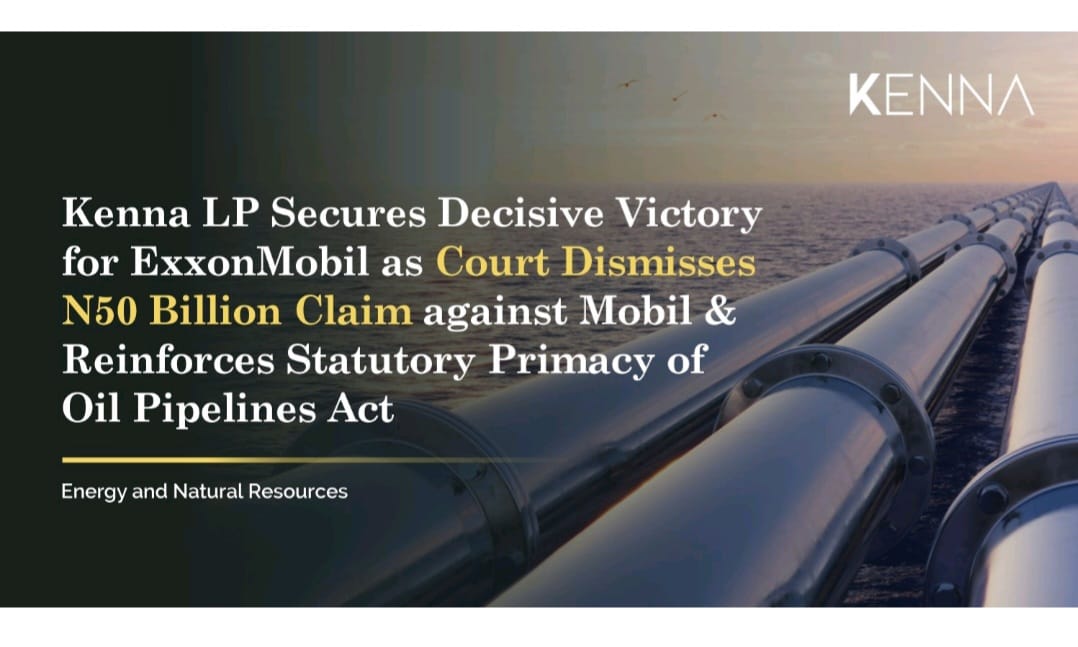
Landmark Judgment: Federal High Court Dismisses ₦50bn Oil Spill Claim Against ExxonMobil
The Federal High Court sitting in Uyo has dismissed a ₦50 billion lawsuit filed against ExxonMobil, sued as Mobil Producing Nigeria Unlimited, now Seplat Energy Producing, in a ruling analysts say could significantly reshape oil spill litigation and compensation claims in Nigeria’s petroleum sector.
Delivering judgment on April 29, 2026, Justice Onyetenu held that the suit instituted by the Ejige Ore Njenyisi Muma & Fishing Co-operative Society Ltd was incompetent and liable to dismissal for lack of jurisdiction.
The plaintiffs had sought ₦50 billion in damages over an alleged hydrocarbon spill said to have occurred on September 12, 2021.
However, counsel to the defendant, Chinonso Ekuma of KENNA LP, successfully argued that the claimants failed to disclose any legally recognisable violation attributable to the oil firm.
In its findings, the court held that the plaintiffs failed to establish any actionable wrongdoing against the defendant.
A key element in the court’s decision was the Joint Investigation Visit (JIV) Report tendered by the plaintiffs themselves, which showed that the alleged spill incident was confined within ExxonMobil’s operational facility and did not impact the members of the cooperative society or their sources of livelihood.
The court further ruled that claims arising from such incidents must be pursued strictly under the statutory compensation framework provided in Section 11(5) of the Oil Pipelines Act, rather than through common-law claims founded on negligence or nuisance.
Justice Onyetenu held that the plaintiffs’ attempt to circumvent the statutory regime by framing the suit as a tort action rendered the matter incompetent before the court, thereby depriving it of jurisdiction.
Legal analysts say the judgment reinforces the supremacy of the Oil Pipelines Act in determining compensation procedures relating to oil pipeline incidents and environmental claims in Nigeria.
The ruling is also seen as strengthening the evidential weight of Joint Investigation Visit Reports, particularly in cases where such reports indicate no direct impact on claimants or host communities.
Industry observers believe the judgment will have far-reaching implications for future oil spill litigation, especially regarding the procedural requirements for compensation claims against oil operators.
The court’s decision further provides clarity for operators within Nigeria’s energy sector by reaffirming that compliance with Section 11(5) of the Oil Pipelines Act is mandatory and cannot be sidestepped through alternative legal formulations.
While K.O. Uzuokwu appeared for the plaintiffs, the defence was led by Chinonso Ekuma of KENNA LP on behalf of ExxonMobil.


- GE Vernova opens new Center of Excellence in Morocco to support power transmission services globally May 14, 2026
- African Mining Week (AMW) 2026 to Position Junior Miners at the Forefront of Africa’s Mineral Evolution May 14, 2026
- Trafigura Eyes $900M Aluminium Smelter as Egypt Accelerates Mineral Beneficiation Drive May 14, 2026
- Grey Joins Moonshot 2026 as Headline Sponsor May 14, 2026
- Africa Steps Into Carbon Market Delivery as Carbon Markets Africa Summit (CMAS) 2026 Heads to Rwanda May 14, 2026
- Basketball Africa League and Qatar Foundation Announce Multiyear Social Impact Collaboration May 14, 2026
- Metering experts call for secure bridge between legacy and smart systems May 14, 2026
- African Mining Week (AMW) 2026 to Examine Energy-Mining Nexus as Africa Prioritizes Reliable Power May 14, 2026
- Ludoil Energy signs agreement to acquire ISAB, creating Italy's largest privately held multi-energy company May 14, 2026
- Merck Foundation Chief Executive Officer (CEO) celebrates 124 Winners from 32 Countries for their Media Awards for Breaking infertility Stigma and Supporting Girl Education May 13, 2026
- GE Vernova opens new Center of Excellence in Morocco to support power transmission services globally May 14, 2026
- African Mining Week (AMW) 2026 to Position Junior Miners at the Forefront of Africa’s Mineral Evolution May 14, 2026
- Trafigura Eyes $900M Aluminium Smelter as Egypt Accelerates Mineral Beneficiation Drive May 14, 2026
- Grey Joins Moonshot 2026 as Headline Sponsor May 14, 2026
- Africa Steps Into Carbon Market Delivery as Carbon Markets Africa Summit (CMAS) 2026 Heads to Rwanda May 14, 2026
- Basketball Africa League and Qatar Foundation Announce Multiyear Social Impact Collaboration May 14, 2026
- Metering experts call for secure bridge between legacy and smart systems May 14, 2026
-

 news5 months ago
WHO REALLY OWNS MONIEPOINT? The $290 Million Deal That Sold Nigeria’s Top Fintech to Foreign Interests
-

 society1 week ago
SOCIAL MEDIA IS NOT A BATTLEFIELD COMMAND – WHY THE NIGERIAN ARMY’S ACTION AGAINST JUSTICE CRACK IS A NATIONAL SECURITY IMPERATIVE
-

 celebrity radar - gossips4 months ago
Dr. Chris Okafor Returns with Power and Fire of the Spirit -Mounts Grace Nation Altar with Fresh Anointing and Restoration Grace on February 1, 2026
-

 celebrity radar - gossips5 months ago
Prophet Kingsley Aitafo Releases 2026 Prophecy: ‘Nigeria Will Rise, but the World Must Prepare for Turbulence’