
society
Worries Over Refusal By Governor Fintiri To Allow Michika Paramount Ruler Ngida Zakawa to His Official Palace.

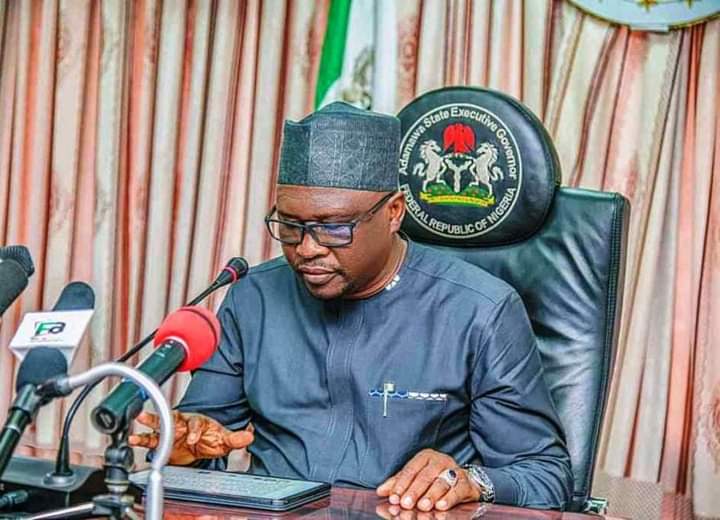
Worries Over Refusal By Governor Fintiri To Allow Michika Paramount Ruler Ngida Zakawa to His Official Palace.
By Ifeoma Ikem
Global News Reports That Since the Assumption of duty in 2013, nine years after the staff of office was handed over to Ngida Zakawa, the Michika ruler has not assume his rightful duties in his palace.
years after his resumption of duty as the District Head of Michika, Ngida Zakawa Kwache, the paramount and substantive district head who is also a grandson of the founder of Michika is yet to be granted access to his ancestral palace of his forefathers.
A development that is brewing tension in the District. Our investigation revealed that governor Fintiri is spearheading the uncharitable act. Sources also revealed that he is insisting the paramount chief should move to a new location which is against the tradition of his forefathers, who occupied the stool before him. It is believed that the palace has been the abode of every king that ascends the throne for the past fifty years.
Moreso, the sitting governor was massively voted by the Michika people of Adamawa state a development that its expected the governor should reciprocate the gesture of the people by granting the High chief to occupy his rightful abode as forefathers did.
Worrisome is the fact that the traditional palace is built by the Michika local government and not the state government as the governor will want people to believe.
However the traditional institution is under the purview of the local government and chieftaincy affairs directly under the governor’s office. So it’s expected that governor Fintiri will do the needful as a man that respects tradition rites.
Intrigues that characterised the election and The throne of Michika traditional council.
The emergence of Zakawa as the high chief of Michika faced a lot of issues and challenges leading to building concerns within the district with the suspicion that the move may have been a deliberate act by the Mubi Emirate Council, which is perceived to be holding unto a petition against the election of Ngida Zakawa by one of the contestants not to turban him even when his staff of office has since been given to him.
This is even as the court before which the petition was brought is was yet to issue any order, restraining Ngida Zakawa from parading himself as district head of Michika.
Most worried by this development was Association of Michika Concerned Citizens and Concerned Michika elders. They were particularly concerned that after the former Governor of the state, Mohammed Bindo had already issued a letter of appointment to Ngida Zakawa as well as given him a staff of office, he was not turbaned by the Emirate Council, up until 2018.
To collaborate this, the then Chairman of Michika Local Government Area Council, Hon. Mathew Vendi Favandzaer had at the official opening of the palace then , made known, the state government’s directive for the council to hand over the district head office for Ngida Zakawa’s use, having fulfilled all requirements of the office.
When our reporter contacted the then Secretary to Michika Local Government Council, Mr. Gidado he confirmed that Ngida’s turbaning is stalled due to an appeal before the court, challenging his election. According to him, “There are issues concerning the throne.
One of the sons of the late district head had approached the court to challenge the election of Ngida Zakawa and until that is settled before the turbaning process will start”, he said.
The history of Michika district headship dates back to the departure of the colonial master who at the point of leaving, conducted elections to install a district head.
The election was won by Stephen Kontikwara who is an uncle to Ngida Zakawa. However, the fact that he was too young and not yet married, gave rise to the emergence of Kufor Maunde Mohammadu, who served in acting capacity as district head of Michika for fifty three (53) years.
Investigations reveal that before his demise, the late acting district head had warned his children not to participate in the contest for the district headship since he was not originally supposed to occupy the throne. However, one of his sons, Alhaji Chubado…….. insisted on contesting which he lost and he took the matter to court.
Two reasons were adduced for the delay in assumption of office by Ngida Zakawa. The fact that Boko Haram took over Michika as well as the court litigations against his election as district head.
However, upon the return of peace in Michika, the state government directed that Ngida Zakawa should resume duty as district head, yet the Mubi Emirate council whose responsibility it is to turban him are still holding unto the litigation against his election not to turban him.





US-Based Society Lady, Fehintola-Brat Extends Eid-El-Kabir Greetings To Muslims
United States based fahionista of class, Chief (Mrs) Ayoola Fehintola-Brat has extended a warm greetings to Muslim faithful all over the world on the occasion of the 2026 Eid-El-Kabir celebration.
Fehintola-Brat who is the Balogun Egbe Obaneye Obinrin Akile Ijebu, and the Yeye Asofin of Idenaland in her message to Journalists urged Muslim to continually uphold the enduring values of sacrifice, obedience, faith, and compassion, which are central to the significance of Eid-El-Kabir festival.
A quiet philantropist whose humanitarian services has won her several laurels urged Muslims to use the spiritual occasion to pray for the peace co-existence of Nigerians regardless of religious, social and political leanings stressing that the oneness of the country should not be underplay.
In a related development, she expressed her felicitations to all sons and daughters of Ijebuland on the forthcoming Ojude Oba 2026 celebration, tasking age-groups otherwise known as Regbregbe to be more proactive in giving back to their immediate communities.
According to her, the beauty of the age-groups in Ijebuland is the need to contribute immensely to the development of the land in no small means. “This we will continue to achieve with God on our side”, she concluded.
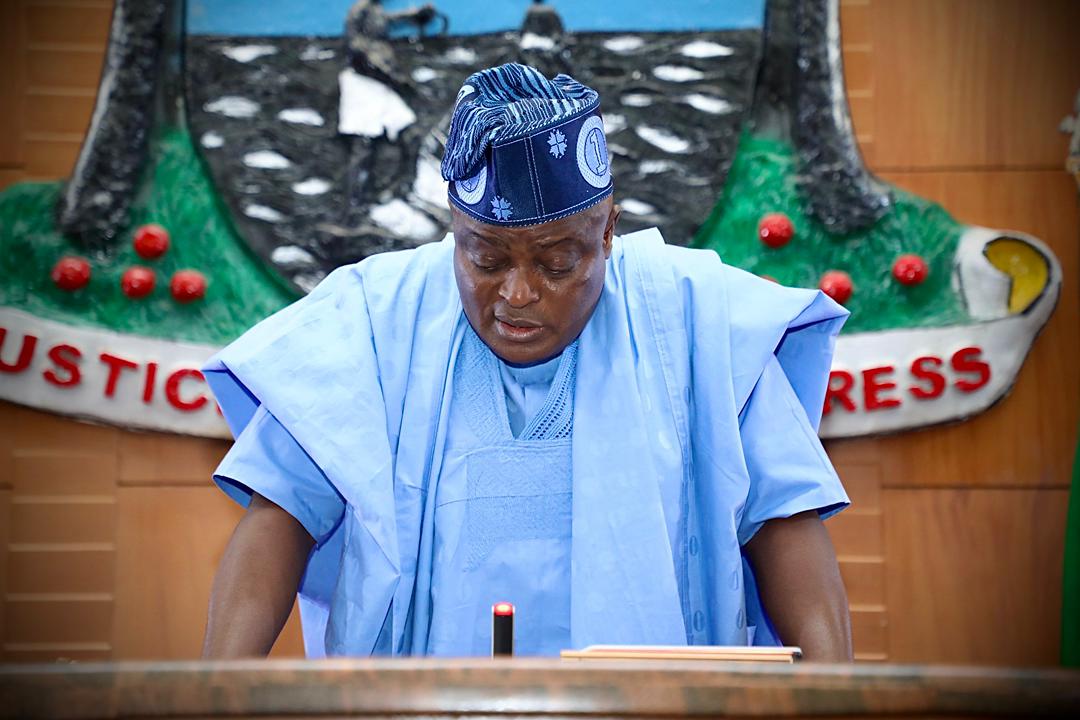
Sallah: Obasa Felicitates Muslim Ummah, Commends Nigerians for APC Primaries Turnout
The Speaker of the Lagos State House of Assembly, Rt. Hon. Mudashiru Obasa has extended warm felicitations to Muslims in Lagos State and across Nigeria on the occasion of Eid al-Adha.
In a statement released by his Chief Press Secretary, Mr. Dave Agboola, Obasa described the festival as a season of sacrifice, reflection, and gratitude, urging the faithful to continue to uphold the values of peace, unity, and love that strengthen the nation.
He noted that the celebration of Eid al-Adha is not only a spiritual milestone but also a reminder of the importance of togetherness and collective responsibility in building a stronger society.
He, likewise, emphasized that the festival provides an opportunity for Nigerians to renew their commitment to national progress and to support leadership that prioritizes development and prosperity.
Obasa, however, commended Nigerians, particularly members of the All Progressives Congress (APC), for their massive turnout during the recently concluded party primaries. He described the participation as a clear demonstration of the people’s confidence in the government of President Bola Ahmed Tinubu and their belief in the administration’s vision for a greater Nigeria.
“The APC primaries have shown the resilience of our democracy and the confidence Nigerians have in the leadership of President Bola Ahmed Tinubu and the Renewed Hope Agenda. This is a strong message that our people are ready to continue supporting policies that will drive growth and prosperity,” Obasa stated.
The Speaker further encouraged Muslims to celebrate responsibly, stressing that the joy of Eid should be accompanied by prayers for the continued peace and progress of Lagos State and Nigeria.
“As you celebrate with family and loved ones, may this season bring joy, peace, and prosperity to your homes. Let us remain united in our resolve to build a stronger nation,” he added.
On behalf of the Lagos State House of Assembly, Obasa wished all Muslims a happy and fulfilling Eid al-Adha celebration.

ABEOKUTA FILM FESTIVAL AT ILEYA
Kayshow Multimedia a filmmaking and Media organization this year 2026 holds its annual Abeokuta film festival at the Ake Palace in Abeokuta.
Alake of Egba land, Ọba Michael Adedotun Arẹmu Gbadebo has graciously endorsed the Free Training of Egba Youths on Film and Arts and the Entertainment of the the People with a FREE FILM SHOW at the AKE PAVILION. as part of the ABEOKUTA FILM FESTIVAL 2.0.
The Convener of the Film Festival Honorable Kehinde Soaga says this year’s event promises to be more exciting as distinguished personalities are sure to attend.
This includes the honorable Minister for Art Culture and Creative Economy in Nigeria, Barr. Hannatu Musa Musawa, Ààrẹ Lai Labode, Sen. Ibikunle Amosun and other special guests.
The event will feature Film, Cultural Dance Cultural foods and Award Ceremony.
The general public is hereby invited to the Free film show at the Abeokuta film festival at the Alake Palace Pavilion on Thursday 28th of May 2026 by 4:00 p.m.
Only well dressed is the Entry. The Abeokuta Film Festival is an annual event taking place in the capital city of Ogun State state.


- Demand for civic space holds strong across Africa as supply of freedoms wanes May 27, 2026
- Zarein Energy Joins African Energy Week (AEW) 2026 as Gold Sponsor Amid Nigeria Gas Hub Expansion May 27, 2026
- Qrent says delaying Information Technology (IT) refresh cycles may be increasing operational risk for businesses in Africa May 27, 2026
- Dentons’ Iyunola Adekanye Appointed to African Mining Week (AMW) Advisory Board May 27, 2026
- United Nations (UN) Women Liberia and Partners Convene for Spotlight Initiative 2.0 Women’s Economic Empowerment Inception Meeting May 27, 2026
- African Mining Week (AMW) to Host Central Bank Governors Roundtable as Monetary Authorities Deepen Role in Mining Sector Growth May 27, 2026
- Eritrea: Diaspora Nationals Celebrate Independence Day Anniversary May 27, 2026
- Africa Unveils Landmark Humanitarian Coordination Platform to Strengthen aligned Response to Humanitarian Crises May 27, 2026
- Seychelles: President Herminie Engages with Police and Fire Services on Praslin May 27, 2026
- Issue 3 of Mining Review Africa now available for free download May 27, 2026
- Demand for civic space holds strong across Africa as supply of freedoms wanes May 27, 2026
- Zarein Energy Joins African Energy Week (AEW) 2026 as Gold Sponsor Amid Nigeria Gas Hub Expansion May 27, 2026
- Qrent says delaying Information Technology (IT) refresh cycles may be increasing operational risk for businesses in Africa May 27, 2026
- Dentons’ Iyunola Adekanye Appointed to African Mining Week (AMW) Advisory Board May 27, 2026
- United Nations (UN) Women Liberia and Partners Convene for Spotlight Initiative 2.0 Women’s Economic Empowerment Inception Meeting May 27, 2026
- African Mining Week (AMW) to Host Central Bank Governors Roundtable as Monetary Authorities Deepen Role in Mining Sector Growth May 27, 2026
- Eritrea: Diaspora Nationals Celebrate Independence Day Anniversary May 27, 2026
-

 news5 months ago
WHO REALLY OWNS MONIEPOINT? The $290 Million Deal That Sold Nigeria’s Top Fintech to Foreign Interests
-

 society3 weeks ago
SOCIAL MEDIA IS NOT A BATTLEFIELD COMMAND – WHY THE NIGERIAN ARMY’S ACTION AGAINST JUSTICE CRACK IS A NATIONAL SECURITY IMPERATIVE
-

 celebrity radar - gossips4 months ago
Dr. Chris Okafor Returns with Power and Fire of the Spirit -Mounts Grace Nation Altar with Fresh Anointing and Restoration Grace on February 1, 2026
-

 celebrity radar - gossips6 months ago
Prophet Kingsley Aitafo Releases 2026 Prophecy: ‘Nigeria Will Rise, but the World Must Prepare for Turbulence’