
Business
*X-RAYING THE SIGNIFICANCE OF NIGERIA’S LEADERSHIP OF THE AFRICAN PETROLEUM REGULATORY FORUM FOR AFRICA

*X-RAYING THE SIGNIFICANCE OF NIGERIA’S LEADERSHIP OF THE AFRICAN PETROLEUM REGULATORY FORUM FOR AFRICA*
By Toby Prince
As Plato aptly stated, “Opinion is the medium between knowledge and ignorance.” This profound assertion underscores the necessity of wisdom to distinguish belief from truth. Without clear understanding, opinions, no matter how well-intentioned, remain elusive and inherently subjective, lacking the objectivity required for transformative progress.
To transition from ignorance to knowledge, rigorous interrogation, analysis, and redefinition are essential. This philosophical backdrop frames the remarkable leadership of Engr. Gbenga Komolafe, the Interim Chairman of the African Petroleum Regulatory Forum (AFRIPERF), whose tenure exemplifies a paradigm shift in Africa’s petroleum sector. His appointment is not merely a recognition of personal excellence but a testament to the trust placed in him by African leaders in the oil and gas industry.
Engr. Komolafe’s years of consistent, transformative leadership have catalyzed significant reforms, positioning Nigeria as a continental leader in strengthening petroleum governance through shared values, collaboration, and effective coordination among member regulators.
Engr. Komolafe’s leadership is rooted in a visionary approach to unifying petroleum regulation across Africa, fostering an environment conducive to attracting investment and driving regional economic growth. His strategic foresight reflects a radical, multi-sectoral approach to problem-solving, for which he is widely respected.
Under his stewardship, AFRIPERF has emerged as a dynamic platform for harmonizing ideas, fostering expertise, and entrenching best practices in the petroleum sector. The forum’s objectives include addressing regional challenges, facilitating knowledge sharing, and enhancing energy security, all of which are critical to unlocking Africa’s economic potential.
The African petroleum sector is poised for unprecedented growth, with Nigeria leading the charge toward achieving a projected $600 billion in annual upstream investments. Engr. Komolafe’s leadership of AFRIPERF has positioned Nigeria as a continental force capable of rewriting Africa’s energy narrative through sustainable development. His appointment reflects his patriotic zeal, exemplary performance, and a proven record of stewardship, making him a round peg in a round hole.
Since assuming the role, he has driven pragmatic reforms aimed at transforming regulatory practices, safeguarding AFRIPERF’s core mandate, and prioritizing frameworks that strengthen governance, ensure environmental compliance, promote sustainable practices, and enhance community participation.
Engr. Komolafe’s disciplined and focused leadership has reshaped continental narratives, transitioning the sector from irresponsible practices to responsible mining techniques, reforestation programs, and land reclamation initiatives that mitigate environmental impacts. His alignment with initiatives like the Extractive Industries Transparency Initiative (EITI) and the Africa Mining Vision (AMV) has bolstered transparency in revenue management and accountability in the mining sector.
By fostering collaboration with organizations such as the African Union (AU), the Economic Community of West African States (ECOWAS), and the Southern African Development Community (SADC), he has created a robust network for policy harmonization and sustainable resource development.
Recognizing the importance of a skilled and innovative workforce in a rapidly evolving digital era, Engr. Komolafe has prioritized extensive training and capacity-building programs. His investments in human capital development, research, and innovative technology have significantly enhanced sectoral growth and governance. His extensive experience, credibility, and profound knowledge have positively influenced regulatory frameworks across African nations.
For instance, Senegal has adopted a transparent and inclusive governance structure with clear licensing criteria, while Tanzania has strengthened its legal framework to emphasize community development and environmental protection. In South Africa, Engr. Komolafe’s influence has driven transformative community welfare and transparency reforms, resolving long-standing conflicts in the mining sector.
As a proactive and resilient leader, Engr. Komolafe has established effective monitoring mechanisms and consistent regulatory enforcement, significantly reducing illicit financial flows and corruption in the sector. His strengthening of institutional mechanisms has enhanced transparency and accountability, creating a stable and attractive investment environment.
His achievements as the Chief Executive Officer of the Nigerian Upstream Petroleum Regulatory Commission (NUPRC) further underscore his qualifications for leading AFRIPERF. At NUPRC, he garnered global acclaim for his transformative leadership, implementing transparent licensing rounds, fiscal disclosures, and compliance monitoring to ensure regulatory adherence. His establishment of the Host Community Development Trusts (HCDTs) has promoted transparency and social responsibility, providing tangible benefits to local communities.
Additionally, his decentralized stakeholder engagement model has restored public trust by fostering collaboration with communities, civil society, and other stakeholders, ensuring sustainable reforms.
Engr. Komolafe’s leadership of AFRIPERF carries profound implications for Africa, as the forum strengthens regional petroleum governance, promotes cooperation, and enhances regulatory frameworks across the continent.
Under his guidance, AFRIPERF is innovating sustainable solutions and leveraging Africa’s vast oil and gas reserves—estimated at 125 billion barrels and 620 trillion cubic feet, respectively—to attract investment and boost economic growth. By standardizing regulations and fostering knowledge sharing, he has enabled member countries to adopt best practices and create a unified regulatory approach.
A staunch advocate for Africa’s economic independence in the global energy landscape, Engr. Komolafe integrates renewable energy and emissions reduction into existing policies, ensuring a balanced approach to energy security. His diplomatic efforts have deepened collaborative dialogue with industry stakeholders and international organizations, addressing regional challenges with mutual respect and shared value. His leadership fosters inclusivity, collaboration, and partnership, enhancing training, research, and innovation to build resilient regulatory institutions.
Engr. Gbenga Komolafe’s leadership of AFRIPERF is not a mere coincidence but a recognition of his outstanding track record, unwavering commitment, and resilience in the oil and gas sector. His appointment holds immense potential to transform Africa’s petroleum industry, driving economic growth, sustainable development, and energy security for the continent and beyond.
Through his visionary leadership, Africa is poised to redefine its energy future, harnessing its vast resources to achieve prosperity and global relevance.
Prince writes from Abuja




Business
Alpha Morgan Bank Reinforces Commitment to Education at Redeemer’s University Business School Commissioning
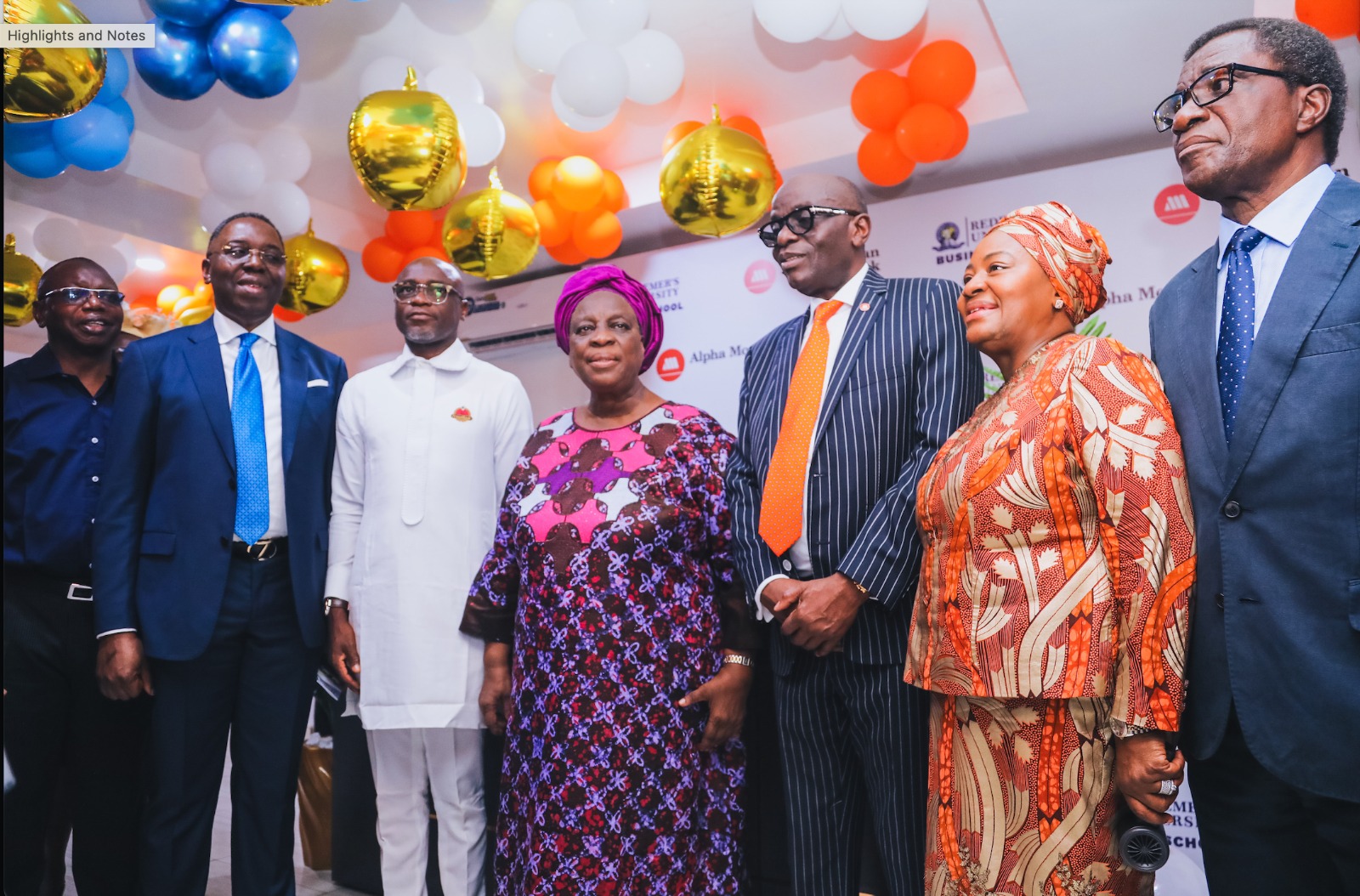
Alpha Morgan Bank Reinforces Commitment to Education at Redeemer’s University Business School Commissioning
Alpha Morgan Bank has reaffirmed its commitment to education and institutional development through its support for the commissioning of the Redeemer’s University Business School.
The Business School was officially inaugurated by Pastor (Mrs.) Folu Adeboye, at the commissioning ceremony attended by distinguished guests including Her Excellency, Mrs. Bola Obasanjo; the Pro-Chancellor and Chairman, Governing Council of Redeemers University, Professor Oluwatoyin Ogundipe; the Vice Chancellor, Professor Shadrach Olufemi Akindele; and other notable dignitaries.
Speaking at the event, the Managing Director of Alpha Morgan Bank reiterated the Bank’s commitment to supporting institutions that drive intellectual growth and national development.
As part of its broader focus on knowledge sharing and thought leadership, Alpha Morgan Bank will host its Economic Review Webinar in May 2026, bringing together experts to share insights on key economic trends and opportunities.
The Bank’s involvement reflects its continued dedication to empowering institutions and shaping the future of business and leadership in Nigeria.
Read more about Alpha Morgan Bank on www.alphamorganbank.com
PHOTO
L-R: Prof. Shadrach Olufemi Akindele, Vice Chancellor, Redeemers University, Engr. Eloka Eje, Dr Perez Araka, Pastor (Mrs) Folu Adeboye, Mother-In-Israel, The Redeemed Christian Church of God, Mr Ade Buraimo, MD/CEO Alpha Morgan Bank, Dr (Mrs) Oluwatomi Somefun, Dr. Simeon Ifere, at the inauguration of the Redeemer’s University Business School, Redemption City, Ogun State on Thursday 2nd April, 2026

Tinubu Aide Rebuts Rufai Oseni Over ₦3.3tn Power Debt Deal
Business
Aare Adetola Emmanuelking Welcomes President Tinubu to Gateway International Airport Commissioning in Iperu-Remo
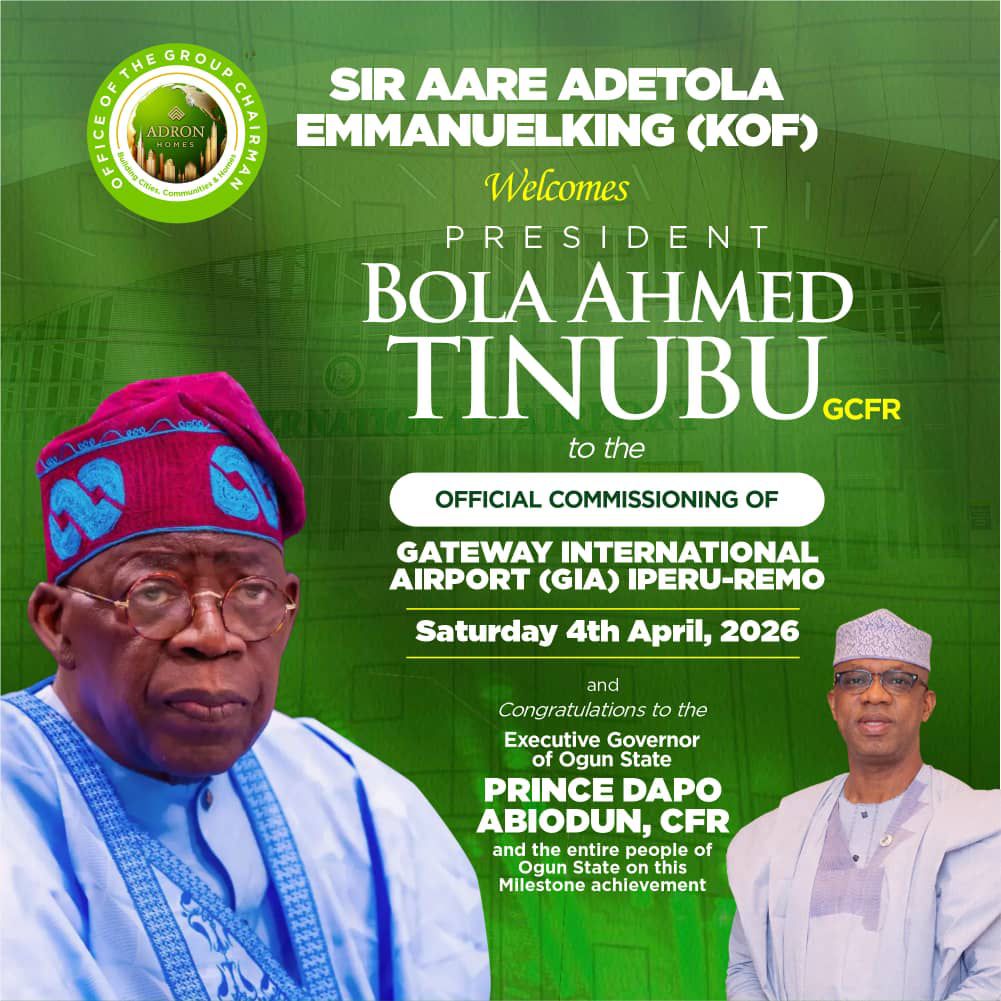
Aare Adetola Emmanuelking Welcomes President Tinubu to Gateway International Airport Commissioning in Iperu-Remo
In a momentous occasion that underscores the rapid infrastructural advancement of Ogun State, renowned real estate mogul and philanthropist, Aare Adetola Emmanuelking, warmly received the President of the Federal Republic of Nigeria, Bola Ahmed Tinubu, at the official commissioning of the Gateway International Airport, located in Iperu-Remo.
The landmark event, held under the visionary leadership of the Ogun State Governor, Dapo Abiodun, marks a significant stride in the state’s economic transformation agenda, positioning Ogun as a key hub for aviation, commerce, and investment in Nigeria.
Aare Emmanuelking, who is also the Chairman/CEO of Adron Homes and Properties, commended the Ogun State Government for its foresight and commitment to infrastructural excellence. He described the airport project as a “game-changer” that will not only boost connectivity but also stimulate real estate growth, tourism, and industrial expansion across the region.
Speaking during the commissioning, President Tinubu lauded Governor Abiodun’s administration for delivering a world-class facility that aligns with the Federal Government’s Renewed Hope Agenda, emphasizing the importance of strategic infrastructure in driving national development.
The Gateway International Airport is expected to serve as a critical gateway for investors and travelers, further enhancing Ogun State’s reputation as one of Nigeria’s most business-friendly environments.
The presence of top dignitaries, industry leaders, and stakeholders at the event underscores the project’s significance and its anticipated impact on the state’s socio-economic landscape and beyond.


- Seychelles Strengthens Human Rights Reporting through National Workshop April 8, 2026
- ABB’s Application Configurator brings speed and precision to grid-feeding protection system design April 7, 2026
- Can Equatorial Guinea Reposition as West Africa’s Gas Hub? April 7, 2026
- Afreximbank Partners with African Energy Week 2026 to Drive Africa-Led Energy Deals April 7, 2026
- Merck Foundation Marks ‘World Health Day’ 2026 – Transforming Patient Care in Africa and Beyond through 2600+ Scholarships for Healthcare Providers From 52 Countries April 7, 2026
- Morocco Gas Plan Reset Could Open Door to New Investment Models April 7, 2026
- African Petroleum Producers Organization (APPO) Secretary General Joins Angola Oil & Gas (AOG) 2026 as African Energy Bank Eyes June 2026 Debut April 7, 2026
- Ghanaian Biomedical Specialist Receives International Award April 7, 2026
- Grey Connects the Africa-Canada Money Corridor With Instant Transfers via Interac April 7, 2026
- Nigeria’s Oil Revival in Focus as Petroleum Minister Lokpobiri Joins Paris Energy Forum April 7, 2026
- Seychelles Strengthens Human Rights Reporting through National Workshop April 8, 2026
- ABB’s Application Configurator brings speed and precision to grid-feeding protection system design April 7, 2026
- Can Equatorial Guinea Reposition as West Africa’s Gas Hub? April 7, 2026
- Afreximbank Partners with African Energy Week 2026 to Drive Africa-Led Energy Deals April 7, 2026
- Merck Foundation Marks ‘World Health Day’ 2026 – Transforming Patient Care in Africa and Beyond through 2600+ Scholarships for Healthcare Providers From 52 Countries April 7, 2026
- Morocco Gas Plan Reset Could Open Door to New Investment Models April 7, 2026
- African Petroleum Producers Organization (APPO) Secretary General Joins Angola Oil & Gas (AOG) 2026 as African Energy Bank Eyes June 2026 Debut April 7, 2026
-

 news4 months ago
WHO REALLY OWNS MONIEPOINT? The $290 Million Deal That Sold Nigeria’s Top Fintech to Foreign Interests
-

 society7 months ago
“You Are Never Without Help” – Pastor Gebhardt Berndt Inspires Hope Through Empower Church (Video)
-

 celebrity radar - gossips2 months ago
Dr. Chris Okafor Returns with Power and Fire of the Spirit -Mounts Grace Nation Altar with Fresh Anointing and Restoration Grace on February 1, 2026
-

 celebrity radar - gossips4 months ago
Prophet Kingsley Aitafo Releases 2026 Prophecy: ‘Nigeria Will Rise, but the World Must Prepare for Turbulence’