
Uncategorized
You Cannot Tax Nigerians Into Prosperity: A Scathing Call for Suspension of Tinubu’s Tax Law

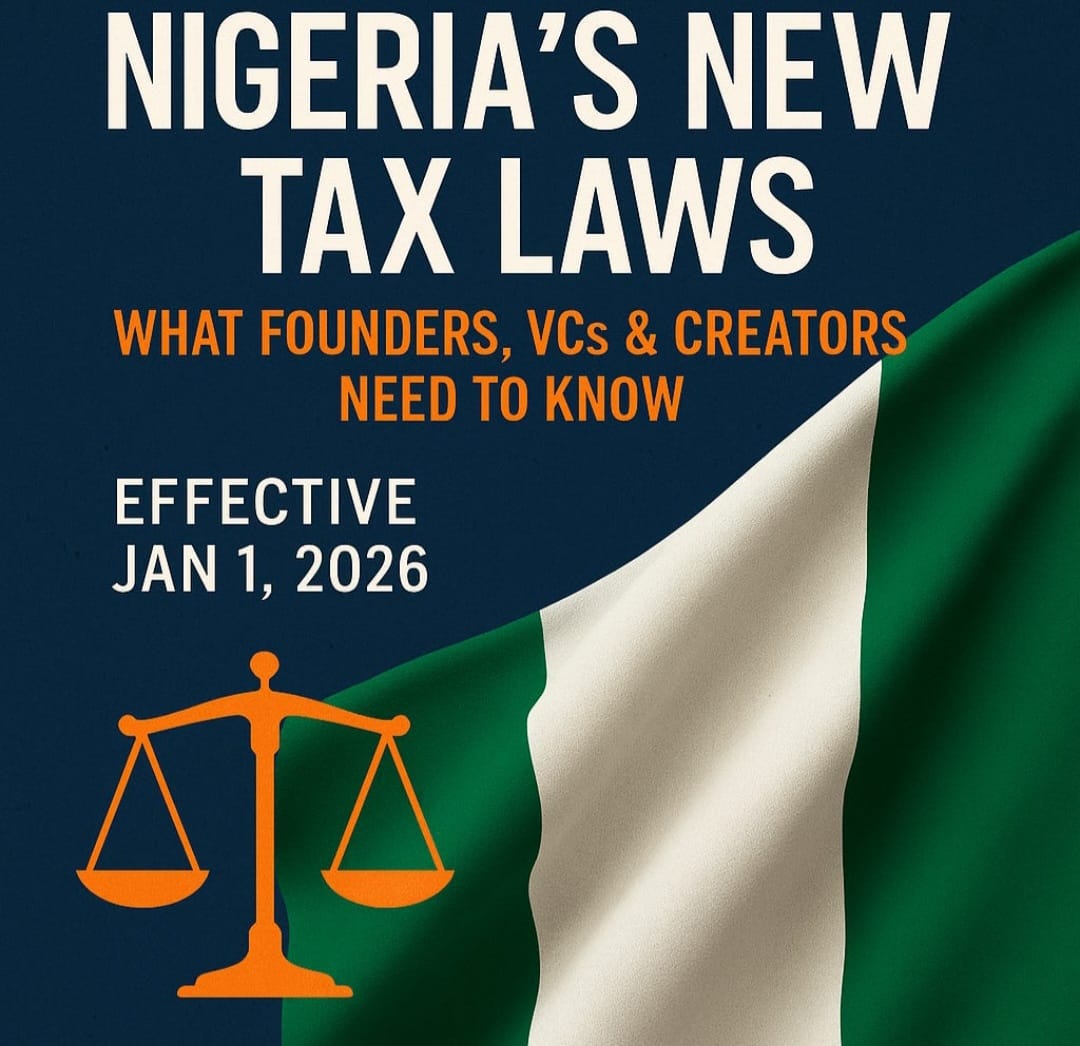
You Cannot Tax Nigerians Into Prosperity: A Scathing Call for Suspension of Tinubu’s Tax Law.
By George Omagbemi Sylvester | Published by saharaweeklyng.com
“How the National Opposition Movement Frames President Tinubu’s Tax Reform as an Economic Assault on the People of Nigeria.”
On 17 December 2025, the political and economic fault lines in Nigeria widened sharply when the National Opposition Movement (NOM) issued an unequivocal demand for the immediate suspension of President Bola Ahmed Tinubu’s new tax law, scheduled to take effect on January 1, 2026. At a press conference held at the Shehu Musa Yar’Adua Centre in Abuja, NOM described the tax overhaul as punitive, exploitative and harmful to the everyday lives of ordinary Nigerians, warning that its implementation would exacerbate hardship, deepen inequality, heighten social tensions and erode national cohesion amid an already severe economic crisis.
This resounding opposition is not merely rhetorical dissent though it echoes grounded economic anxieties and taps into the lived realities of a populace grappling with rising food prices, escalating electricity tariffs, unemployment and a collapse of public services. To fully grasp the gravity of NOM’s demands, it is essential to contextualise the new tax law, examine the socioeconomic dynamics underpinning the backlash and assess its implications for Nigeria’s fraught political economy.
What Does the New Tax Law Entail? The tax reforms in question consist of a series of four legislative acts signed into law on 26 June 2025, namely:

Nigeria Tax Act
Nigeria Tax Administration Act
Nigeria Revenue Service (Establishment) Act
Joint Revenue Board (Establishment) Act
thesun.ng
Collectively, these laws envision a broadened tax base that mandates all Nigerian adults of taxable age (regardless of employment status) to file tax returns between January 1 and March 31, 2026, with penalties for non-compliance. Moreover, business owners are required to file tax returns for all employees, including those earning below the taxable threshold, a departure from previous practices.
Proponents including the Presidency and the Federal Government assert that the reforms will streamline tax administration, improve efficiency, broaden the revenue base, exempt genuine low-income earners and ultimately strengthen public finances. However, these stated benefits are deeply contested by critics who argue that the reforms fall far short of equitable and effective tax policy.
NOM’s Core Criticisms: An “Assault on the Poor”. At the heart of NOM’s criticism is the belief that the tax laws are not genuine reforms but an assault on the economic wellbeing and social security of Nigerians, especially the most vulnerable:
1. A Tax at the Worst Possible Time
NOM emphasises that Nigeria is in the throes of a multidimensional crisis, characterized by:

Rising poverty and homelessness
Food scarcity and high cost of living
Worsening insecurity
Declining purchasing power
In such conditions, adding fresh tax obligations (especially unaccompanied by improved services or social protections) is perceived as deeply insensitive and economically reckless.
As Dr. Amina Bello, Senior Fellow in Public Policy at the Centre for Economic Governance, recently observed, “Reforming taxation must start with equity, transparency, and capacity and not coercion. Taxing people into poverty only accelerates economic decay.”
2. Disproportionate Impact on the Poor and Vulnerable
Critics argue that the new regime will disproportionately harm low-income Nigerians. Despite government claims of exemptions for the poor, mandatory filings for unemployed adults and penalties for non-compliance are widely viewed as an undue burden on those already struggling to survive. Small and medium-sized businesses, already squeezed by inflation and weak demand, fear added bureaucratic costs and compliance liabilities.
Economist Professor Chukwuemeka Nnaji of the University of Lagos warned, “A tax system that compels returns from the unemployed, the underemployed, and those in the informal sector (without addressing their constraints) is not reform; it is a regressive extraction of what little remains.”
3. Weak Institutional Capacity
NOM highlighted Nigeria’s chronic institutional weaknesses; limited internet access, inefficient service delivery and widespread corruption within revenue agencies such as the Federal Inland Revenue Service (FIRS). The group criticised an undisclosed Memorandum of Understanding between FIRS and a French tax agency as lacking transparency and accountability.
This distrust is not unfounded. Transparency International’s latest assessments underscore longstanding concerns about governance failures and revenue mismanagement in Nigeria. Economist and governance expert Dr. Khadijah Ibrahim argues that “tax compliance must be built on trust; where institutions are opaque, taxation becomes synonymous with exploitation.”
4. Failure to Tie Taxation to Public Services
Another central criticism concerns the lack of direct, credible commitments that increased tax revenues will translate into improved public services. Nigerians continue to endure chronic electricity outages, deteriorating healthcare systems, poorly performing schools, and inadequate security. NOM contends that citizens are being asked to pay more without a guarantee of tangible returns in public welfare.
Public finance scholar Professor Olufemi Adesina summed it up:
“A tax system divorced from visible public benefit is a moral failing. Citizens pay taxes to see better roads, functional health systems, safety and opportunity, not to subsidise inefficiency.”

NOM’s Demands: Beyond Suspension. NOM’s call for suspension is accompanied by detailed policy prescriptions:
Immediate halt to the tax plan’s implementation
Nationwide consultations with labour unions, civil society, SMEs, professionals and state governments
Explicit social protection guarantees tied to any future tax reforms
A shift in tax focus toward luxury consumption, excess profits, monopolies and corrupt gains
Stronger legal safeguards to protect taxpayer rights
This reflects a desire for a more inclusive and equitable policy process, one that acknowledges economic realities and empowers citizens rather than penalizes them.
Political and Social Implications. NOM’s stance aligns with ongoing resistance from organised labour, including the Nigeria Labour Congress (NLC) and the Trade Union Congress (TUC), both of which have raised alarm over governance and economic policies under the Tinubu administration.
The opposition’s framing of the tax law as an “assault” signals deepening trust deficits between the government and significant segments of the public. Without dialogue and compromise, there is a tangible risk of escalating social unrest, strikes, and further fragmentation of national unity.
Defending Tax Reform and Or Misdiagnosing the Problem? Supporters of the tax reforms argue that Nigeria’s historical reliance on oil revenues has starved government coffers and that broadening the tax net is essential for sustainable fiscal policy. International financial institutions have long urged Nigerian administrations to strengthen domestic revenue mobilisation to reduce dependence on volatile oil earnings.
However, this perspective faces critical pushback: What use is a broader tax base if millions cannot afford basic necessities? If institutional corruption persists unchecked? If tax revenues do not translate into visible public goods?
This fundamental tension lies at the heart of the current crisis of confidence.
A Moment of National Choice: A Nation at a Crossroads. The demand to suspend Tinubu’s tax law is more than a political slogan—it is a clarion call for governance rooted in equity, accountability and public trust. As Nigeria approaches the implementation deadline, the administration faces a pivotal choice: engage in genuine dialogue and recalibrate policy, or risk deepening an already perilous socio-economic divide.
As Dr. Aisha Mohammed, an expert in fiscal policy, warned, “Tax reform cannot be a dagger aimed at the poor. It must be a bridge to shared prosperity.”

In the final analysis, Nigerians should not be taxed into poverty; they must be taxed toward prosperity; where taxation and service delivery form a pact of mutual accountability and where no citizen is left to shoulder the weight of systemic failures alone.




Uncategorized
TYO National Competition Concludes with Exceptional Display of Oratory and Critical Thinking

The TYO 2026 National Competition concluded with an impressive showcase of oratory, critical thinking, and a compelling demonstration of the skills developed by participants during a four-day intensive boot camp. The programme commenced on Monday, April 27, with semifinals held on April 29 and the finals on April 30, 2026.
The final event was marked by an emotional moment as the winner was announced to an enthusiastic reception from the audience. Participants were evaluated on key competencies including reasoning, content, structure, audibility, and audience engagement. The competition stood as a clear demonstration of what can be achieved when young minds are given the opportunity and space for intentional development.
TYO is a communications platform and an expression of the Peat Philips Foundation, committed to instilling leadership, communication, and public speaking skills in young people. The initiative focuses on building strong character and empowering participants to embody the change they seek, not only through words but through aligned actions.
The boot camp incorporated multiple dimensions of learning, including structure, intent, goal-setting, character development, reasoning and effective audience engagement. These components provided participants with the opportunity to refine their speaking abilities while unlearning habits that no longer serve their growth. The experience also fostered peer learning, as participants engaged closely with other qualified individuals within the programme.
Beyond the competition, TYO serves as a broader platform dedicated to developing young people into confident communicators and ambassadors of their communities and country. The competition itself is one of several initiatives aimed at preparing a Nigerian representative for the International Public Speaking Competition scheduled to take place in the United Kingdom in July this year.
Looking ahead, preparations are already underway for the 2027 edition of the TYO Boot Camp. The organisers express hope for continued and increased support from sponsors and partners to sustain and expand the programme. This support is essential to reaching more young people and strengthening a critical area of development, not only for Nigeria but for the African continent at large.
For partnership and sponsorship inquiries, interested parties are encouraged to connect with the organisers to support the mission of raising a generation equipped to serve and lead effectively. Contact: 08071825959, [email protected].
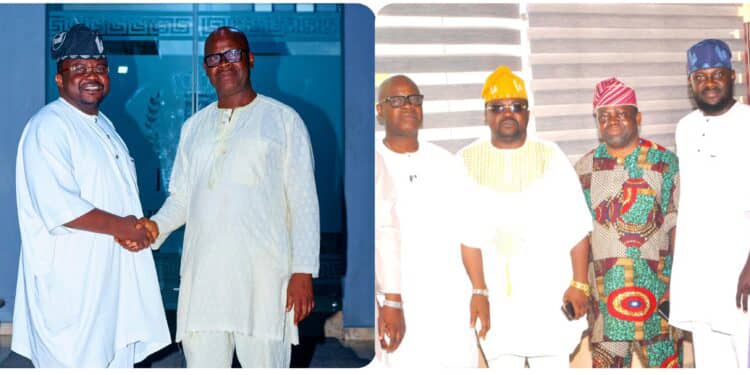
Ajadi Visits Ilaji Resort, Commends Sanusi’s Vision for Oyo’s Economic Growth
The leading gubernatorial aspirant in Oyo State under the Peoples Democratic Party (PDP), Olufemi Ajadi Oguntoyinbo, has lauded the transformative impact of private-sector investment on the state’s economy, following a courtesy visit to Ilaji Hotels and Sports Resort in Akanran, Ibadan.
Ajadi, who was warmly received on Sunday by the resort’s founder, Chief Dr Dotun Sanusi, described the facility as a symbol of what visionary leadership and indigenous enterprise can achieve in driving rural development, job creation, and tourism growth.
Speaking during the visit, Ajadi commended Sanusi’s commitment to Oyo State’s economic advancement, noting that Ilaji Resort stands as a model for sustainable development outside urban centres.
“What I have seen here today is not just a business venture, but a bold statement of belief in Oyo State’s potential,” Ajadi said. “Chief Sanusi has demonstrated that with vision, dedication, and strategic investment, we can transform our rural communities into thriving economic hubs. This aligns perfectly with my agenda to expand opportunities, empower our people, and sustain development across the state.”
[4/13, 6:34 PM] johnsonakinpelu: The PDP gubernatorial aspirant emphasised that his governorship ambition is rooted in supporting initiatives that promote local enterprise, tourism, and youth employment, adding that partnerships between government and private investors would be a priority if elected.
In his remarks, Sanusi, popularly known as Ilaji, expressed delight at hosting Ajadi and his entourage, describing the visit as encouraging for investors in the state.
“I am honoured to receive Ambassador Ajadi here at Ilaji Resort,” Sanusi said. “This project was born out of a desire to give back to society, create jobs for our youths, and showcase the rich cultural and tourism potential of Oyo State. When leaders recognise and support such efforts, it strengthens our resolve to do more.”
Sanusi further stressed the importance of continuity in governance and policies that encourage investment, noting that consistent support from government actors is crucial for long-term economic growth.
The visit also attracted notable political stakeholders, including the former Ona-Ara Local Government Chairman, Hon. Taiwo Oke, Hon. Bass Oloko, and Ajadi’s personal assistant, Kilamuwaye Badmus, among others.
Observers at the event described the meeting as a convergence of political leadership and entrepreneurial vision, highlighting the growing importance of collaboration in addressing developmental challenges in Oyo State.
Analysts see Ajadi’s visit to Ilaji Resort as part of his broader engagement with key stakeholders across sectors, as he continues to build momentum ahead of the 2027 governorship race.

FOPCHEN Calls for Dialogue as Court Fixes May 28 for Continuation
OTA, OGUN STATE — Proceedings in a widely followed legal case resumed on March 24, 2026, at the High Court of Ogun State, Ota Division, ending with a fresh adjournment as the court fixed May 28, 2026, for continuation.
During the session, legal representatives for all parties restated their positions and addressed preliminary matters, laying the groundwork for more substantive arguments at the next hearing. Observers noted that the case continues to attract significant public attention due to its perceived implications for law, culture, and societal values.
The Foundation for the Protection of Cultural Heritage in Nigeria (FOPCHEN) used the occasion to reiterate its call for constructive national dialogue. The group emphasized that while the judicial process must be respected, broader societal engagement remains essential.
According to the organization, issues relating to values, responsibility, and cultural identity should not be confined solely to courtroom deliberations but should involve active participation from various sectors of society.
Legal analysts present at the proceedings described the matter as one with far-reaching implications, noting that arguments advanced in court could shape future interpretations surrounding sensitive cultural and moral questions.
The presiding judge subsequently adjourned the case to May 28, granting all parties time to refine their submissions and respond to issues raised during the hearing.
As anticipation builds ahead of the next court date, Nigerians across different sectors continue to monitor developments closely, keen to see how the judiciary navigates the delicate balance between constitutional rights and cultural expectations.


- Pitcher Awards Announces 2026 Winners, Marking a Landmark Year for Pan‑African Creativity May 30, 2026
- Ghana Commemorates 78th International Day of United Nations Peacekeepers May 30, 2026
- South Africa: President Ramaphosa receives second interim report of Madlanga Commission May 30, 2026
- Asmara Marathon 2026 to be held May 30, 2026
- Powerful call for dialogue and compromise to secure peace in South Sudan issued on International Peacekeepers Day May 30, 2026
- Over 1,000 Participants Join Rwenzori Marathon Activation Run in Mombasa May 30, 2026
- World Health Organization (WHO) actively participated in the 2nd Summit on Healthcare Integration in Portuguese-speaking countries May 30, 2026
- Annual Meetings (AM) 2026: “Africa has what It takes” - Experts call for stronger financial systems to help Africa mobilise capital at scale May 30, 2026
- Eritrea Participates at Organization of African, Caribbean and Pacific States Meetings May 30, 2026
- Annual Meetings 2026 (AM2026): African Development Bank Group’s 2025 Annual Report Highlights Strong Results and a New Chapter for Africa’s Transformation May 29, 2026
- Pitcher Awards Announces 2026 Winners, Marking a Landmark Year for Pan‑African Creativity May 30, 2026
- Ghana Commemorates 78th International Day of United Nations Peacekeepers May 30, 2026
- South Africa: President Ramaphosa receives second interim report of Madlanga Commission May 30, 2026
- Asmara Marathon 2026 to be held May 30, 2026
- Powerful call for dialogue and compromise to secure peace in South Sudan issued on International Peacekeepers Day May 30, 2026
- Over 1,000 Participants Join Rwenzori Marathon Activation Run in Mombasa May 30, 2026
- World Health Organization (WHO) actively participated in the 2nd Summit on Healthcare Integration in Portuguese-speaking countries May 30, 2026
-

 news6 months ago
WHO REALLY OWNS MONIEPOINT? The $290 Million Deal That Sold Nigeria’s Top Fintech to Foreign Interests
-

 society4 weeks ago
SOCIAL MEDIA IS NOT A BATTLEFIELD COMMAND – WHY THE NIGERIAN ARMY’S ACTION AGAINST JUSTICE CRACK IS A NATIONAL SECURITY IMPERATIVE
-

 celebrity radar - gossips4 months ago
Dr. Chris Okafor Returns with Power and Fire of the Spirit -Mounts Grace Nation Altar with Fresh Anointing and Restoration Grace on February 1, 2026
-

 celebrity radar - gossips6 months ago
Prophet Kingsley Aitafo Releases 2026 Prophecy: ‘Nigeria Will Rise, but the World Must Prepare for Turbulence’