
society
Group Raises Concern Over ‘Peace Meeting’ Between Zamfara, Katsina State Officials With Notorious Bandits


Group Raises Concern Over ‘Peace Meeting’ Between Zamfara, Katsina State Officials With Notorious Bandits
A civil society grouikp, the Citizens for Equity and Justice Initiative (CEJI), has condemned the governors of Zamfara and Katsina states over a widely criticised peace meeting held with Ado Aleru, a notorious bandit leader long declared wanted by security forces.

The meeting, held Saturday in Bichi community, Danmusa LGA of Katsina, was attended by traditional rulers, local government officials, representatives of the Nigerian Army, and top officials from both states. In widely circulated video footage, Aleru — who has a N5 million bounty on his head — was seen addressing the gathering, urging for peaceful coexistence between Fulani herders and farming communities.
Aleru has been linked to countless acts of terror and bloodshed in the north-west, with human rights organisations accusing him of orchestrating mass killings, mass kidnappings, and the displacement of thousands. His reemergence, not in handcuffs but at the centre of state-sanctioned negotiations, has sparked outrage across the country.
CEJI, a non-partisan watchdog focused on justice and rule of law, said the presence of state officials and security personnel at a meeting where Aleru was not only welcomed but offered a platform to speak, was a complete betrayal of the Nigerian people and an affront to every citizen who has lost a loved one to bandit violence.
In a statement issued on Friday, Dr Abdulmumin Sarki, CEJI president, accused governors Dikko Radda of Katsina and Dauda Lawal of Zamfara of hypocrisy and political cowardice.
“These are the same governors who, while campaigning, condemned so-called peace deals with blood-stained warlords,” Sarki said.
“Now in power, they are doing precisely what they once derided — normalising criminals as stakeholders in the governance process, even as tens of thousands of citizens remain unaccounted for due to the very violence these men unleashed.”
The group referenced a 2023 report by Amnesty International which estimated that more than 10,000 Nigerians have been killed and tens of thousands more displaced in the past two years alone as a result of banditry and communal violence in the northwest. In that context, CEJI described the peace parley as a “moral collapse of governance”.
“You do not negotiate with terrorists in the open, not when the blood of their victims is still drying, not when they remain armed, wanted, and unrepentant. It is a dangerous precedent that delegitimises state authority and emboldens violent actors,” Sarki added.
Governor Lawal of Zamfara had, in August 2023, publicly ruled out dialogue with bandits, describing such moves as “a failed strategy that has only given criminals more time to regroup and rearm.”
Similarly, Governor Radda had dismissed earlier peace talks under his predecessor as “a misguided approach that rewarded impunity.”
CEJI said both governors must be held to account for clearly contradicting their own policy positions and exposing the public to more insecurity.
“The Nigerian state cannot simultaneously claim to be fighting insecurity while its chief executives are sharing stages with those they should be arresting. This is a contradiction that weakens the rule of law and puts lives at risk,” Sarki said.
The group called on the National Security Adviser, Nuhu Ribadu, and the Inspector General of Police, Kayode Egbetokun, to immediately investigate the circumstances under which Ado Aleru was allowed to surface freely and publicly despite his wanted status.
“It is unacceptable that a man declared wanted since 2020 was able to move around with such impunity, engage state actors, and issue statements without fear of arrest. The implication is that there may be state complicity in shielding these actors, which is a grievous national security breach,” the statement added.
The group also urged the National Human Rights Commission and international partners to investigate the meeting as a possible violation of Nigeria’s obligations under international law.
“Negotiating with known perpetrators of crimes against humanity, in full view of the security agencies and the public, without any form of justice or accountability, is a breach of international norms and values,” CEJI stated.
It called on the governors to issue public explanations for their roles in the meeting and to clarify whether their administrations now officially recognise violent non-state actors as peace partners.
“If the governors of Katsina and Zamfara can legitimise a fugitive bandit in the name of peace, what will stop every other violent group from demanding the same treatment?” Sarki asked.
“That meeting undermines the rule of law. It tells victims there is no justice. It tells future terrorists that with enough weapons and violence, they too can get invited to state dinners.
“We strongly condemn that so-called peace meeting and urge the security agencies to investigate that highly provocative gathering.”




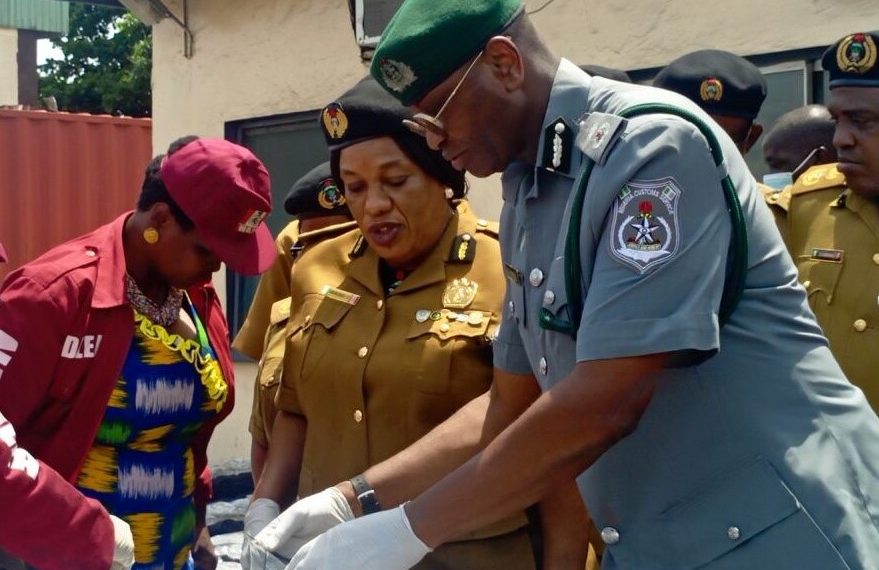
Customs, NDLEA Intercept N16.7bn Cannabis Shipment at Tin Can Port
By Ifeoma Ikem
The Nigeria Customs Service, Tin Can Island Port Command, has intercepted a major consignment of illicit drugs valued at N16.7 billion at the Lagos Port Complex, in what authorities described as a significant breakthrough in Nigeria’s ongoing anti-smuggling operations.
The seizure, which occurred barely two weeks after a similar interception, involved 4,173.5 kilograms of Cannabis Indica concealed in 8,347 packages and packed inside a 40-foot container.
Speaking during a media briefing in Lagos, the Customs Area Controller of Tin Can Island Port Command, Comptroller Frank Onyeka, said the operation was carried out through intelligence sharing and strategic collaboration between the Nigeria Customs Service and the National Drug Law Enforcement Agency.
Onyeka explained that officers of the command’s Enforcement Unit intercepted the container marked HAMU 247034/8 after receiving credible intelligence reports from relevant security agencies.
He said the container was immediately flagged for detailed physical examination upon arrival at Tin Can Island Port.
According to him, the container originated from Canada and was discovered to contain large quantities of Cannabis Indica hidden among cargo items.
He disclosed that the illicit substance weighed 4,173.5 kilograms and carried an estimated street value of N16.694 billion.
The Customs boss said the interception highlights the increasing use of maritime trade routes by international criminal syndicates seeking to penetrate Nigeria’s market with illegal substances.
He noted that such criminal activities pose serious risks to national security, public health and economic productivity, particularly among young Nigerians.
Onyeka stated that the command would continue to strengthen surveillance systems, improve cargo profiling and enhance intelligence gathering to safeguard Nigeria’s ports.
He also warned that port insiders and other individuals aiding smuggling activities would be identified and prosecuted in accordance with the law.
The Comptroller commended the Comptroller-General of Customs, Bashir Adewale Adeniyi, for promoting inter-agency cooperation in anti-smuggling operations.
Receiving the seized consignment on behalf of the National Drug Law Enforcement Agency, Director of Seaport Operations, ACGN Ibinabo Archie Abia, described the seizure as a major disruption of transnational drug trafficking networks.
She revealed that the operation followed months of surveillance and international intelligence collaboration involving Homeland Security Investigations, the United States Drug Enforcement Administration and the Royal Canadian Mounted Police.
Abia added that the latest interception, alongside previous seizures of 4,729 kilograms on April 27 and 610.5 kilograms on April 30, reflects growing efficiency in intelligence-driven enforcement operations aimed at protecting Nigeria’s maritime trade environment.

*Menopause Is Not the End – It is a Critical Transition Hidden Behind Silence and Stigma*
– *Dr Nelson Aluya MD, MBBS*
Menopause is universal, inevitable, and often misunderstood.
It is not merely the end of menstruation; it is one of the most consequential biological transitions in a woman’s life. The danger of menopause does not lie in the transition itself, but in how poorly it is understood, recognized, and treated—by societies, healthcare systems, and often by women themselves.
Women constitute approximately 49.6–49.7% of the global population, amounting to over 4 billion women worldwide as of 2024–2025. Although slightly more boys are born than girls—about 106 boys for every 100 girls—higher male mortality means women increasingly outnumber men in older age groups. Globally, the sex ratio evens out to nearly 50/50, with women dominating later decades of life (United Nations; World Bank; INED). And every woman who lives long enough will experience menopause.
Menopause is defined as 12 consecutive months without a menstrual period, typically occurring between ages 45 and 55, with an average age of 51–52. Today, over one billion women globally are experiencing perimenopause, menopause, or postmenopause. In the United States alone, 1.3 to 2 million women enter menopause annually, roughly 6,000 women every day. As populations age and life expectancy increases, this number will continue to rise.
Yet despite affecting nearly half of humanity and 100% of women who reach midlife, menopause remains one of the most neglected and poorly integrated areas of modern meLimitations?
*A Critical Biological Turning Point:*
Menopause represents a sharp decline in estrogen and progesterone—hormones that influence far more than reproduction. Estrogen plays a protective role in cardiovascular health, bone density, brain function, metabolic regulation, and emotional stability. When estrogen levels fall, risk rises.
This is why menopause is increasingly recognized as a critical health inflection point, not a benign milestone.
*Cardiovascular Disease: The Greatest Threat:*
Cardiovascular disease is the leading cause of death in women worldwide, surpassing all cancers combined. Before menopause, estrogen confers relative cardiovascular protection. After menopause, that protection rapidly diminishes.


Research shows that the menopausal transition is associated with: Worsening lipid profiles Increased insulin resistance
Central weight gain
Vascular stiffness and endothelial dysfunction
Collectively, these changes double the risk of heart disease compared with premenopausal women.
Compounding this risk is misdiagnosis. Women experiencing myocardial infarction often do not present with classic symptoms such as crushing chest pain or dramatic shortness of breath. Instead, they may report fatigue, nausea, heartburn, dizziness, jaw or shoulder pain—symptoms frequently dismissed as anxiety, stress, or “menopausal complaints.”
The consequences are stark. Studies show that women aged 45–64 have higher mortality following a first heart attack than men of the same age. One-year mortality rates approach 23% in women versus 18% in men, and within five years, 47% of women die, develop heart failure, or suffer a stroke compared with 36% of men.
“Menopause does not cause heart disease.
Ignorance of menopause does.”
*Mental Health, Depression, and Suicide Risk:*
Menopause is also a period of heightened psychological vulnerability. Fluctuating and declining estrogen affects neurotransmitters such as serotonin and dopamine, increasing susceptibility to major depression, anxiety, irritability, and emotional dysregulation.
*This risk is not theoretical:* Epidemiological data indicate that women are more likely to die by suicide between the ages of 45 and 49, coinciding with the late perimenopausal and early menopausal years. While suicide is multifactorial, menopause represents a biological and psychosocial stressor that intersects with caregiving burdens, career pressures, aging awareness, and sleep deprivation.
“o dismiss these symptoms as “normal” is to trivialize a period of genuine risk.”
*Cognitive Decline and Neurological Vulnerability:*
Emerging evidence suggests that estrogen plays a role in maintaining synaptic health and cerebral blood flow. The menopausal transition has been associated with brain fog, memory lapses, and reduced processing speed, symptoms frequently minimized or ignored.
Women account for nearly two-thirds of Alzheimer’s disease cases worldwide. While causality remains under investigation, declining estrogen during menopause is increasingly viewed as a potential contributor to long-term neurological vulnerability, particularly when combined with cardiovascular risk factors.
*Bone Loss and Physical Frailty:*
Bone density declines precipitously after menopause. Without estrogen, women experience accelerated bone resorption, placing them at high risk for osteoporosis and fractures. Nearly half of a woman’s lifetime bone loss occurs during the menopausal years.
Hip fractures, in particular, are associated with loss of independence, chronic disability, and increased mortality—yet bone health screening and prevention remain underutilized.
*The Burden of Symptoms—and Silence:* Hot flashes, night sweats, sleep disruption, fatigue, vaginal dryness, reduced libido, and cognitive changes are not trivial inconveniences. Moderate-to-severe vasomotor symptoms peak in the first two years after menopause and can persist for a decade or longer.
Despite this, menopause remains dramatically under-treated. Many women are told to endure symptoms without explanation or support. This silence has consequences—not only for individual health, but for families and communities.
*Menopause and the Social Fabric:*
Menopause often coincides with peak life stress: caring for aging parents, supporting adolescent or adult children, managing career demands, and confronting aging itself. The cumulative effect can strain relationships.
Surveys suggest that up to 70% of women report menopause as a contributing factor to marital breakdown, citing increased conflict, reduced intimacy, and emotional distress. Divorce rates among adults over 50—so-called “gray divorce”—have risen dramatically in recent decades, with menopause frequently acting as an unrecognized catalyst.
When menopause is misunderstood, women are blamed for biological changes they cannot control.
A Shift Toward Evidence and Empowerment
Menopause is not a disease, but it demands medical respect.
Lifestyle interventions—regular physical activity, balanced nutrition, smoking cessation, reduced alcohol use—remain foundational. Medical care is equally vital: cardiovascular screening, bone density assessment, mental health support, and treatment of genitourinary symptoms.
Hormone therapy, long stigmatized, is undergoing reevaluation. In November 2025, the U.S. Food and Drug Administration initiated the removal of outdated “black box” warnings from most hormone replacement therapies, acknowledging that prior risk assessments were based on misinterpreted data. Current evidence indicates that for women under 60 or within 10 years of menopause, hormone therapy can reduce cardiovascular risk, fractures, and possibly dementia when appropriately prescribed.
Legislative efforts, such as the New Jersey Menopause Coverage Act, reflect growing recognition that menopause care is not optional—it is essential healthcare.
Beyond Survival: The Postmenopausal Years
For many women, life after menopause brings increased confidence, clarity, and freedom—a phase sometimes described as postmenopausal zest. But reaching that stage safely requires awareness, education, and systemic change.
Conclusion
Menopause is not a footnote in women’s health.
It is a defining chapter.
Ignoring it places billions of women at unnecessary risk—of heart disease, depression, cognitive decline, fractured families, and preventable death.
“Menopause does not weaken women.
Silence does.”
Recognizing menopause as a critical health transition is not only a medical obligation—it is a moral one.

NSCDC Busts Syndicate Vandalizing Railway Tracks, NNPC Pipelines; 12 Suspects Arrested
The Nigeria Security and Civil Defence Corps (NSCDC) has dismantled a syndicate involved in the vandalism, theft and recycling of critical national infrastructure, including railway tracks, NNPC pipelines and water board installations, with no fewer than 12 suspects arrested. The National Public Relations Officer of the corps, ACC Babawale Afolabi, disclosed this during a briefing on Wednesday in Kaduna. Afolabi, represented by the Deputy Public Relations Officer, SC Terzungwe Orndiir, said the operation followed a viral video showing massive vandalisation of newly laid Kaduna-Kano rail tracks and existing railway infrastructure in the northern part of the country. He said the Commandant General of the corps, Ahmed Abubakar Audi, directed the CG’s Special Intelligence Squad (SIS) and the Kaduna State Command to identify and apprehend those behind the act.
According to Afolabi, the breakthrough was achieved through intelligence-led operations supervised by the Commander of the CG’s SIS, Commandant Apollos Dandaura, in collaboration with the Kaduna State Command. He said operatives on May 12 dismantled what he described as an international and local syndicate operating under a sophisticated criminal cover. The suspects allegedly used the premises of Inner Galaxy Steel Company at Birnin Yero in Igabi Local Government Area of Kaduna State as a front for their activities. According to the NSCDC spokesperson, the company allegedly compressed vandalised railway materials into scrap at its Kaduna facility before transporting them to Aba, Abia State, where they were melted and recycled into nails and iron rods. Afolabi said this criminal cycle had caused the Federal Government monumental economic losses, adding that the suspects allegedly conspired with vandals to purchase stolen railway tracks, slippers, NNPC pipes and water board infrastructure.
The NSCDC spokesman said seven suspects had been arrested in connection with the case, identifying them as Usman Hassan, company manager; Bilyaminu Usman, weighbridge operator; Choji Pam, weighbridge officer; Jamilu Jaafar, scrap collector; Chukwuemeka Udonwoke, supervisor; Chikwodilli Ezema, company manager; and Isaac Etim, scrap leader. According to him, the suspects are being processed for criminal conspiracy, unlawful possession of vandalised property and receiving stolen property. He listed items recovered from the scene to include large quantities of vandalised railway tracks and slippers, suspected NNPC and water board pipes, as well as specialised machinery allegedly used for compressing and concealing stolen infrastructure.
Afolabi further disclosed that the CG’s SIS and Kaduna State Command also arrested five suspects over alleged vandalism of rail tracks along the Kaduna-Abuja corridor at Gwagwada community in Chikun Local Government Area. He said exhibits recovered from them included railway tracks, slippers and gas cylinders allegedly used in destroying the infrastructure. The NSCDC spokesman quoted the Commandant General as commending the CG’s SIS and Kaduna State Command for their gallantry and professionalism. He said the corps was concerned that registered companies were allegedly acting as saboteurs, adding, “Under this leadership, the NSCDC will not treat economic sabotage with kid gloves. We are going after the sponsors. This operation marks the beginning of a new phase in our crackdown on syndicates supporting vandalism under any disguise.” Afolabi thanked members of the public for providing intelligence through social media and urged continued collaboration with security agencies.
Also speaking, the Managing Director of the Nigerian Railway Corporation (NRC), Dr Kayode Opeifa, commended the NSCDC for recovering large quantities of railway materials allegedly vandalised and concealed in Kaduna State. Opeifa, represented by the Chief Technical Officer (Track), Zaria, Mr Paul Doche, said the NRC team was invited by the NSCDC to identify railway materials recovered during the intelligence-led operation. He said the recovered items included heaps of railway sleepers and rail tracks allegedly hidden beneath scrap metal debris, adding, “We have gone round and identified some of our materials there. These are national assets.” Doche praised the NSCDC for what he described as a successful intelligence-driven operation. He noted, however, that it would be difficult to immediately quantify the recovered materials because many of the railway components were buried under heaps of metal scraps. “Before we can quantify, we have to remove all the debris and count the materials one after the other,” he said. Doche reiterated that the Nigerian Railway Corporation had zero tolerance for vandalism and destruction of railway infrastructure. According to him, the matter would be handed back to the NSCDC for further investigation and prosecution of those involved in accordance with the law.


- West African Development Bank (BOAD) and PROPARCO Launch a Landmark €200 Million Cross-Financing Operation to Boost the Private Sector in the West African Economic and Monetary Union (WAEMU) Region May 14, 2026
- West African Development Bank's (BOAD) Inaugural Rating by Japan Credit Rating Agency, Ltd. (JCR): Strategic Recognition for a Reinforced Ambition May 14, 2026
- DHL Express Sub-Saharan Africa (SSA) celebrates its 53rd Transported Asset Protection Association's (TAPA) Facility Security Requirements (FSR) certification May 14, 2026
- Governor of the Central Bank of Egypt and President of Afreximbank Hold a Press Briefing on Egypt's Ongoing Preparations to Host the 33rd Afreximbank Annual Meetings in Alamein May 14, 2026
- Kaspersky shares 5-step safety action plan on what to do when you discover your phone is missing May 14, 2026
- Africa-Focused Independents Expand African Energy Week (AEW) 2026 Speaker Lineup as Exploration Accelerates May 14, 2026
- African Leadership Magazine Announces Nominees for the 16th African Business Leadership Awards (ABLA) 2026 May 14, 2026
- GE Vernova opens new Center of Excellence in Morocco to support power transmission services globally May 14, 2026
- African Mining Week (AMW) 2026 to Position Junior Miners at the Forefront of Africa’s Mineral Evolution May 14, 2026
- Trafigura Eyes $900M Aluminium Smelter as Egypt Accelerates Mineral Beneficiation Drive May 14, 2026
- West African Development Bank (BOAD) and PROPARCO Launch a Landmark €200 Million Cross-Financing Operation to Boost the Private Sector in the West African Economic and Monetary Union (WAEMU) Region May 14, 2026
- West African Development Bank's (BOAD) Inaugural Rating by Japan Credit Rating Agency, Ltd. (JCR): Strategic Recognition for a Reinforced Ambition May 14, 2026
- DHL Express Sub-Saharan Africa (SSA) celebrates its 53rd Transported Asset Protection Association's (TAPA) Facility Security Requirements (FSR) certification May 14, 2026
- Governor of the Central Bank of Egypt and President of Afreximbank Hold a Press Briefing on Egypt's Ongoing Preparations to Host the 33rd Afreximbank Annual Meetings in Alamein May 14, 2026
- Kaspersky shares 5-step safety action plan on what to do when you discover your phone is missing May 14, 2026
- Africa-Focused Independents Expand African Energy Week (AEW) 2026 Speaker Lineup as Exploration Accelerates May 14, 2026
- African Leadership Magazine Announces Nominees for the 16th African Business Leadership Awards (ABLA) 2026 May 14, 2026
-

 news5 months ago
WHO REALLY OWNS MONIEPOINT? The $290 Million Deal That Sold Nigeria’s Top Fintech to Foreign Interests
-

 society2 weeks ago
SOCIAL MEDIA IS NOT A BATTLEFIELD COMMAND – WHY THE NIGERIAN ARMY’S ACTION AGAINST JUSTICE CRACK IS A NATIONAL SECURITY IMPERATIVE
-

 celebrity radar - gossips4 months ago
Dr. Chris Okafor Returns with Power and Fire of the Spirit -Mounts Grace Nation Altar with Fresh Anointing and Restoration Grace on February 1, 2026
-

 celebrity radar - gossips5 months ago
Prophet Kingsley Aitafo Releases 2026 Prophecy: ‘Nigeria Will Rise, but the World Must Prepare for Turbulence’