
Bank
ZENITH BANK’S HYBRID RIGHTS ISSUE AND PUBLIC OFFER HOLDS IMMENSE VALUE FOR INVESTORS


ZENITH BANK’S HYBRID RIGHTS ISSUE AND PUBLIC OFFER HOLDS IMMENSE VALUE FOR INVESTORS
Sahara Weekly Reports That Zenith Bank Plc, in a significant move to meet the Central Bank of Nigeria’s (CBN) new minimum capital requirement of N500 billion, is offering its ongoing hybrid rights and public offers at the bank’s lowest price range, locking in about 32 percent gain in potential immediate return for existing shareholders and new investors. This Hybrid Rights Issue and Public Offer, aimed at raising approximately N290 billion, will not only enable the bank to meet the CBN’s requirement but also provide additional working capital to support its expanding operations and investments in information technology infrastructure.

Currently, Zenith Bank’s issued and fully paid share capital stands at N15.698 billion, complemented by a share premium of N255.047 billion. To meet the CBN’s new stipulation, the bank requires an additional N229.225 billion. Despite its robust historical performance, the CBN’s new capital requirement has necessitated this substantial capital raise. According to Dame Dr. Adaora Umeoji, OON, Group Managing Director/CEO of Zenith Bank, this capital infusion will help meet regulatory requirements and enhance the bank’s information technology infrastructure.
The Hybrid offer includes a Rights Issue of 5.233 billion ordinary shares priced at N36 per share for existing shareholders, alongside a Public Offer of 2.767 billion ordinary shares available to the public at N36.50 each. The offer commenced on August 1, 2024, and is set to close on September 9, 2024. These figures suggest that Zenith Bank’s shares are not only undervalued but also present a promising opportunity for capital appreciation. Engaging in the bank’s upcoming capital-raising offer could yield significant capital gains for investors who recognise the potential upside. Zenith Bank’s strong financial performance adds to its appeal as an investment opportunity. The bank has consistently demonstrated resilience, with impressive profitability metrics and a solid track record.
Over the past five years, Zenith Bank’s share price has grown by approximately 57%, establishing itself as one of the most capitalised banks on the Nigerian Exchange Group (NGX) with a market capitalisation of N1.130 trillion. In 2023, the bank emerged as the most profitable listed bank on the NGX, reporting a pre-tax profit of N795.962 billion. Notably, in the first quarter of 2024, Zenith Bank achieved about 40% of its total pre-tax profit for 2023, indicating a strong trajectory.
Currently, Zenith Bank’s stock trades at a price-to-earnings (P/E) ratio of 1.30x—significantly lower than the banking sector average of 2.2x—suggesting it may be undervalued compared to its peers. Additionally, its price-to-book (P/B) ratio stands at 0.4, while its price-to-sales (P/S) ratio is 0.44, indicating a considerable discount relative to its book value and annual sales.
Financially, Zenith Bank reported a pre-tax profit of N795.962 billion in 2023, with a solid net interest income of N736.182 billion for the same year. However, concerns linger regarding its loan portfolio; loans and advances surged by 63% to N6.6 trillion, accompanied by a cost of risk increase of 128% to 7.3%.
Zenith Bank Plc is offering its ongoing hybrid rights and public offers at the bank’s lowest price range, locking in about 32% gain in potential immediate return for existing shareholders and new investors. Nigeria’s largest bank by profit, Zenith Bank is offering a rights issue of 5.233 billion ordinary shares of 50 kobo each at N36 per share. The shares were pre-allotted to existing shareholders on the basis of one new ordinary share for every six existing ordinary shares held as at the close of business on Wednesday, July 24, 2024.
For investors, Zenith Bank’s Hybrid Rights Issue and Public Offer represent an enticing opportunity to acquire shares at competitive prices. With strong historical performance and favourable valuation metrics, investors seeking stability and potential growth may find this offer particularly appealing.
A review of the trading history of Zenith Bank at the stock market indicated that the bank’s shares had recently traded as high as N47.35 per share, a price range that market pundits believe is a fair price for the stock. This recent price range implies a discount of about 32% locked into the ongoing hybrid rights and public offers.
With earnings per share of N21.55 for the 2023 business year, Zenith Bank’s offers carry an earnings yield of about 60%, the most attractive value addition among peers and competing offers. This simply means that beyond its industry-leading dividend payout, investors in Zenith Bank have significant value creation in the investment that can sustain above-average, long-term returns.
At the latest audit, Zenith Bank led the banking industry with a pre-tax profit of N796 billion and profit after tax of N677 billion in 2023. The bottom-line performance was driven by aggressive business expansion and brand adoption across domestic and foreign markets. The bank’s gross earnings crossed two milestones from N946 billion in 2022 to N2.13 trillion in 2023. There are only three Nigerian banks with N2 trillion gross earnings.
First quarter results for 2024 already indicated that the bank could surpass the 2023 performance in the current year. Gross earnings jumped by 189% from N270 billion in the first quarter of 2023 to N781 billion in the first quarter of 2024. Profit before tax tripled by 267.8% to N320 billion in March 2024 as against N87 billion recorded in March 2023. After taxes, net profit leapt by 291% from N66 billion to N258 billion. Earnings per share rose simultaneously from N2.10 to N8.22.
Analysts believe Zenith Bank has entered a new phase of phenomenal growth. Annualised, the first quarter 2024 performance indicates that the bank’s net profit could surpass a trillion, with potential earnings per share that almost covers the cost of buying into the ongoing offers. Such fundamental performance usually triggers a rally for a stock, underscoring the belief by investment experts that the bank could set a new all-time high within the next few months.
Zenith Bank has been adjudged the Best Commercial Bank in Nigeria for the fourth consecutive year by the prestigious World Finance Banking Awards. It has also been honoured for the past three years as the Best Corporate Governance in Nigeria. These awards were revalidated in the Summer 2024 issue of World Finance Magazine, which provides comprehensive coverage and analysis of the financial industry, international business, and the global economy. The awards recognised the bank’s financial performance, customer service, sustainability initiatives, and corporate governance practices.
Established by Jim Ovia, CFR, in May 1990, Zenith Bank began operations in July 1990. The bank became a public limited company on June 17, 2004, and was listed on the Nigerian Stock Exchange (NSE) on October 21, 2004, following a successful initial public offering (IPO). In 2013, the bank listed $850 million worth of shares at $6.80 each on the London Stock Exchange (LSE).
The bank has grown into one of Africa’s leading financial institutions. The bank’s philosophy is to remain customer-centric with a clear understanding of its market and environment. Zenith Bank’s excellent performance has earned numerous international awards, including being recognised as the Number One Bank in Nigeria by Tier-1 Capital for the 15th consecutive year in the 2024 Top 1000 World Banks Ranking, published by The Banker Magazine,
Finacial Times.





Fidelity Bank grows gross earnings by 38% to N434.95b in Q1
Fidelity Bank Plc recorded 37.9 per cent growth in gross earnings to N434.95 billion in first quarter 2026 as the international commercial bank continued to expand its core banking market share.
Interim report and accounts of Fidelity Bank for the three months ended March 31, 2026 released at the Nigerian Exchange (NGX) showed that gross earnings rose from N315.42 billion in first quarter 20025 to N434.95 billion in first quarter 2026, representing an increase of 37.9 per cent.
The top-line performance was driven by impressive growth in the bank’s core business operations with interest incomes rising by 22.8 per cent to N314.48 billion in first quarter 2026 as against N256.10 billion in first quarter 2025.
With net interest income at N180.97 billion, the bank closed the period with profit before tax of N92.48 billion. After taxes, net profit stood at N74.47 billion for the three-month period. Earnings per share remained high at N5.69, underlining the capacity of the bank to reward its shareholders.
The balance sheet of the bank also emerged stronger. Total assets crossed the N11 trillion mark to N11.35 trillion by March 2026 compared with N10.46 trillion recorded in December 2025. Customers’ deposits increased from N6.89 trillion to N7.38 trillion. Total equity rode on the back of earnings growth to a 27.5 per cent increase from N1.09 trillion in December 2025 to N1.39 trillion by March 2026.
The first quarter 2026 results further consolidated the strong earnings outlook of the bank, which had successfully completed its recapitalisation amidst impressive earnings performance in 2025.
Fidelity Bank had recorded double-digit growths in interest and non-interest incomes as well as key balance sheet items during the year ended December 31, 2025.
The audited report showed that gross earnings rose from N1.04 trillion in 2024 to N1.52 trillion in 2025, an increase of 45.6 per cent. Interest and similar incomes had grown by 38.7 per cent from N803.1 billion in 2024 to N1.11 trillion in 2025. Fees and commission incomes also rose by 44.7 per cent from N78.4 billion to N113.4 billion. The bank recorded net profit after tax of N242.4 billion in 2025.
The bank’s balance sheet emerged stronger with total assets rising by 18.6 per cent to N10.46 trillion in 2025 as against N8.82 trillion in 2024. Customer deposits increased by 16.1 per cent from N5.94 trillion to N6.89 trillion, reflecting continued franchise strength and an improved funding profile. Net loans and advances meanwhile declined by 2.4 per cent to N4.28 trillion in 2025 as against N4.39 trillion in 2024, attributable to customers paying down on their mature obligations.
The bank had in 2025 strengthened its capital position, with eligible capital rising to N561 billion, above the regulatory minimum of N500 billion for banks with international authorisation. In addition, capital adequacy had remained robust, with Capital Adequacy Ratio of 30.94 per cent by December 2025 as against 23.47 per cent by December 2024.
Managing Director, Fidelity Bank Plc, Dr. Nneka Onyeali-Ikpe, said the first quarter 2026 results reinforced the bank’s strong and resilient business model.
She noted that with the remarkable success of its recapitalisation programme and continuing expansion, Fidelity Bank has entered a new era of growth and impressive returns.
“We are on a stronger footing and confident that we will set new growth records that are reflective of our legacy and the future we are working on,” Onyeali-Ikpe said.
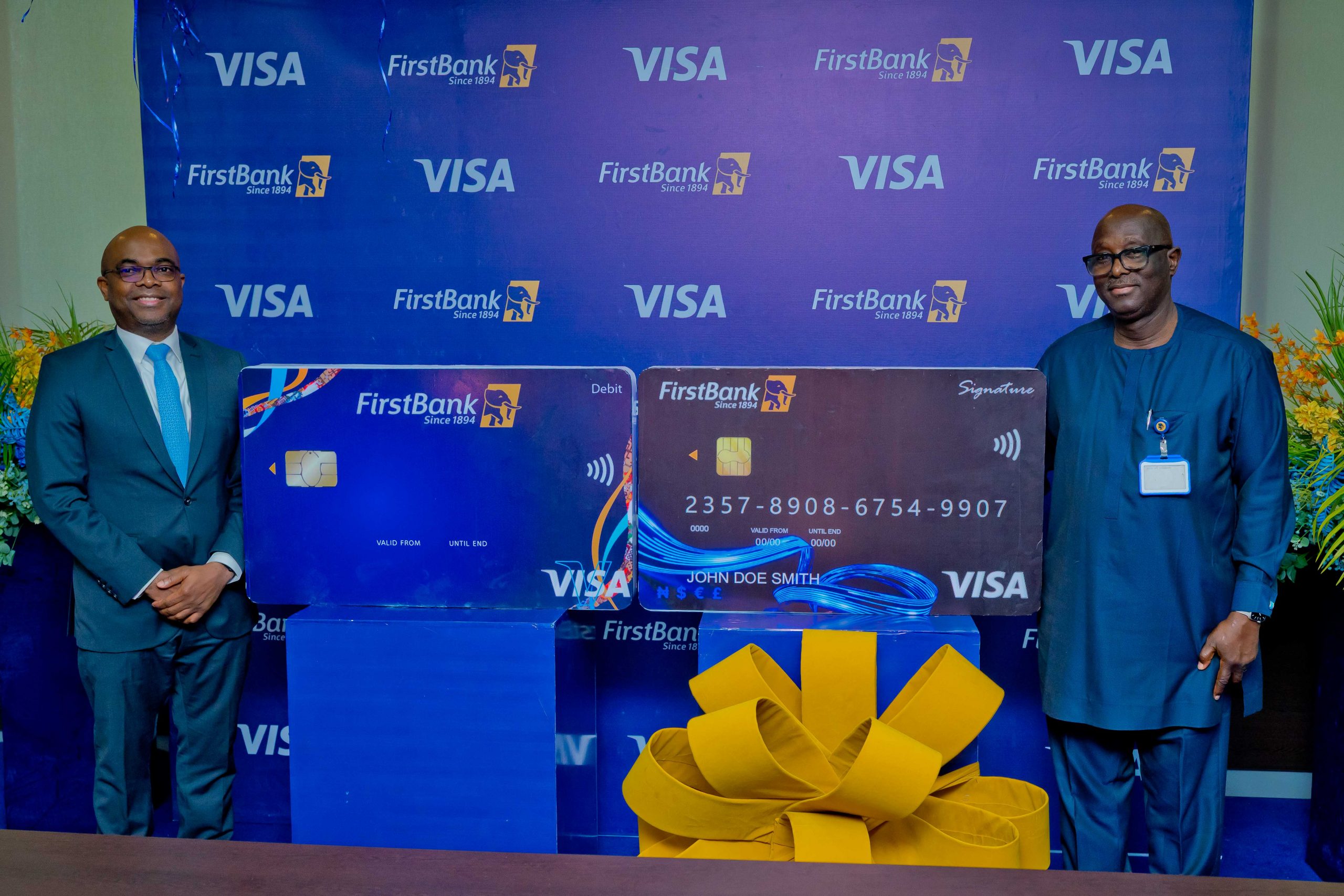
FirstBank, Visa Expand Premium Card Portfolio with Visa Signature Launch
Designed for Nigeria’s affluent segment, Visa Signature unlocks world-class benefits through Visa’s global network across travel, lifestyle, and premium merchant offers.
Lagos, Nigeria – May 15, 2026 – First Bank of Nigeria Limited, in partnership with Visa, has announced the launch of Visa Signature, a premium card offering designed for Nigeria’s affluent segment. The card unlocks an exclusive portfolio of lifestyle benefits, global travel privileges, and curated merchant offers through Visa’s worldwide acceptance network, giving high-spending Nigerians a product built around how they live.
Visa Signature targets Nigeria’s top executives, business owners, and frequent international travelers who expect more from their financial products. Through Visa Global benefits and Visa Destination offers, cardholders gain access to preferential rates, premium experiences, and priority services across hundreds of partner merchants, hotels, airlines, and destinations around the world. The card supports both domestic and cross-border transactions, ensuring seamless payment experiences whether cardholders are in Lagos, London, or Dubai.
Commenting on FirstBank’s ambition for its premium cardholders, Chuma Ezirim, Group Executive, eBusiness & Retail Products, FirstBank, said: “At FirstBank, we are dedicated to creating financial solutions that reflect the evolving lifestyles of our customers. We understand that our premium customers aspire to experiences that reflect their global outlook. Visa Signature is crafted to meet those expectations, offering access to exclusive experiences, global connectivity, and lifestyle privileges that empower our customers to live without boundaries. We remain focused on creating value and reinforcing our position as the partner of first choice for Nigerians at home and abroad.”
Highlighting the strategic importance of the FirstBank partnership, Andrew Uaboi, Vice President and Cluster Head, West Africa, Visa, noted: “Nigeria’s affluent consumers are among the most active and globally connected spenders on the continent. Visa Signature is designed to serve that profile with the depth of benefits and the breadth of acceptance they deserve. We are delighted to work with FirstBank in making this available to the Nigerian market.”
The launch marks a strategic step for FirstBank in deepening its premium product offering. FirstBank’s existing Visa portfolio already serves millions of Nigerians across everyday retail, cross-border commerce, and online transactions through Visa Infinite, Visa Gold, Naira Credit, and Visa Prepaid cards. Visa Signature adds a dedicated tier for the affluent segment, giving this customer group the recognition and privileges their spending profile demands.
Visa Signature is available to eligible FirstBank customers. Interested customers can visit any FirstBank branch nationwide or contact their dedicated relationship manager to apply.

Visa (NYSE: V) is a world leader in digital payments, facilitating transactions between consumers, merchants, financial institutions, and government enti
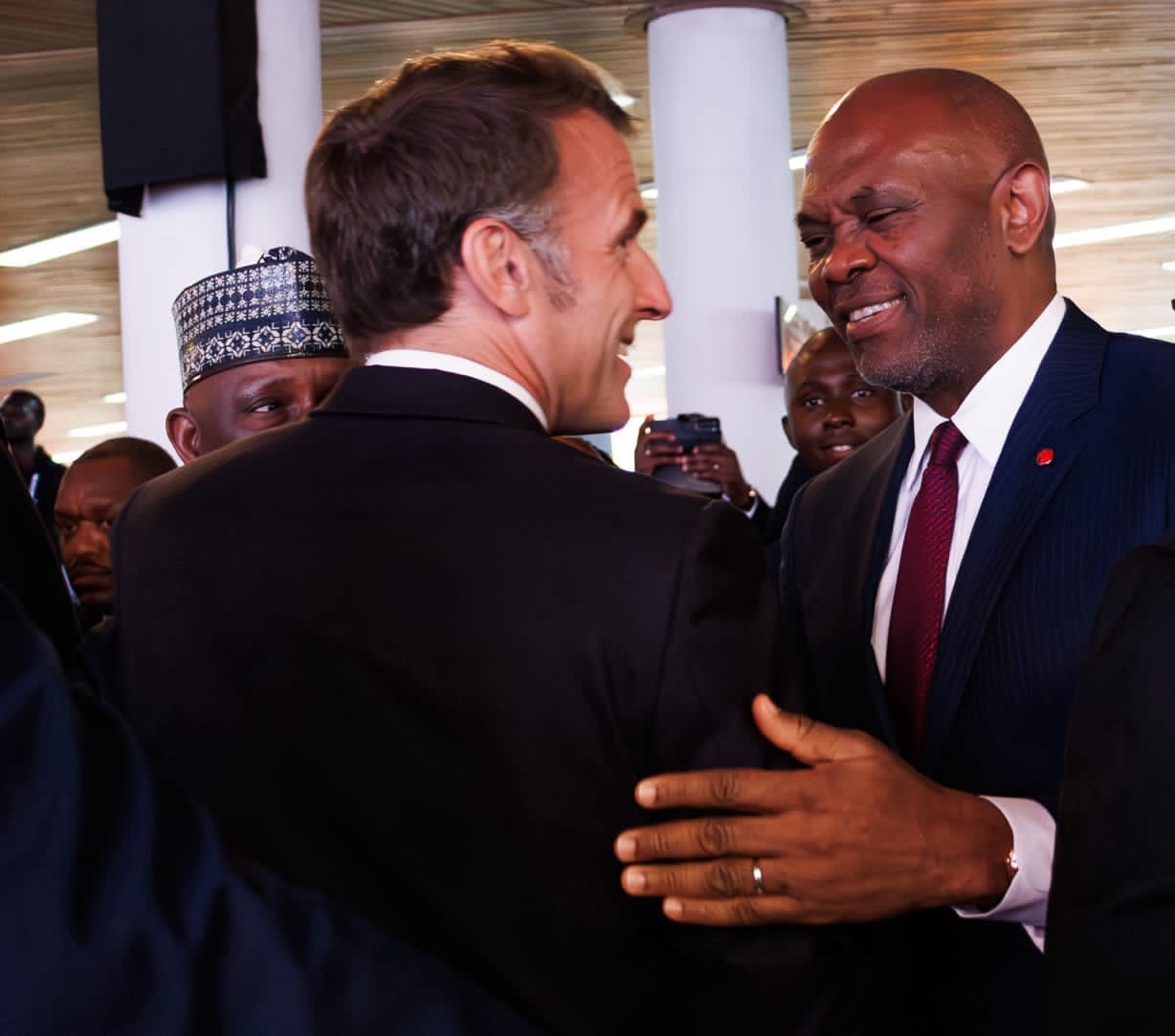
Tony Elumelu at Africa Forward Summit: “Our Youth Do Not Need Handouts”
Heirs Holdings Founder tells Presidents Ruto and Macron that Africa wants partners of substance, based on equality, and that power and infrastructure must come first.
At the 2026 Africa Forward Summit, convened by Kenyan President H.E. William Ruto and French President H.E. Emmanuel Macron, Heirs Holdings Founder and Group Chair, Tony O. Elumelu, CFR, delivered a direct message to a room of heads of state, investors, and global business leaders: Africa is open for partnership, not patronage.
“We welcome true partnership — partnerships of substance and based on equity — where Africans and African solutions catalyse Africa’s future”, he remarked.
Elumelu argued that Africa’s transformation hinges on two foundational investments — electricity and infrastructure — and that private capital must do the heavy lifting.
“The private sector is what will help us mobilise capital to drive investment in infrastructure, investment in electricity. These are two critical requirements for the economic prosperity and development of Africa,” he said. “If we create the right operating environment, we will create jobs for our people. We will alleviate poverty and deliver growth and prosperity.”
With more than 65 percent of Africans under 35, Elumelu pushed back hard against the traditional language of aid.
aid.
“In Africa, we have a young population. There is no room for victim mentality. Our youth do not need handouts; they need jobs, they need improved access to electricity, they need to join the internet. What is important is providing this enablement, this infrastructure requirement, so that our young ones can realise their potential.”
His Tony Elumelu Foundation (TEF) has now provided access to training for 2.5 million young Africans and funded over 27,000 entrepreneurs across all 54 African countries — the continent’s largest entrepreneurship platform.
Elumelu signalled openness to every credible partner, regardless of geography.
“It is a good place to be at, as Africans, now. We should embrace those who want to help us catalyse growth in Africa. And let us not forget Africa is the fastest growing region globally – and it is not just demographics” he said.
“In the 21st century, the mindset must change. It should be a mindset that embraces economic prosperity and development, a mindset that creates the environment that will help us alleviate poverty in Africa, create jobs for our young people.”
Tony Elumelu’s participation at the summit aligns with Heirs Holdings’ broader commitment to driving long-term African development through strategic investments across sectors critical to economic transformation, including power, financial services, healthcare, hospitality, and technology.
The 2026 Africa Forward Summit concluded with renewed calls for deeper collaboration between governments, development institutions, and the private sector, as leaders exploredaid.
“In Africa, we have a young population. There is no room for victim mentality. Our youth do not need handouts; they need jobs, they need improved access to electricity, they need to join the internet. What is important is providing this enablement, this infrastructure requirement, so that our young ones can realise their potential.”
His Tony Elumelu Foundation (TEF) has now provided access to training for 2.5 million young Africans and funded over 27,000 entrepreneurs across all 546 African countries — the continent’s largest entrepreneurship platform.
Elumelu signalled openness to every credible partner, regardless of geography.
“It is a good place to be at, as Africans, now. We should embrace those who want to help us catalyse growth in Africa. And let us not forget Africa is the fastest growing region globally – and it is not just demographics” he said.
“In the 21st century, the mindset must change. It should be a mindset that embraces economic prosperity and development, a mindset that creates the environment that will help us alleviate poverty in Africa, create jobs for our young people.”
Tony Elumelu’s participation at the summit aligns with Heirs Holdings’ broader commitment to driving long-term African development through strategic investments across sectors critical to economic transformation, including power, financial services, healthcare, hospitality, and technology.
The 2026 Africa Forward Summit concluded with renewed calls for deeper collaboration between governments, development institutions, and the private sector, as leaders explored pathways to accelerate inclusive growth and strengthen Africa’s position within the global economy.


- Afreximbank Deepens Commitment to Economic Progress in The Bahamas June 1, 2026
- African Electric Vehicle (EV) platform Spiro raises $215M in equity to scale electric mobility and energy infrastructure across Africa June 1, 2026
- Africa Centres for Disease Control and Prevention (Africa CDC) Statement on Attacks Against Health Facilities During the Bundibugyo Virus Disease Response in the Democratic Republic of the Congo June 1, 2026
- Putting consumers at the centre of Africa’s dairy transformation June 1, 2026
- International Rescue Committee (IRC) warns Democratic Republic of the Congo (DRC) Ebola outbreak likely far larger than official figures suggest June 1, 2026
- South Africa: Portfolio Committee on Health Marks National Cancer Survivor Day and Reaffirms Importance of Early Detection and Public Awareness June 1, 2026
- Rwanda’s RSSB Tigers Crowned 2026 Basketball Africa League Champions June 1, 2026
- Uganda: Appointments Committee Begins Vetting of Ministerial Nominees June 1, 2026
- Sudan braces for worsening child malnutrition as pre-harvest season starts June 1, 2026
- Etu Energias Strengthens Angolan Footprint, Returns to Angola Oil & Gas (AOG) 2026 as Champion Sponsor June 1, 2026
- Afreximbank Deepens Commitment to Economic Progress in The Bahamas June 1, 2026
- African Electric Vehicle (EV) platform Spiro raises $215M in equity to scale electric mobility and energy infrastructure across Africa June 1, 2026
- Africa Centres for Disease Control and Prevention (Africa CDC) Statement on Attacks Against Health Facilities During the Bundibugyo Virus Disease Response in the Democratic Republic of the Congo June 1, 2026
- Putting consumers at the centre of Africa’s dairy transformation June 1, 2026
- International Rescue Committee (IRC) warns Democratic Republic of the Congo (DRC) Ebola outbreak likely far larger than official figures suggest June 1, 2026
- South Africa: Portfolio Committee on Health Marks National Cancer Survivor Day and Reaffirms Importance of Early Detection and Public Awareness June 1, 2026
- Rwanda’s RSSB Tigers Crowned 2026 Basketball Africa League Champions June 1, 2026
-

 news6 months ago
WHO REALLY OWNS MONIEPOINT? The $290 Million Deal That Sold Nigeria’s Top Fintech to Foreign Interests
-

 society4 weeks ago
SOCIAL MEDIA IS NOT A BATTLEFIELD COMMAND – WHY THE NIGERIAN ARMY’S ACTION AGAINST JUSTICE CRACK IS A NATIONAL SECURITY IMPERATIVE
-

 celebrity radar - gossips4 months ago
Dr. Chris Okafor Returns with Power and Fire of the Spirit -Mounts Grace Nation Altar with Fresh Anointing and Restoration Grace on February 1, 2026
-

 celebrity radar - gossips6 months ago
Prophet Kingsley Aitafo Releases 2026 Prophecy: ‘Nigeria Will Rise, but the World Must Prepare for Turbulence’