
Education
The GTCrea8 Convention for Undergraduates Holds March 8



Foremost African financial institution, Guaranty Trust Bank plc, is set to hold the maiden edition of the GTCrea8 Convention for Undergraduates, on Thursday, March 8, 2018 at the University of Lagos, Akoka.
The one day convention, which is free to attend, will bring together undergraduates from universities across Nigeria who are passionate about technology, digital media, fashion, and more to connect with peers as well as role models in their areas of interests. To participate in the event, interested undergraduates are advised to register, FOR FREE, at gtcrea8.com/convention2018.
As a convergence of creative undergraduates as well as seasoned professionals, the GTCrea8 Convention promises to be fun, innovative and entrepreneurial. The event will feature Masterclasses facilitated by captains of industries who will not only enlighten the undergraduates with practical knowledge in their areas of passion but also inspire them with first-hand experiences on how to build a successful business career out of their passions.
The Masterclasses will hold in the following five categories;
● The Business of Creative Writing by Lola Shoneyin, author of The Secret Lives of Baba Segi’s Wives
● Technology by Iyin Aboyeji, Co-Founder and Managing Director of Flutterwave
● Digital Media by Uche Pedro, Founder of BellaNaija
● Makeup Artistry by Anita Adetoye, Creative Director of Anita Brows
● Fashion Design by Lanre Da Silva Ajayi, Creative Director of the self-named fashion label
Commenting on the GTCrea8 Convention, Segun Agbaje, Managing Director and Chief Executive Officer of Guaranty Trust Bank plc, said; “We are happy to provide young people in tertiary institutions with a platform that enables them connect with peers and interact with role models in their areas of interest. With the lineup of activities and the wealth of experience to be shared at the event, I am confident that the GTCrea8 Convention will have a lasting impact in helping the undergraduates who attend build successful careers.”
He further stated that, “At GTBank, we are committed to supporting the aspiration of young people by providing them with first class financial service, empowering them to achieve their academic goals and providing them with the opportunity to live their dreams.”
Guaranty Trust Bank plc has been at the forefront of supporting education for all and champions several initiatives that provide undergraduates with various avenues to learn, interact and have fun while in school. Beyond the GTCrea8 Convention, the bank also runs the GTCrea8 Education Support Scheme with which it offers financial support to undergraduates and the Campus Storms which brings Digital Skills Training as well as popular musicians and comedians to universities across the country.







Lagos to Seal Dowen College Over Illegal Waste Dumping
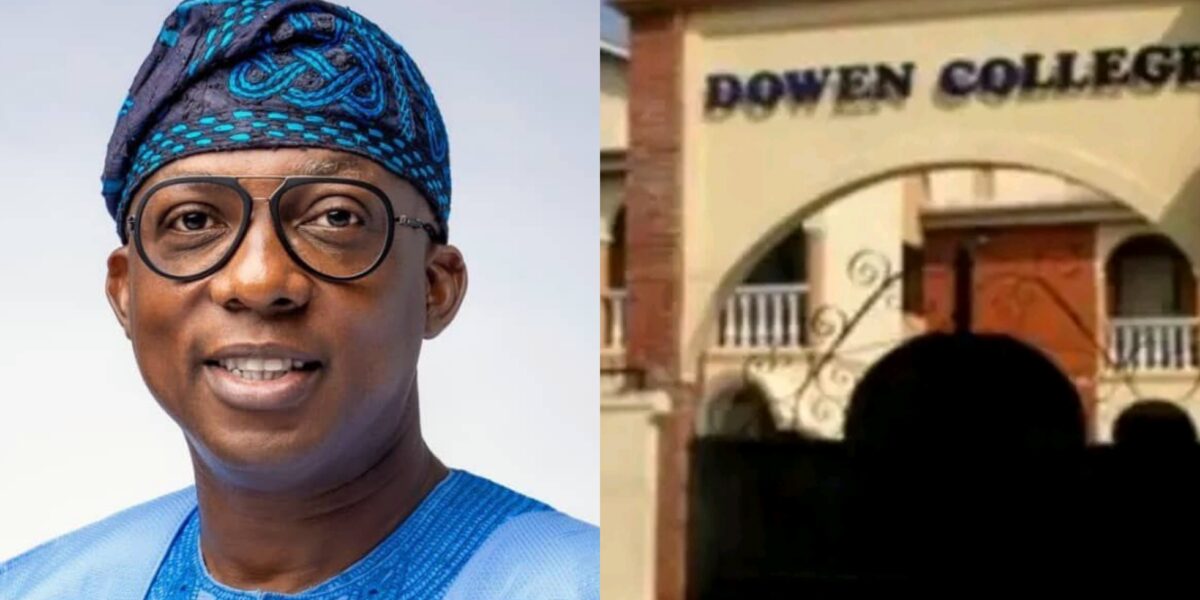
Lagos State authorities have ordered the sealing of Dowen College, Lekki Phase 1, following allegations of improper waste disposal traced to the school.
Commissioner for Environment and Water Resources, Tokunbo Wahab, announced the move on X (formerly Twitter), stating that the Corps Marshal of the Lagos State Environmental Sanitation Corps had been directed to enforce the order.
“This waste was traced to Dowen College in Lekki Phase 1. Such disregard for environmental laws is unacceptable,” Wahab said. “We will not hesitate to take firm action against any institution or organization that violates waste management regulations.”
The commissioner’s statement comes as part of the state’s intensified crackdown on environmental law violations.
Dowen College has previously faced scrutiny from the state government. In 2021, it was shut down indefinitely following the controversial death of student Sylvester Oromoni Jnr., pending investigation.
Education
UBEC, NGF in Conjunction with NEWGLOBE Spotlight Kwara as Model for Tackling Out-of-School Crisis

UBEC, NGF in Conjunction with NEWGLOBE Spotlight Kwara as Model for Tackling Out-of-School Crisis
-By Olufemi A. Adetola
As Nigeria grapples with the challenge of out-of-school children—estimated to be among the highest globally—recent interventions led by the Universal Basic Education Commission (UBEC) and the Nigeria Governors’ Forum (NGF) offer renewed hope. At the center of this momentum is Governor Abdulrahman Abdulrazaq of Kwara State, whose leadership as NGF Chairman is setting a new national tone on foundational education.
Penultimate week, the NGF in collaboration with UBEC and NEWGLOBE convened a multi-stakeholders dialogue in Abuja focusing on foundational learning and strategies to combat the out-of-school children crisis. Commissioners of Education and Chairpersons of State Universal Basic Education Boards (SUBEBs) were present to discuss reforms and implementation pathways. The gathering reaffirmed the need for stronger state-level ownership and collaborative policymaking.
Kwara State represented by the Hon Commissioner of Education, Dr Lawal Olohungbebe and the Executive Chairman of Kwara State Universal Basic Education Board, Prof Shehu Raheem Adaramaja presents a model of what focused leadership and fiscal discipline can achieve in basic education. According to their presentation, upon assumption of office as the Executive Governor of Kwara State , Mallam AbdulRahaman Abdulrazaq CON moved swiftly to pay backlogs of UBEC counterpart funding, allowing the state to access over ₦14.2 billion in federal matching grants for the years 2014-2019 . This intervention reversed Kwara’s prior blacklisting from UBEC funding and unlocked a cascade of basic education infrastructure projects across the state.
Through the Prof. Shehu Adaramaja-led Kwara SUBEB, over 600 schools have been renovated or newly constructed across the 16 local government areas. Classrooms have been furnished with pupils and teachers furniture, perimeter fences erected, boreholes sunk, Digital literacy centres established in 38 centres and WASH facilities provided across the 193 political wards of the state, with clear attention to equity and rural inclusion. These upgrades are impacting both teaching and learning environments in meaningful ways.
In addition to infrastructure, Kwara has tackled the human resource challenge head-on. Between 2021 and 2025, the state recruited over 6,400 new teaching and non-teaching staff, with an emphasis on STEM subjects. The recent recruitment exercise adopted community-based recruitment approach, where qualified NCE and Bachelor degrees in education from various communities were recruited to teach in their localities. All recruited staff signed performance bonds, demonstrating a commitment to accountability and diligence performance at duty.
Another bright spot is the KwaraLEARN programme—an ambitious education technology initiative that has digitized classroom management in over 1,770 public schools. With real-time monitoring, teacher coaching, and structured lesson plans, over 620,000 pupils now benefit from a more consistent and effective learning experience.
Mallam AbdulRahaman Abdulrazaq gave priority attention to teachers motivation and encouragements. He largely demonstrated this in prompt payment of salaries, promotion of teaching and non teaching staff of the State Basic Education Board, enhance capacity building with significant attention to technology education, modern pedagogical trainings, classrooms management techniques, foundational literacy and numeracy skills and other impactful workshops. Early results show gains in literacy and numeracy scores, attendance, and classroom engagement.
Kwara has also gone beyond the school walls. Earlier this year, a targeted enrollment drive brought over 2,300 out-of-school children into classrooms. These efforts were especially focused on nomadic communities, Qur’anic school pupils, street children, and underserved areas often missed in national data. Plans are also underway to build 75 new schools in remote areas to further reduce access barriers.
Perhaps the most telling endorsement of Kwara’s progress came in May 2025 when UBEC’s North-Central Director, Elder Abalaka described the state as “a pacesetter in compliance.” This reflects not just infrastructural output but the state’s commitment to due process, transparency, and strategic alignment with federal education goals.
Governor Abdulrazaq’s leadership at the NGF is crucial to replicating this progress nationwide. His advocacy for coordinated policies, timely funding, and inclusive education models is influencing how states approach their UBE responsibilities. The recent dialogue in Abuja underscored the need for such synergy.
As Nigeria intensifies efforts to implement a new national strategy on foundational learning, it is clear that the states must lead from the front. Kwara State’s success story shows that with the right blend of policy, leadership, and stakeholder engagement, progress is not just possible—it is sustainable.
The crisis of out-of-school children and weak foundational education has persisted for too long. But if more states follow the Kwara example under Governor Abdulrazaq’s NGF-backed leadership, the foundation of Nigeria’s future can be salvaged and secured.
In this regard, what is happening in Kwara should not just be applauded—it should be emulated. The real task now is to replicate such bold governance across every corner of the country.
Worst WAEC Results in 10 Years Raise Concerns Over Education Standards, CBT Readiness
ABUJA, August 5, 2025 — Nigeria’s education sector is under renewed scrutiny after the 2025 West African Senior School Certificate Examination (WASSCE) recorded its worst performance in a decade, igniting debate over exam reforms, poor teaching quality, and readiness for full Computer-Based Testing (CBT) next year.
On Monday, the West African Examinations Council (WAEC) announced that only 38.32 percent of the 1,969,313 candidates who sat for the exam obtained five credits, including English and Mathematics—a sharp drop from the 72.12 percent pass rate in 2024.
The last time Nigeria posted a worse result was in 2014, when just 31.28 percent made the benchmark. Over the past decade, performance peaked at 81.70 percent in 2021 before plunging this year.
WAEC Blames Anti-Cheating Measures, CBT Integration
Head of WAEC Nigeria, Dr. Amos Dangut, linked the massive drop to stricter anti-malpractice measures, including serialisation of objective papers, which made collusion “more difficult.”
“The decline can be attributed to new protocols designed to curb malpractice,” Dangut said. He added that Computer-Based Testing was introduced in key subjects like English Language, Mathematics, Biology, and Economics, reducing malpractice but exposing digital illiteracy among students.
He noted that 192,089 results (9.75%) were withheld for alleged cheating—slightly lower than 2024’s 11.92 percent—while 451,796 results (22.94%) remain under processing for technical and administrative reasons.
Despite the low benchmark pass, 87.24 percent of candidates earned five credits in other combinations of subjects.
Digital Transition Sparks Fresh Concerns
The sharp performance decline comes ahead of Nigeria’s planned full CBT transition for WASSCE in 2026, following a Federal Government directive earlier this year.
However, stakeholders warn the timeline is unrealistic, citing this year’s glitches in CBT-based Unified Tertiary Matriculation Examination (UTME) and WAEC’s own logistical chaos—such as the late-night English Language paper on May 28, which saw students writing under candlelight in some states.
WAEC blamed the midnight session on the reprinting of leaked papers, a move that disrupted logistics nationwide.
Stakeholders React: ‘A Reflection of Deep Rot’
Parents-Teachers Association (PTA) President, Haruna Danjuma, said poor preparation and lack of computer knowledge among candidates worsened the outcome:
“Some students did not prepare well. Public schools lack learning materials, and the environment is not conducive. CBT exams blocked chances of malpractice, which many depend on,” Danjuma said.
Prof. Francis Egbokhare, former Director of Distance Learning, University of Ibadan, described the results as a symptom of systemic failure:
“This reflects a crisis of quality in education. We neglect teacher training and infrastructure while obsessing over technology and AI as if they can replace quality instruction,” he lamented, warning of growing “functional illiteracy” among graduates.
Dr. Bisi Akin-Alabi, Project Lead, Safe Schools, Lagos, agreed with WAEC that tougher protocols and serialised question papers made cheating harder, exposing students’ dependence on “expo.”
“The option of CBT shocked many students who lack digital skills,” she said, urging educators to embrace AI-assisted learning and better preparation rather than reliance on leaks.
What Next for WAEC and Nigeria’s Education System?
With less than a year to full CBT exams, experts warn that failure to train teachers, upgrade infrastructure, and close digital gaps could doom millions of students.
As WAEC insists the reforms are necessary to protect exam integrity, Monday’s result has left one question hanging:
Is Nigeria ready for a technology-driven education system—or headed for another decade of failure?


-
 society5 months ago
Ramadan Relief: Matawalle Distributes Over ₦1 Billion to Support 2.5 Million Zamfara Residents
-

 Politics2 months ago
Nigeria Is Not His Estate: Wike’s 2,000‑Hectare Scandal Must Shake Us Awake
-

 society4 months ago
Broken Promises and Broken Backs: The ₦70,000 Minimum Wage Law and the Betrayal of Nigerian Workers
-

 society3 months ago
OGUN INVESTS OVER ₦2.25 BILLION TO BOOST AQUACULTURE
You must be logged in to post a comment Login