
society
Broken Promises and Broken Backs: The ₦70,000 Minimum Wage Law and the Betrayal of Nigerian Workers


“Broken Promises and Broken Backs: The ₦70,000 Minimum Wage Law and the Betrayal of Nigerian Workers”
By George Omagbemi Sylvester
In a nation where the cost of living rises faster than hope, Nigeria’s workers remain the punching bag of economic mismanagement, political indifference, and institutional hypocrisy. It is nothing short of a national disgrace that almost a year after the Federal Government passed the ₦70,000 minimum wage into law in June 2024, only 16 out of 36 states have bothered to implement it. That leaves 20 states—more than half the federation—brazenly violating a law meant to protect the most vulnerable: local government workers, primary school teachers, cleaners, and support staff who keep the wheels of governance turning.

A Law Betrayed
The passage of the ₦70,000 minimum wage law was hailed as a necessary step to cushion the blow of the floating naira, spiraling inflation, and the withdrawal of fuel subsidies. President Bola Ahmed Tinubu signed the bill into law amidst fanfare and political grandstanding, declaring that “no worker in Nigeria should earn below a livable wage.”

Yet, in reality, those words have rung hollow. In states like Kogi, Bauchi, Zamfara, and even oil-rich Delta, the new minimum wage remains a cruel illusion. Workers still earn the outdated ₦30,000 or, in some cases, even less. Local government employees and primary school teachers in these states have become beggars in a country they serve diligently.
Economic Injustice in Broad Daylight
What exactly does ₦70,000 buy today? In 2025, ₦70,000 is barely enough to cover rent in most urban centers, let alone feed a family, pay for transportation, school fees, or basic healthcare. According to data from the National Bureau of Statistics (NBS), the average monthly cost of living for a Nigerian family of four is now over ₦180,000. So even the ₦70,000 wage—far from generous—is the barest minimum needed to scrape by.
Yet many state governments are dragging their feet, citing “inadequate funds” and “bureaucratic delays.” These are tired excuses from administrations that continue to waste public resources on bloated convoys, foreign trips, and frivolous allowances. Economist Dr. Bismarck Rewane, CEO of Financial Derivatives Company, remarked in a recent interview, “State governments crying about affordability should look inward. There is enough waste and duplication in their budgets to fund this minimum wage if fiscal priorities are restructured.”
Where is the Accountability?
It is important to ask: why are these states not being held accountable? The Nigerian Labour Congress (NLC) has issued threats, organized protests, and released statements, but what has changed? Why has the federal government, which passed the law, not enforced it with the same zeal it uses to collect taxes or chase debtors?
It is yet another example of Nigeria’s selective enforcement of laws—one for the elites, another for the poor. If a citizen fails to pay taxes or utility bills, the system comes down hard. But when governments fail to obey a law passed by their own legislature, silence and complicity reign supreme.
Voices from the Ground
Workers across the 20 defaulting states are speaking up—but who’s listening? Mr. Musa, a local government clerk in Gombe State, says, “I have not been able to pay my children’s school fees since last term. They keep telling us they are ‘working on it.’ Since June last year? My salary is ₦28,000. What can I do with that today?”
Mrs. Onome, a primary school teacher in Edo State, adds, “They want us to teach with passion, but they don’t pay us enough to eat. The government talks about education reform while starving the educators.”
The Hypocrisy of Governance
This situation reveals a deeper malaise—Nigeria’s chronic hypocrisy when it comes to governance. Governors are quick to increase their own allowances, fund their re-election campaigns with public money, and host lavish state dinners, but suddenly become frugal when it concerns paying the minimum wage.
As respected economist Prof. Pat Utomi rightly put it, “A nation that fails to prioritize the welfare of its workers is a nation preparing for social implosion. Wage justice is not a luxury—it is a foundation for peace, productivity, and patriotism.”
Political Will or Political Wickedness?
Some states like Lagos, Rivers, Akwa Ibom, and Enugu have implemented the new wage and are adjusting their budgets accordingly. This proves that implementation is not about resources—it’s about political will. The states that have refused to comply are not necessarily the poorest; they are the most irresponsible.
The Revenue Mobilization Allocation and Fiscal Commission (RMAFC) reports that all 36 states received an average of ₦60 billion each in federal allocations between July 2024 and March 2025. If even 10% of that allocation were directed toward wages, most states would easily meet the minimum wage threshold.
The Role of Civil Society and Media
Civil society organizations, labor unions, and the media must do more than issue statements. There must be coordinated action, legal battles, and naming-and-shaming campaigns. Let every Nigerian know which governors are breaking the law. Let them be exposed in every forum, from town halls to social media.
In the words of Femi Falana (SAN), “Workers must rise to defend their rights. When government disobeys the law, civil disobedience becomes duty.” Falana further suggested that workers should sue non-compliant states and seek judicial enforcement of the wage law.
A Call to Action
Enough is enough. This is not the time for diplomacy or patience. The Nigerian worker has endured decades of deception, delay, and disdain. We must demand a national audit of state compliance with the minimum wage law, backed by sanctions for erring states.
Let the governors who refuse to pay their workers feel the pressure. Let every non-compliant state be exposed. Let labor unions organize strategic strikes. Let civil society file class-action lawsuits. And let the international community take note that Nigeria cannot claim to be democratic while treating its workforce like slaves.
Conclusion: Justice Delayed is Justice Denied
The refusal of 20 states to implement the ₦70,000 minimum wage is not just an administrative failure—it is a betrayal of trust, a violation of human dignity, and a ticking time bomb. The poor cannot continue to subsidize the waste and luxury of the rich.
We cannot claim to build a prosperous future on the backs of underpaid, disrespected workers. If the government is serious about peace, progress, and productivity, it must start by paying its debts—starting with the most basic one: a fair wage.
And to those governors still playing politics with the lives of workers, remember this: history never forgets. Nigerians are watching, and justice may be slow, but it always arrives.




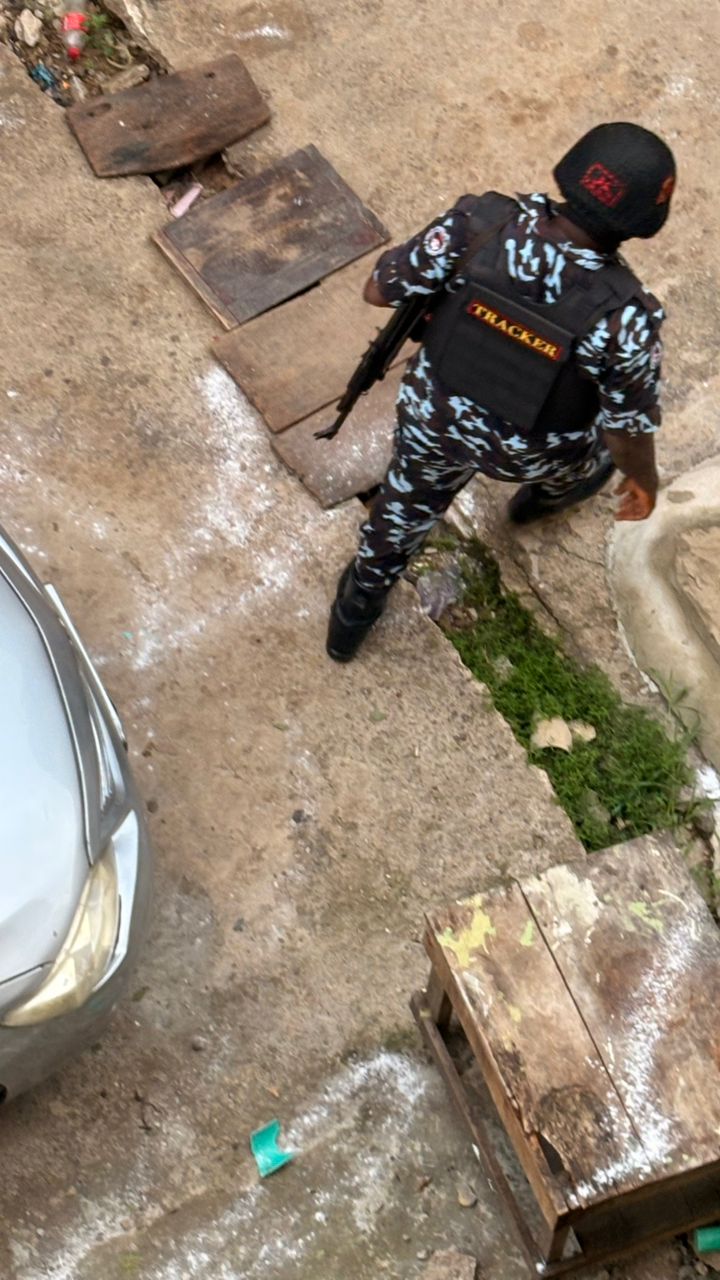
Police Officers Detained as Family Property Dispute Sparks Demolition Controversy in Lagos
By Ifeoma Ikem
A property dispute within the Omotayo-Ojo family has taken a dramatic turn following a controversial demolition exercise at a residential building in Ikosi-Ketu, Lagos State, which reportedly left tenants displaced and led to the detention of some police officers allegedly involved in the operation.

The property, located at 23B Loveall Street, Ikosi-Ketu, has been the subject of a prolonged ownership tussle since the death of its owner, Chief Oludola Omotayo Ojo, the Babaalaje of Imesi-Ile, Osun State, in 2019.
Residents said tension erupted when a group of individuals, accompanied by security operatives, stormed the premises and commenced demolition activities.
According to eyewitnesses, portions of the building were pulled down while tenants rushed to salvage their belongings from affected apartments.
The residents alleged that windows, doors and roofing sheets were damaged during the exercise, exposing parts of the building to the elements and causing significant losses to occupants.
At the centre of the dispute is Mrs Mojisola Omotayo Ojo Alolagbe, who claimed that the property was allocated to her by her late father during his lifetime as a source of financial support.
She alleged that some family members had persistently challenged her ownership claim despite ongoing legal proceedings relating to the administration of the deceased’s estate.
Alolagbe further claimed that the latest incident was part of a series of attempts to wrest control of the property, citing previous cases of alleged vandalism and partial demolition in November 2025, January 2026 and February 2026.
The situation escalated further when reports emerged that police officers allegedly involved in the demolition were later apprehended and conveyed in a Black Maria vehicle over questions surrounding the legality of their participation in the operation.
Sources familiar with the matter said those behind the demolition had initially claimed to be acting on approval from the Lagos State Ministry of Lands. However, the authenticity and extent of such approval could not be independently verified as of the time of filing this report.
The development has generated concern among residents and community members, who questioned the involvement of security personnel in what they described as a civil matter.
Some tenants, who said they had recently renewed their tenancy agreements, lamented the destruction of their property and appealed to the authorities for protection and possible compensation.

They also called for a thorough investigation into the circumstances surrounding the demolition, insisting that the rights of all parties involved should be protected.
Stakeholders have urged the Lagos State Government, security agencies and the judiciary to intervene and ensure that the dispute is resolved through lawful means to prevent further escalation.
The controversy has continued to draw public attention, raising concerns over property rights, estate administration and the role of law enforcement agencies in civil disputes.

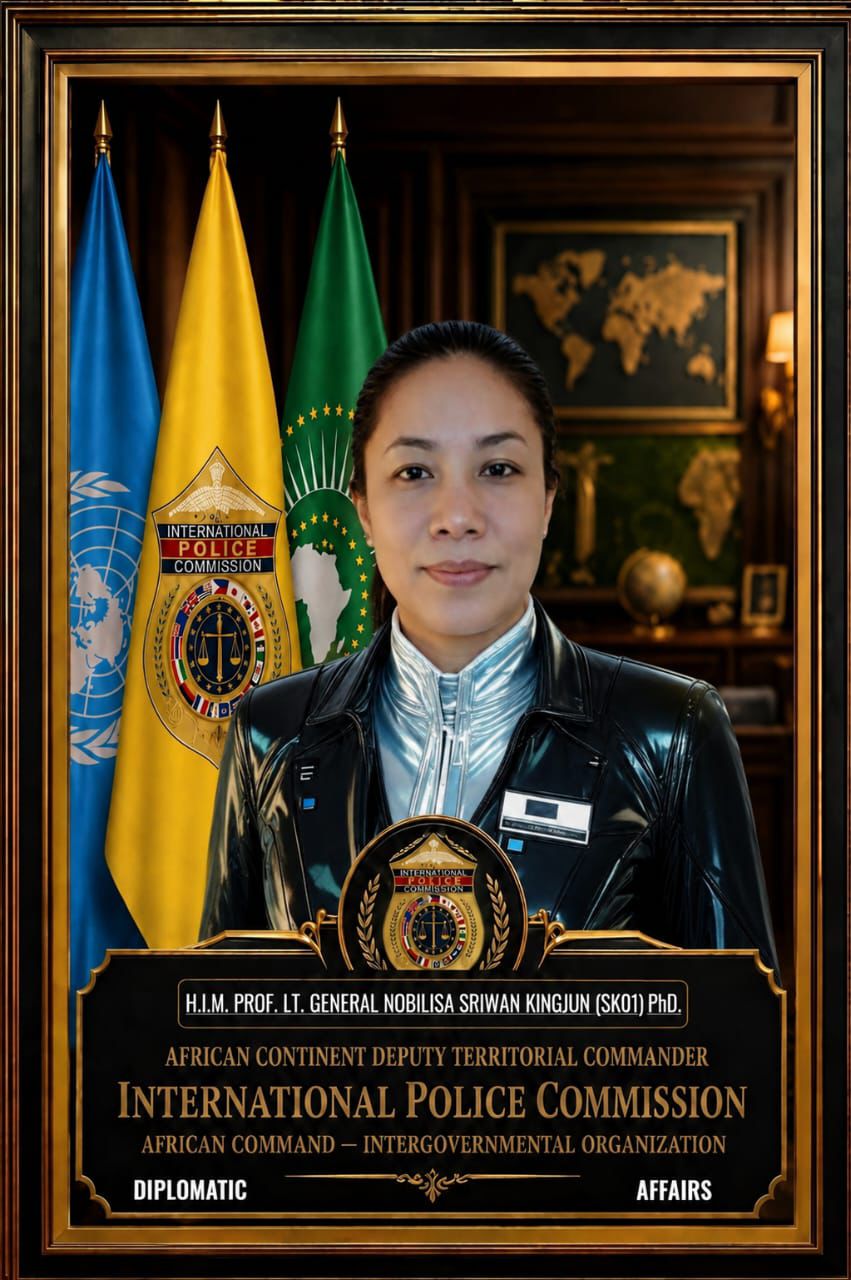
UKA Gears Up for Final ATC Exchangeability Test Run as June Preparations Begin.
May 30, 2026 – As the month of June gathers momentum, the *United Kingdom of Atlantis, UKA*, a sovereign nation has unveiled a series of vital guidelines and preparatory packages to ensure citizens and stakeholders run the *ATC Exchangeability* process effectively.
In an official update, the *President of Atlantic Crown Limited, Empress of Attica Empire UKA*, confirmed that the *Final Test Run of ATC Exchangeability* is scheduled for the month of June 2026. The exercise marks a key phase ahead of the *Official Exchangeability Window, set to run from July 2026 to February 2027*.
### Key Highlights from the Presidential Briefing
1. *Final Test Run – June 2026*
The test run is designed to validate systems, procedures, and user readiness before full activation. Citizens, partners, and designated participants are urged to follow all official advisories released by UKA authorities during this period.
2. *Official Exchangeability Period*
Following the successful completion of the June test run, the Official Exchangeability will commence in july 2026 and we are Expecting Full Exchange ability between July Ending, 2026 to February 2026.
UKA stated that detailed schedules, eligibility requirements, and step-by-step instructions will be communicated progressively through verified UKA channels.
3. *Benefiting Packages for June*
In line with UKA’s commitment to citizen empowerment, the month of June will feature “benefiting packages” aimed at education, preparation, and seamless onboarding. These packages are intended to equip the people of UKA with the knowledge and tools needed for effective participation.
4. *Commitment to Transparency*
Addressing the nation, the Empress of Attica Empire UKA emphasized:
_“Final Test Run of ATC Comes up in The Month of June, As We Prepare For The Official Exchangeability, Between July 2026 To Feb 2027. All Information Will Be Communicated.”_
UKA reaffirmed that only information released through official UKA platforms should be regarded as authoritative.
The United Kingdom of Atlantis is encouraging all citizens, representatives, and interested parties to remain alert to official communications, attend designated orientation sessions, and avoid unofficial sources. UKA’s dedication to order, clarity, and the collective benefit of its people as the nation moves into this significant phase.
For updates, advisories, and participation guidelines, citizens are advised to monitor official UKA communication channels.
United Kingdom of Atlantis, UKA, is a sovereign nation, committed to national development, citizen welfare, and structured economic participation through initiatives such as ATC Exchangeability.
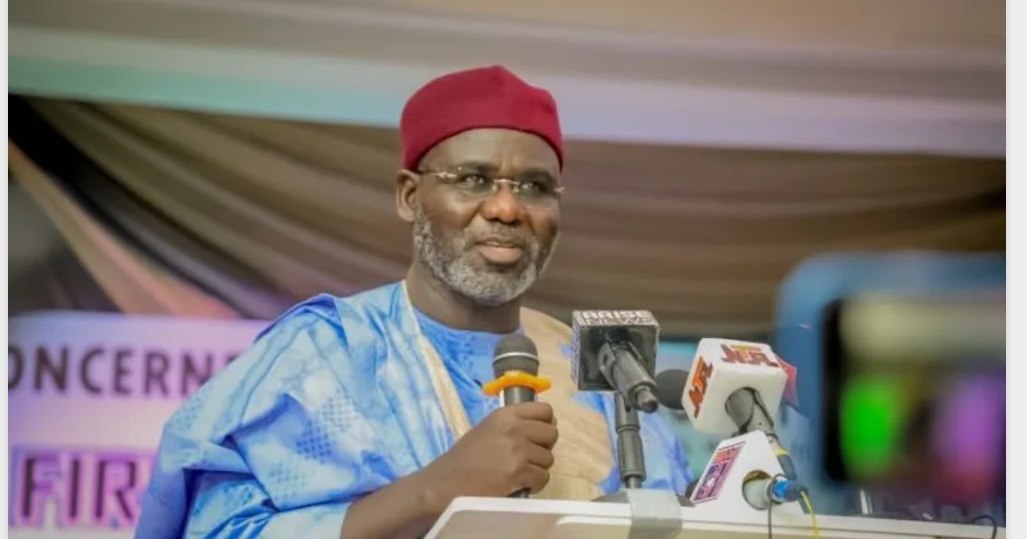
Three Years On, General Buratai Hails Tinubu’s Economic, Security Achievements
Former Chief of Army Staff, Lt. Gen. Tukur Buratai (retd.), has commended President Bola Ahmed Tinubu for what he described as bold economic reforms and improved security efforts as the President marks three years in office.
In a goodwill message on Thursday to commemorate Tinubu’s third anniversary as President and Commander-in-Chief of the Armed Forces, Buratai said the administration had taken courageous decisions that would leave a lasting impact on Nigeria’s development.

According to him, President Tinubu broke a long-standing cycle that had hindered national growth by removing fuel subsidy and implementing foreign exchange reforms aimed at stabilising the naira and strengthening the economy.
He noted that the reforms were beginning to yield positive results, citing the global acceptance of Nigerian debit cards, the gradual revival of local refineries, access to student loans, and ongoing road and infrastructure projects across the country.
“The FCT Administration has also recorded remarkable progress, completing major road projects that remained unfinished for over 16 years,” Buratai stated.
The former army chief also praised the administration’s security efforts, saying renewed military offensives against insurgents, terrorists and bandits had led to notable successes across various parts of the country.
He specifically lauded recent joint operations involving Nigerian and United States forces against Boko Haram and ISWAP in the North-East, as well as intensified counter-banditry operations in the North-West.
“We have seen notorious ISWAP commanders being neutralised. I congratulate the Commander-in-Chief, the Minister of Defence, the Chief of Defence Staff, the Service Chiefs, the Inspector-General of Police and heads of intelligence agencies for their efforts,” he said.
Buratai, however, acknowledged that challenges remained, stressing the need for more aggressive military operations and intelligence-driven strategies in the coming year.
While urging Nigerians to remain hopeful, he said celebrating the President’s achievements did not amount to ignoring the difficulties facing the nation.
“Because you truly care, you have shown the courage to trade short-term comfort for long-term hope. Nigerians need your reassurances, and that is why we remain optimistic and full of confidence,” he added.
The retired military officer reaffirmed his support for the Tinubu administration and expressed confidence that the foundation being laid by the government would deliver a brighter future for the country.
He also prayed for God’s guidance, wisdom, strength and good health for the President as he continues to lead Nigeria.


- Deputy (Dep.) Finance Minister Courts Investors to Transform Ghana’s rice Economy June 4, 2026
- Mobile health services in Kenya reduce the risk of stillbirths June 4, 2026
- JustMarkets Research Highlights Global Growth Divergence as a Key Market Driver June 4, 2026
- African Development Bank Group approves $125 million investment in African Trade and Investment Development Insurance (ATIDI) to expand risk insurance capacity in Africa June 4, 2026
- Congo Energy & Investment Forum 2027 to Position Brazzaville as a Hub for Global Energy Deal-Making June 4, 2026
- Africa Skills Hub (ASH) Transitions to ASH Africa as it Marks 10 Years of Impact June 4, 2026
- When women farm better, Eswatini eats better June 3, 2026
- Togo Hosts the 8th Annual Forum of National Volunteer Agencies in the Economic Community of West African States (ECOWAS) Region June 3, 2026
- Indigenous Peoples gravely vulnerable to Ebola epidemic, warn United Nations (UN) independent experts June 3, 2026
- Meeting between Parliamentary Vice-Minister ONISHI and His Excellency (H.E.) Mr. Cosgrow, Principal Minister and Minister for Agriculture, Fisheries and Blue Economy of Seychelles June 3, 2026
- Deputy (Dep.) Finance Minister Courts Investors to Transform Ghana’s rice Economy June 4, 2026
- Mobile health services in Kenya reduce the risk of stillbirths June 4, 2026
- JustMarkets Research Highlights Global Growth Divergence as a Key Market Driver June 4, 2026
- African Development Bank Group approves $125 million investment in African Trade and Investment Development Insurance (ATIDI) to expand risk insurance capacity in Africa June 4, 2026
- Congo Energy & Investment Forum 2027 to Position Brazzaville as a Hub for Global Energy Deal-Making June 4, 2026
- Africa Skills Hub (ASH) Transitions to ASH Africa as it Marks 10 Years of Impact June 4, 2026
- When women farm better, Eswatini eats better June 3, 2026
-

 news6 months ago
WHO REALLY OWNS MONIEPOINT? The $290 Million Deal That Sold Nigeria’s Top Fintech to Foreign Interests
-

 society1 month ago
SOCIAL MEDIA IS NOT A BATTLEFIELD COMMAND – WHY THE NIGERIAN ARMY’S ACTION AGAINST JUSTICE CRACK IS A NATIONAL SECURITY IMPERATIVE
-

 celebrity radar - gossips4 months ago
Dr. Chris Okafor Returns with Power and Fire of the Spirit -Mounts Grace Nation Altar with Fresh Anointing and Restoration Grace on February 1, 2026
-

 celebrity radar - gossips6 months ago
Prophet Kingsley Aitafo Releases 2026 Prophecy: ‘Nigeria Will Rise, but the World Must Prepare for Turbulence’