
Campaign
10 Hip-Hop artistes who Might Flop in 2018



Fame, they say comes with season. There comes a particular time when one is celebrated or is seen as the rave of the moment and there comes a time when all goes down. The highly celebrated one is replaced by someone else, and the fame becomes a thing of the past.
This is rampant in the entertainment industry, especially the hip-hop aspect of the industry. There is influx of new talented artistes day by day and it makes it very easy for an artiste with a blooming career to become forgotten within a twinkle of an eye.
Below is the list of Artistes whom we feel might not shine In their musical career in 2018
· Korede Bello : Fondly called Mr Romantic, it looks like all is over for his Music career so soon. He was introduced into the industry with a theme song with the mavins records owned by Don Jazzy, before recording his massive hit, Godwin which made him very popular world-wide but it seems everything is fading away gradually as much hasn’t been heard from him lately. His album which he released in 2017 didn’t live up to what his fans expected and it will be very tough for him in 2018 to succeed in his music career
· Dija : She could give the excuse of Marriage for not being able to hold her career down like she did years back. The early part of 2017 saw a very great career for Dija, she was arguably one of the best female artists Nigeria had at the moment but suddenly, it all became sour after marriage. Marriage is a good thing and we wish her a very prosperous married life but it seems music is done with her.
· Niyola : She used to be one of the most respected female vocalists in Nigeria. The only female artist signed by Banky W to his Empire Mates Entertainment (EME). She was very hardworking, dropped hit songs, the like of Toh Bad made waves Nationwide and some of the songs she released in 2017 but it seems she hasn’t been able to withhold the fame she has gotten and it will really be hard for her to survive 2018
· Lil Kesh : Mr Yagi, as fondly called fought his way through to get famous. He left the record label he was signed to, YBNL, at the time his career was getting to its peak. Everyone was afraid but he proved people wrong by still going taller than his career was in YBNL. This is no doubt a very good kudos to him. However, his songs nowadays has the same patterns, no versatility and no much creativity, and its making people get tired of it, with this, he will definitely have a tough time in 2018
· Shaydee : He parted ways with EME in 2017, this move was actually needed because he spent over four years with the record label and he had no tangible achievement, awards, endorsements. He had songs with Wizkid, Yung6ix and lot of stars but it seems these won’t guarantee his success in 2018. He needs extra work to be able to succeed in 2018
· Dremo : His career is too young to go down the hill now, he started out in 2017 with Davido’s record Label, DMW with Mayorkun and no doubt, he got the recognition during the time he started but suddenly, it looked like he has left the music scene, he doesn’t put out hit songs, doesn’t get features around, hasn’t been getting award nominations and all that. It might also be difficult for him in 2018
· Chinko Ekun : ‘Tiger’ as he calls himself, it seems he won’t be able to bite much out of 2018 as not much is given to him. He started his career with YBNL, owned by Olamide, though he had a bright future and signed a new record deal in 2017 but it looks like he won’t get much out of 2018 in his music career
· Yemi Alade : It seems she has suddenly left the music scent to look for her ‘Johnny’, who knows, she might be planning marriage anytime soon. The kind of focus she had in her career, even up to last year was amazing but it suddenly faded away, the king of queens has suddenly become queen amidst queens, 2018 is definitely a year not to near music for her, she should try other things as it might not end well for her musically
· Chidinma : Miss Kedike, the very young looking and energetic female musician Nigeria had, it looks like her time has passed. She released some songs in 2017 which didn’t live to see the world, they only went a little bit farther from the studio where she released the songs. She also did a cover of Reminise ‘Ponmile’ to get some attention which she did but in 2018, she might not really get the desired attention in her music career.
· Flavour : One of the sexiest Male artiste we have in Nigeria, no doubt, he is talented, has great stage performance, has the looks everyone wants to see but the music just doesn’t fit him anymore. There was a time In 2016/2017 where he had all the attention but in 2018 he might not get the attention at all
NOTE : This is not to discourage the artiste on the list, it is to encourage them to do more to save their musical career


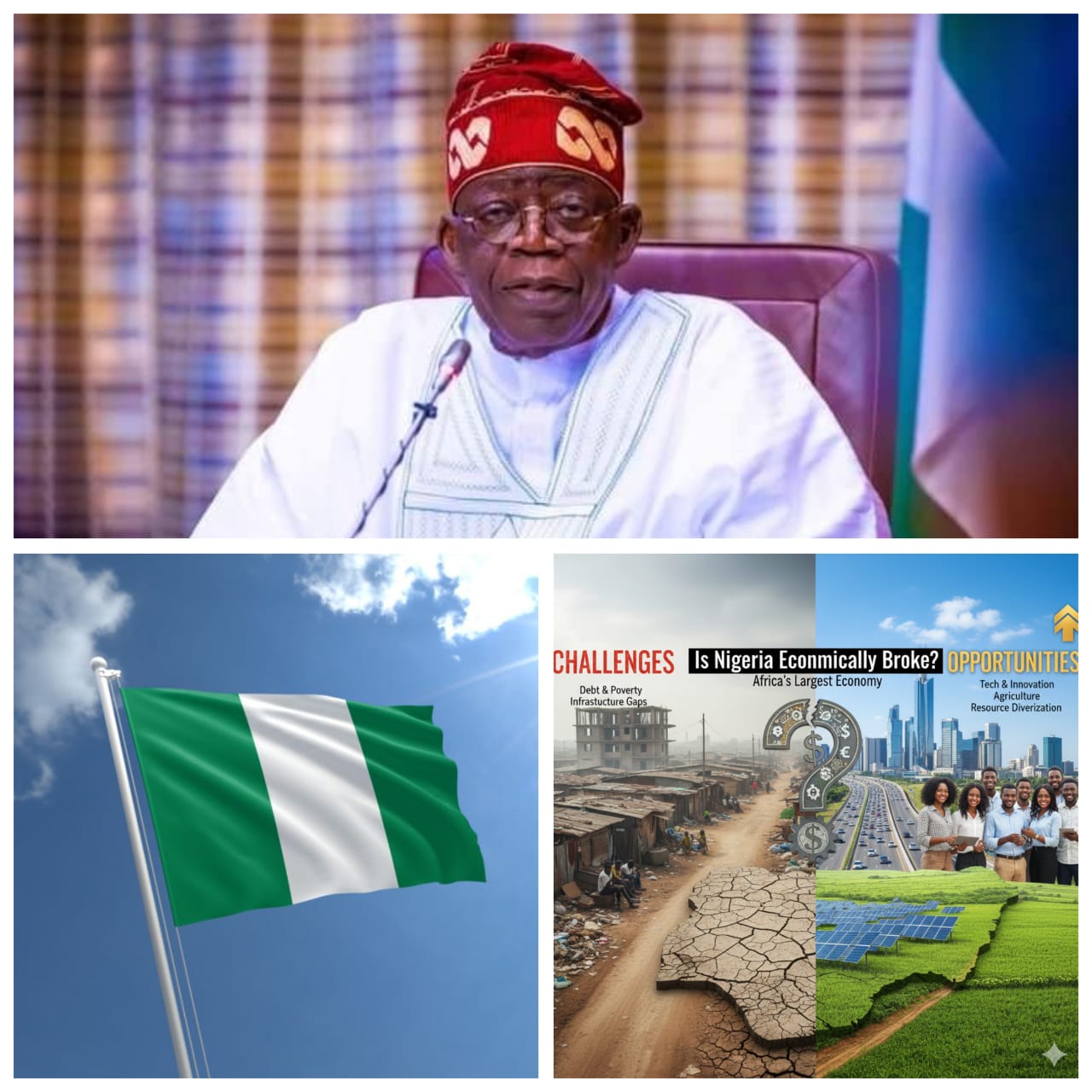
Is Nigeria Economically Broke? Challenges and Opportunities in Africa’s Largest Economy
BY BLAISE UDUNZE
Is Nigeria, Africa’s largest economy, economically broke? It is a question no patriotic citizen wants to confront, yet one that confronts every Nigerian daily at the fuel pump, the market stall, the school gate, the hospital reception, and increasingly, in the national accounts. The country’s fiscal reality is no longer a debate in economic circles alone; it is a lived experience for millions and a gathering storm for future generations.
To understand the gravity of the nation’s situation, one must look beyond political speeches and interrogate Nigeria’s borrowing patterns, revenue profile/debt numbers, public spending, and the economic behavior of both federal and state governments under President Bola Ahmed Tinubu’s. administration. What emerges is a troubling picture as taxation is squeezing small businesses, borrowing is mortgaging the nation’s tomorrow, and shockingly, the trillions shared among federal, state, and local governments every month translate into little visible development. Nigeria’s books show figures, but her streets show a different reality.
Since President Bola Ahmed Tinubu assumed office in June 2023, Nigeria’s public debt has spiraled from N33.3 trillion to N152.4 trillion by mid-2025 which represents a staggering 348.6 percent increase in just two years. Economies do not collapse overnight; they weaken gradually, sending warning signs that only become obvious in hindsight. Nigeria is flashing all the red signals today. Between July and October 2025 alone, the government secured over $24.79 billion, €4 billion, ¥15 billion, N757 billion, and another $500 million in sukuk bonds. These figures, in a functional economy, should translate into expanded electricity capacity, world-class healthcare systems, vibrant industries, better roads, thriving SMEs, and export-oriented value chains. Instead, much of Nigeria’s real sector remains stagnant as energy is unstable, industrial output is weak, and infrastructure remains largely stuck in the realm of political promises.
Borrowing, in itself, is not the crime. Nations borrow to grow. Borrowing becomes a problem when the funds are not directed toward productive, self-liquidating projects capable of paying back the debt through increased economic activity. Nigeria borrows aggressively but produces too little. The loans are not translating into productivity or growth, which is why the debt-servicing burden continues to rise. Today, more than 90 percent of government revenue is spent on servicing old debts. In some quarters, debt servicing now consumes 25 percent of Nigeria’s entire annual revenue. This means that governance has been reduced to fiscal survival, with vital sectors such as education, healthcare, and industrialization competing for the crumbs left after creditors take their share.
Professor Uche Uwaleke of Nasarawa State University captured it aptly: “Nigeria’s debt service ratio is inimical to economic development… The opportunity cost for the country is high.” The tragedy is clear as the country has substituted borrowing for revenue and debt servicing for development. At the 2025 IMF and World Bank Meetings, global leaders lamented Africa’s growing debt, which has now exceeded $1.3 trillion. Sub-Saharan African governments spent over $89 billion servicing debts in 2025 alone. Yet Nigeria’s case stands out because of its size, population, weak industrial base, and persistent revenue leakages. Nigeria continues to borrow through Eurobonds, multilateral loans, bilateral facilities, and sukuk instruments, even without a corresponding rise in productivity. This raises a painful but necessary question: if these loans are development financing, where is the development?
Recently, the House of Representatives approved President Tinubu’s request to borrow $2.35 billion to finance part of the 2025 budget deficit. This is not borrowing to invest, it is borrowing to plug holes, pay salaries, and service existing debts. This is fiscal survivalism, not economic transformation. Countries that borrow to build infrastructure grow out of debt. Countries that borrow to fund recurrent expenditure sink deeper into it. Nigeria is drifting toward the latter.
The African Democratic Congress (ADC) bluntly accused the president of being “addicted to debts,” noting that if all requested loans for 2025 are approved, Nigeria’s debt stock could reach N193 trillion. The Debt Management Office confirmed the possibility. In the ADC’s words: “You cannot claim your house is in order while taking new loans to stop the roof from collapsing.” The loan in question was the N1.15 trillion request by President Tinubu to fund the 2025 budget deficit, which the Senate and House of Representatives gave their approval during last Wednesday’s plenary.
Despite government assurances that inflation is easing by recording 18.02 percent headline inflation and 16.87 percent food inflation, Nigerians feel no relief. Prices remain high, purchasing power continues to collapse, and businesses are shutting down. There is no statistical comfort in an empty dinner plate.
While federal borrowing continues to dominate conversations, an equally critical yet often ignored dimension lies at the state level. Since the fuel subsidy removal in June 2023, state governments have become quiet but major beneficiaries of the enlarged FAAC allocations as a feeding bottle.
NEITI and OAGF/NBS records show that between June 2023 and June 2025, FAAC distributed N25.65 trillion yet few Nigerians can point to commensurate development in their states. Roads remain terrible. State industries are dead. Capital projects are abandoned. Health and education sectors are underfunded. Internally generated revenue remains weak.
Many states have weaponized FAAC allocations into a system of dependence. They line up monthly for their share but fail to harness the natural resources, agricultural potential, tourism corridors, or industrial hubs available within their territories.
Nigeria’s fiscal health is not a function of what federal government collects alone, it is a function of what the states produce. Development is a chain; a weak link breaks the entire system. Many states have become consumption centers instead of production hubs, contributing significantly to the national productivity crisis. Until FAAC allocations are tied to measurable development outcomes, Nigeria will continue to share poverty, not prosperity.
All these realities force Nigerians to ask again if Nigeria is economically broke?
A country is economically broke:
· when it borrows to survive rather than to grow;
· when it spends the bulk of its income servicing old debts;
· when its states depend on allocations instead of productivity;
· when taxation cripples rather than empowers businesses; and
· when development is measured by political speeches, not real outcomes.
By these metrics, Nigeria is edging dangerously close to fiscal insolvency, living on borrowed money and borrowed time.
Yet despite this troubling landscape, Nigeria’s economic prospects are not irredeemable. The country possesses immense opportunities that, if harnessed, could transform its economic future to becoming one of the most vibrant in the world.
1. Diversification: Agriculture, Technology, and Services –
Nigeria’s over-reliance on oil remains its most dangerous economic vulnerability. Oil accounts for more than 90 percent of export earnings and over half of government revenue. A single fluctuation in global oil prices can destabilize the entire economy. Diversification is not optional; it is a national emergency.
Agriculture, however, offers a powerful alternative. With vast arable land, abundant labor, and high domestic demand, agriculture can drive food security, export expansion, and industrial value chains.
Technology stands as another frontier of opportunity. Nigeria’s youthful population, fast-rising digital economy, and growing tech hubs offer pathways for innovation, employment, and global competitiveness.
The services sector which consists of telecommunications, finance, logistics, entertainment, and tourism also holds massive potential to absorb millions of jobs and stimulate economic growth and reduce reliance on oil revenue.
2. Job Creation and Youth Productivity:
Nigeria’s unemployment and underemployment rates remain dangerously high, particularly among young people. A productive youth population is an economic asset; an idle youth population is a socio-economic risk. Entrepreneurship support, industrial hubs, vocational training, and SME financing can unlock millions of new jobs.
3. Infrastructure Development:
However, none of these sectors can thrive without addressing Nigeria’s infrastructural deficit. Poor power supply, crumbling roads, inefficient transport systems, and inconsistent regulatory policies continue to choke businesses. Infrastructure is the backbone of any modern economy; without it, productivity remains low regardless of potential.
4. Governance, Transparency, and Anti-Corruption:
Governance and transparency play an equally critical role. Nigeria cannot build a productive economy on the foundation of corruption, mismanagement, and opaque financial practices. Strengthening institutions, enforcing accountability, digitizing public services, and ensuring full transparency in FAAC disbursements, budget execution, and loan utilization are essential steps toward restoring public trust and investor confidence. Transparency must become the norm not the exception.
The path to a resilient Nigerian economy requires a national reset in fiscal discipline. The following steps are critical:
– Borrowing must be tied strictly to revenue-generating, self-liquidating projects.
– Recurrent expenditure borrowing must stop.
– Debt ceilings should be legally enforced.
– States must be compelled to boost local productivity and mobilize internal revenue.
– FAAC allocations should be linked to measurable development benchmarks.
– Public finance transparency must be non-negotiable
– Economic diversification must be pursued with urgency, not rhetoric.
Currently, Nigeria stands at an intercession. One path leads to deeper debt, economic stagnation, and a future where the next generation inherits nothing but liabilities. The other path leads to reform, productivity, innovation, and the emergence of a strong, resilient economy capable of withstanding global uncertainties.
So, is Nigeria economically broke? The uncomfortable truth is that Nigeria is not yet bankrupt but it is dangerously close. A nation cannot continue borrowing to survive, consuming more than it produces, or neglecting the engines of real growth. The time for action is now. Nigeria’s challenges are vast, but so are her opportunities. With discipline, transparency, and visionary leadership, Africa’s largest economy can still reclaim its promise and chart a sustainable path toward shared prosperity.
Blaise, a journalist and PR professional writes from Lagos, can be reached via: [email protected]

GLOWFUX Concert ’22: FANAFILLIT set to host 1,000 children and adults to a fiesta

The organizers of the annual GLOWFUX Charity Concert, Fanafillit Integrated Concepts, have announced their plans to host not less than 1,000 adults and children from special homes across Lagos State. This was contained in its official statement made available to the press on Friday, to announce the official commencement of activities for the annual end-of-the-year social intervention event.
According to the statement signed by the Project Coordinator, Miss Margaret Ngonadi, this year’s edition marks the 7th edition of the impactful project and the second time of spreading its tentacles across Lagos State. “As we aim to again host children from special homes like orphanages, rehabilitation centers, less privileged homes, and homes of people with special abilities, we are not going back on our promise last year to make this glamorous event statewide”, the statement reads.
Reiterating their commitment to the project, the organizers stated that they look forward to giving everyone a funfilled, exciting, and memorable experience at this year’s edition of the GLOWFUX Charity Concert which is slated to hold on Saturday, 28th of December, 2022 at Dan & Den Arena, Elegushi Beachfront, Lekki, Lagos.
“The general public is welcomed to celebrate with our VIP guests who will be joining us from several orphanages/special need homes across Lagos State. Admission to the event is strictly by registration through the GLOWFUX registration link and invitations to some members of the public. However, all members of the public attending the event are encouraged to come with gift items as that’s part of the criterion for clearance at the entry point”, a part of the statement read.
On the content of the event, the organizers assured that this year’s edition of the GLOWFUX Concert promises to feature an avalanche of entertainment, gifts, food and drinks for all. “While we already have on board some notable entertainment practitioners like Kemi Stone, Da’Fresh Olorin, Vanessa Jones, Ogbono, TalkTalk, Princephelar, Meyrah, Maryjane Dawn, FKM, Dharnniella, we are working on more popular brands and entertainment practitioners to merry with the children and make them experience the overwhelming joy of the end-of-the-year festivities. Notable amongst entertainment brands we are in talks with are Prince Jide Kosoko, Funsho Adeolu, Bimbo Akintola, Yemi Blaq, Shushu Abubakar, Yinka Alaseyori and a host of others”, said the project coordinator in the release.
Also, the organizers announced the introduction of a new award category to its GLOWFUX Hall of Charity Award Category which is tagged GLOWFUX Charitable Corporate brand of the year to recognize and celebrate Corporate Brands whose charitable endeavors have impacted their immediate community.
The organizers of the GLOWFUX Charity Concert encourage the general public to join the cause as they set to put smiles on the faces of 1000 Special Children through donations and by attending the events with gifts.
GLOWFUX (Giving Love With Fun for Xmas) is an annual end-of-the-year charity concert that brings together children from orphanages/special need homes across the state for an unusual end-of-the-year celebration with the general public.
The last six editions of the GLOWFUX Charity Concert have recorded myriads of impact across the State with about 1,500 children from several special homes (government-owned and private-owned) as beneficiaries.
In addition to existing brands like iCare Foundation, Hands Lifting Hearts Initiatives, Corsican Brothers, Elegushi Royal stool, MALENS diagnostics, Headway Events, DJ MAPS Productions, OPREM Photography and NSNF who have always been part of the project, other notable being considered to come on board this year’s edition includes Fidson Healthcare, Beloxxi Biscuits, Dano Milk, Unilever Nig, Seniors Wellbeing Foundations, AkModel Properties, Hypo, Dan & Den Lounge, Germane Auto and SIFAX Group.
The media supports for this year includes AIT, KRAKS TV, Legit.ng, Pulse.ng, thestatusng.blogspot.com theeagleonline.com.ng, thegazellenews.com, newspop.com, mockinbird.com.ng, omonaijablog.com.ng, freedomonline.com.ng, Hottestgistinnaija.com, Encomium magazine, YES! International magazine, theelitesng.com freedomonline.com.ng, thecitypulsenews.com, Global Excellence magazine, saharaweeklyng.com freelanews.com theimpactnewspaper.com
Inquiries on the partnership, support, and donations can be forwarded to any of the following contact 07032312815, 08111236196, 09159712472, 07061893629, 08103103198, or connect with the organizer on their social media pages @glowfux.
Donations can also be made through the link https://donate-ng.com/campaign/glowfux-concert

“Why Poshglowskincare Is The Best Product For Your Skin”- Bukunmi Oluwasina Reveals

That top Nigerian actress, producer, screenwriter cum singer, Bukunmi Oluwasina has just signed a multi-million Naira endorsement deal is like stating this obvious.
This is because a few days ago, the dashing actress signed a mouthwatering endorsement deal worth £15,000 with Poshglow Skincare.
The Ekiti State-born entertainer who has lately been dominating the Nigerian music Industry with series of her new songs featuring international artistes, is gaining lots of attention due to her human nature.
However, in an exclusive interview with the Brand Manager of Poshglowskincare, Olanrewaju Alaka, who spoke on behalf of the company, revealed the reason the brand splashed £15,000 to renew the vivacious actress’ contract with the brand for the fourth time.
According to him, “this is the fourth time Poshglowskincare will be working together with Bukunmi, and we have decided to renew our working relationship this time because, we appreciate the loyalty, love and professionalism of those we work with. Additionally, it will be a good fit for our brand to work with someone people love, a celebrity with high level of relevancy and professionalism. Most importantly our goals align and of course working with her has given us good ROI”.
“Nevertheless, our working relationship shows that the two brands have good audience perception of influencer marketing in Nigeria, especially in the beauty industry. It is not very common to have an influencer in Nigeria who truly uses the product of the brand they represent and still work with them for several years. It is a common knowledge that influencers in Nigeria only care about the revenue they generate from their endorsement, our global ambassador is keen on her audience perception and scrupulous on how she represents her brand. This is who we love to work with”.
On why she joined the brand, Bukunmi said, “Poshglow Skincare missions is to create 100% natural, productive, and 100% cruelty-free skincare products for all skin types. I am particular on the type of brand I work with and of course our goals have to align. Working with Poshglowskincare has been an amazing and interesting journey for me. I find it quite interesting to work with a brand that values creativities and appreciate what I do. Poshglowskincare is not only after getting the value of what they paid for, they will still support you and make sure you excel in that project. It is an honour working with a brand that is keen on quality products and tries its very best to satisfy their customers”.
“Compared to some reviews I see on social media, I have never gotten negative feedback about the brand, it has always been a positive reviews and I can attest to this myself because my family and I use Poshglowskincare”
“I don’t promote products I do not use. I’ve made a name in the entertainment industry, so I try to protect it through what I do. Poshglow Skincare is completely remarkable product and for the fourth time, we are signing business deals together”.
“This demonstrates our tenacity and steadfastness in the belief of Poshglow Skincare’s existence, even in the United Kingdom, to make inroads into the UK market and dominate”, Bukunmi stated.
Reacting to this, the Chief Executive Officer of Poshglow Skincare, Folasade Omotoyinbo said, “I am delighted to have Bukunmi as the brand ambassador, and the gains of having her is enormous”.


-

 society7 months ago
Religion: Africa’s Oldest Weapon of Enslavement and the Forgotten Truth
-

 news4 months ago
WHO REALLY OWNS MONIEPOINT? The $290 Million Deal That Sold Nigeria’s Top Fintech to Foreign Interests
-

 society6 months ago
“You Are Never Without Help” – Pastor Gebhardt Berndt Inspires Hope Through Empower Church (Video)
-

 celebrity radar - gossips2 months ago
Dr. Chris Okafor Returns with Power and Fire of the Spirit -Mounts Grace Nation Altar with Fresh Anointing and Restoration Grace on February 1, 2026
You must be logged in to post a comment Login
You must log in to post a comment.