
Business
Sale of Customer’s N2.5b Goods: Access Bank states its case

Says: ‘The sale was in line with the agreement’
Contrary to the story milling around about the contrived sale of a customer’s goods worth N2.5billion by foremost financial services provider, Access Bank Plc, the bank has come out in defense of the purported sale by vehemently denying any wrongdoing whatsoever in the alleged sale of the said customer’s goods.
The denial was bluntly made when the Police Special Fraud Unit in Lagos charged Access Bank Plc, its managing director and chief executive officer, Herbert Wigwe, and others with 21 counts of conspiracy, fraudulent disposal of trust property, fraudulent conversion, stealing and false representation before an Ogun State High Court.
In the suit, Access Bank Plc, Mr. Wigwe, Alawode Oluseye and Bayo Adesina were accused of conspiring and stealing 23,754.413 metric tonnes of steel billets valued at ₦2.5 billion belonging to BMCE Bank International Plc. But in a notice to the Nigerian Stock Exchange (NSE), on Monday, Access Bank denied the allegations stressing that at no time did the bank or any of its executives or officers commit any of the alleged offences.
The statement reads:“In 2015, Access Bank availed credit facilities to Metal Africa Steel Products Limited, to finance the importation of billets and machinery for the expansion of its factory. Consequent upon the grant of the facilities, the bank opened Form M and Letters of Credit, LC, to facilitate the importation of the billets for which the shipping documents were consigned to the bank. The facilities were secured by a Debenture Trust Deed over the customer’s assets shared with other lenders. Upon arrival of the billets, the bank released the shipping documents to the customer to enable it clear the goods. The bank subsequently discovered that the customer had cleared the goods from the port without payment of appropriate customs duty. The bank, in line with its duty to protect its depositors’ funds, reported the alleged crime to SFU which obtained a court order to take over the customer’s business operations. Furthermore, the bank petitioned Interpol, which is presently taking steps to repatriate the suspects involved in the alleged fraud from India. Subsequently, the beneficiary banks (including the bank) under the Debenture Trust Deed, appointed a Receiver/Manager who took over the operations of the customer’s business and paid the appropriate customs duty on the billets. The Receiver/Manager subsequently obtained a court order from the Federal High Court and sold the billets and distributed the proceeds amongst the beneficiary banks (including the bank. The lender further said in the statement that it was “aware that the petitioner also laid claims to the same billets following which there were attempts at the settlement between the petitioner and the Receiver/Manager. The petitioner subsequently filed a complaint at SFU following the failure of settlement. Based on the foregoing, we were surprised to be served with the charges by the SFU alleging, amongst others, that the bank stole the billets and forged the shipping documents covering the billets. We hereby state that at no time did the bank or any of its executives or officers commit any of the alleged offences. The bank has continued to maintain the position that it financed the importation of the billets and that the Receiver/Manager appointed by the bank and a syndicate of other lenders had the right to sell the goods. We are aware that there are civil matters in court on the same subject. We are also aware that there are on-going settlement negotiations between the Receiver/Manager and the petitioner. Without prejudice to the settlement discussions and the civil matter, we reiterate that the Receiver/Manager appointed by the bank and a syndicate of other lenders acted within its powers to sell the billets. We wish to assure our stakeholders that the bank will continue to take all necessary steps to protect its depositor’s funds, in line with its fiduciary duties as well as extant rules and regulations.”
The implication or inference from Access Bank’s submission is that the bank did not in any way contravene or breach any agreement involved in the deal, and as such not liable to any offence as the court or public is being made to believe, except the complainant has other issues to raise in an expected originating summon. Until then, the bank remains adamant and stands by its position on the matter.




*PUBLIC NOTICE*: Revalidation of UNIPGC Organizational Status
To prevent any misunderstanding regarding our affiliation with the United Nations, we hereby provide a formal clarification on the status and identity of the United International Peace and Governance Council (UNIPGC), formerly known as IPGC.
UNIPGC is an independent Civil Society Organization and Non-Governmental Organization with continental chapters registered in the United States, Germany, Canada, and several countries across Africa. The organization is committed to promoting the values and principles of the United Nations, particularly in advancing Sustainable Development Goal 16 (Peace, Justice, and Strong Institutions), as well as advocating for good governance globally.
In furtherance of its mandate, UNIPGC has established partnerships with reputable diplomatic civil society organizations, including the United Nations Association of Nigeria and the United Nations Association of Ghana. These collaborations are aimed at strengthening its engagement with initiatives aligned with United Nations ideals.
Additionally, UNIPGC has entered into diplomatic relations with the International Organization for Economic Development (IOED), an Intergovernmental Organization (IGO), to enhance its capacity for international cooperation and diplomatic engagement.

We wish to clearly state that UNIPGC is **not** an entity, agency, or organ of the United Nations.
Members of the public and media practitioners are respectfully advised to refer to the organization by its full and correct name: **United International Peace and Governance Council (UNIPGC)**, and not as the United Nations.
Thank you.
Business
Laffmattazz Announces Strategic Partnership with First Bank of Nigeria Limited for 2026 International Tour
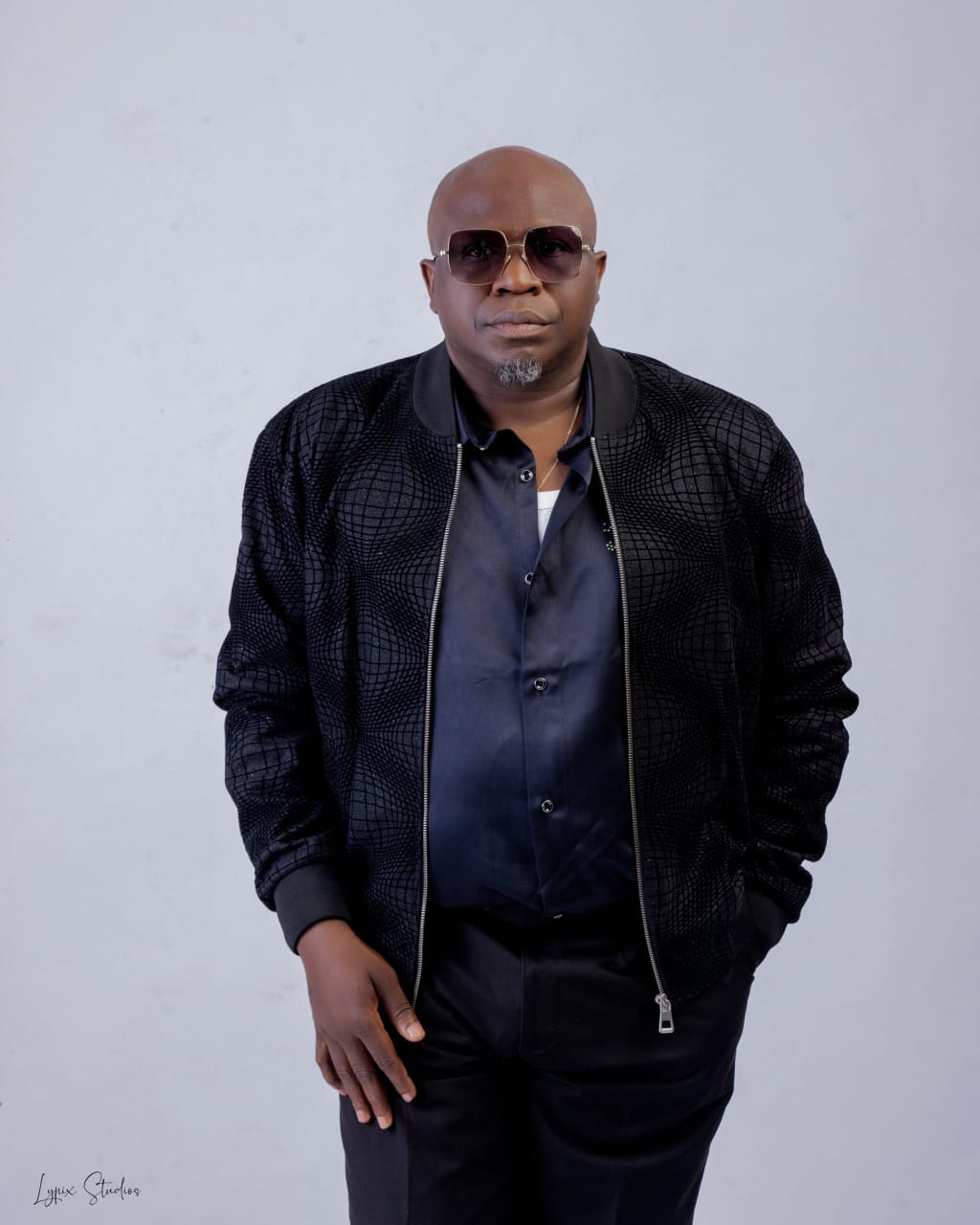
Laffmattazz Announces Strategic Partnership with First Bank of Nigeria Limited for 2026 International Tour
Laffmattazz, one of Nigeria’s foremost comedy and live entertainment brands, is pleased to announce its official partnership with First Bank of Nigeria Limited for the highly anticipated Laffmattazz 2026 International Tour, themed “Next Chapter: A New Season of Laughter.”
Now in its 15th year, Laffmattazz—the brainchild of renowned Nigerian comedian Gbenga Adeyinka (Gbenga Adeyinka 1st)—has evolved into a cultural phenomenon, celebrated for its seamless fusion of comedy, music, and live stage performances.
The 2026 tour, which kicked off on Easter Sunday, April 5th, 2026 at the Jogor Centre, Ibadan, marks a significant milestone in the brand’s journey. Building on over a decade of success across Nigeria, this year’s edition signals a bold expansion into the international market, with a multi-city run in Canada, alongside major stops in Akure, Abeokuta, and Lagos.
This strategic partnership with First Bank of Nigeria Limited underscores a shared commitment to excellence and innovation. It is also aligned with FirstBank’s First@Arts initiative—a significant and ongoing program dedicated to supporting the creative arts, entertainment, and cultural sectors. Through this initiative, FirstBank provides financing, advisory services, and actively fosters a sustainable value chain for artists and creative entrepreneurs, while supporting key industry platforms such as the Nigerian Entertainment Conference.
Speaking on the collaboration, the Laffmattazz team stated:
“We are delighted to welcome First Bank of Nigeria Limited as a strategic partner for the Laffmattazz 2026 International Tour. As we mark 15 remarkable years of Laffmattazz, this partnership reinforces our vision to take premium Nigerian entertainment beyond borders, while delivering even bigger, better, and more memorable experiences for our audiences.”
As a key partner, First Bank will enrich the tour through innovative customer engagement initiatives, experiential activations, and exclusive fan experiences across all tour locations.
With its distinctive blend of humor, culture, and live entertainment, the Laffmattazz 2026 Tour is poised to connect audiences across cities and continents, bringing laughter to thousands of fans worldwide.
⸻
About Laffmattazz
Laffmattazz is a premier Nigerian comedy and entertainment brand, now in its 15th year, renowned for its vibrant live shows and nationwide tours. Founded by Gbenga Adeyinka 1st, the brand continues to deliver high-quality experiences that celebrate creativity, culture, and laughter.
About First Bank of Nigeria Limited
First Bank of Nigeria Limited is Nigeria’s oldest financial institution, widely respected for its legacy of trust, innovation, and customer-centric financial solutions that support economic growth and development. Through its First@Arts initiative, the Bank continues to play a pivotal role in empowering the creative industry and driving sustainable growth across the sector.
Business
MREIF is Better: FirstBank’s Mortgage Loan Is the Game-Changer for Home Ownership in Nigeria
MREIF is Better: FirstBank’s Mortgage Loan Is the Game-Changer for Home Ownership in Nigeria
Anyone who has tried to get a loan to buy a house in Nigeria knows the drill: endless forms, property valuation, and eventual down payment of a minimum 25% or more on the property. Sometimes, interest rates could go as high as 30% per annum, while the typical loan limit is N50 million.
Now, FirstBank is making homeownership more attractive.
FirstBank, in partnership with the Ministry of Finance Incorporated (MOFI), has introduced the MREIF Home Loan. MREIF loan is a game-changer, offering a single-digit interest rate of 9.75% per annum, with a loan amount of up to ₦100 million and a repayment period of up to 20 years. This is perfect for salaried individuals, including Nigerians in the diaspora, looking to purchase homes in approved locations.
The MREIF loan stands out with its lower interest rate, higher loan amount, and flexible equity contribution as low as 10%. This makes it an attractive option for those seeking affordable homeownership.
You are one quick decision away from being a landlord.
If you’ve been waiting for the right time to buy a home, FirstBank’s MREIF Home Loan is the smartest route to owning property in Nigeria today. Visit the FirstBank website https://www.firstbanknigeria.com/personal/loans/mreif-home-loan/ to get started.


- Çelebi Aviation Enters Kenyan Market, Accelerating Strategic Growth Across Africa April 24, 2026
- Algeria eliminates trachoma as a public health problem April 23, 2026
- Various Activities by Diaspora Eritrean Communities April 23, 2026
- Uganda: Parliament Passes Reforms to Professionalise Teaching Sector April 23, 2026
- Sierra Leone Signs Offshore Petroleum License with Marginal Energy April 23, 2026
- New strategic partnership in the Arab States region to enhance access to green finance for small and medium-sized enterprises April 23, 2026
- STUDIOCANAL announces The Road Home, a distinctly South African story, to be filmed in Cape Town April 23, 2026
- Africa Finance Corporation (AFC) Establishes Nairobi Office, Targeting Additional US$2 Billion in Regional Investments and Financial Services Solutions April 23, 2026
- Sonangol’s Kátia Epalanga to Lead Muhatu as Angola Prioritizes Inclusive Growth April 23, 2026
- Africa Strengthens Foundations to Lead Its Own Financing as Domestic Pools Surpass External Flows, Africa Finance Corporation (AFC) Report Shows April 23, 2026
- Çelebi Aviation Enters Kenyan Market, Accelerating Strategic Growth Across Africa April 24, 2026
- Algeria eliminates trachoma as a public health problem April 23, 2026
- Various Activities by Diaspora Eritrean Communities April 23, 2026
- Uganda: Parliament Passes Reforms to Professionalise Teaching Sector April 23, 2026
- Sierra Leone Signs Offshore Petroleum License with Marginal Energy April 23, 2026
- New strategic partnership in the Arab States region to enhance access to green finance for small and medium-sized enterprises April 23, 2026
- STUDIOCANAL announces The Road Home, a distinctly South African story, to be filmed in Cape Town April 23, 2026
-

 news4 months ago
WHO REALLY OWNS MONIEPOINT? The $290 Million Deal That Sold Nigeria’s Top Fintech to Foreign Interests
-

 celebrity radar - gossips3 months ago
Dr. Chris Okafor Returns with Power and Fire of the Spirit -Mounts Grace Nation Altar with Fresh Anointing and Restoration Grace on February 1, 2026
-

 celebrity radar - gossips6 months ago
End of an Era: Nigeria Mourns Evangelist Dr. Uma Ukpai, 80
-

 celebrity radar - gossips4 months ago
Prophet Kingsley Aitafo Releases 2026 Prophecy: ‘Nigeria Will Rise, but the World Must Prepare for Turbulence’
You must be logged in to post a comment Login
You must log in to post a comment.