
Business
N4.65 Trillion in the Vault, but is the Real Economy Locked Out?


N4.65 Trillion in the Vault, but is the Real Economy Locked Out?
BY BLAISE UDUNZE
Following the successful conclusion of the banking sector recapitalisation programme initiated in March 2024 by the Central Bank of Nigeria, the industry has raised N4.65 trillion. No doubt, this marks a significant milestone for the nation’s financial system as the exercise attracted both domestic and foreign investors, strengthened capital buffers, and reinforced regulatory confidence in the banking sector. By all prudential measures, once again, it will be said without doubt that it is a success story.
Looking at this feat closely and when weighed more critically, a more consequential question emerges, one that will ultimately determine whether this achievement becomes a genuine turning point or merely another financial milestone. Will a stronger banking sector finally translate into a more productive Nigerian economy, or will it be locked out?
This question sits at the heart of Nigeria’s long-standing economic contradiction, seeing a relatively sophisticated financial system coexisting with weak industrial output, low productivity, and persistent dependence on imports truly reflects an ironic situation. The fact remains that recapitalisation, by design, is meant to strengthen banks, enhancing their ability to absorb shocks, manage risks and support economic growth. According to the apex bank, the programme has improved capital adequacy ratios, enhanced asset quality, and reinforced financial stability. Under the leadership of Olayemi Cardoso, there has also been a shift toward stricter risk-based supervision and a phased exit from regulatory forbearance.
These are necessary reforms. A stable banking system is a prerequisite for economic development. However, the truth be told, stability alone is not sufficient because the real test of recapitalisation lies not in stronger balance sheets, but in how effectively banks channel capital into productive economic activity, sectors that create jobs, expand output and drive exports. Without this transition, recapitalisation risks becoming an exercise in financial strengthening without economic transformation.
Encouragingly, early signals from industry experts suggest that the next phase of banking reform may begin to address this long-standing gap. Analysts and practitioners are increasingly pointing to small and medium-sized enterprises (SMEs) as a key destination for recapitalisation inflows, which is a fact beyond doubt. Given that SMEs account for over 70 percent of registered businesses in Nigeria, the logic is compelling. With great expectation, as has been practicalised and established in other economies, a shift in credit allocation toward this segment could unlock job creation, stimulate domestic production, and deepen economic resilience. Yet, this expectation must be balanced with reality. Historically, and of huge concern, SMEs have received only a marginal share of total bank credit, often due to perceived risk, lack of collateral, and weak credit infrastructure.
Indeed, Nigeria’s broader financial intermediation challenge remains stark. Even as the giant of Africa, private sector credit stands at roughly 17 percent of GDP, and this is far below the sub-Saharan African average, while SMEs receive barely 1 percent of total bank lending despite contributing about half of GDP and the vast majority of employment. These figures underscore the structural disconnect between the banking system and the real economy. Recapitalisation, therefore, must be judged not only by the strength of banks but by whether it meaningfully improves this imbalance.
Nigeria’s economic challenge is not merely one of capital scarcity; it is fundamentally a problem of low productivity. Manufacturing continues to operate far below capacity, agriculture remains largely subsistence-driven, and industrial output contributes only modestly to GDP. Despite decades of banking sector expansion, credit to the real sector has remained limited relative to the size of the economy. Instead, banks have often gravitated toward safer and more profitable avenues such as government securities, treasury instruments, and short-term trading opportunities.
This is not irrational. It reflects a rational response to risk, policy signals, and market realities. However, it has created a structural imbalance in which capital circulates within the financial system without sufficiently reaching the productive economy. The result is a pattern where financial sector growth outpaces real sector development, a phenomenon widely described as financialisation without productivity gains.
At the center of this challenge is the issue of credit allocation. A recapitalised banking sector, strengthened by new capital and improved buffers, should theoretically expand lending. But this is, contrarily, because the more important question is where that lending will go. Will Nigerian banks extend long-term credit to manufacturers, finance agro-processing and value chains, and support scalable SMEs or will they continue to concentrate on low-risk government debt, prioritise foreign exchange-related gains, and maintain conservative lending practices in the face of macroeconomic uncertainty? Some of these structural questions call for immediate answers from policymakers.
Some industry voices are optimistic that the expanded capital base will translate into a broader loan book, increased investment in higher-risk sectors, and improved product offerings for depositors; this is not in doubt. There are also expectations that banks will scale operations across the continent, leveraging stronger balance sheets to expand their regional footprint. Yes, they are expected, but one thing that must be made known is that optimism alone does not guarantee transformation. The fact is that without deliberate incentives and structural reforms, capital may continue to flow toward low-risk assets rather than high-impact sectors.
Beyond lending, experts are also calling for a shift in how banking success is measured. The next phase of reform, according to the experts in their arguments, must move from capital thresholds to customer outcomes. This includes stronger consumer protection frameworks, real-time complaint management systems and more transparent regulatory oversight. A more technologically driven supervisory model, one that allows regulators to monitor customer experiences and detect systemic risks early, could play a critical role in strengthening trust and accountability within the system.
This dimension is often overlooked but deeply significant. A banking system that is well-capitalised but unresponsive to customer needs risks undermining public confidence. True financial development is not only about capital strength but also about accessibility, fairness, and service quality. Nigerians must feel the impact of recapitalisation not just in improved financial ratios, but in better banking experiences, more inclusive services, and greater economic opportunity.
The recapitalisation exercise has also attracted notable foreign participation, signaling confidence in Nigeria’s banking sector. However, confidence in banks does not necessarily translate into confidence in the broader economy. The truth is that foreign investors are typically drawn to strong regulatory frameworks, attractive returns, and market liquidity, though the facts are that these factors make Nigerian banks appealing financial assets; it must be made explicitly clear that they do not automatically reflect confidence in the country’s industrial base or productivity potential.
This distinction is critical. An economy can attract capital into its financial sector while still struggling to attract investment into productive sectors. When this happens, growth becomes financially driven rather than fundamentally anchored. The risk therefore, is that recapitalisation could deepen Nigeria’s financial markets but what benefits or gains when banks become stronger or liquid without addressing the structural weaknesses of the real economy.
It is clear and explicit that the current policy direction of the CBN reflects a strong emphasis on stability, with tightened supervision, improved transparency, and stricter prudential standards. These measures are necessary, particularly in a volatile global environment. However, there is an emerging concern that stability may be taking precedence over growth stimulation, which should also be a focal point for every economy, of which Nigeria should not be left out of the equation. Central banks in emerging markets often face a delicate balancing act and this is putting too much focus on stability, which can constrain credit expansion, while too much emphasis on growth can undermine financial discipline, as this calls for a balance.
In Nigeria’s case, the question is whether sufficient mechanisms exist to align banking sector incentives with national productivity goals. Are there enough incentives to encourage long-term lending, sector-specific financing, and innovation in credit delivery? Or does the current framework inadvertently reward risk aversion and short-term profitability?
Over the past two decades, it has been a herculean experience as Nigeria’s economic trajectory suggests a growing disconnect between the financial sector and the real economy. Banks have become larger, more sophisticated and more profitable, yet the irony is that the broader economy continues to struggle with high unemployment, low industrial output, and limited export diversification. This divergence reflects the structural risk of financialization, a condition in which financial activities expand without a corresponding increase in real economic productivity.
If not carefully managed, recapitalisation could reinforce this trend. With more capital at their disposal, banks may simply scale existing business models, expanding financial activities that generate returns without contributing meaningfully to production. The point is that this is not solely a failure of the banking sector; it is a systemic issue shaped by policy design, regulatory priorities, and market incentives, which needs the urgent attention of policymakers.
Meanwhile, for recapitalisation to achieve its intended purpose and truly work, it must be accompanied by a deliberate shift or intentional policy change from capital accumulation to productivity enhancement and the economy to produce more goods and services efficiently. This begins with creating stronger incentives for real sector lending with differentiated capital requirements based on sector exposure, credit guarantees for high-impact industries, and interest rate support for priority sectors can encourage banks to channel funds into productive areas and this must be driven and implemented by the apex bank to harness the gains of recapitalisation.
This transformative process is not only saddled with the CBN, but the Development finance institutions also have a critical role to play in de-risking long-term investments, making it easier for commercial banks to participate in financing projects that drive economic growth. At the same time, one of the missing pieces that must be taken into cognizance is that regulatory frameworks should discourage excessive concentration in risk-free assets. No doubt, banks thrive in profitability, as government securities remain important; overreliance on them can crowd out private sector credit and limit economic expansion.
Innovation in financial products is equally essential. Traditional lending models often fail to meet the needs of SMEs and emerging industries as this has continued to hinder growth. Banks must explore new approaches, including digital lending platforms, supply chain financing, and blended finance solutions that can unlock new growth opportunities, while they extend their tentacles by saturating the retail space just like fintech.
Accountability must also be embedded in the system. One fact is that if recapitalisation is justified as a tool for economic growth, then its outcomes and gains must be measurable and not obscure. Increased credit to productive sectors, higher industrial output and job creation should serve as key indicators of success. Without such metrics, the exercise risks being judged solely by financial indicators rather than its real economic impact.
The completion of the recapitalisation programme represents more than a regulatory achievement; it is a defining moment for Nigeria’s economic future. The country now has a banking sector that is better capitalised, more resilient, and more attractive to investors. These are important gains, but they are not ends in themselves.
The ultimate objective is to build an economy that is productive, diversified, and inclusive. Achieving this requires more than strong banks; it requires banks that actively power economic transformation.
The N4.65 trillion recapitalisation is a significant step forward. It strengthens the foundation of Nigeria’s financial system and enhances its capacity to support growth. However, capacity alone is not enough and truly not enough if the gains of recapitalisation are to be harnessed to the latter. What matters now is how that capacity is deployed.
Some of the critical questions for urgent attention are as follows: Will banks rise to the challenge of financing Nigeria’s productive sectors, particularly SMEs that form the backbone of the economy? Will policymakers create the right incentives to ensure credit flows where it is most needed? Will the financial system evolve from a focus on profitability to a broader commitment to the economic purpose of fostering a more productive Nigerian economy and the $1 trillion target?
The above questions are relevant because they will determine whether recapitalisation becomes a catalyst for change or a missed opportunity if not taken into cognizance. A well-capitalised banking sector is not the destination; it is the starting point. The real journey lies in building an economy where capital works, productivity rises, and growth becomes both sustainable and inclusive.
Blaise, a journalist and PR professional, writes from Lagos and can be reached via: [email protected]





Fidelity Bank grows gross earnings by 38% to N434.95b in Q1
Fidelity Bank Plc recorded 37.9 per cent growth in gross earnings to N434.95 billion in first quarter 2026 as the international commercial bank continued to expand its core banking market share.
Interim report and accounts of Fidelity Bank for the three months ended March 31, 2026 released at the Nigerian Exchange (NGX) showed that gross earnings rose from N315.42 billion in first quarter 20025 to N434.95 billion in first quarter 2026, representing an increase of 37.9 per cent.
The top-line performance was driven by impressive growth in the bank’s core business operations with interest incomes rising by 22.8 per cent to N314.48 billion in first quarter 2026 as against N256.10 billion in first quarter 2025.
With net interest income at N180.97 billion, the bank closed the period with profit before tax of N92.48 billion. After taxes, net profit stood at N74.47 billion for the three-month period. Earnings per share remained high at N5.69, underlining the capacity of the bank to reward its shareholders.
The balance sheet of the bank also emerged stronger. Total assets crossed the N11 trillion mark to N11.35 trillion by March 2026 compared with N10.46 trillion recorded in December 2025. Customers’ deposits increased from N6.89 trillion to N7.38 trillion. Total equity rode on the back of earnings growth to a 27.5 per cent increase from N1.09 trillion in December 2025 to N1.39 trillion by March 2026.
The first quarter 2026 results further consolidated the strong earnings outlook of the bank, which had successfully completed its recapitalisation amidst impressive earnings performance in 2025.
Fidelity Bank had recorded double-digit growths in interest and non-interest incomes as well as key balance sheet items during the year ended December 31, 2025.
The audited report showed that gross earnings rose from N1.04 trillion in 2024 to N1.52 trillion in 2025, an increase of 45.6 per cent. Interest and similar incomes had grown by 38.7 per cent from N803.1 billion in 2024 to N1.11 trillion in 2025. Fees and commission incomes also rose by 44.7 per cent from N78.4 billion to N113.4 billion. The bank recorded net profit after tax of N242.4 billion in 2025.
The bank’s balance sheet emerged stronger with total assets rising by 18.6 per cent to N10.46 trillion in 2025 as against N8.82 trillion in 2024. Customer deposits increased by 16.1 per cent from N5.94 trillion to N6.89 trillion, reflecting continued franchise strength and an improved funding profile. Net loans and advances meanwhile declined by 2.4 per cent to N4.28 trillion in 2025 as against N4.39 trillion in 2024, attributable to customers paying down on their mature obligations.
The bank had in 2025 strengthened its capital position, with eligible capital rising to N561 billion, above the regulatory minimum of N500 billion for banks with international authorisation. In addition, capital adequacy had remained robust, with Capital Adequacy Ratio of 30.94 per cent by December 2025 as against 23.47 per cent by December 2024.
Managing Director, Fidelity Bank Plc, Dr. Nneka Onyeali-Ikpe, said the first quarter 2026 results reinforced the bank’s strong and resilient business model.
She noted that with the remarkable success of its recapitalisation programme and continuing expansion, Fidelity Bank has entered a new era of growth and impressive returns.
“We are on a stronger footing and confident that we will set new growth records that are reflective of our legacy and the future we are working on,” Onyeali-Ikpe said.
Business
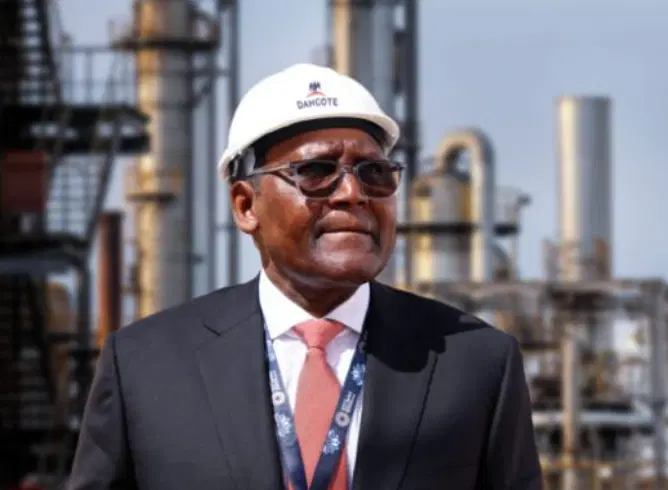
Dangote Refinery Ends Nigeria’s Era of Fuel Import Dependence, Boosts GDP, FX Earnings — EIU
Dangote Refinery Ends Nigeria’s Era of Fuel Import Dependence, Boosts GDP, FX Earnings — EIU
The operational ramp up of the 650,000 barrels per day Dangote Petroleum Refinery & Petrochemicals is fundamentally reshaping Nigeria’s downstream oil sector, significantly reducing the country’s dependence on imported refined petroleum products and strengthening its external position, according to the Economist Intelligence Unit (EIU).
In its latest assessment on Nigeria’s fuel market and regulatory environment, the EIU said the refinery has already transformed a sector that was previously characterised by heavy reliance on imported fuel despite Nigeria being Africa’s largest crude oil producer. The report noted that the refinery met nearly 80 per cent of domestic petrol demand in April and produced enough volumes to satisfy local consumption requirements as operations approached full capacity.
The EIU described Nigeria’s downstream petroleum sector before the refinery as “long dysfunctional”, noting that the country had remained almost entirely dependent on costly imported fuel while producing nearly 1.5 million barrels of crude oil daily.
According to the report, the emergence of the refinery has reduced import dependence, improved domestic fuel availability and strengthened Nigeria’s balance of payments position through lower import demand and rising exports of refined petroleum products.
“The gradual ramp up of the 650,000 barrel/day Dangote refinery since May 2023 has transformed Nigeria’s long dysfunctional downstream sector,” the report stated. “The country’s main refineries, all state owned, had been inoperative for years and Nigeria was almost entirely reliant on costly imported fuel.”
The research and analysis division of The Economist Group, London added that the refinery’s attainment of full operational capacity and its planned expansion would further support Nigeria’s economic growth and foreign exchange earnings over the medium term.
“Meanwhile, the attainment of full capacity at, and an increase in exports from, the Dangote refinery will support real GDP growth and foreign exchange earnings in 2026 and 2027 and beyond, as a planned doubling of the plant’s output comes on stream around the end of the decade,” it added.
Industry analysts said the refinery is increasingly positioning Nigeria as an emerging refining and export hub, altering energy trade flows across Africa and reducing the vulnerability associated with fuel import dependence.
The EIU noted that the refinery’s expansion has coincided with major reforms in Nigeria’s downstream sector, including the removal of fuel subsidies and the introduction of market driven pricing mechanisms.
The report, however, said the transition from a state dominated fuel import structure to large scale domestic refining has triggered resistance from interests linked to the old import regime.
The latest tensions emerged following the decision by the Nigerian Midstream and Downstream Petroleum Regulatory Authority to relax restrictions on petrol imports despite the refinery’s growing capacity to meet domestic demand.
Dangote Industries subsequently initiated legal action, arguing that continued import approvals undermine domestic refining investments and conflict with the objectives of the Petroleum Industry Act, which seeks to encourage local refining capacity and reduce import dependence.
Analysts noted that the availability of large-scale domestic refining capacity has improved Nigeria’s energy security and reduced exposure to external supply shocks and foreign exchange volatility.
The Centre for the Promotion of Private Enterprise also cautioned against unrestrained importation of petroleum products, warning that such a policy could weaken Nigeria’s industrialisation drive and discourage investments in domestic refining.
Chief Executive Officer of CPPE, Muda Yusuf, said continued dependence on imported fuel had historically contributed to pressure on foreign reserves, exchange rate instability and fiscal leakages.
The refinery’s growing impact is also being reflected in Nigeria’s broader macroeconomic indicators. Earlier this month, S&P Global Ratings cited increased domestic refining capacity and rising hydrocarbon exports among the major factors supporting Nigeria’s sovereign credit rating upgrade – the first in 14 years.
Beyond Nigeria, analysts said the refinery is increasingly being viewed as a strategic industrial asset for Africa, where many countries remain heavily dependent on imported fuel despite rising demand for transportation, manufacturing, and power generation.
Business
BREAKING: Court Dismisses $19.6 Million Claim Against NNPCL — Rules Contract Scope Cannot Be Changed Orally

BREAKING: Court Dismisses $19.6 Million Claim Against NNPCL — Rules Contract Scope Cannot Be Changed Orally
In a landmark ruling on Friday, May 22, 2026, the Federal Capital Territory High Court in Abuja threw out a $19.6 million lawsuit filed by Alternate Dimensions Ventures Ltd against the Nigerian National Petroleum Company Limited (NNPCL), affirming a key legal principle: a written contract cannot be expanded through oral agreements or conduct.
Alternate Dimensions had sought $19,600,000 in professional fees, claiming the scope of its Direct Sale, Direct Purchase (DSDP e-pro) contract with NNPCL was orally expanded. Represented by counsel Patrick Peter, the firm argued it was entitled to the revised sum for services rendered under the alleged new terms.
But NNPCL, through its lawyer Ituah Imhanze of KENNA LP, pushed back sharply, arguing that parties are bound exclusively by the clear terms of their written agreement. Imhanze contended that without any written amendment, the claim was legally unsound, and the court agreed.
Delivering judgment, Justice Hamza Mu’azu upheld NNPCL’s defense, stating that the contract was unambiguous and that no evidence was adduced during the trial, which supported the alleged scope expansion. The court further found that NNPCL fully complied with all contractual terms and committed no breach.
Dismissing the suit as meritless, Justice Mu’azu reinforced the doctrine of sanctity of contract: any amendment to a written agreement must be express, unequivocal, and documented, not implied or verbal.
The ruling spares NNPCL from the S19.6 million claim and also a floodgate of similar potential liabilities.


- CANAL+ lists on the Johannesburg Stock Exchange (JSE), strengthening the Group’s dual-continental approach and reinforcing South Africa’s (SA) role as a gateway to global capital and African growth June 3, 2026
- African Mining Week (AMW) Country Focus to Spotlight Liberia’s Iron Ore, Gold and Critical Minerals Prospects June 3, 2026
- Venezuela to Host Its Largest-Ever International Energy Investment Summit June 3, 2026
- Canada–Africa Business Conference Preparations Advance Following Canadian Secretary of State’s High-Level Visit to Nigeria June 3, 2026
- Uganda: Parliament concludes vetting of ministers June 2, 2026
- Fund for Export Development in Africa (FEDA) Board Appoints Mr. Emmanuel Assiak as Chief Executive Officer June 2, 2026
- Ecobank Group Launches World First Nature Bond Mobilising Global Capital to Protect Africa’s Natural Ecosystems June 2, 2026
- Merck Foundation Chief Executive Officer (CEO) Dr. Rasha Kelej together with Kenya First Lady support the education of 47 Kenyan Schoolgirls by providing Annual Scholarships till they Graduate June 2, 2026
- Annual Meetings 2026: Governors Back the Bank’s Platform Solutions to Transform Aviation and Health Systems in Africa June 2, 2026
- ThinkMarkets launches ChelseaAI, bringing live CFD trading into Artificial Intelligence (AI) assistants June 2, 2026
- CANAL+ lists on the Johannesburg Stock Exchange (JSE), strengthening the Group’s dual-continental approach and reinforcing South Africa’s (SA) role as a gateway to global capital and African growth June 3, 2026
- African Mining Week (AMW) Country Focus to Spotlight Liberia’s Iron Ore, Gold and Critical Minerals Prospects June 3, 2026
- Venezuela to Host Its Largest-Ever International Energy Investment Summit June 3, 2026
- Canada–Africa Business Conference Preparations Advance Following Canadian Secretary of State’s High-Level Visit to Nigeria June 3, 2026
- Uganda: Parliament concludes vetting of ministers June 2, 2026
- Fund for Export Development in Africa (FEDA) Board Appoints Mr. Emmanuel Assiak as Chief Executive Officer June 2, 2026
- Ecobank Group Launches World First Nature Bond Mobilising Global Capital to Protect Africa’s Natural Ecosystems June 2, 2026
-

 news6 months ago
WHO REALLY OWNS MONIEPOINT? The $290 Million Deal That Sold Nigeria’s Top Fintech to Foreign Interests
-

 society1 month ago
SOCIAL MEDIA IS NOT A BATTLEFIELD COMMAND – WHY THE NIGERIAN ARMY’S ACTION AGAINST JUSTICE CRACK IS A NATIONAL SECURITY IMPERATIVE
-

 celebrity radar - gossips4 months ago
Dr. Chris Okafor Returns with Power and Fire of the Spirit -Mounts Grace Nation Altar with Fresh Anointing and Restoration Grace on February 1, 2026
-

 celebrity radar - gossips6 months ago
Prophet Kingsley Aitafo Releases 2026 Prophecy: ‘Nigeria Will Rise, but the World Must Prepare for Turbulence’