
news
14 killed in Damaturu multiple blasts


At least 14 people were killed in three separate suicide bomb attacks in Damaturu, northeast Nigeria, on Wednesday, National Emergency Management Agency (NEMA) said. The blasts came after Boko Haram militants this week claimed to have carried out three suicide attacks on the outskirts of the capital, Abuja, last Friday that left 18 dead and 41 injured.
Suspicion for the latest bombings will likely fall on the Islamist rebels, who have repeatedly attacked Damaturu during their bloody, six-year insurgency. Last month, a girl thought to be aged 12 killed six and injured 47 when the explosives she was carrying went off outside a bus station in the Yobe state capital.
NEMA coordinator for Yobe state Bashir Idris Garga said the first blast Wednesday happened at a small food store on a housing estate, killing four. Another near a mosque killed one, while nine, including a family, lost their lives when another bomber exploded at a Fulani settlement on the outskirts of the city.
“Total injured 10, seven partially injured and three critically injured,” Garga said in a text message. Yobe state police spokesman Toyin Gbadegesin told AFP “gun-wielding bombers” carried out the attacks between 5:30 and 6:00 am before the night-time curfew was lifted. “All the areas affected have been cordoned off and the police have held meetings with community leaders… for them to be more vigilant and suspicious of strange faces and movements,” he added.
‘Attack repelled’
Boko Haram has reverted to attacking “soft” civilian targets after last year’s land grab that saw it seize towns and villages across Yobe and neighbouring Borno and Adamawa states. Nigeria’s military has claimed a series of successes against the insurgents and on Wednesday claimed to have killed scores of rebel fighters during clashes with troops south of Damaturu.
Army spokesman Colonel Sani Usman said fighters attempted to attack a battalion of soldiers in Goniri, some 60 kilometres by road southeast of Damaturu, in the early hours of Wednesday. “During the encounter our gallant troops successfully repelled the attacked and inflicted heavy casualty on the invading terrorists as all of them were killed,” he said in a statement.
“On the last count over 100 terrorists bodies were seen,” he added. There was no independent verification and the army has previously claimed high losses on the part of the militants. Usman said seven soldiers were killed and nine others injured in the fighting, which also saw troops recover arms and ammunition, including primed improvised explosive devices.
Nigeria’s President Muhammadu Buhari has set his military commanders a three-month deadline to early November to end the violence, which has left at least 17,000 dead since 2009. But he has conceded that bomb and suicide attacks in urban areas could continue. More than 1,260 people have been killed since he took office on May 29, according to an AFP tally.
Boko Haram on Wednesday published a new propaganda video via social media, in which an unidentified fighter read a statement in Hausa and Arabic, flanked by more than a dozen armed fighters. The rebel said military claims that some 200 fighters had surrendered in the border town of Banki last month, and that hundreds of women and children were released, were a “complete lie”.
The 17-minute video was posted under the name “Islamic State in West Africa Province”, which Boko Haram has used since its pledge of allegiance to IS leader Abu Bakr al-Baghdadi in March. Boko Haram has continued to attack neighbouring Chad, Niger and Cameroon, underlining its threat to regional security.
On Tuesday, 11 soldiers were killed and 13 injured in a Boko Haram attack on Chadian positions across the border; 17 insurgents were also killed in the pre-dawn strike, Chad’s army said. Suicide attacks on Sunday in the city of Diffa, southeast Niger, killed a gendarme and five civilians. Suspected Boko Haram terrorists on Wednesday, hit the Buhari Housing Estate, in Damaturu, Yobe State.

Yobe State’s Emergency Management Agency, (SEMA) has confirmed 16 people dead to the press.
Residents of Damaturu say that explosions were heard in the early hours of today.
Reports say the first attack was reportedly carried out by three teenage boys at a mosque inside Buhari Estate.
According to an eyewitness, the suicide bombers went near the mosque, one of them hugged the other, then they blew themselves up.
SEMA reports that injured persons have been taken to Sani Abacha Specialist Hospital, along the Damaturu-Biu Road, for treatment.




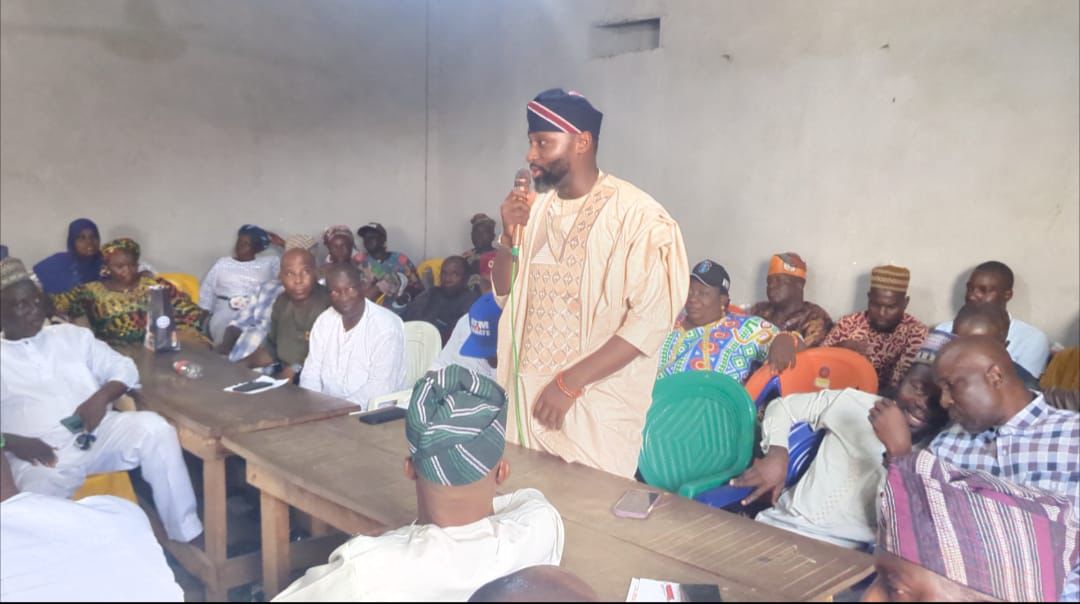
Reports from the field in Ondo North Senatorial District indicate that voters, officers, and agents at the voting centers across the wards have put Abdul Tunji Mohammed (ATM) in the lead.
According to the current figures collated from the centers, ATM is polling with wider margins of votes
Going by these figures, ATM is poised to win all the six Local Government in the Senatorial Districtt.
We urge all party members and supporters to remain peaceful as collation continues.
news
Senate Leader Opeyemi Bamidele Hosts Ondo North Aspirant Abdul Tunji Mohammed, Backs Grassroots Development Agenda

Senate Leader Opeyemi Bamidele recently hosted Chief Abdul Tunji Mohammed (ATM), a prominent aspirant for the Ondo North senatorial seat.
The meeting highlighted a strategic alignment between progressive forces, with both leaders emphasizing a shared vision for grassroots development and legislative excellence.
Senator Bamidele, a respected figure in Nigerian politics, is recognized for his contributions to national cohesion and impactful policymaking, drawing on his experience as a legal luminary and human rights activist.
Chief Mohammed, an astute businessman and dedicated grassroots mobilizer, has made a notable impact on Ondo North through his philanthropic work and commitment to constituents’ welfare. His approach blends corporate discipline, economic ingenuity, and a deep concern for people—qualities that have reshaped the region’s political narrative.
The two leaders discussed the district’s critical needs, exploring avenues for socioeconomic growth, legislative reform, and stronger community integration. Senator Bamidele stressed the importance of supporting President Bola Ahmed Tinubu’s Renewed Hope Agenda, a sentiment echoed by Chief Mohammed.
The convergence of Chief Mohammed’s vision with Senator Bamidele’s legislative experience offers hope for Ondo North. This synergy between grassroots ambition and seasoned mentorship points to a promising future for the district’s representation in the Senate. With ATM’s drive and the guidance of leaders like Senator Bamidele, Ondo North is positioned for progress and transformative governance.

APC Senatorial aspirant for Ondo North, Abdul Tunji Mohammed, popularly known as ATM, received a resounding endorsement on Thursday during a high-profile visit to Ikare-Akoko.
The endorsement came from the Olukare of Ikare, His Royal Majesty Oba Akadiri Momoh IV, the Owa Ale of Ikare, His Royal Majesty Oba Adeleke Adedoyin, and the Ikare Council of Chiefs, who described ATM as a credible son of the soil with the capacity to represent Ondo North effectively at the Senate.
Speaking at the palace, the Olukare commended ATM for his consistent engagement with the people and his track record in business and community development. “We have watched your contributions to Ondo North over the years. You are one of us, and we believe you have the experience and character to speak for our people in Abuja,” the monarch said.
The Owa Ale, in his remarks, stressed the need for unity and quality representation. He urge him to continue the help to the people at home that he’s doing. He urged other stakeholders to support aspirants with proven commitment to the district’s progress, noting that Ikare and Akoko land require strong voices at the National Assembly.
In his response, Abdul Tunji Mohammed thanked the monarchs and chiefs for their blessings and trust. He reaffirmed his commitment to prioritize infrastructure, education, healthcare, youth empowerment, and agricultural development if elected.
“Ikare is central to Ondo North, and your support strengthens my resolve to serve with integrity and results. I will not betray this trust. My campaign will remain issue-based, and my representation will reflect the hopes of our people,” ATM stated.
The visit was marked by prayers, cultural displays, and solidarity from party leaders, youth, and women groups across Ikare-Akoko.


- Statement of the International Contact Group for the Great Lakes (ICG) on the situation in the eastern Democratic Republic of the Congo (DRC) May 24, 2026
- Eritrea: Messages of Congratulations May 24, 2026
- African Development Bank (AfDB) – 2026 Annual Meeting: Full live coverage on Africa 24 May 24, 2026
- Countries in the Horn of Africa and Yemen recommit to ending variant poliovirus May 23, 2026
- Seychelles: President Visits Police and Fire Services in Final Stop on La Digue Tour May 23, 2026
- United Nations World Food Programme (WFP) scales up emergency Ebola response in eastern Democratic Republic of the Congo (DRC) to contain risk of regional crisis May 23, 2026
- Economic Community of West African States (ECOWAS) Inspection Team Visits ECOWAS Stabilisation Support Mission in Guinea Bissau May 23, 2026
- Member States advance regional coordination on Bundibugyo Ebola response May 23, 2026
- World Health Organization (WHO) Supports Zambia to Strengthen Access to Mental Health Medicines and Services May 23, 2026
- Brazzaville 2026 African Development Bank Group (AfDB) Annual Meetings to focus on mobilising Africa’s development financing at scale May 22, 2026
- Statement of the International Contact Group for the Great Lakes (ICG) on the situation in the eastern Democratic Republic of the Congo (DRC) May 24, 2026
- Eritrea: Messages of Congratulations May 24, 2026
- African Development Bank (AfDB) – 2026 Annual Meeting: Full live coverage on Africa 24 May 24, 2026
- Countries in the Horn of Africa and Yemen recommit to ending variant poliovirus May 23, 2026
- Seychelles: President Visits Police and Fire Services in Final Stop on La Digue Tour May 23, 2026
- United Nations World Food Programme (WFP) scales up emergency Ebola response in eastern Democratic Republic of the Congo (DRC) to contain risk of regional crisis May 23, 2026
- Economic Community of West African States (ECOWAS) Inspection Team Visits ECOWAS Stabilisation Support Mission in Guinea Bissau May 23, 2026
-

 news5 months ago
WHO REALLY OWNS MONIEPOINT? The $290 Million Deal That Sold Nigeria’s Top Fintech to Foreign Interests
-

 society3 weeks ago
SOCIAL MEDIA IS NOT A BATTLEFIELD COMMAND – WHY THE NIGERIAN ARMY’S ACTION AGAINST JUSTICE CRACK IS A NATIONAL SECURITY IMPERATIVE
-

 celebrity radar - gossips4 months ago
Dr. Chris Okafor Returns with Power and Fire of the Spirit -Mounts Grace Nation Altar with Fresh Anointing and Restoration Grace on February 1, 2026
-

 celebrity radar - gossips5 months ago
Prophet Kingsley Aitafo Releases 2026 Prophecy: ‘Nigeria Will Rise, but the World Must Prepare for Turbulence’
You must be logged in to post a comment Login
You must log in to post a comment.