
society
2019 Election : ” It’s redemption time”- Chief Kenny Martins Unveils New Group

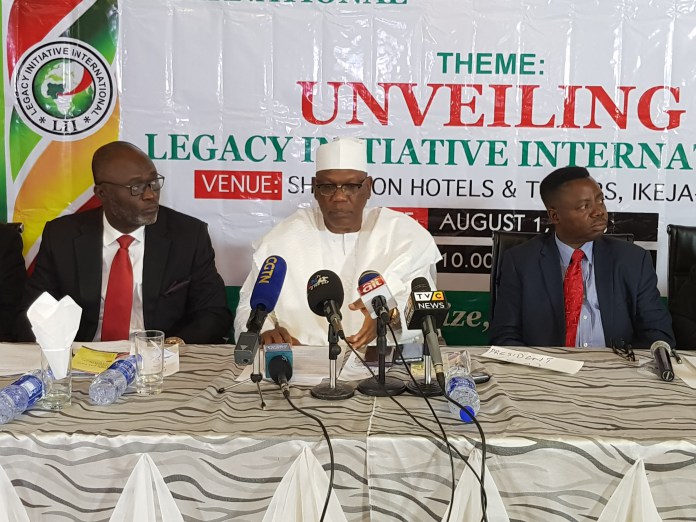

Chief Kenny Martins has challenged Nigerians to shun money politics and allow God to intervene in the political imbroglio plaguing the country and by choosing credible leaders in the forthcoming election based on merits. “There’s something missing in our equation,” he said. “Why don’t we bring God into our equation? It’s redemption time.”
Chief Martins along with eminent Nigerians raised concerns over issues of insecurity in Nigeria as they unveiled an initiative to unite religious groups and ensure peaceful coexistence in the country.
Addressing its maiden world press conference on Wednesday, August 1at, 2018 at the Lagos Sheraton Hotel, Ikeja, the Legacy Initiative International led by the Grand Patron, Chief Kenny Martins and the President, Dr Bolaji Akinyemi, along with other members of its executive unveiled the vision and mission of the group that is out to prepare Nigerians for responsible citizenship and credible leadership, as well as instituting a legacy of responsible citizenship for good governance through public enlightenment.

While delivering his speech, Chief Martins said, “Legacy is an Organisation that has been long in coming. Many well-meaning Patriotic Nigerians have been meeting for nearly one year now and searching for solutions to some of the most divisive issues in Nigeria as a Country, namely: Ethnicity and Religious intolerance. They have spent sleepless nights, travelled long distances for consultations and spent their meagre income on logistics for a cause which is for the common good of all our people in Nigeria. I am very proud to have been associated with them all the way,” Martins said while addressing the conference.
He added: “These consultations have been costly in terms of time and resources to the organisation, but they have given us a great insight on the enormity of the challenges presently facing our Country and the need for all hands to be on deck towards repositioning our Country on the right trajectory to even development and less acrimony.
Martins made it clear that the organisation “is neither a religious organisation nor a partisan political organisation”. He described the group as a social organisation attempting to tackle a social problem through the building of concessions among National Elites.
Wondering why Nigeria is such a dysfunctional society, even with all the natural, human and spiritual resources, Martins drew the audience’s attention to developments in neighbouring Ghana as he compared the state of the Murtala Muhammed International Airport opened in 1979 by the then Head of State, Gen. Olusegun Obasanjo and the Airport opened in Ghana three months ago.
He also rated hospitals in Ghana above those in Nigeria in healthcare delivery.
“There’s something missing in our equation,” he said. “Why don’t we bring God into our equation? It’s redemption time.”

According to him, the Leadership of the organization had met with religious and opinion leaders including: Prophet TB Joshua of Synagogue Church of All Nations, The Arch Bishop of The Catholic Arch Diocese of Lagos; the Arch Bishop of The Catholic Arch Diocese of Abuja; the Sultan of Sokoto; the Etsu Nupe (Emir of Bida), the Prelate of The Methodist Church, Nigeria; the Primate of the Church Of Nigeria, Anglican Communion; the Leader of the Christ Apostolic Church; the Leader of Living Faith Church a.k.a Winners Chapel; the Leader Of NASFAT; the President Of CAN; the Vice President Of CAN; the President Of the National Christian Elders Council; the President of the Christian Counsel of Nigeria; the Leader Cherubim and Seraphim Church; the Leader of the Celestial Church of Christ; the Leader of the Trinity Church; the Leader of the Mountain of Fire and Miracles Ministry; the Leader of Goodnews Miracle Church; the Leader of The Redeemed Evangelical Mission (TREM); the Senior Special Adviser to the President on Media and Publicity; three former Presidents; many former Governors; many serving Governors, and many senior Legislators.
He revealed that members of the group included seasoned professionals from different illustrious backgrounds, great women of substance and very vibrant youths from all parts of the country.
“We also have members who are Nigerians living in the diaspora. Our diaspora members contribute to our debates through the social media. We also have functional offices in the United Kingdom and other European Countries, while the United States and Canadian wings are fast coming up,” he said. “Apart from peaceful co-existence among Nigerians in the diaspora, our diaspora members have asked us to advocate they should be allowed to vote during elections as many other countries allow their citizens in the diaspora to vote during general elections. In the case of the Nigerian diaspora vote, we understand that there is, in fact, a subsisting judgement of a Nigerian High Court directing the appropriate agency to allow diaspora voting, which judgement is yet to be executed or complied with.
“The twin issues that Legacy has decided to focus its advocacy upon are not in the least exotic. These are hard-core issues that have prevented our Country from developing as fast as it could have developed over the years. The good news is that with the work of Legacy and the organisations that have pledged their support to it, the twin evils of Ethnicity and Religious intolerance will be drastically defeated and degraded in Nigeria, if l may use that contemporary terminology.”
Our Population of Muslims in Nigeria is more than the Population of any other country in Africa. Also, Our Population of Christians in Nigeria is more than the Population of any other country in Africa. Only Nigeria has the capacity to feed 200,000,000 people per year and still remain the largest economy in our continent.
“It is, therefore, a thing of regret that often times the narratives that we see and hear, even from very prominent Nigerians are issues that relate to hate speech and the proclamation of artificial fault lines like Ethnicity and Religious Intolerance.
“We recognize the place of evangelism in every religion and the rights of believers to seek converts to their own sect or mission. What causes odium is not the genuine acts of winning converts but the deliberate denigration of a people or the use of vile language to describe their faith.
“At interpersonal levels, Nigerians of all Faith and Ethnicity love each other. We intermarry with each other, work in each other’s Company and belong to similar social organisations. Nobody buys stuff from the market from only his faith group or ethnic group. Nobody goes to check the faith or ethnic Origin of 3 bus driver before we hop into the bus.
“However, from time to time especially during the period of general elections, the colours of our fault lines become more prominent than ever. Mr Chairman, distinguished Ladies and Gentlemen, it is the problem of these fault lines and the hardships that they have brought to our Country Nigeria, that Legacy is determined with your support to address in a comprehensive manner, once and for all.
“We are not naive to think that what we are undertaking is a simple task that could be solved overnight, but in the words of the Former American President, Barak Obama, we have the “Audacity of Hope” that we shall soon overcome the problem with the support of all that are gathered here today and the millions of Nigerians who are sick and tired of these unnecessary stumbling blocks to National development.
“We must here salute the industry of our Religious and Opinion Leaders in Nigeria for their Leadership and service in the area of opening and running some of the best schools and Tertiary institutions in Nigeria, Housing Estates and Medical facilities of distinction.
“We call on them to turn their attention with the same grace and vigour to the election process in Nigeria in a coordinated effort by the Leaders of the two faith groups in Nigeria, the Christians and the Muslims. There is a saying in some parts of Nigeria that when two persons urinate together, they generate a larger foam. We believe that if our Religious Leaders can quickly overcome their interdenominational and interfaith differences, they will emerge as the most potent force for the choice of Political Leaders in our Country and ultimately bring about the rise of ethical governance in Nigeria without turning the Country into a Theocracy, which is an entirely different form of government from our system of democracy which we cherish.
“It is not difficult to imagine what will be the outcome if the top hierarchy of our Christian and Muslim leaders, with all their wisdom and spiritual disposal, will narrow their choice to a single candidate in a Presidential or gubernatorial election. Such candidate will win easily without having to break any Bank, and when he or she is in office there will be no doubt that the person will be the appropriate agency to allow diaspora voting, constantly conscious of the divine route through which he or she got into office and the consequences of not governing in the best way possible. With time such a practice can become the norm and apply to both the local Government and other elections. We have the audacity to hope that this will come to pass.
“Some of the best sermons in the world are preached on the Nigerian soil on Church altars and different Mosques. Although the Muslim elite faithful tend to listen more to their own clerics, the rate of influence the Christian Clergy have on their own faithful in public offices is to say the least abysmally low, and will continue to be so unless the Christian politicians know that they will pay a political price unless they listen to their resurgent clergy as they galvanise themselves with their current trend of assertiveness.
“Apart from the divisive twin issues of ethnicity and Religious intolerance, there are other equally pressing issues in Nigerian politics that must be addressed urgently and objectively. The first in my own opinion is the Security problems around the country with different brand names ranging from; Farmer-Herdsmen clashes to Bandits-Citizens clashes; Militancy, and deliberate destruction of our economic infrastructure in some regions of the Country.
“With the gallantry of our Armed Forces, the Boko Haram insurgency have now been defeated and degraded. However, from time to time we hear the news of the sizeable numbers of insurgents that have been neutralised. Unfortunately, the Boko Haram insurgency in whatever shape or fashion that they currently exist, still consist a major security threat that must be addressed by the Federal Government. We hear of current changes in the chains of command at the operation theatres. We hope that the changes will bring the much needed succour for the long suffering citizens of Nigeria in the North East zone of our Country.
“Also worthy of mention is the issue of official corruption. Our current score card in the corruption index is nothing for anybody to be happy about. Whether corruption is fighting back or not, we urge the Federal Government to double its effort to make sure that our Country is not overwhelmed by the evil of official corruption.
“The resurgence of kidnapping and other violent crimes like armed robbery along our major highways are very serious security issues the Law Enforcement agencies must quickly address. We know about their constraints in manpower and budgetary issues, but we urge them to maximise their response to these violent crimes with the current resources available to them.
“This is an election year and the election fever is on. We urge all the players to play by the rules and the umpire to acquit itself creditably. The eyes of the whole world are now on Nigeria and will be so until the elections are concluded early next year. We believe that by this time next year after the elections have come and gone that our Country will be even stronger and our economy even more robust.
“The aim of our organisation is to sustain this campaign for peaceful coexistence among our people in every part of the country. As such, we plan to establish viable local wings in all states of the Federation and even in Local Government Areas where we have members. Currently we have functional offices in Lagos and Abuja and many more will come on stream in the near future.
“The task of funding the organisation is enormous. Our funding for now has been through the contributions of our members. This is not sustainable in the long run. We therefore call for the support for our organisation as it struggles to meet these lofty aims and objectives in the interest of peace and development of our Country with very lean resources at its disposal. We welcome donations from well-meaning Nigerians and assure all of you that all such donations will be well utilised and very well accounted for.
In his own speech, the president of the initiative, Dr. Akinyemi revealed that Christianity teaches love and Islam teaches peace, yet both ideals are elusive in Nigeria.
Harping on the need to cross the dividing line and forge agreement towards nation building, Dr Akinyemi said, “Legacy International Initiative is much concerned about high scale of insecurity and lawlessness in the nation, which has led to wanton bloodletting and huge number of internally displaced persons.
“It is saddenning and disheartening that with the global reputation of the Nigerian nation as a highly religious country, the great percentage of our citizens alluded to the Islam and Christian faiths, yet the expected effect of the teachings of these religions is far-fetched.”





Police Officers Detained as Family Property Dispute Sparks Demolition Controversy in Lagos
By Ifeoma Ikem
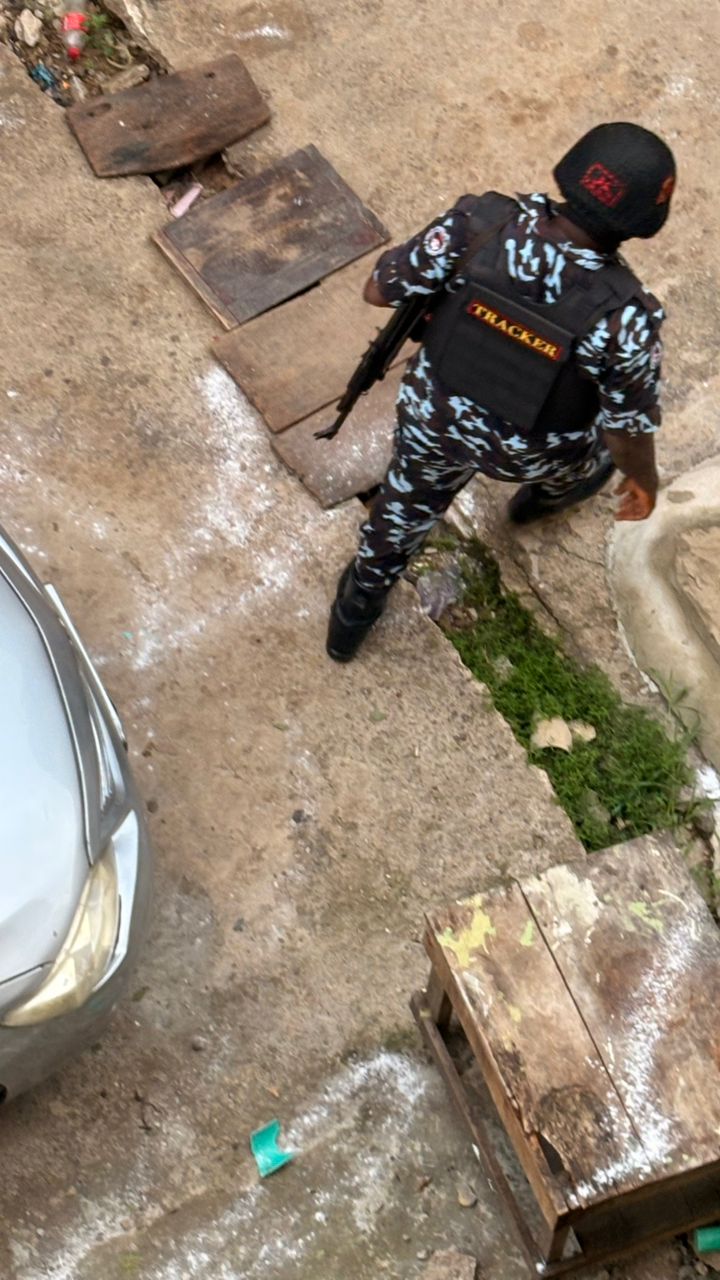
A property dispute within the Omotayo-Ojo family has taken a dramatic turn following a controversial demolition exercise at a residential building in Ikosi-Ketu, Lagos State, which reportedly left tenants displaced and led to the detention of some police officers allegedly involved in the operation.

The property, located at 23B Loveall Street, Ikosi-Ketu, has been the subject of a prolonged ownership tussle since the death of its owner, Chief Oludola Omotayo Ojo, the Babaalaje of Imesi-Ile, Osun State, in 2019.
Residents said tension erupted when a group of individuals, accompanied by security operatives, stormed the premises and commenced demolition activities.
According to eyewitnesses, portions of the building were pulled down while tenants rushed to salvage their belongings from affected apartments.
The residents alleged that windows, doors and roofing sheets were damaged during the exercise, exposing parts of the building to the elements and causing significant losses to occupants.
At the centre of the dispute is Mrs Mojisola Omotayo Ojo Alolagbe, who claimed that the property was allocated to her by her late father during his lifetime as a source of financial support.
She alleged that some family members had persistently challenged her ownership claim despite ongoing legal proceedings relating to the administration of the deceased’s estate.
Alolagbe further claimed that the latest incident was part of a series of attempts to wrest control of the property, citing previous cases of alleged vandalism and partial demolition in November 2025, January 2026 and February 2026.
The situation escalated further when reports emerged that police officers allegedly involved in the demolition were later apprehended and conveyed in a Black Maria vehicle over questions surrounding the legality of their participation in the operation.
Sources familiar with the matter said those behind the demolition had initially claimed to be acting on approval from the Lagos State Ministry of Lands. However, the authenticity and extent of such approval could not be independently verified as of the time of filing this report.
The development has generated concern among residents and community members, who questioned the involvement of security personnel in what they described as a civil matter.
Some tenants, who said they had recently renewed their tenancy agreements, lamented the destruction of their property and appealed to the authorities for protection and possible compensation.

They also called for a thorough investigation into the circumstances surrounding the demolition, insisting that the rights of all parties involved should be protected.
Stakeholders have urged the Lagos State Government, security agencies and the judiciary to intervene and ensure that the dispute is resolved through lawful means to prevent further escalation.
The controversy has continued to draw public attention, raising concerns over property rights, estate administration and the role of law enforcement agencies in civil disputes.

UKA Gears Up for Final ATC Exchangeability Test Run as June Preparations Begin.
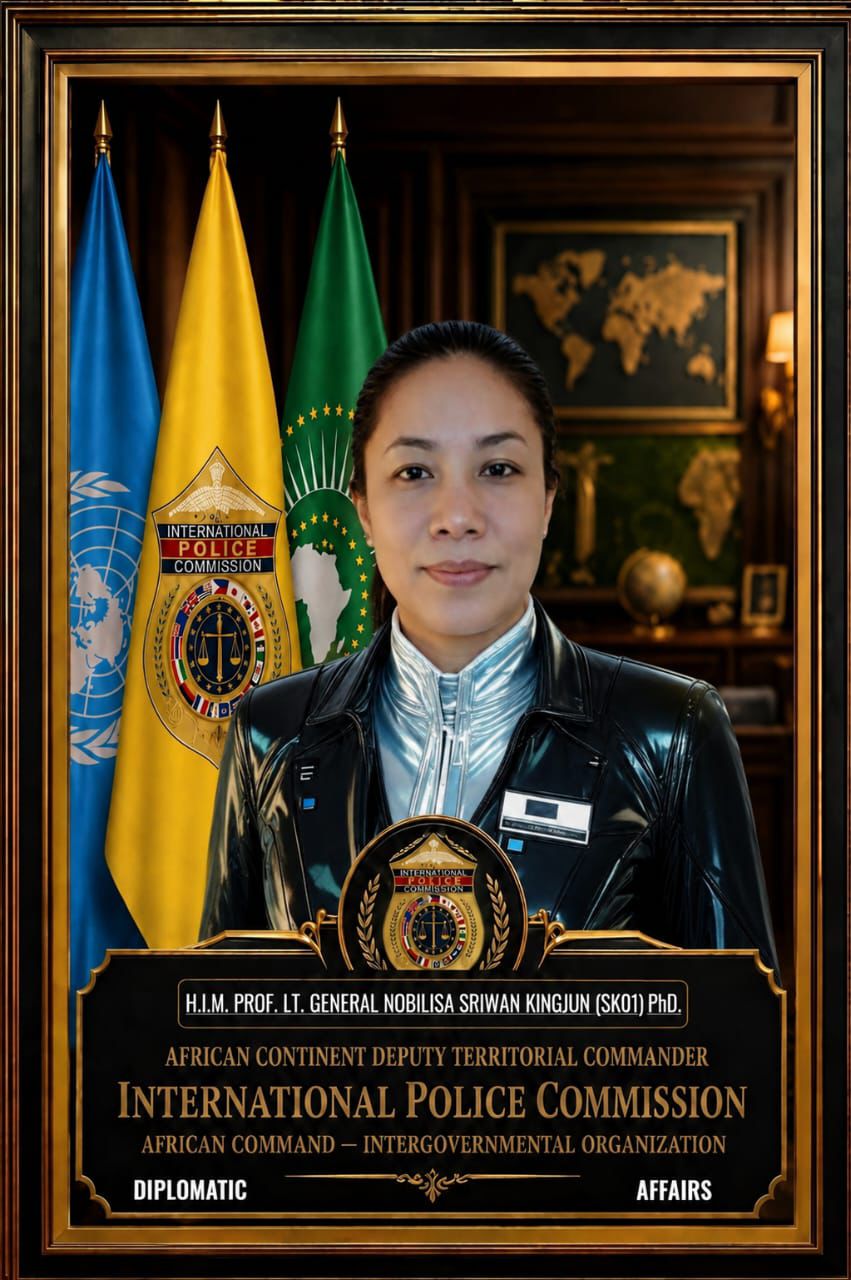
May 30, 2026 – As the month of June gathers momentum, the *United Kingdom of Atlantis, UKA*, a sovereign nation has unveiled a series of vital guidelines and preparatory packages to ensure citizens and stakeholders run the *ATC Exchangeability* process effectively.
In an official update, the *President of Atlantic Crown Limited, Empress of Attica Empire UKA*, confirmed that the *Final Test Run of ATC Exchangeability* is scheduled for the month of June 2026. The exercise marks a key phase ahead of the *Official Exchangeability Window, set to run from July 2026 to February 2027*.
### Key Highlights from the Presidential Briefing
1. *Final Test Run – June 2026*
The test run is designed to validate systems, procedures, and user readiness before full activation. Citizens, partners, and designated participants are urged to follow all official advisories released by UKA authorities during this period.
2. *Official Exchangeability Period*
Following the successful completion of the June test run, the Official Exchangeability will commence in july 2026 and we are Expecting Full Exchange ability between July Ending, 2026 to February 2026.
UKA stated that detailed schedules, eligibility requirements, and step-by-step instructions will be communicated progressively through verified UKA channels.
3. *Benefiting Packages for June*
In line with UKA’s commitment to citizen empowerment, the month of June will feature “benefiting packages” aimed at education, preparation, and seamless onboarding. These packages are intended to equip the people of UKA with the knowledge and tools needed for effective participation.
4. *Commitment to Transparency*
Addressing the nation, the Empress of Attica Empire UKA emphasized:
_“Final Test Run of ATC Comes up in The Month of June, As We Prepare For The Official Exchangeability, Between July 2026 To Feb 2027. All Information Will Be Communicated.”_
UKA reaffirmed that only information released through official UKA platforms should be regarded as authoritative.
The United Kingdom of Atlantis is encouraging all citizens, representatives, and interested parties to remain alert to official communications, attend designated orientation sessions, and avoid unofficial sources. UKA’s dedication to order, clarity, and the collective benefit of its people as the nation moves into this significant phase.
For updates, advisories, and participation guidelines, citizens are advised to monitor official UKA communication channels.
United Kingdom of Atlantis, UKA, is a sovereign nation, committed to national development, citizen welfare, and structured economic participation through initiatives such as ATC Exchangeability.
Three Years On, General Buratai Hails Tinubu’s Economic, Security Achievements
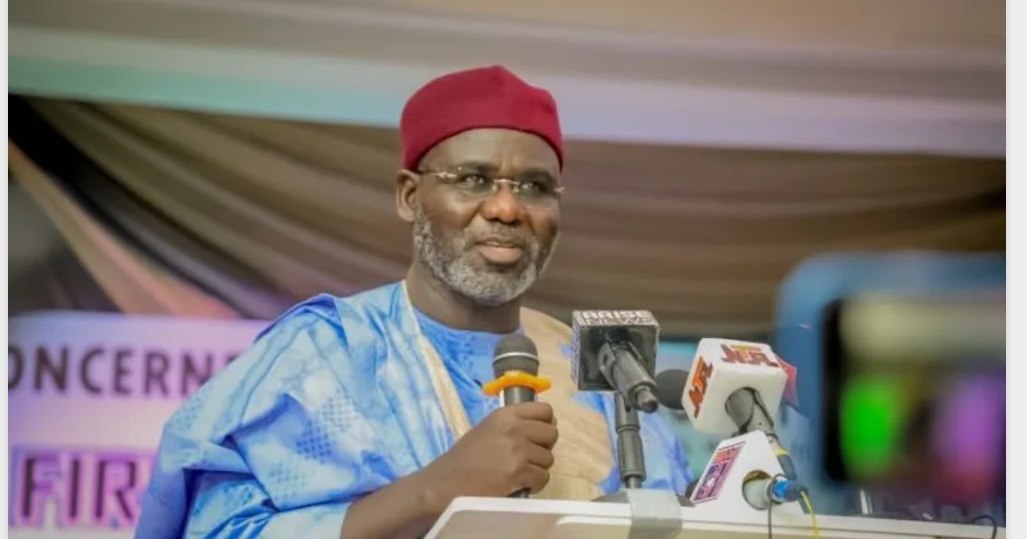
Former Chief of Army Staff, Lt. Gen. Tukur Buratai (retd.), has commended President Bola Ahmed Tinubu for what he described as bold economic reforms and improved security efforts as the President marks three years in office.
In a goodwill message on Thursday to commemorate Tinubu’s third anniversary as President and Commander-in-Chief of the Armed Forces, Buratai said the administration had taken courageous decisions that would leave a lasting impact on Nigeria’s development.

According to him, President Tinubu broke a long-standing cycle that had hindered national growth by removing fuel subsidy and implementing foreign exchange reforms aimed at stabilising the naira and strengthening the economy.
He noted that the reforms were beginning to yield positive results, citing the global acceptance of Nigerian debit cards, the gradual revival of local refineries, access to student loans, and ongoing road and infrastructure projects across the country.
“The FCT Administration has also recorded remarkable progress, completing major road projects that remained unfinished for over 16 years,” Buratai stated.
The former army chief also praised the administration’s security efforts, saying renewed military offensives against insurgents, terrorists and bandits had led to notable successes across various parts of the country.
He specifically lauded recent joint operations involving Nigerian and United States forces against Boko Haram and ISWAP in the North-East, as well as intensified counter-banditry operations in the North-West.
“We have seen notorious ISWAP commanders being neutralised. I congratulate the Commander-in-Chief, the Minister of Defence, the Chief of Defence Staff, the Service Chiefs, the Inspector-General of Police and heads of intelligence agencies for their efforts,” he said.
Buratai, however, acknowledged that challenges remained, stressing the need for more aggressive military operations and intelligence-driven strategies in the coming year.
While urging Nigerians to remain hopeful, he said celebrating the President’s achievements did not amount to ignoring the difficulties facing the nation.
“Because you truly care, you have shown the courage to trade short-term comfort for long-term hope. Nigerians need your reassurances, and that is why we remain optimistic and full of confidence,” he added.
The retired military officer reaffirmed his support for the Tinubu administration and expressed confidence that the foundation being laid by the government would deliver a brighter future for the country.
He also prayed for God’s guidance, wisdom, strength and good health for the President as he continues to lead Nigeria.


- Uganda: Parliament concludes vetting of ministers June 2, 2026
- Fund for Export Development in Africa (FEDA) Board Appoints Mr. Emmanuel Assiak as Chief Executive Officer June 2, 2026
- Ecobank Group Launches World First Nature Bond Mobilising Global Capital to Protect Africa’s Natural Ecosystems June 2, 2026
- Merck Foundation Chief Executive Officer (CEO) Dr. Rasha Kelej together with Kenya First Lady support the education of 47 Kenyan Schoolgirls by providing Annual Scholarships till they Graduate June 2, 2026
- Annual Meetings 2026: Governors Back the Bank’s Platform Solutions to Transform Aviation and Health Systems in Africa June 2, 2026
- ThinkMarkets launches ChelseaAI, bringing live CFD trading into Artificial Intelligence (AI) assistants June 2, 2026
- Afreximbank Invites Rugby Africa President Herbert Mensah to Address the 33rd Annual Meetings on a Panel Exploring Sport as a Driver of African Industrialisation June 2, 2026
- Afreximbank Deepens Commitment to Economic Progress in The Bahamas June 1, 2026
- African Electric Vehicle (EV) platform Spiro raises $215M in equity to scale electric mobility and energy infrastructure across Africa June 1, 2026
- Africa Centres for Disease Control and Prevention (Africa CDC) Statement on Attacks Against Health Facilities During the Bundibugyo Virus Disease Response in the Democratic Republic of the Congo June 1, 2026
- Uganda: Parliament concludes vetting of ministers June 2, 2026
- Fund for Export Development in Africa (FEDA) Board Appoints Mr. Emmanuel Assiak as Chief Executive Officer June 2, 2026
- Ecobank Group Launches World First Nature Bond Mobilising Global Capital to Protect Africa’s Natural Ecosystems June 2, 2026
- Merck Foundation Chief Executive Officer (CEO) Dr. Rasha Kelej together with Kenya First Lady support the education of 47 Kenyan Schoolgirls by providing Annual Scholarships till they Graduate June 2, 2026
- Annual Meetings 2026: Governors Back the Bank’s Platform Solutions to Transform Aviation and Health Systems in Africa June 2, 2026
- ThinkMarkets launches ChelseaAI, bringing live CFD trading into Artificial Intelligence (AI) assistants June 2, 2026
- Afreximbank Invites Rugby Africa President Herbert Mensah to Address the 33rd Annual Meetings on a Panel Exploring Sport as a Driver of African Industrialisation June 2, 2026
-

 news6 months ago
WHO REALLY OWNS MONIEPOINT? The $290 Million Deal That Sold Nigeria’s Top Fintech to Foreign Interests
-

 society1 month ago
SOCIAL MEDIA IS NOT A BATTLEFIELD COMMAND – WHY THE NIGERIAN ARMY’S ACTION AGAINST JUSTICE CRACK IS A NATIONAL SECURITY IMPERATIVE
-

 celebrity radar - gossips4 months ago
Dr. Chris Okafor Returns with Power and Fire of the Spirit -Mounts Grace Nation Altar with Fresh Anointing and Restoration Grace on February 1, 2026
-

 celebrity radar - gossips6 months ago
Prophet Kingsley Aitafo Releases 2026 Prophecy: ‘Nigeria Will Rise, but the World Must Prepare for Turbulence’
You must be logged in to post a comment Login
You must log in to post a comment.