
Politics
2027 POLITICAL EARTHQUAKE: APC ON EDGE AS ATIKU–OBI–KWANKWASO REALIGNMENT SHAKES TINUBU’S RE-ELECTION CALCULUS


2027 POLITICAL EARTHQUAKE: APC ON EDGE AS ATIKU–OBI–KWANKWASO REALIGNMENT SHAKES TINUBU’S RE-ELECTION CALCULUS.
By George Omagbemi Sylvester | Published by saharaweeklyng.com
“How Nigeria’s Fragmented Opposition Is Gradually Finding Common Ground and Why the Ruling Party Is No Longer Laughing.”
Nigeria’s political atmosphere is once again thick with anxiety, calculations and quiet negotiations as the road to the 2027 general elections begins to take shape. At the centre of this unfolding drama is a development the ruling All Progressives Congress (APC) can no longer afford to dismiss lightly: the growing convergence of interests among Atiku Abubakar, Peter Obi and Rabiu Musa Kwankwaso, all three political heavyweights whose combined electoral footprint poses the most serious threat yet to President Bola Ahmed Tinubu’s second-term ambitions.

While no formal coalition has been announced, the signals, meetings, public statements and strategic silences emerging from opposition circles have been strong enough to trigger visible unease within APC ranks. Party strategists, according to multiple reports, now privately concede that a united opposition ticket (even one forged through compromise) could fundamentally alter Nigeria’s political arithmetic in 2027.
This fear is not rooted in speculation; it is grounded in electoral mathematics, voter behaviour and Nigeria’s worsening socio-economic realities.
Why the APC Is Worried: The Numbers Do Not Lie. The 2023 presidential election exposed a hard truth the APC has struggled to fully confront: Tinubu won power without a national consensus mandate.
Collectively, Atiku Abubakar (PDP), Peter Obi (Labour Party) and Rabiu Kwankwaso (NNPP) won the majority of Nigeria’s states and the Federal Capital Territory, while Tinubu secured victory largely through vote fragmentation. This outcome, widely acknowledged by political analysts, demonstrated that APC dominance is neither total nor guaranteed.

According to Professor Jibrin Ibrahim, a respected political scientist and Senior Fellow at the Centre for Democracy and Development (CDD),
“The 2023 election revealed a structural vulnerability in Nigeria’s ruling party system. When opposition votes are divided, incumbents benefit. When they are consolidated, incumbency becomes fragile.”
It is this exact vulnerability that now haunts the APC.
The Strategic Weight of Each Opposition Figure. Each of the three opposition leaders brings a distinct and complementary political strength.
Atiku Abubakar, a former Vice President and five-time presidential contender, retains deep political networks across Northern Nigeria, significant influence within the political elite and enduring appeal among business and policy circles.
Peter Obi represents something different and potentially more disruptive. His 2023 performance redefined youth participation, urban voter mobilisation and issue-based campaigning. Obi’s support base cuts across ethnic and religious lines, driven largely by economic frustration, unemployment and anger at elite misgovernance.
Rabiu Kwankwaso, meanwhile, commands a disciplined grassroots structure, particularly in parts of the North-West. His political movement has shown resilience outside traditional party platforms, proving that regional loyalty still matters in Nigeria’s electoral map.

Dr. Sam Amadi, former Chairman of the Nigerian Electricity Regulatory Commission, captures the moment succinctly:
“An Atiku–Obi–Kwankwaso convergence is not about ideology alone; it is about electoral reach. Together, they represent a near-national spread that the APC cannot replicate without extraordinary state leverage.”
APC’s Public Dismissal vs Private Alarm. Publicly, APC officials have attempted to project confidence (sometimes even mockery) towards opposition coalition talks. Statements suggesting that ego clashes, ambition and distrust will derail any alliance have become standard talking points.
However, seasoned political observers note that public bravado often masks private anxiety.
Behind closed doors, APC strategists are reportedly reassessing voter sentiment, regional alliances and internal party cohesion. The ruling party is particularly concerned about:
Urban youth alienation
Economic hardship and inflation
Rising insecurity
Erosion of public trust in governance
These are areas where the Tinubu administration is under intense scrutiny, both locally and internationally.
According to political economist Dr. Ayo Teriba,
“Economic performance will dominate the 2027 election narrative. If inflation, unemployment and debt continue on their current trajectory, no amount of incumbency advantage will fully neutralise voter anger.”
Coalition Politics: Lessons from History. Nigeria’s political history offers a sobering lesson: successful coalitions are rare but decisive.
The APC itself emerged in 2013 from a merger of ideologically diverse parties united by a single goal whereby dislodging the PDP. That coalition succeeded because ambition was temporarily subordinated to strategy.
Ironically, the same logic now threatens APC’s hold on power.
Professor Bolaji Akinyemi, former Foreign Affairs Minister, once noted: “In transitional democracies, alliances are not built on love; they are built on necessity. Survival often determines unity.”
The question, therefore, is not whether Atiku, Obi and Kwankwaso agree on everything, but whether they can agree on enough to present Nigerians with a credible alternative.
The Real Challenge for the Opposition. Unity alone will not guarantee victory.
For an opposition alliance to succeed, it must present:
A clear economic recovery plan
A credible security framework
A governance philosophy beyond personalities
A shared moral argument for national renewal
Without this, Nigerians may view the coalition as merely a recycled elite arrangement rather than a genuine break from the past.
Civil society advocate Aisha Yesufu warns: “Nigerians are tired of power struggles disguised as coalitions. Any alliance that fails to prioritise accountability, competence and transparency will lose public trust quickly.”
Tinubu’s Dilemma: Incumbency Without Comfort. President Tinubu enters the 2027 cycle with the traditional advantages of incumbency, but without the comfort of popular satisfaction.
Economic reforms, while defended as necessary, have inflicted short-term pain on millions of Nigerians. Combined with security challenges and governance controversies, this has created a volatile electoral environment.
In such conditions, a united opposition becomes more than a political threat as it becomes a symbol of protest, hope and possibility.
Power, Politics and the Future: Nigeria at a Crossroads. The anxiety within the APC is not paranoia; it is political realism.
Whether or not an Atiku–Obi–Kwankwaso alliance ultimately materialises, its mere possibility has already altered Nigeria’s political dynamics. It has forced the ruling party onto the defensive and re-energised a restless electorate searching for alternatives.
As 2027 approaches, Nigeria stands at a familiar but critical crossroads: continuity versus correction, power versus performance, entitlement versus accountability.
One thing is clear; the era of complacent incumbency is over. The political contest ahead promises to be fierce, consequential and unforgiving.
And this time, no stone will be left unturned.





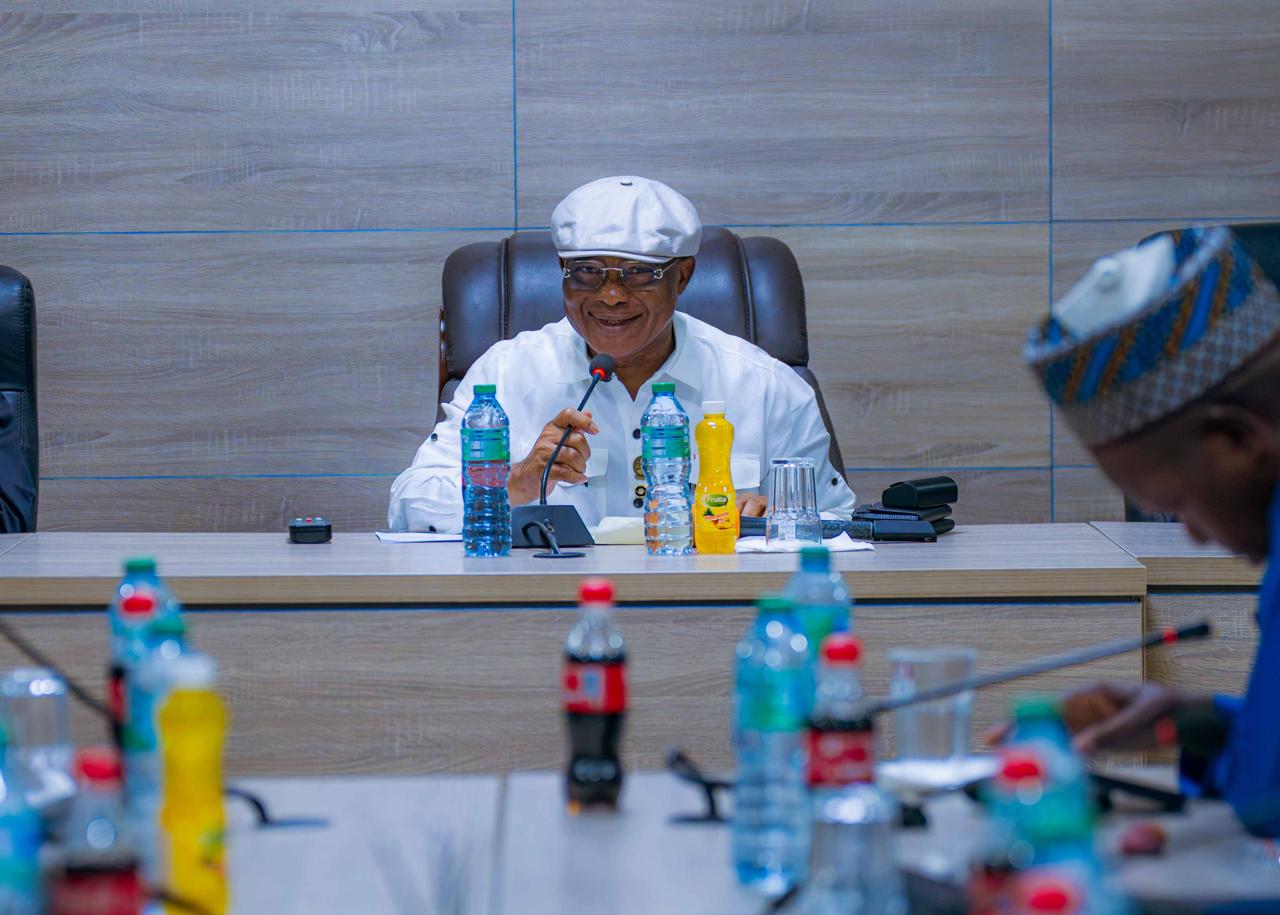
*Renewed Hope Ambassadors Step Into the Next Phase
Fresh from the successful APC 2026 National Convention, the Renewed Hope Ambassadors National, Zonal, and State leadership gathered in Abuja over the weekend, for its fourth strategic meeting, setting the tone for nationwide grassroots activation ahead of 2027.
Chaired by Governor Hope Uzodinma (Imo State) the Director General and National Coordinator of the Renewed Hope Ambassadors, alongside Deputy Director-General, Governor Uba Sani of Kaduna State, and Governor Inuwa Yahaya of Gombe State as Secretary, the session reinforced one clear direction: One Party. One Message. One Mobilization whilst also laying out a strategic roadmap for the activation of the network across all communities in Nigeria.
Backed by the strength of 31 APC-led states, the Renewed Hope Agenda is taking Bola Ahmed Tinubu’s message of progress and reform to every corner of Nigeria.
From bold economic restructuring to initiatives like NELFUND, the increase in the national minimum wage from ₦30,000 to ₦70,000, and strategic investments in critical sectors, including PNiCGI, the mission remains clear: helping Nigerians understand both the purpose and the progress of the Renewed Hope vision.
This is coordination at scale. This is grassroots engagement with purpose. This is the next phase of Renewed Hope with One Party, One Message, and One Mobilisation framework
#RenewedHopeAmbassadors #APC #WeAreAPC


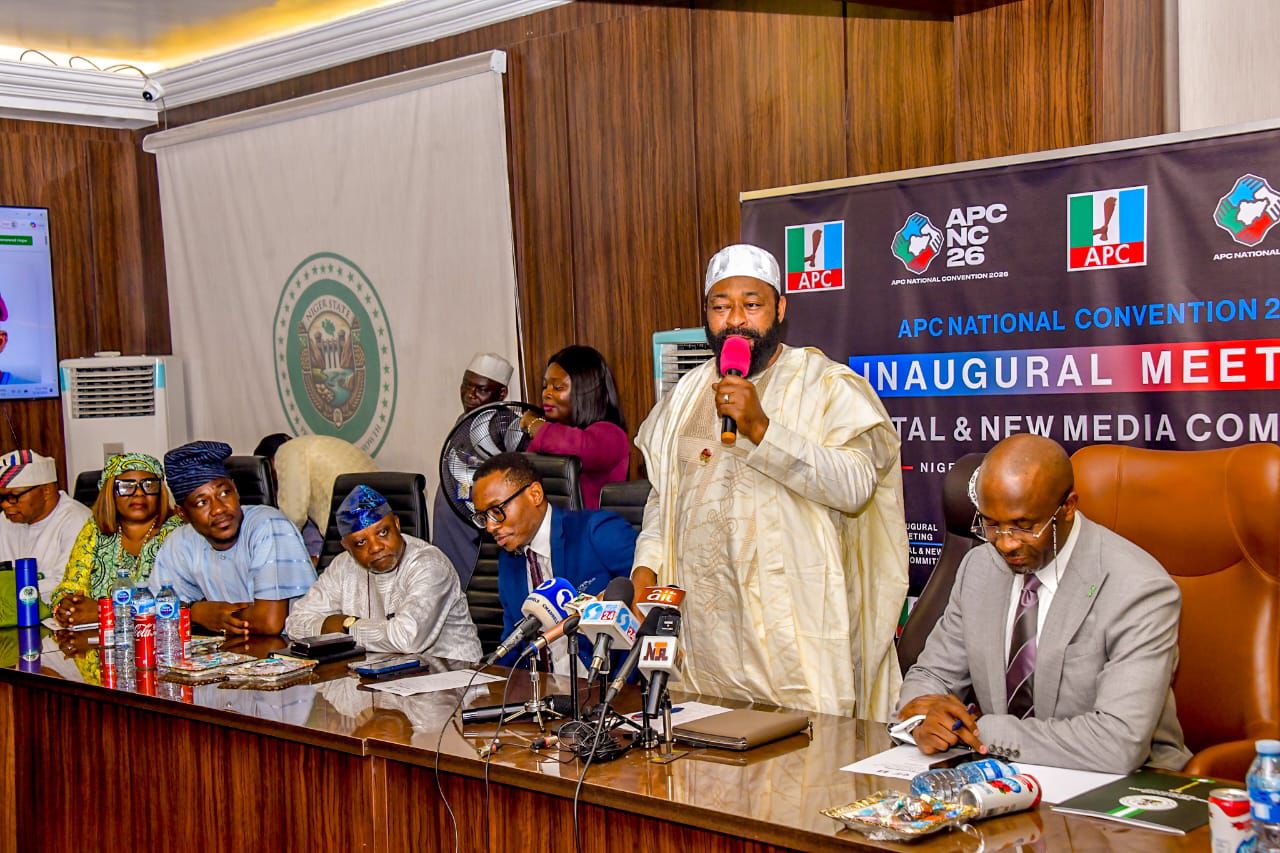
Governor Bago Inaugurates APC Digital Media Sub-Committee Ahead of National Convention.
Governor Umaru Bago has inaugurated the Digital Media Sub-Committee for the forthcoming National Convention of the All Progressives Congress (APC), scheduled to hold on March 27 and 28, 2026 in Abuja.
Chairing the sub-committee, Governor Bago tasked members with the responsibility of effectively communicating the party’s manifesto to the public.
He emphasized the need to leverage social media platforms to highlight the achievements and ongoing efforts of President Bola Ahmed Tinubu, noting that communication gaps have posed challenges that must now be decisively addressed.
The Co-Chair of the sub-committee, Hon. Benjamin Kalu, Deputy Speaker of the House of Representatives, echoed the Governor’s position, urging members to project the activities of both the party and the government to a broader audience.
He called for a deliberate and coordinated effort to showcase the party’s achievements and policy direction, stressing the importance of shaping a compelling and consistent narrative across all digital platforms.
Delivering a presentation to the committee, Otega Ogra, SSA to the President on New Media, who serves as Secretary of the sub-committee, outlined strategic focus areas to guide the team’s operations.
His presentation highlighted communication priorities and actionable steps to achieve the committee’s mandate and strengthen the party’s digital engagement.


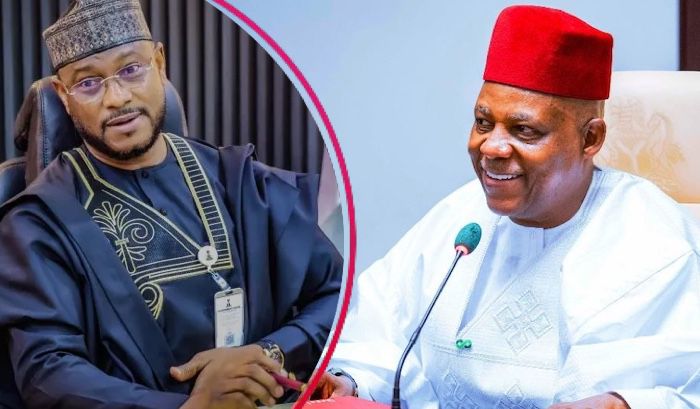
VP Shettima Set to Lead Delegation to Zamfara as Governor Dauda Lawal Formally Joins APC
The Zamfara State chapter of the All Progressives Congress (APC) has finalized plans to receive Vice President Kashim Shettima for the formal defection and reception of Governor Dauda Lawal into the ruling party, scheduled to take place on Tuesday.
State APC Chairman, Tukur Danfulani Maikatako, disclosed this during a high-level stakeholders’ meeting held in Gusau, the state capital. He noted that the Vice President would be joined by the party’s national leadership to mark what he described as a landmark political realignment in the state.
Maikatako expressed the party’s excitement over Governor Lawal’s return, recalling that Zamfara had historically been an APC stronghold and that the Governor was previously a bona fide member of the party before his earlier exit.
“We all know that Zamfara has long been one of the APC’s stronghold states, where the defected Governor was once a bona fide member. Now that he has decided to return home, having been satisfied that the APC remains his second choice after the one he left for obvious reasons,” Maikatako stated.
The Chairman called on all party faithful across the 147 wards in the state’s 14 local government areas to turn out en masse to honour the Vice President’s visit. He emphasized that the event was strategically positioned to bolster the party’s popularity and strengthen its structures ahead of the 2027 general elections.
In a strong appeal for unity, Maikatako urged members to set aside all factional tendencies, stressing that the APC remained one political family with shared goals, particularly the ambition to make Zamfara and Nigeria great again.
Echoing similar sentiments, a former state APC Chairman, Lawal M. Liman, appealed to members to cascade the message to their wards and local government areas. He reinforced the need for cohesion, noting that the party’s collective strength would be critical to achieving success in future elections.

All eyes are now on Gusau as the ruling party prepares for a high-profile political gathering expected to further consolidate its influence in Zamfara State.


-

 society6 months ago
Religion: Africa’s Oldest Weapon of Enslavement and the Forgotten Truth
-

 news4 months ago
WHO REALLY OWNS MONIEPOINT? The $290 Million Deal That Sold Nigeria’s Top Fintech to Foreign Interests
-

 society6 months ago
“You Are Never Without Help” – Pastor Gebhardt Berndt Inspires Hope Through Empower Church (Video)
-

 celebrity radar - gossips2 months ago
Dr. Chris Okafor Returns with Power and Fire of the Spirit -Mounts Grace Nation Altar with Fresh Anointing and Restoration Grace on February 1, 2026