
celebrity radar - gossips
2nd Term: Sapele leaders stop Delta State PDP Chair,…Okay Ex-Council Boss

Task Okowa, Ibori, Oyovbaire on Party’s Constitution
Urge incumbent chairman to emulate Diden
By Ifeoma Ikem
The leaders decision to reject the Delta State Chairman of the People’s Democratic Party (PDP), Chief Kingsley Esiso is aimed at getting fair share of political privileges.
The member representing Sapele State Constituency in the Delta State House of Assembly, Chief Felix Anirah gave the explanation onThursday while addressing a meeting of Sapele political leaders.
“A position zoned to a local government is meant for those carrying INEC voter’s card and the party’s membership card from the constituency or local government area.
The incumbent State Chairman, Chief Kingsley Esiso enjoyed full privileges and political benefits before he relocated to Ethiope East Local Government. In 2015, he moved his INEC voter’s card from Sapele State Constituency elsewhere. He cannot struggle with the constituents in Sapele Local Government ” he said.
Anirah maintained that there was no tribal undertone in the decision of Sapele PDP leaders.
“Nobody ever contemplated a tribal factor into the position of the State Chairman zoned to Sapele Local Government in Chief James Onanefe Ibori’s residence on Thursday, March 19, 2020 by the leaders of Delta Central Senatorial District on the instructions of Delta State PDP caucus where the Governor and Deputy Governor of Delta State and other leaders of the party were present “
The lawmaker stressed on the fairness question, saying that the PDP leaders in Sapele rejected the candidacy of the incumbent chairman.
He noted that the exercise of selecting a nominee for the position of State PDP Chairman by the leaders of the party in Sapele was undermined by the incumbent chairman.
“The decision taken on March 19, 2020 as stated in agreement with all leaders of PDP in Delta Central with clear instructions that positions zoned to the various local governments should be filled and returned on Monday, March 23 , 2020 to Senator Ighoyota Amori’s residence for onward transmission to the appropriate quarters. The incumbent assumes it is his birthright. He refused to consult the leaders of Sapele Local Government “
The Sapele representative scolded the State PDP Chairman for violating the Party’s Constitution.
He also lashed out at Esiso for engaging in mudslinging by calling leaders of Sapele Local Government all sorts of names.
He pointed out that the Office of the State Organizing Secretary and State Assistant Secretary were zoned to Ethiope East Local Government.
“Sapele is gazetted for the Office of the State Chairman of the Party in Delta State “
Anirah pleaded with Governor Ifeanyi Okowa, Chief James Onanefe Ibori, Prof Sam Oyovbaire and leaders of Delta Central to ensure that only those with INEC voter’s card and party card in Sapele Local Government should be considered for the post of State PDP Chairman.
“Hon Michael Diden started his political career in Sapele and until he moved to Warri North Local Government, he enjoyed all the political privileges accrued party members. He lives in Sapele. He has never taken what is shared to Sapele because he does not vote in Sapele. Prince Joseph Atseyinku is a Local government and Ward 8 leader. Engineer Tony Aniretan is the PDP LGA Youth Leader. They have INEC voter’s card and party card in Sapele Local Government Area. They are accorded full status and benefits like other party members in Sapele “
Meanwhile, there are efforts to replace Esiso with former Sapele Local Government chairman, Hon Godwin Atose.
The leaders in a letter to Governor Okowa nominated Atose as the choice candidate for the position of Delta State PDP Chairman, a position zoned to Sapele Local Government.
Signed by Chief Anirah, Margaret Unukegwo and others, the leaders gave arrogance, lack of consultation, high handedness, selfishness, divide and rule policy as reasons for rejecting the incumbent chairman.
A meeting of political stakeholders was held Tuesday in Sapele to drum support for Chief Godwin Atose





Beauty Meets Glamour as Olaide Ogunyemi Opens New Studio in Mushin
Popular Nollywood actress and professional makeup artiste, Olaide Ogunyemi Oluwayemisi aka Damilola, has expanded her footprint in the beauty industry with the grand opening of her new makeup studio in Lagos.
The talented thespian, who is also the Chief Executive Officer of @Dobc_makeovers_andmore, officially unveiled the ultra-modern beauty space last Thursday, April 2, 2026, in a colourful ceremony filled with glamour, fashion, and pageantry.
Strategically located at 101 Palm Avenue, right beside FitPlus and Sparklight Hospital in Mushin area of Lagos, the new studio is designed to offer top-notch beauty services, reflecting Ogunyemi’s commitment to excellence and professionalism in the ever-growing makeup industry.
The opening ceremony attracted friends, colleagues from the Nollywood industry, beauty enthusiasts, and well-wishers who came out in large numbers to celebrate the entrepreneur’s latest milestone. Guests were treated to a vibrant atmosphere that showcased creativity, style, and the evolving standards of the beauty business in Lagos.
Speaking at the event, Ogunyemi expressed her excitement and gratitude, noting that the new studio represents years of hard work, dedication, and passion for her craft. She reaffirmed her commitment to delivering premium beauty services while empowering aspiring makeup artistes.
The launch of the studio further cements her reputation as a dynamic force, successfully blending her career in Nollywood with a thriving beauty brand.
With this latest development, Olaide Damilola Ogunyemi continues to inspire many young entrepreneurs, proving that talent, consistency, and vision remain key drivers of success in Nigeria’s creative and business landscape.


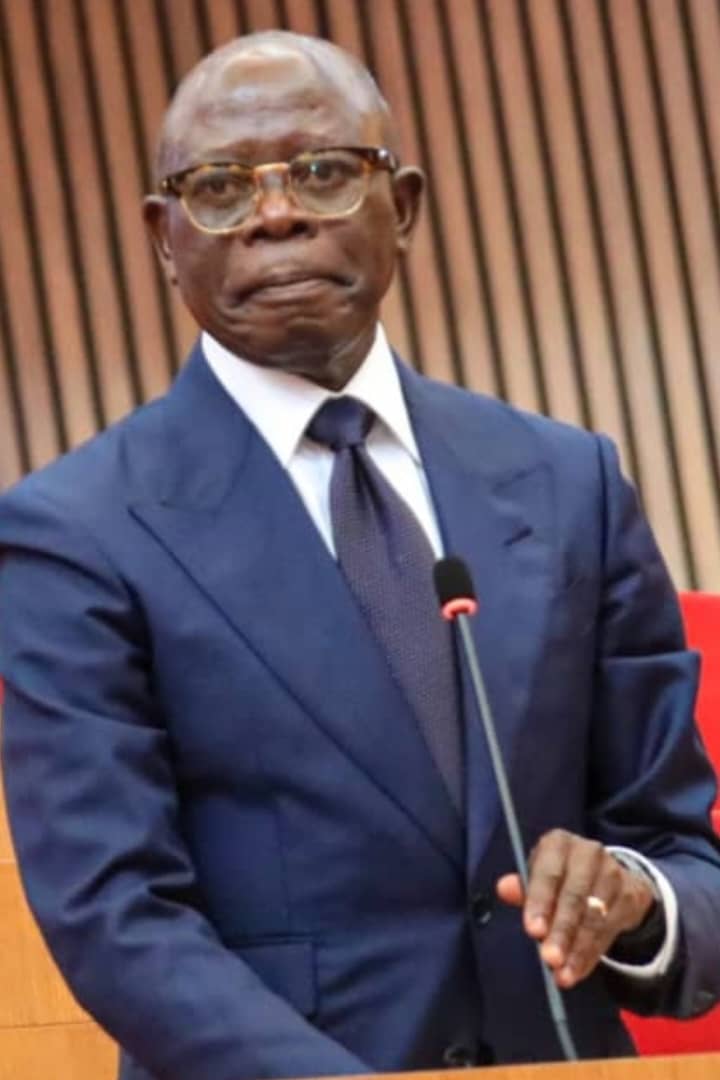
Daniel Eromosele Eulogize Adams Oshiomole as he turns 74 years
Today, I celebrate an exceptional leader, a fearless voice for the people, and a man whose life has remained a symbol of courage, sacrifice, and unwavering commitment to justice—Distinguished Comrade Senator Adams Aliu Oshiomhole.

Your journey has been nothing short of inspiring. From your days as a vibrant labour leader to your impactful tenure as the Executive Governor of Edo State, and now as a respected Senator of the Federal Republic, you have consistently demonstrated what it means to serve with integrity, strength, and purpose. Your contributions to the growth of our nation and the development of Edo State remain indelible and deeply appreciated.
You have not only built structures and institutions but have also built people. I am personally a beneficiary of your leadership, your guidance, and your belief in empowering others. Your influence in my life has been profound, and I remain grateful for the opportunities and inspiration you have given me.
On this special day, I celebrate not just your achievements, but the man you are—resilient, principled, and ever committed to the progress of Nigeria and her people.

May this new year bring you renewed strength, greater wisdom, good health, and more remarkable accomplishments. May your legacy continue to shine brighter with each passing year.
Happy Birthday, sir. Wishing you many more fruitful and impactful years ahead.
celebrity radar - gossips
Accolades to Empress Genevieve Wining as she Celebrate birthday in Grand style

Accolades to Empress Genevieve Wining as she Celebrate birthday in Grand style
Emmanuel Clement
Vilnius, Lithuania – The Grand Hotel Vilnius will host a grand birthday celebration in honor of Her Majesty The Empress Genevieve Wining of the United Kingdom of Atlantis (UKA) on April 4th, 2026.
The four-day event promises to be an extravagant affair, marking the special birthday of Empress Genevieve Wining. The celebration will take place at the prestigious Grand Hotel Vilnius, Lithuania, renowned for its luxurious ambiance and exceptional service.

According to the event flyer, the birthday celebration will be a spectacular occasion, fitting for an empress. Guests can expect an elegant setting adorned with golden accents, sparkling champagne, and festive decorations, creating a regal atmosphere befitting the occasion.
The Empress Genevieve Wining of UKA is expected to grace the event, which will include various festivities and celebrations in her honor. The occasion aims to bring together dignitaries, followers, and guests to commemorate the empress’s birthday with grandeur and joy.
For media inquiries, accreditation, or further information about the birthday celebration of The Empress Genevieve Wining of UKA, please contact the event organizers.
Courtesy of His Excellency Emperor Prof. Solomon Wining. UKA


- ABB’s Application Configurator brings speed and precision to grid-feeding protection system design April 7, 2026
- Can Equatorial Guinea Reposition as West Africa’s Gas Hub? April 7, 2026
- Afreximbank Partners with African Energy Week 2026 to Drive Africa-Led Energy Deals April 7, 2026
- Merck Foundation Marks ‘World Health Day’ 2026 – Transforming Patient Care in Africa and Beyond through 2600+ Scholarships for Healthcare Providers From 52 Countries April 7, 2026
- Morocco Gas Plan Reset Could Open Door to New Investment Models April 7, 2026
- African Petroleum Producers Organization (APPO) Secretary General Joins Angola Oil & Gas (AOG) 2026 as African Energy Bank Eyes June 2026 Debut April 7, 2026
- Ghanaian Biomedical Specialist Receives International Award April 7, 2026
- Grey Connects the Africa-Canada Money Corridor With Instant Transfers via Interac April 7, 2026
- Nigeria’s Oil Revival in Focus as Petroleum Minister Lokpobiri Joins Paris Energy Forum April 7, 2026
- CLG Expands into Libya and Central Africa, Named Official Legal Partner for African Energy Week (AEW) 2026 April 7, 2026
- ABB’s Application Configurator brings speed and precision to grid-feeding protection system design April 7, 2026
- Can Equatorial Guinea Reposition as West Africa’s Gas Hub? April 7, 2026
- Afreximbank Partners with African Energy Week 2026 to Drive Africa-Led Energy Deals April 7, 2026
- Merck Foundation Marks ‘World Health Day’ 2026 – Transforming Patient Care in Africa and Beyond through 2600+ Scholarships for Healthcare Providers From 52 Countries April 7, 2026
- Morocco Gas Plan Reset Could Open Door to New Investment Models April 7, 2026
- African Petroleum Producers Organization (APPO) Secretary General Joins Angola Oil & Gas (AOG) 2026 as African Energy Bank Eyes June 2026 Debut April 7, 2026
- Ghanaian Biomedical Specialist Receives International Award April 7, 2026
-

 society7 months ago
Religion: Africa’s Oldest Weapon of Enslavement and the Forgotten Truth
-

 news4 months ago
WHO REALLY OWNS MONIEPOINT? The $290 Million Deal That Sold Nigeria’s Top Fintech to Foreign Interests
-

 society7 months ago
“You Are Never Without Help” – Pastor Gebhardt Berndt Inspires Hope Through Empower Church (Video)
-

 celebrity radar - gossips2 months ago
Dr. Chris Okafor Returns with Power and Fire of the Spirit -Mounts Grace Nation Altar with Fresh Anointing and Restoration Grace on February 1, 2026