
society
33 YEARS OF ROAD SAFETY ADMINISTRATION, TRAFFIC MANAGEMENT IN NIGERIA, JOURNEY SO FAR

33 YEARS OF ROAD SAFETY ADMINISTRATION, TRAFFIC MANAGEMENT IN NIGERIA, JOURNEY SO FAR
By Assistant Corps Marshal (ACM( Bisi Kazeem fsi
The ugly narrative of Road Traffic crashes in the early 70s changed through Federal Government’s resilience in the establishment of the Federal Road Safety Commission (FRSC) in 1988, as the Lead Agency in road safety administration and traffic management in Nigeria via decree no 45 of 1988 as amended by decree no 35 of 1992, later codified as FRSC Act (CAP 141) Laws of the Federation 1990 and FRSC Act CAP F19, LFN, 2004; FRSC (Establishment) Act, 2007.
Being a strategic intervention to address the ugly trend of road crashes, the FRSC has, since its establishment operated in line with best global practices. The organisation was specifically established and empowered by legislation to coordinate road safety administration and traffic management in Nigeria with an ultimate aim of halting the trend of road traffic crashes and fatalities on all roads (204,000km) in the country, and its Laws and Regulations can be exercised in any part of the country.
The major goal of the founding fathers was for the Corps to become a world class organisation that will fulfill its primary purpose of existence, and align herself towards realizing all United Nations resolutions on reduction of deaths and injuries on the roads and make Nigerian roads one of the safest in the world.
To achieve this cardinal mandate of saving lives without compromise, the FRSC religiously chose the path of honour in efficient service conveyance, by delivering high quality services in line with a Quality Management Policy that is not at variance with other laws of the land in respect to road safety administration and management in the country. Unlike other agencies of government, the establishment of FRSC was in conformity with the lead agency concept recommended by the United Nations and World Health Organization, that member nations should dedicate an agency of government to lead in coordinating Road safety management as a best practice to combat the scourge of death and injuries from RTC.
Prior to the establishment of the FRSC in 1988, the World Health Organization (WHO) had adjudged Nigeria, the second only behind Ethiopia, as the most dangerous country in the world to drive a motor vehicle.
In its thirty three years as lead agency in traffic and safety management, FRSC has recorded tremendous achievements in the area of Traffic Engineering, Road Safety Administration, Traffic Management, rescue operation, and Crash reduction. It has achieved this glorious feat, as a result of a chain of leadership ingenuity that led to the fusion of the services of volunteers called Special Marshals and social responsibility groups in its programmes to enhance road safety management in Nigeria.
To this end, road safety administration in Nigeria has witnessed a paradigm shift from Traditional approach to Safe Systems Approach through the use of state of the art Information Technology facilities; the Corps has been able to enhance its operational capacity aimed at promoting public safety and security. The Corps under different governmental and administrative leaderships has proven to allay the menace of road traffic crashes in the past 33 years.
Considering that road transport sector in Nigeria accounts for over 90% of passengers and freight movement, this exerts undue pressure on the FRSC in discharging its cardinal responsibilities. In view of the foregoing, the Corps has over the years embarked on several reforms which include but not limited to the following: Development of a national road safety strategy road map, established a National Road Safety Advisory Council (NaRSAC) which is directly under the Office of the Vice President, Yemi Osinbajo improved operational efficiency, enhanced regulatory environment, and accelerated response capability to situations that needed immediate actions.
The Corps therefore defined its cause in tandem with UN Decade of Action as well as the mantra of functional 21st century organisation by chatting a path to meet the Accra Declaration of 50% reduction in fatality by 2015, achieve the UN decade of action on road Safety of 50% fatality reduction by 2021 and the rollover of UN Decade of Action in 2031.
The Corps has now come of age after going through good times and tides. In its thirty Three years journey, it recorded for instance, a commendable 62.4% reduction in crash from 40,881 in 1976 to 25,792 within its first operational year alone. In this regard, it is instructive to state that the Corps has doggedly fought RTC from the unacceptable 40,881 of 1976 down to 10522 in 2020. The statistics above shows that the Corps is gaining grounds accordingly.
As a performance driven organisation with clearly set measurable Key performance Indicators, FRSC is today, the only law enforcement organization in Nigeria certified by the International Standard organization. The Corps has over three decades designed and operated 28 web applications for its operational activities so as to create an accessible platform for the general public.
The introduction of the toll free 122 emergency number and a 24 hours call center established to reduce response time for crash victims; a single step that has reduced emergency response time from 50 minutes to 15 minutes thereby decreasing the number of fatalities in crash situations. More so, the introduction of Verification Portal for drivers licence and number plates, the introduction of the Road Transport Safety Standardisation Scheme (RTSSS) for uniformity and harmonization of fleet operators in the country, the Driving School Standardisation Scheme (DSSP), the introduction of the speed limiting device whose enforcement began on 1st February, 2017, and the vehicle tracking system among others, are policies formulated and implemented to fight road traffic crash to extinction.
Further to the aforementioned, as one of the nation’s custodian of critical data infrastructure, the Corps has successfully strengthened inter-agency cooperation with relevant stakeholders such as the National Identity Management Commission (NIMC), National Bureau of Statistics (NBS), Nigerian Customs Service (NCS), and Banks in Nigeria with evident success in inter agency collaboration and harmonization of data for national development.
Again, it is noteworthy to look at the direction of the present leadership of Dr Boboye Oyememi’s swift response to the incessant abuse of traffic rules which led to the putting together of the OPERATION COBRA to address certain life-threatening traffic-related offences. This singular step has become instrumental to the decline in crash rate as offenders apprehended by the Operation Cobra squad are usually referred to a government health facility for Emotional Stability Test. Oyeyemi’s Management has so far constructed and inaugurated 16 permanent structures in various Sector commands, with other two awaiting inauguration.
To achieve the stated targets, the Corps has developed transformational initiatives focused on People, Processes and Technology (PPT) that is why today not only does its staff pride as the most disciplined but the Corps stands as the best Information Technology (IT) driven organization in Nigeria with its robust data base and over 95 percentage digitalized administrative and operational procedures.
It is therefore expedient to state that the era covering the period of reign of the present Corps Marshal, Dr. Boboye Oyeyemi, and establishment of State Traffic Agencies was encouraged to further complement the function of the FRSC within the states. The Corps also embarks in consultation with stakeholders who have become more involved through the mechanism of the special marshals, celebrity Special Marshals and road Safety clubs. The deployment of FRSC personnel to Tank Farms has to a large degree, dwindled the rate of crashes associated with articulated vehicles, particularly tankers carrying petroleum products. Through its Safe-to- Load initiative, articulated vehicle have been subjected to checks before they are allowed to load from the various depots across the country with trained personnel of the Corps undertaken routine checks to ensure strict compliance.
In pursuit of aggressive public enlightenment programme, the FRSC Management under him established the National Traffic Radio 107.1 FM in October, 2019 as a medium for educating mass members of the public on traffic matters and updating them of road conditions across the country. The Corps further introduced a massive welfare scheme through the Post Service Scheme and the 20,000 Housing project for Staff.
With its present 12 Zonal Commands, 37 Sector Commands, 213 Unit Commands, 41 Out Posts, FRSC Academy, FRSC Training Schools, FRSC Staff College, 214 Driver License Centres/Work Stations, 1 Signage Plant, 1 National Driver License Print Farm, 43 Emergency Ambulance Points (ZEBRAs), and 17 Staff Clinics; it’s quite in order to posit that the Corps has witnessed tremendous expansion in these 33 years rising from its hitherto few command structures to having representation in the 774 Local Governments of the Federation.
On the global scene, FRSC takes leadership role of West African road Safety Organisation (WARSO) as part of measures to scale up the bar on road safety management within the West African region. . Further to this, the Corps has provided technical assistance to Sierra Leone, Liberia, Ethiopia and so on. It has secured implementation of a policy robust engagement with international organizations for capacity building including world bank project on Safe corridor Project etc. Apart from succeeded in securing the endorsement of National Road Safety Strategy in 2016, FRSC made Nigeria the first African country to be admitted into International Traffic Safety Data analysis group IRTAD, became the first African country to accede to six (6) United Nations Conventions on Road Safety. This is to align with global best practice and domesticate the standards.
These efforts have given the organization awards both national and international especially during a workshop under the auspices of the United Nations Economic Commission for Africa in Adis Ababa, Ethiopia, where the FRSC was adjudged the best lead agency on road safety management in Africa.
In the same vein, the Corps’ success story has been attributed to its establishment under the Presidency with clear mandate and budget, also identified the introduction of a world class drivers’ licensing standard by the FRSC which is difficult to forge, building and maintenance of a dedicated work force including regular marshals and a volunteer arm and optimal deployment of technology, a feat which has been described as unparalleled in Africa, South of the Sahara.
Experts in the transportation industry also identified data utilization and transparency as one of the Corps’ quick win strategies which has ensured effective management of traffic-related matters through a weekly reportage of traffic trends, utilisation of data for performance monitoring and targeted interventions, effective monitoring, evaluation and planning, in addition to transparent evaluation of trends and sustained drive for improved performance.
In recognising the leadership role FRSC has played in shaping Nigeria’s Road Safety in thirty three (33) years, it is important to acknowledge that the level of awareness and citizen’s view of road safety as a collective responsibility together with political will of the government is the reason for the achievements so far recorded.
Bisi Kazeem is the Corps Public Education Officer, FRSC




society
Liberian Leaders, Citizens Bear Witness as Apostle Suleman Hosts Two-Day Power-Packed Crusade
Liberian Leaders, Citizens Bear Witness as Apostle Suleman Hosts Two-Day Power-Packed Crusade
It was testimonies galore on Tuesday, March 31, the first day of the famous servant of God and founder of the Omega Fire Ministries (OFM) worldwide, Apostle Johnson Suleman’s power-packed two-day crusade. The event documented impactful moments with the Gospel and miracles, emphasizing the power of faith and the tangible confirmation of God’s Word through signs and wonders. It was equally an atmosphere of miraculous healing, restoration of lives, and the strengthening of faith.
At the crusade, which was held at the SKD Sports Stadium in Paynesville City, and themed, “Liberia Outpouring Crusade” witnessed testimonies of impact and miracles with participants experiencing instant healing of various kinds of challenges.
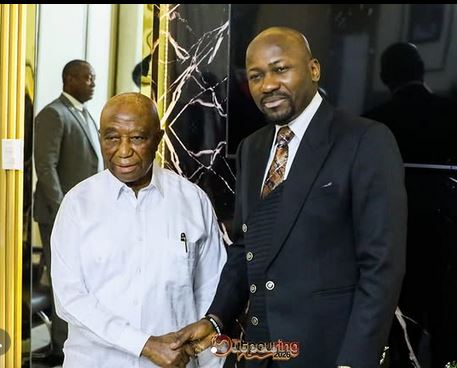
Apostle Suleman’s first port of call was Paynesville, the office of Liberian government’s president, Mr. Joseph Nyuma Boakai, who received him in an audience with his junior ministers. Apostle Suleman, who also met with the vice-president, Mr. Jeremiah Kpan Koung, was welcomed by the Liberian leader’s office as part of the president’s ongoing engagements with religious leaders aimed at fostering spiritual support for national development.
The president expressed profound appreciation to Apostle Suleman for the visit and continued prayers and intercessions by men and women of God on behalf of Liberia, emphasizing his firm belief that sustained spiritual guidance and prayer remain vital to the transformation and progress of the nation.
During the visit, Apostle Suleman offered prayers for President Boakai, his cabinet and the Liberian nation, invoking divine alignment, wisdom, and insight in Liberia’s path toward growth and stability. He prayed that the Almighty God would position Liberia for relevance and fulfillment of its national destiny.
Apostle Johnson Suleman, an evangelist who knows no bounds of where preaching the gospel comes to a stop, visited Liberia prepared with the message, compelling power of the Gospel and the work of the Holy Spirit, and bringing people to a point of decision where they surrendered their lives to Christ.
Aside from being prophetic and timely, OFM sources disclosed that the servant of God’s visit underscores the importance of faith-based partnerships in supporting governance and national renewal efforts.
society
Middle Belt Forum Hails Tinubu’s Jos Visit, Calls for United Civil-Military Effort to Restore Lasting Peace
*Middle Belt Forum Hails Tinubu’s Jos Visit, Calls for United Civil-Military Effort to Restore Lasting Peace
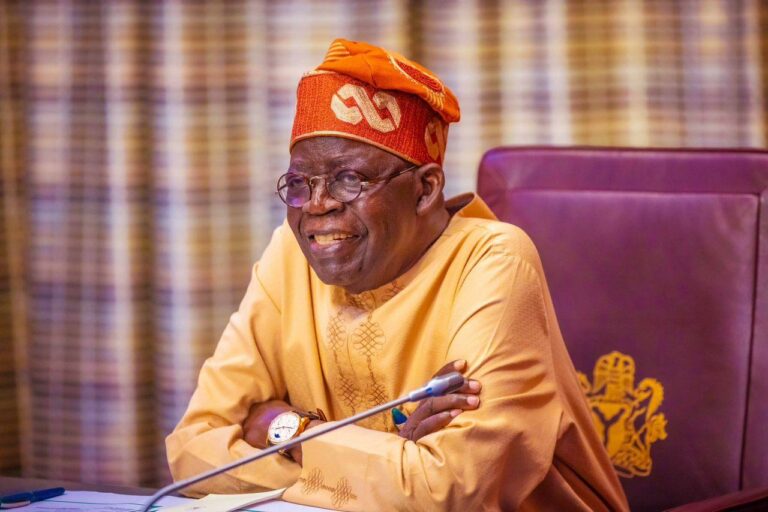
The Middle Belt Peace Forum (MBPF) has commended President Bola Ahmed Tinubu for his profound demonstration of empathy and responsive leadership following his decision to postpone an official engagement in Iperu in order to visit victims of the recent attacks in Jos.
In a statement signed by its National Coordinator, Pastor Bulus Garba, in Jos on Friday, the Forum said the President’s decision to personally identify with grieving communities sends a powerful message of solidarity and reinforces public confidence in the commitment of the Federal Government to the protection of lives and property.
“The Middle Belt Peace Forum warmly commends President Bola Ahmed Tinubu for prioritising compassion over ceremony. At a time of deep sorrow for the people of Plateau State, his decision to visit Jos stands as a mark of true leadership—one that listens, responds, and stands with the people in their moment of pain,” the statement read.
The Forum described the perpetrators of the recent attacks as “cowards who prey on innocent and defenceless citizens,” stressing that such acts of violence are not only inhumane but also a direct assault on the unity and peace of the nation.
“We condemn in the strongest terms the actions of these cowardly attackers whose only aim is to instil fear and destabilise peaceful communities. Their actions must be met with firm and decisive resistance from all arms of the state,” Pastor Garba said.
The MBPF further used the opportunity to salute the courage, gallantry, and sacrifices of the Armed Forces of Nigeria under the leadership of the Chief of Defence Staff, General Olufemi Oluyede, noting that their continued efforts remain central to restoring stability across troubled parts of the country.
According to the Forum, the Armed Forces have demonstrated resilience and professionalism in the face of complex security challenges, often operating under difficult conditions to safeguard communities and defend Nigeria’s territorial integrity.
“We salute the Armed Forces of Nigeria for their unwavering commitment and sacrifices. Their gallantry in confronting criminal elements and reclaiming territories is a testament to their dedication to national service. We recognise that the path to peace is demanding, and we honour those who stand daily in defence of our nation,” the statement added.
The Forum pledged its full support to ongoing military operations and called for strengthened collaboration between security agencies and local communities as a critical factor in achieving lasting peace.
It also urged citizens across the Middle Belt to cooperate with security forces by providing timely information and fostering unity within their communities.
The MBPF, however, expressed concern over the need for greater synergy among security agencies, particularly the role of the Nigeria Police in consolidating gains made by the military.
“We call on the Nigeria Police Force to rise fully to its constitutional responsibility by effectively supporting the Armed Forces in stabilising and securing areas that have been cleared of criminal elements. Holding and policing such territories is essential to preventing a resurgence of violence,” Pastor Garba stated.
The Forum emphasised that sustainable peace requires a coordinated approach in which the military clears and secures areas, while the police maintain law and order to enable displaced communities to return and rebuild their lives.
The MBPF concluded by reiterating its commitment to peacebuilding efforts across the Middle Belt and expressed optimism that with sustained leadership, coordinated security efforts, and active citizen participation, lasting peace can be achieved.
“Together, through unity, vigilance, and collective resolve, we can overcome these challenges and build a safer and more peaceful Middle Belt,” the statement added.
Governor Dauda Lawal Wins Face of Africa Governor of the Year Award in London
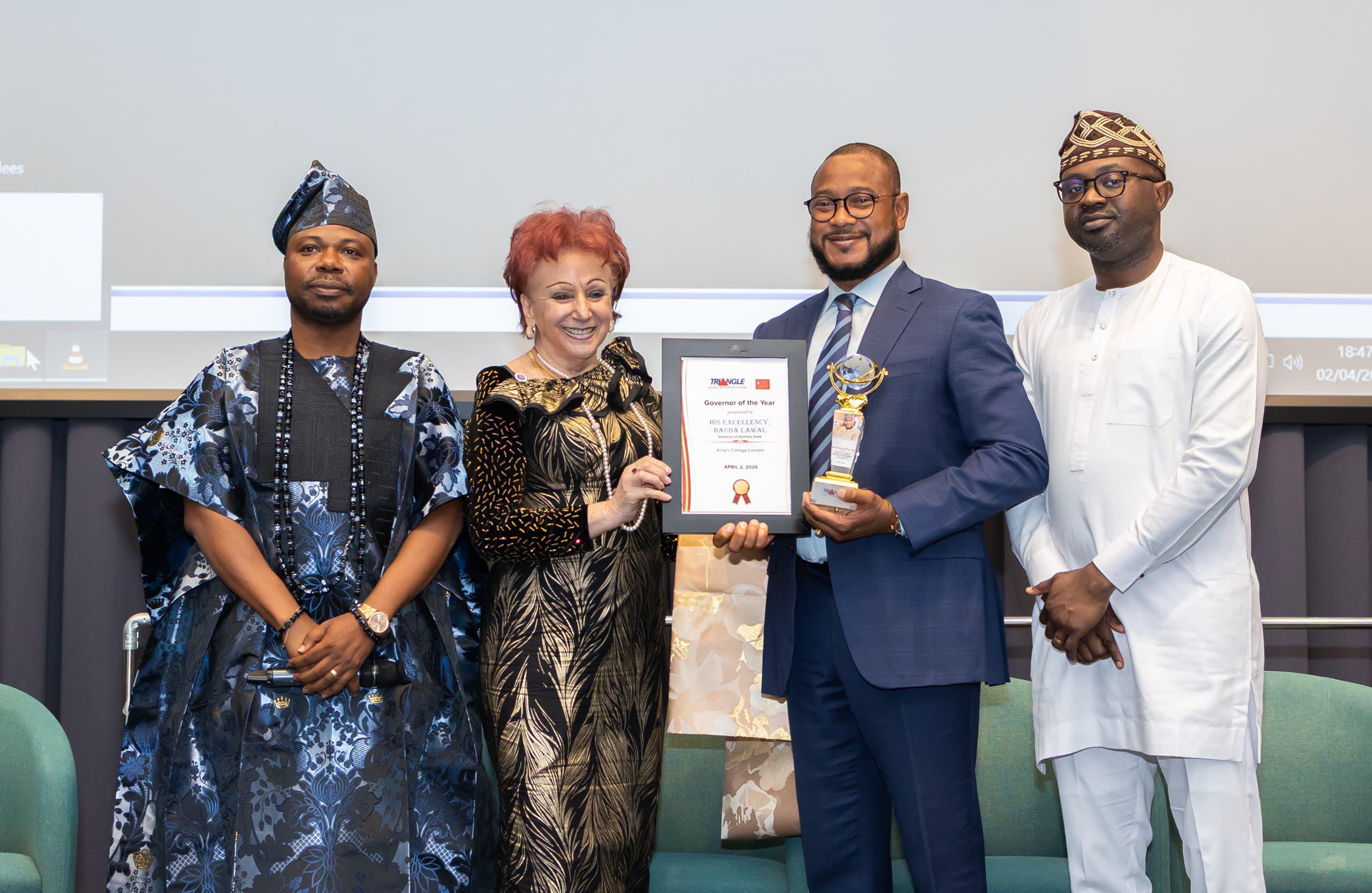
Governor Dauda Lawal has been honored with the Outstanding Governor of the Year award by Triangle Media International Magazine.
The award was presented during the magazine’s 10th annual lecture and award ceremony, held on Thursday at the Grand Hall of King’s College, London, United Kingdom.
According to a statement by the governor’s spokesperson, Sulaiman Bala Idris, the awards recognize public and private sector leaders whose leadership positively impacts governance and service delivery.
He added that the lecture, themed “Harnessing the Roles of Nigerians in Diaspora for National Development,” brought together stakeholders from both the public and private sectors.
The statement read in part: “Yesterday, in London, Governor Dauda Lawal received the 2026 Face of Africa Leadership Award for Outstanding Governor of the Year.
“The 2026 edition coincides with the 10th anniversary of Triangle International Magazine, which has over the years celebrated notable Africans across diverse fields.
“The award recognizes the Zamfara State Government under Governor Lawal’s leadership for achieving remarkable milestones in service delivery since his inauguration on 29 May 2023.
“The board of Triangle International noted that, despite inheriting an empty treasury, Governor Dauda Lawal has remained true to the Rescue Agenda’s campaign promise: to rescue and rebuild Zamfara.
“The award also reflects the state government’s innovative approach to indirectly curbing insecurity through educational advancement, demonstrated by the declaration of a state of emergency in the education sector.
“This includes the state government’s swift payment of the outstanding N3.4 billion for WAEC and NECO examinations, as well as the reconstruction and rehabilitation of schools across all 14 Local Government Areas of Zamfara State.
“The international magazine finds these initiatives to be strategic interventions toward long-term efforts to make Zamfara State better.”
The colourful event was attended by the Minister of Interior, Olubunmi Tunji-Ojo, and Sahara Group’s Group Managing Director, Kola Adesina, among others.


-

 society7 months ago
Religion: Africa’s Oldest Weapon of Enslavement and the Forgotten Truth
-

 news4 months ago
WHO REALLY OWNS MONIEPOINT? The $290 Million Deal That Sold Nigeria’s Top Fintech to Foreign Interests
-

 society6 months ago
“You Are Never Without Help” – Pastor Gebhardt Berndt Inspires Hope Through Empower Church (Video)
-

 celebrity radar - gossips2 months ago
Dr. Chris Okafor Returns with Power and Fire of the Spirit -Mounts Grace Nation Altar with Fresh Anointing and Restoration Grace on February 1, 2026